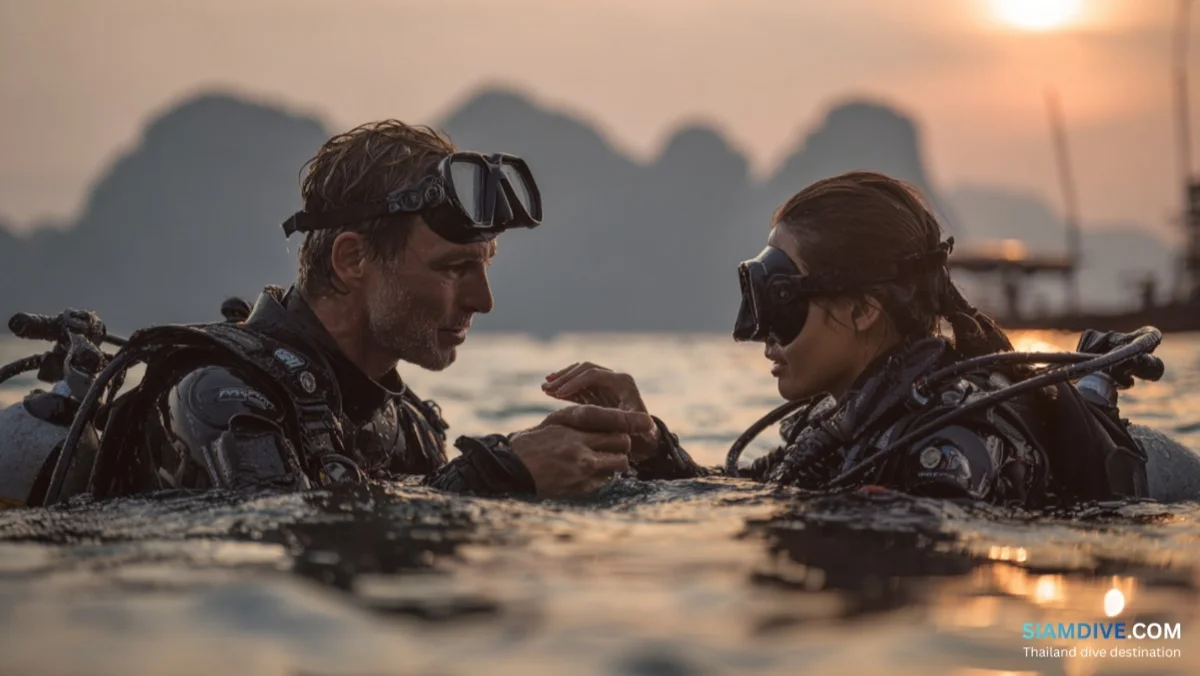
10 Things Every Certified Diver Should Know (But Open Water Didn't Teach)
9 เมษายน 2569
Gas management, dive planning, SMBs, owning your gear, DAN insurance and the right to call a dive — the practical skills certified divers actually need.
Why Most Certified Divers Stop Improving
You finished Open Water, logged 15 dives in Koh Tao, and now you call yourself a diver. The truth is most people who get certified plateau within their first year. They never learn the skills that turn a tourist with a C-card into someone the dive boat actually trusts. None of this is in the PADI manual — it lives in the gap between what your instructor had time to teach and what you actually need underwater. Here is what nobody tells you after the certification card arrives.
Gas Management Beyond "Check Your Gauge"
Open Water teaches you to surface with 50 bar. That is the bare minimum. Real gas management uses the rule of thirds: one third for the way out, one third for the way back, one third reserve for emergencies. The reserve is for the moment your buddy runs out, the current picks up, or your computer says you need a deco stop you didn't plan for.
Calculate your SAC rate (surface air consumption) every 5 dives — divide your air used by dive time and depth. A rested adult typically sits at 14–18 L/min on the surface. Stress doubles it. Knowing your number means you stop guessing how long a tank will last and start planning real dives.
Plan the Dive Before the Dive Computer Plans It For You
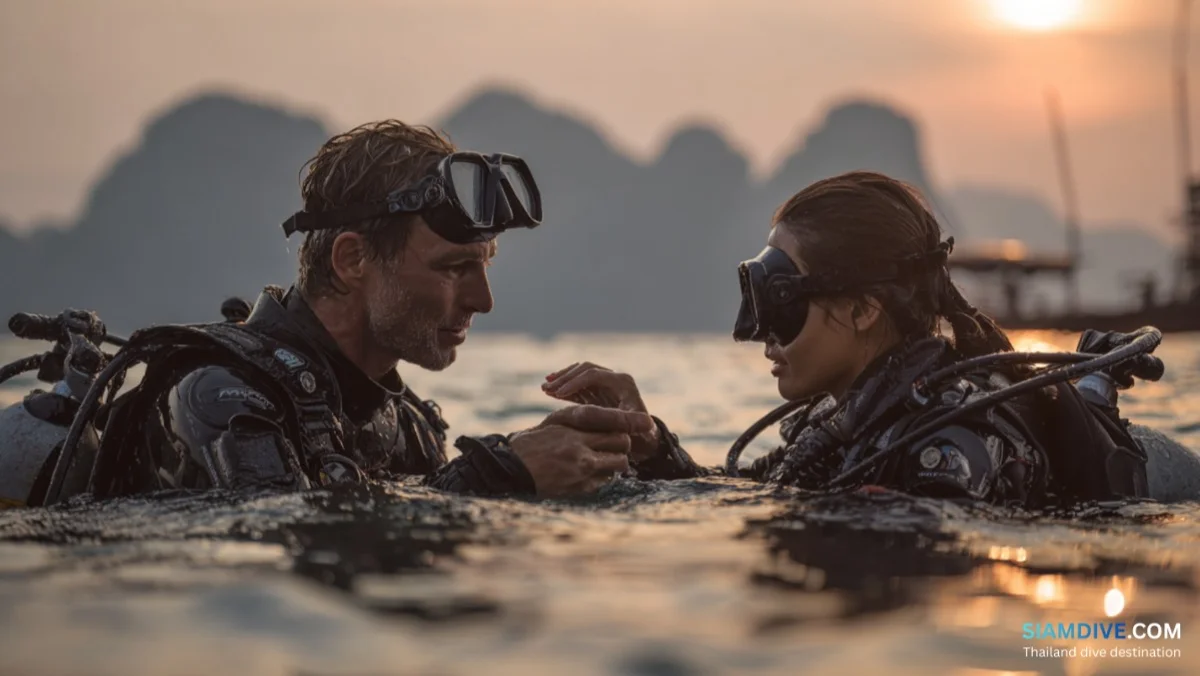
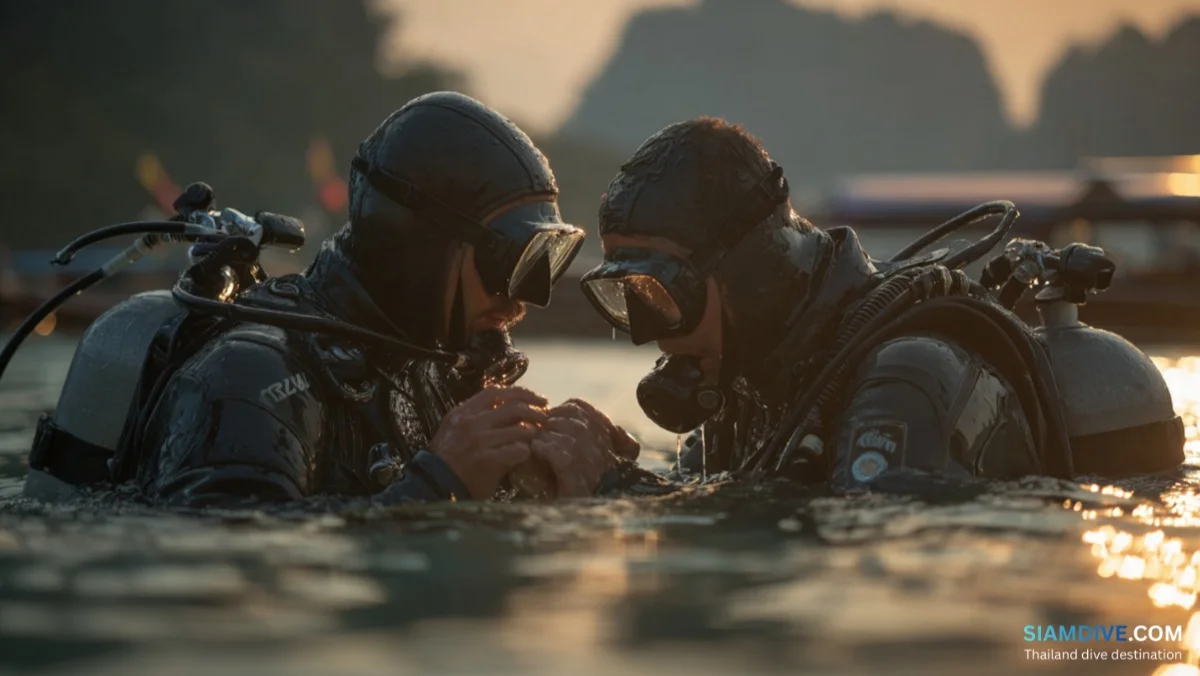
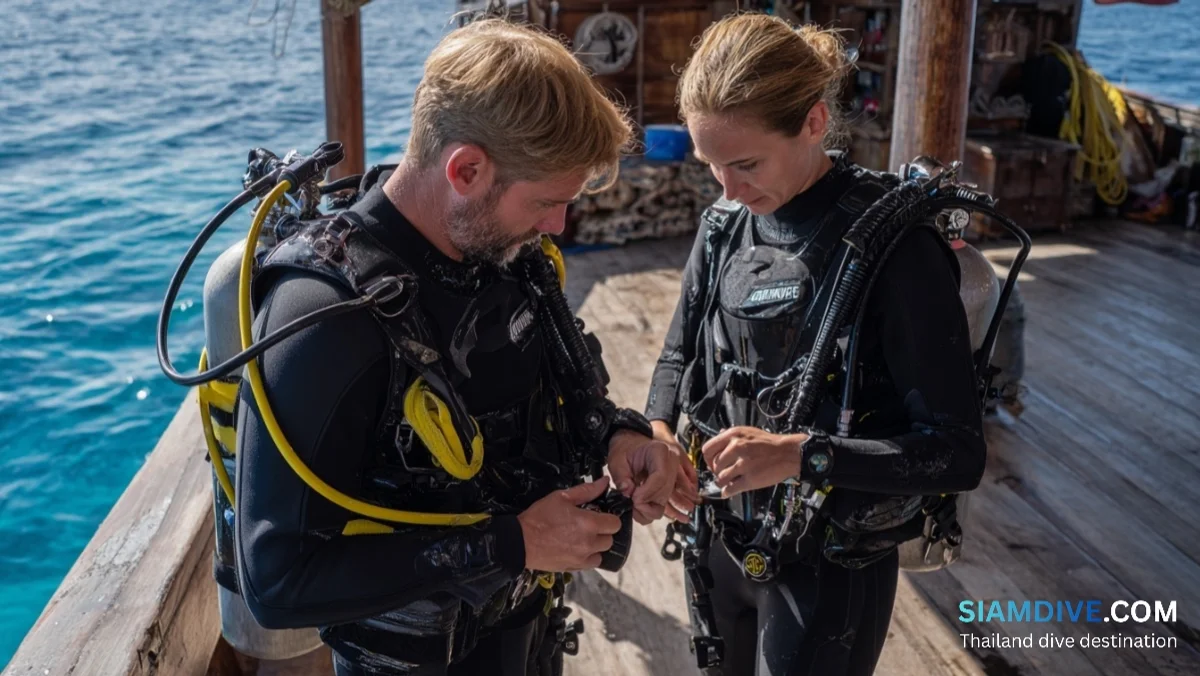
Your dive computer is not a dive plan. It is a no-decompression calculator after the fact. Before splashing, agree with your buddy on:
- Maximum depth (and who turns first if it's reached)
- Maximum time (and what gas pressure triggers the turn)
- Direction relative to the boat or shore
- What you do if you get separated (one minute search, then surface)
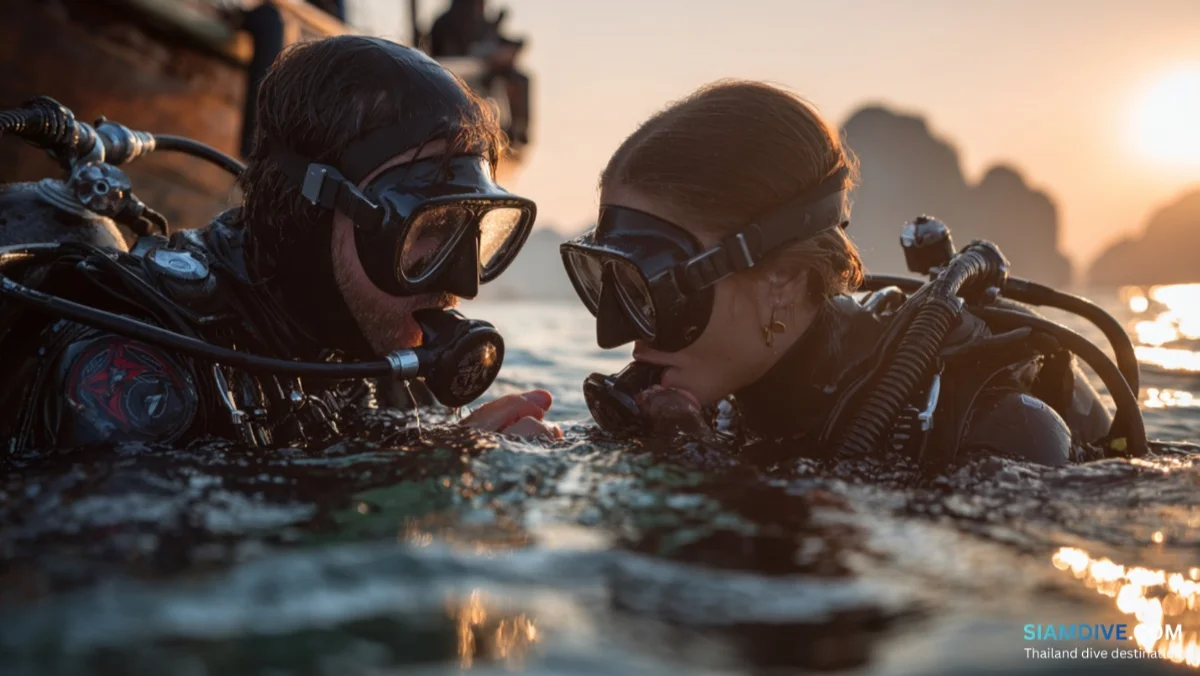
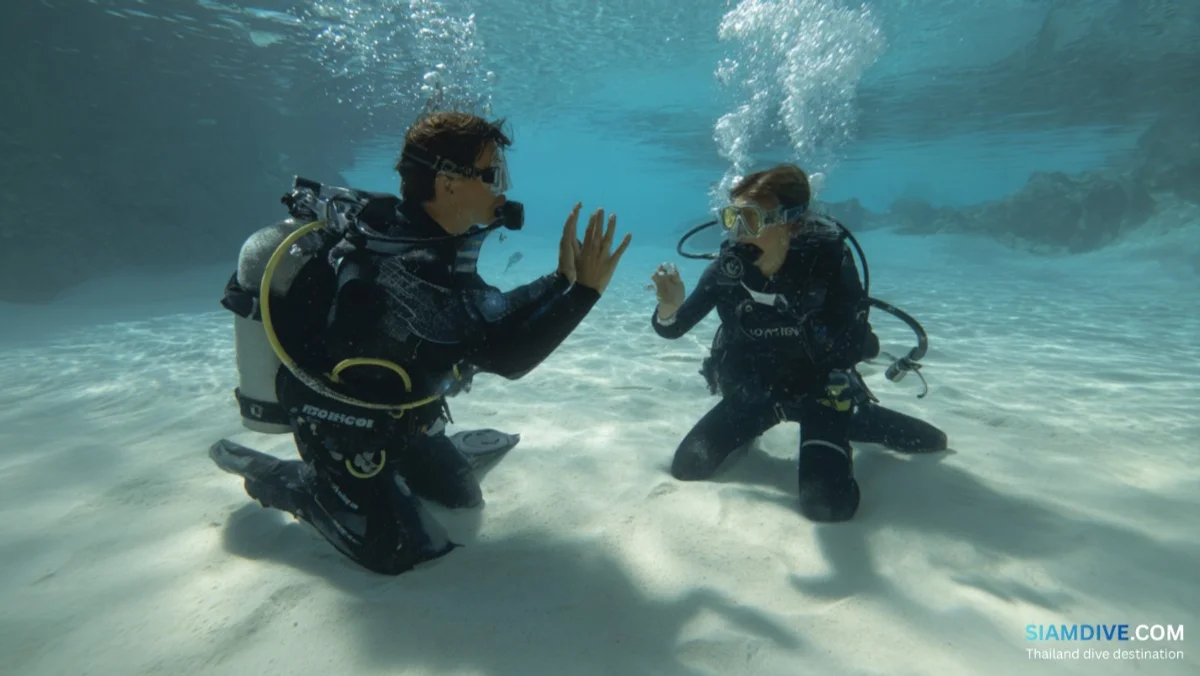
- Hand signals beyond "OK" — low on air, danger, ascend now, look at this
That conversation takes 90 seconds and prevents 90 percent of the bad stories you hear at dive bars.
Buy Your Own Mask, Computer and Fins
Renting works for the first 10 dives. After that, your face has memorized the shape of the wrong mask, your feet hurt in mismatched fins, and you have no idea how your computer behaves on dive 25 because you got a different model last week. Owning these three items pays for itself in 30 dives and immediately makes every dive more comfortable. The total damage: about 10,000 baht for a decent set in Thailand.
Skip the "complete kit" pressure from dive shops. BCDs and regulators can wait — they are expensive, well-maintained on rental boats, and easy to learn on different models. Mask, computer, fins. In that order.
Navigation, SMBs and Drift Diving
Most certified divers rely entirely on the guide. The day you find yourself disoriented at 20 meters with no one in sight, you will wish you had practiced compass headings and natural navigation in a pool. Spend a single afternoon doing it. It's free.
A surface marker buoy (SMB) is non-optional once you start drift diving in places like Koh Tachai, Anemone Reef, or Hin Daeng. Boats can't see you on the surface in chop — the SMB is your "I am here" flag. Carry one. Learn to deploy it from depth without blowing yourself to the surface. Most dive shops in Thailand will rent you one for 50 baht and show you how in five minutes.
Log Your Dives Like They Matter
The PADI logbook with the smiley faces is for tourists. A real log records:
- Site name, GPS coordinates if you can grab them
- Conditions: visibility, current, water temperature, surface conditions
- Max depth, average depth, dive time
- Air in / air out / bar used per minute (your SAC over time)
- What you saw and where exactly
- What went wrong (be honest — this is for you)
After 50 logged dives this way, you start spotting patterns: you breathe more in cold water, you panic on the third dive of liveaboards, you always burn extra air on Phi Phi because the current there is sneaky. Patterns are how you actually improve.
Get DAN Insurance Before You Need It
A single recompression chamber treatment in Thailand costs around 200,000–400,000 baht. DAN (Divers Alert Network) membership and dive insurance is roughly 3,500 baht per year. Do the math. The 24-hour emergency hotline number alone — +66 2253 4624 for the Thailand chamber and DAN's international line — has saved dives that would otherwise have ended in airlift bills.
And buy real travel insurance that explicitly covers diving. Most generic policies exclude scuba below 18 m, which is exactly where you actually dive.
Know When to Call the Dive
The biggest skill nobody teaches you is the right to say "I'm not feeling this — I'm staying on the boat." A diver who calls a dive because their ear is acting up, they slept badly, the seas look too rough, or something just feels off is not a wimp. They are someone who will still be diving in 20 years. The divers who push through are the ones who get hurt or quit altogether.
If you have to convince yourself to get in the water, that is your answer. The reef will be there next time.
How to Level Up in Thailand
Thailand is the perfect testing ground for the skills above. Start with Koh Tao for cheap repetition (a Fundive day costs around 1,800 baht with everything). Move to Phuket day trips when you want experienced guides and real currents. Take the leap to a Similan or Surin liveaboard for your first 4-dives-per-day week — that is where everything you read here clicks into muscle memory. SiamDive lists trips with small group ratios so you actually get personal attention from the guide instead of being one of 12 people kicking each other in the face. Find a trip that matches your level on siamdive.com and put these skills to work.