7 Morays, 1 Giant Cave: Why Cousteau Chose Poor Knights
1 พฤษภาคม 2569
Seven moray species, a sea cave the size of an aircraft hangar, and 125 subtropical fish that have no business at 35°S. What Cousteau saw here.
Thirty metres down the volcanic wall, where the ecklonia kelp thins out and the rock turns bare, a mosaic moray slides its head from a crack. This is 35 degrees south — colder than anywhere a mosaic moray belongs. Yet here it is, eye to eye with a diver who expected nothing more subtropical than a blue cod. The Poor Knights Islands break the rules of latitude, and Jacques Cousteau put them on his top-ten list for exactly that reason.
Twenty-three kilometres off Northland's Tutukaka coast, two main islands and a scatter of rock stacks rise from volcanic foundations laid down 11 million years ago. Above water, they look like fortified ruins — sheer, dark, and unwelcoming. Below the waterline, they host one of the most improbable ecosystems in the Southern Hemisphere: a subtropical reef system thriving at a latitude where it has no business existing.
A Subtropical Collision at the Wrong Latitude
The East Auckland Current sweeps warm water down from the Coral Sea, hitting these volcanic remnants with enough consistency to raise local water temperatures several degrees above the mainland coast. The result is a marine environment where temperate and subtropical species overlap in ways that shouldn't work on paper. Of the 125-plus fish species recorded here, roughly 38 percent are subtropical exotics — spotted black grouper, Lord Howe coralfish, cowrie snails, tropical sea urchins, and paper nautiluses drifting through on the current.
That mix is what earned Cousteau's attention when he visited during his Pacific expeditions. His top-ten list — which also includes Sipadan, Richelieu Rock, and the Great Blue Hole — positions Poor Knights as the best subtropical diving on the planet. Not tropical. Not temperate. The narrow band where the two collide, which most dive sites can't sustain because currents shift seasonally. Here, the East Auckland Current has been delivering warm water for geological ages, long enough for permanent subtropical populations to establish rather than just visit.
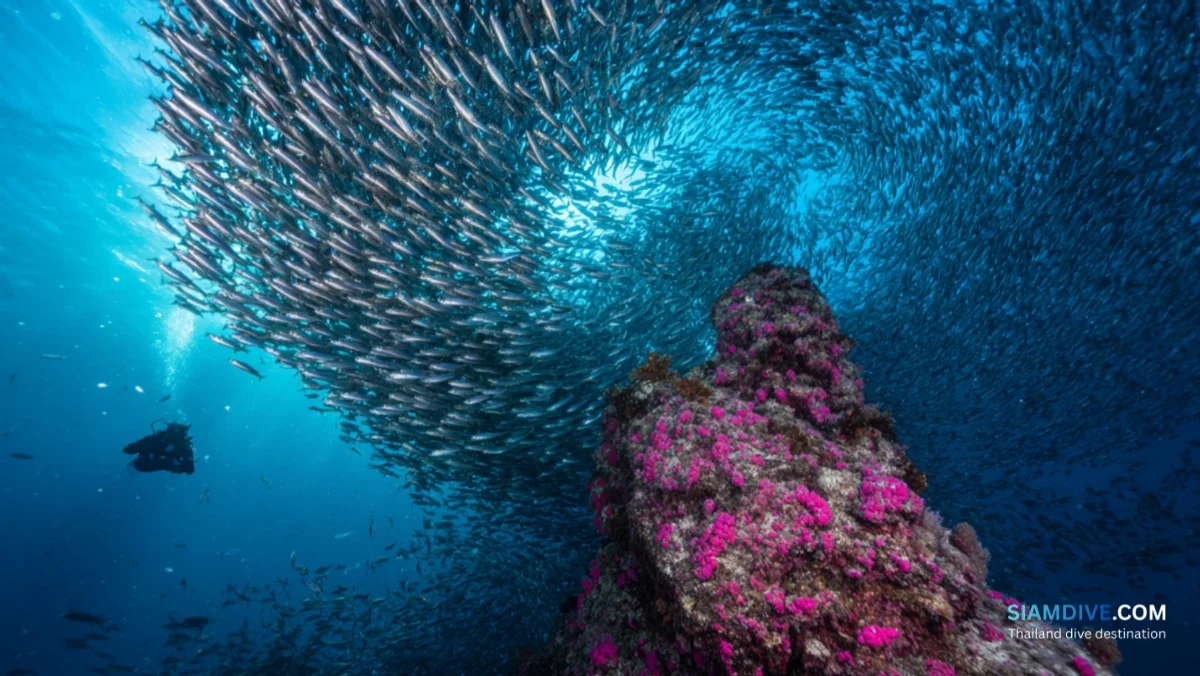
The practical effect for divers is a single wall that transitions from kelp forest to sponge garden to soft coral within a depth change of fifteen metres. Temperate demoiselles school above subtropical anemones. Species that hunt by ambush sit among species that school by the thousand. No single dive captures the full range — which is precisely why repeat visitors outnumber first-timers on most charter boats.
Rikoriko — A Gas Bubble Older Than the Alps
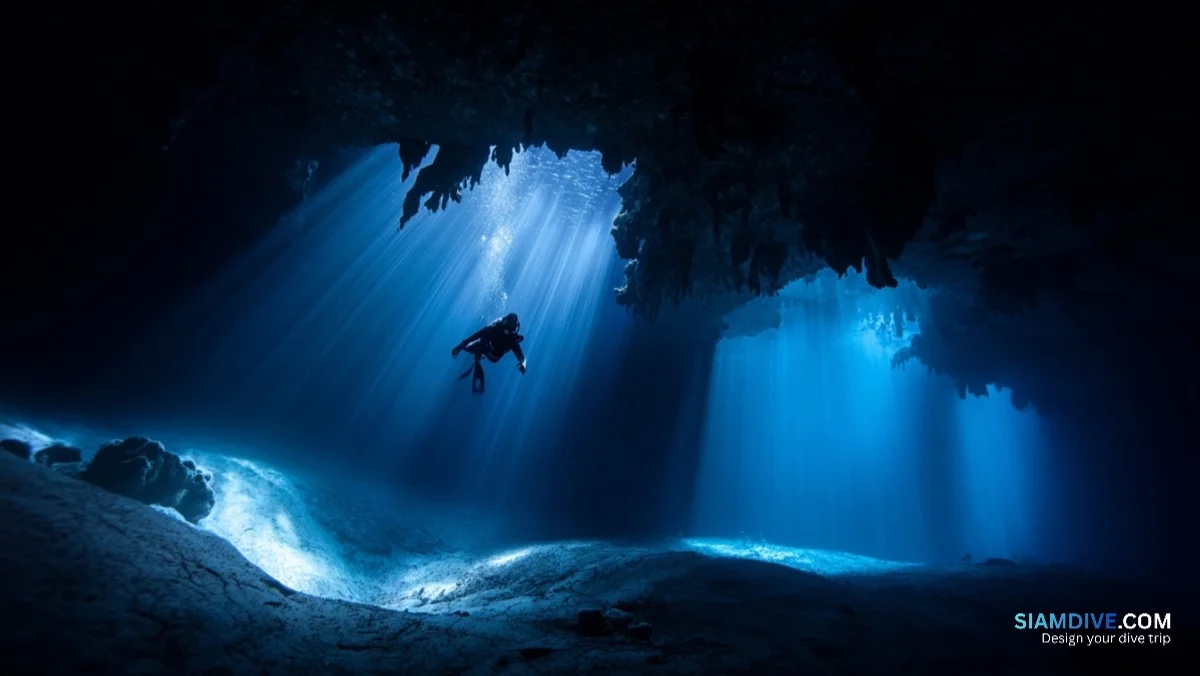
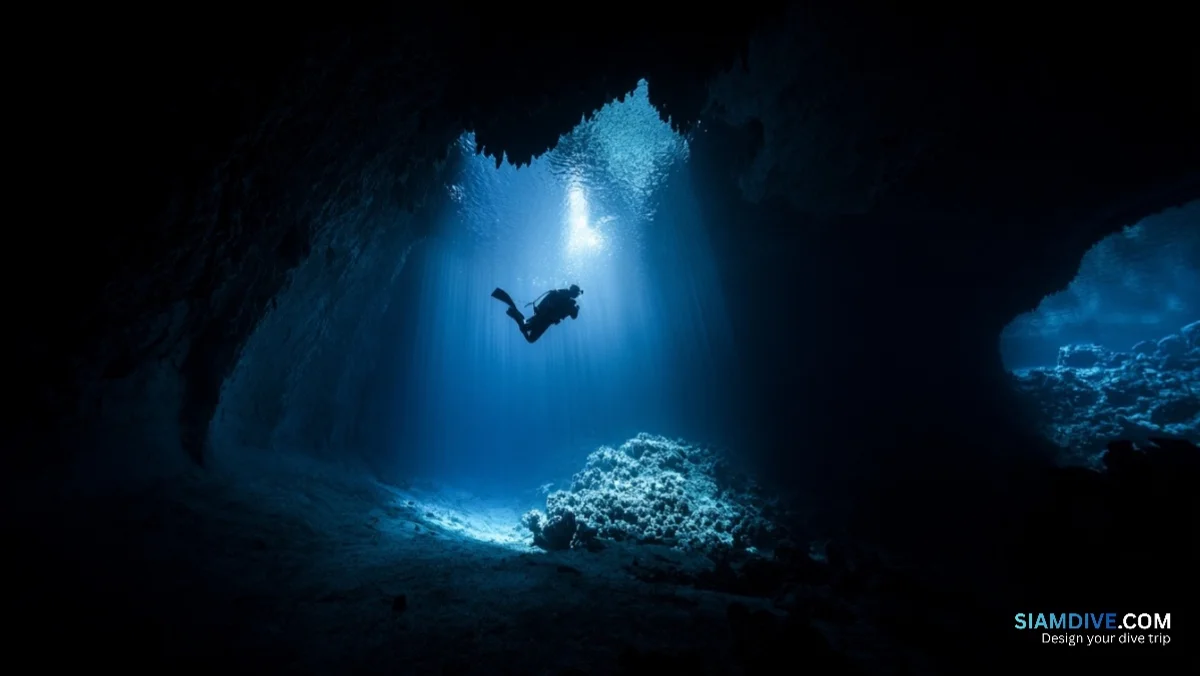
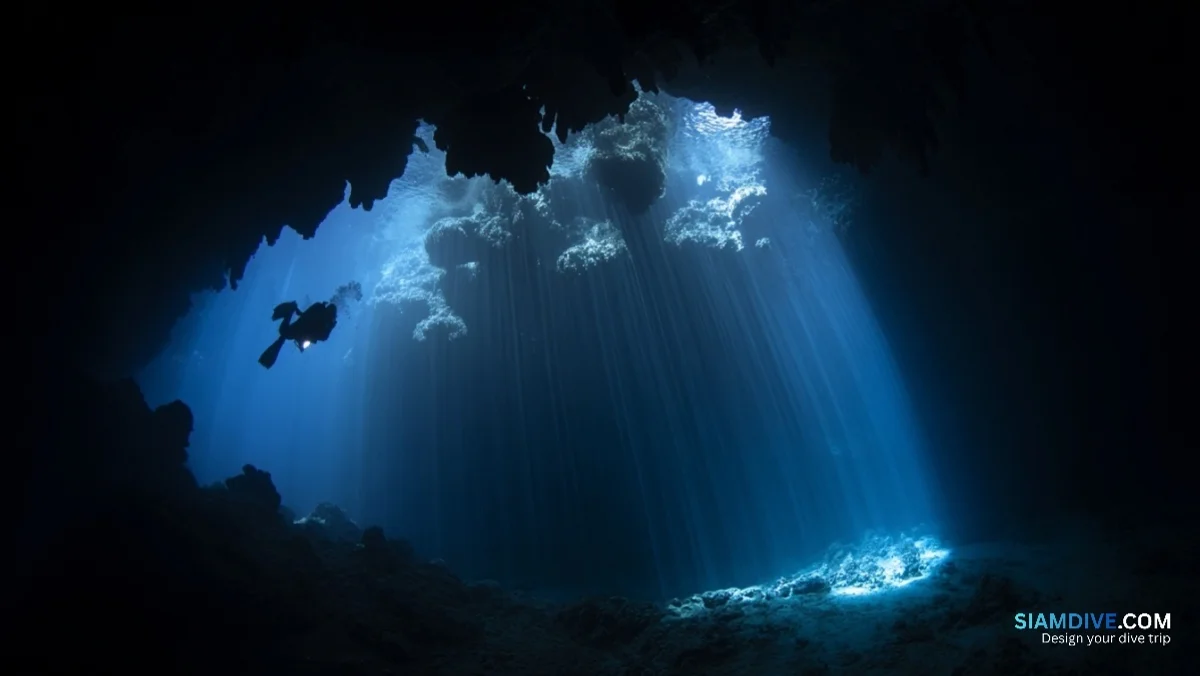
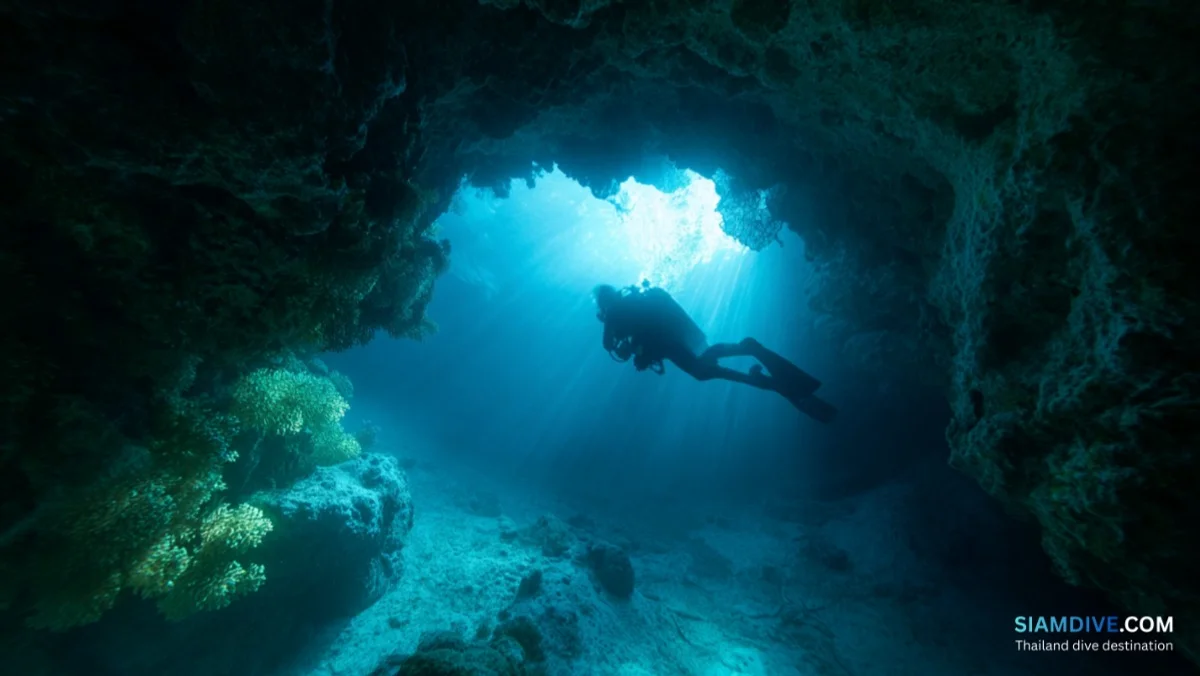
Fifteen million years ago, a volcanic eruption trapped a gas pocket that never collapsed. The sea eventually broke through, and the result is Rikoriko Cave: 130 metres long, 80 metres wide, ceiling arching 35 metres overhead, extending 26 metres below the waterline. Total volume: 221,494 cubic metres. By most measurements, the largest sea cave on Earth.
Diving inside feels like entering a cathedral that forgot to drain. Visibility often exceeds what divers find outside — 35 to 45 metres in the cave versus 15 to 30 in the open water, because the enclosed space shelters the water column from plankton-bearing currents. The water is gin-clear in a way that makes depth perception unreliable; divers routinely underestimate how far they've swum toward the back wall.
At the rear, around 10 to 15 metres depth, cup coral grows in colonies. This species normally lives at 200 metres, where light barely reaches. Inside Rikoriko, the cave's geometry filters enough daylight to trick the coral into thinking it sits in the deep ocean. It is the only known shallow population of its kind in New Zealand — a biological anomaly created entirely by architecture.
The cave's acoustics are so precise that musicians have staged concerts inside, their voices bouncing off curved walls with a natural reverb that recording studios spend millions replicating. For divers, the draw is simpler: hovering mid-water in a space large enough to swallow a commercial aircraft, watching light shafts angle through the entrance and fracture off the walls into shifting blue geometry.
Seven Morays in One Reserve
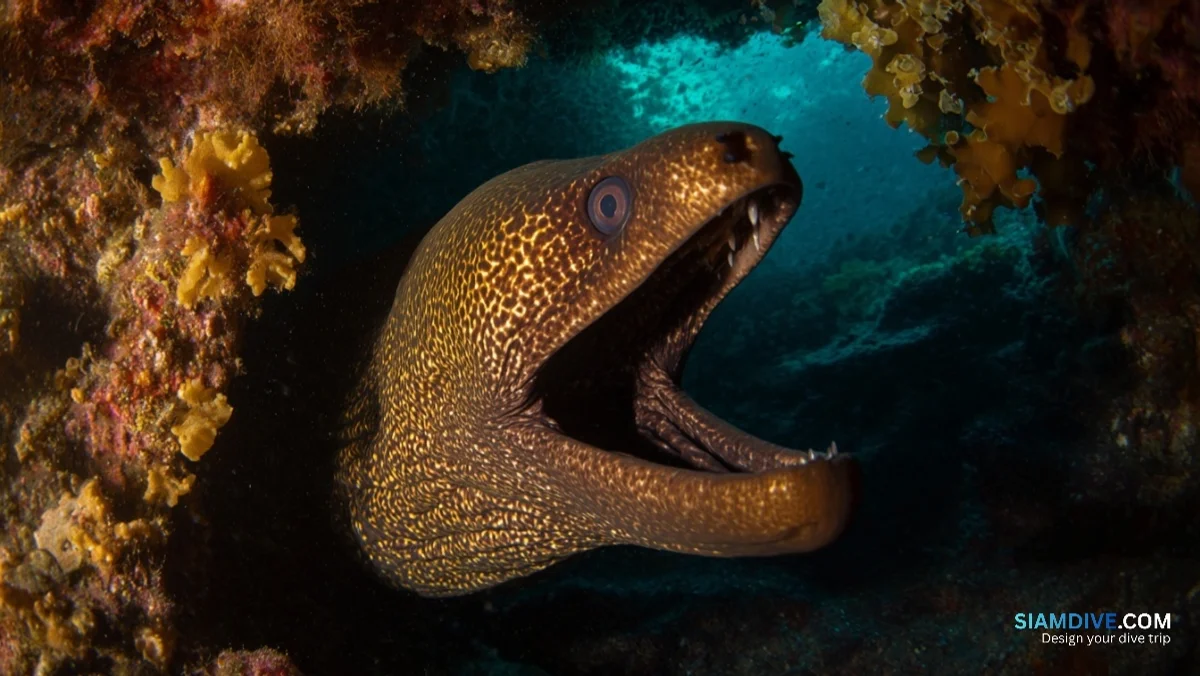
Most temperate dive sites produce one, maybe two moray species. Poor Knights delivers seven confirmed species in regular residence, with occasional sightings of an eighth. The grey moray is the common one — heads poking from every second crack along the kelp-covered boulders, unperturbed by passing divers in a way that suggests decades without harassment.
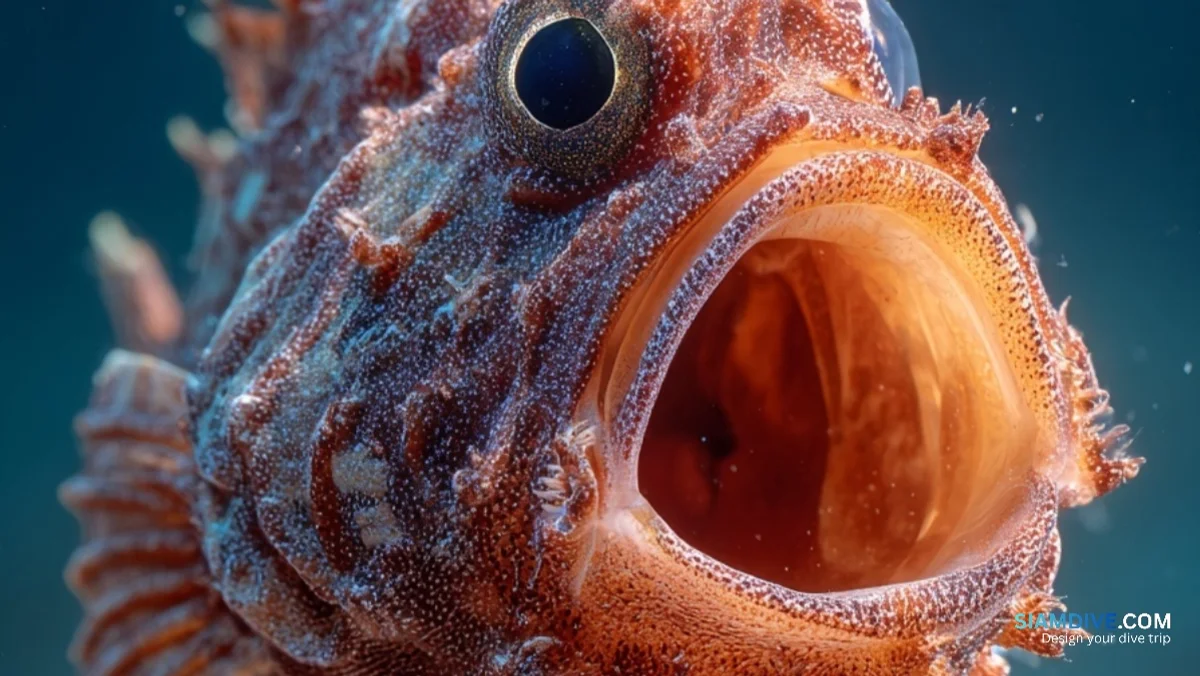
The diversity runs deeper than abundance. Mosaic morays carry pattern work that looks hand-painted. Mottled morays prefer the deeper crevices below twenty metres. The yellow moray hunts the shallows at dusk. And the recently documented Y-patterned moray — a species so uncommon that confirmed sightings anywhere in New Zealand waters make news among marine biologists — has been photographed here more than once. Seven species coexisting in a reserve barely twenty-four kilometres long represents a density that tropical reefs would respect.
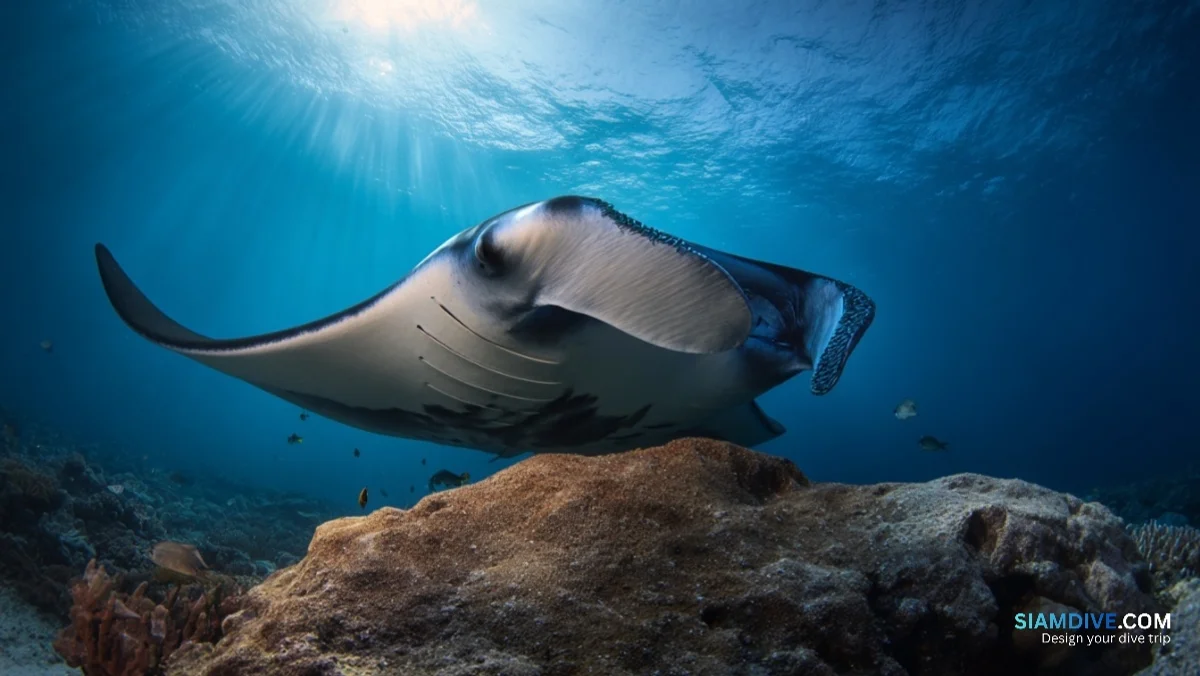
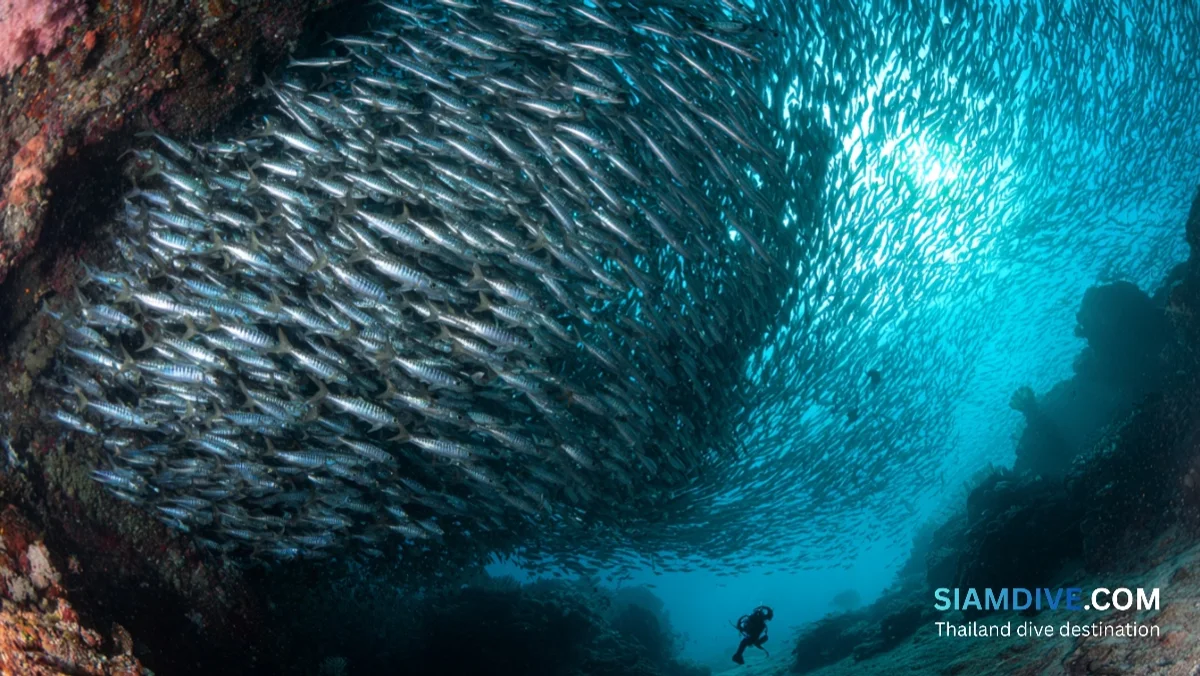
The morays share their walls with short-tailed stingrays spanning two metres across, schools of kingfish thick enough to dim the light overhead, and — between November and April — visiting orcas that hunt the stingrays along the reef edge. Divers surfacing for their interval have reported dolphin pods circling the boat while eagle rays cruise the blue below. The pelagic traffic here operates on a schedule that rewards patience and repeat visits.
Arches, Tunnels, and the Topography That Makes Repetition Impossible
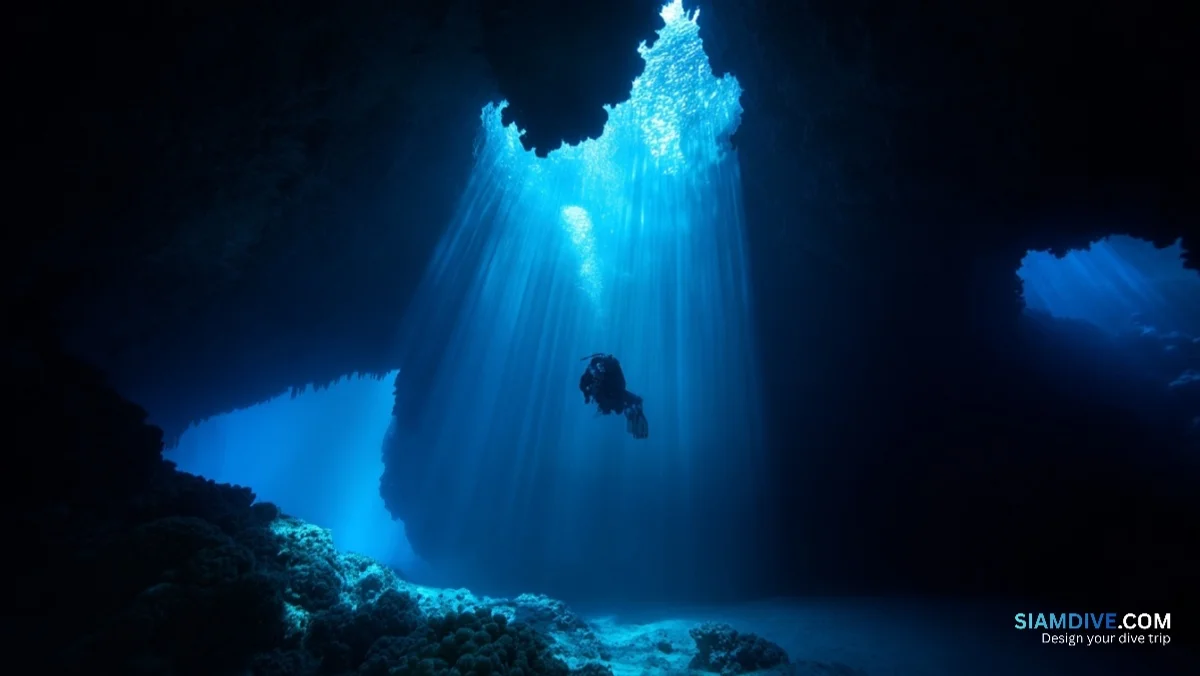
The volcanic cliffs above water continue below it — plunging 100 metres to a sandy floor, creating a vertical labyrinth of arches, swim-throughs, and overhangs that could fill a logbook for years without repeating a single route.
- Blue Maomao Arch — named for the dense schools of iridescent blue fish that pack the tunnel, turning it into a living corridor of shimmer and motion. Swimming through feels less like diving and more like being absorbed into a shoal.
- Middle Arch — breaks the surface with a rocky bottom at 15 metres, wide enough for a group to pass through while reef fish stream overhead in both directions simultaneously.
- Tye Dye Arch — entrance at 18 metres, dual passageways where filtered light paints the rock in shifting colour bands that earned its name.
- Northern Arch — deep walls dropping past 30 metres, kingfish patrols at the edges, soft coral encrusting every horizontal surface in orange and white.
Between the arches, kelp forests of Ecklonia radiata blanket the shallower zones — swaying canopies that harbour nudibranchs, blennies, and juvenile fish hiding from the kingfish schools above. The contrast defines Poor Knights diving: swim through a dark arch into sudden kelp-green light, and the temperature can shift a degree within two fin kicks as currents layer over each other at different depths.
For photographers, the arches provide natural framing that requires no artificial composition — the rock does the work, the fish fill the space, and the light cooperates in ways that feel designed rather than accidental.
What 45 Years Without a Hook Did
The marine reserve designation came in 1981, making it one of New Zealand's oldest. Recreational fishing continued until a full ban in 1998. That gives the ecosystem 28 years of zero extraction — and the results are visible on every descent. Snapper here grow to sizes that mainland fishers would consider myths. Crayfish wander the open reef instead of retreating into cracks at the first sign of a shadow. Kingfish school in numbers that suggest they've never learned what a lure looks like.
The Department of Conservation monitors fish populations through regular surveys. Count data shows biomass increases that dwarf neighbouring unprotected reefs — a pattern consistent with what marine biologists observe in long-established no-take zones globally. The reserve effect compounds over decades: larger fish produce exponentially more eggs, juveniles survive at higher rates without fishing pressure, and the entire food web thickens from the bottom up.
For divers, the practical effect is straightforward: more fish, larger fish, and animal behaviour that treats your presence as background noise rather than threat. A short-tailed stingray doesn't bolt when you fin over it. A school of trevally parts around you and reforms without changing speed. This is what a reef looks like when it hasn't been raided in a generation.
The Season Question
Poor Knights offers a genuine dilemma rather than a simple "best month" answer:
- May to September (winter) — water temperature 14–17°C, visibility routinely exceeds 30 metres, sometimes topping 46 metres. Fewer plankton means less marine activity overall, but the walls glow with clarity and the kind of visibility that wide-angle photographers wait months to find.
- November to April (summer) — water warms to 19–25°C, visibility drops to 15–20 metres as plankton blooms roll in. But the plankton brings everything else: orcas, mantas, eagle rays, and the subtropical visitors that ride the East Auckland Current south. This is peak season for pelagic encounters.
The shoulder months — October and early May — sometimes deliver both: clear water that hasn't yet bloomed, with warm-current species still lingering from summer. Locals who've dived the Knights for decades call these windows the secret season, though they're unreliable enough that no operator will guarantee them.
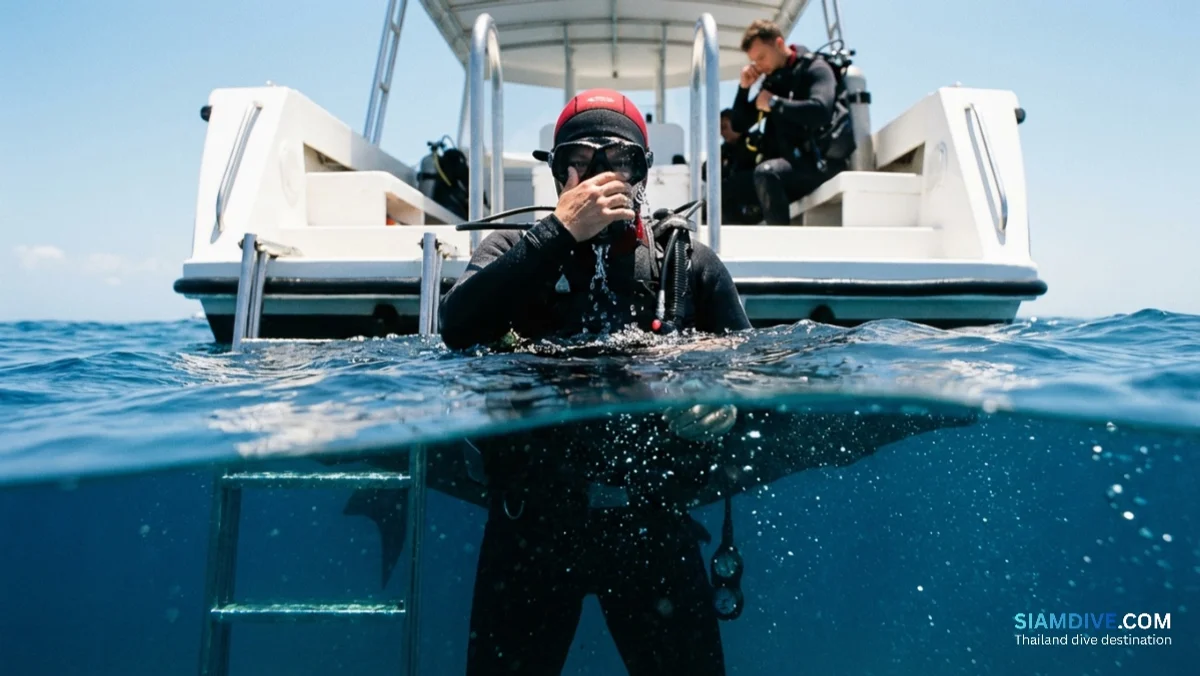
Most operators recommend a 5mm wetsuit year-round, with a hood for winter. The truly cold-tolerant dive drysuit. Either way, the 45-minute boat ride from Tutukaka Marina is sheltered enough that seasickness rarely becomes the story of the day.
Getting There and What It Costs
Tutukaka sits 30 kilometres northeast of Whangarei on Northland's east coast — roughly 2.5 hours' drive north of Auckland. Charter boats depart the marina daily when weather permits, with a typical day trip running seven to eight hours including two dives and a surface interval spent kayaking or snorkelling the shallows.
- Certified diver with own gear — NZD 219 per person (includes boat, 2 dives, surface activities)
- Full gear hire — add NZD 100
- Tank and weights only — add NZD 40
- Non-diver (snorkel/kayak) — NZD 219–245 depending on operator
As of March 2026, operators have added a NZD 10 fuel levy to all trip pricing — a response to global fuel supply costs that shows no sign of reversing soon. Booking in advance is standard during the November–April peak, when boats fill days ahead. Winter trips run with smaller groups, which some divers prefer for the quieter surface intervals and flexible site choices.
There's no overnight option at the islands themselves — the reserve prohibits landing. Every diver returns to Tutukaka by afternoon, which means the reef has been empty of humans since sunset every day for 45 years. That enforced absence is part of what makes diving here feel like trespassing into something that forgot humans exist. The remoteness isn't geographical — it's temporal. The reef resets every night.