Koh Haa Diving Guide: Five Islands of Crystal Clear Water
9 เมษายน 2569
Dive Koh Haa's lagoon, Cathedral cave, and deep pinnacles from Koh Lanta. All-level sites with 20-30m visibility and rich marine life.
Koh Haa: Five Limestone Islands in the Open Andaman
Koh Haa means "Five Islands" in Thai, and that's exactly what you get — five small limestone islands rising from the Andaman Sea about 25 kilometers west of Koh Lanta. There's nothing on these islands. No hotels, no restaurants, no beach bars. Just rock, jungle, and some of the clearest water you'll find in southern Thailand. The entire group sits within Mu Koh Lanta National Park, and access is controlled: you visit by day trip from Koh Lanta, and you leave when the boat goes back.
This isolation is the point. The reefs around Koh Haa benefit from limited human contact. The coral is healthy, the fish populations are robust, and the underwater topography — caves, swim-throughs, dramatic pinnacles, and a sheltered lagoon — offers more variety than you'd expect from five small rocks in the middle of the sea. It's become one of the most popular day-trip dive destinations from Koh Lanta, and the reputation is deserved.
Why Koh Haa Is a Must-Visit for Divers
Three things set Koh Haa apart from other Andaman dive sites. First, the water clarity. Visibility here routinely hits 20-30 meters during high season, and because the islands are offshore with no river runoff nearby, the water quality stays remarkably consistent. You're not gambling on conditions the way you might at nearshore sites.
Second, it works for every level. The lagoon between the islands offers calm, shallow water that's ideal for Open Water students and Discover Scuba participants. Move to the outer walls and pinnacles, and you'll find enough depth and complexity to satisfy experienced divers. That combination — beginner-friendly and genuinely interesting for advanced divers on the same trip — is rare.
Third, the environment feels intact. National park protection limits boat traffic and anchoring, and the dive operators running trips from Koh Lanta generally follow responsible practices. The soft corals on the deeper walls are lush, the hard coral coverage in the shallows is solid, and you'll see marine life behaving normally rather than fleeing from divers. Turtles, in particular, seem unfazed by human presence here — they'll glide past within a couple of meters if you stay calm.
The sheltered nature of the lagoon also means diving happens even on days when outer Andaman sites get called off due to swell. It's a reliable option throughout the season, which matters when you've planned a trip around diving.
Best Dive Sites at Koh Haa
Despite being just five islands, Koh Haa offers a surprising number of distinct dive sites. Most day trips include two or three dives, rotating between these depending on conditions and group experience levels.
The Lagoon (Koh Haa Lagoon)
The signature dive at Koh Haa — and arguably the most distinctive dive site in the Koh Lanta area. The lagoon sits between three of the five islands, creating a natural swimming pool of turquoise water no deeper than 5 meters in most places. The bottom is a patchwork of coral gardens, sand channels, and scattered rocks, all bathed in bright natural light from above.
What makes the lagoon special isn't depth or drama — it's the intimacy. You're diving in gin-clear water barely deeper than a swimming pool, surrounded by clownfish in their anemones, juvenile sweetlips hiding under table corals, nudibranchs on the rubble, and cleaner shrimp working their stations. It's a macro photographer's playground. For new divers, it's the gentlest possible introduction to the underwater world — warm, calm, shallow, and absolutely packed with life.
The Cathedral (Koh Haa Yai)
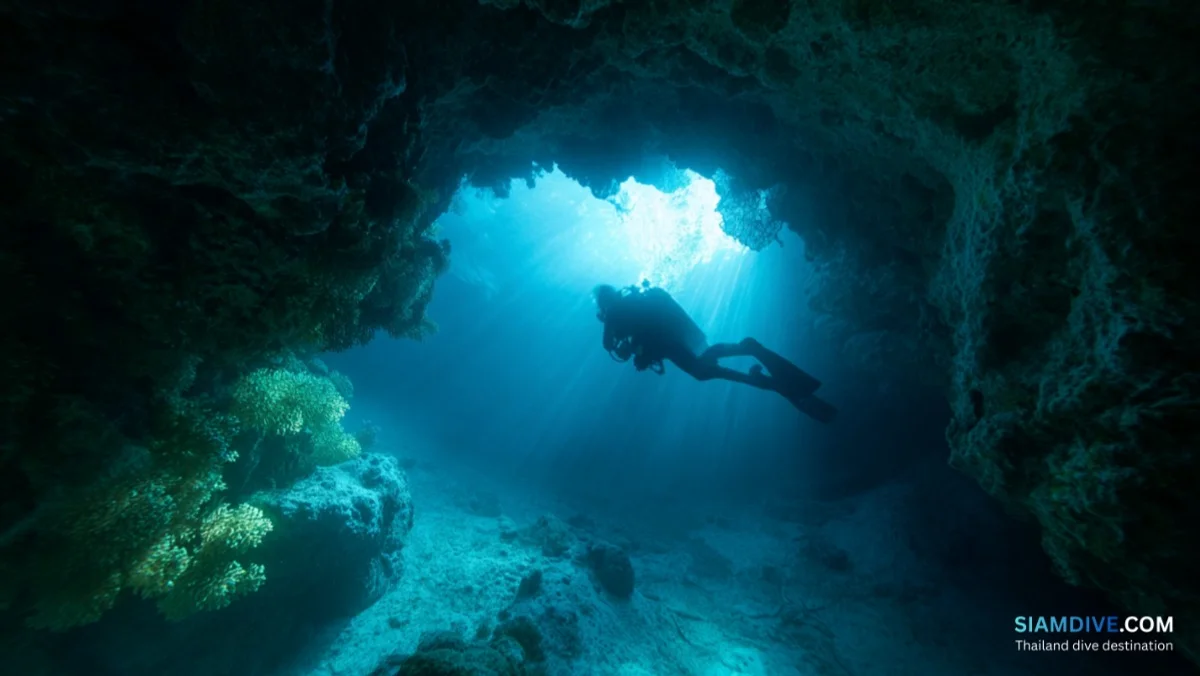
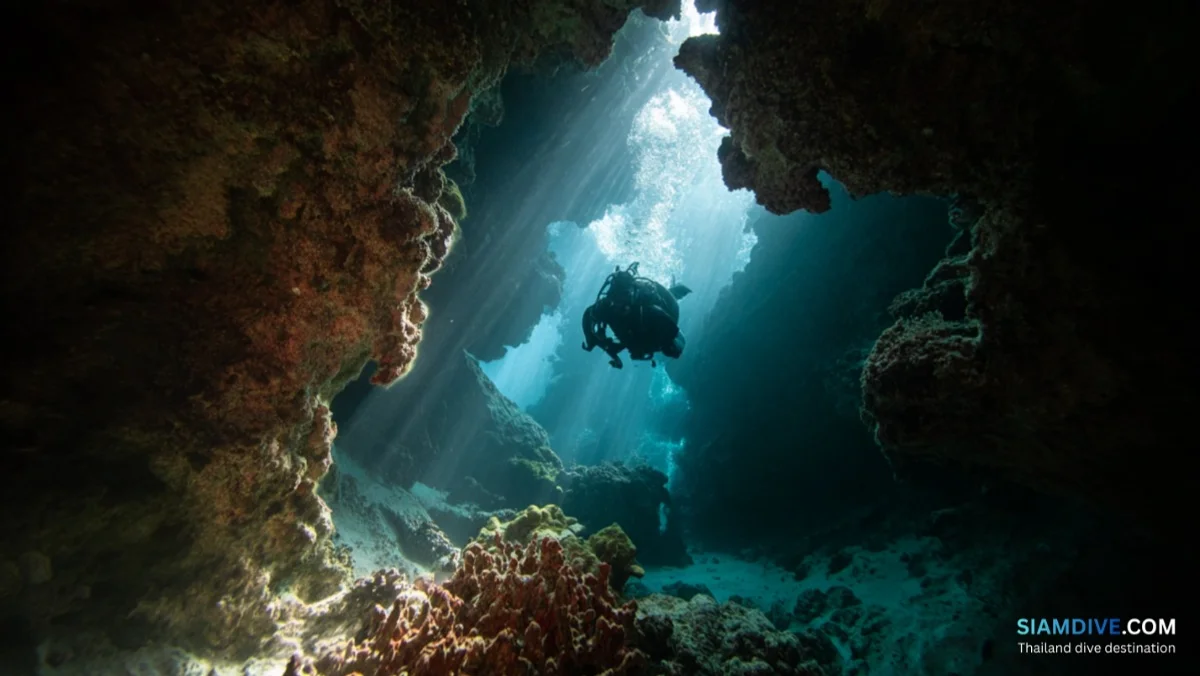
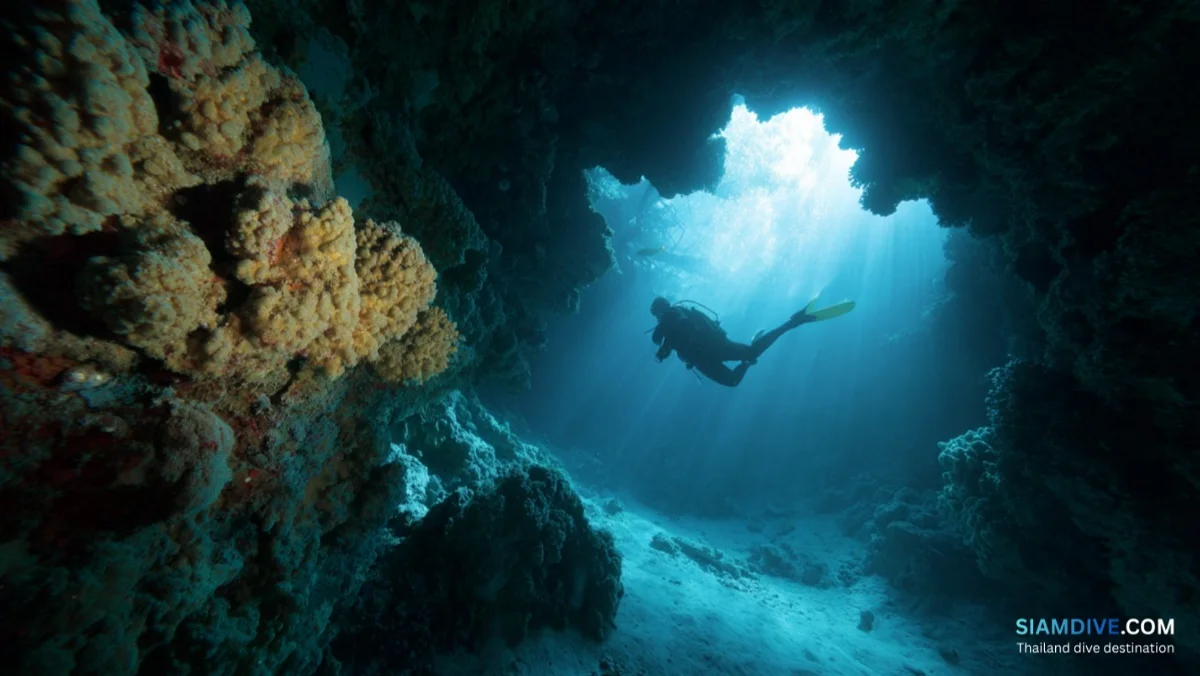
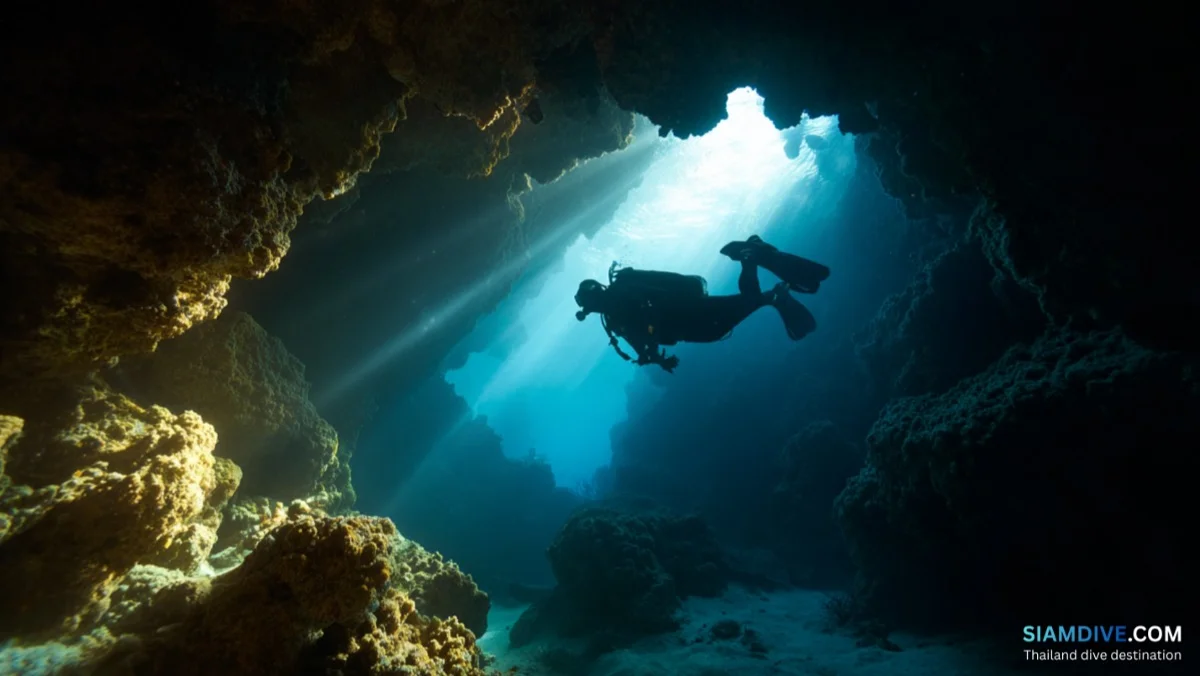
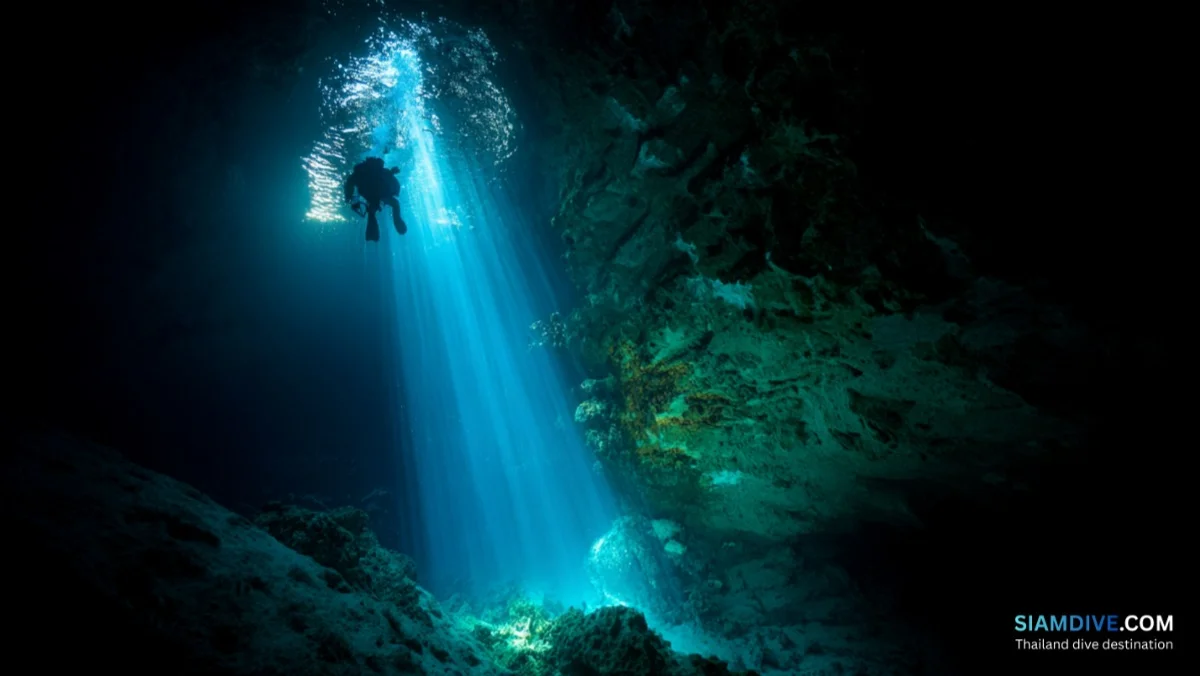
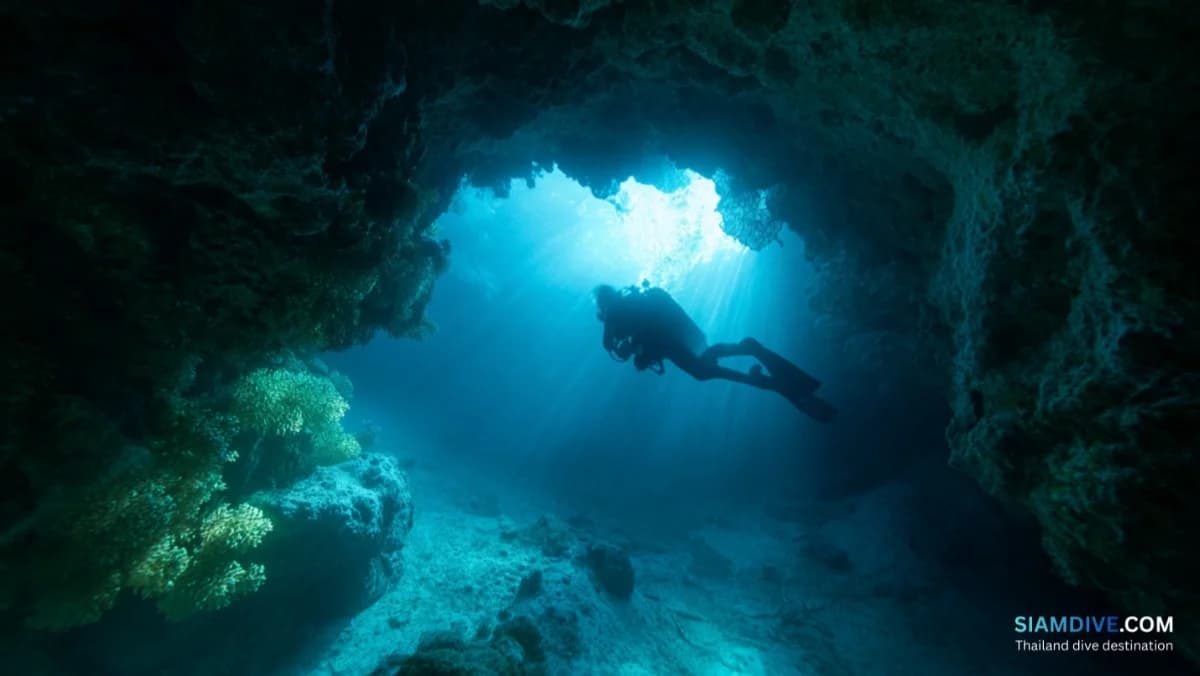
A large underwater cavern on the biggest island in the group. The Cathedral is a wide, open cave with a sandy floor and enough ambient light filtering through the entrance to see without a torch (though bring one anyway for the details). The ceiling arches overhead like a church interior — hence the name. Depths inside range from 8 to 18 meters.
The cave is large enough that it doesn't feel claustrophobic, even for divers who normally avoid overhead environments. Stalactite formations hang from the ceiling, and the walls host encrusting corals and sponges. The entrance frame, with blue open water behind a diver silhouette, is one of the most photographed shots in the region. Schools of glassfish sometimes pack the interior, creating a shimmering wall of silver.
The Chimney
A vertical swim-through that starts at roughly 14 meters and exits at about 5 meters — you enter from the deeper side and ascend through a narrow rock channel that opens up as you rise. Light pours in from the top, creating a dramatic visual effect as you look up through the chimney. It's a short feature but a memorable one, and it connects to good reef diving on either side of the passage.
The Chimney is suitable for divers with decent buoyancy control. It's not technically a cave dive — you can see the exit the entire time — but the narrow passage means you need to avoid bumping the walls. Most operators will assess your comfort level before taking you through.
The Pinnacles
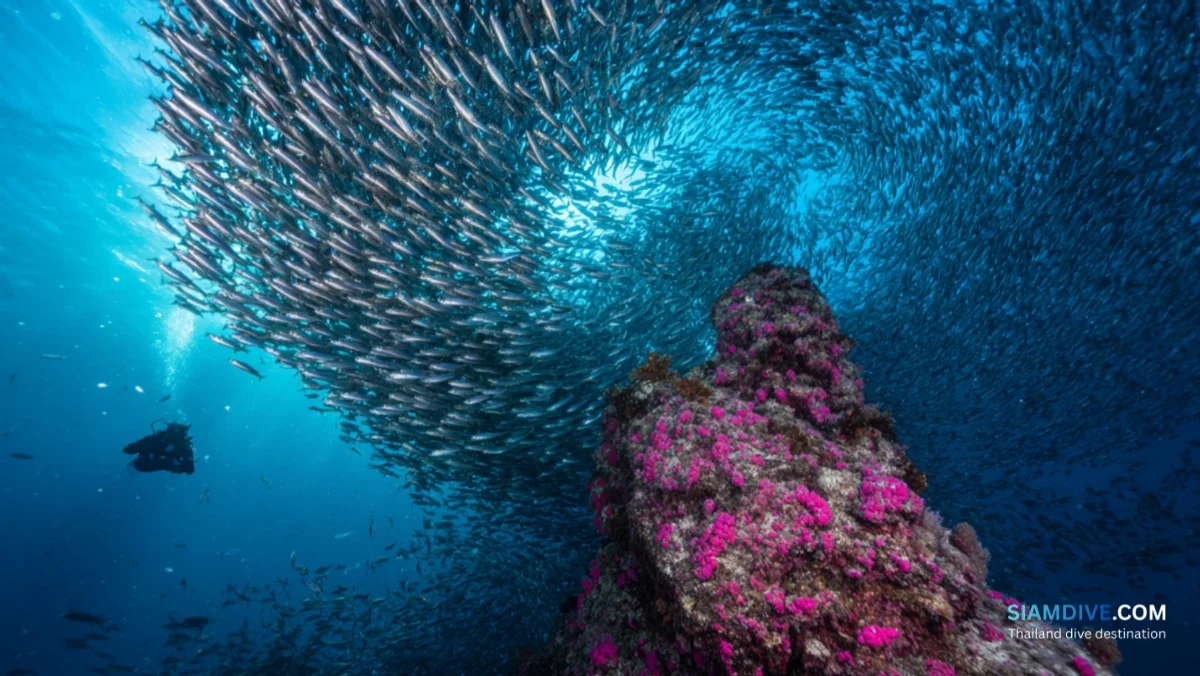
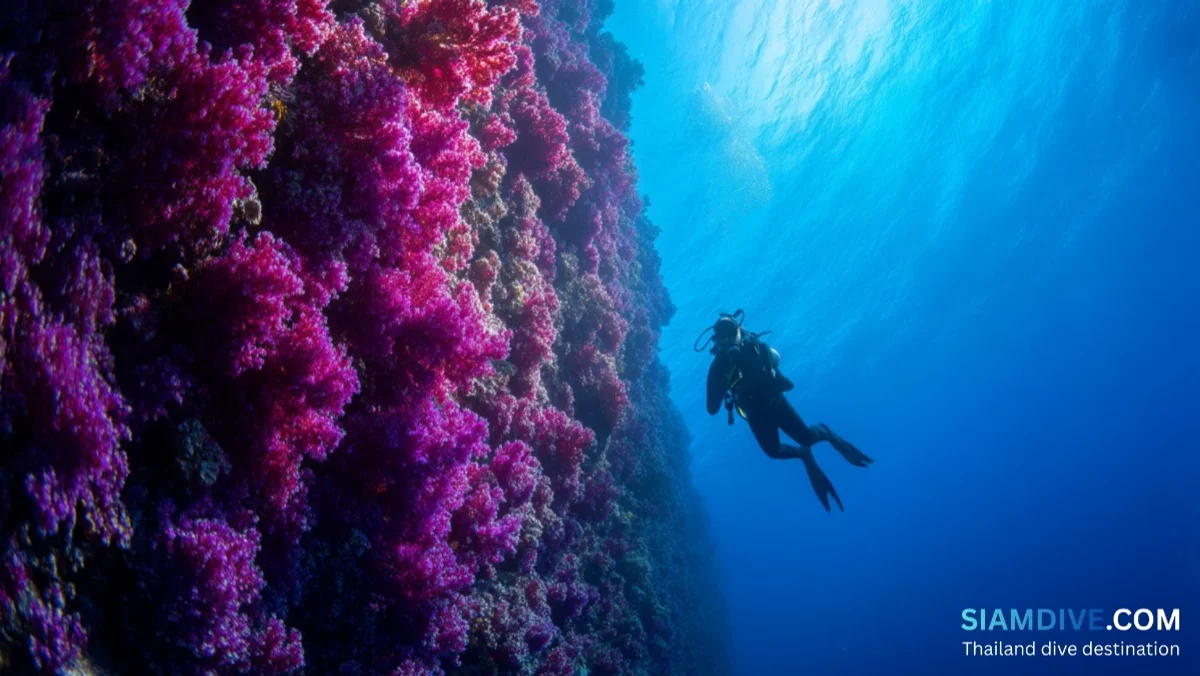
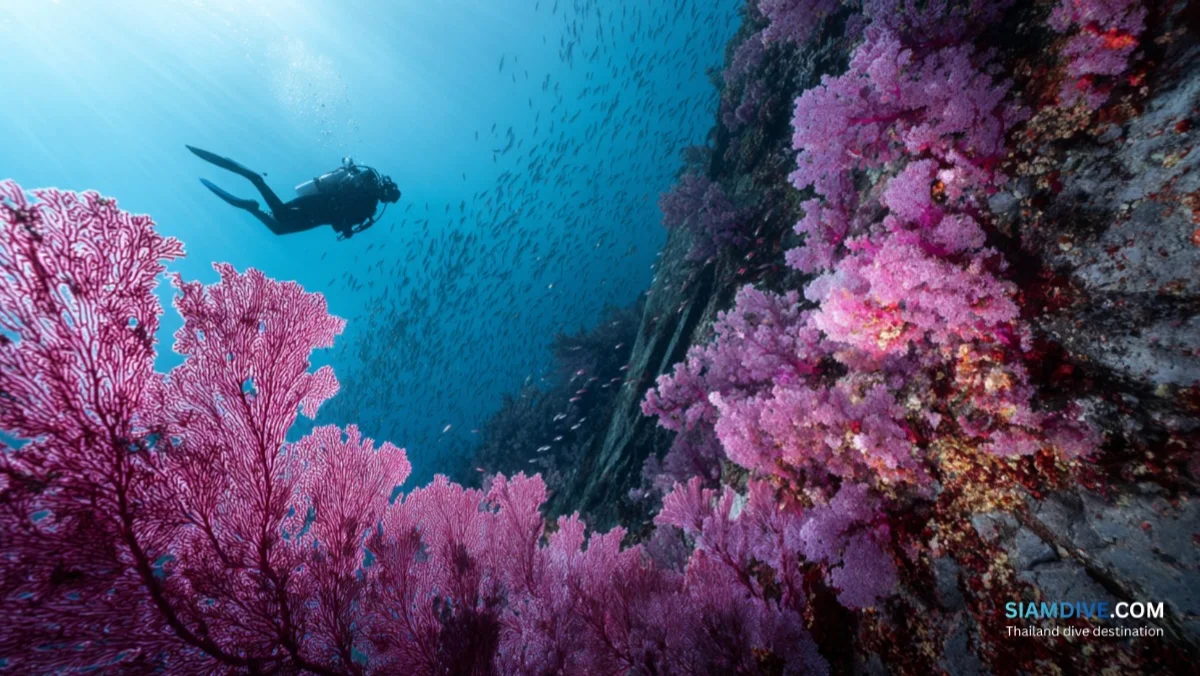
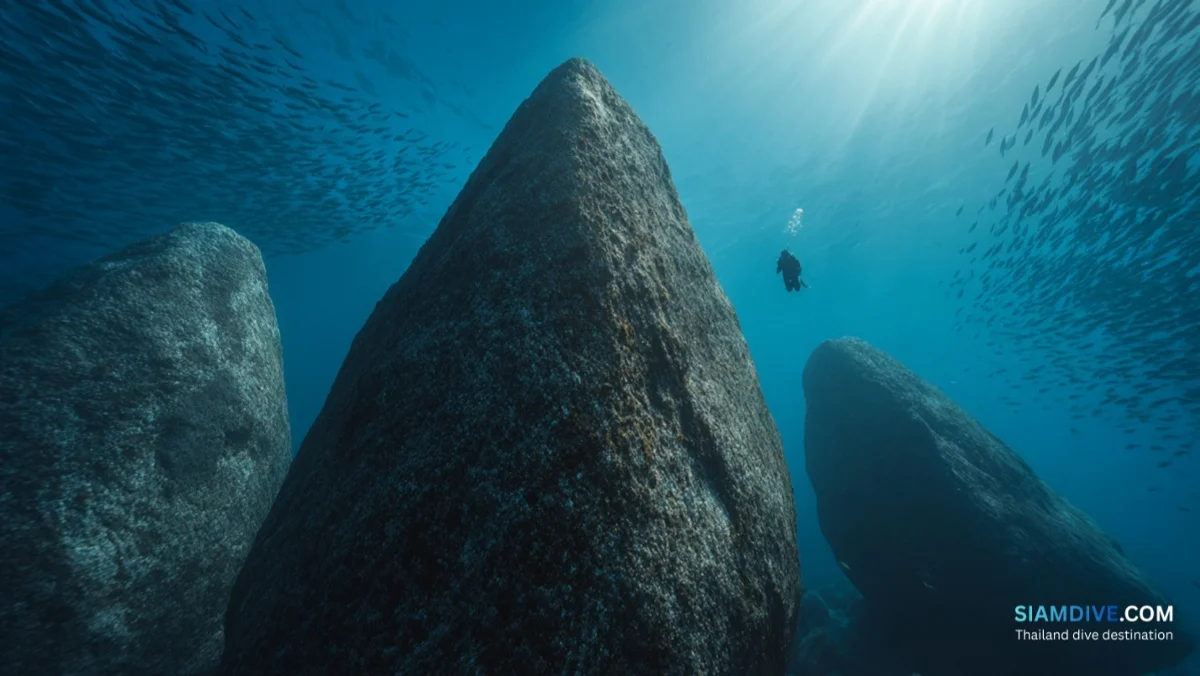
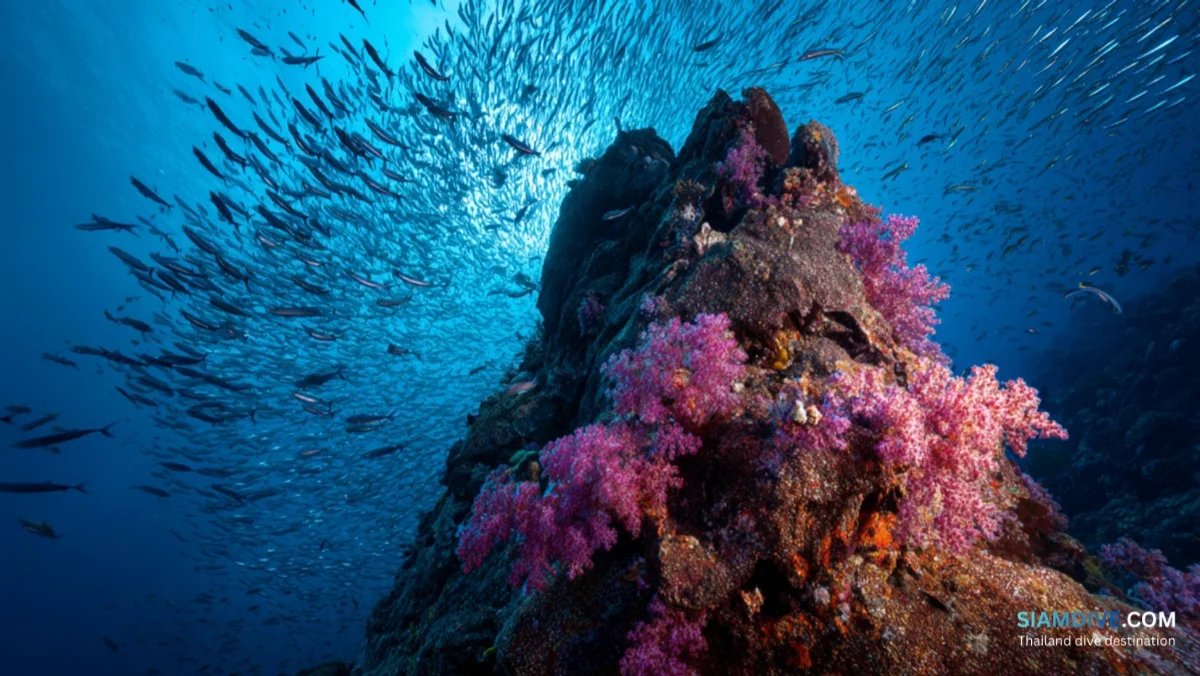
Submerged rock formations on the outer edges of the island group, dropping from 5 meters to beyond 30 meters. The pinnacles are where you'll find the best soft coral coverage at Koh Haa — the current flowing past the rocks brings nutrients that feed dense clusters of purple, red, and yellow dendronephthya corals. Sea fans spread across the deeper faces, and the fish life concentrates around these structures.
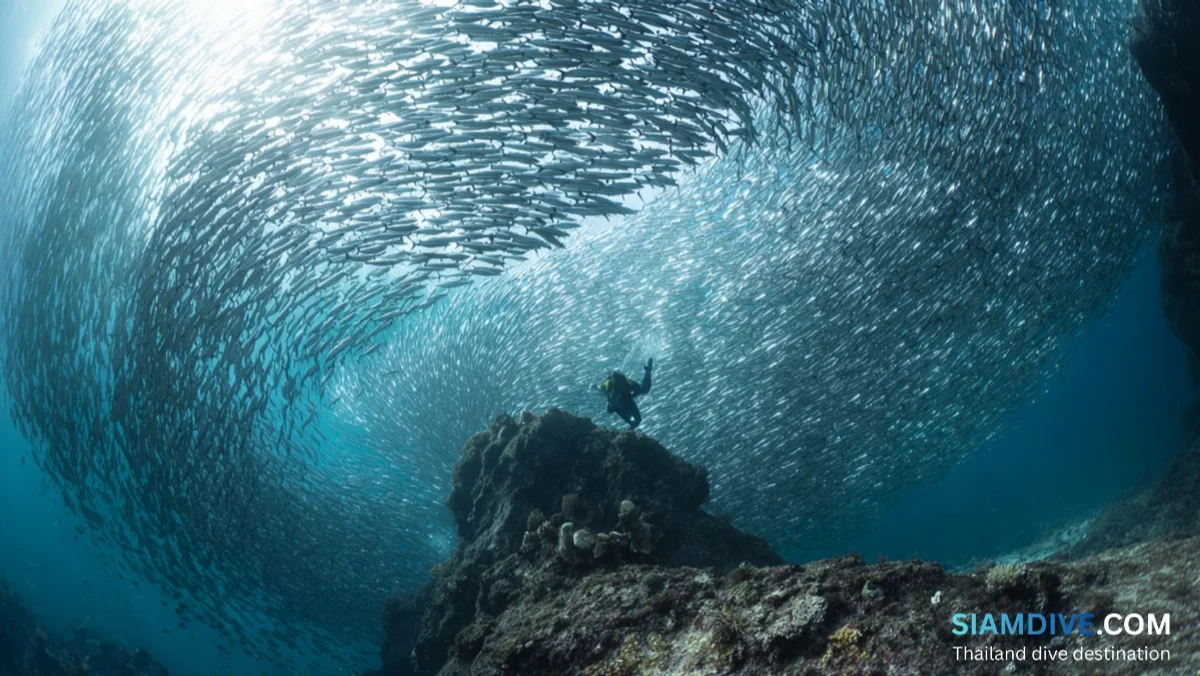
Currents at the pinnacles can be moderate to strong, making this a site better suited to divers with some experience. When the current is running, you'll see more action — barracuda, snapper schools, and the occasional guitar shark patrolling the deeper edges. On slack current days, the pinnacles are still worth visiting for the coral alone.
Marine Life You'll Encounter
Koh Haa delivers a strong mix of reef life and occasional surprises. The lagoon and shallow areas teem with classic tropical species: clownfish (multiple species, each paired with their host anemone), juvenile sweetlips with their distinctive spotted patterns, parrotfish grazing on coral, and butterflyfish picking at the reef. Nudibranchs are common throughout — the diversity of species here keeps macro photographers busy for entire dives.
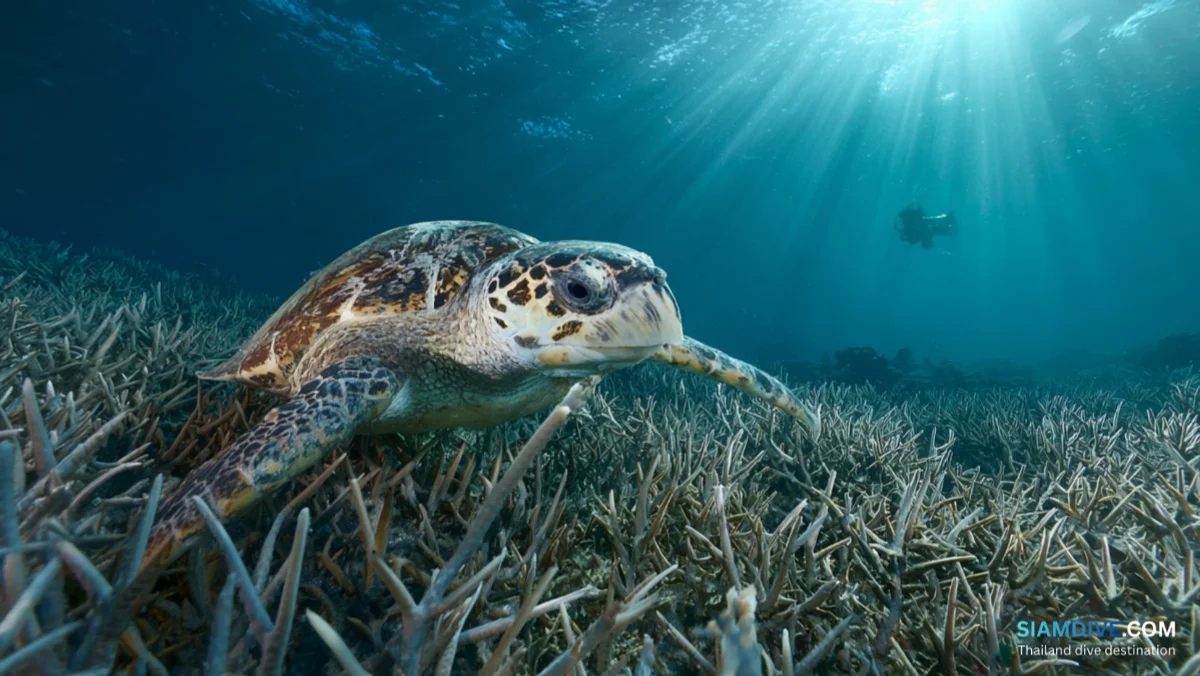
Sea turtles are a highlight. Both hawksbill and green turtles frequent Koh Haa's reefs, and they're notably tolerant of divers. You'll often see them feeding on sponges along the walls or resting on ledges. Unlike at some busier sites, the turtles here don't immediately bolt when you approach — they'll watch you and continue what they're doing.
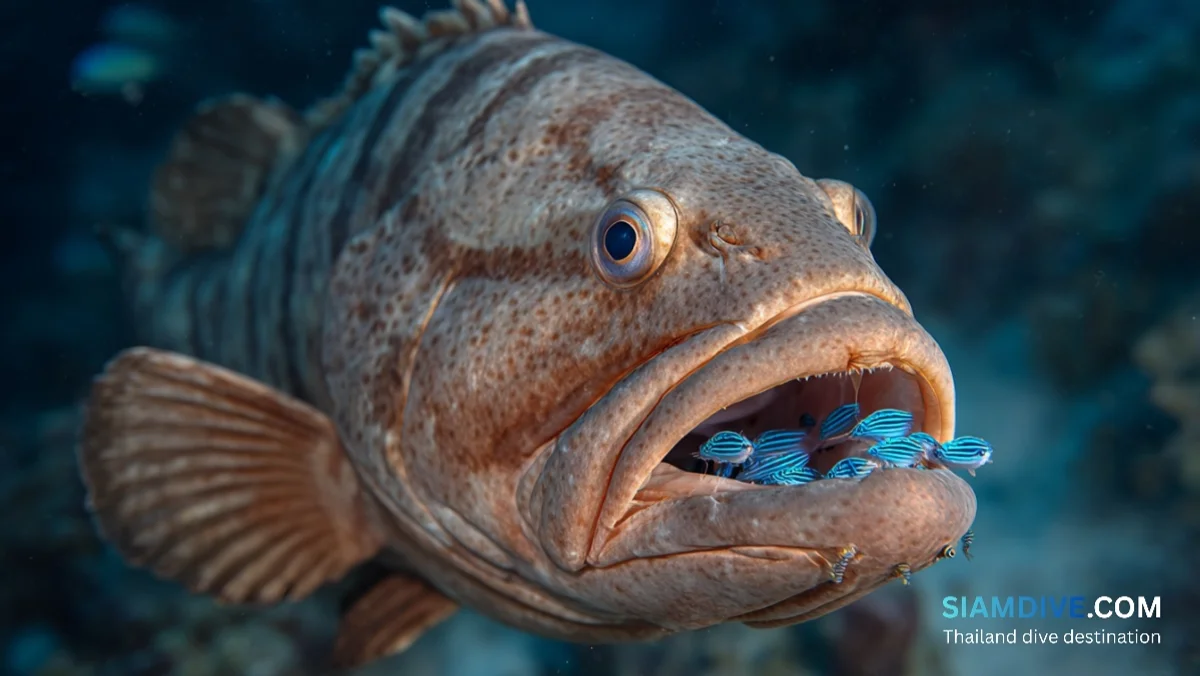
Cleaner shrimp and cleaner wrasse operate busy stations on several of the coral formations. Watching a large grouper hold still while tiny shrimp pick parasites from its gills is one of those small underwater moments that never gets old. Snappers congregate in loose schools along the walls, and cuttlefish are frequently spotted hovering near the bottom, sometimes displaying their remarkable color-changing abilities when they notice you.
The deeper pinnacles bring the bigger finds. Guitar sharks — flattened, ray-like sharks that cruise the sandy areas — have been sighted at Koh Haa, though sightings aren't daily. Barracuda schools and various species of trevally patrol the current-swept edges. At night (on liveaboard trips that anchor nearby), the reefs come alive with hunting lionfish, foraging crabs, and the occasional Spanish dancer nudibranch.
Best Time to Dive
Koh Haa is accessible from mid-October to mid-May, matching the operating season of Mu Koh Lanta National Park. Outside these dates, the park closes, the boats don't run, and the sea conditions make the crossing from Koh Lanta inadvisable anyway.
Best conditions fall between November and April. This is when visibility peaks at 20-30 meters, seas are calmest, and you can expect water temperatures around 28-30°C. December through February tends to be the sweet spot — consistent conditions, warm water, and enough daily trips running that you can choose between different operators and schedules.
The early season (mid-October to November) and late season (April to mid-May) can still offer excellent diving, but conditions are less predictable. You might get a stunning day followed by a washout. If your trip specifically revolves around Koh Haa, mid-December through March gives you the highest probability of ideal conditions.
Water temperature rarely drops below 27°C even in the cooler months. A 3mm wetsuit or shorty is standard; many people dive in just a rash guard.
How to Get There from Koh Lanta
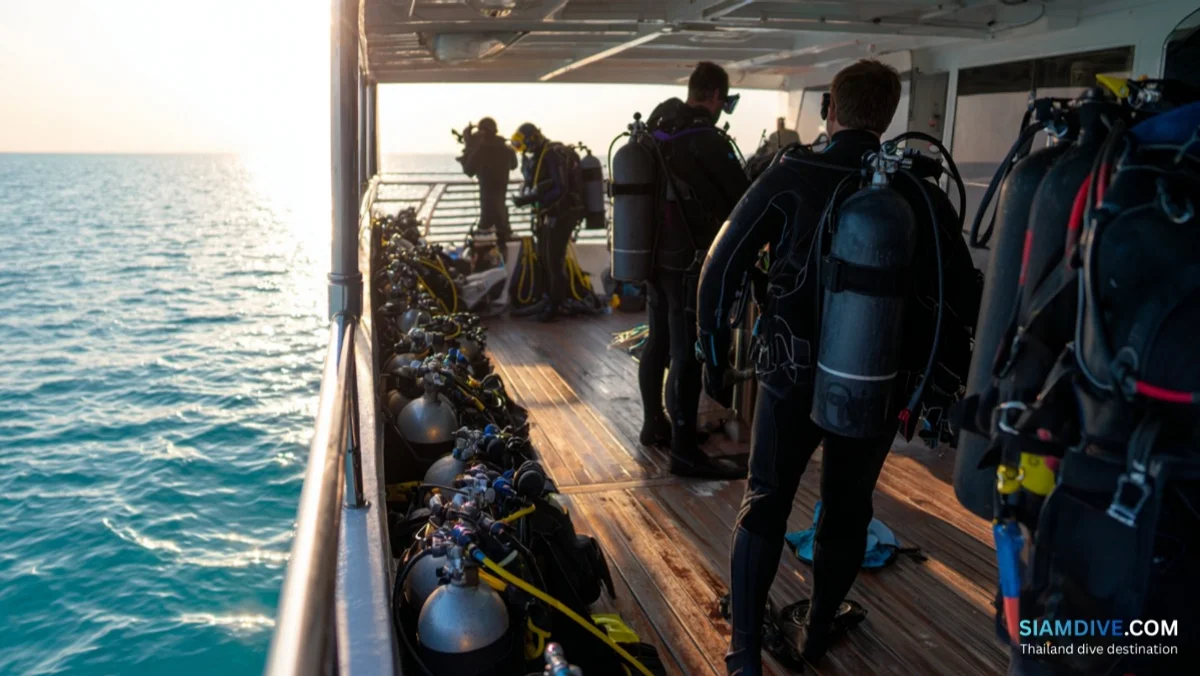
Koh Haa is exclusively reached by boat from Koh Lanta. There's no independent way to visit — you book a tour that handles everything from hotel pickup to lunch on the boat.
The Standard Day Trip
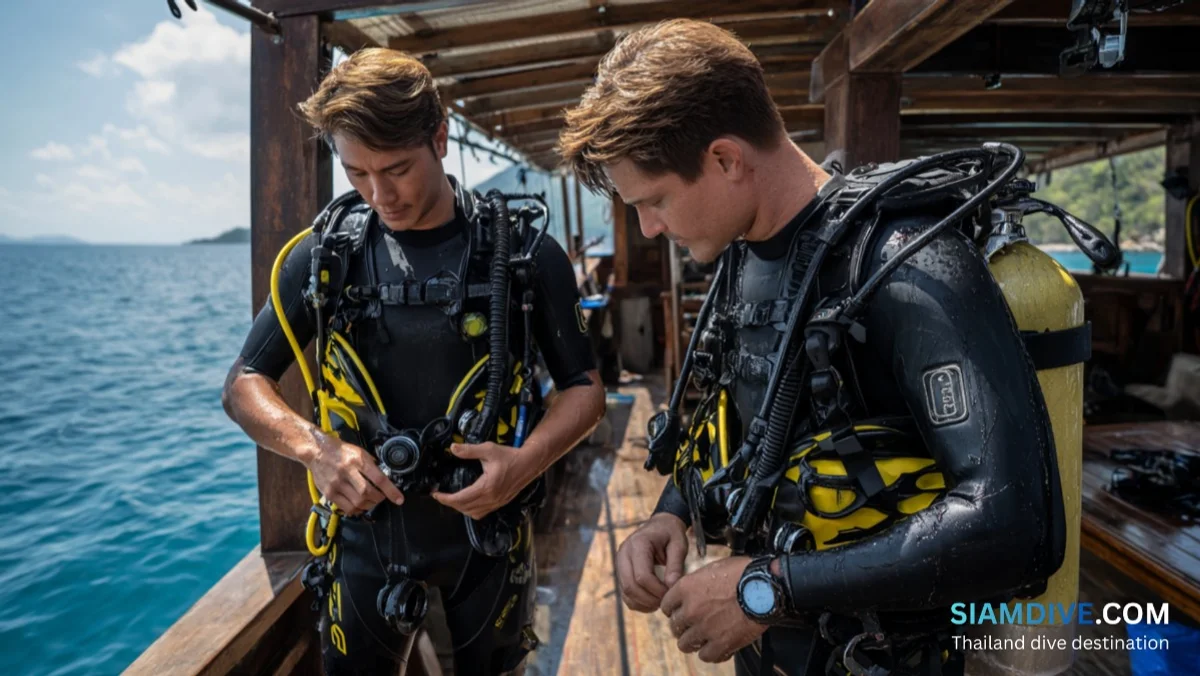
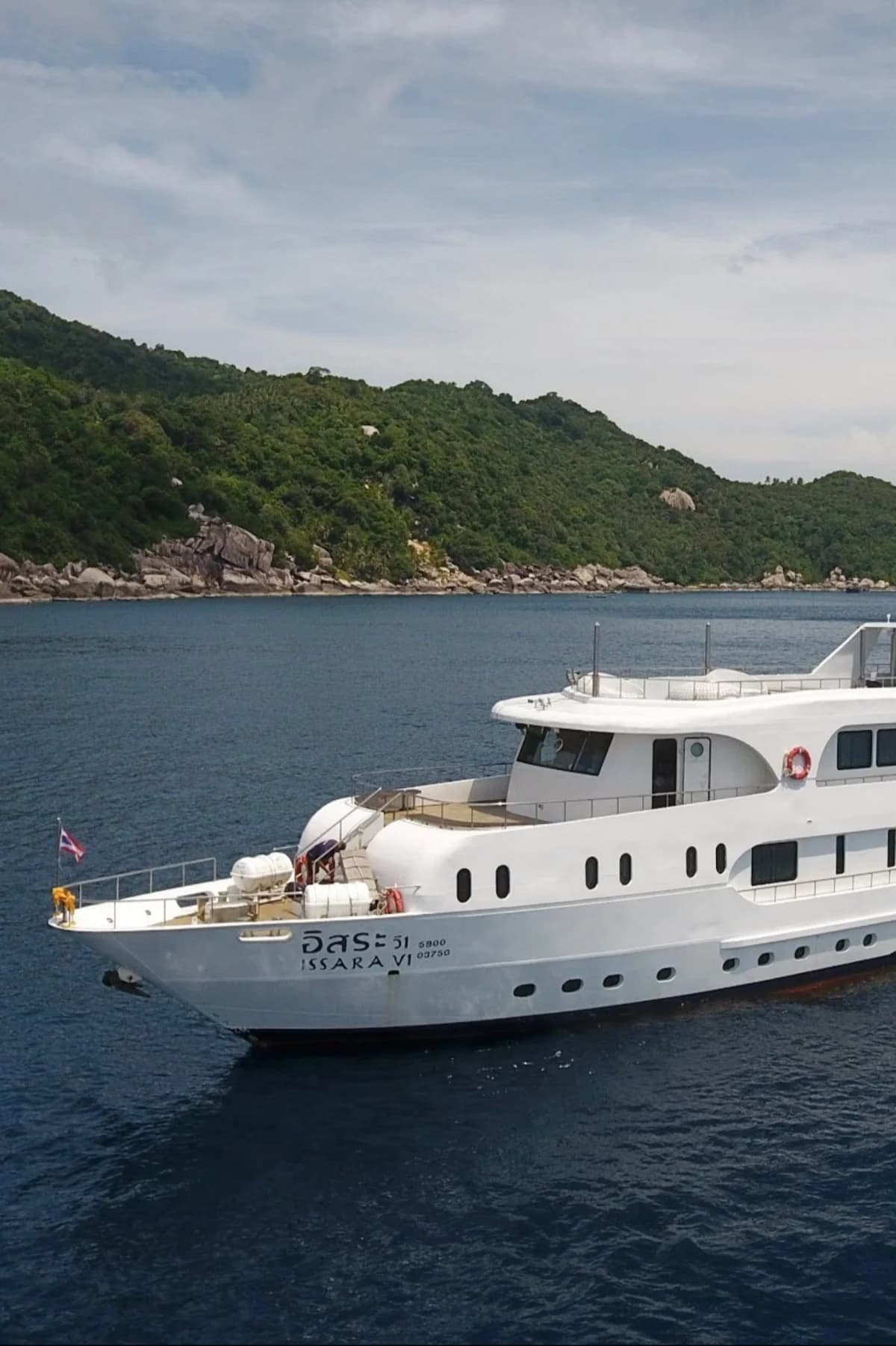
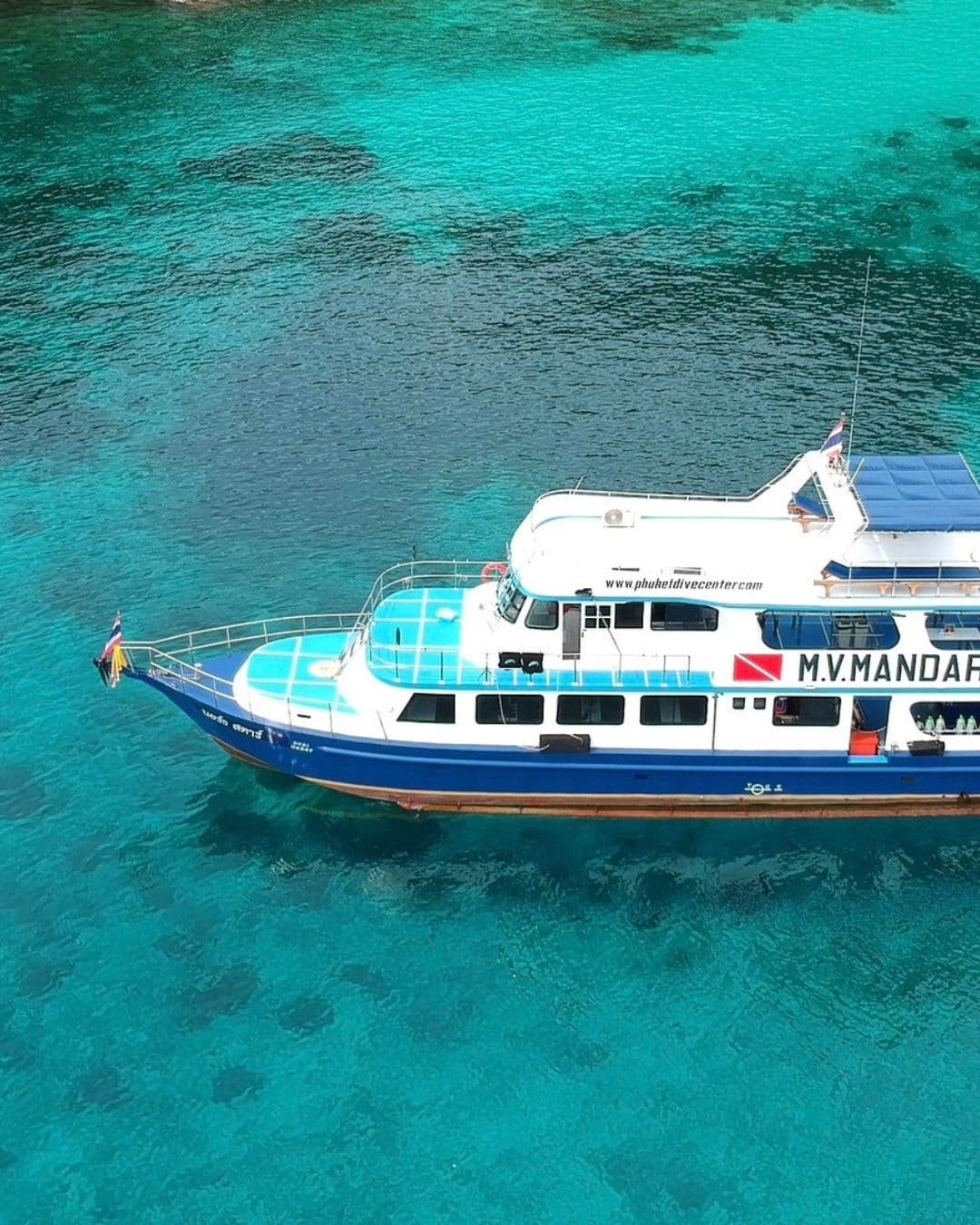
Most tour operators pick you up from your Koh Lanta hotel between 7:30 and 8:50 AM, depending on location. You're transferred to Saladan Pier (the main pier at Koh Lanta's northern tip), where you board a speedboat. The ride to Koh Haa takes approximately 45 minutes, weather dependent. Tours typically depart around 9:30-10:00 AM and return by mid-afternoon.
A standard day trip includes two to three dives (or snorkeling for non-divers), all equipment, a guide, and lunch. Some operators add a stop at a nearby island on the return. Expect to be back at your hotel by 4:00-5:00 PM.
Costs
Day trip packages run $50-100 USD per person, depending on the operator, whether you're diving or snorkeling, and what's included. The lower end typically covers snorkeling with basic equipment; diving packages with full gear rental sit at the higher end. Private charters for groups start around $1,000 and offer flexibility on timing and site selection.
The national park entrance fee is 400 THB for adults and 200 THB for children. This is usually collected separately from the tour price — bring cash for this.
Booking
You can book through operators on Koh Lanta directly (walk-in the day before is fine for most of the season), through platforms like GetYourGuide or Viator, or through your hotel. Direct booking with operators like Tin Adventure Sea Tour or local dive shops typically gives the best price. During peak season (late December through February), booking a day or two ahead is smart — boats do fill up.
Tips for Diving at Koh Haa
Logistics
No independent travel to Koh Haa is possible. Don't try to hire a private longtail — the crossing is open ocean and longtails aren't suitable. Stick with established tour operators who know the route, the mooring points, and the current conditions. The park rangers check boats and permits, so unlicensed operators get turned away.
What to Expect
The trip involves open water crossing, which can be bouncy on some days. If you're prone to seasickness, take medication before boarding. Once you're in the lagoon area, conditions are sheltered and calm — it's the transit that can be rough.
Currents at Koh Haa vary by site and tide. The lagoon is almost always calm. The outer pinnacles and walls can have moderate to strong currents, especially during tidal changes. Your divemaster will brief you on conditions before each dive. If the current is running, drift diving techniques apply — let the water carry you along the reef and the boat will pick you up at the end.
Equipment and Preparation
Tour operators provide all necessary diving and snorkeling equipment. That said, if you own a mask that fits well, bring it — a leaking rental mask can ruin an otherwise perfect dive. Underwater cameras are worth bringing; the combination of clear water, abundant marine life, and dramatic topography makes Koh Haa one of the most photogenic sites in southern Thailand.
Reef-safe sunscreen, a hat for the boat ride, and plenty of drinking water are essentials. The sun on the open crossing is brutal — cover up or you'll burn before the first dive.
Conservation
Koh Haa sits within a national park, and the rules matter. Don't touch or stand on coral. Don't chase marine life. Don't take anything from the reef. Don't feed the fish. These aren't suggestions — park rangers can and do fine violators. The health of Koh Haa's reefs is directly tied to responsible diving practices, and the operators here take that seriously.
Final Thoughts
Koh Haa manages something unusual: it's both accessible for beginners and genuinely rewarding for experienced divers. The lagoon alone would make it worth visiting — there aren't many places in Thailand where new divers can explore a sheltered coral garden in 3-5 meters of crystal water with this level of marine life density. Add the Cathedral, the Chimney, and the deep-water pinnacles, and you have a day trip that covers an impressive range of underwater experiences.
The 45-minute boat ride from Koh Lanta is manageable, the cost is reasonable, and the operators are professional. If you're spending time on Koh Lanta during the diving season, skipping Koh Haa would be a mistake.
For current trip schedules, operator comparisons, and live condition reports from Koh Haa and other Koh Lanta dive sites, check siamdive.com. We aggregate real diver feedback and seasonal data to help you plan the right trip at the right time.