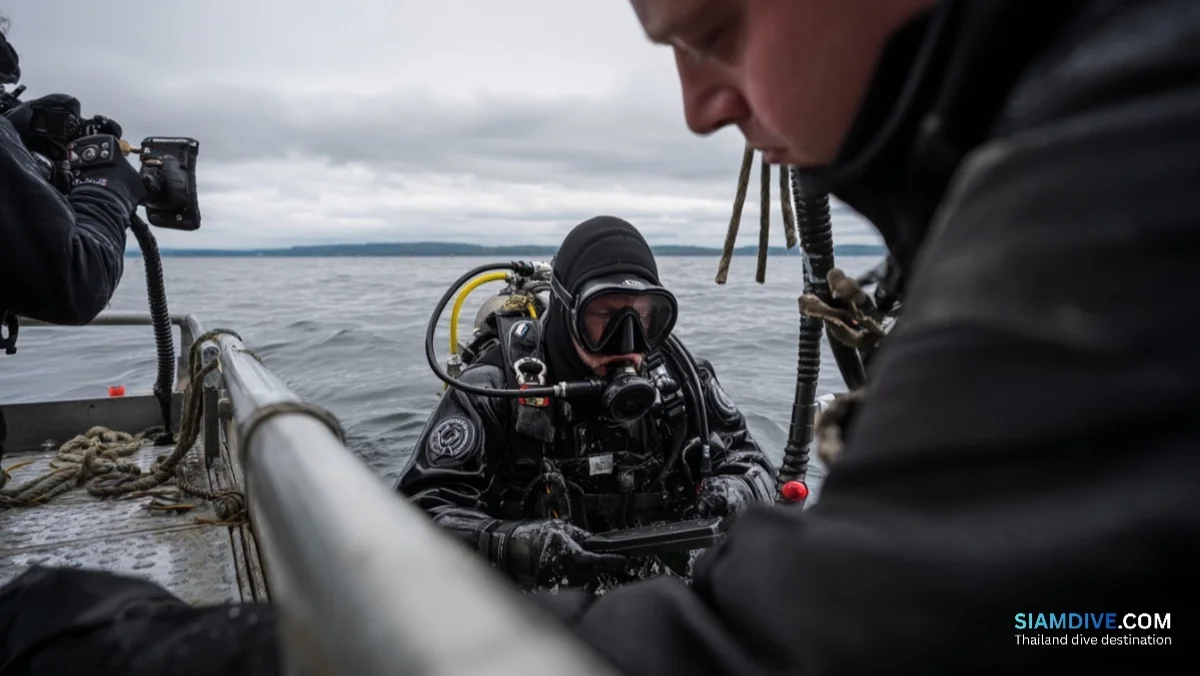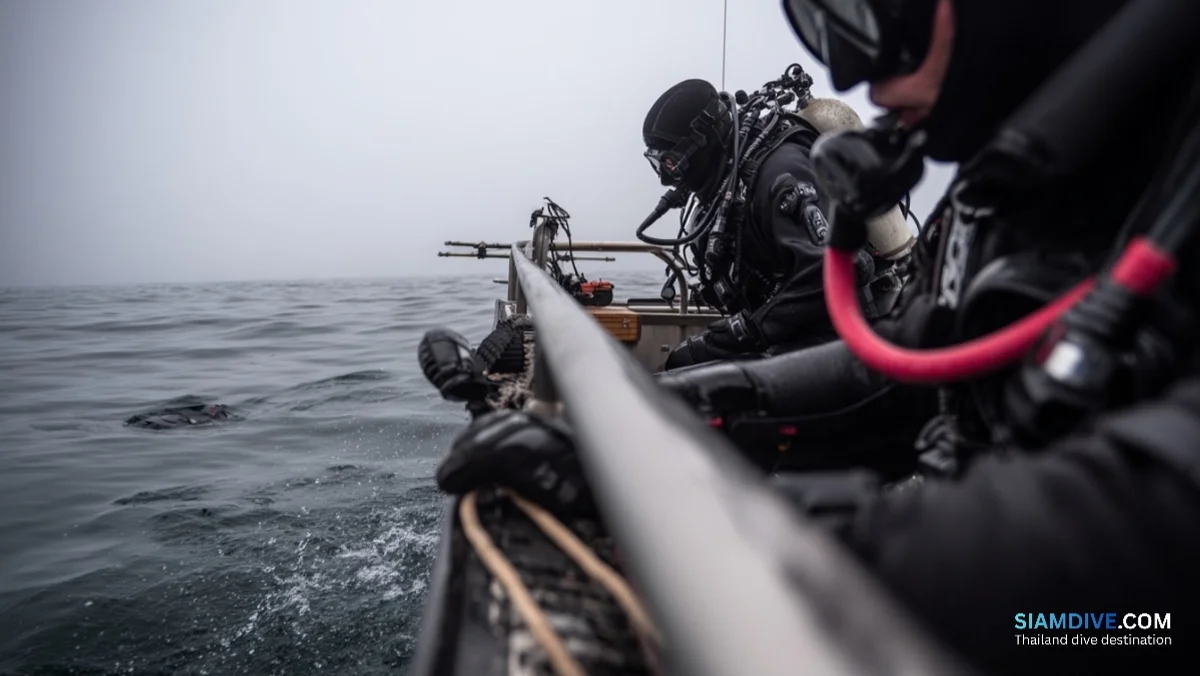
How to Not Throw Up on the Dive Boat: A Practical Seasickness Guide
17 เมษายน 2569
Seasickness ruins more dive trips than equipment failures. Learn exactly how to prevent and manage nausea on dive boats — from the right medications and natural remedies to where to sit, what to eat, and what to do if you're already green.
Why Divers Get Seasick (And Why It Hits Between Dives)
Seasickness — technically motion sickness triggered by the sea — happens when your inner ear detects movement that your eyes can't confirm. On a dive boat, the worst moment isn't usually the transit out to the dive site. It's the surface interval between dives, when you're bobbing on the surface while fiddling with camera settings, reviewing dive computers, or setting up gear below deck.
Several factors make dive boats particularly brutal for seasickness:
- Conflicting sensory signals: Looking down at a camera screen or phone while the boat rocks sends contradictory information to your brain — your eyes say "still" but your inner ear says "moving."
- Below-deck gear setup: Going below to change lenses, swap tanks, or organize equipment removes the horizon from view, which is your brain's primary motion reference point.
- Diesel fumes: Engine exhaust on the back deck is a powerful nausea trigger, especially on older dive boats and Thai longtails where the engine sits exposed.
- Dehydration: Divers are chronically dehydrated from breathing dry compressed air. Dehydration significantly lowers your threshold for seasickness.
- Heat: Sitting in full wetsuit gear under tropical sun while the boat rolls compounds everything.
Medication: Your First Line of Defense
If you're prone to seasickness, medication is the most reliable prevention. But not all anti-nausea drugs are safe for diving — some can be genuinely dangerous at depth.
Meclizine (Bonine / Dramamine Less Drowsy / Dramamine All Day): This is the go-to choice for most scuba divers. Meclizine provides up to 24 hours of protection with significantly less drowsiness than original Dramamine. Take one 25mg tablet the night before your dive day and another one hour before boarding. Only 46% of meclizine users report side effects, compared to 83% with original Dramamine.
Dimenhydrinate (original Dramamine): Effective against nausea but causes significant drowsiness and cognitive impairment. Research has shown that dimenhydrinate dramatically lowers divers' cognitive functioning to the point where it's considered unsafe for scuba. The sedative effects are potentiated by depth — meaning they get worse the deeper you go.
Scopolamine patch (prescription): A small patch placed behind the ear that delivers continuous medication for up to 72 hours. The US Navy uses scopolamine as its first-line seasickness drug for divers, and DAN (Divers Alert Network) approves it with a trial run on land first. Excellent for liveaboards where you need multi-day coverage.
Critical safety rule: Always test any medication on land before diving with it. Take it on a non-dive day at home and see how it affects you. Any drug that makes you drowsy, dizzy, or mentally foggy is not safe to take before diving.
The Dangerous Combo: Drowsy Antihistamines + Nitrogen at Depth
This deserves its own section because it can kill you. Any medication that affects the central nervous system — including first-generation antihistamines like diphenhydramine (Benadryl) and original dimenhydrinate (Dramamine) — has the potential to interact with increased partial pressures of nitrogen underwater.
The mechanism works both ways: the drug increases your susceptibility to nitrogen narcosis, and nitrogen enhances the sedative quality of the drug. At 30 meters, a diver on drowsy antihistamines may experience narcosis equivalent to a much deeper dive. Impaired judgment, slowed reaction time, and even panic can result.
Bottom line: If the label says "may cause drowsiness," do not dive on it. Stick to meclizine or scopolamine after testing them on land first.
Natural Remedies: Ginger, Acupressure, and Sea-Bands
Not everyone wants to take medication, and some divers prefer a layered approach combining natural remedies with drugs for extra protection.
Ginger: A Cochrane Review confirmed that ginger at 1 gram daily significantly reduces nausea. It works by blocking serotonin receptors in the gut. You have several options:
- Ginger capsules: 500mg capsules taken twice daily starting the day before your dive trip. Available at any pharmacy.
- Candied ginger: Chew pieces throughout the boat ride. Many dive operators in Thailand keep a jar on board.
- Ginger ale: Sip flat ginger ale (carbonation can worsen nausea). Make sure it contains real ginger extract, not just flavoring.
- Fresh ginger tea: Steep sliced ginger root in hot water. Perfect for early morning liveaboard departures.
Acupressure wristbands (Sea-Band): These elastic bands apply continuous pressure to the P6 (Nei-Kuan) acupressure point on the inner wrist. A 2025 study showed Sea-Bands provided nausea relief in as little as five minutes, with an 80% consistent reduction rate. They cost around $10, have zero side effects, don't interact with nitrogen, and can be worn while diving. Put them on before you board the boat.
The layered approach: Many experienced divers combine all three — meclizine the night before, Sea-Bands on before boarding, and ginger candies in the pocket for surface intervals. This multi-pronged strategy is the most effective non-prescription approach.
Where to Sit on the Dive Boat (This Makes a Huge Difference)
Your position on the boat matters more than most people realize. The physics are simple: different parts of the boat experience different amounts of motion.
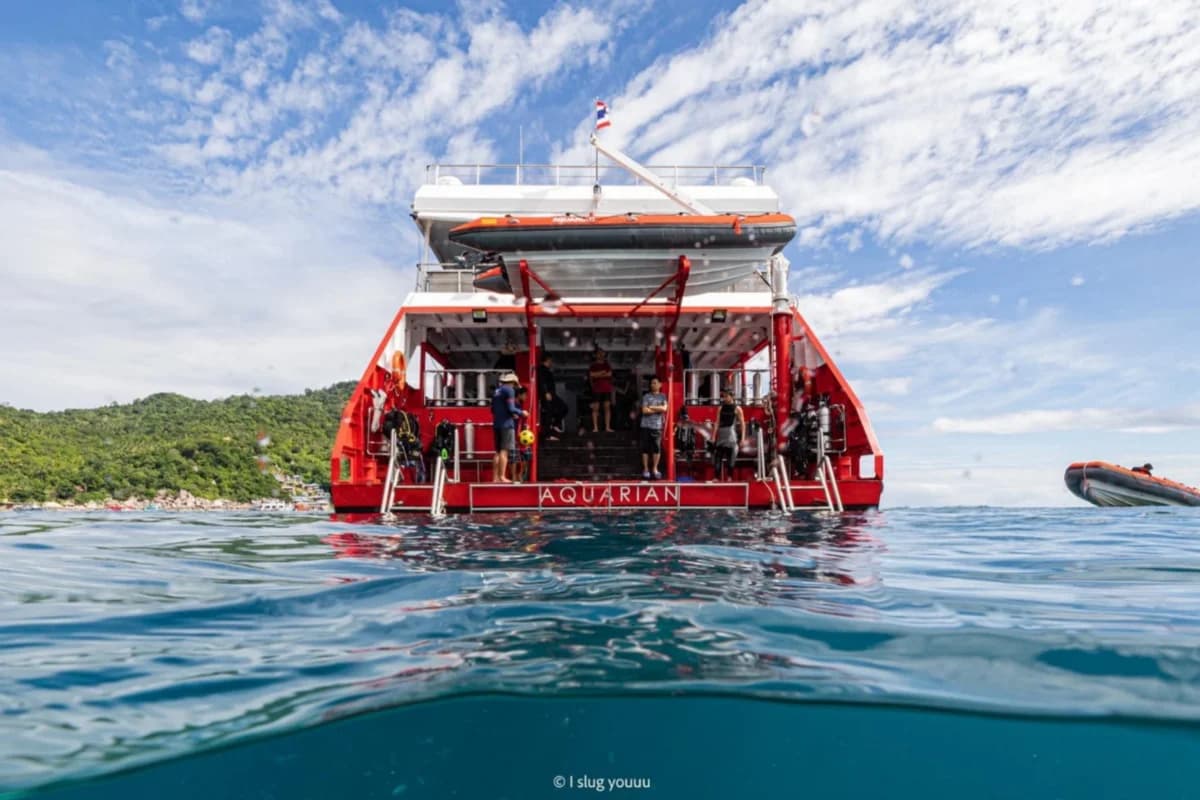
- Best: Stern (back) and center of the boat. The center of the boat near the waterline experiences the least motion. The stern is typically where dive boats have the most open deck space and fresh air.
- Good: Anywhere on the upper deck. Fresh air and an unobstructed view of the horizon are your allies.
- Worst: Below deck and the bow (front). The bow rises and falls the most in waves. Below deck removes your horizon reference and traps diesel fumes.
Essential positioning rules:
- Face forward: Always face the direction of travel. Your brain reconciles motion signals better when visual and vestibular inputs align.
- Watch the horizon: This is the single most effective non-medical intervention. The stable horizon gives your brain a fixed reference point that matches what your inner ear is sensing.
- Stay on deck: Resist the temptation to go below for shade or to set up gear. Do everything topside if you're seasickness-prone.
- Avoid screens: Do not look at your phone, camera, or dive computer during surface intervals on a rocking boat. This is the number-one trigger for divers who "never get seasick" to suddenly get seasick.
Thai Dive Boats: Longtail vs. Speedboat vs. Liveaboard
If you're diving in Thailand, the type of boat matters significantly for seasickness risk.
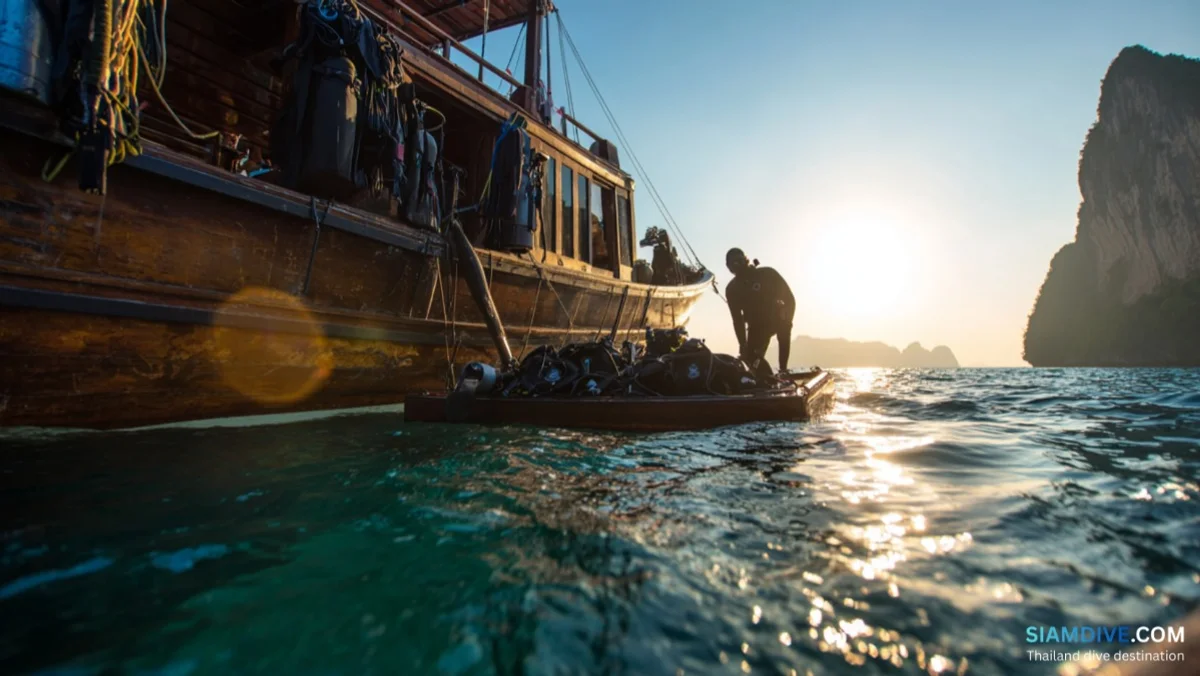
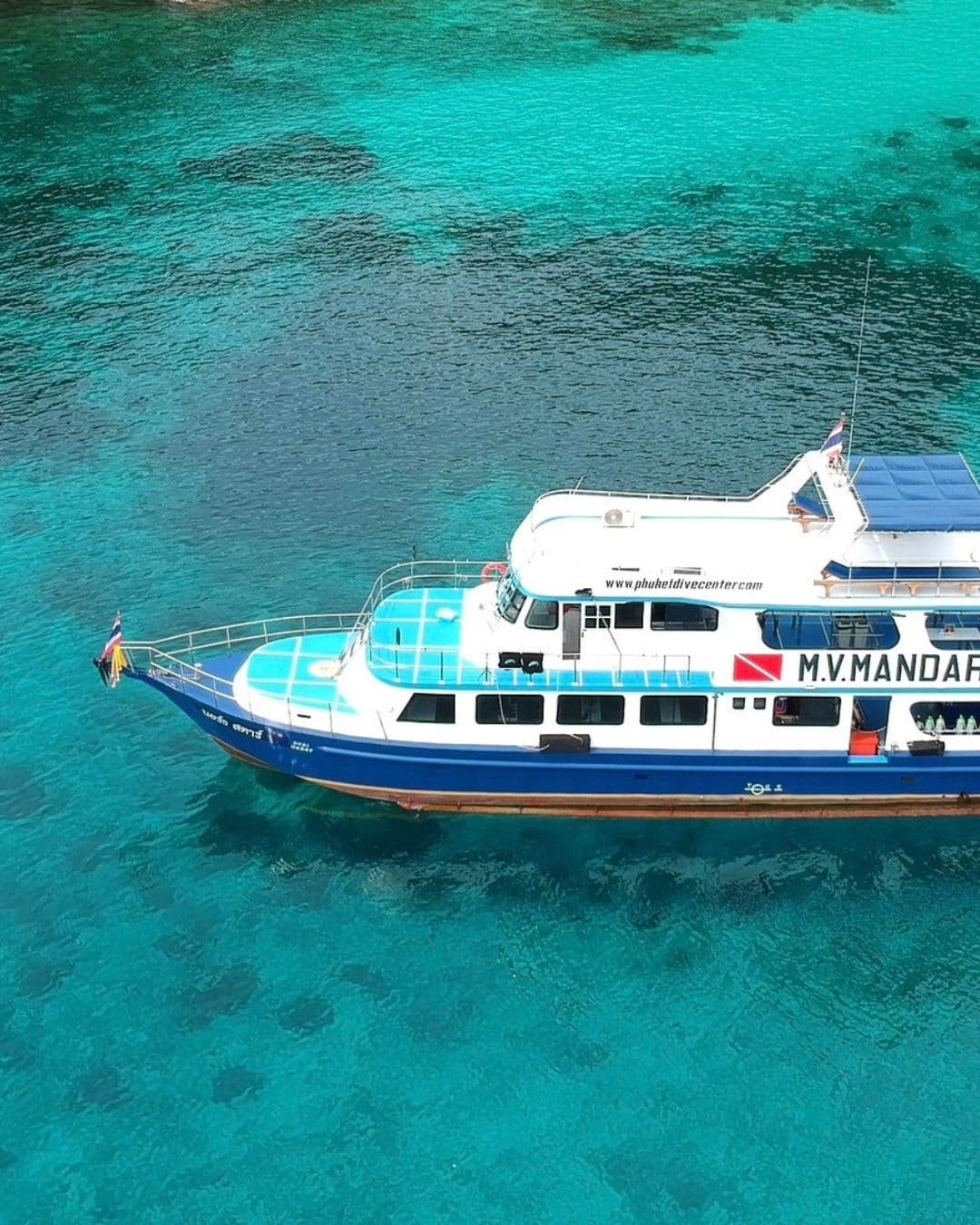
Longtail boats: These iconic Thai boats sit low in the water with minimal hull depth. They roll heavily in even moderate swells and offer no enclosed cabin. The exposed diesel engine creates fumes, but the completely open design provides constant fresh air. Trips are usually short (under 30 minutes). Seasickness risk: moderate to high in swells, but short exposure time.
Speedboats: Fiberglass speedboats used for day trips (common for Similan Islands, Phi Phi) ride higher and move fast, creating a pounding, slapping motion in waves. The enclosed cabin below traps fumes and removes the horizon. Many people who handle longtails fine get sick on speedboats. Seasickness risk: high, especially inside the cabin.
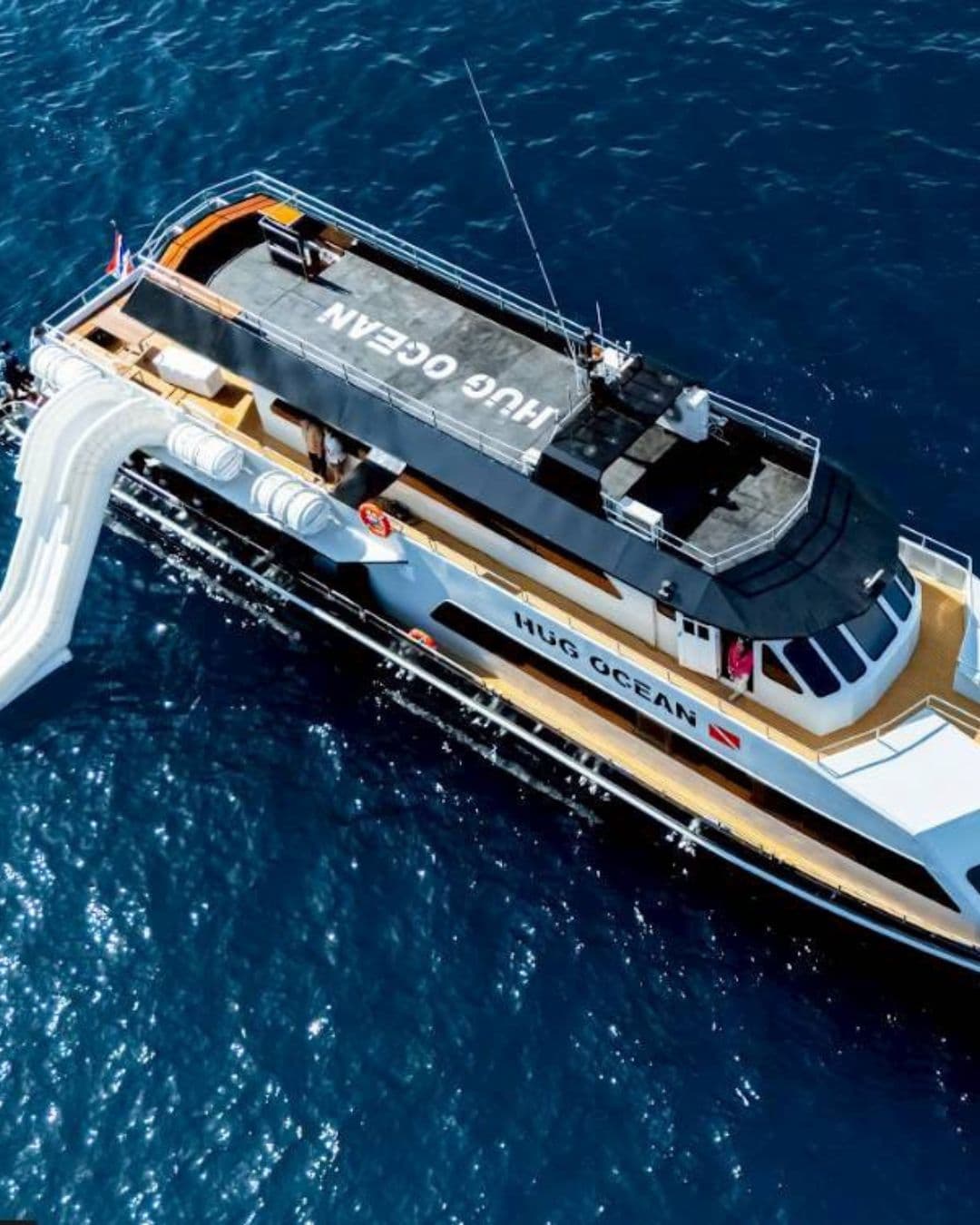
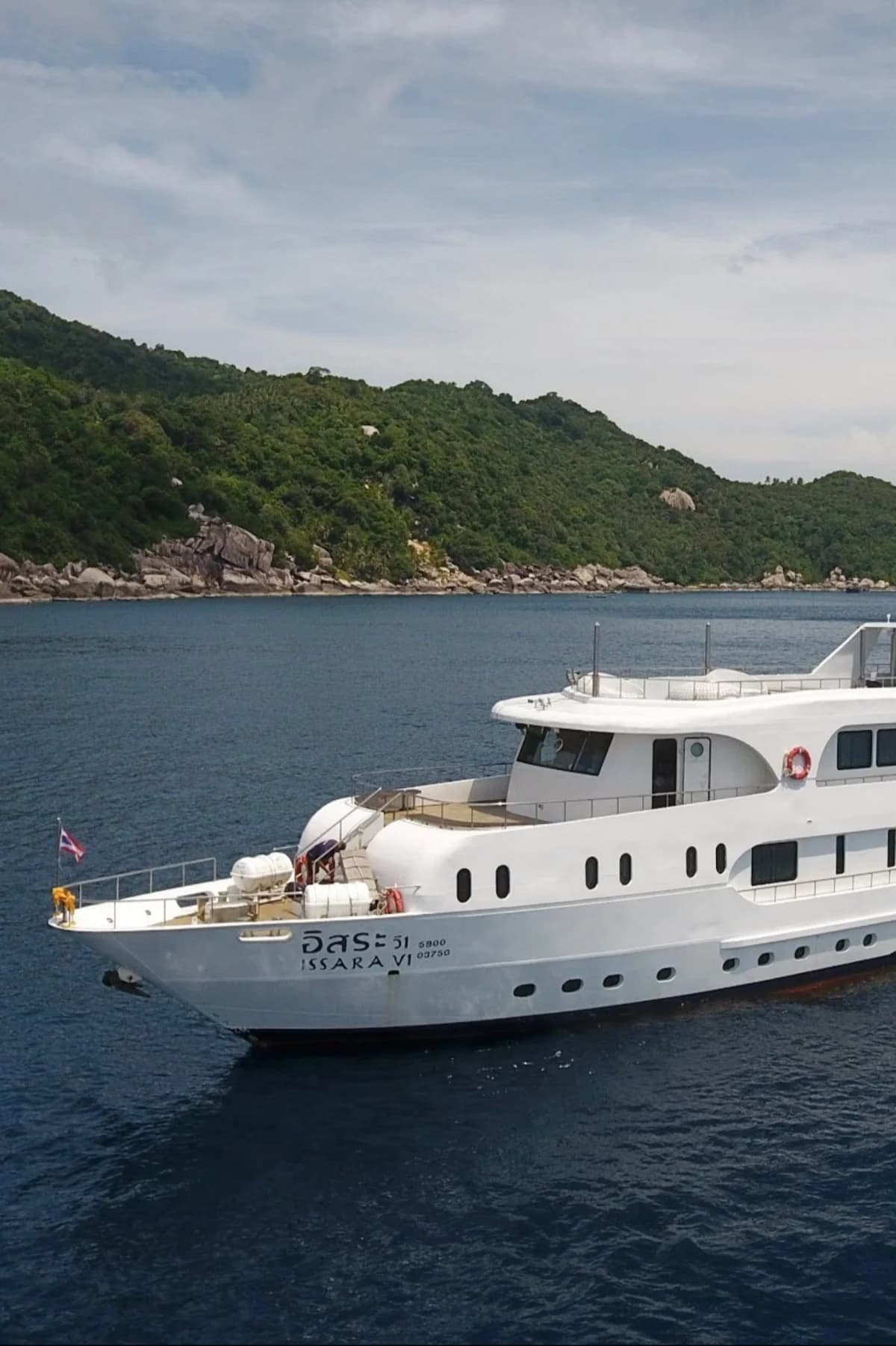
Liveaboards: Large steel or wooden vessels are the most stable platform. However, overnight anchoring in exposed waters means constant gentle rolling that can affect you during sleep and meals. The good news: most people adapt within 24-48 hours as the brain recalibrates.
For Similan Islands day trips leaving from Khao Lak, the Andaman Sea crossing can be rough during early and late season (November and April). If you're seasickness-prone, consider a liveaboard where your body has time to adapt instead of fighting a long speedboat crossing each day.
Why Some People Adapt After 1-2 Days on a Liveaboard
There's a well-documented phenomenon where seasickness-prone divers feel terrible on day one of a liveaboard trip but are completely fine by day two or three. This is called habituation — your brain literally recalibrates its motion processing.
The vestibular system (inner ear) and the visual system learn to reconcile the constant motion signals, and the nausea response diminishes. This is the same mechanism that allows sailors to find their "sea legs." The key is continuous exposure — which is why liveaboards work better for adaptation than repeated day trips with overnight breaks on land that reset the process.
Tips to speed up adaptation:
- Spend as much time on deck as possible during the first 24 hours
- Use medication on day one, then try reducing or stopping it on day two
- Eat small, frequent meals rather than large ones
- Stay hydrated — drink more water than you think you need
- Sleep in a midship cabin if you have a choice (less motion)
Already Feeling Sick? Here's Your Emergency Plan
Sometimes prevention fails and the nausea hits. Here's what to do:
- Get fresh air immediately: Move to the upper deck or stern. Face into the wind if possible.
- Lock your eyes on the horizon: Don't look at anything on the boat. Stare at the most distant, stable point you can find.
- Eat light crackers or dry bread: An empty stomach makes nausea worse. Plain saltine crackers or dry toast absorb stomach acid and can ease symptoms. Avoid anything greasy, spicy, or acidic.
- Sip cold water: Small sips, not gulps. Room-temperature ginger ale is even better.
- Don't fight the vomiting: If you need to throw up, do it. You'll usually feel significantly better afterward. Lean over the leeward (downwind) rail so you don't create a mess for fellow divers.
- Skip the dive if you're actively vomiting: Vomiting through a regulator underwater is technically possible but miserable and potentially dangerous. You risk aspiration, mask flooding, and panicked ascent. There will always be another dive — it's not worth the risk.
- Lie down: If nothing else works, lie flat on your back in the center of the boat with your eyes closed. This minimizes sensory conflict.
Seasickness is not weakness and it's not "in your head" — it's a genuine neurological mismatch that affects even experienced mariners. With the right combination of medication, positioning, and natural remedies, the vast majority of divers can manage it effectively. Plan ahead, test your chosen remedies before the trip, and don't let nausea keep you from the underwater world.
Visit siamdive.com for more practical diving tips and to plan your next dive trip in Thailand.