Japanese Gardens Koh Tao Diving Guide: The Island's Easiest Great Reef
11 เมษายน 2569
Japanese Gardens is Koh Tao's most-used training site, but it's more than that. Shallow coral, hidden swim-throughs, and the island's most reliable dive.
The Shallowest Reef That Turns Students Into Divers
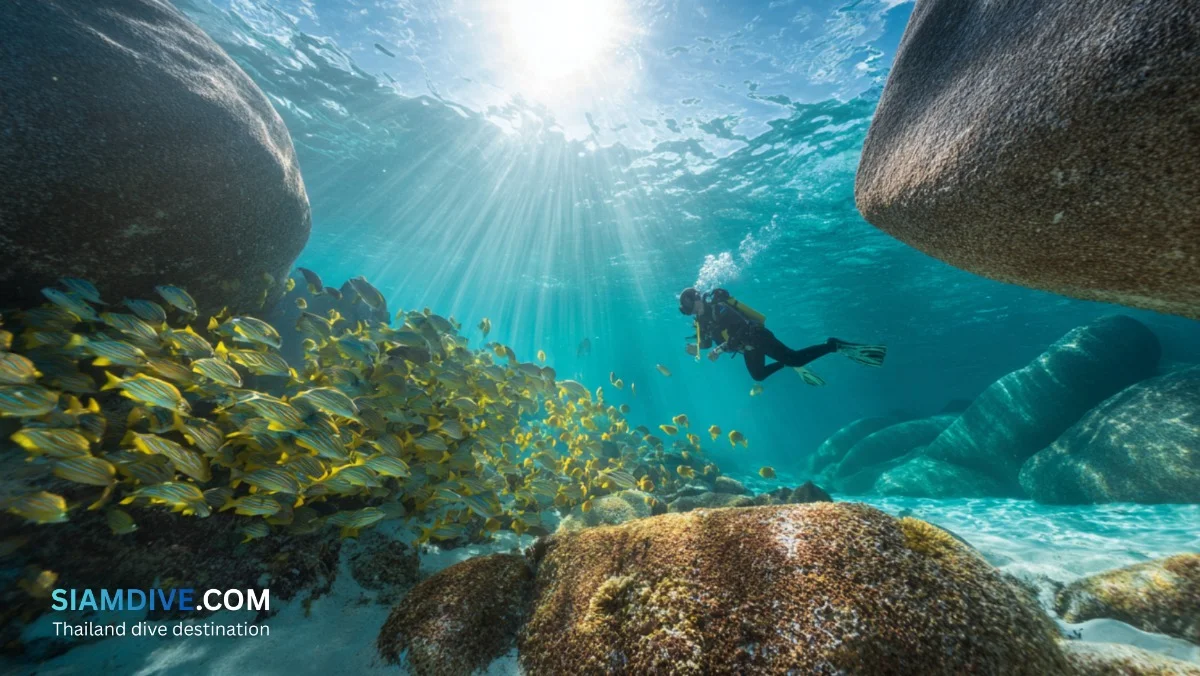
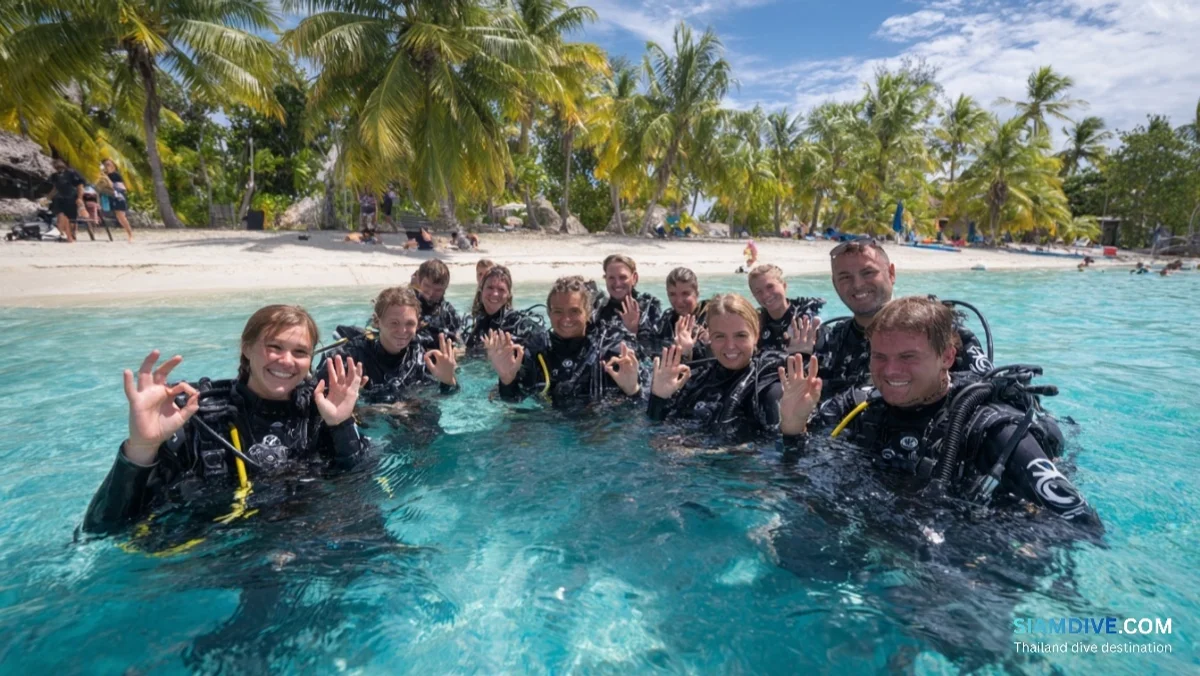
Japanese Gardens sits in a sheltered bay on the east side of Koh Nang Yuan, the tiny three-island cluster just off the northwest coast of Koh Tao. The site is shallow — average depth 8 meters, max around 12 to 16 depending on where your guide takes you — and so protected from current that you can stand in the shallows and adjust your mask without getting pushed off a reef. Something like 85 to 90 percent of the dive schools on Koh Tao use this site for Open Water training. That is not an exaggeration. If you learned to dive here, you probably logged your first three confined-water-to-open-water transitions at Japanese Gardens.
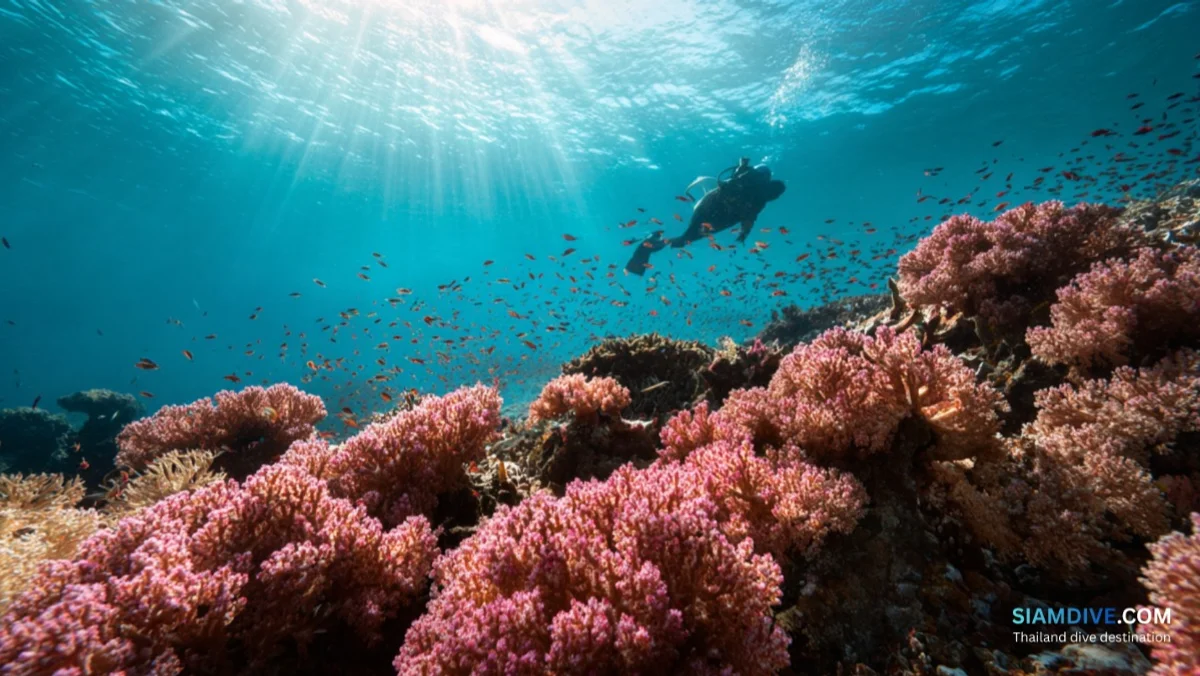
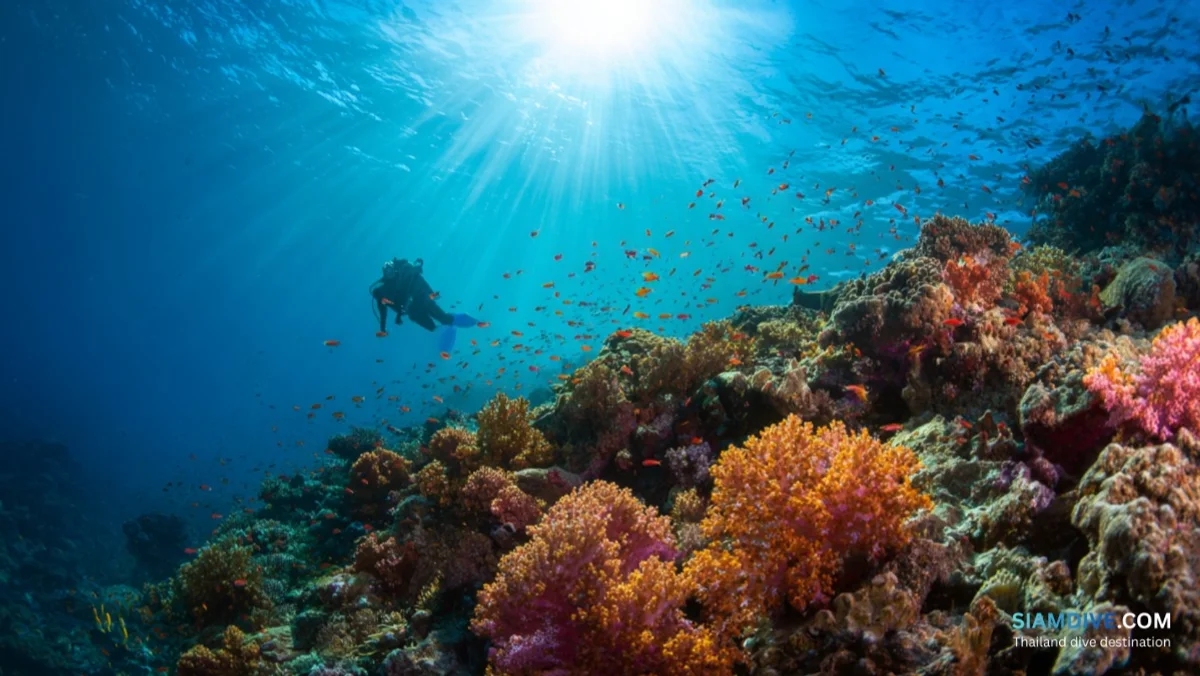
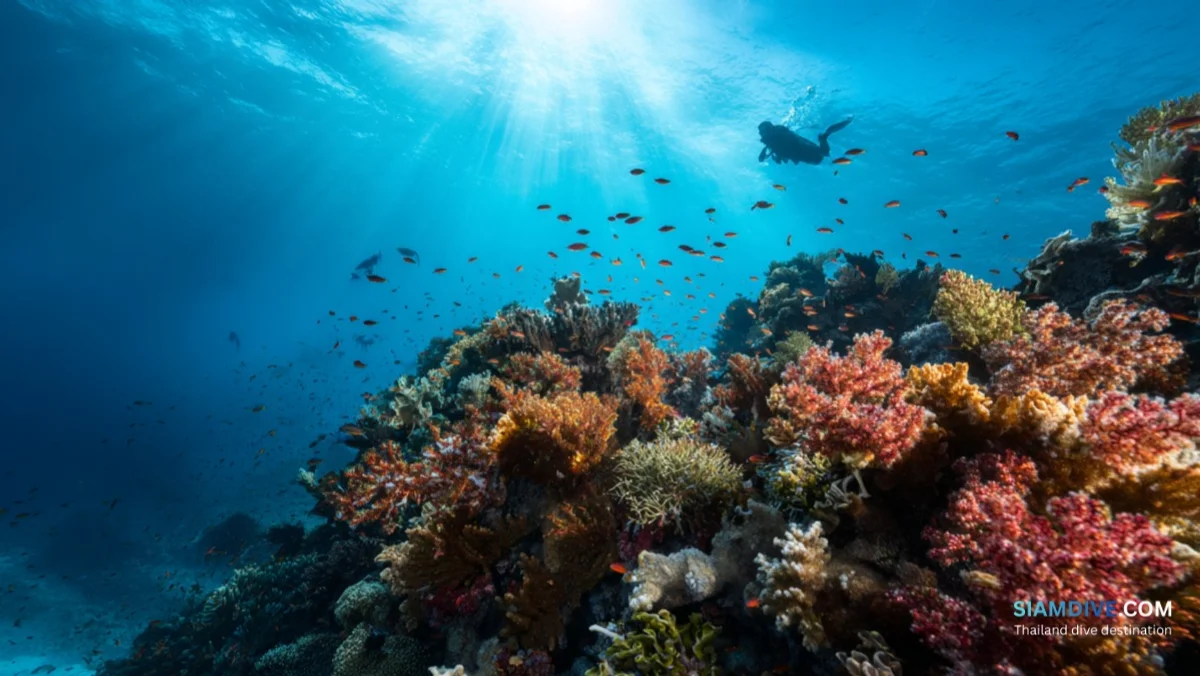
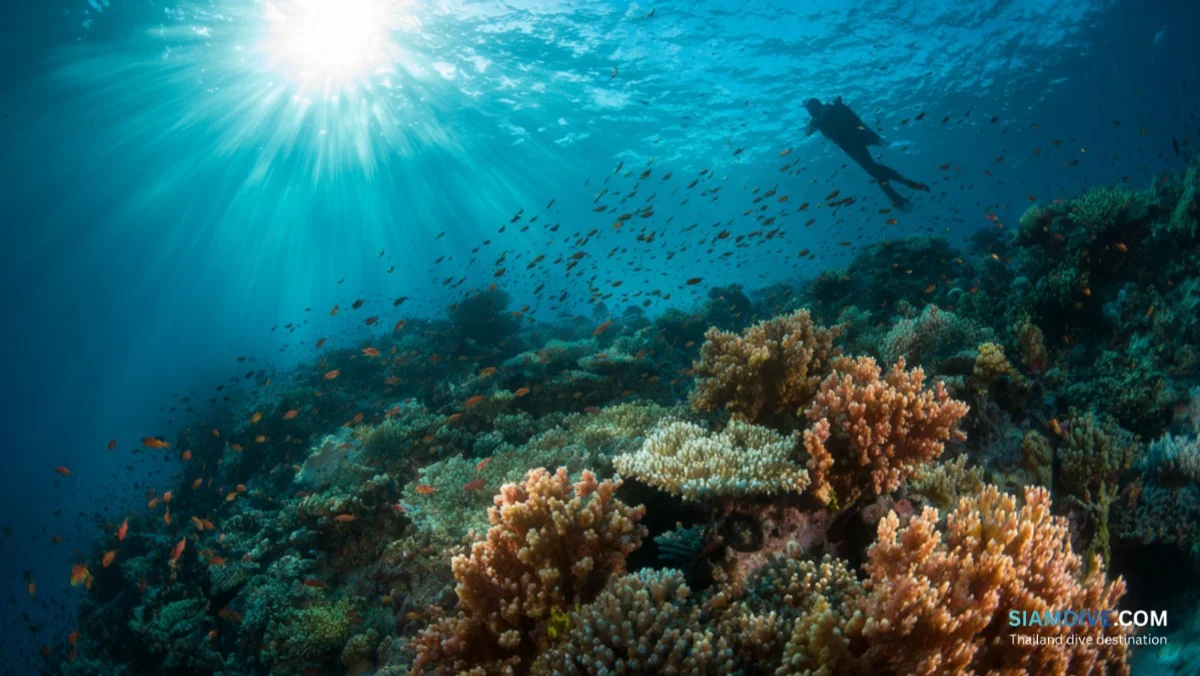
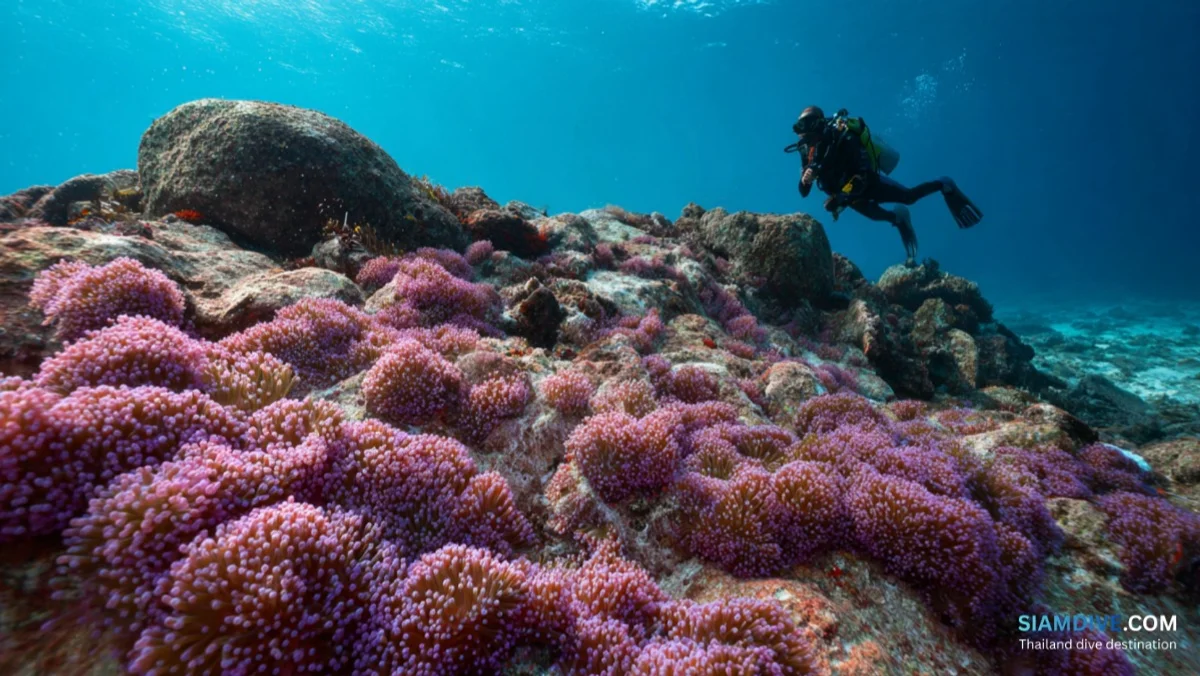
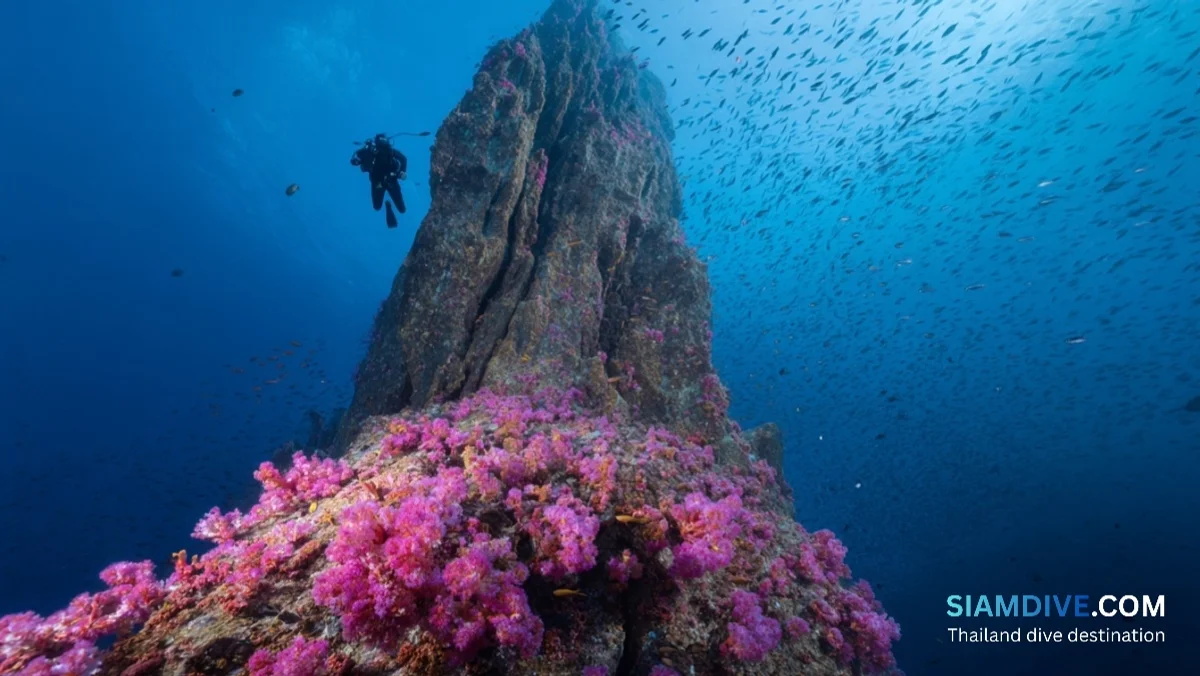
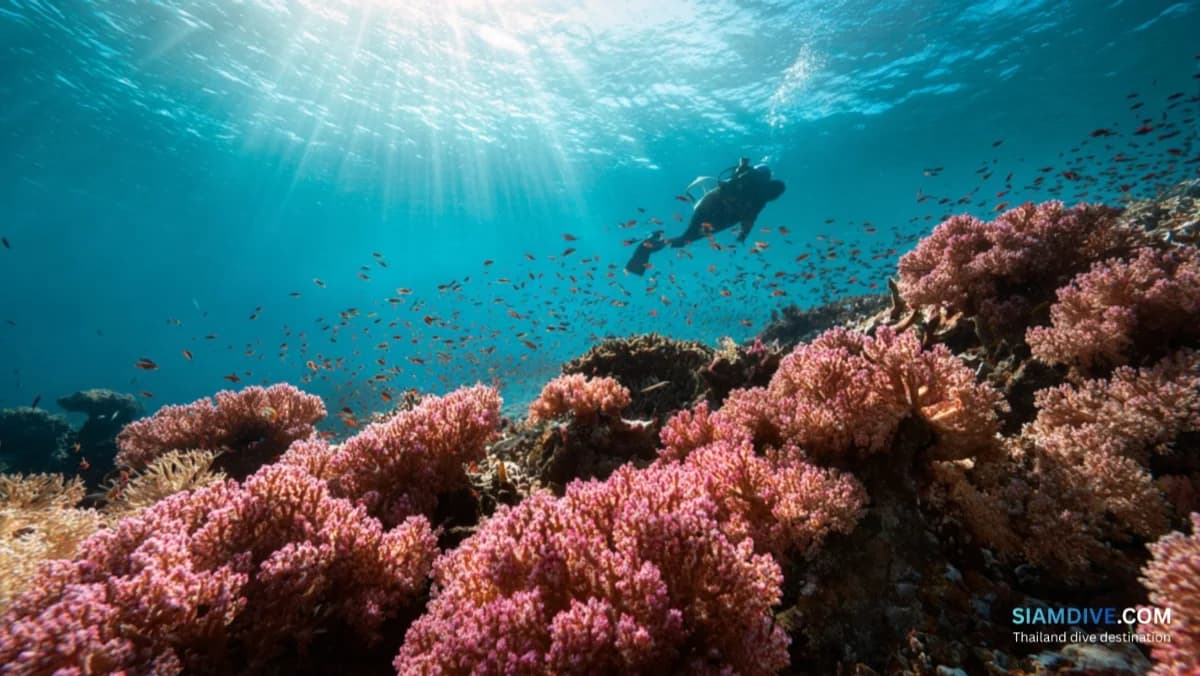
That reputation as a training site undersells what is actually down there. Japanese Gardens has some of the densest hard and soft coral on the west side of Koh Tao, a coral garden that stretches across the whole bay from the beach to 12 meters, and a set of swim-throughs called the Hin Deng Caves that most training dives skip but advanced guides add when conditions allow. It is a beginner site that hides a good middle layer underneath.
Why Japanese Gardens Is a Must-Visit for Divers
If you are certified or taking your Open Water course on Koh Tao, you will end up here. The real question is whether you treat it as just another check-the-box training dive or slow down and actually look at the reef. Because the reef is genuinely good. The bay is sheltered by the rock formations of Koh Nang Yuan on one side and the sandbar connecting the three islets on the other. Currents are almost nonexistent most of the year. Visibility runs 10 to 15 meters on average and can hit 20 on a clear day after calm weather.
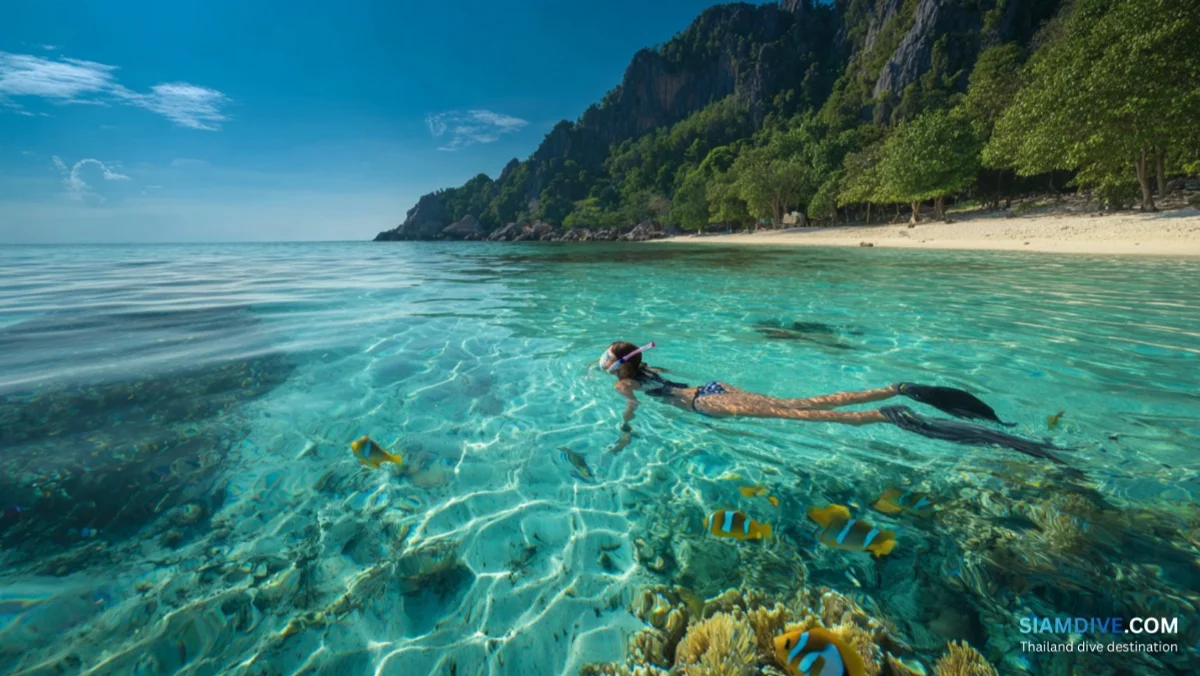
For beginners, that shelter plus the shallow depth means this is the site where your breathing actually settles down and your buoyancy starts to click. For photographers, it is a flat 8-meter garden with ambient sunlight that makes macro shots easy and wide-angle shots workable without strobes. For snorkelers, you can swim the edge of the bay directly from the beach and see most of what the divers see. It is genuinely one of the most versatile shallow sites in the Gulf.
Best Dive Routes at Japanese Gardens
Most guides run the dive as a slow loop across the bay at 8 to 12 meters. Here is how the site breaks down.
- The shallow coral garden (3-8 m): The classic Japanese Gardens zone. Dense hard and soft coral bommies, sandy patches between them where instructors set their students down for buoyancy drills, butterflyfish and damselfish everywhere.
- The deeper slope (8-12 m): Where the bay opens up and the coral transitions to larger bommies and sandy patches. More space for turtles and the occasional stingray.
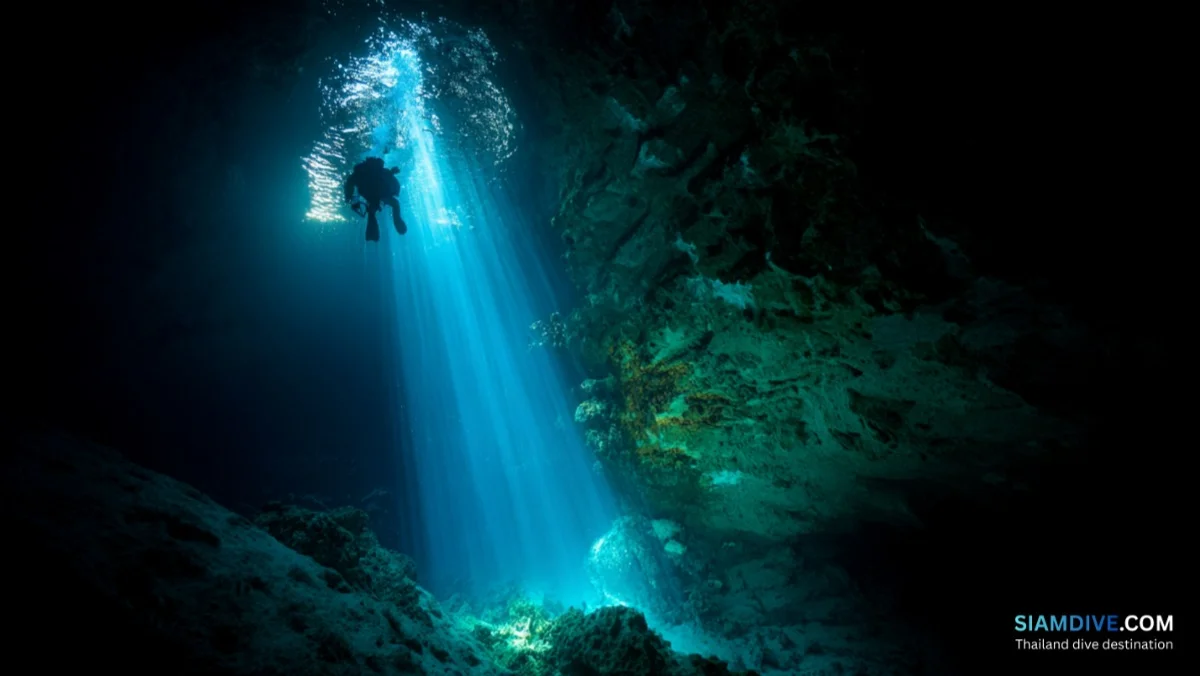
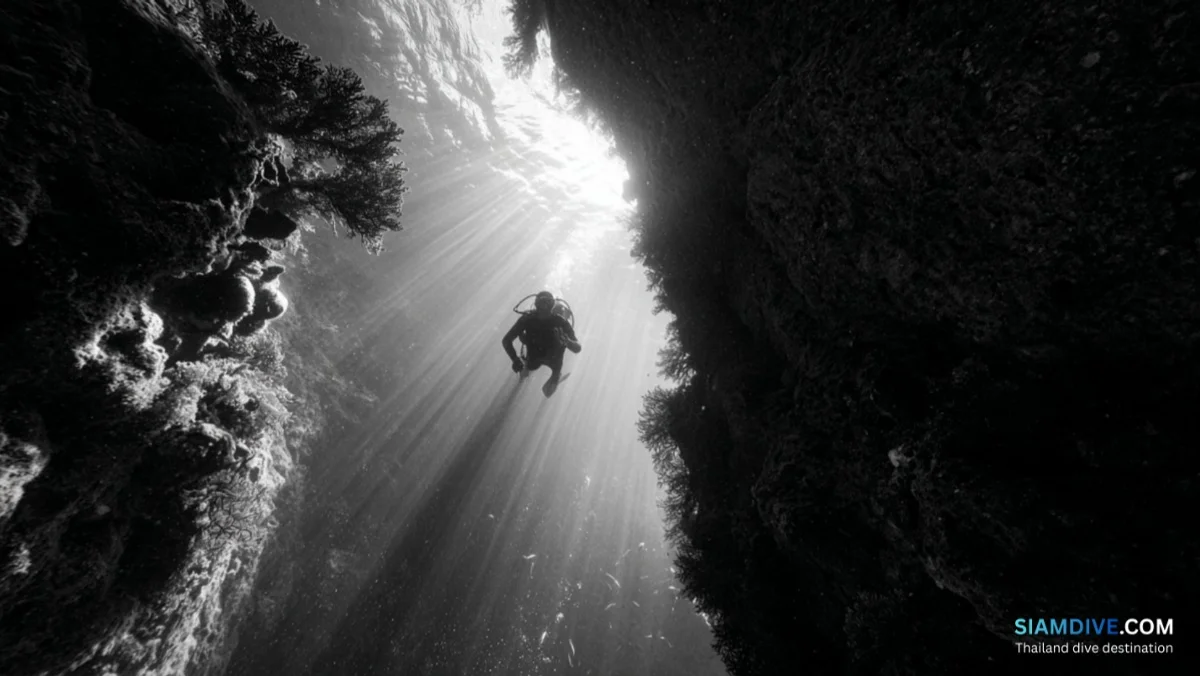
- Hin Deng Caves (max 12 m): A set of swim-throughs on the south side of the bay that an experienced guide will add to the dive on about 40 percent of trips when conditions allow. Sleeping parrotfish tucked into the cracks, moray eels in the overhangs, and the kind of light you only get in swim-through archways with sun coming in the end.
- The sandbar drop-off (10-16 m): On the side connecting Japanese Gardens to Twins dive site. A very slow slope down to about 16 meters where advanced divers can extend the profile and look for blue-spotted rays on the sand.
Marine Life You'll Encounter
Japanese Gardens is a high-density macro and fish site rather than a pelagic site. Nothing big comes through often. What you get instead is volume and variety of small stuff in one small bay:
- Butterflyfish, angelfish, damselfish, parrotfish in almost every coral head. These are not special species, they are just present in numbers that make them easy to photograph.
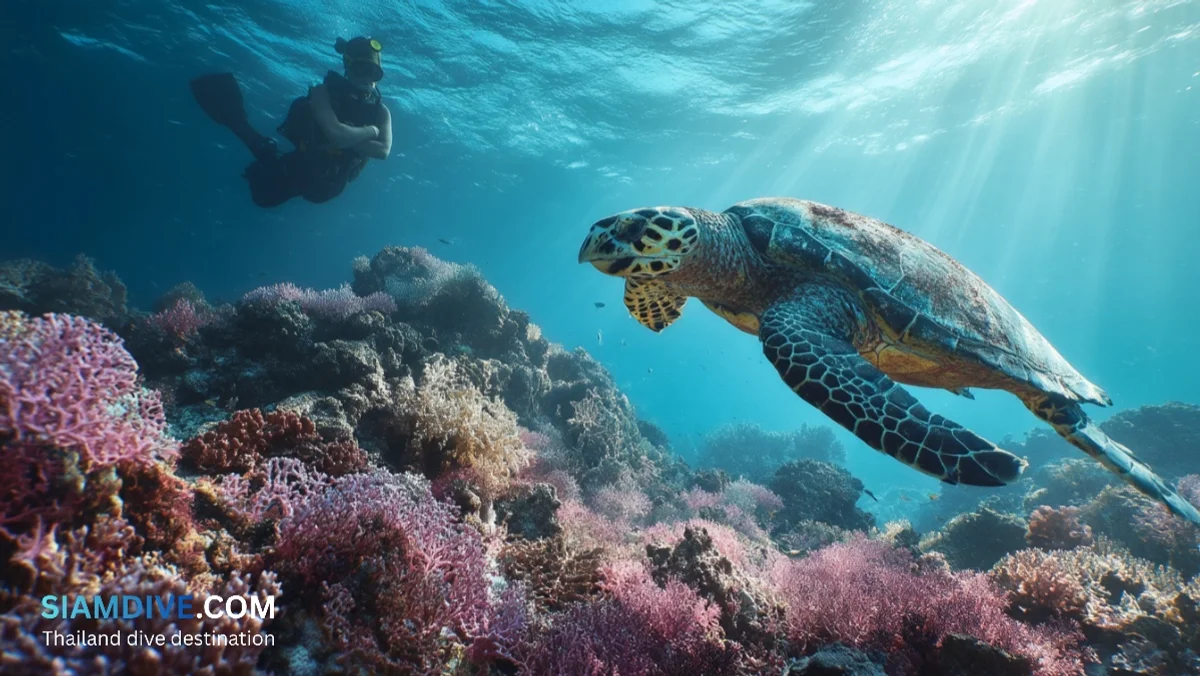
- Hawksbill turtles regularly. Not on every dive, but the same turtles cruise this bay and the guides know where to look.
- Moray eels tucked into the overhangs, especially in the Hin Deng Caves area.
- Blue-spotted ribbontail rays on the sand patches, usually half-buried.
- Lobsters under the rock formations, harder to spot during the day but obvious at night.
- Sleeping parrotfish wrapped in their mucus cocoons, visible inside the swim-throughs during early or late dives.
- Small stingrays on the sand between coral bommies, easy to spot if you scan the bottom.
- Occasional reef sharks at the deeper edges — rare but documented.
Best Time to Dive Japanese Gardens
Japanese Gardens is the Koh Tao site that almost never closes. The bay is so sheltered that it stays divable even during the November monsoon when most of the open-water pinnacles shut down for weeks at a time. It is where Koh Tao dive shops take students on the days they cannot go anywhere else. That reliability is the single best thing about the site.
Optimal conditions run April to August when the water is warmest (around 29-30°C), visibility averages 15-20 meters, and the light is best for photography. February to May is high training season, which means the bay gets crowded with Open Water students mid-morning — if you want fewer groups, book the 7 a.m. boat or go in the afternoon. September and October are quieter and still divable. November to February is the monsoon, but even then Japanese Gardens is usually the first site on the board because it keeps working when White Rock and the pinnacles cannot.
How to Get There
You need to be on Koh Tao. From Bangkok, the options are:
- Fly + ferry: Bangkok to Koh Samui on Bangkok Airways (about 1 hour), then Lomprayah or Seatran catamaran to Koh Tao (1.5-2 hours).
- Train + ferry: Overnight train to Chumphon (about 8 hours), then Lomprayah catamaran to Koh Tao (1.5 hours).
- Bus + ferry: Southern Bus Terminal to Chumphon (6-7 hours), then ferry.
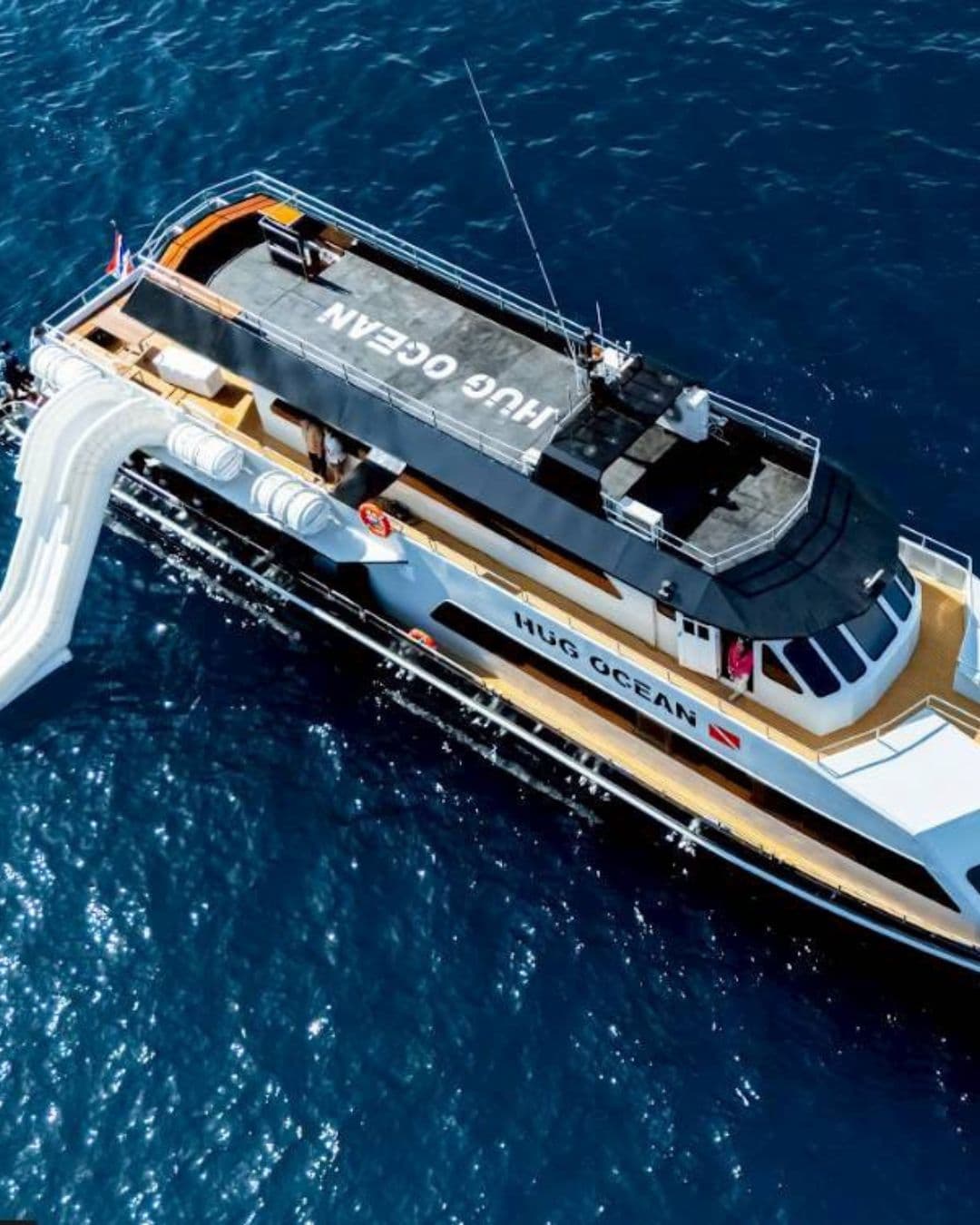
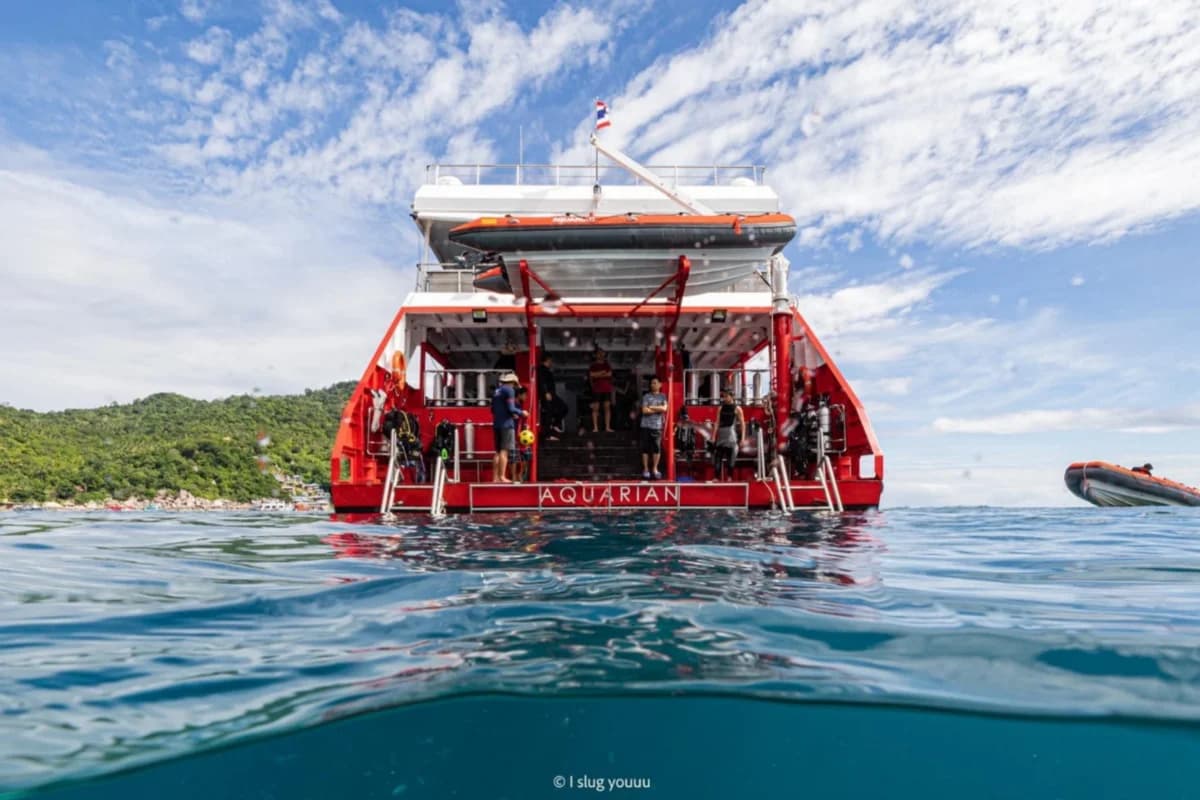
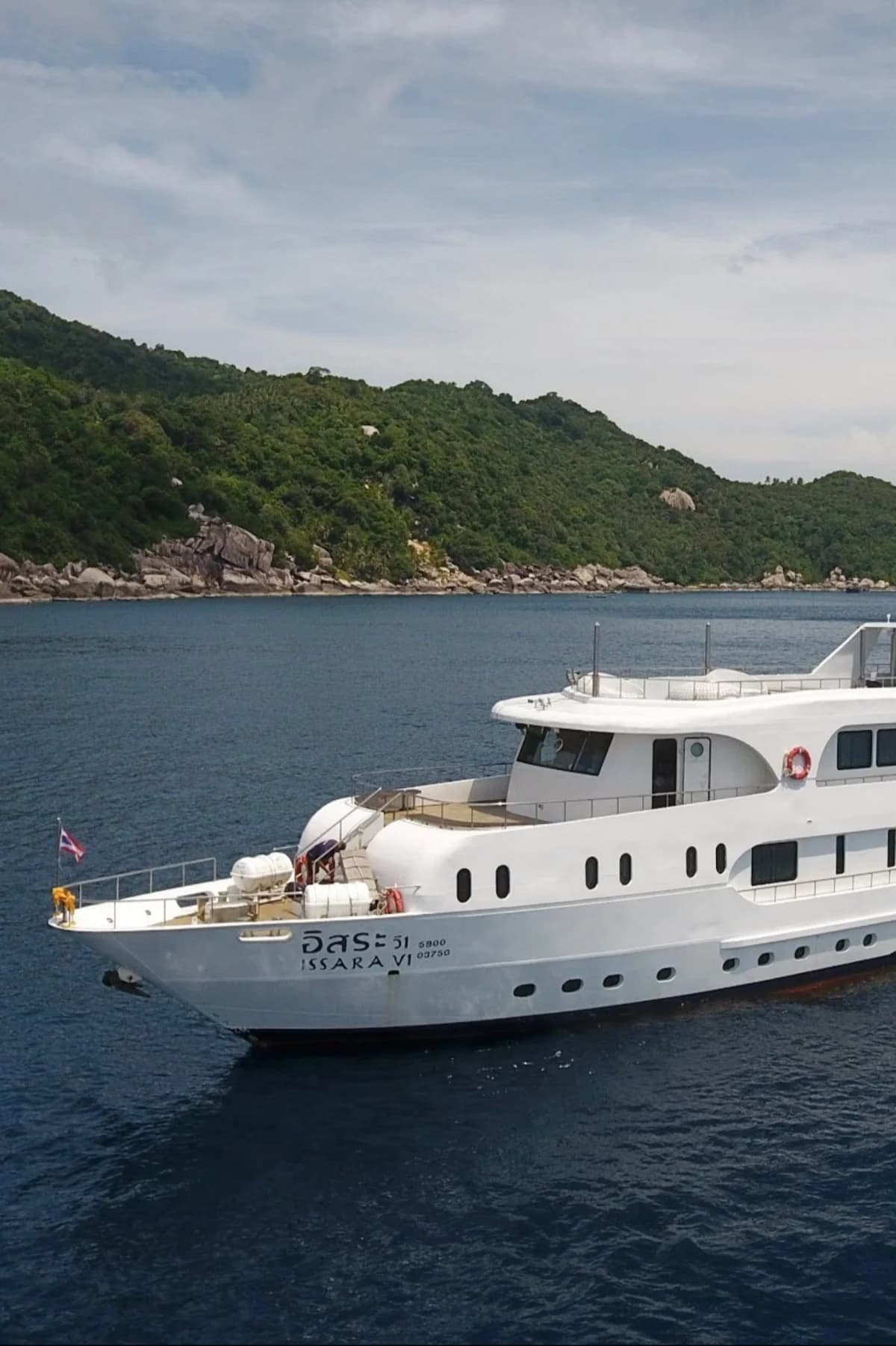
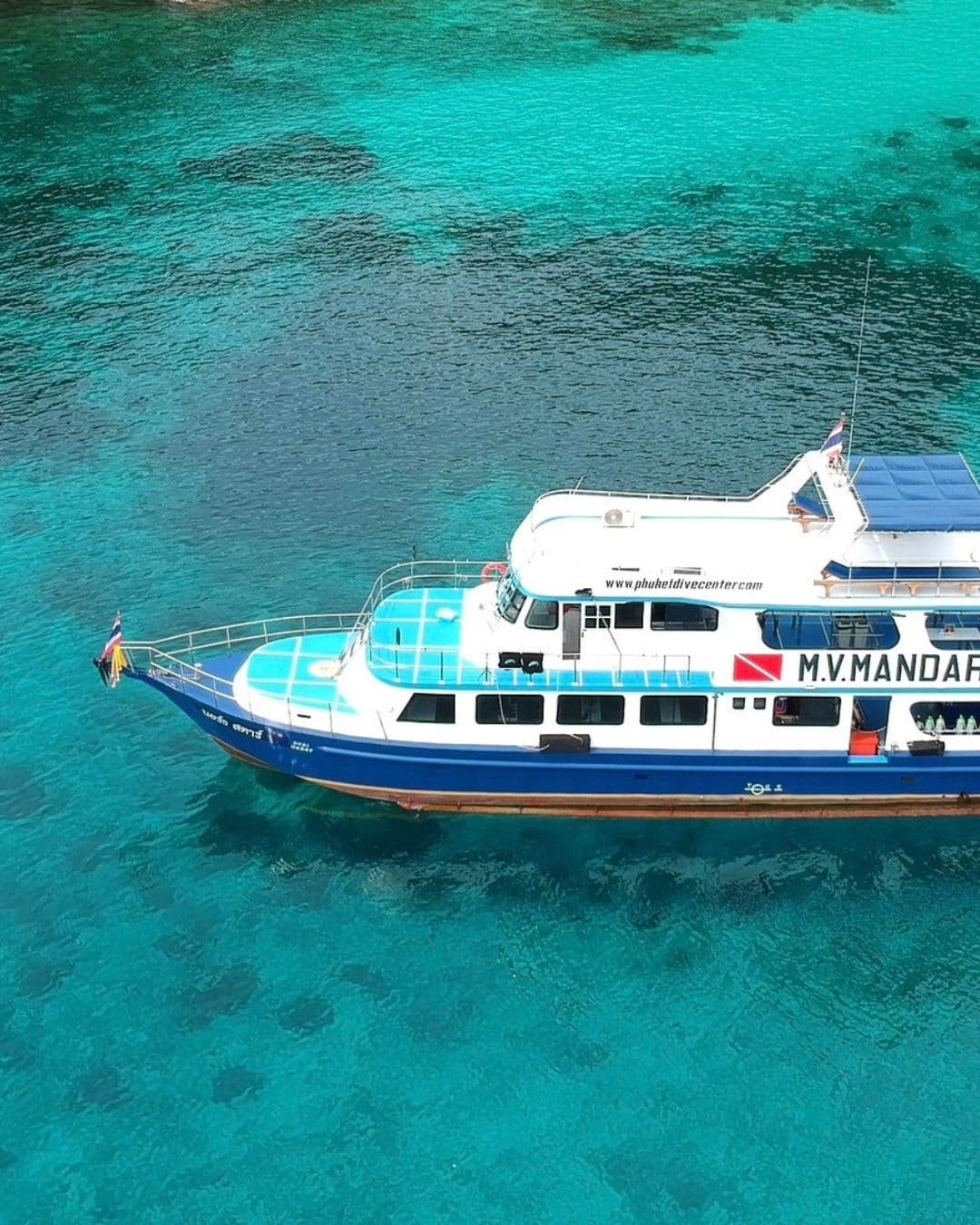
Once on Koh Tao, every dive shop runs trips to Koh Nang Yuan and Japanese Gardens. It is 15 to 25 minutes by boat from Mae Haad pier. Most operators bundle Japanese Gardens with Twins or Red Rock as a two-tank day trip and include a lunchtime stop on Nang Yuan beach. Two-tank day trips run 1,800 to 2,400 baht depending on the operator and whether you rent gear. You can also visit the site as a snorkeler — snorkel tours from Koh Tao to Nang Yuan leave hourly and most of them stop here.
Note that Koh Nang Yuan charges a 100 baht entry fee per person when you land on the island, separate from your dive trip price. Most operators cover this for divers but not always for snorkelers.
Tips for Diving at Japanese Gardens
- Use it as a buoyancy tune-up. If you have not dived in six months and want an easy site to get your buoyancy back before doing anything more serious, Japanese Gardens is the best site on Koh Tao for it.
- Ask about the Hin Deng Caves. Not every guide adds them. If you have your Advanced cert and you want the extra interest, specifically ask. Experienced guides will add them when conditions allow.
- Bring a compact camera. The shallow depth and ambient light make this an easier photography site than anywhere else on Koh Tao. Macro is especially good — the coral bommies are dense with small fish.
- Avoid the mid-morning rush. Between 9 and 11 a.m. the site fills with Open Water training groups. Go at 7 a.m. or after 1 p.m. for a quieter dive.
- Do not stand on the coral. This is basic but worth repeating because the site is so shallow. Instructors put students on sand patches specifically because beginners still touch the bottom accidentally. Keep your fins up.
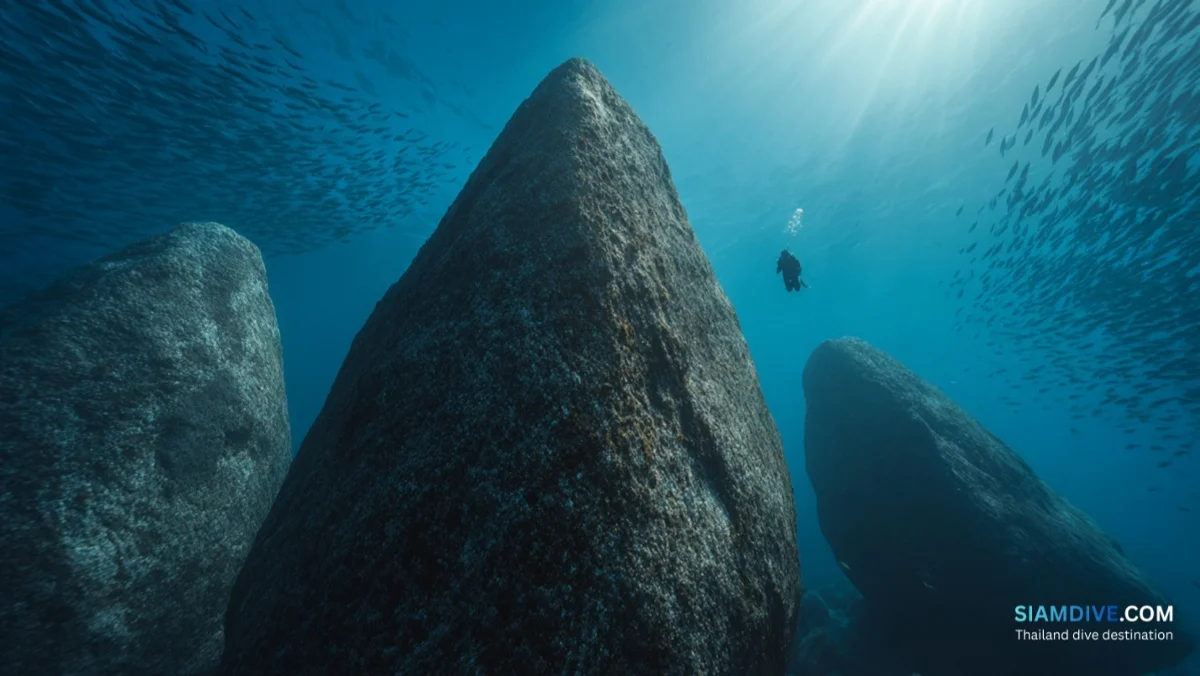
- Combine it with Twins. Most day boats pair Japanese Gardens with the Twins dive site on the west side of Koh Nang Yuan. Twins has three granite pinnacles and a swim-through — it is a perfect complement to the flat coral of Japanese Gardens.
- Snorkel if a family member cannot dive. The shallow edge of the bay is as good from the surface as it is from 8 meters down. Non-diving friends and kids can experience the site without a course.
The Gentlest Dive on Koh Tao
Japanese Gardens is the site most divers remember from their first week on Koh Tao but underrate once they move on to the pinnacles. Do not write it off. It is the most reliable, most beginner-friendly, most photogenic shallow reef on the island, and it works even when the weather shuts down everything else. If you are booking a Koh Tao trip and want a day that includes Nang Yuan beach, lunch on the sandbar, and a dive that does not demand anything from you, Japanese Gardens is the one. Book through siamdive.com — we work with the operators that combine Japanese Gardens with Twins or Red Rock on the same day and include the Hin Deng Caves for divers who ask. It is the easiest good dive on Koh Tao.