Koh Ngam Yai Diving Guide: Chumphon's Wild Granite Island
11 เมษายน 2569
Koh Ngam Yai is the quiet Chumphon dive site Koh Tao crowds never reach. Anemone fields, whale shark odds, and small boats — here's how to dive it.
The Wild Granite Island Most Divers Skip
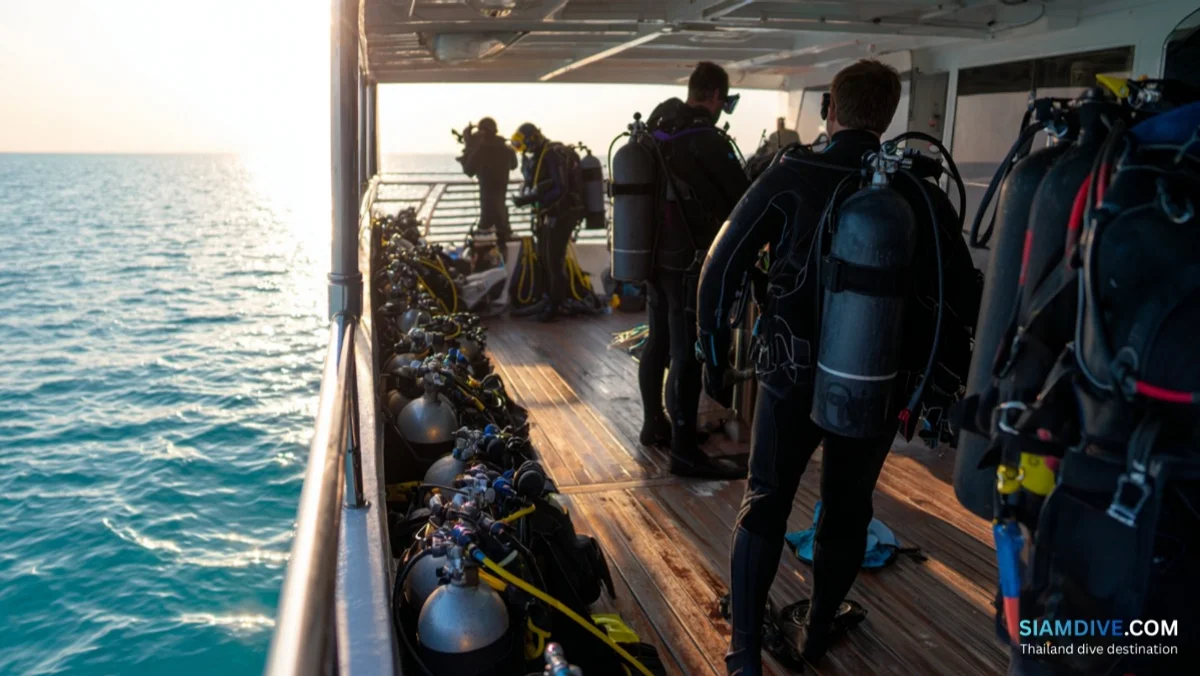
Koh Ngam Yai sits about 20 kilometers off the coast of Chumphon, a jagged limestone outcrop crowned by a cliff locals call the Buddha's Palm. There is no beach, no resort, and no easy way to get here. You roll off the boat directly into the water, and that is the entire point. While most divers in Thailand chase the same handful of names on Koh Tao or in the Similans, this corner of the Mu Ko Chumphon National Park stays quiet. On a good day you might share the site with one other boat. On a great day you have it to yourself.
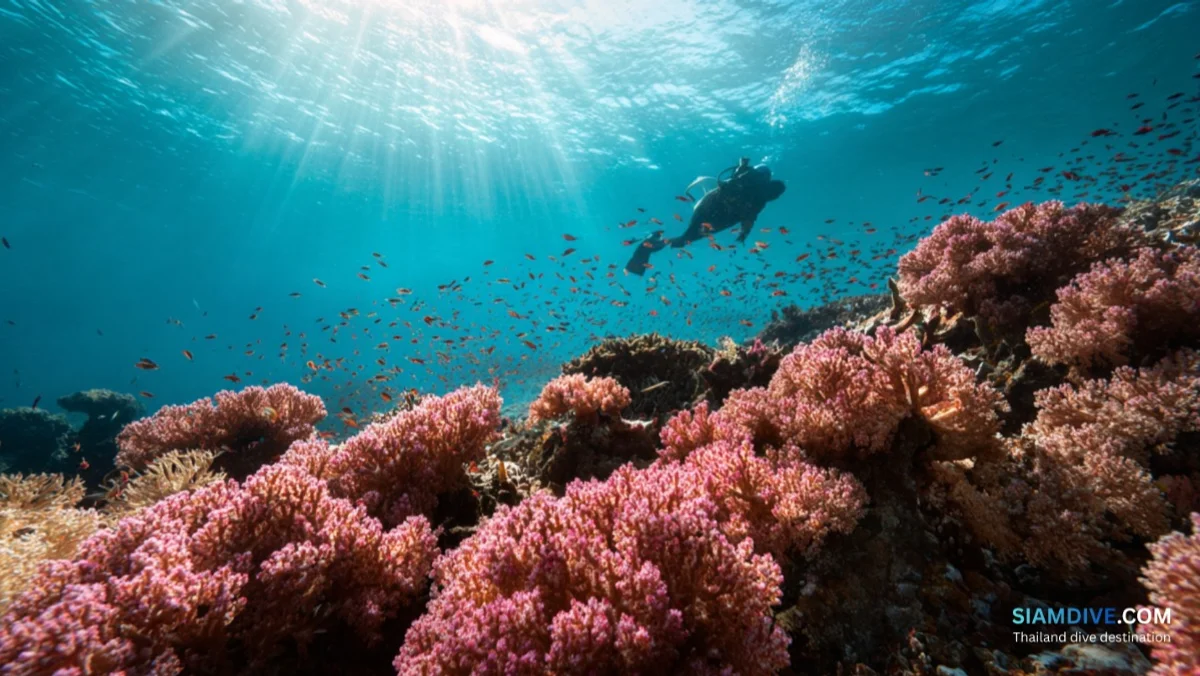
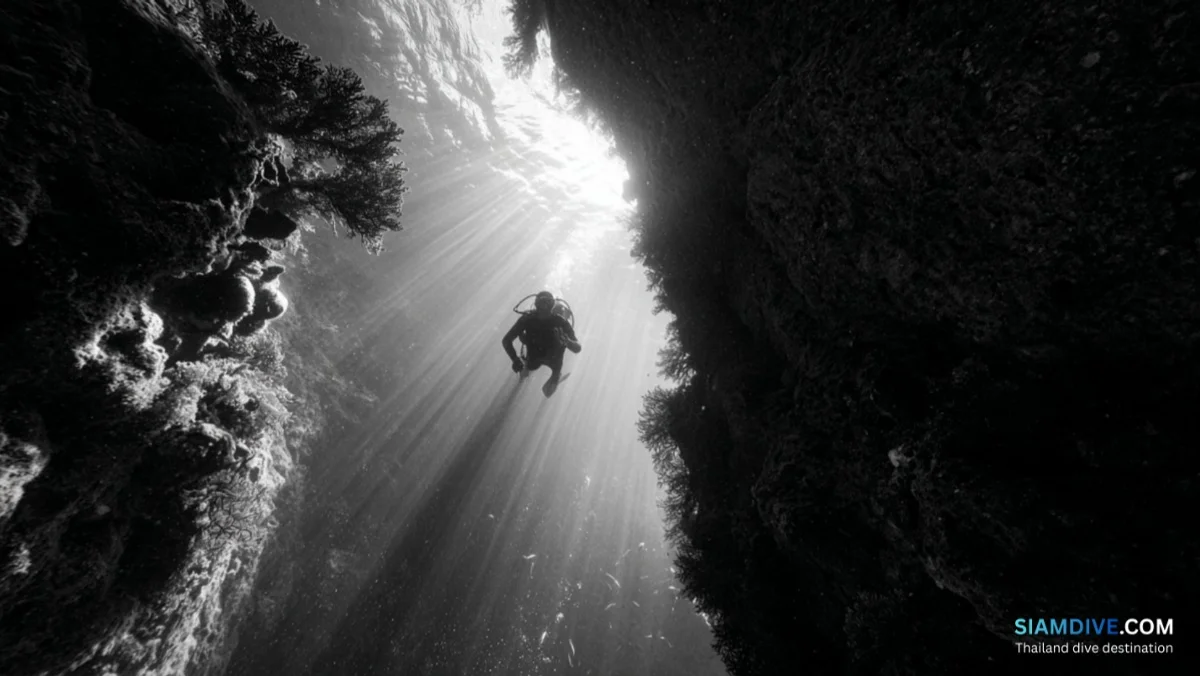
The reef wraps the island in shallow coral gardens that drop to about 30 meters at the deepest point. Currents are usually mild, water temperature stays between 25 and 31°C all year, and visibility runs from 5 meters on a bad tide to 30 meters when the season is right. It is the kind of site you can dive in a 3 mm shorty and forget about the gauges.
Why Chumphon Locals Send You Here First
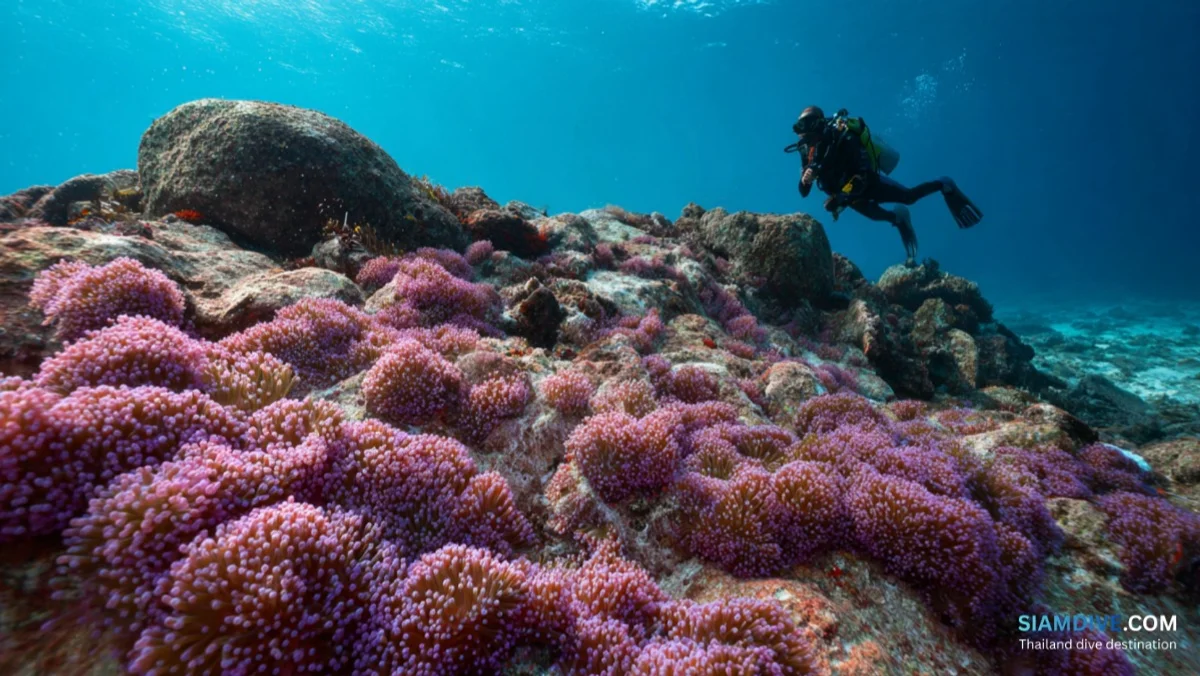
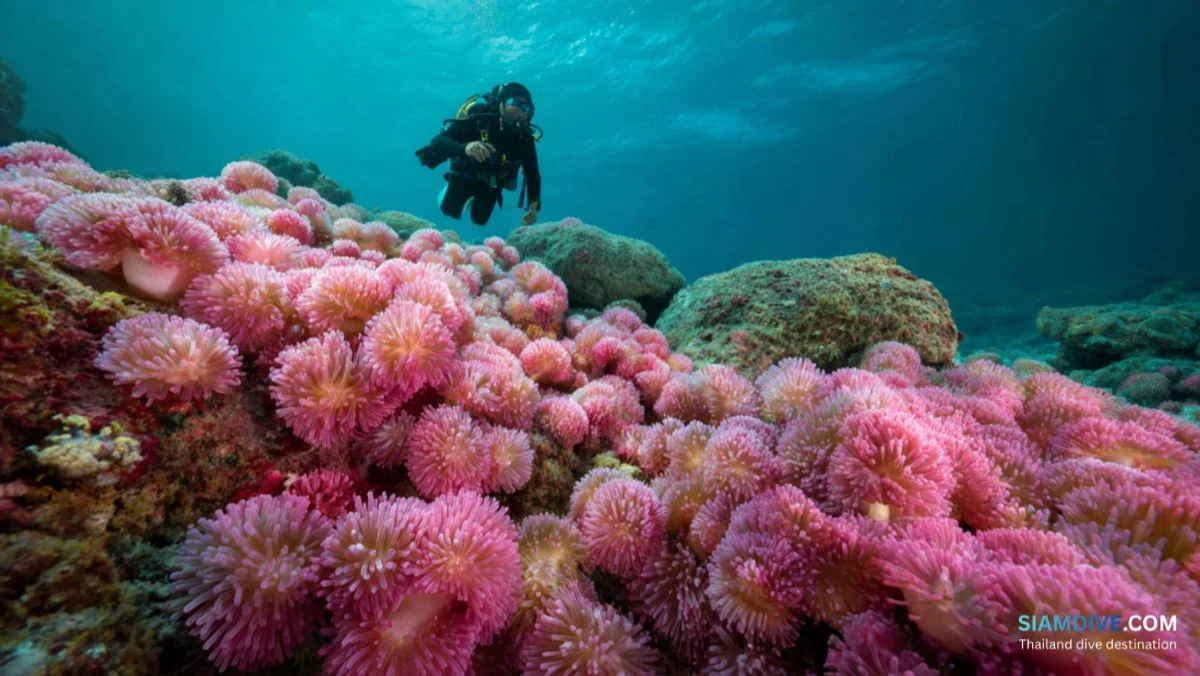
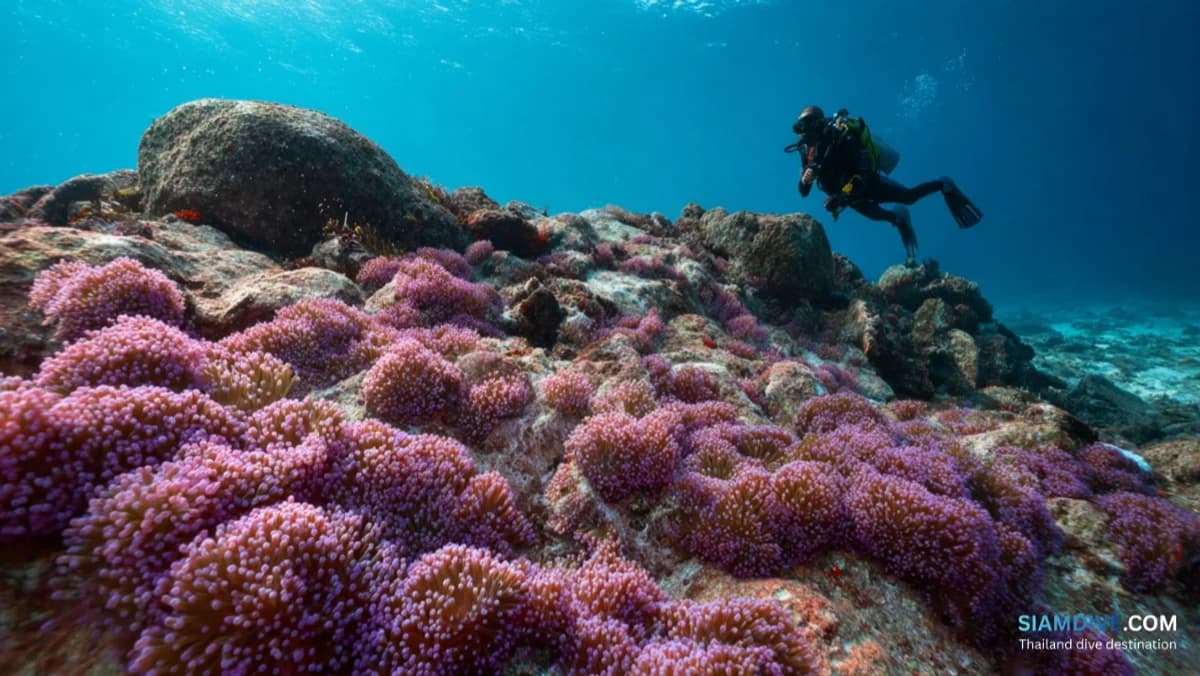
Chumphon's underwater scene lives in the shadow of Koh Tao, an hour further south. That works in your favor. Dive operators here run smaller boats, tighter groups, and prices that have not yet climbed to island-hub rates. The bottom is also genuinely different from Koh Tao. Instead of the granite seamounts the southern Gulf is famous for, Koh Ngam Yai gives you sloping reef edges, anemone meadows that carpet entire shelves, and a northern tip where the coral drops straight off into blue water.
The site is part of a national park, which means the corals are healthier than at the more trafficked spots near the mainland. Park rangers patrol, fishing nets are uncommon, and the underwater nature trail laid out by the park comes with a printed guide sheet you can clip to your BCD. It is one of the few places in Thailand where the marine park infrastructure actually shows up in your dive.
Best Dive Spots Around the Island
Most day trips run two or three dives across the small archipelago. Here is what each one gives you.
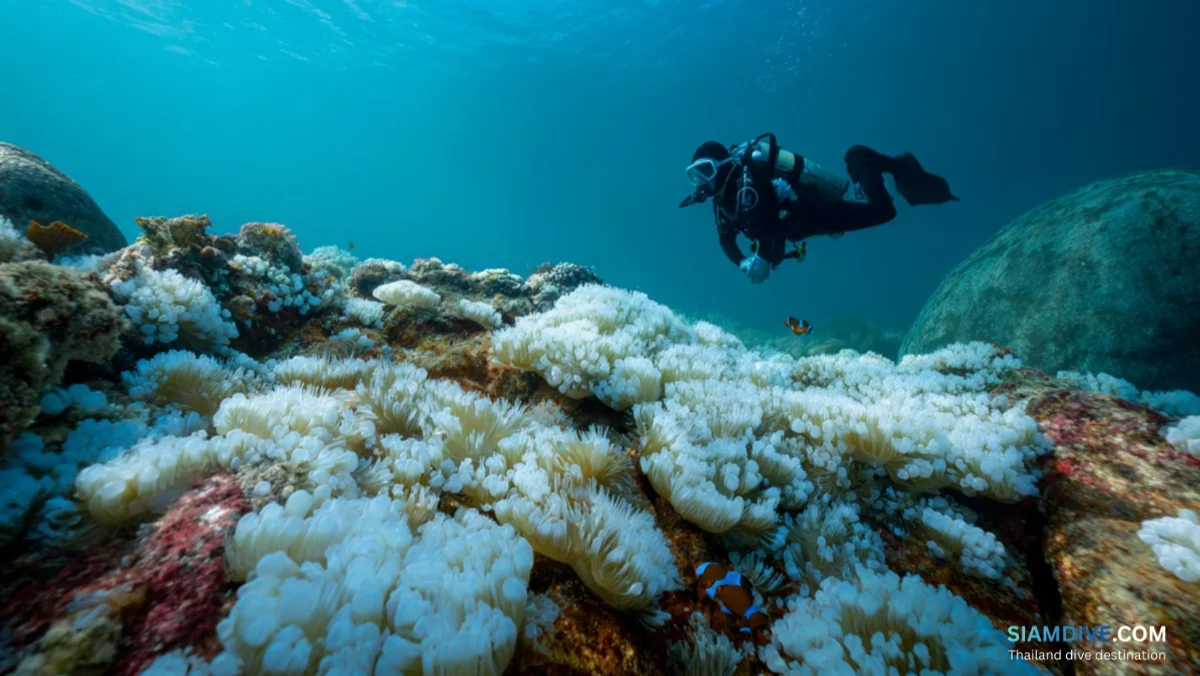
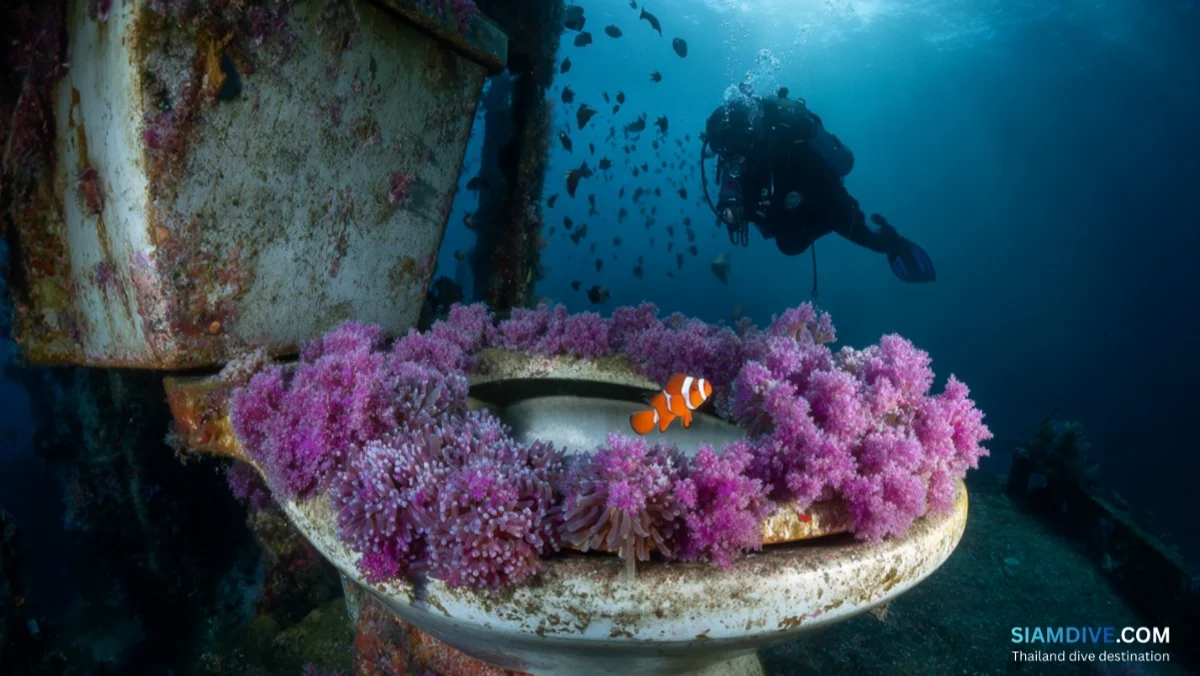
- Koh Ngam Yai north tip (5-30 m): The headline dive. Anemone fields full of clownfish, a hard coral wall sliding to 20 m, and the best whale shark odds in the area. Suitable for every certification level.
- Koh Ngam Noi (5-16 m): Ngam Yai's smaller sister, ten minutes north. Coral gardens, schooling fusiliers, the occasional juvenile reef shark sliding past. Calm enough for an open water student.
- Hin Lak Ngam (5-20 m): A satellite pinnacle with the cleanest water in the group. Pipefish, blue-spotted stingrays, and a designated underwater trail.
- Hin Pae Koh Ngam (5-17 m): A limestone pinnacle just north of Ngam Yai with rare black coral fans clinging to the deeper walls.
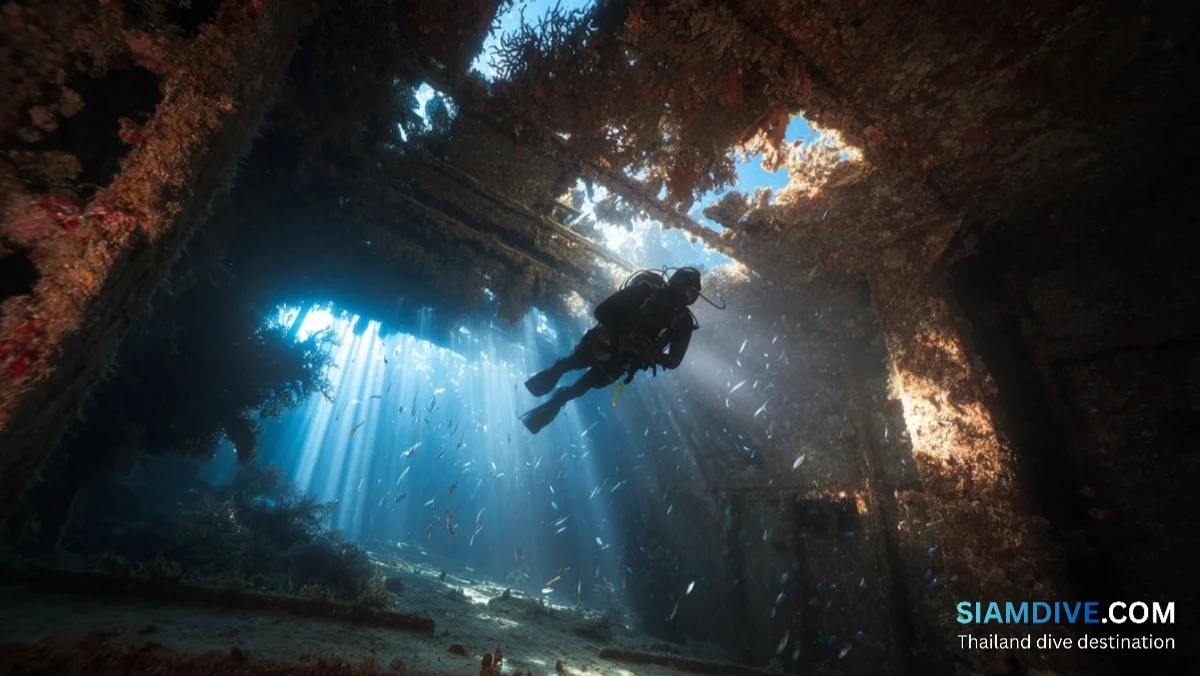
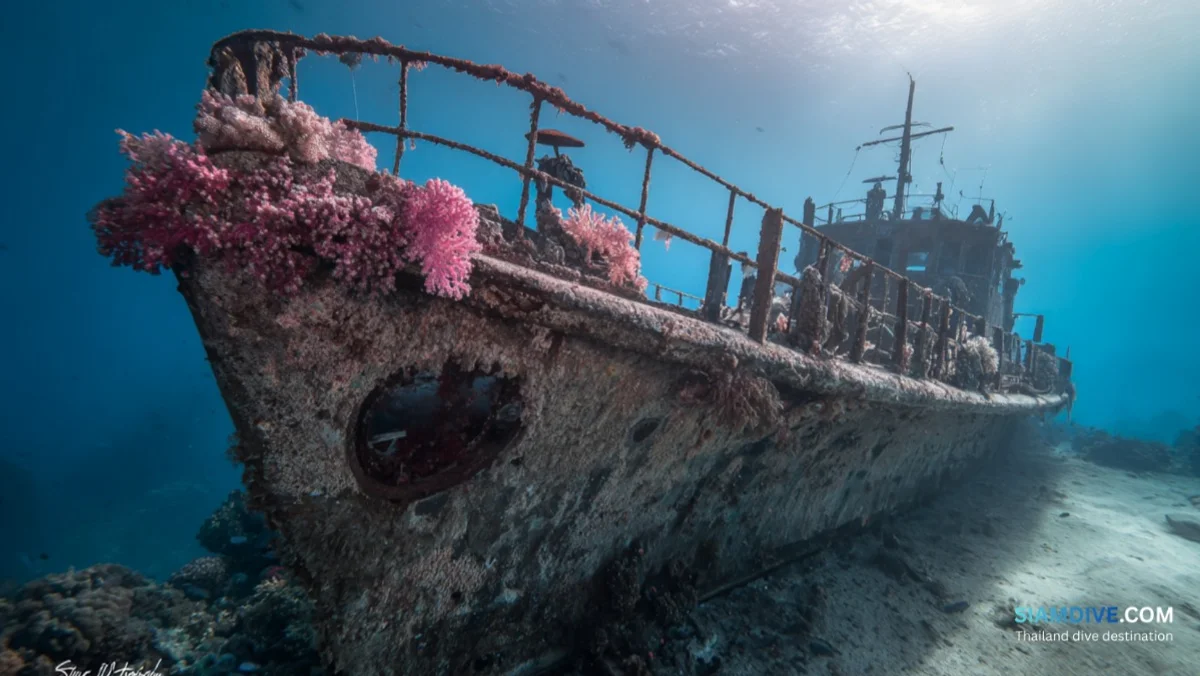
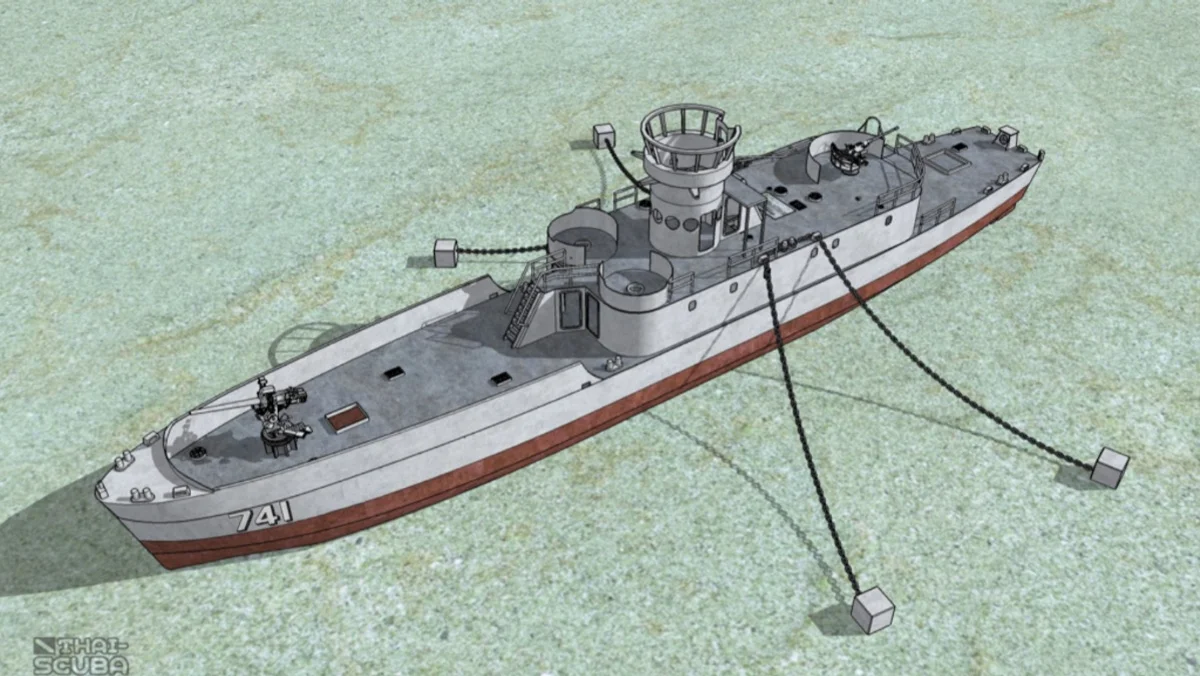
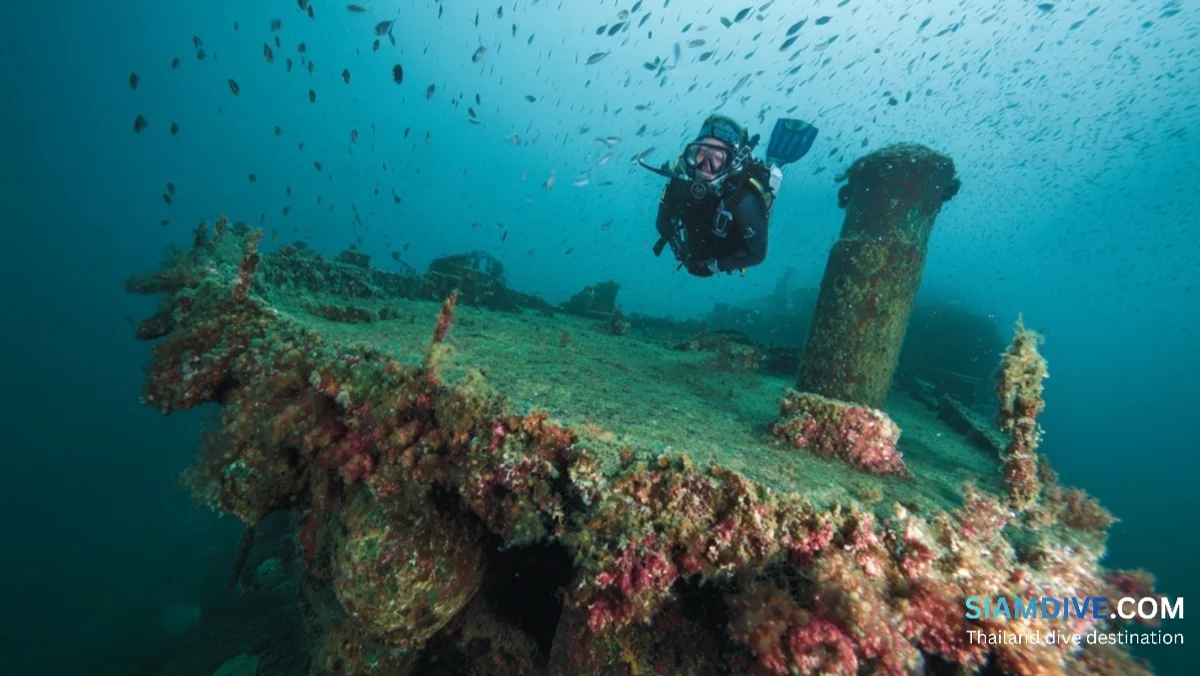
- HTMS Prab 741 wreck (max 23 m): A WWII-era landing craft sunk south of Koh Ngam Noi in 2011 as an artificial reef. Now covered in soft coral and fish.
What You'll Actually See Down There
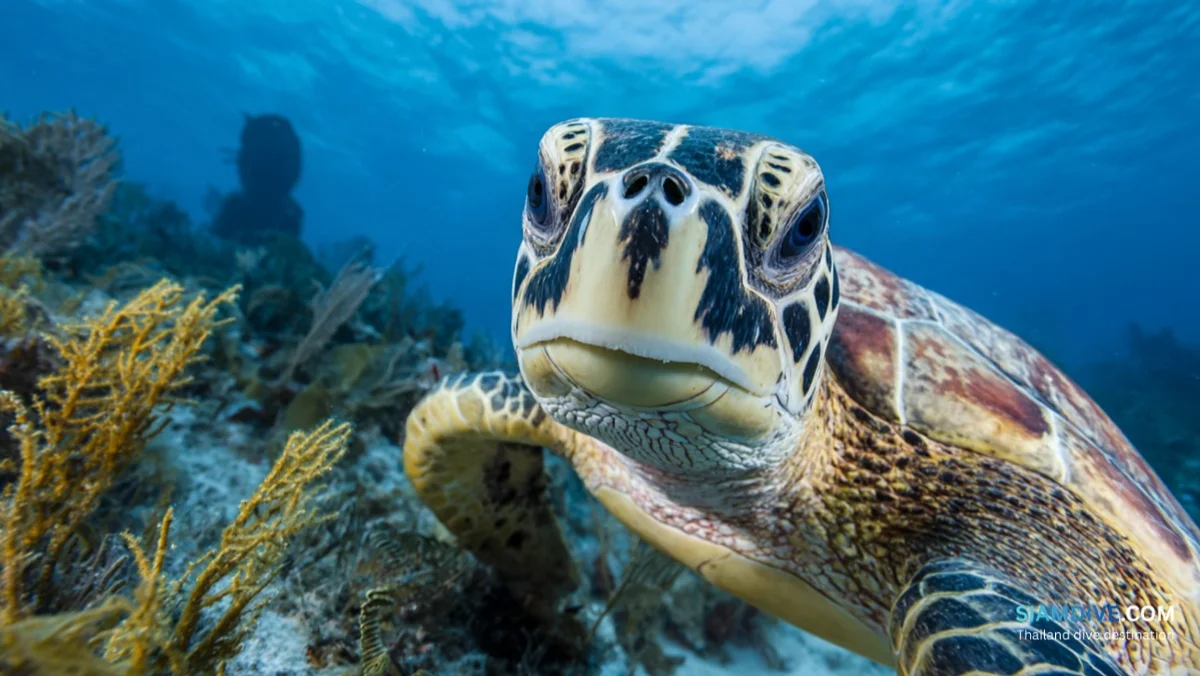
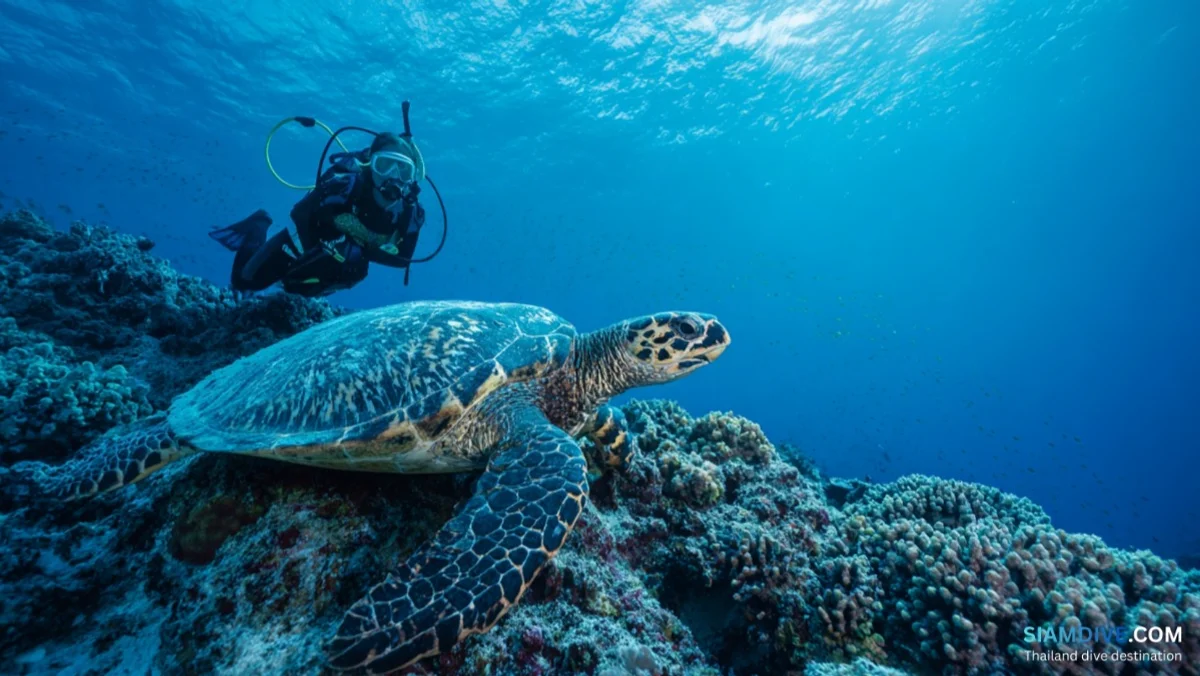
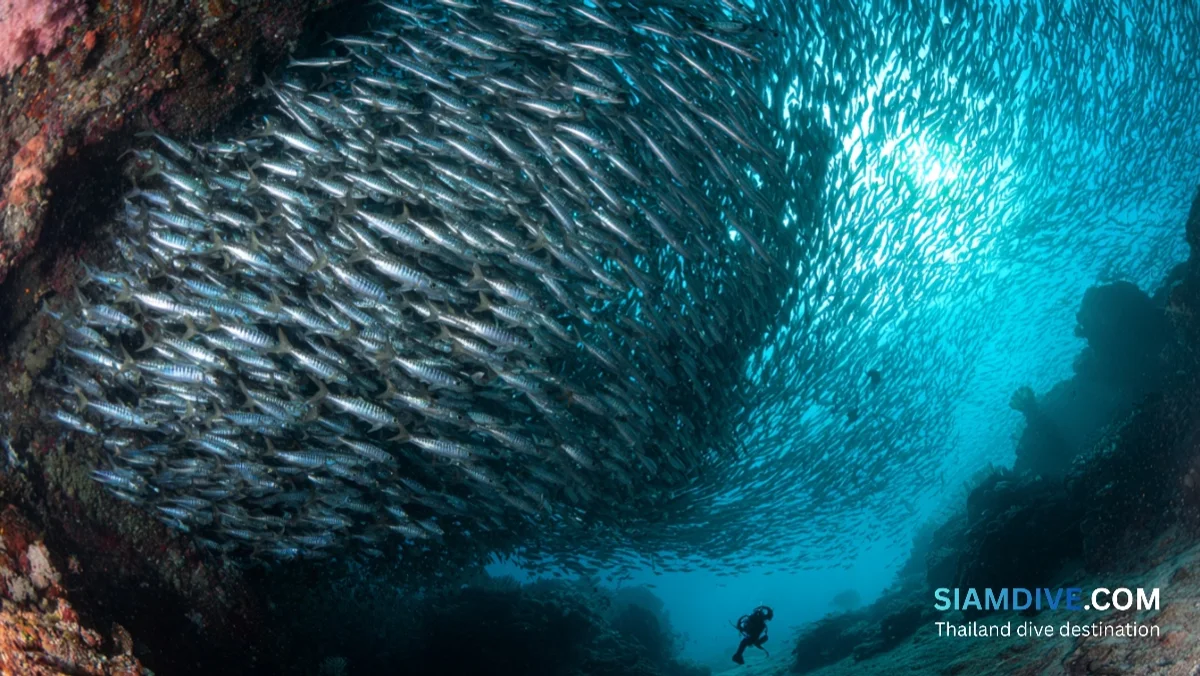
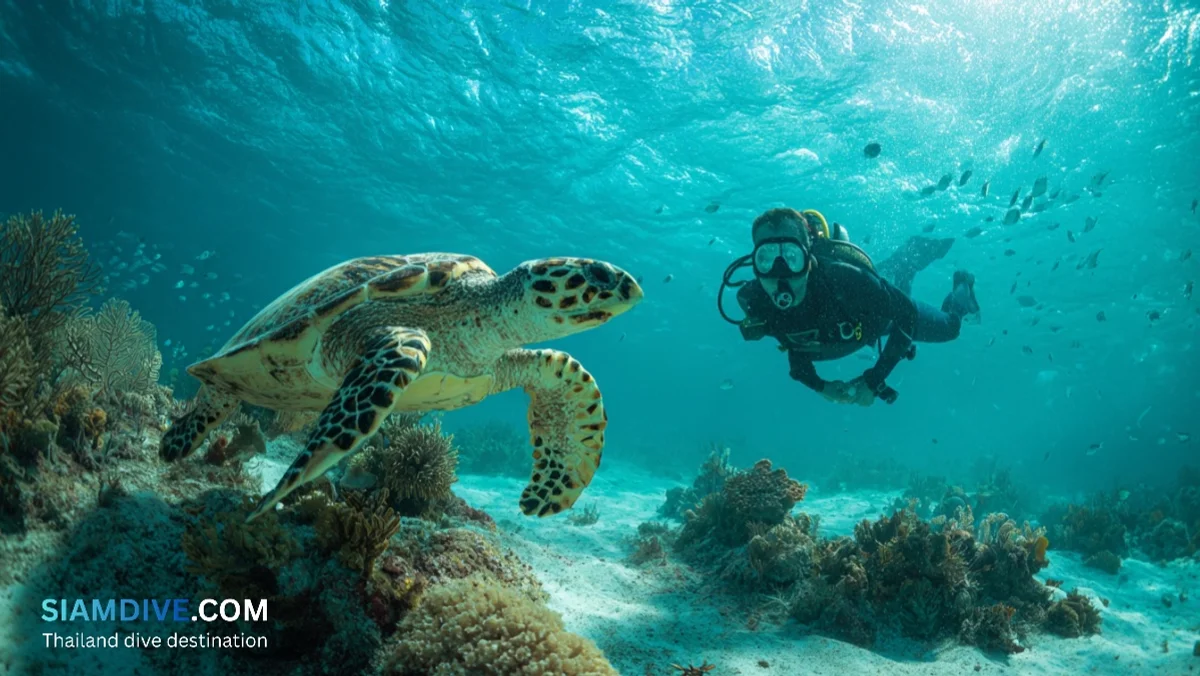
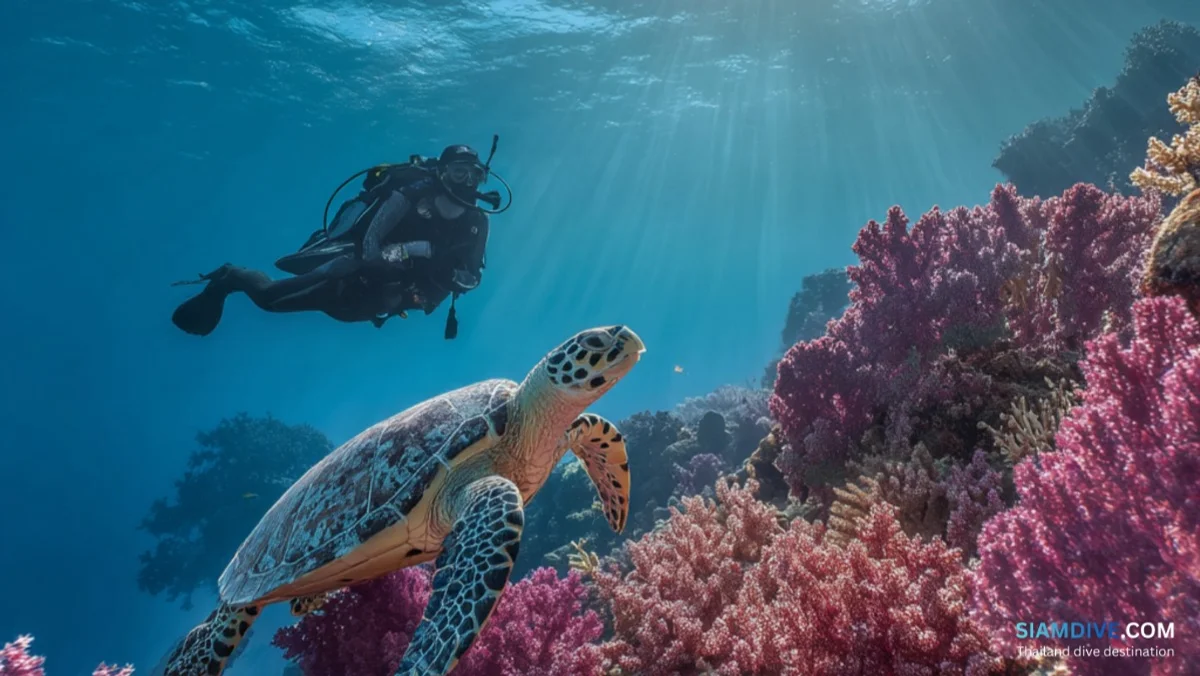
Koh Ngam Yai is a soft-bottom site if you want it to be and a critter site if you slow down. Most divers come up talking about three things: the anemone fields, the schools of yellowtail barracuda that hang in the blue past the drop-off, and the sea turtles that cruise the shallow reef. None of this is rare here.
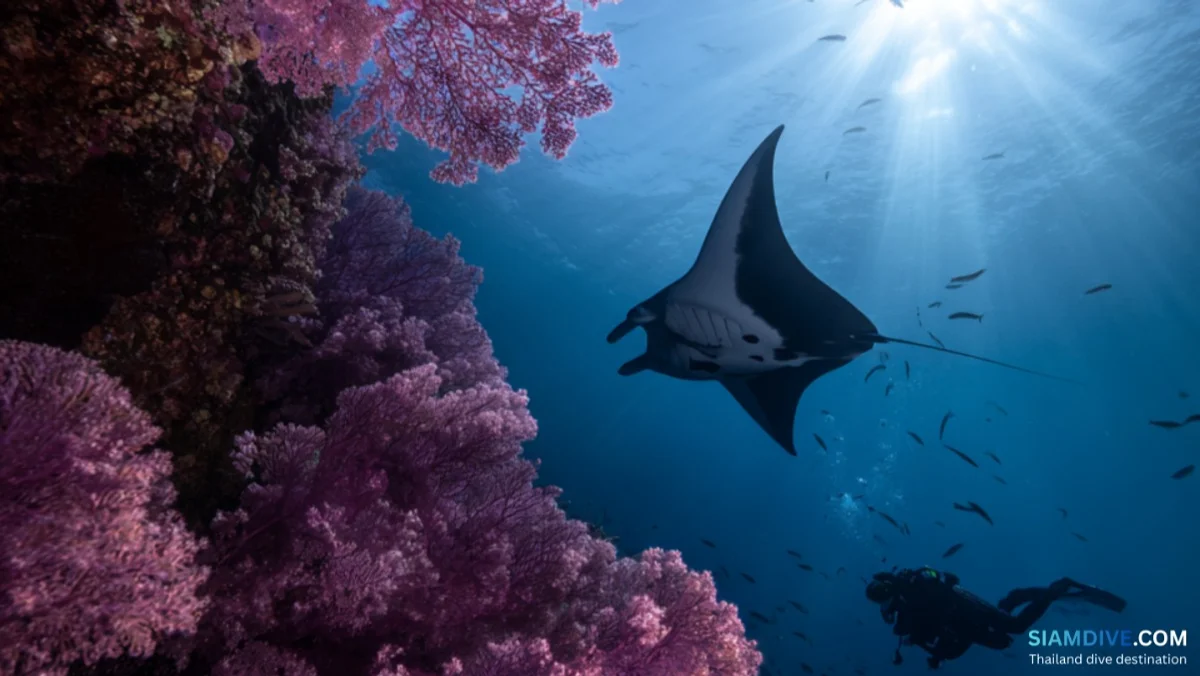
If you stop and look closely, the small stuff takes over. Pipefish weaving through the coral rubble, nudibranchs on the dead patches, sawblade shrimp tucked into anemone tentacles, frogfish if your guide knows where to find them. Lionfish and groupers patrol the deeper rocks. Whale sharks pass through enough times a year that the local divemasters keep a sighting log, but do not plan a trip around it. They show up when they show up.
When to Dive Here
The sweet spot is March through September, when the water clears up to 25-30 m and the surface stays flat enough for a comfortable boat ride. January and February are still divable but visibility drops and the wind can shut down trips with no warning. October to December is the rainy season and most operators suspend daily departures. Water temperature does not really change, so a 3 mm wetsuit covers you year-round. If you want the warmest water and the best whale shark odds, aim for April or May.
How to Get to the Boat
You start in Chumphon town, which is reachable from Bangkok by overnight train (about 8 hours, the comfortable option), bus from the Southern Terminal (6-7 hours), or a one-hour Nok Air flight to Chumphon Airport. From town it's a short songthaew or grab to Chumphon Pier, which most locals still call Siam Tours Pier.
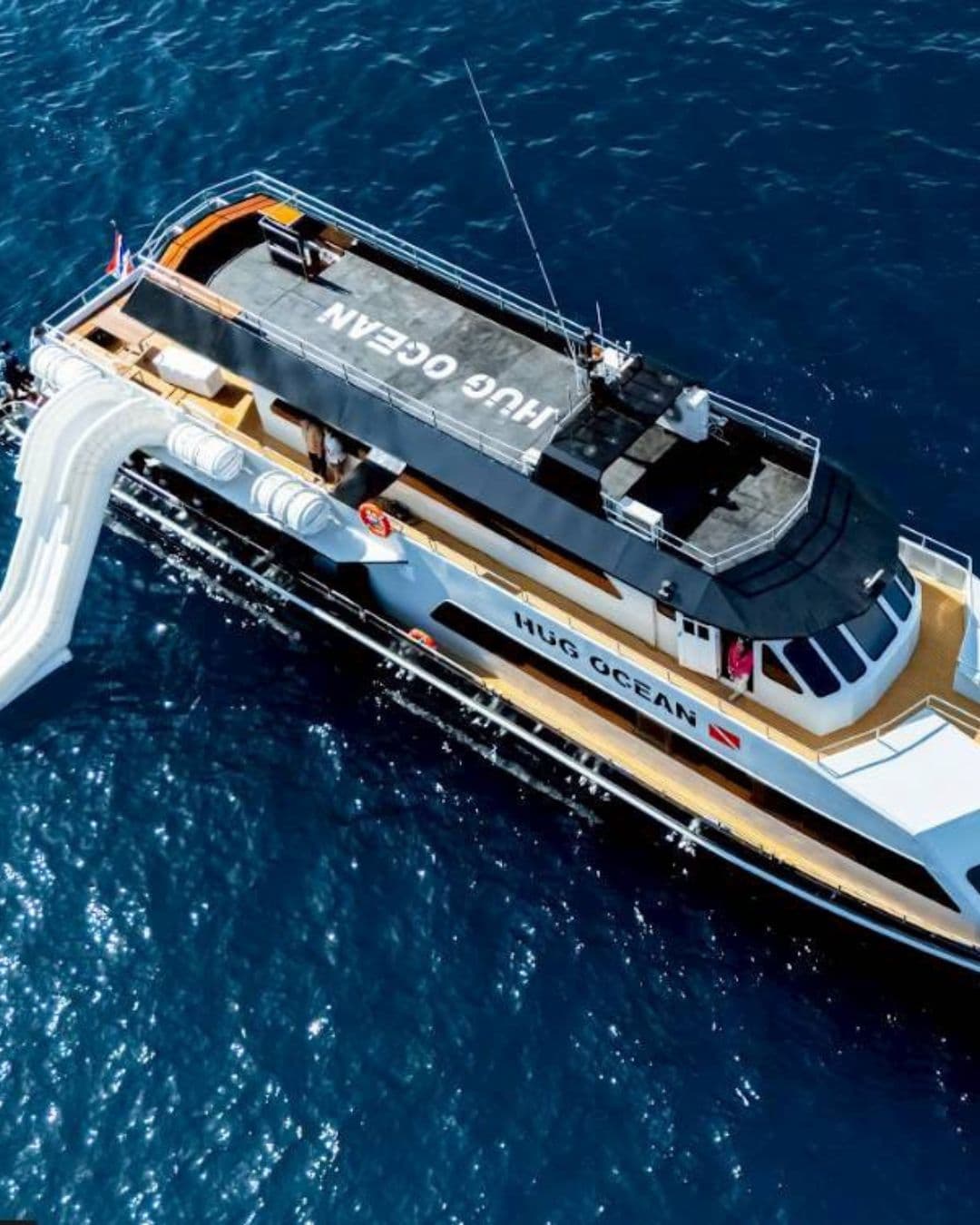
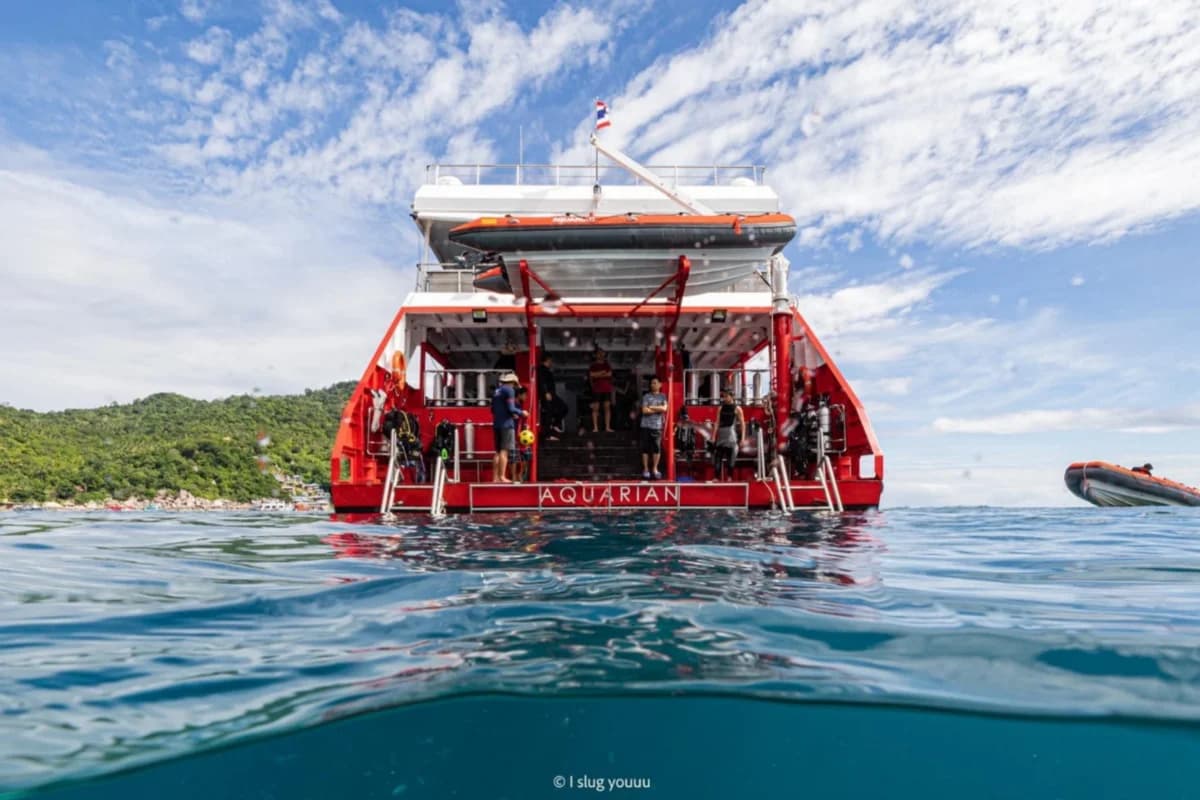
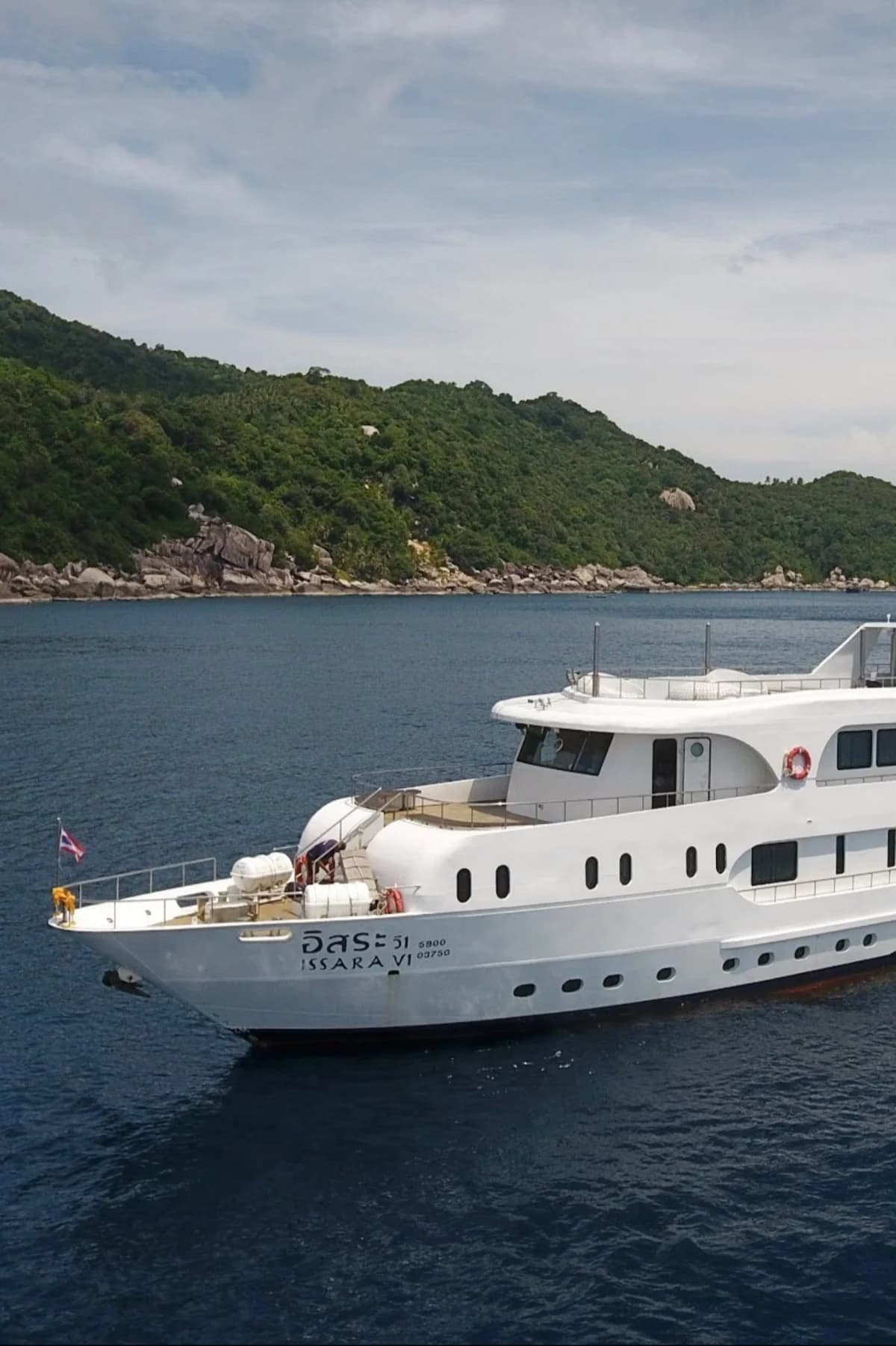
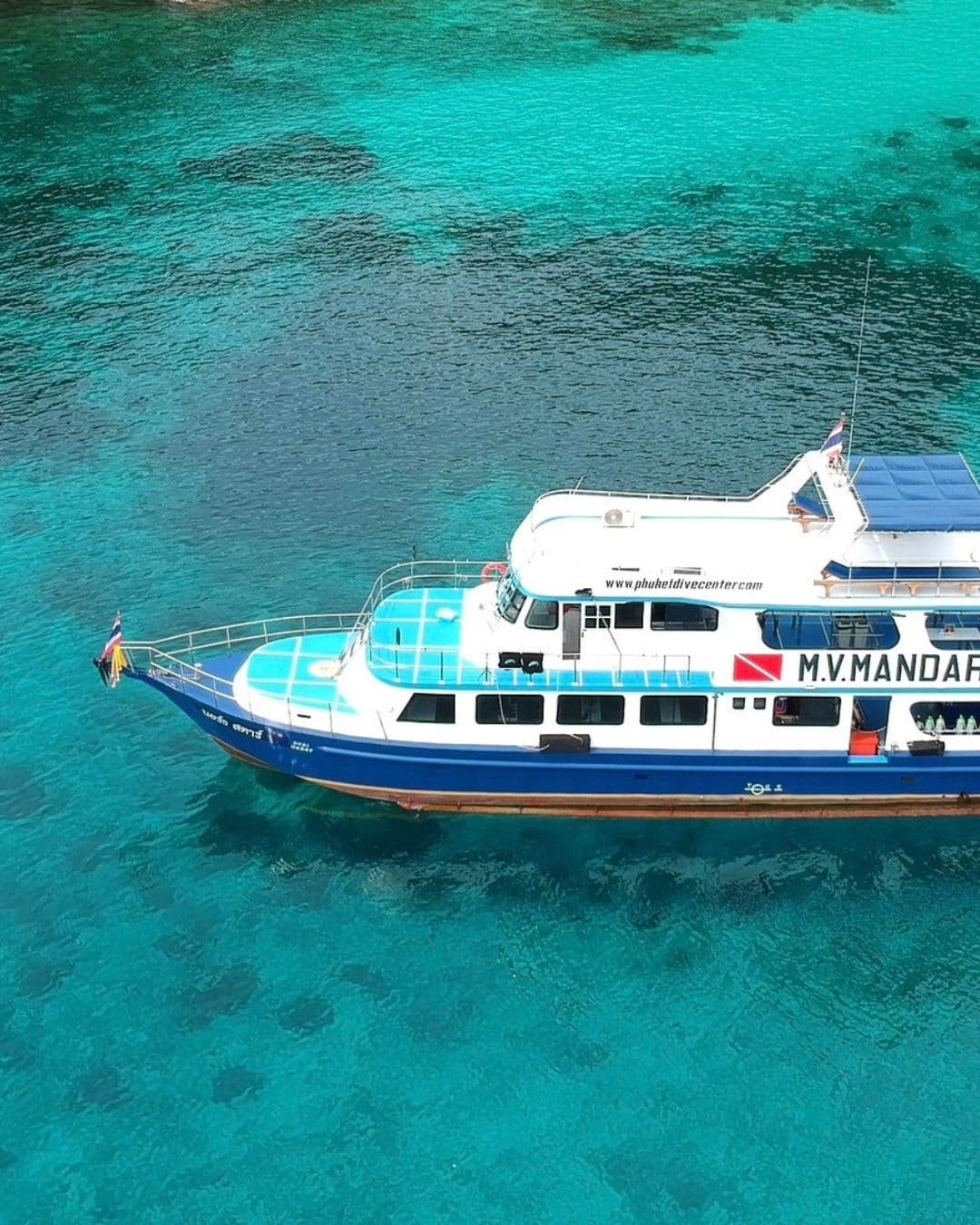
From the pier the boat ride to Koh Ngam Yai runs about 60 to 70 minutes on a tour catamaran or speedboat. There are no ferries and no public transport — long-tails cannot make the 20 km crossing safely. You go with a dive operator or you do not go. Plan on a national park fee of 200 baht for adults and 100 baht for children, paid at the island.
Practical Tips Before You Book
- Book ahead in peak season. Operators here run small groups and fill up fast in April-May. A day or two notice is enough most of the year, but Songkran week is genuinely full.
- Confirm the language. A few of the smaller Chumphon dive shops only run Thai-language briefings. Ask before you pay if you need English.
- Pack your own snacks. Most boats include lunch but the coffee runs out fast and the snack situation is whatever the captain bought that morning.
- Bring reef-safe sunscreen. The deck has zero shade and the boat ride home in May feels longer than 70 minutes.
- Check the season for whale sharks if that matters to you. The locals will tell you straight if they have been showing up that week. They do not lie about it.
- Combine with snorkeling. If you have non-diving friends, the boats usually swing by Koh Matra or Koh Rangkajiu for a snorkel stop on the way back.
Worth the Detour
Koh Ngam Yai is not the easiest dive site to reach in Thailand, and that is exactly why divers who find it keep coming back. You trade convenience for healthy reef, small boats, and a real chance of an empty mooring line. If you are already heading down to the Gulf and tired of the Koh Tao crowds, swap one day for this. Plan your trip and book a Chumphon boat through siamdive.com — we work with the operators who know these reefs and run the small groups. The whale sharks do not show up on schedule, but the rest of it always delivers.