Scuba Day TripsSnorkelingLand TourLiveaboardDive ResortFreedive Trips
Scuba CoursesFreedive Courses
Blog
Hin Daeng & Hin Muang Liveaboard: Thailand's Wildest Walls
← Blog

Hin Daeng & Hin Muang Liveaboard: Thailand's Wildest Walls

8 เมษายน 2569

Hin Daeng and Hin Muang are Thailand's deepest soft coral walls — manta rays, whale sharks, and serious current. Here's how to dive them by liveaboard.

Why Hin Daeng and Hin Muang Belong on Every Serious Diver's List

Most divers who visit Thailand stop at Phi Phi or the Similans and call it a trip. They miss the two pinnacles sitting 70 kilometers offshore in the southern Andaman, and that is a real loss. Hin Daeng and Hin Muang are not pretty house reefs. They are deep, current-swept walls inside Mu Koh Lanta National Marine Park where whale sharks and manta rays show up to feed, and where the wall at Hin Muang drops past 60 meters into blue water. This is the kind of diving you book a liveaboard for.

The remoteness keeps them quiet. On a good day you might be the only boat tied to either pinnacle, which is almost unheard of in Thai waters. If you have the experience to handle current and you want big-animal encounters without the crowd at Richelieu Rock, this is where you should be heading.

What Makes These Two Pinnacles Special

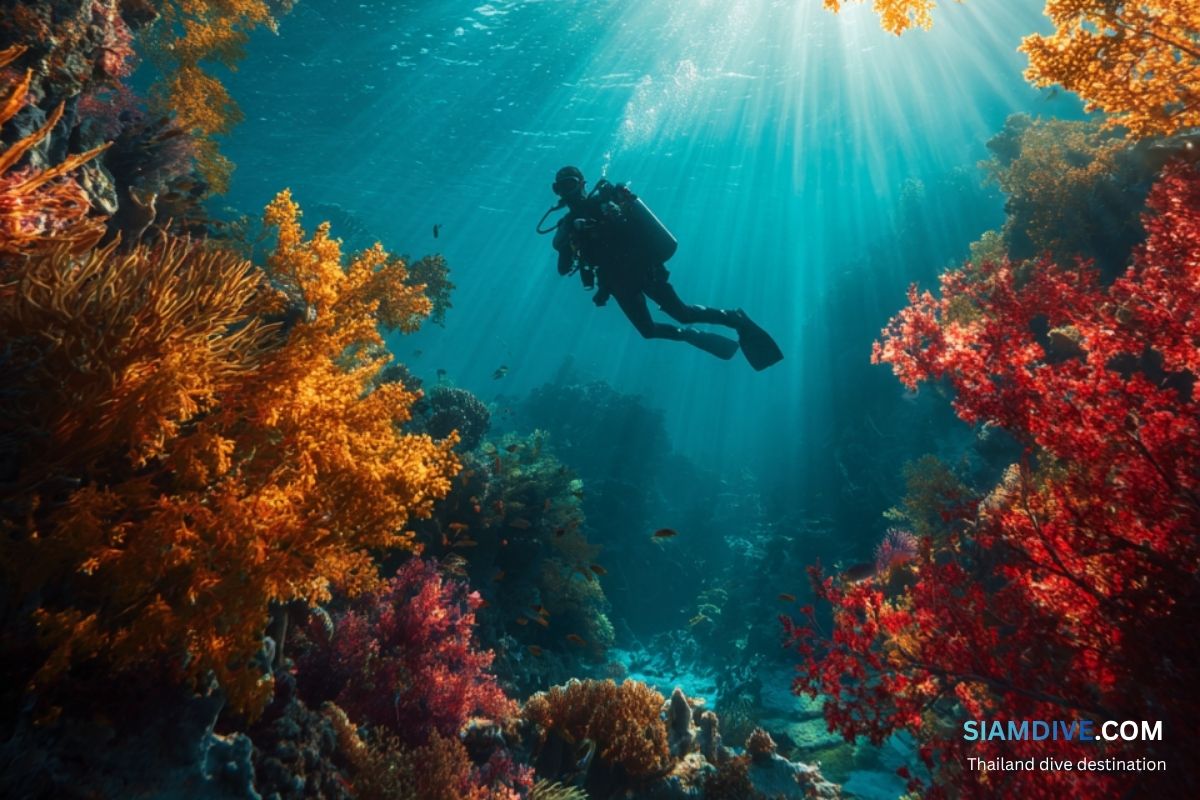
Hin Daeng means "Red Rock" and the name fits. The pinnacle breaks the surface and is wrapped top to bottom in red soft corals so dense they look like fabric. Schools of rainbow runners and giant trevallies cruise the shallows, and the southern wall plunges to around 50 meters where reef sharks patrol the shadows.

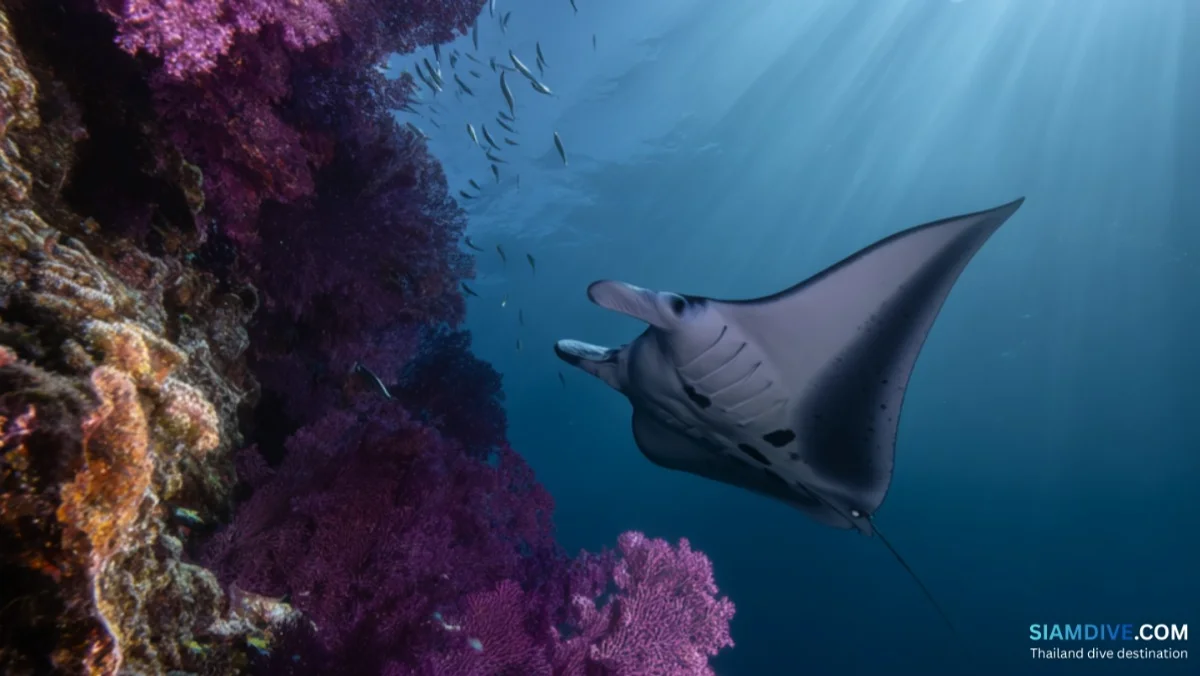
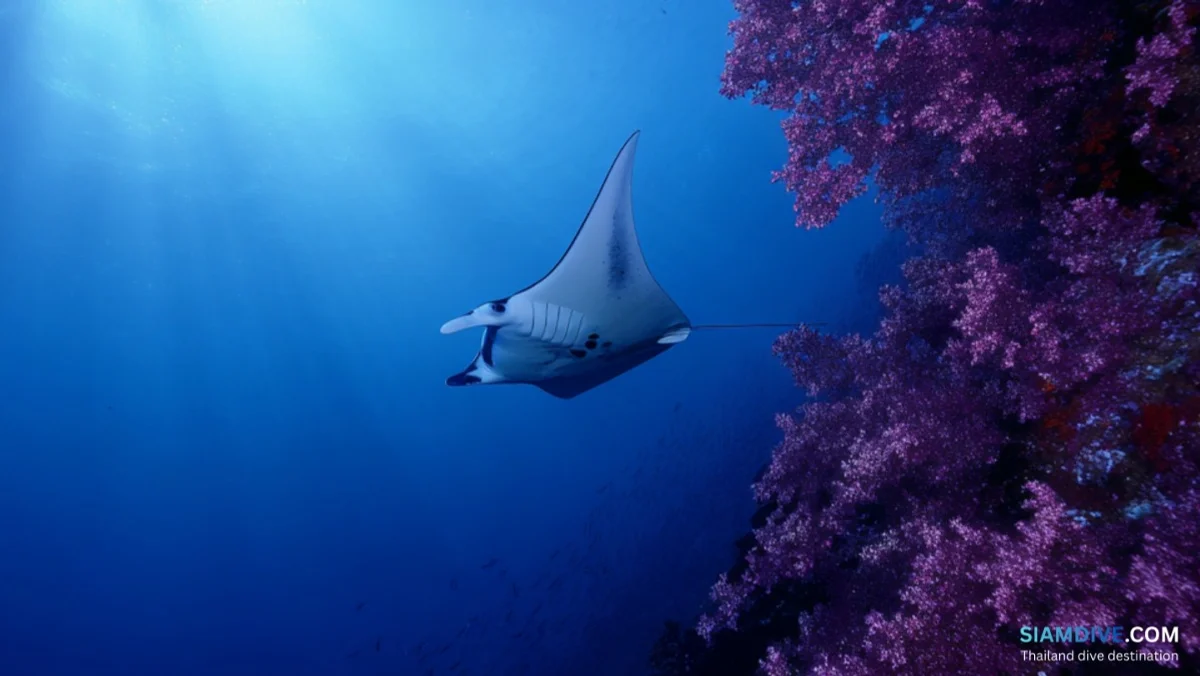
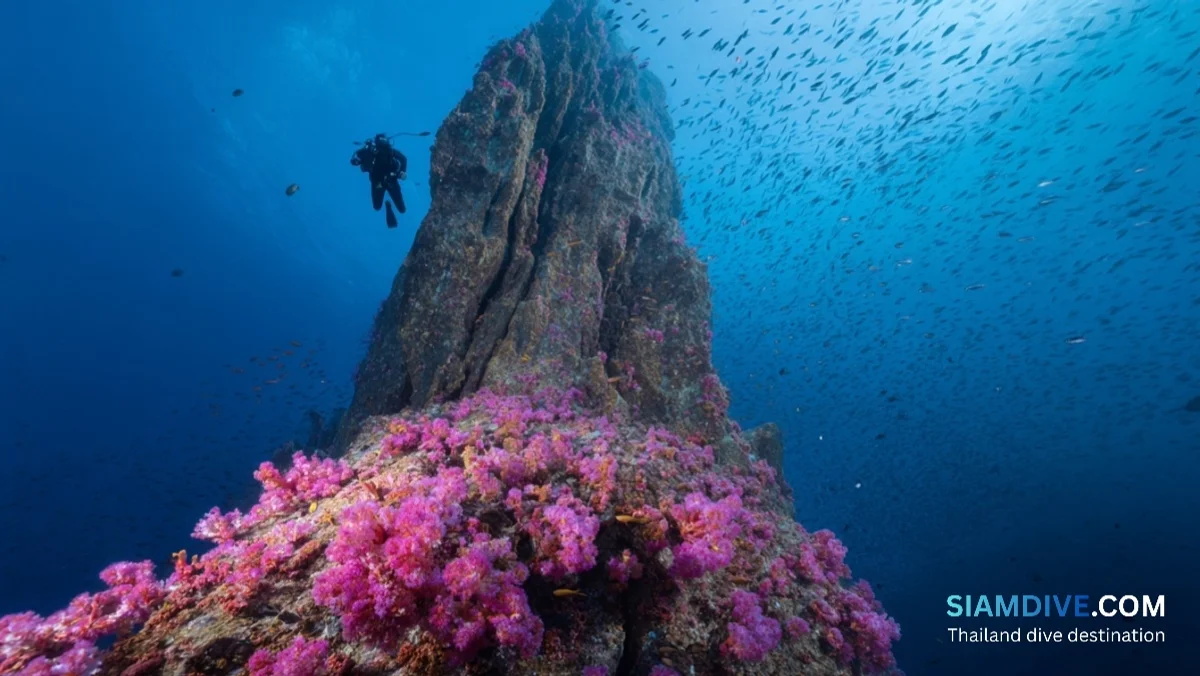
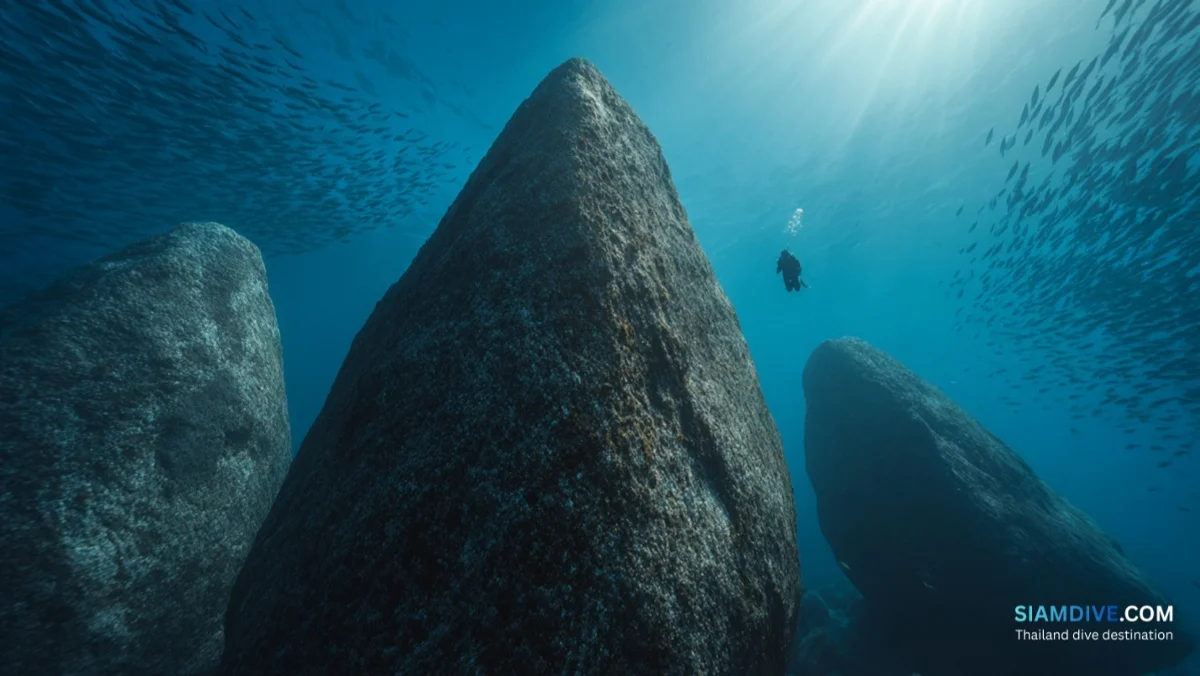
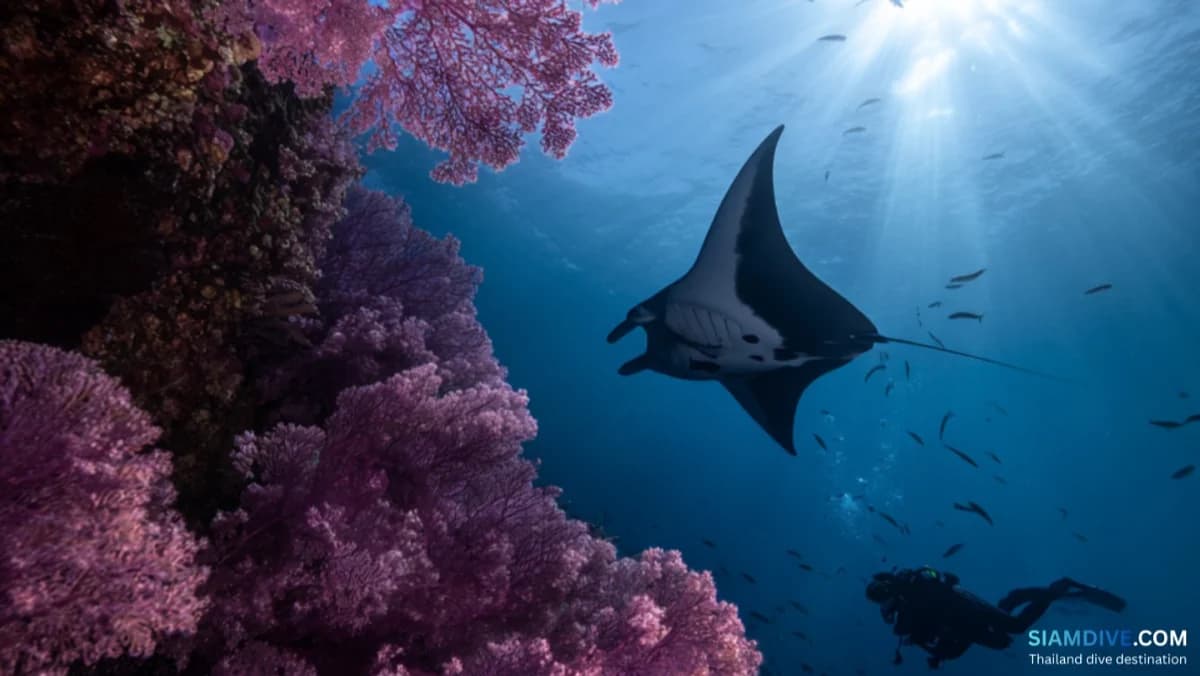
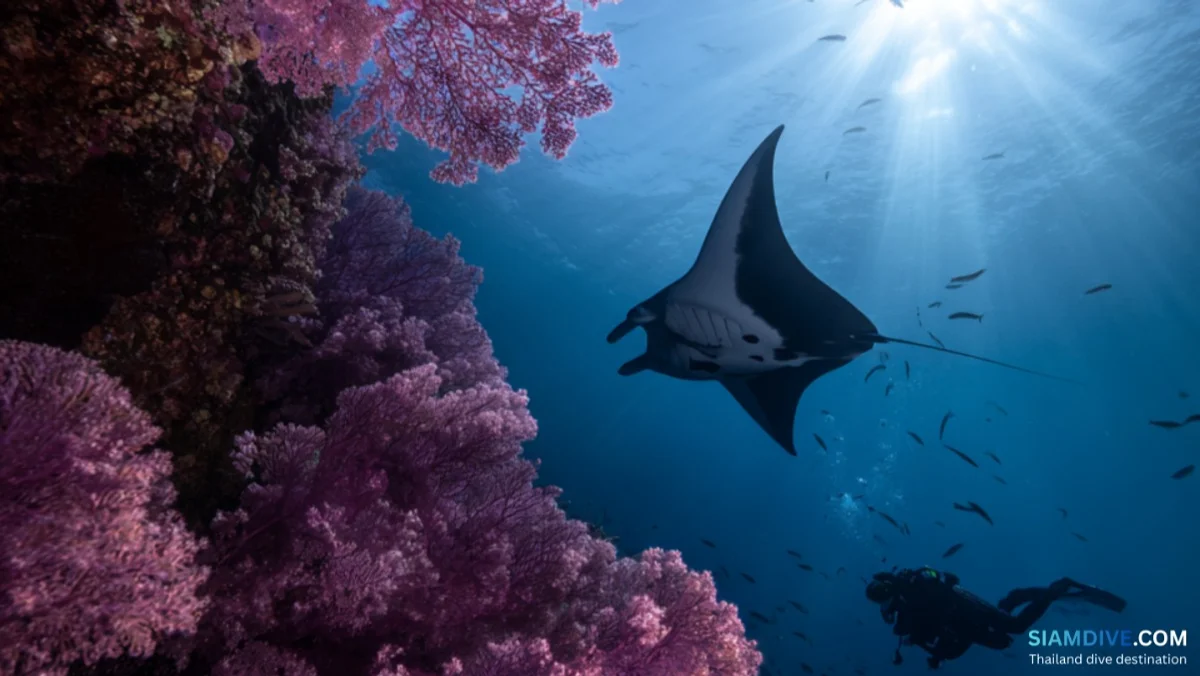
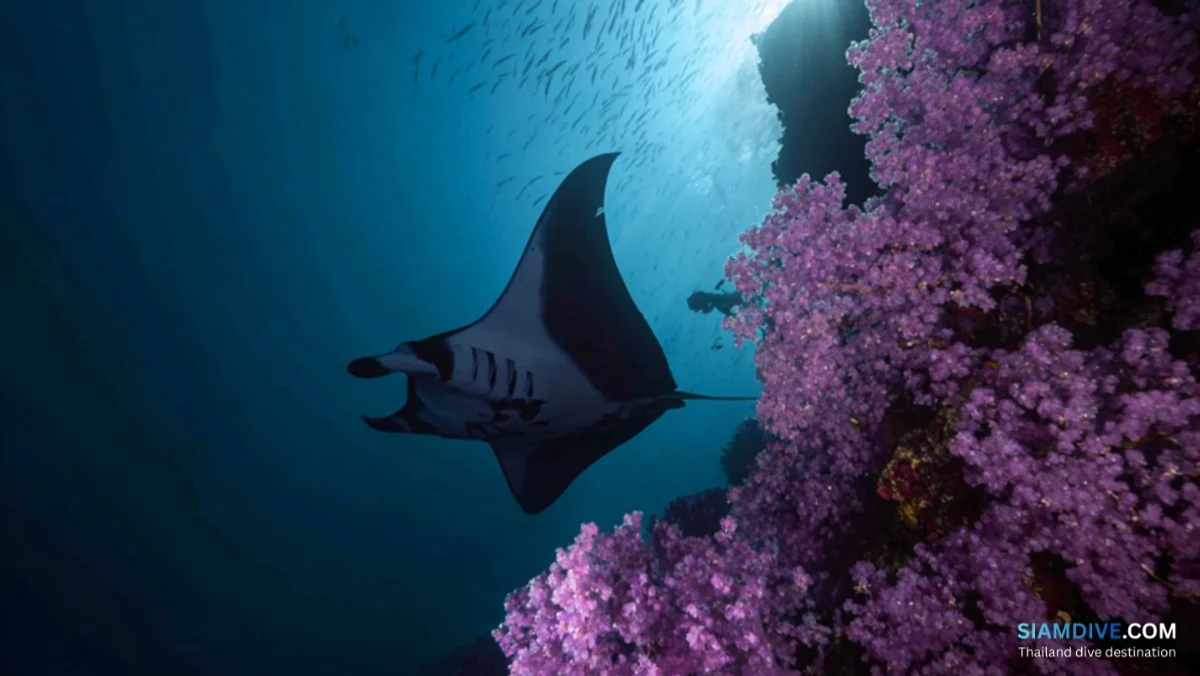
Hin Muang sits about 500 meters away, completely submerged with its peak around 8 meters below the surface. The site holds the deepest vertical wall in Thailand, dropping past 60 meters with technical divers reaching 70. Purple soft corals cover the wall, which is where the Thai name "Purple Rock" comes from. The two sites together give you everything: shallow color, deep wall, sharks, pelagics, and macro tucked into the cracks.

Marine Life You Can Realistically Expect

The nutrient-rich currents that make these sites uncomfortable are the same currents that make them productive. On a single dive you can hit:

  • Whale sharks — most reliable from February through April when plankton blooms peak
  • Manta rays — both reef mantas and the occasional giant oceanic manta cruising the cleaning stations
  • Leopard sharks resting on sand patches and reef sharks holding in current
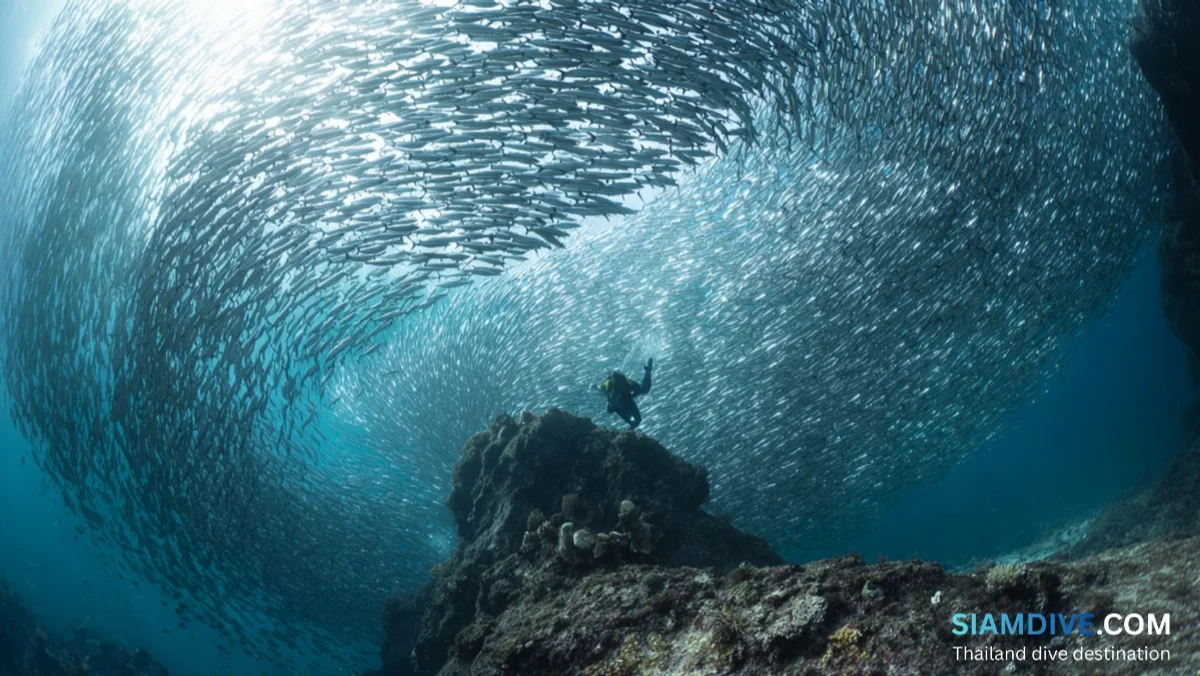
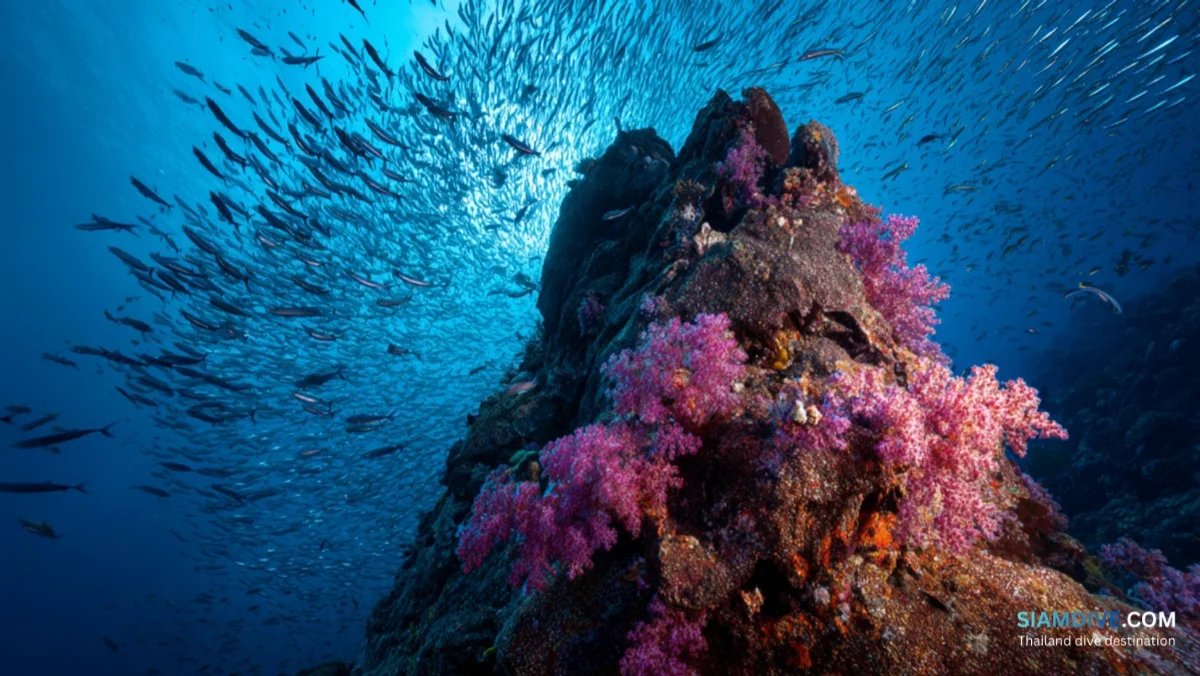
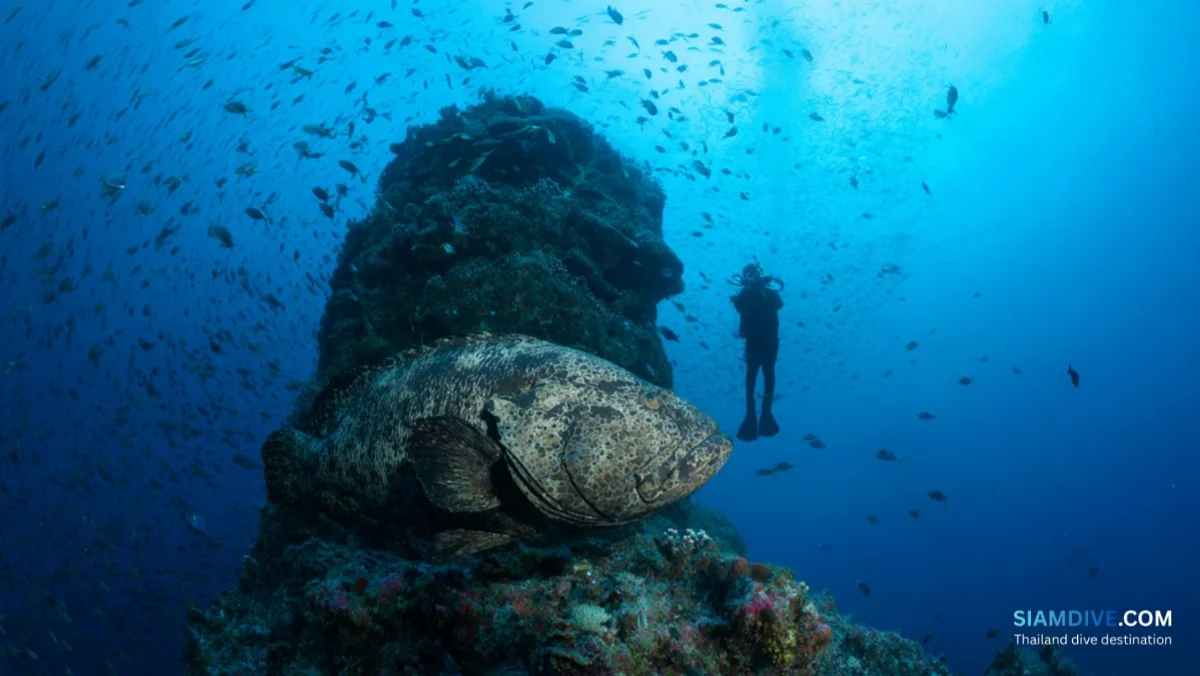
  • Schooling barracuda, jacks, and rainbow runners in tornadoes around the pinnacle tops
  • Frogfish, scorpionfish, and harlequin shrimp for divers who slow down and look hard
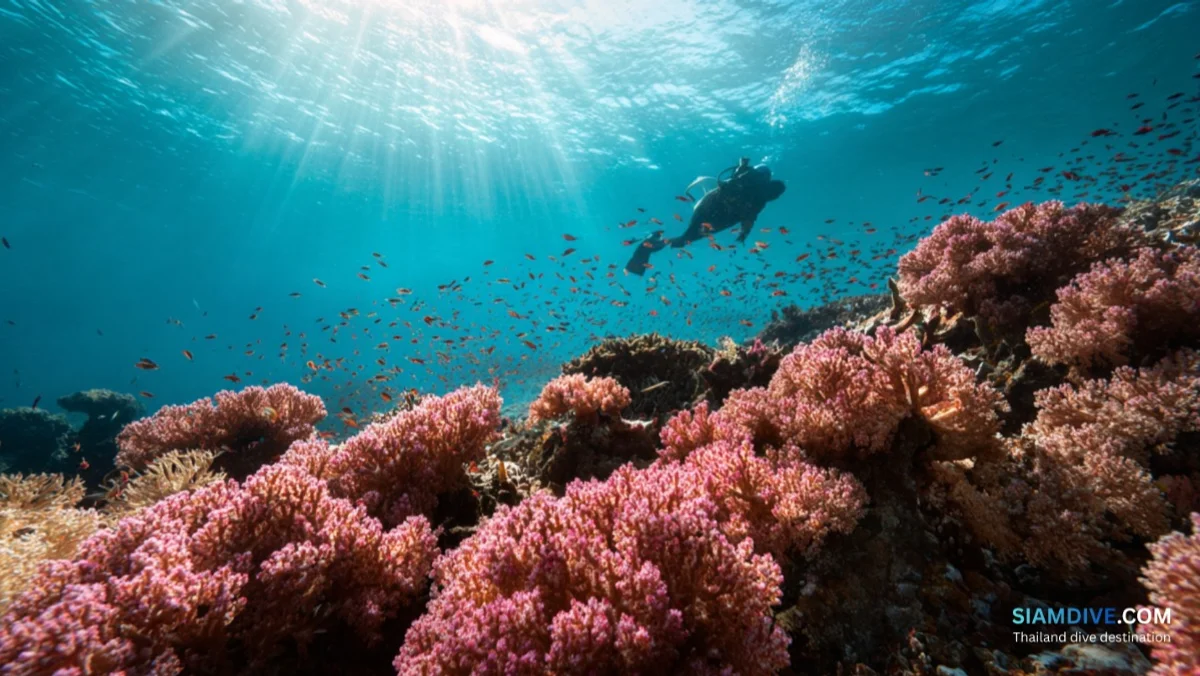
  • Soft coral walls — red at Hin Daeng, purple at Hin Muang, both spectacular when current pushes them open

Nothing is guaranteed, but the odds here beat almost anywhere else in Thailand for big-animal sightings during the right months.

Conditions, Currents, and Who Should Be Diving Here

Water temperature stays between 27 and 30°C all year, so a 3mm wetsuit is plenty. Visibility runs 15 to 30 meters depending on plankton load — clearer water means fewer whale sharks, soupier water means better chances. That trade-off is real and you should pick your trip dates accordingly.

Currents are the main reason these sites are advanced-only. They can switch direction mid-dive, accelerate around the pinnacle, and force you to shelter on the leeward side. If you cannot hold a safety stop in moving water, or if you have fewer than about 30 logged dives, this is not your trip yet. Reef hooks help. So does the ability to stay calm when you suddenly cannot see your buddy because a wall of barracuda just slid between you.

How a Typical Liveaboard Trip Runs

Day trips do not work — the run from Phuket is too long and burns the bottom time you came for. Liveaboards are the answer, and most departures fall into two formats:

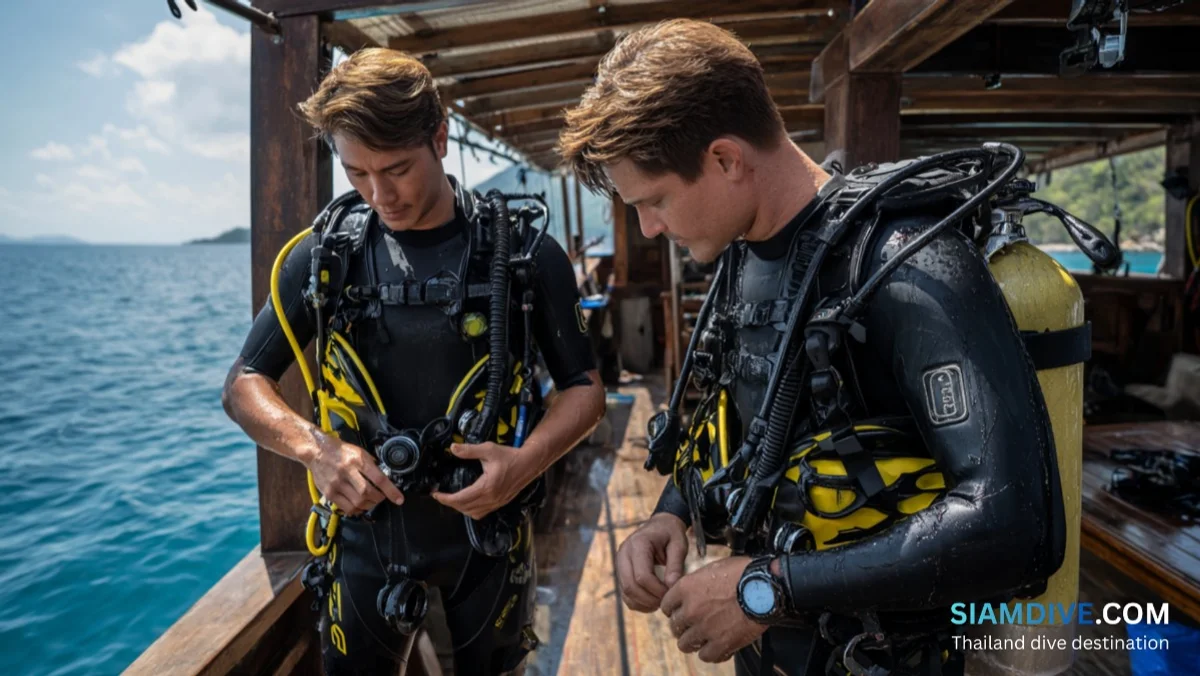
  • 2-night / 3-day short trips from Phuket or Khao Lak. Roughly 7 to 9 dives total, hitting Hin Daeng, Hin Muang, Koh Ha, and one or two of the Phi Phi sites. The boat leaves Chalong or Patong in the evening, you wake up at the pinnacles, and you get two days of diving before heading back.
  • 5 to 6-night combination trips that pair the southern pinnacles with the Similans, Koh Bon, Koh Tachai, and Richelieu Rock to the north. These are the trips serious photographers book, and they cover the entire Andaman in one shot.

Pricing starts around 32,000 to 36,000 THB per diver for the short trips on smaller boats like MV Giamani (max 10 divers). Longer combination trips on larger boats run 65,000 to 95,000 THB depending on cabin grade. Meals, tanks, weights, guided dives, and Phuket-area hotel transfers are usually included.

Best Time to Book and How to Get There

The diving season runs from late October to early May. Outside those months Mu Koh Lanta National Marine Park is closed and the boats do not run. February through April is the sweet spot if you want whale sharks. November and December tend to give the cleanest visibility. April is hot but the seas are usually flattest.

Most divers fly into Phuket International Airport. Direct flights from Bangkok take about an hour and run all day. From the airport, a taxi to Chalong or Patong costs around 1,200 THB. Many liveaboard operators include hotel pickup from Patong, Kata, and Karon at no charge. If your trip leaves from Khao Lak's Tap Lamu pier, plan an extra 90 minutes by road from Phuket airport, or book the operator's transfer.

Practical Tips Before You Board

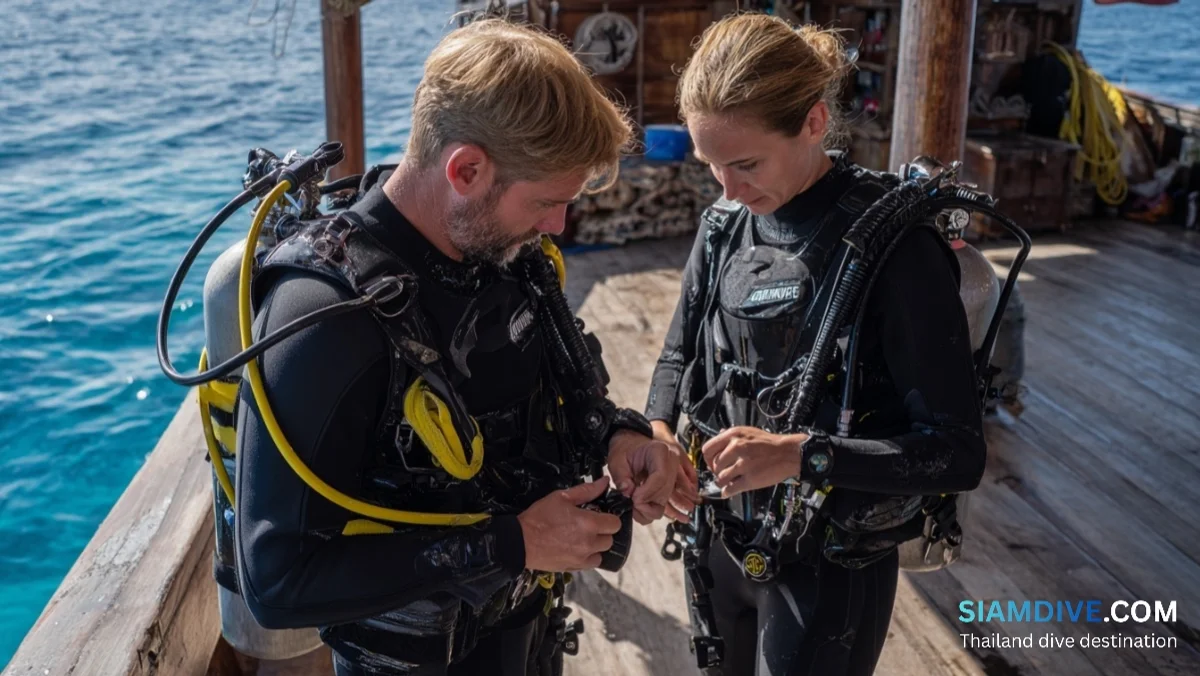
  • Bring your own regulator and computer if you have them. Rental gear is fine but yours is better when current makes things busy.
  • Pack motion sickness tablets even if you do not normally need them. The crossing to the pinnacles can be rough.
  • Wait at least 18 hours after your last dive before flying home. Plan your domestic connection accordingly.
  • Book early for February to April departures. Small boats with 10 divers fill up months in advance.
  • If you can extend your trip, the 5-night combination cruise gives you Richelieu Rock too. It is worth the extra cost.
  • Carry cash on board for the marine park fee (around 600 THB) and tips for the crew.

Final Thoughts

Hin Daeng and Hin Muang are not the Thailand most tourists ever see. They are the Thailand serious divers come back for. If you have the certifications and the comfort in current, a liveaboard to these pinnacles will give you the kind of dives you actually remember a decade later — walls of soft coral, sharks in the blue, and if you time it right, a whale shark gliding past close enough to feel the bow wave. Browse current liveaboard departures and check availability for the upcoming season at siamdive.com.
← กลับไปหน้า Blog

Gallery

Hin Daeng & Hin Muang Liveaboard: Thailand's Wildest Walls — image 1Hin Daeng & Hin Muang Liveaboard: Thailand's Wildest Walls — image 2Hin Daeng & Hin Muang Liveaboard: Thailand's Wildest Walls — image 3Hin Daeng & Hin Muang Liveaboard: Thailand's Wildest Walls — image 4

บทความแนะนำ

White Rock Koh Tao Diving Guide: The Island's Best Night Dive

White Rock Koh Tao Diving Guide: The Island's Best Night Dive

White Rock (Hin Khao) is Koh Tao's most-used dive site for a reason. Staghorn gardens, turtles, and the island's top night dive — here's how to dive it.

Richelieu Rock Diving Guide: Best Site in Thailand 2025

Richelieu Rock Diving Guide: Best Site in Thailand 2025

Discover Richelieu Rock, Thailand's crown jewel of scuba diving. Whale sharks, manta rays, seahorses and world-class biodiversity await in the Andaman Sea.

Hin Sawaeng Diving Guide: Koh Lipe's Wall and Pinnacle Gem

Steep walls, dramatic drop-offs, and rich marine life make Hin Sawaeng one of Koh Lipe's most rewarding dive sites. Complete guide with tips and conditions.

Sea Turtles in Thailand: Species Guide for Scuba Divers

Sea Turtles in Thailand: Species Guide for Scuba Divers

Meet hawksbill, green, and olive ridley turtles at Koh Tao, Similan Islands, and more. Species ID, dive sites, conservation, and photo tips.

What Makes Thailand Special for Scuba Divers

What Makes Thailand Special for Scuba Divers

Two coasts, year-round warm water, world-class sites you can actually reach, and prices that don't punish you. Here's what really sets Thailand apart for divers.

Stonehenge Dive Site Koh Lipe: Boulders, Currents and Big Fish

Stonehenge Dive Site Koh Lipe: Boulders, Currents and Big Fish

Massive granite boulders, strong currents pulling in pelagics, and healthy corals. Everything you need to know about diving Stonehenge off Koh Lipe.

Aow Leuk Koh Tao Diving Guide: The Island's Best Beginner Bay

Aow Leuk Koh Tao Diving Guide: The Island's Best Beginner Bay

Aow Leuk on Koh Tao's southeast coast offers shallow reefs, juvenile blacktip sharks, and easy shore diving — the perfect beginner bay on the island.

8 Mile Rock Diving Guide: Koh Lipe's Deep Pinnacle

8 Mile Rock Diving Guide: Koh Lipe's Deep Pinnacle

A remote pinnacle 8 miles offshore with big pelagics, reef sharks, and untouched corals. Your guide to Koh Lipe's most rewarding advanced dive site.

Should You Get Scuba Certified? An Honest Answer

Should You Get Scuba Certified? An Honest Answer

Real costs, time commitments, physical requirements, and risks of scuba certification — plus a smart way to test the waters before you invest.

Japanese Gardens Koh Tao Diving Guide: The Island's Easiest Great Reef

Japanese Gardens Koh Tao Diving Guide: The Island's Easiest Great Reef

Japanese Gardens is Koh Tao's most-used training site, but it's more than that. Shallow coral, hidden swim-throughs, and the island's most reliable dive.

Scuba Diving Safety: A Beginner's Guide to Diving Safe & Smart

Scuba Diving Safety: A Beginner's Guide to Diving Safe & Smart

The five-minute pre-dive check, three golden rules, buddy system and emergency drills every diver must know. Real safety advice without the fluff.

Chumphon Pinnacle Diving Guide: Gulf of Thailand's Granite Tower

Chumphon Pinnacle Diving Guide: Gulf of Thailand's Granite Tower

A complete guide to diving Chumphon Pinnacle off Koh Tao — whale sharks, schools of trevally, the swim-through, depths, currents, and how to book.

Safe Diving Techniques: 8 Skills That Prevent Accidents

Safe Diving Techniques: 8 Skills That Prevent Accidents

Master the 8 essential safe diving techniques every diver must know — from buoyancy control and air management to emergency ascents and SMB deployment.

The Pre-Dive Buddy Check Most Scuba Divers Skip

The Pre-Dive Buddy Check Most Scuba Divers Skip

Half of all scuba accidents could be prevented by a five-minute BWRAF buddy check. Here's why experienced divers skip it and how to do it right.

10 Things Every Certified Diver Should Know (But Open Water Didn't Teach)

10 Things Every Certified Diver Should Know (But Open Water Didn't Teach)

Gas management, dive planning, SMBs, owning your gear, DAN insurance and the right to call a dive — the practical skills certified divers actually need.

Triangle Pinnacle Diving Guide: The Gulf's Quietest Granite Site

Triangle Pinnacle Diving Guide: The Gulf's Quietest Granite Site

Hin Sam Liam is the Gulf of Thailand pinnacle that does not show up on the standard Koh Tao board. Big groupers, anemone gardens, and almost no crowds.

Explore 9 Eco Centers

Explore 9 Eco Centers

Discover 9 PADI Eco Centers in Thailand certified by UN Reef-World Green Fins for responsible scuba diving. Your ultimate guide by Siam Dive Center to sustainable dive sites.

King Kong Pinnacle Koh Tao Diving Guide: The Island's Quietest Pinnacle

King Kong Pinnacle Koh Tao Diving Guide: The Island's Quietest Pinnacle

King Kong Pinnacle south of Koh Tao is the island's least-dived pinnacle — healthy reef, relaxed fish, and empty water for divers who want peace.

The Junkyard Koh Tao Diving Guide: The Island's Quirkiest Artificial Reef

The Junkyard Koh Tao Diving Guide: The Island's Quirkiest Artificial Reef

The Junkyard off Mae Haad is Koh Tao's artificial reef built from recycled trash — toilets, bikes, and a thriving coral nursery with resident batfish and lionfish.

Nitrox Diving Guide: Benefits, Risks & MOD Explained

Nitrox Diving Guide: Benefits, Risks & MOD Explained

Master Enriched Air Nitrox diving — understand MOD calculations, oxygen toxicity risks, EAN32 vs EAN36, and how Nitrox extends your bottom time safely.

ทริปแนะนำ

Hug Ocean Boat
daytrip

Hug Ocean Boat

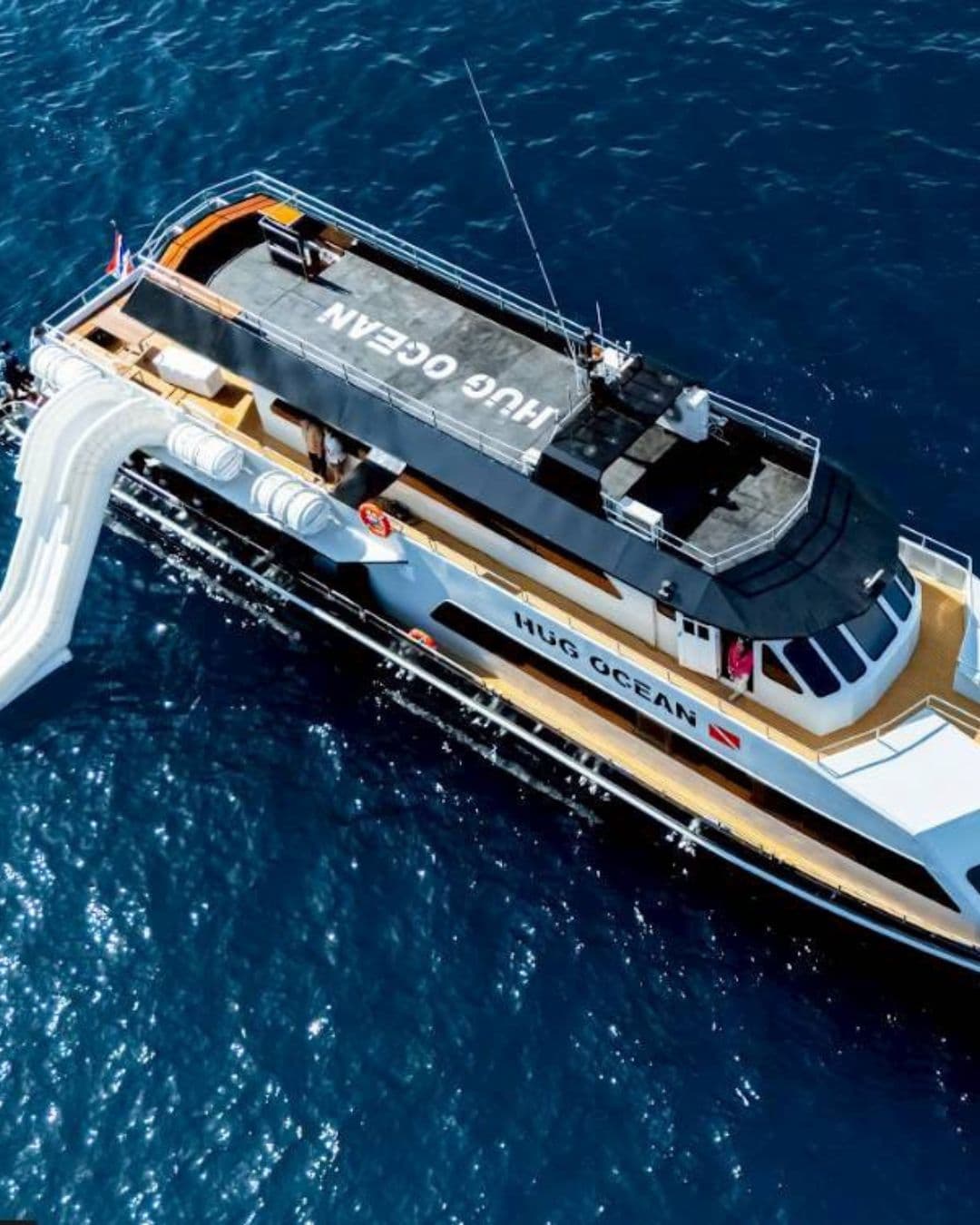
Discover Phuket's Andaman Sea aboard Hug Ocean — a luxury 3-deck dive yacht for 80 guests with a thrilling water slide, sun-soaked top deck, and PADI-certified diving at Racha Yai and Racha Noi.

Aquarian Liveaboard
liveaboard

Aquarian Liveaboard

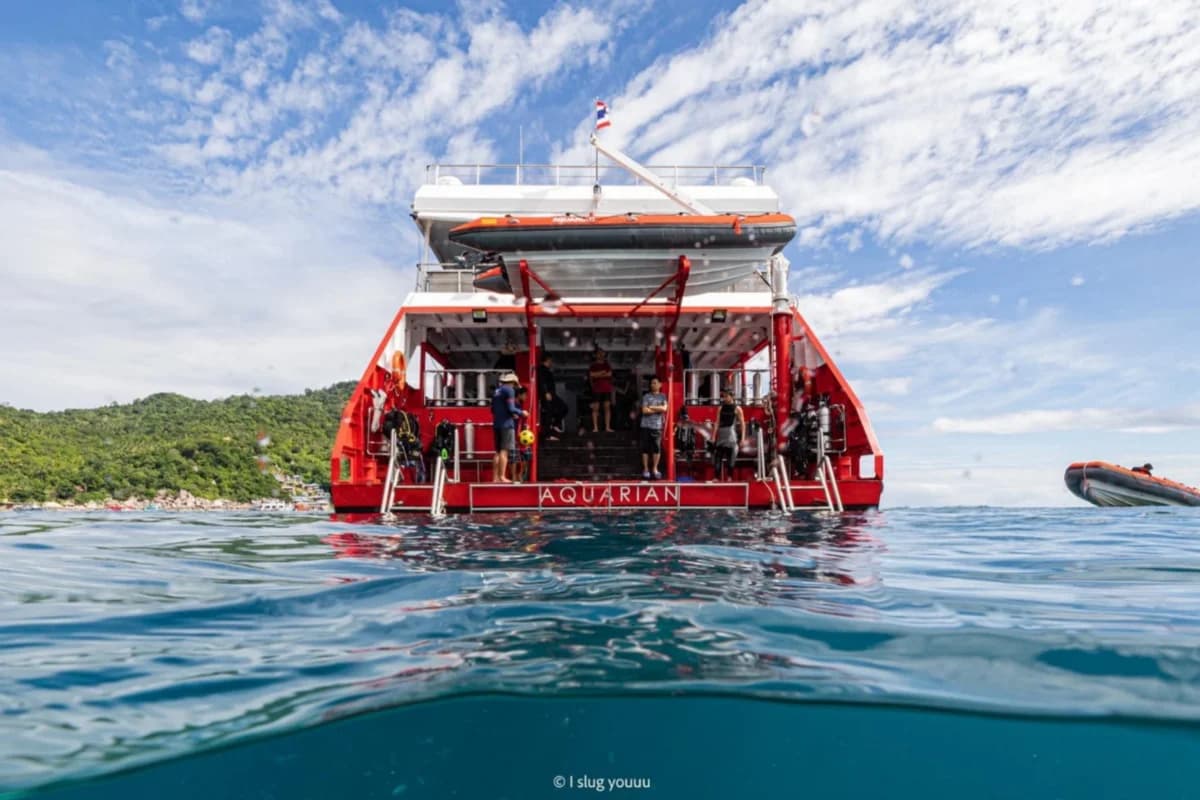
MV Aquarian — striking 2021-built red steel liveaboard, 31.4 m × 7.5 m, max 28 guests in 14 cabins. Free unlimited Nitrox via Coltri Sub membranes, one of Thailand's largest dive platforms, and full premium-hotel comfort.

Issara Liveaboard
liveaboard

Issara Liveaboard

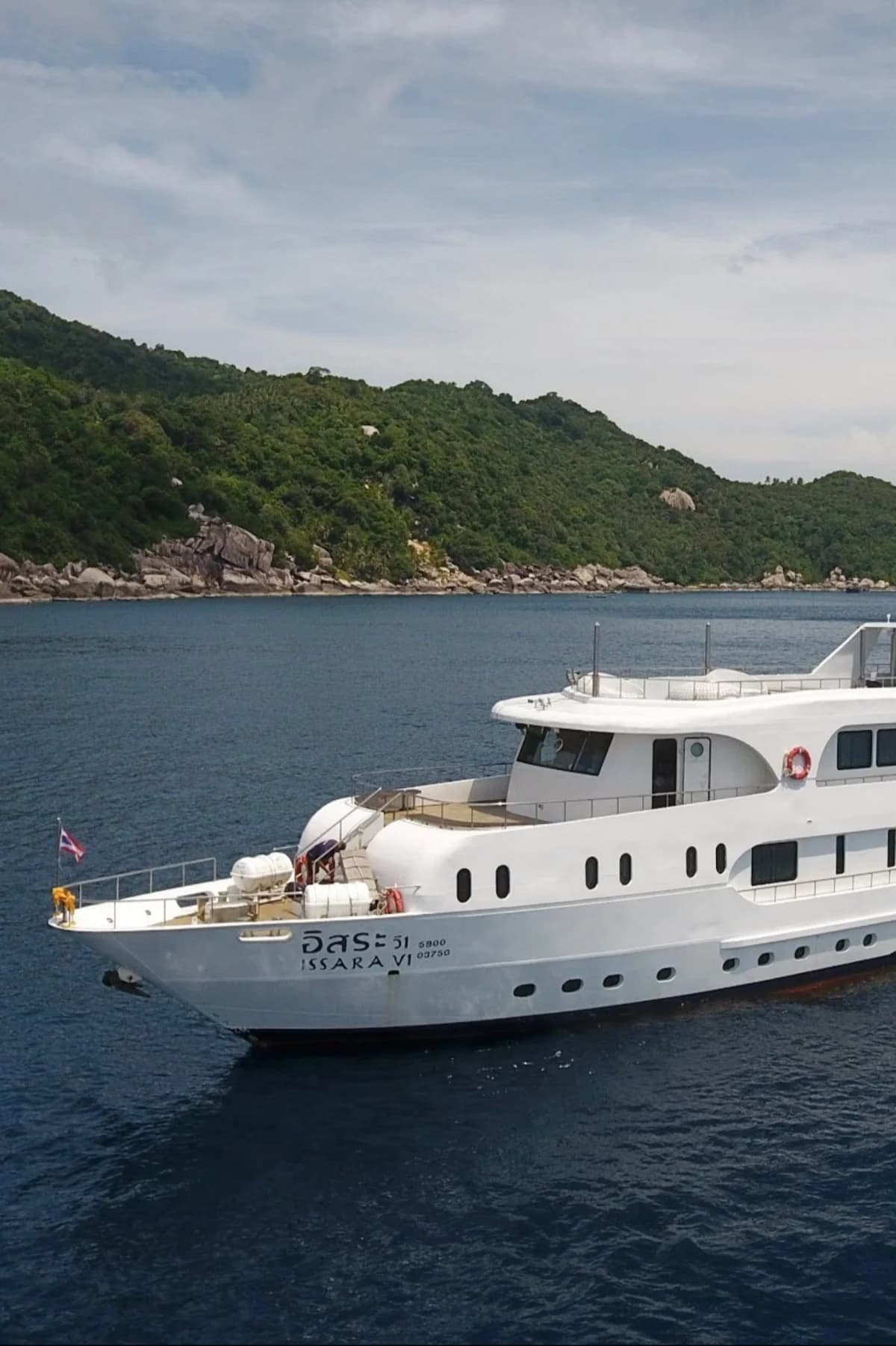
MV Issara — high-end Thai steel-hulled liveaboard built 2016–17, 28.5 m × 6.5 m, 4 decks, max 22 guests in 11 hotel-style cabins. Indoor saloon, jacuzzi sun deck, full-board buffet dining.

Mandarin Queen 5
daytrip

Mandarin Queen 5

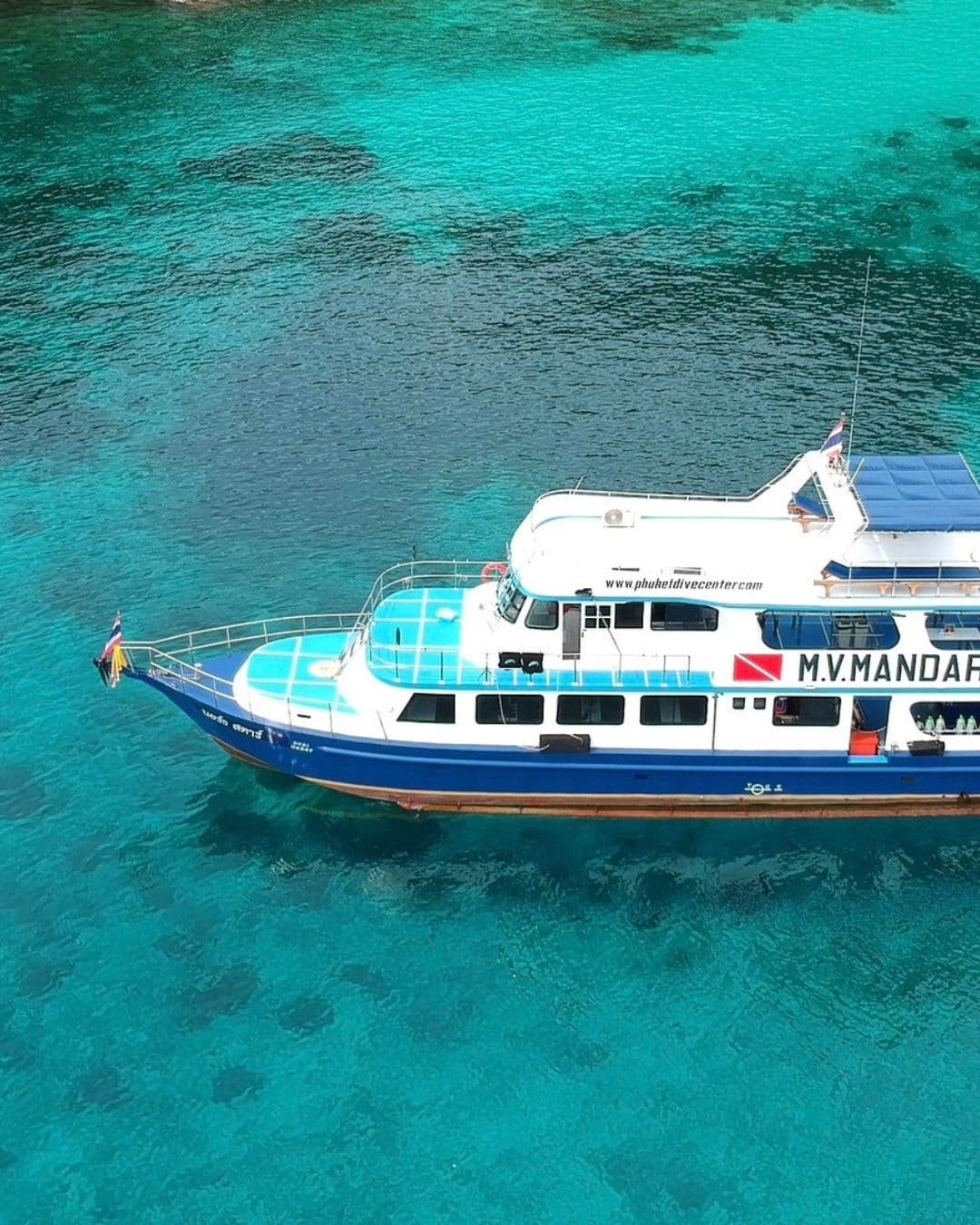
Brand-new Phuket dive boat — 26.2 m M/V Mandarin Queen 5 with spacious dive platform, lounge and upper sun deck. Daily day trips to King Cruiser Wreck, Shark Point, Anemone Reef, Racha Yai and Racha Noi.