Scuba Day TripsSnorkelingLand TourLiveaboardDive ResortFreedive Trips
Scuba CoursesFreedive Courses
Blog
What Makes Thailand Special for Scuba Divers
← Blog

What Makes Thailand Special for Scuba Divers

7 เมษายน 2569

Two coasts, year-round warm water, world-class sites you can actually reach, and prices that don't punish you. Here's what really sets Thailand apart for divers.

Why Thailand Keeps Pulling Divers Back

Ask any divemaster who has worked across Southeast Asia where they would send a friend on a first big dive trip, and Thailand keeps coming up. Not because it has the rarest fish or the most remote walls — it doesn't. It wins on something more practical: you can show up with two weeks off, a moderate budget, and zero local knowledge, and still come home with photos of whale sharks, mantas, and coral gardens you didn't have to fight to reach.

This is what actually makes Thailand stand out — the parts the brochures gloss over and the parts that genuinely matter once you're standing on a boat at six in the morning.

Two Coasts, Two Completely Different Trips

Most dive countries give you one coastline and one season. Thailand gives you two of each, and they barely overlap. That single fact changes everything about how you plan a trip.

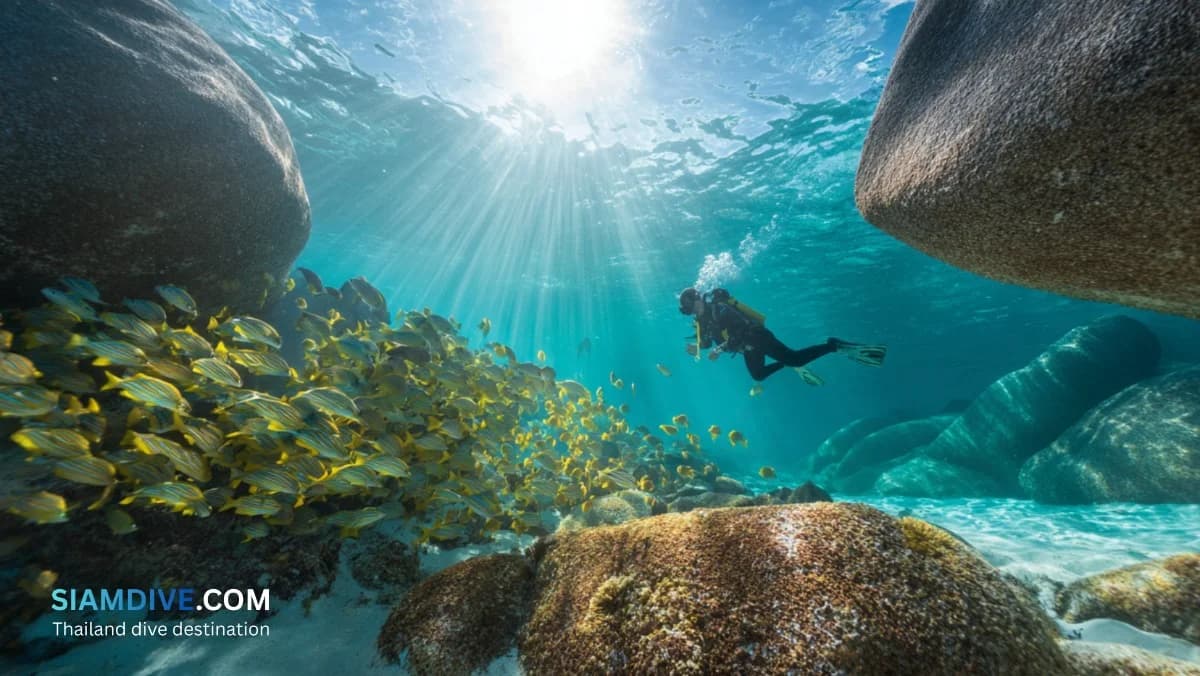
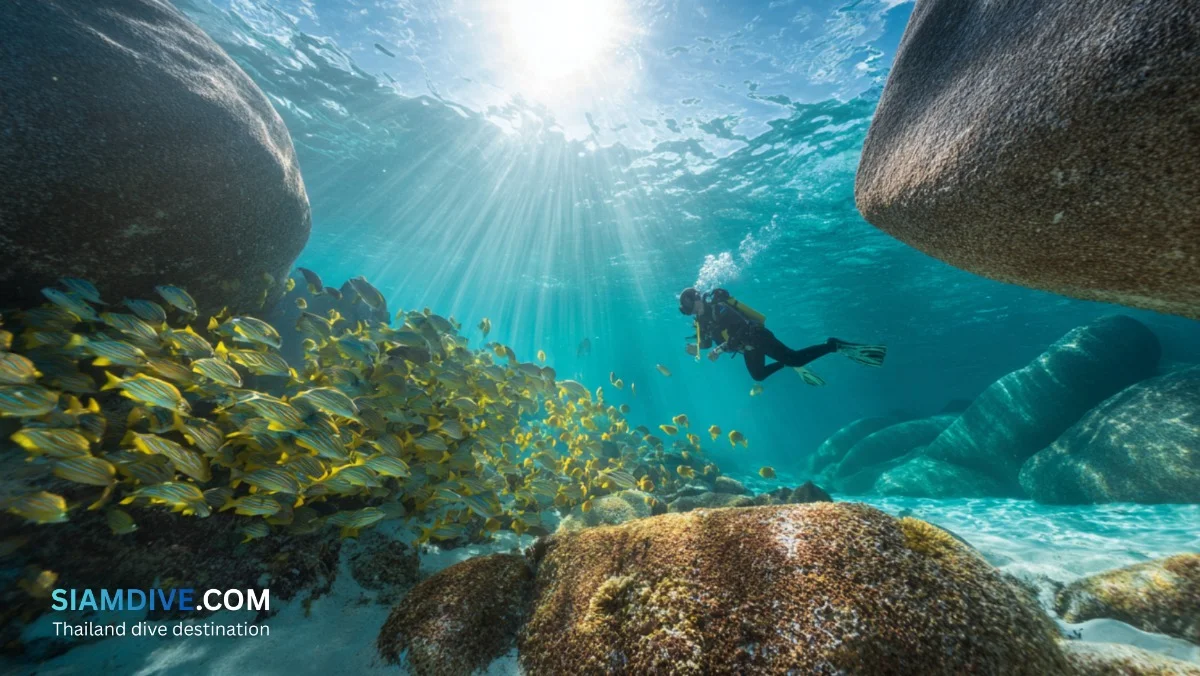
The Andaman side — Phuket, Khao Lak, the Similans, Koh Lanta — runs from October through May. Visibility hits 30 to 40 meters on a good day. The terrain is dramatic: granite boulders the size of houses, swim-throughs, and pinnacles like Hin Daeng that drop straight into blue water. This is where the liveaboards run and where most of the big-animal stories come from.

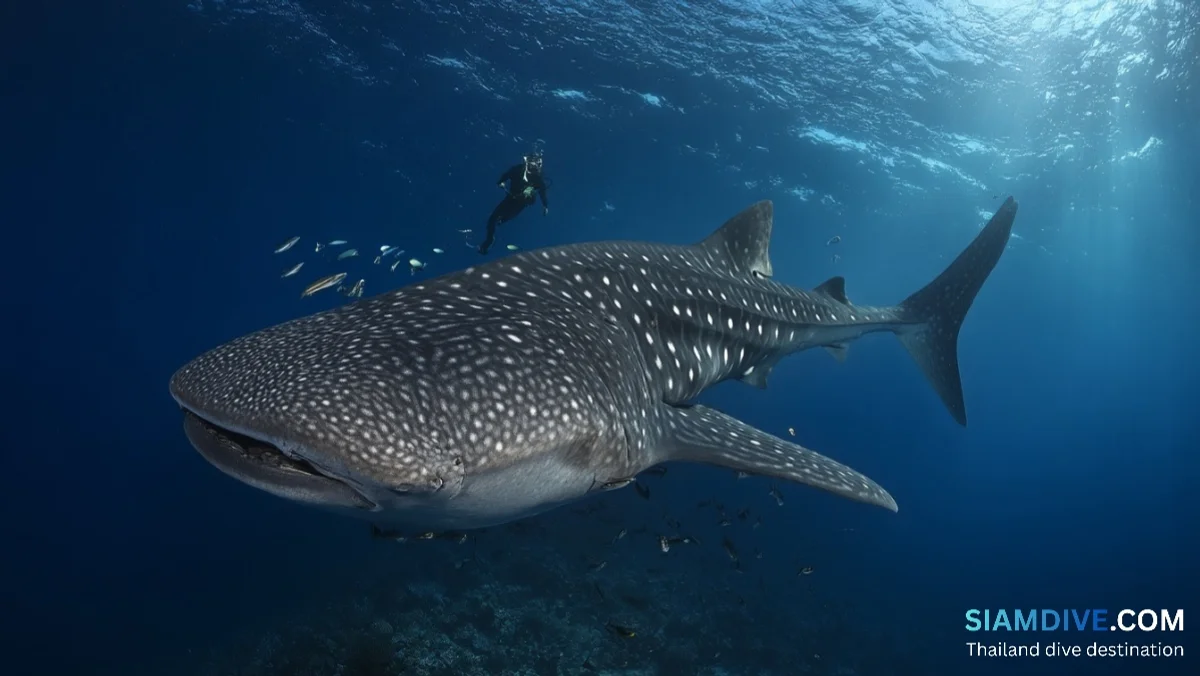
Then the wind flips. From March through October, the Gulf of Thailand opens up — Koh Tao, Koh Samui, Koh Phangan. Shallower, gentler, warmer, and the cheapest place on earth to learn to dive. Chumphon Pinnacle alone produces more bull shark and whale shark sightings per season than entire countries manage in a year.

If you mistime one coast, you can drive eight hours and dive the other. Almost nowhere else gives you that.

Water You Don't Have to Dress For

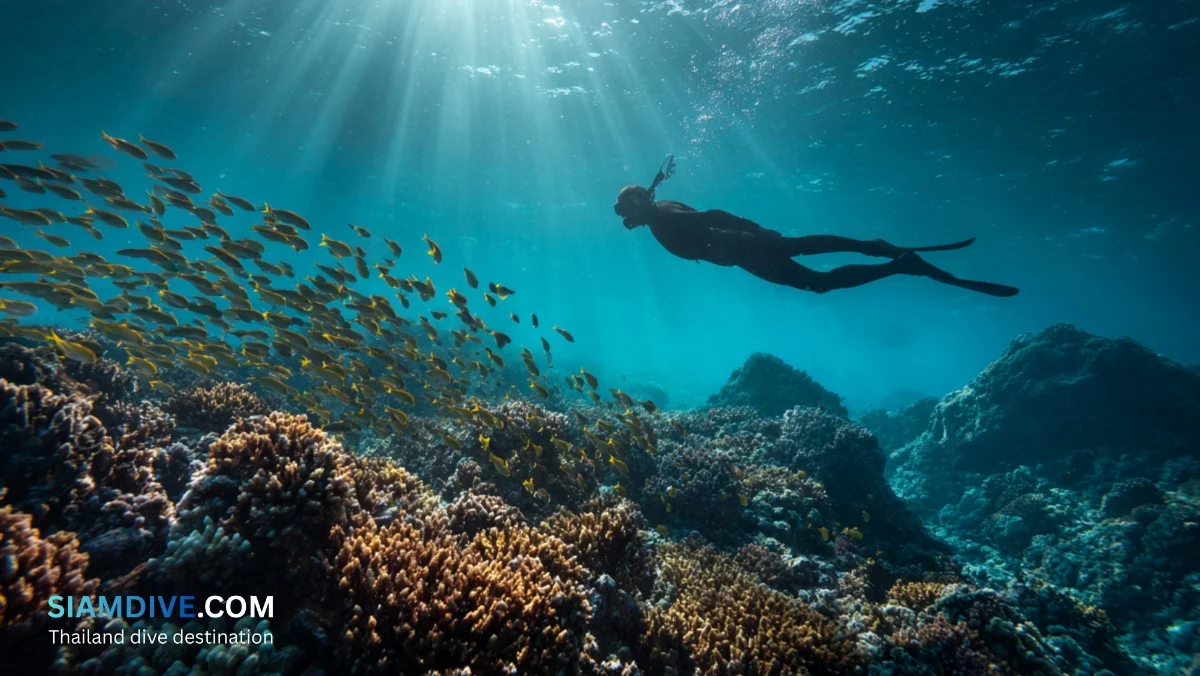
Water temperature in Thailand sits between 27 and 30°C twelve months a year. That sounds like a small detail until you've done a 60-minute dive in a 3mm shorty and surfaced still warm. No drysuit rentals, no thermal undersuits, no cold-shock breathing problems on the descent. Beginners log longer dives because they're not burning energy staying warm. Photographers stay down for the shot. People who hated diving in cold European or Australian water often discover they actually love it once they try it here.

It also means gear is cheaper, lighter, and you can pack a single 23 kg bag for a two-week trip without checking a second case.

Sites You Can Actually Get To

Thailand's best dive sites aren't a six-leg charter flight away. The Similan Islands are a 90-minute speedboat ride from Khao Lak. Hin Daeng and Hin Muang are accessible as day trips from Koh Lanta — about two hours each way. Chumphon Pinnacle is 45 minutes off Koh Tao. You can dive Richelieu Rock as a long day trip or a short liveaboard.

Compare that with Raja Ampat (two domestic flights plus a boat) or Tubbataha (liveaboard only, three months a year). Thailand's logistics are forgiving. You can decide on Tuesday to dive a world-class site on Thursday, and that's not a stretch.

The Animals Show Up

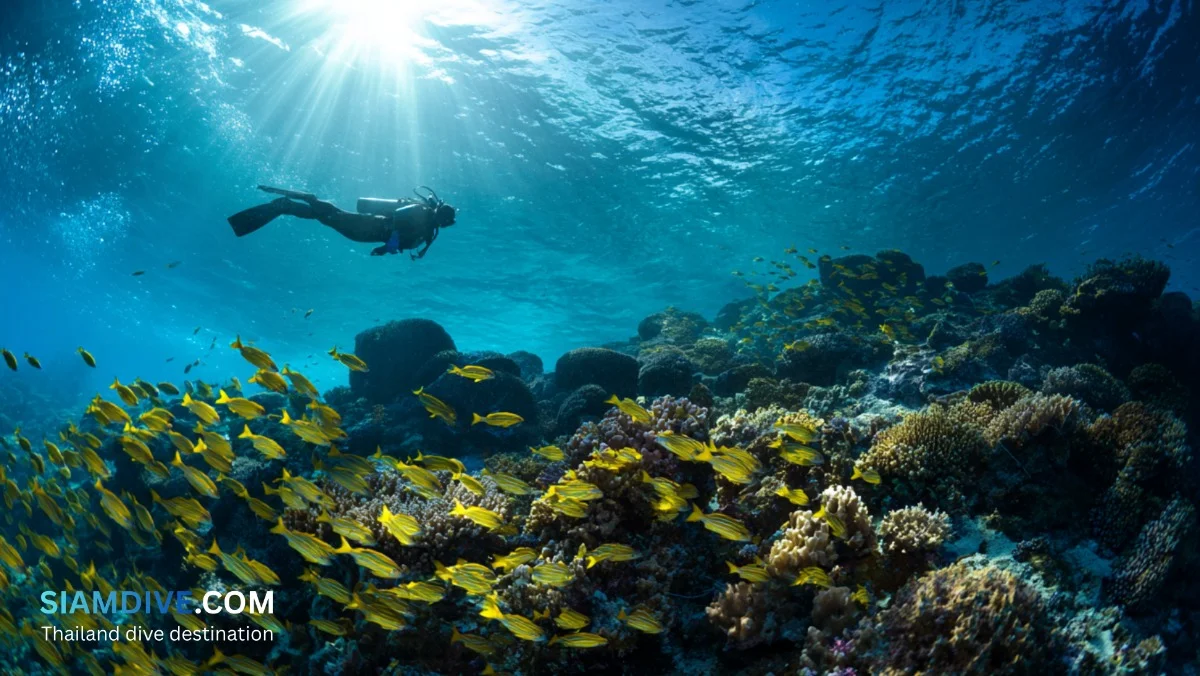
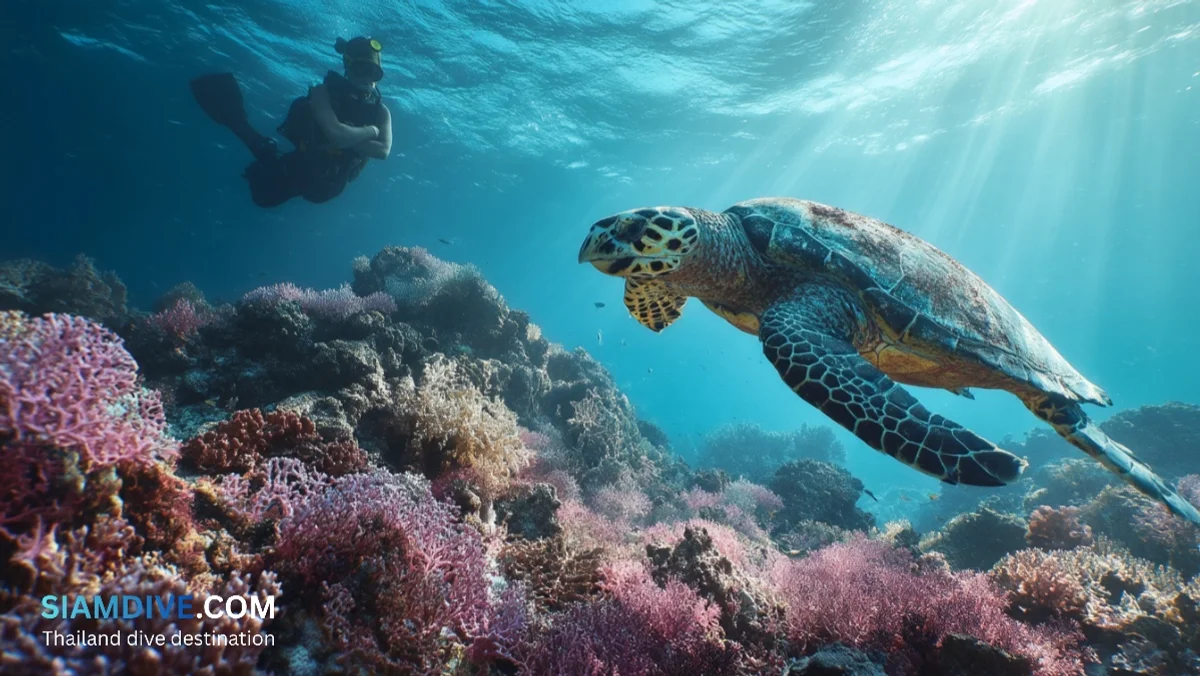
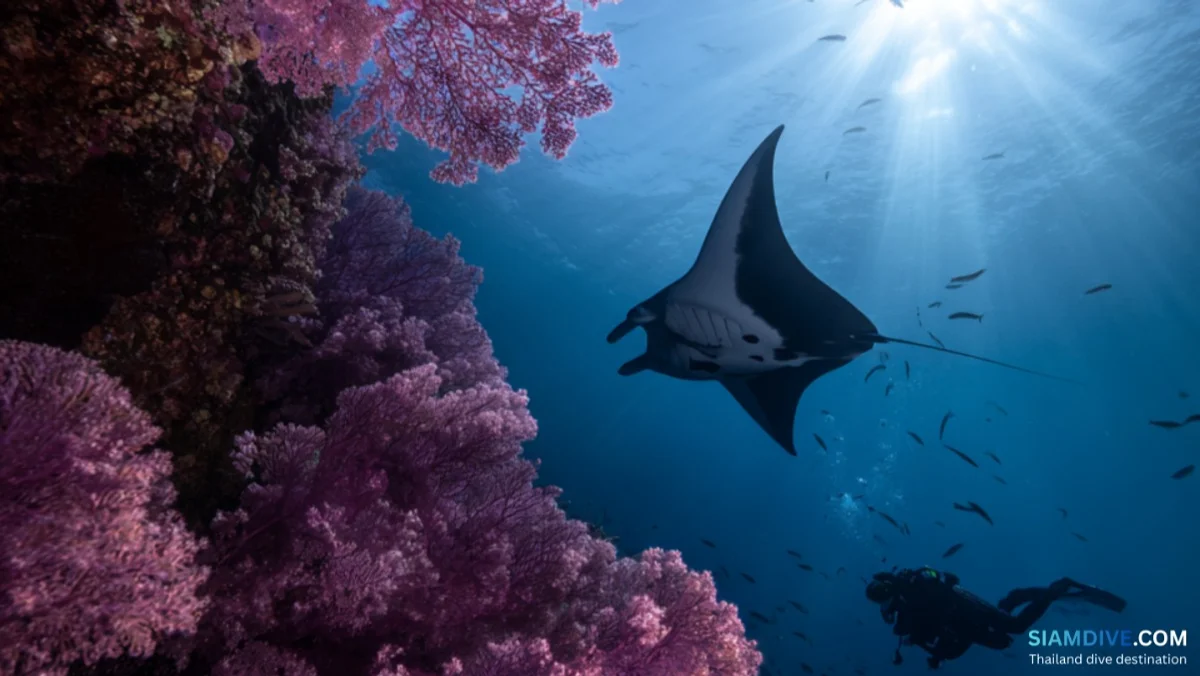
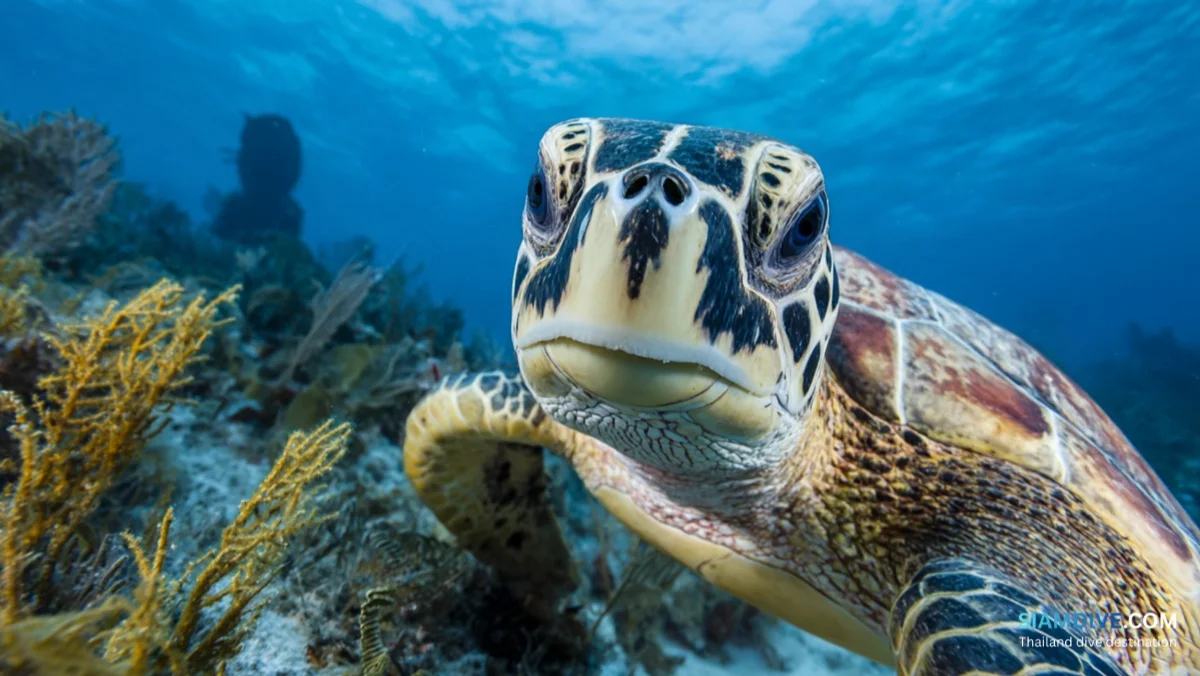
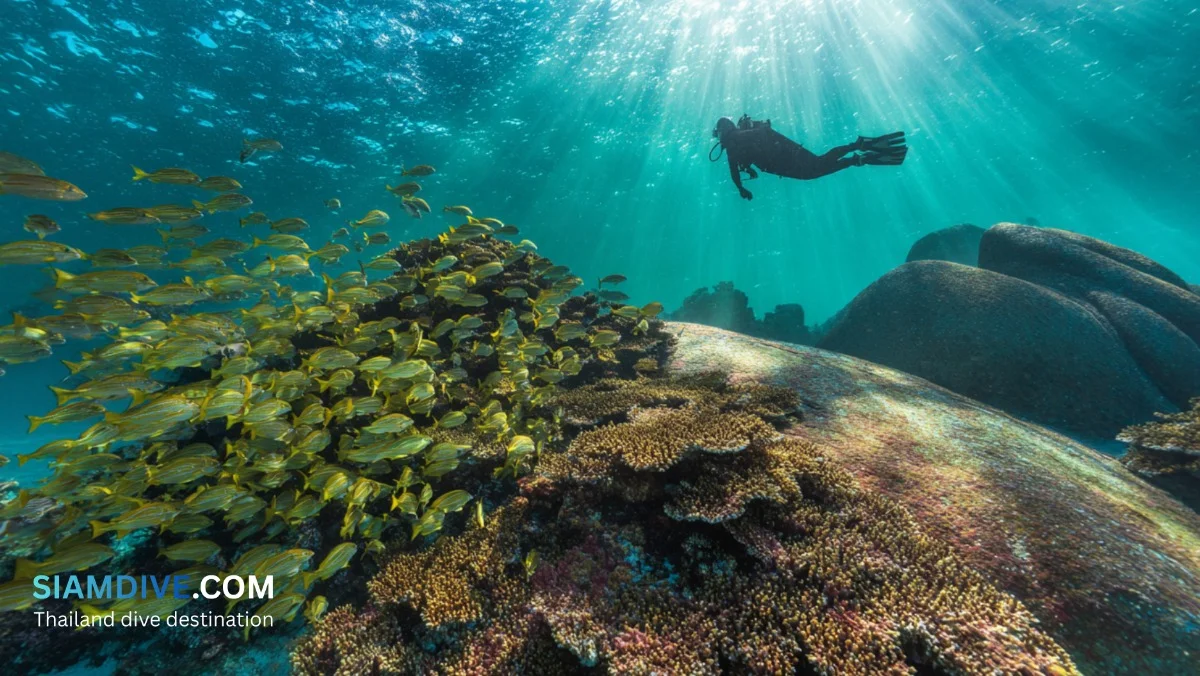
Whale sharks at Richelieu Rock and Hin Daeng peak February through April. Manta rays cruise Koh Bon and Koh Tachai during the same window. Bull sharks have been a Chumphon Pinnacle regular for the last few seasons. Add reef sharks, turtles on almost every dive, schooling barracuda, frogfish, ghost pipefish, and the kind of nudibranch density that makes macro shooters lose track of time.

None of this is guaranteed — diving never is — but the hit rate on big animals during peak months is genuinely high. Operators who run the same sites every week know exactly when to show up.

The Cost Reality

A PADI Open Water on Koh Tao runs THB 10,000 to 14,000 — roughly USD 280 to 400 — and that includes four training dives, gear, and the certification card. The same course in Australia or the Caribbean costs three to five times that. Advanced Open Water adds another THB 8,000 to 12,000.

Liveaboards tell the same story. A four-night Similan trip starts around THB 27,800. A serious eight-day Whale Shark Expedition hitting North and South Andaman runs THB 77,000 to 82,500 depending on cabin grade — and that's full board, all dives, transfers, and Nitrox available. A comparable trip in Indonesia easily clears USD 4,000.

Accommodation near the dive shops sits at THB 500 to 2,000 per night for clean, basic rooms, and THB 2,000 to 5,000 buys you a pool and breakfast. You can run a complete two-week dive trip — flights aside — for what one week in the Maldives costs.

Easy to Get In, Easy to Move Around

Most nationalities get visa-free entry or visa on arrival. Phuket and Bangkok are well-connected to Europe, the Middle East, and the rest of Asia, and competition between airlines keeps fares reasonable. Once you're on the ground, the dive industry runs in English by default — every briefing, every form, every gear shop.

Moving between regions is cheap and well-trodden: a domestic flight from Bangkok to Koh Samui takes an hour and costs less than a tank of fuel back home. Buses and ferries connect everything else. Nothing about the trip requires expedition-level planning.

Worth the Trip?

If you want the absolute best biodiversity on the planet, Raja Ampat still wins. If you want pristine and remote, Tubbataha or the Solomons. But if you want a genuinely great dive trip that doesn't drain your savings, doesn't require six months of planning, and gives you two completely different coasts to play with — Thailand is hard to argue against. It's why so many divers come for one trip and end up coming back every year.

Plan your dive trip with us at siamdive.com — day trips, liveaboards, courses, and resort packages across both coasts.
← กลับไปหน้า Blog

Gallery

What Makes Thailand Special for Scuba Divers — image 1What Makes Thailand Special for Scuba Divers — image 2What Makes Thailand Special for Scuba Divers — image 3What Makes Thailand Special for Scuba Divers — image 4

บทความแนะนำ

PADI Open Water Course: What It Involves Day by Day

PADI Open Water Course: What It Involves Day by Day

A day-by-day breakdown of the PADI Open Water course — theory, pool sessions, open water dives, required skills, and what to expect at each stage.

How to Start Scuba Diving: A Complete Beginner's Guide

How to Start Scuba Diving: A Complete Beginner's Guide

Ready to try scuba diving but don't know where to begin? This step-by-step guide covers everything from choosing a course to your first ocean dive.

Octopus Intelligence: The Smartest Creature Underwater

Octopus Intelligence: The Smartest Creature Underwater

Octopuses have 500 million neurons, use tools, recognize faces, and change color in milliseconds. Here is why divers never forget their first encounter.

Saving Racha Yai: Inside Thailand's 3D-Printed Coral Reef Project

Saving Racha Yai: Inside Thailand's 3D-Printed Coral Reef Project

Discover how 3D-printed artificial reefs are reviving marine life and transforming Racha Yai into a thriving center for conservation and scuba diving.

Similan Islands: Last Weeks to Dive Before the 2026 Season Closes

Similan Islands: Last Weeks to Dive Before the 2026 Season Closes

The Similan Islands close in mid-May 2026. Here's why the final weeks offer the best diving conditions and how to book a last-minute liveaboard trip.

Hin Daeng & Hin Muang Liveaboard: Thailand's Wildest Walls

Hin Daeng & Hin Muang Liveaboard: Thailand's Wildest Walls

Hin Daeng and Hin Muang are Thailand's deepest soft coral walls — manta rays, whale sharks, and serious current. Here's how to dive them by liveaboard.

Sea Turtles in Thailand: Species Guide for Scuba Divers

Sea Turtles in Thailand: Species Guide for Scuba Divers

Meet hawksbill, green, and olive ridley turtles at Koh Tao, Similan Islands, and more. Species ID, dive sites, conservation, and photo tips.

HTMS Prab 741 Wreck Diving Guide: Chumphon's Quiet Artificial Reef

HTMS Prab 741 Wreck Diving Guide: Chumphon's Quiet Artificial Reef

HTMS Prab 741 is the small WWII landing craft sunk south of Koh Ngam Noi in 2011. Open Water depth, intact hull, and almost no other divers — here's how to dive it.

Why Learn Scuba Diving? 8 Reasons to Get Certified

Why Learn Scuba Diving? 8 Reasons to Get Certified

Not sure if scuba diving is for you? Here are 8 real reasons why getting certified changes how you travel, stay fit, and see the world.

The Junkyard Koh Tao Diving Guide: The Island's Quirkiest Artificial Reef

The Junkyard Koh Tao Diving Guide: The Island's Quirkiest Artificial Reef

The Junkyard off Mae Haad is Koh Tao's artificial reef built from recycled trash — toilets, bikes, and a thriving coral nursery with resident batfish and lionfish.

The Pre-Dive Buddy Check Most Scuba Divers Skip

The Pre-Dive Buddy Check Most Scuba Divers Skip

Half of all scuba accidents could be prevented by a five-minute BWRAF buddy check. Here's why experienced divers skip it and how to do it right.

Cleaning Stations: The Secret Social Hubs of the Reef

Cleaning Stations: The Secret Social Hubs of the Reef

Discover cleaning stations — where predators open their mouths for tiny fish and shrimp to crawl inside. The most fascinating animal behavior you can witness on any dive.

Hin Sawaeng Diving Guide: Koh Lipe's Wall and Pinnacle Gem

Steep walls, dramatic drop-offs, and rich marine life make Hin Sawaeng one of Koh Lipe's most rewarding dive sites. Complete guide with tips and conditions.

TEKAsia 2026: Asia's First Technical Diving Conference

TEKAsia 2026: Asia's First Technical Diving Conference

TEKAsia 2026 debuts at ADEX Singapore this April 10-12, bringing 30+ world-class speakers and hands-on workshops for technical divers across Asia.

Discover the Avelo Scuba System: Revolutionizing Diving in Thailand

Discover the Avelo Scuba System: Revolutionizing Diving in Thailand

The Avelo Scuba System redefines buoyancy control with its innovative Hydrotank, offering lighter gear, stable neutrality, and longer dives perfect for Thailand's vibrant dive sites.

Nitrox Diving Guide: Benefits, Risks & MOD Explained

Nitrox Diving Guide: Benefits, Risks & MOD Explained

Master Enriched Air Nitrox diving — understand MOD calculations, oxygen toxicity risks, EAN32 vs EAN36, and how Nitrox extends your bottom time safely.

Andaman Sea vs Gulf of Thailand: Picking Your Dive Region

Andaman Sea vs Gulf of Thailand: Picking Your Dive Region

Compare Thailand's two dive coasts side by side — marine life, visibility, seasons, costs, and which region fits your experience level.

Mango Bay Koh Tao Guide: The Island's Best Beginner Dive and Snorkel Site

Mango Bay Koh Tao Guide: The Island's Best Beginner Dive and Snorkel Site

Mango Bay on Koh Tao's north coast is the island's best beginner dive site and snorkel spot — calm water, vibrant reefs, and year-round conditions.

Green Rock Koh Tao Diving Guide: The Island's Best Swim-Through Site

Green Rock Koh Tao Diving Guide: The Island's Best Swim-Through Site

Green Rock off Koh Nang Yuan offers Koh Tao's best boulder maze, The Chimney swim-through, dense macro life and advanced training — here's everything divers need.

Losin : Thailand's Best-Kept Diving Secret in the Deep Gulf

Losin : Thailand's Best-Kept Diving Secret in the Deep Gulf

Losin is a remote liveaboard-only dive site off Pattani famous for manta rays, whale sharks, and bull sharks during March-May.

ทริปแนะนำ

Hug Ocean Boat
daytrip

Hug Ocean Boat

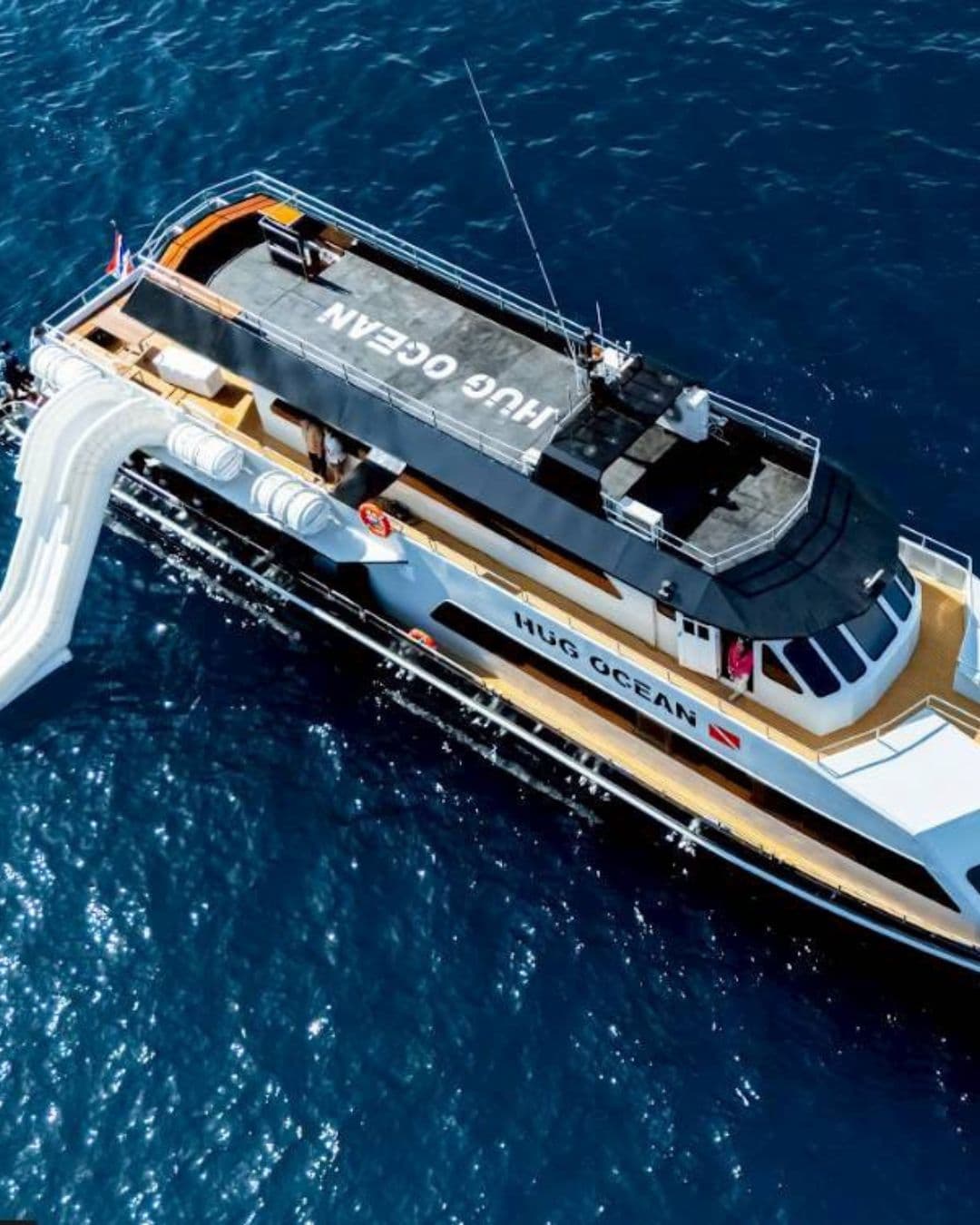
Discover Phuket's Andaman Sea aboard Hug Ocean — a luxury 3-deck dive yacht for 80 guests with a thrilling water slide, sun-soaked top deck, and PADI-certified diving at Racha Yai and Racha Noi.

Aquarian Liveaboard
liveaboard

Aquarian Liveaboard

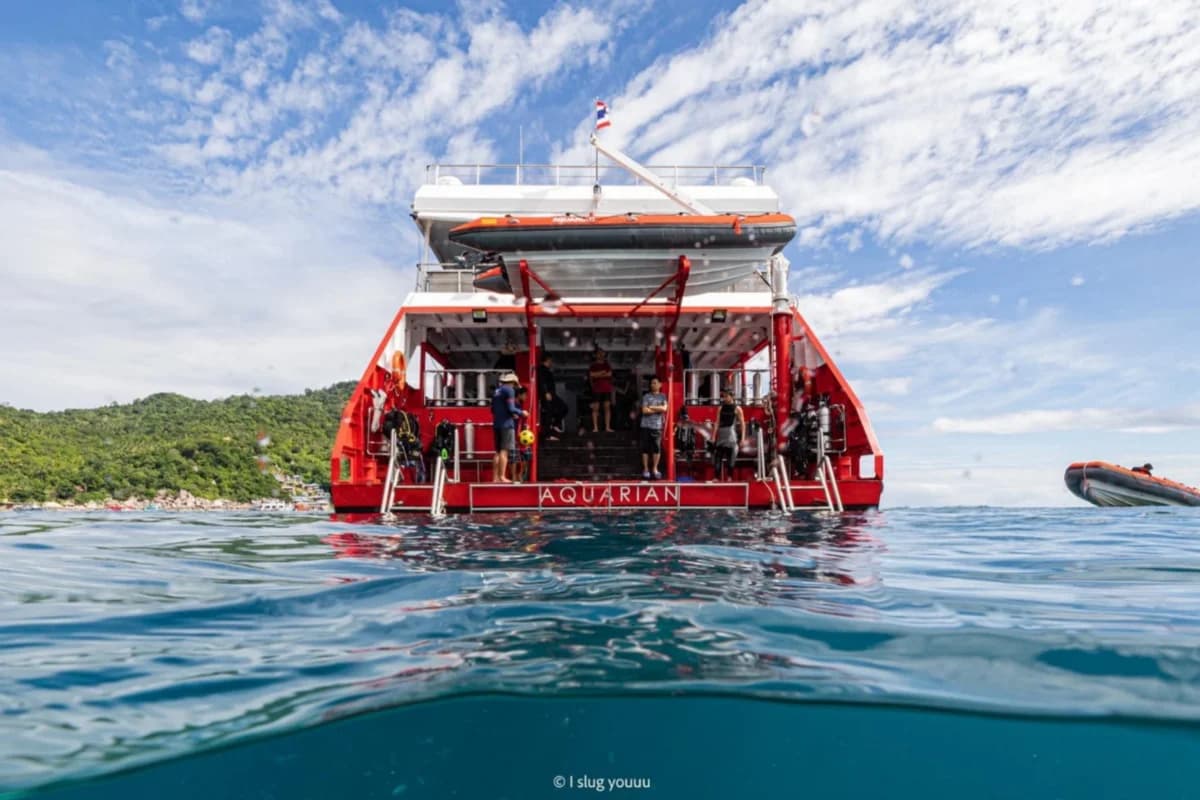
MV Aquarian — striking 2021-built red steel liveaboard, 31.4 m × 7.5 m, max 28 guests in 14 cabins. Free unlimited Nitrox via Coltri Sub membranes, one of Thailand's largest dive platforms, and full premium-hotel comfort.

Issara Liveaboard
liveaboard

Issara Liveaboard

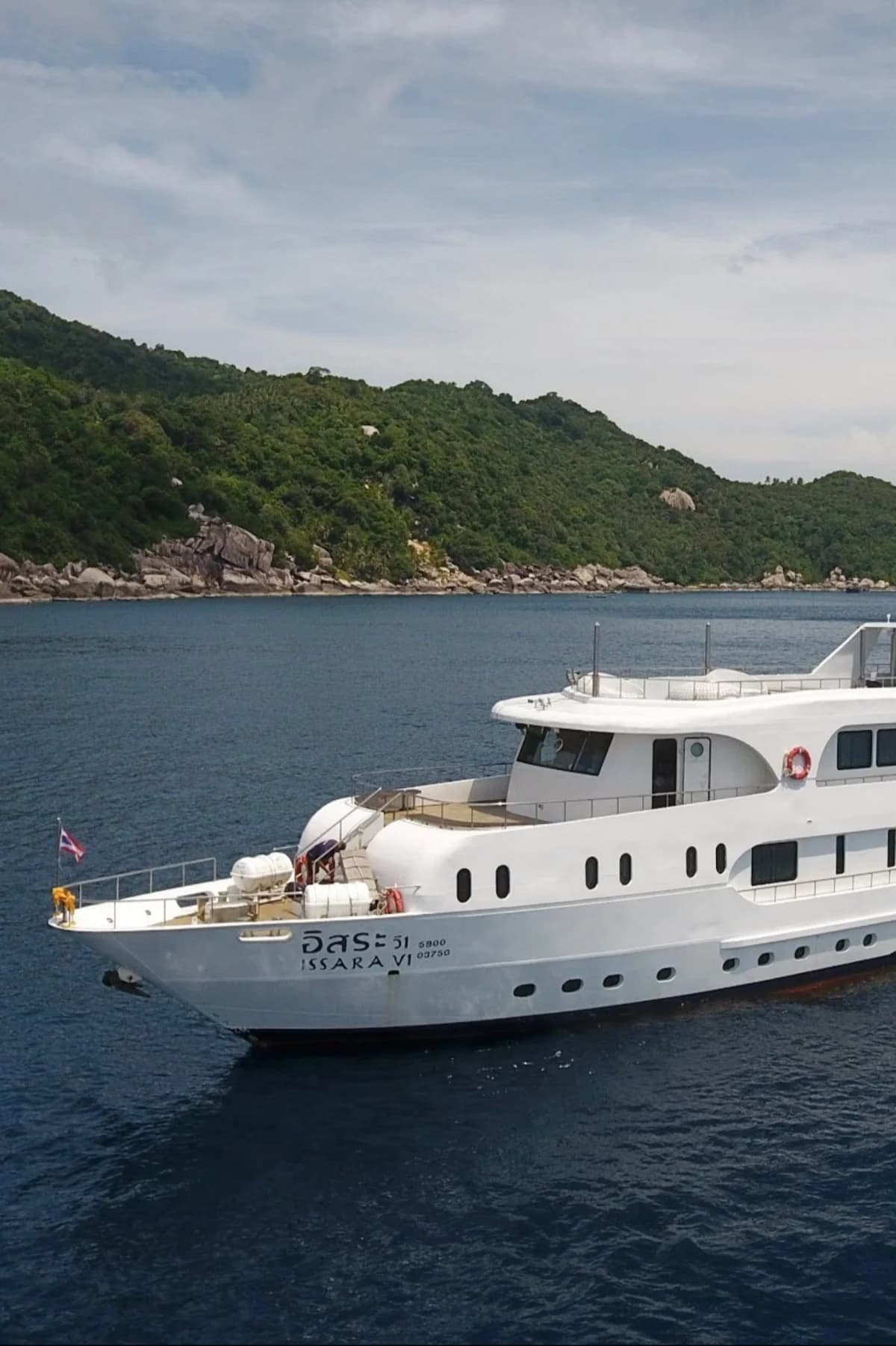
MV Issara — high-end Thai steel-hulled liveaboard built 2016–17, 28.5 m × 6.5 m, 4 decks, max 22 guests in 11 hotel-style cabins. Indoor saloon, jacuzzi sun deck, full-board buffet dining.

Mandarin Queen 5
daytrip

Mandarin Queen 5

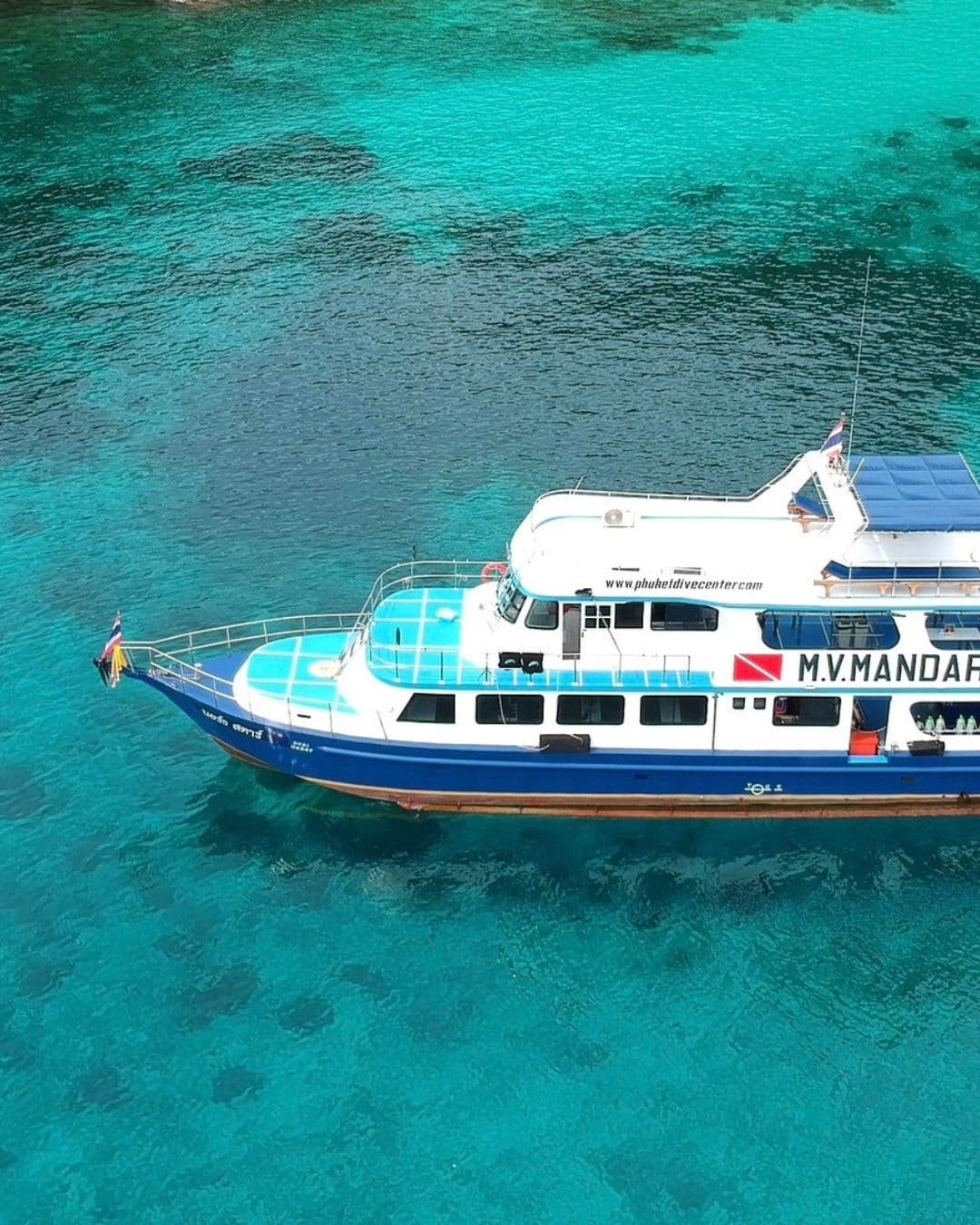
Brand-new Phuket dive boat — 26.2 m M/V Mandarin Queen 5 with spacious dive platform, lounge and upper sun deck. Daily day trips to King Cruiser Wreck, Shark Point, Anemone Reef, Racha Yai and Racha Noi.