Andaman Sea vs Gulf of Thailand: Picking Your Dive Region
9 เมษายน 2569
Compare Thailand's two dive coasts side by side — marine life, visibility, seasons, costs, and which region fits your experience level.
Two Coasts, Two Personalities
Thailand has roughly 3,200 kilometers of coastline split between two bodies of water. The Andaman Sea covers the western side — Phuket, Krabi, Koh Lanta, and the offshore national parks. The Gulf of Thailand wraps around the east and south — Koh Tao, Koh Samui, Koh Phangan, and Chumphon Province.
These are not interchangeable dive destinations with minor cosmetic differences. The Andaman side has granite boulders, deep pinnacles, nutrient-rich currents, and pelagic encounters that draw experienced divers from around the world. The Gulf side has calm shallow reefs, affordable dive schools, and conditions that stay friendly most of the year. Picking the right coast for your trip saves money, matches your skill level, and puts you in front of the marine life you actually want to see.
The Andaman Sea: Big Encounters and Remote Reefs
The Andaman coastline from Ranong down to Satun holds Thailand's most celebrated dive sites. The water is deeper, the visibility is longer, and the marine life is larger than what you will find in the Gulf.
Similan Islands: Nine granite islands sitting 60 km offshore from Khao Lak. The west side features house-sized boulders with swim-throughs, while the east side has sloping hard coral gardens. Visibility regularly reaches 25 to 30 meters. Open to divers from mid-October through mid-May only — the national park closes entirely during monsoon season.
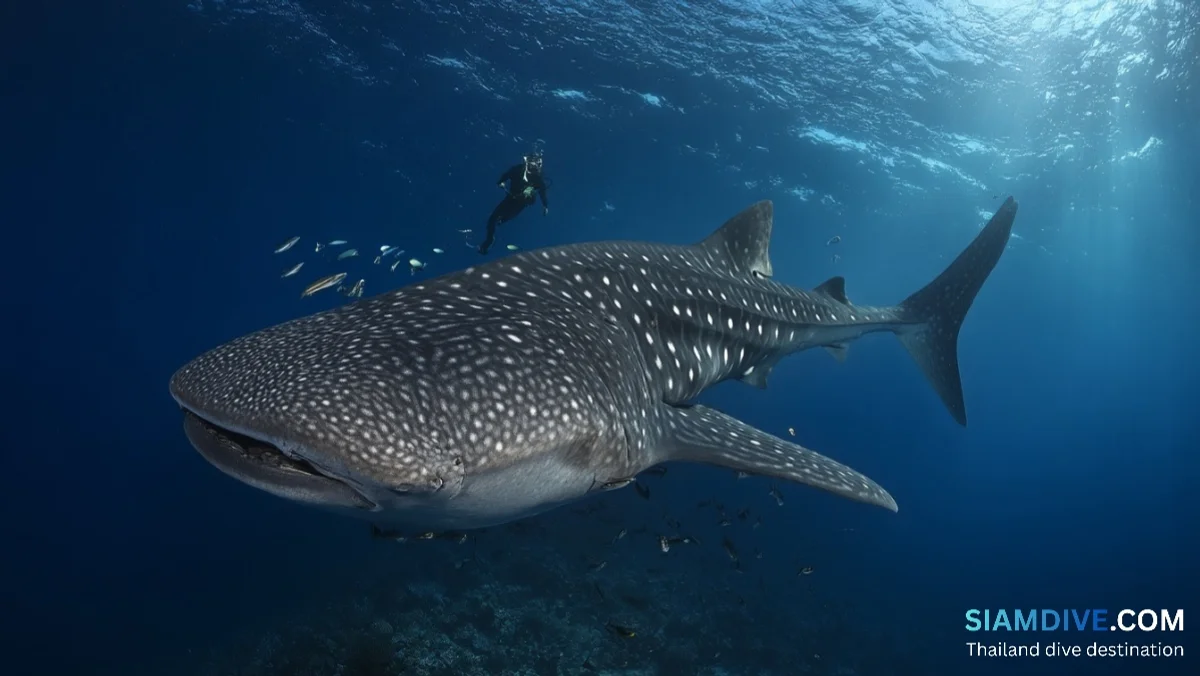
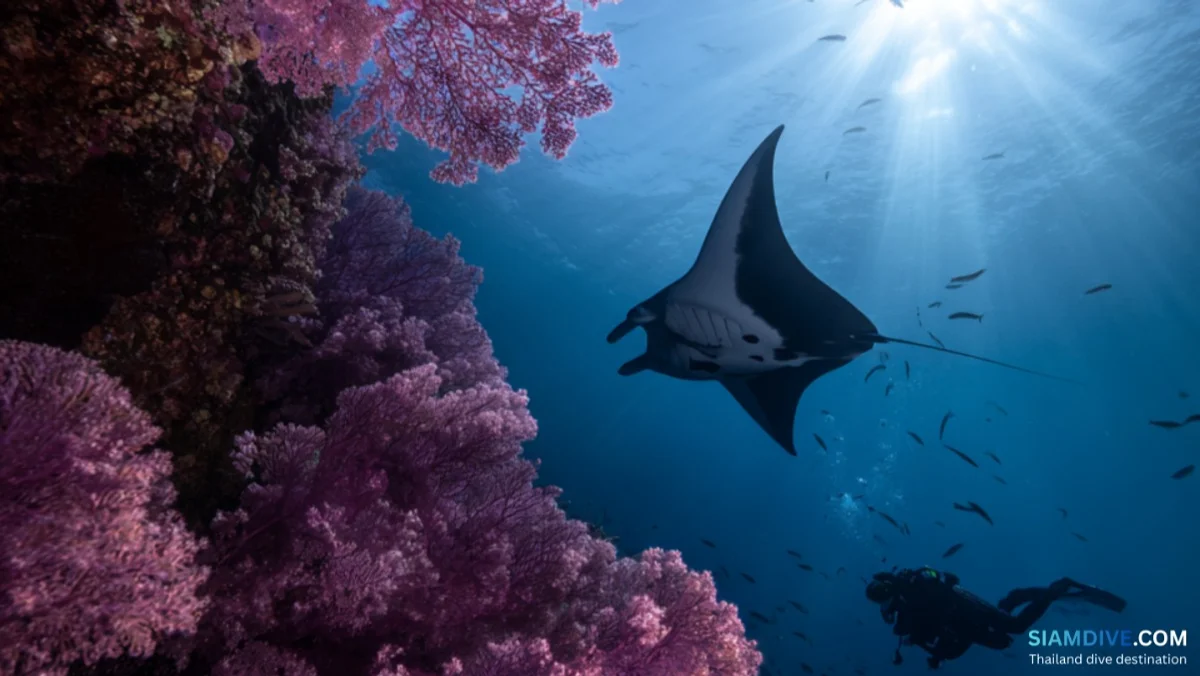
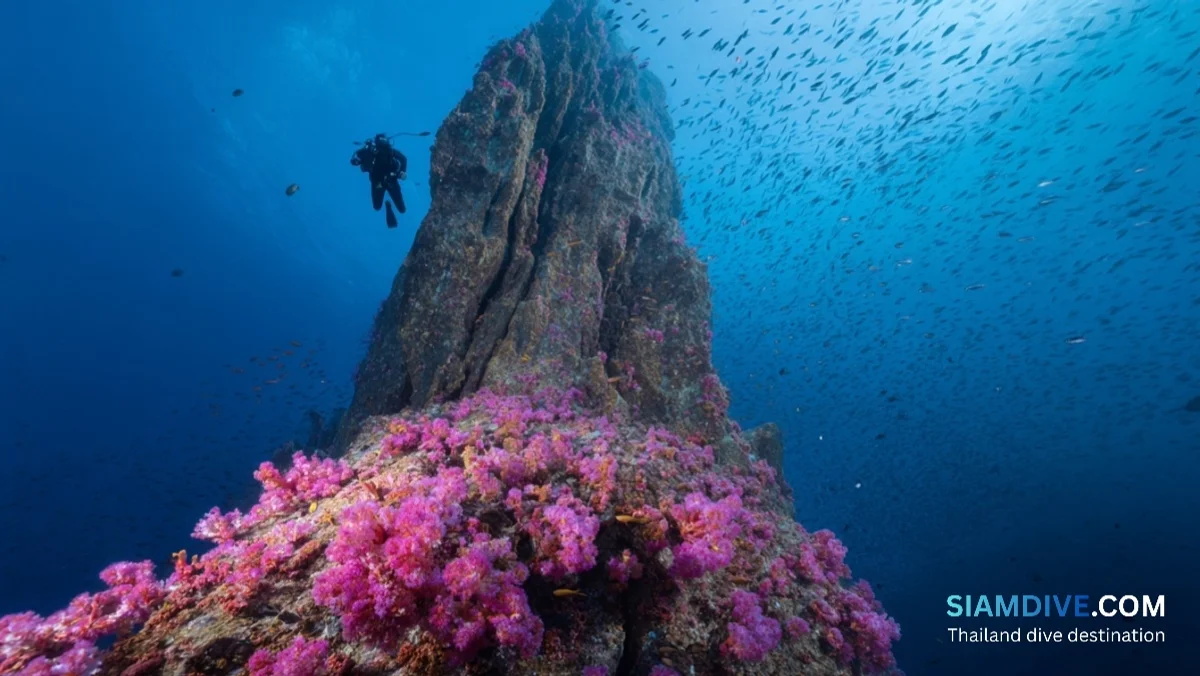
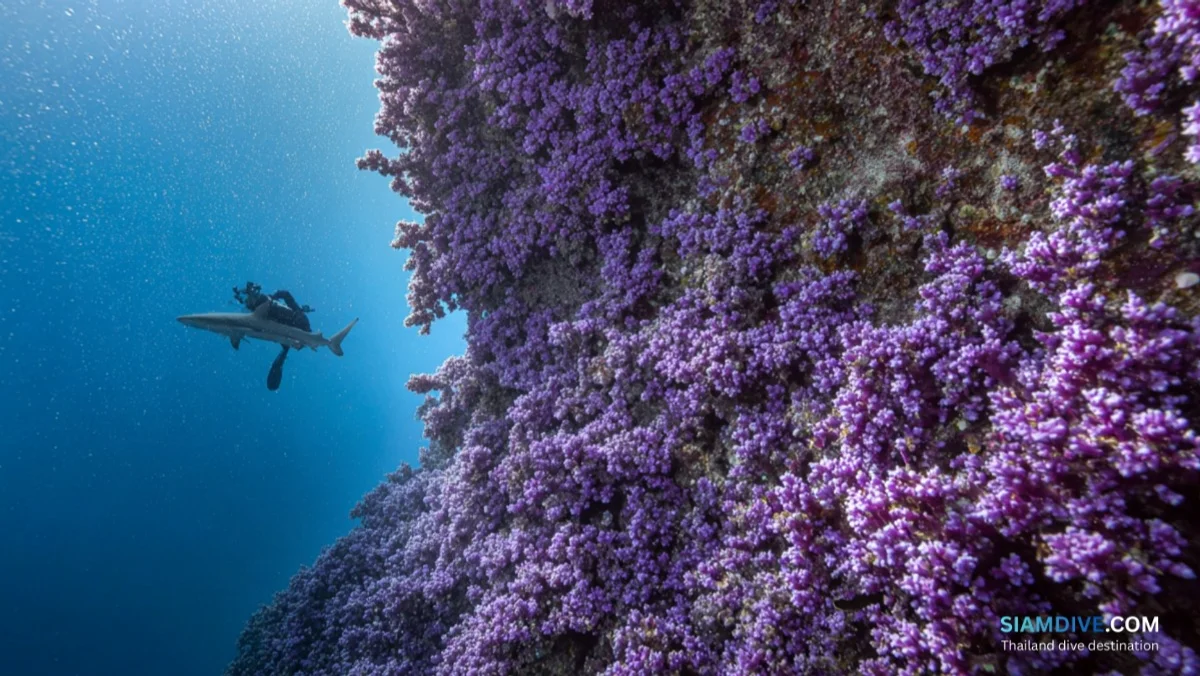
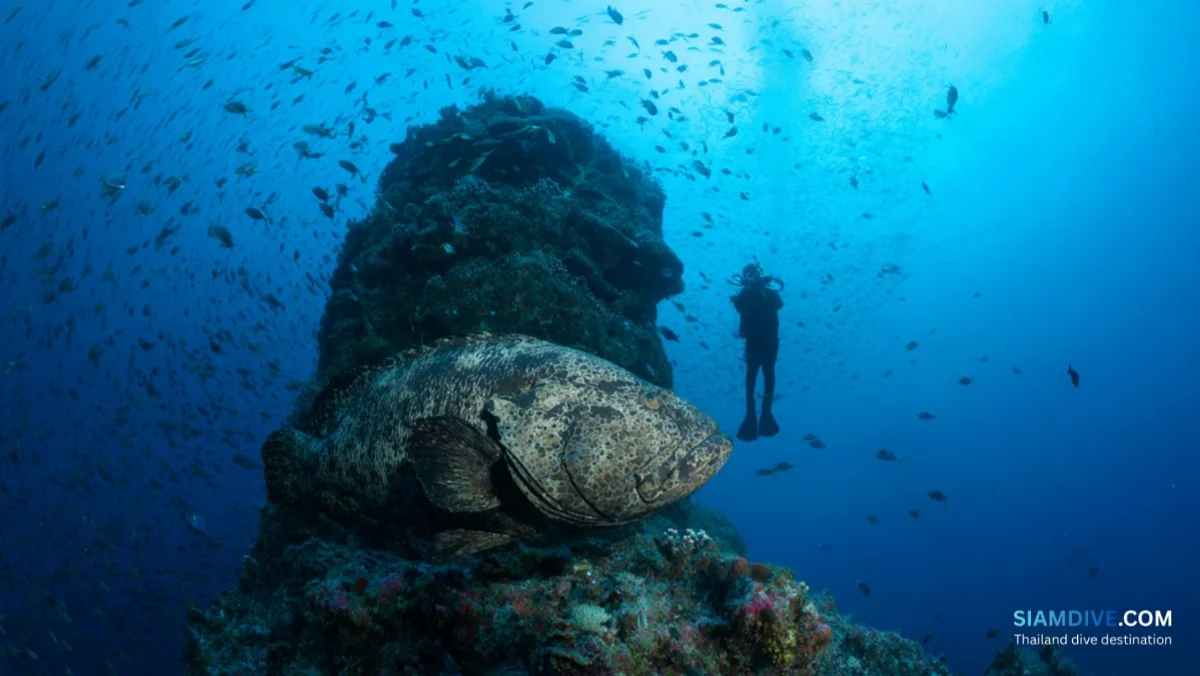
Richelieu Rock: A single horseshoe-shaped pinnacle north of the Surin Islands. Whale sharks appear here between February and April, and the rock itself is blanketed in purple and red soft corals. Macro life is exceptional — seahorses, ghost pipefish, ornate pipefish, harlequin shrimp. Many photographers consider this the best single dive site in Southeast Asia.
Hin Daeng and Hin Muang: Two submerged seamounts south of Koh Lanta. Hin Muang has a wall dropping to 70 meters — the deepest wall in Thai waters. Manta rays and whale sharks visit regularly. Currents can be strong, and these sites demand at least Advanced Open Water certification.
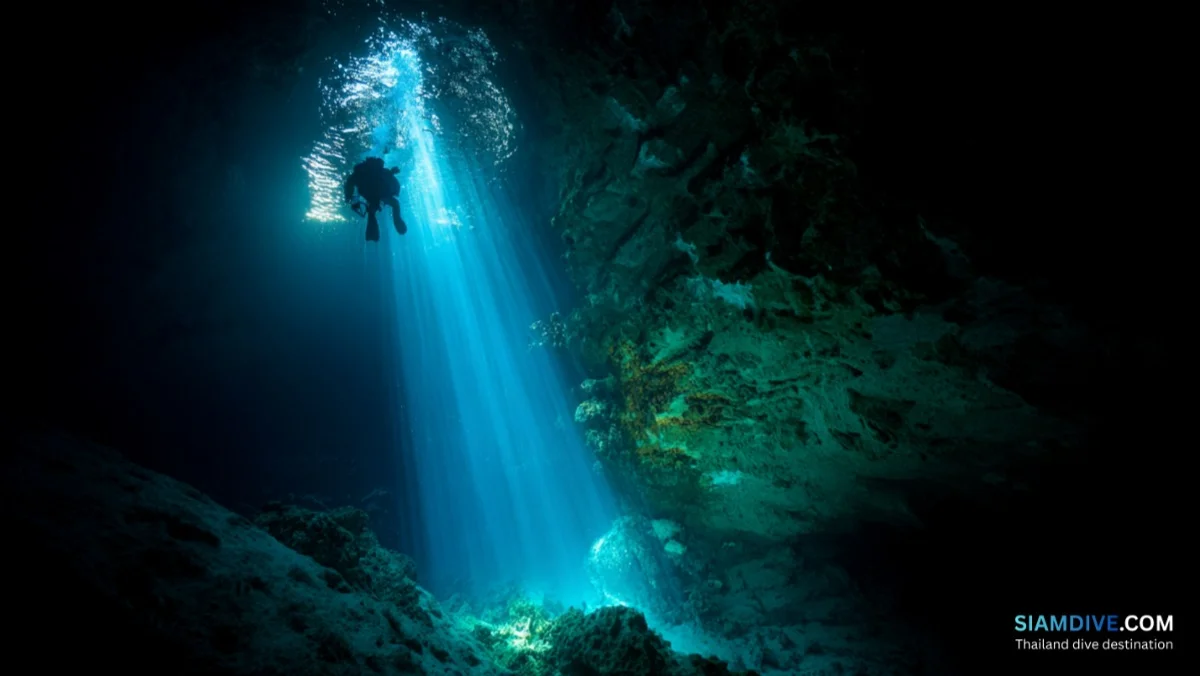
Koh Haa: A cluster of five small islands near Koh Lanta with a cathedral-like cavern system. The lagoon between the islands has calm, shallow water perfect for training dives. Depths range from 8 to 30 meters, making it one of the Andaman's few genuinely beginner-friendly sites.
Koh Lipe and the Tarutao area: The southernmost dive region in the Andaman, near the Malaysian border. Less crowded than the Similan corridor, with healthy hard coral coverage and good macro diversity. Access is slower — a long ferry ride from Pak Bara — but the quiet factor makes up for it.
The Gulf of Thailand: Accessible, Affordable, Year-Round
The Gulf coast is where most people get certified and where budget-conscious divers keep coming back. The water is shallower, warmer, and calmer for most of the year. The drawback is reduced visibility and fewer large animal encounters compared to the Andaman side.
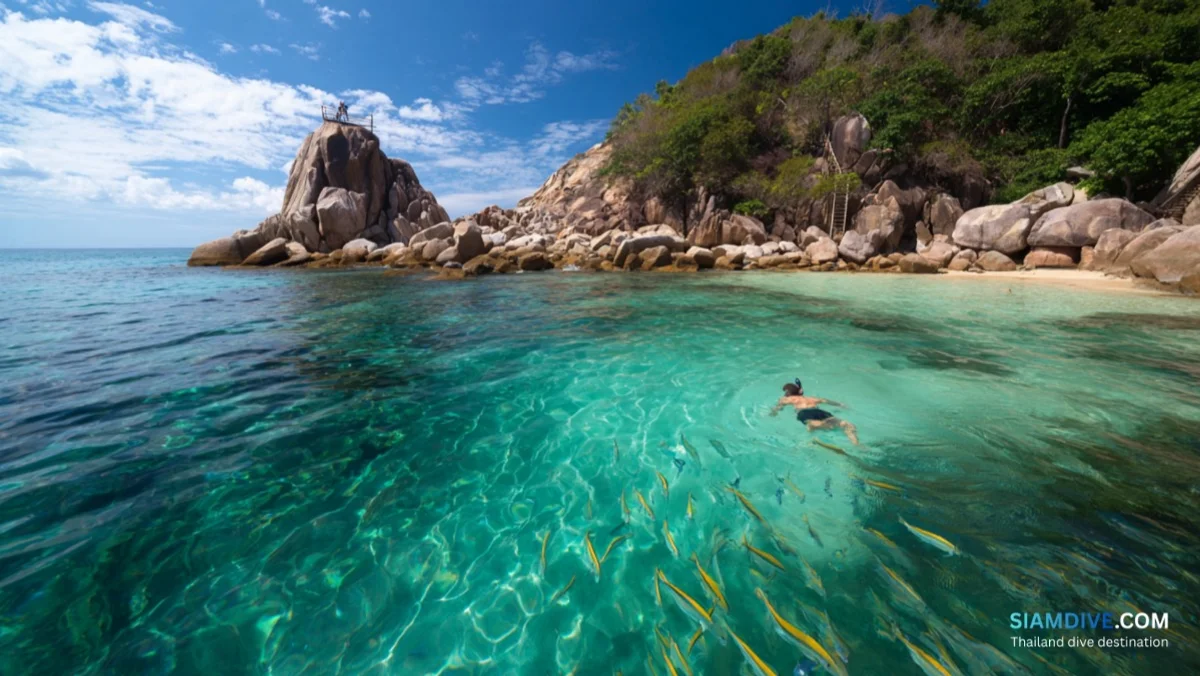
Koh Tao: The island issues more PADI certifications than anywhere else on Earth. An Open Water course here costs 9,000 to 11,000 THB ($260–$320), which is some of the cheapest diving education globally. Beyond training, Koh Tao has legitimate fun diving at sites like Japanese Gardens (shallow coral gardens with triggerfish and angelfish) and Twins (twin pinnacles with barracuda schools). The island has over 70 registered dive shops.
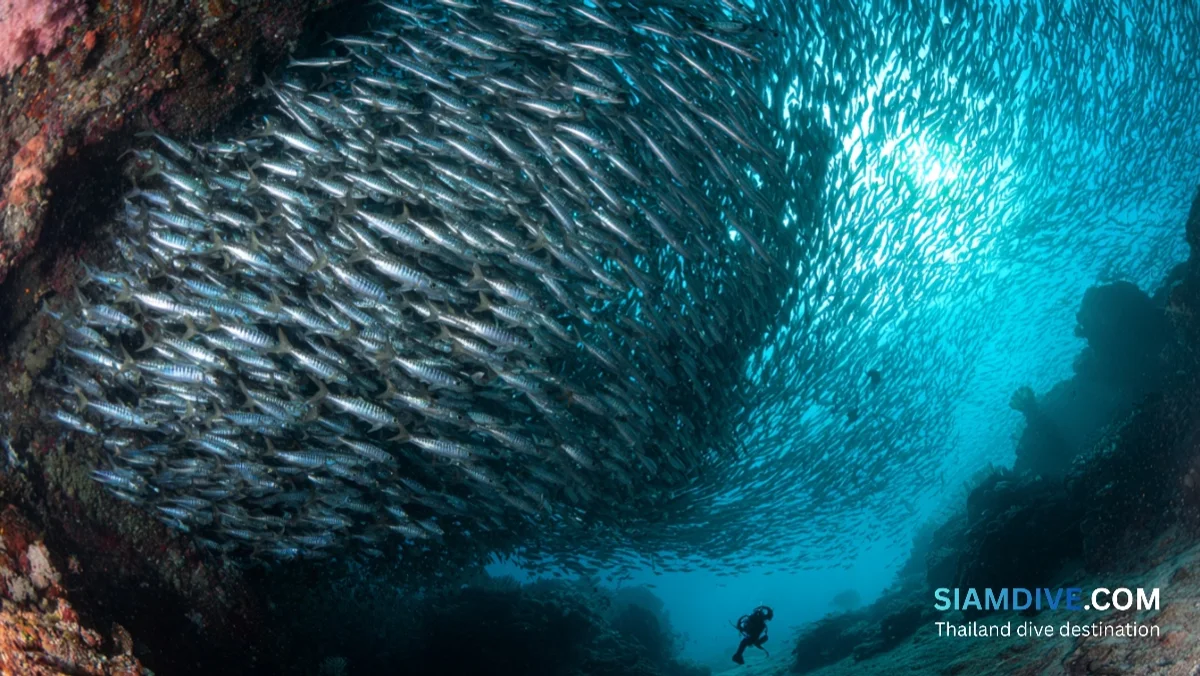
Sail Rock: A granite pinnacle between Koh Tao and Koh Phangan. This is the Gulf's standout advanced site — a vertical chimney you can swim through from 18 meters down to 6 meters, surrounded by dense schools of chevron barracuda and batfish. Whale sharks pass through between March and June. Visibility averages 10 to 20 meters depending on plankton levels.
Chumphon Pinnacle: A cluster of granite boulders at 32 meters depth, northwest of Koh Tao. The site attracts groupers, whale sharks (seasonally), and large schools of trevally. Bottom time is limited due to depth, so this one suits divers with good air consumption and proper buoyancy control.
Ang Thong Marine Park: A protected archipelago of 42 islands near Koh Samui. Diving here is secondary to the landscape — limestone cliffs, hidden lagoons, and kayak routes — but the shallow reefs offer pleasant snorkeling and introductory dives.
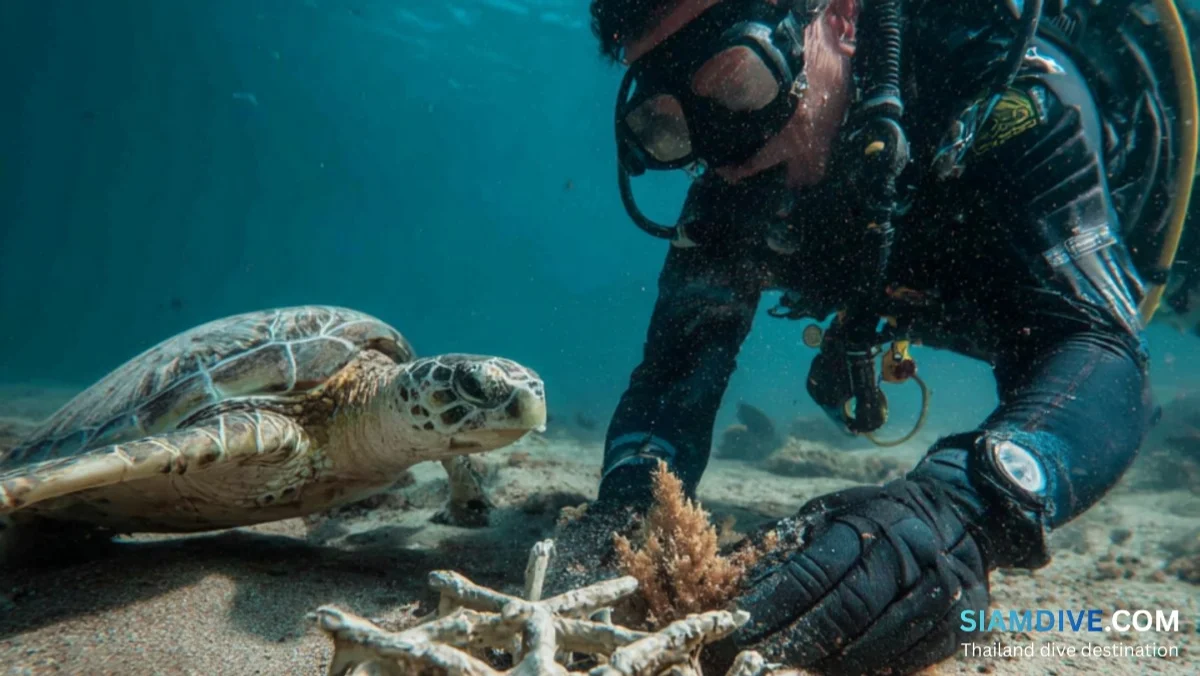
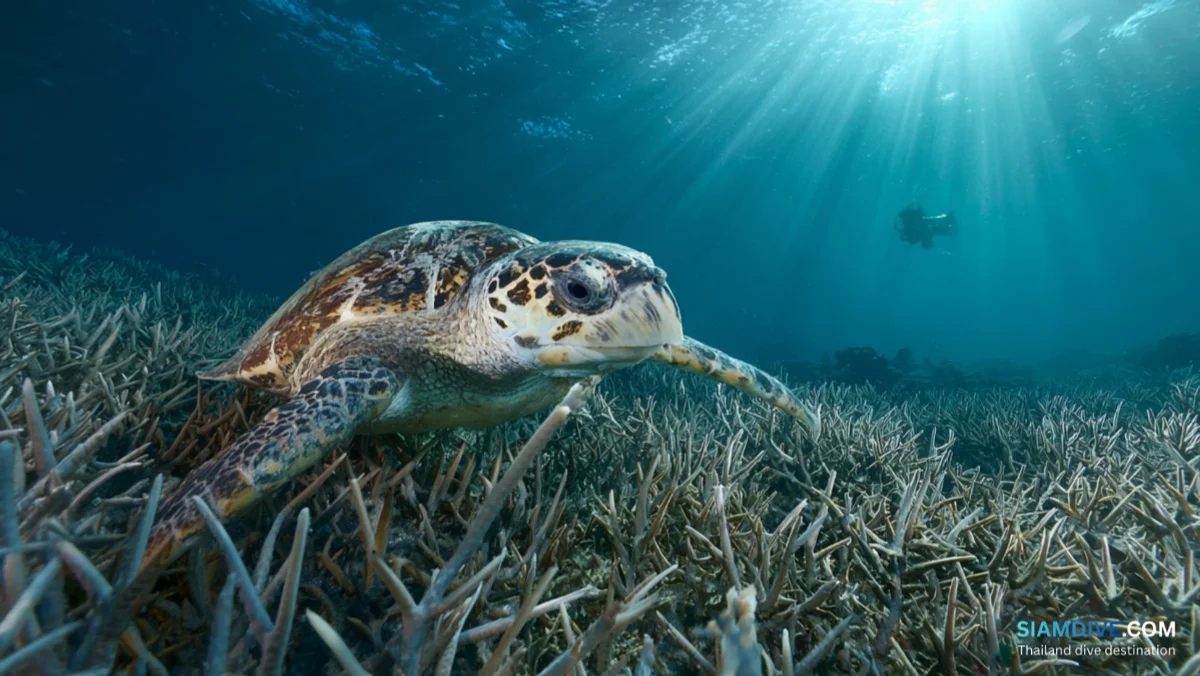
Koh Phangan: Better known for the Full Moon Party, but the west coast has quiet dive sites with staghorn coral fields and hawksbill turtle sightings. Dive shops are fewer and less hectic than Koh Tao.
Conditions Side by Side
Numbers tell the story faster than adjectives. Here is how the two regions compare on the metrics that matter to divers.
- Visibility: Andaman averages 20 to 30 meters during peak season. Gulf averages 10 to 20 meters, dropping to 5 meters during plankton blooms. The Andaman wins clearly on water clarity.
- Water temperature: Andaman sits at 27 to 29 degrees Celsius year-round. Gulf ranges from 26 to 30 degrees. Both are comfortable in a 3mm wetsuit or rashguard. Thermoclines at deeper Andaman sites can drop to 24 degrees.
- Currents: Andaman sites, especially Richelieu Rock and Hin Daeng, can have medium to strong currents that shift direction mid-dive. Gulf currents are generally mild, with Sail Rock and Chumphon Pinnacle being the notable exceptions.
- Marine life variety: The Andaman has a clear edge for pelagics — manta rays, whale sharks, leopard sharks, and eagle rays. The Gulf has better macro diversity in some areas (nudibranchs on Koh Tao's deeper sites) and consistent reef fish populations, but fewer big animal encounters overall.
- Coral health: Andaman reefs, particularly in the national parks, are in better shape overall. The Similan Islands and Surin Islands have some of the healthiest hard coral coverage in Thai waters. Gulf reefs around Koh Tao have shown bleaching stress in recent years, though recovery efforts are underway.
Best Season for Each Coast
This is where your trip planning either clicks or falls apart, because the two coasts have opposite weather patterns.
Andaman Sea: November through April. The sweet spot is February to March — calm seas, maximum visibility, and peak whale shark and manta ray activity. The monsoon hits from May through October, closing national parks and making boat travel dangerous. Do not try to dive the Andaman in July.
Gulf of Thailand: February through September. March is the standout month with clear skies and easy ferry access. The Gulf gets its worst weather from October through December when monsoon winds swing to the northeast. Koh Tao stays diveable year-round in practice, but conditions deteriorate significantly in November.
The overlap window of February through April works for both coasts. If you want to combine regions in a single trip, that is your window. Fly into Phuket for Andaman diving, then hop to Koh Samui or Surat Thani for the Gulf side.
Getting There and Getting Around
Andaman access: Fly into Phuket International Airport (HKT) or Krabi Airport (KBV). Phuket is the main gateway for Similan liveaboards — operators run minivans to Tab Lamu pier in Khao Lak (about 90 minutes north). For Koh Lanta day trips to Hin Daeng or Koh Haa, Krabi is closer. Koh Lipe requires a ferry from Pak Bara pier in Satun Province, about four hours from Hat Yai airport.
Gulf access: Fly into Surat Thani (URT) or Koh Samui (USM). Surat Thani is cheaper — budget airlines serve it from Bangkok — and ferries to Koh Tao or Koh Phangan take 2 to 6 hours depending on the boat type. Koh Samui has a private airport with higher ticket prices but puts you 30 minutes from the island's dive centers.
Domestic flights from Bangkok to either coast cost 1,500 to 5,000 THB ($45–$145) one way. Ferry tickets range from 400 to 1,200 THB. The Andaman side is slightly easier logistically because Phuket is a large airport with frequent flights. Gulf access involves more connecting steps — a flight plus a ferry — though the journey itself is part of the experience.
Which Region Matches Your Level
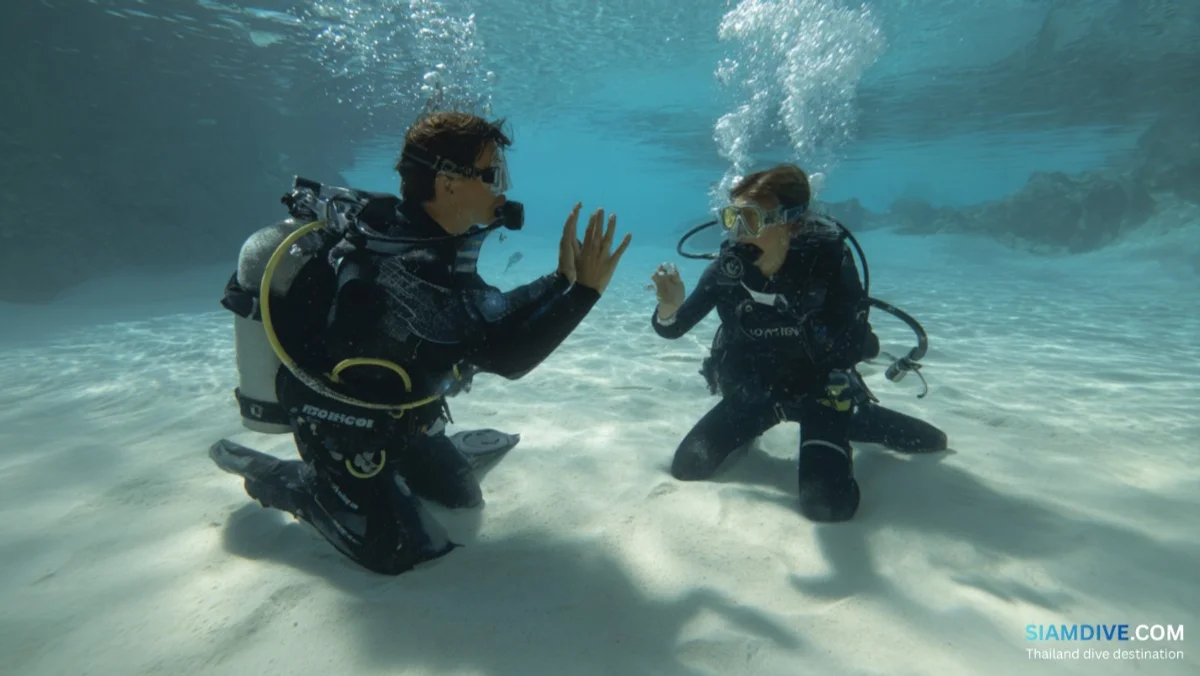
If you are a new diver or getting certified for the first time, the Gulf of Thailand is a better fit. Koh Tao's dive schools are structured around beginners, the water is calm, the sites are shallow, and the cost of training is as low as it gets anywhere in the world. You can finish an Open Water course in three days and follow it with fun dives at sites well within your comfort zone.
If you already hold an Advanced Open Water certification and have 30 or more logged dives, the Andaman Sea is where you should go. The current-swept pinnacles, deep walls, and pelagic encounters reward experience. A liveaboard to the Similans and Richelieu Rock is, for many experienced divers, the single best trip available in Southeast Asia.
If you fall somewhere in the middle — certified but fewer than 20 dives — the Andaman still works if you stick to sites like Koh Haa and the east side of the Similans. Just avoid the deep advanced sites until your buoyancy and air consumption are solid. Some operators run mixed-level itineraries that offer both gentle reef dives and challenging pinnacle dives on the same trip.
Cost Comparison
The Gulf is cheaper across the board, and the gap is significant for budget travelers.
- PADI Open Water course: Gulf (Koh Tao) 9,000–11,000 THB ($260–$320). Andaman (Koh Lanta/Phuket) 12,000–16,000 THB ($350–$460). Koh Tao's volume keeps prices down.
- Fun diving day trip (2 dives): Gulf 2,000–3,500 THB ($60–$100). Andaman 3,000–5,000 THB ($85–$145). Andaman prices include national park fees and longer boat rides.
- Liveaboard (4 nights): Not common in the Gulf. Andaman options start at $500 and run to $2,800 per person.
- Accommodation: Koh Tao hostels start at 300 THB ($9) per night. Koh Lanta budget rooms start around 600 THB ($17). Phuket varies wildly by area.
- Food: Both coasts average 150–300 THB ($4–$9) per meal at local restaurants. Island surcharges apply on Koh Tao and Koh Lanta for imported goods.
A week of diving on the Gulf (accommodation, food, 8 fun dives) can be done for under $500 total. The equivalent on the Andaman side runs $800 to $1,200 depending on whether you do day trips or a liveaboard.
Final Thoughts
The choice is straightforward once you know what you want. The Gulf of Thailand is where you learn to dive, spend less, and enjoy easy logistics with year-round access. The Andaman Sea is where you go for world-class sites, big marine life, and that liveaboard experience that looks nothing like a day trip from a resort pier.
Both coasts deserve a visit at some point. Plenty of divers get certified on Koh Tao, rack up experience, and then head west for their first Similan liveaboard a year later. That progression makes sense and gives you the best of both regions over time.
Compare dive trips across both coasts and find the right fit for your next Thailand dive at siamdive.com.