Scuba Day TripsSnorkelingLand TourLiveaboardDive ResortFreedive Trips
Scuba CoursesFreedive Courses
Blog
Never Dived Before? Here's Why Thailand Should Be Your First Ever Dive Trip
← Blog

Never Dived Before? Here's Why Thailand Should Be Your First Ever Dive Trip

17 เมษายน 2569

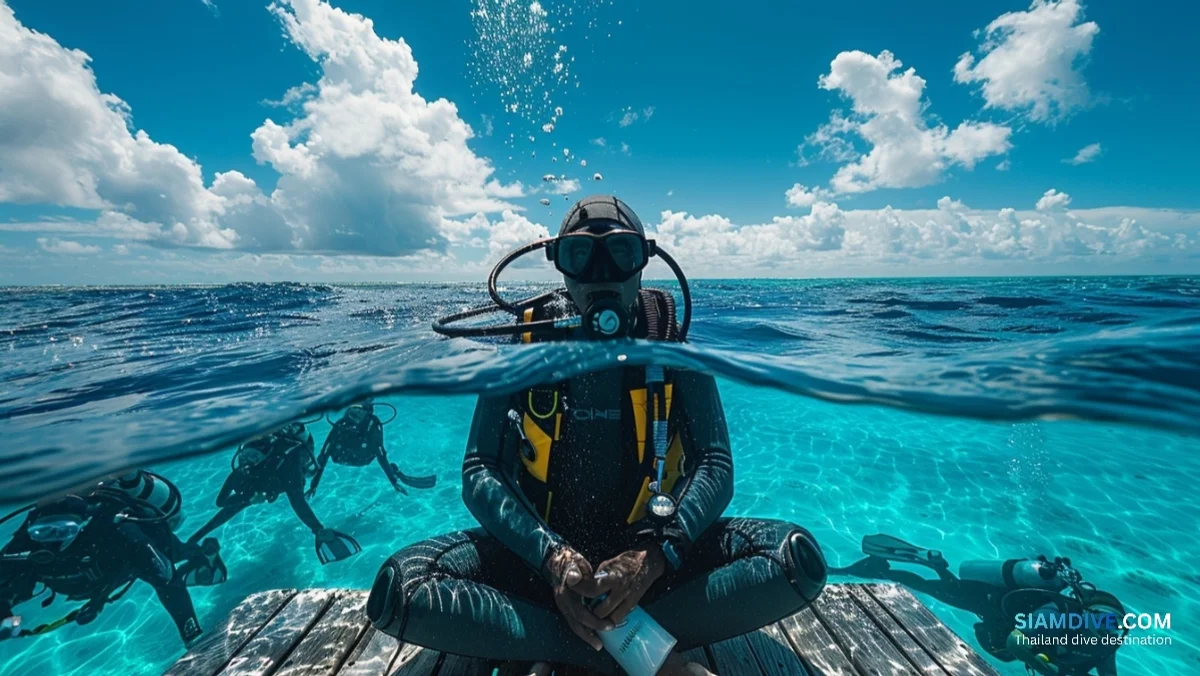
Warm 29°C water, 30m visibility, the world's cheapest PADI courses, and reefs built for beginners. Here's why Thailand is the single best place on Earth to start diving.

The Country Where Everyone Learns to Dive

Koh Tao alone certifies more new divers than almost any other spot on the planet. That's not a marketing line — it's the reality of a small island whose entire economy runs on getting nervous first-timers comfortable underwater. If you've ever thought about trying scuba, Thailand is not just a good option. It is the obvious one. Warm water, cheap courses, protected reefs, and instructors who teach beginners every single day.

This post is for the person who hasn't dived yet — or who tried a Discover Scuba in Bali and didn't get hooked. Here's why Thailand fixes every reason you might have hesitated.

Reason 1: The Water Is Ridiculously Warm

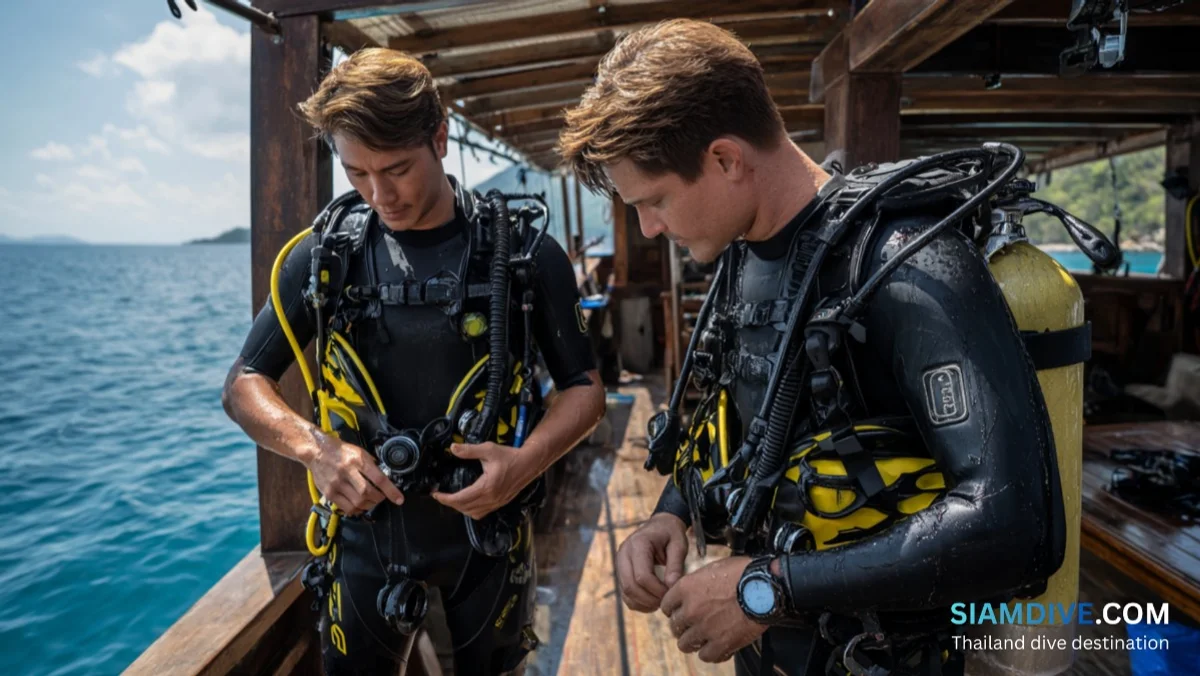
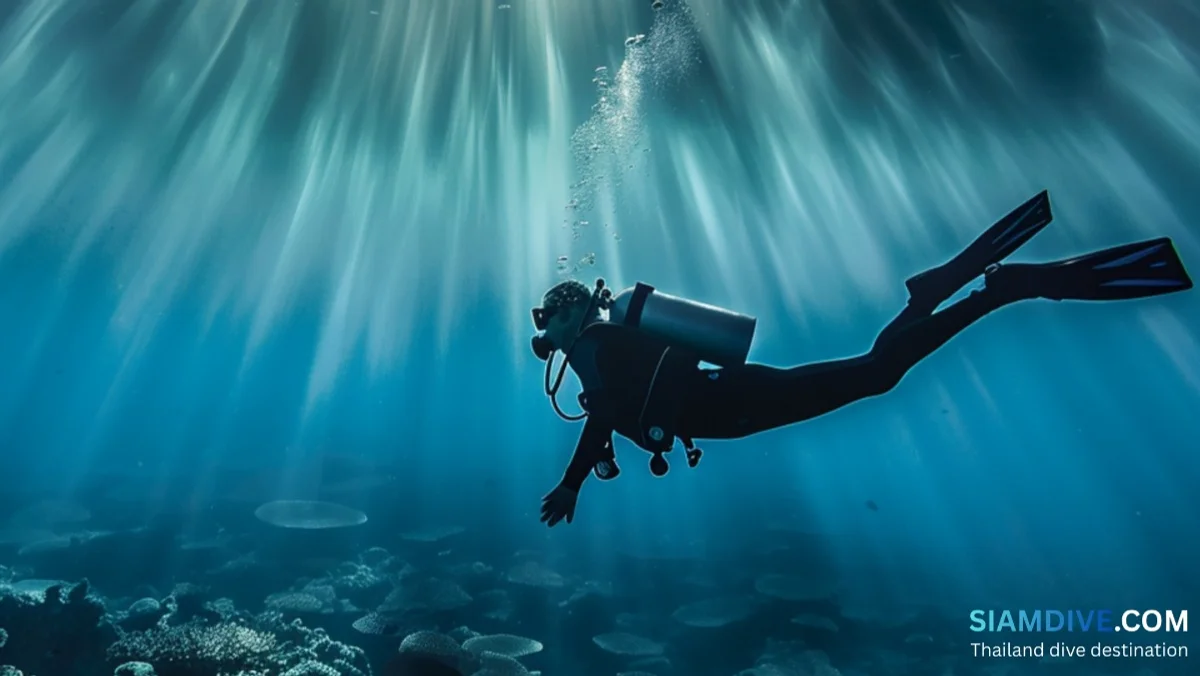
Thai sea temperatures sit between 27°C and 30°C (81–86°F) year round. You dive in a 3mm shorty wetsuit, sometimes just a rash guard. You are not cold. You are not distracted by shivering. Your first underwater breaths happen in water that feels like a bath.

Compare that to learning in the UK (10°C), California (15°C), or even Australia in winter (19°C) and you realize why people fly across the world to get certified in Thailand instead.

Reason 2: It's the Cheapest Certification on Earth

A full PADI Open Water course on Koh Tao runs roughly 9,500–12,000 THB (~$280–$350 USD) including equipment, eLearning, pool sessions, four training dives, and your international certification card. Phuket and Koh Phi Phi run a little higher at 14,000–16,000 THB. Either way, you're looking at less than the cost of a single Apple watch for a lifetime qualification.

Discover Scuba Diving (a half-day intro, no certification) starts at around 2,500 THB. If you just want to see whether you like breathing underwater before committing to a course, it's the smartest 75 dollars you'll spend on a trip.

Reason 3: The Training Sites Are Practically Designed for Beginners

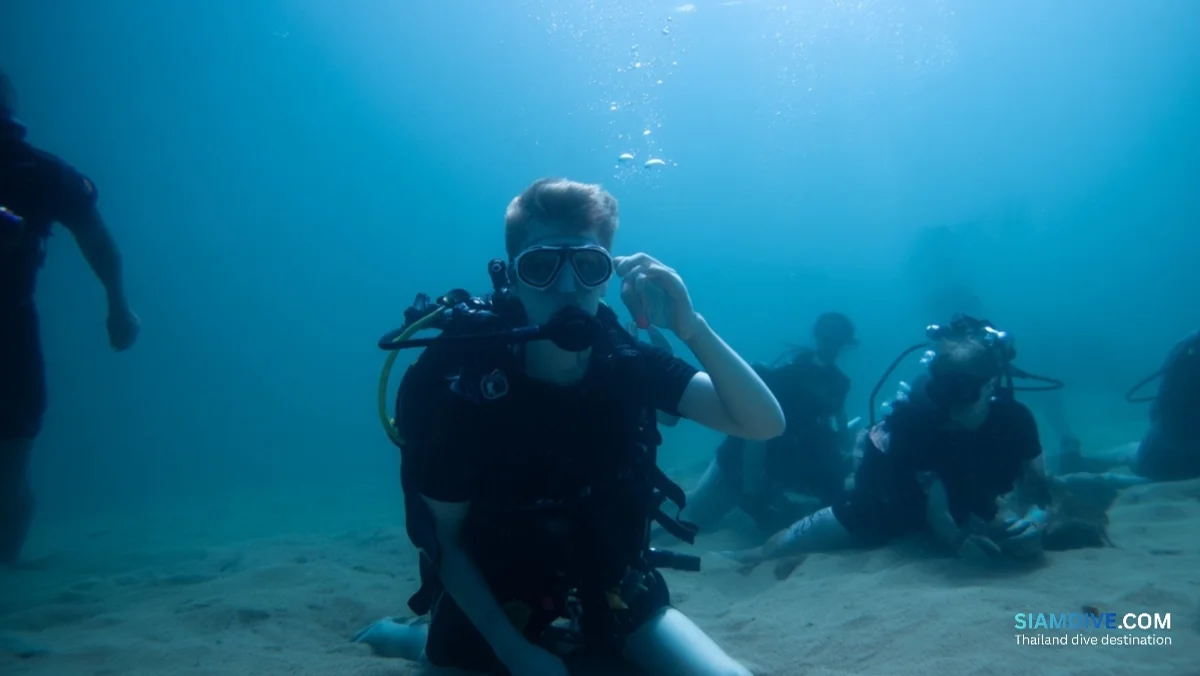
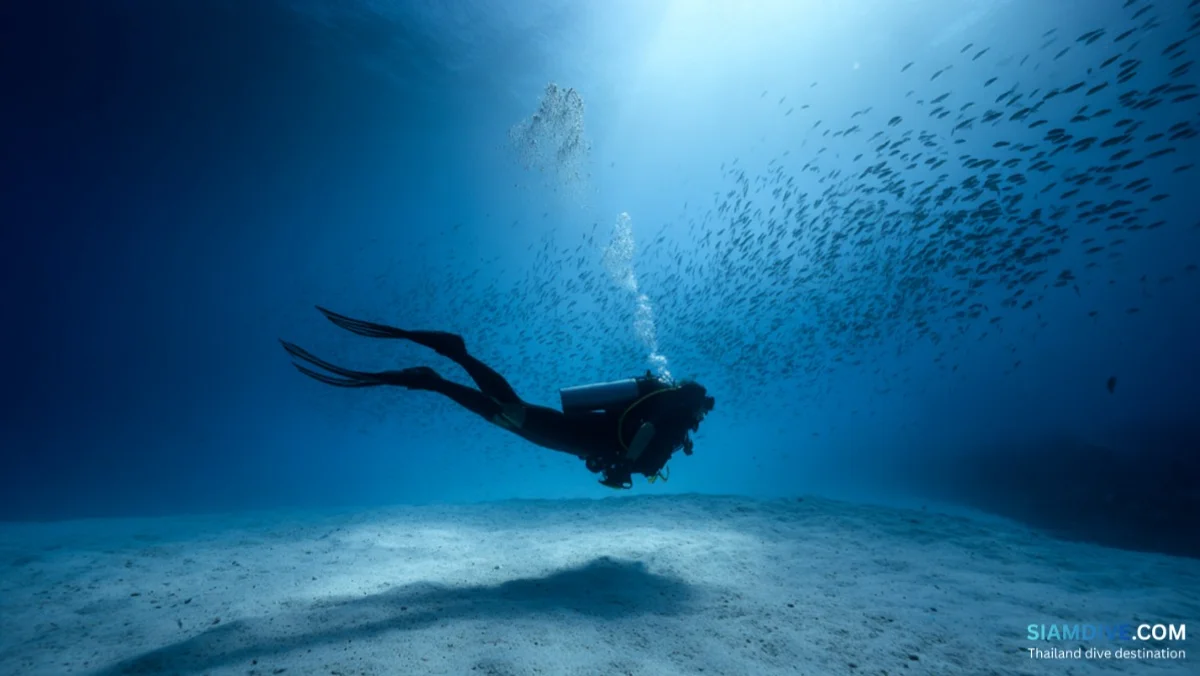
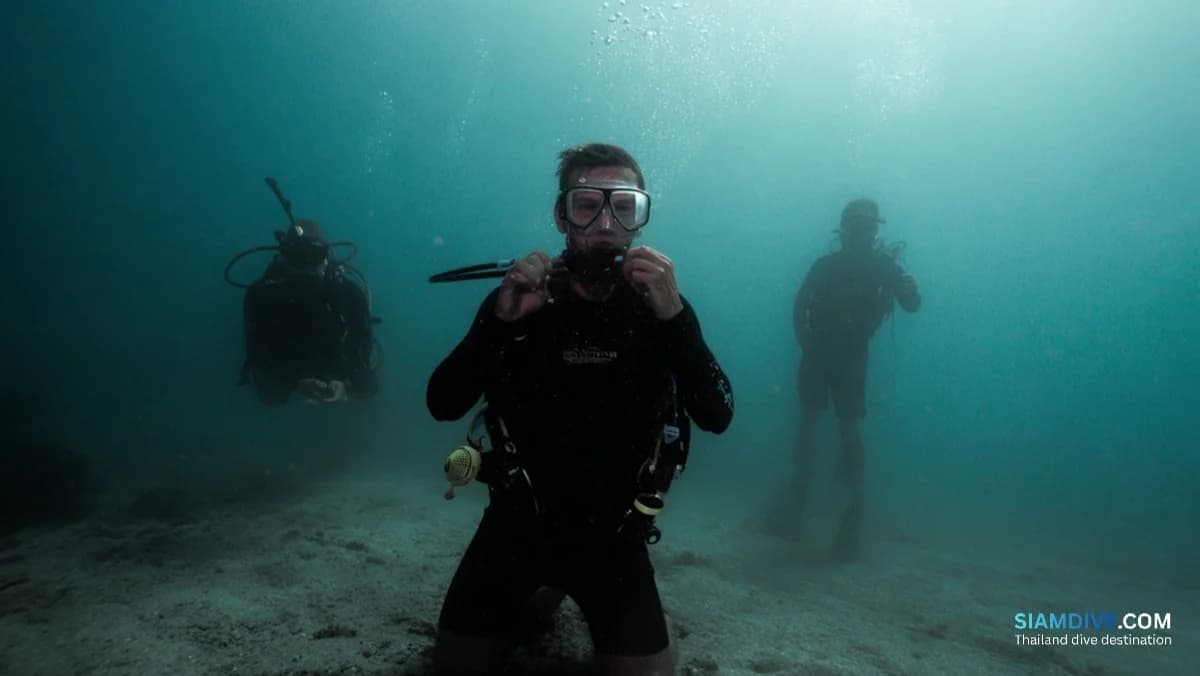
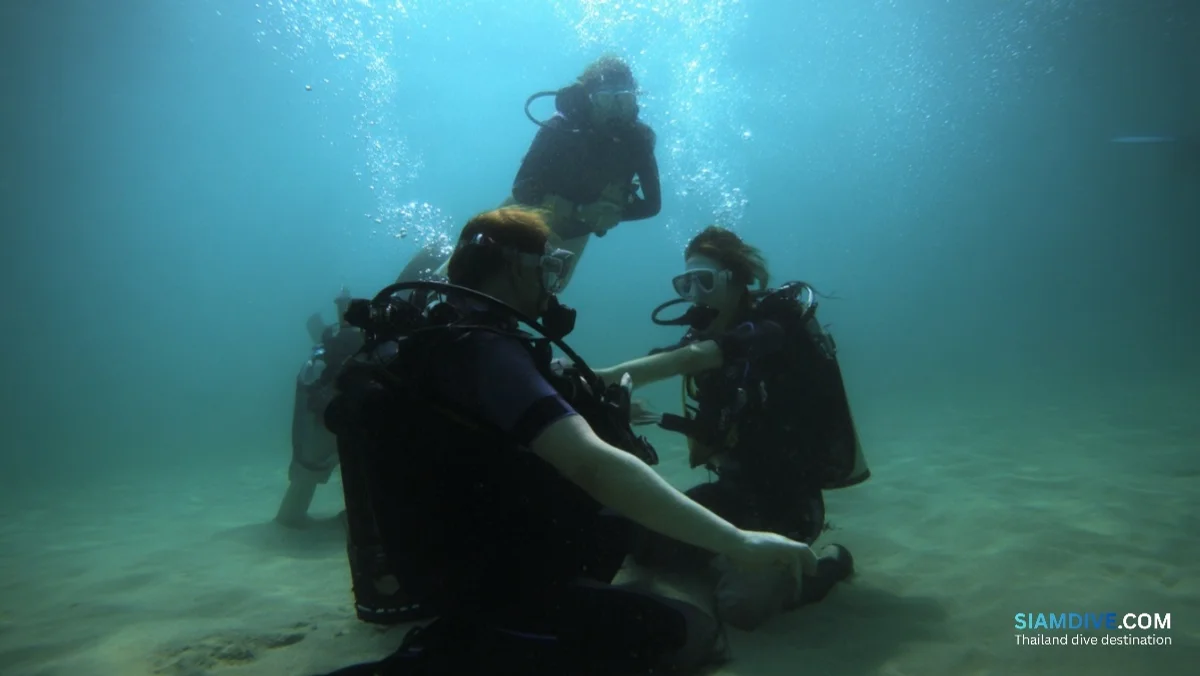
Sites like Japanese Gardens, Twins, White Rock, and Mango Bay (all Koh Tao) are shallow — usually 5 to 12 metres — with calm, clear water and no current. These aren't fallback sites for bad weather. They are purpose-used training grounds because their conditions match exactly what an Open Water student needs: a sandy bottom to kneel on, a gentle slope, easy navigation, and reef life within arm's reach.

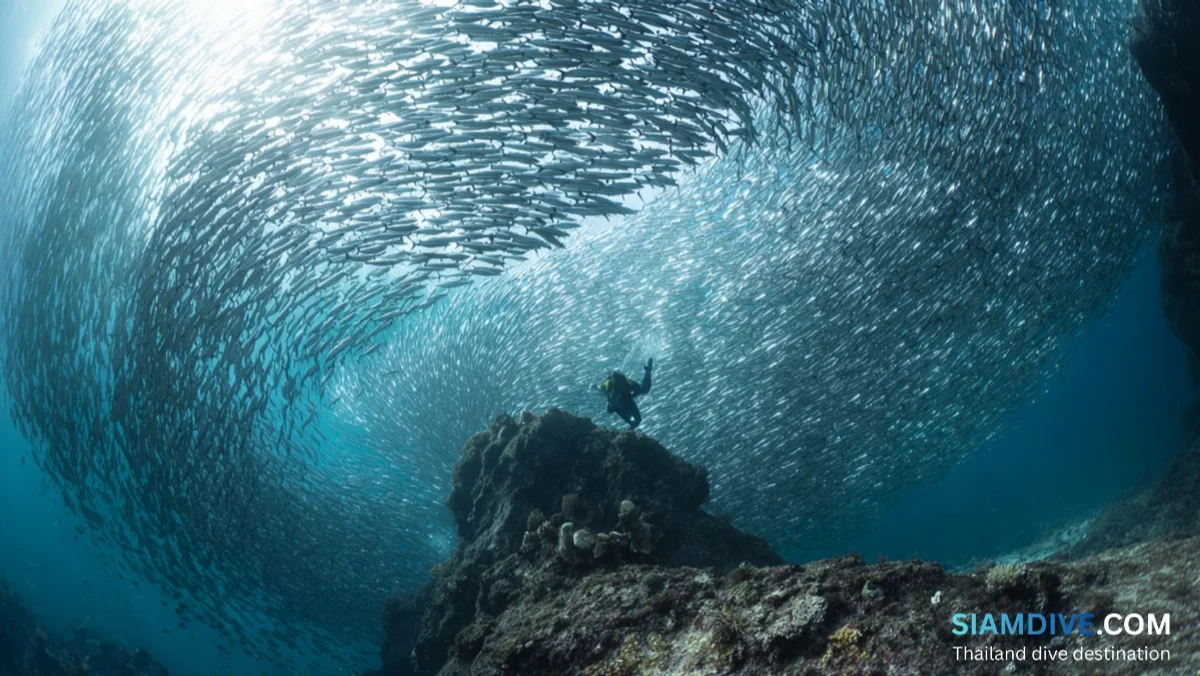
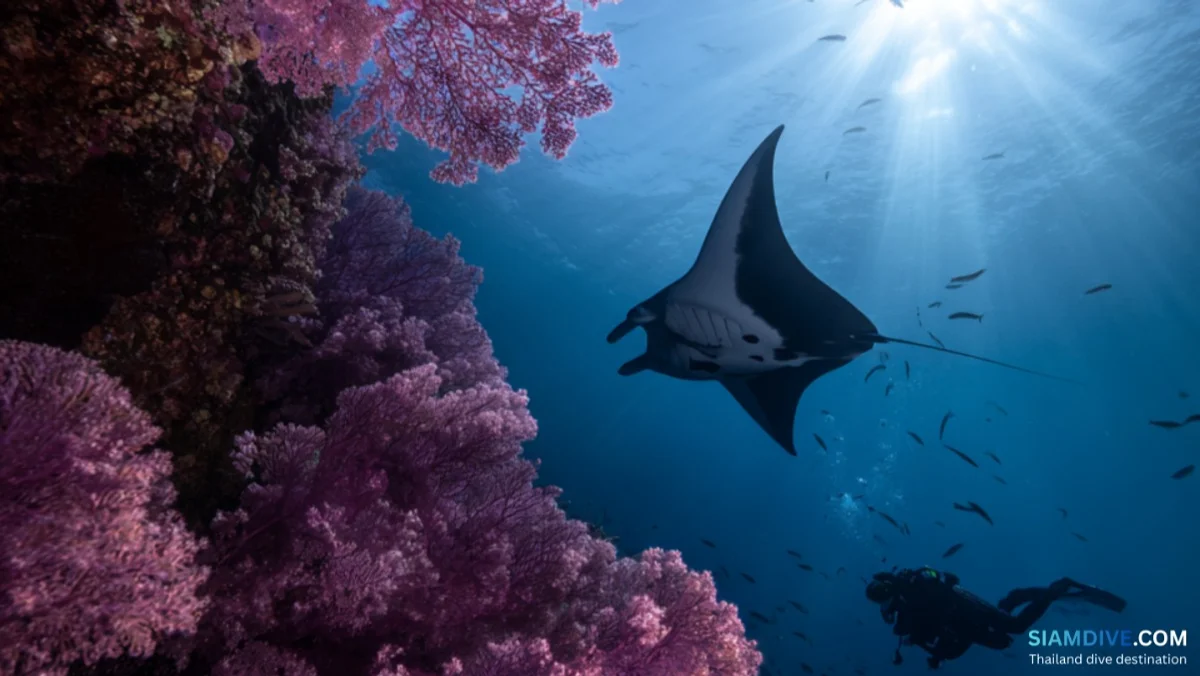
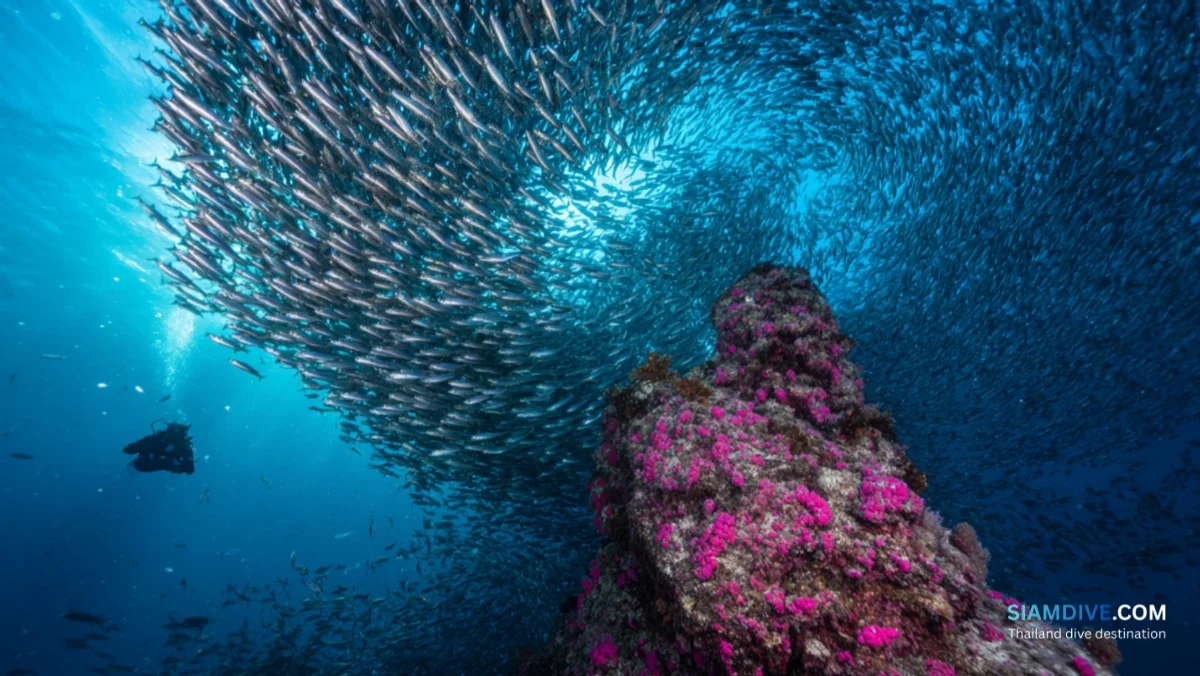
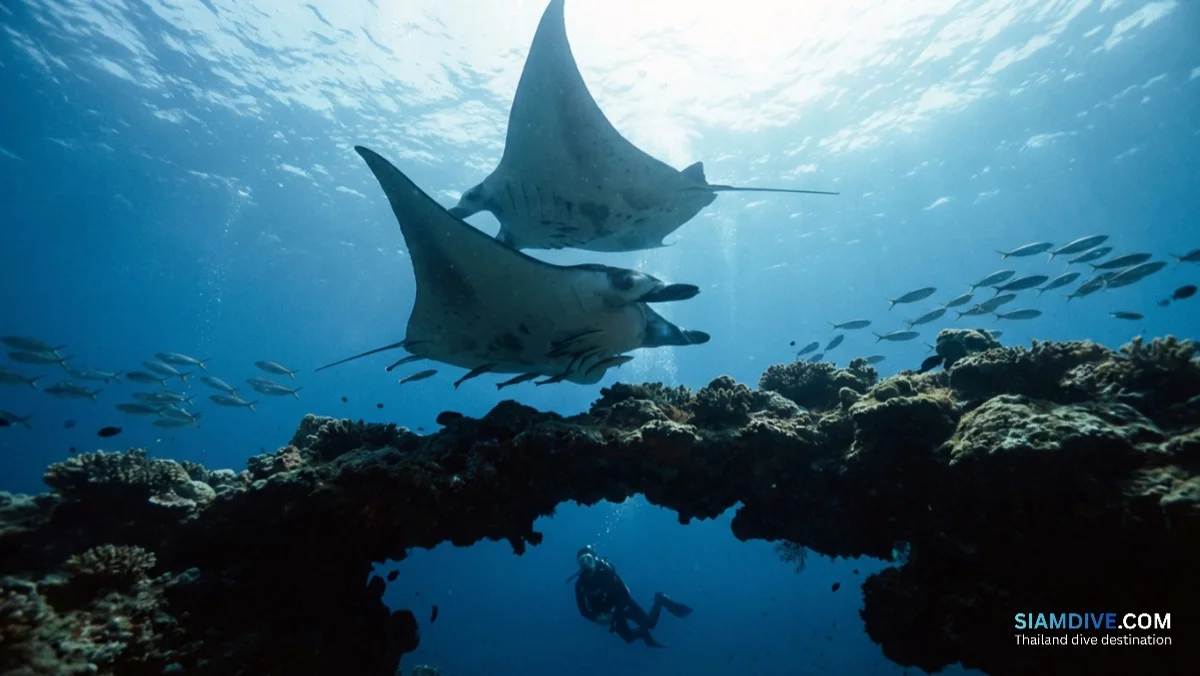
Krabi and Koh Phi Phi offer the same profile on the Andaman side. Calm, clear, protected — and the moment you're certified, you can jump onto sites with whale sharks and manta rays without leaving the country.

Reason 4: Visibility Is Genuinely Incredible

Peak season visibility (roughly October through May on the Andaman side, and year-round on the Gulf side) regularly hits 25–30 metres. For a new diver, clear water means confidence. You can see your buddy, your instructor, the bottom, and the surface all at once. That's the difference between a relaxing first dive and a stressful one.

Reason 5: You Can Certify Fast (Or Slow)

The standard PADI Open Water course runs 3 to 4 days. That fits a normal holiday — fly in Monday, certified by Friday, spend the weekend actually using the certification on fun dives.

If you want to take it slower, shops on Koh Tao will happily split the course across 5 or 6 days. If you want to go all-in, you can stack Open Water → Advanced Open Water → Rescue in under two weeks and walk out with 30+ logged dives.

Reason 6: Dive Shops Speak Your Language

Top dive centres in Thailand have instructors in English, Thai, Mandarin, Japanese, Korean, German, French, Russian, and more. This matters more than people realize. Your first dive involves vocabulary — equalize, purge, neutral buoyancy, controlled emergency swimming ascent — and having an instructor who teaches you that in your native language is the difference between understanding and pretending to understand.

Reason 7: It's Not Just About Diving

A lot of first-time divers worry about committing a whole trip to a hobby they haven't tried yet. In Thailand, you don't have to. Your course is usually 2–4 hours per day. The rest of the day you're on a beach, eating pad thai for 60 baht, getting a 300-baht massage, hopping a ferry to the next island. If you hate diving, you still have a perfect Thailand trip. Nobody says that about a dedicated dive boat in Indonesia or Palau.

What It Actually Costs — Ballpark for 10 Days

  • Flights (from EU/US): $700–$1,200
  • Accommodation 10 nights (mid-range): $300–$500
  • PADI Open Water course: $300–$350
  • 4 extra fun dives after certification: $120–$160
  • Food and transport 10 days: $200–$300

Total: roughly $1,600–$2,500 for a full 10-day trip including certification. The same experience starting in the Maldives or Caribbean easily doubles.

The One Thing You Should Do Before You Arrive

Start the eLearning before your flight. PADI Open Water eLearning is 8–12 hours of videos and quizzes, and if you've done it all at home, your four days on the island are 100% in the water instead of split between water and classroom. You can also practise equalizing your ears on land (pinch nose, gently blow) — the single skill that trips up most first-time divers.

Where to Start

For a first certification, we genuinely recommend Koh Tao for budget and ease, Koh Phi Phi or Krabi for nicer scenery with calm conditions, or Phuket if you want an easy international airport arrival. All three work. None are wrong.

Browse certified dive centres, Open Water course packages, and island combos on siamdive.com and message the shop directly. See you underwater.
← กลับไปหน้า Blog

Gallery

Never Dived Before? Here's Why Thailand Should Be Your First Ever Dive Trip — image 1Never Dived Before? Here's Why Thailand Should Be Your First Ever Dive Trip — image 2Never Dived Before? Here's Why Thailand Should Be Your First Ever Dive Trip — image 3

บทความแนะนำ

Green Rock Koh Tao Diving Guide: The Island's Best Swim-Through Site

Green Rock Koh Tao Diving Guide: The Island's Best Swim-Through Site

Green Rock off Koh Nang Yuan offers Koh Tao's best boulder maze, The Chimney swim-through, dense macro life and advanced training — here's everything divers need.

Hin Wong Pinnacle Koh Tao Diving Guide: The East Coast's Best Kept Secret

Hin Wong Pinnacle Koh Tao Diving Guide: The East Coast's Best Kept Secret

Hin Wong Pinnacle off Koh Tao's east coast has more fan corals than any site on the island, plus rich fish life and fewer crowds — here's everything divers need.

Scuba Diving Safety: A Beginner's Guide to Diving Safe & Smart

Scuba Diving Safety: A Beginner's Guide to Diving Safe & Smart

The five-minute pre-dive check, three golden rules, buddy system and emergency drills every diver must know. Real safety advice without the fluff.

We Did the Math: Thailand Costs a Third of the Maldives and Matches the Red Sea's Best

We Did the Math: Thailand Costs a Third of the Maldives and Matches the Red Sea's Best

We priced a week of diving in Thailand, the Maldives, Egypt, the Philippines, and the Caribbean. Here's the real per-dive cost — and why Thailand wins for most divers.

Explore 9 Eco Centers

Explore 9 Eco Centers

Discover 9 PADI Eco Centers in Thailand certified by UN Reef-World Green Fins for responsible scuba diving. Your ultimate guide by Siam Dive Center to sustainable dive sites.

Bida Nok: Where Leopard Sharks Sleep at Your Feet

Bida Nok: Where Leopard Sharks Sleep at Your Feet

Bida Nok near Koh Phi Phi delivers leopard sharks, turtles, and vibrant coral walls on every dive. Here's exactly what to expect at 0-30 meters.

Triangle Pinnacle Diving Guide: The Gulf's Quietest Granite Site

Triangle Pinnacle Diving Guide: The Gulf's Quietest Granite Site

Hin Sam Liam is the Gulf of Thailand pinnacle that does not show up on the standard Koh Tao board. Big groupers, anemone gardens, and almost no crowds.

Richelieu Rock Diving Guide: Best Site in Thailand 2025

Richelieu Rock Diving Guide: Best Site in Thailand 2025

Discover Richelieu Rock, Thailand's crown jewel of scuba diving. Whale sharks, manta rays, seahorses and world-class biodiversity await in the Andaman Sea.

What to Eat Before Diving (And the Meal That Could Ruin It)

What to Eat Before Diving (And the Meal That Could Ruin It)

Your pre-dive meal matters more than you think. Learn the best foods, hydration tips, and what to avoid before scuba diving to stay safe and comfortable underwater.

Hin Daeng & Hin Muang Liveaboard: Thailand's Wildest Walls

Hin Daeng & Hin Muang Liveaboard: Thailand's Wildest Walls

Hin Daeng and Hin Muang are Thailand's deepest soft coral walls — manta rays, whale sharks, and serious current. Here's how to dive them by liveaboard.

Safe Diving Techniques: 8 Skills That Prevent Accidents

Safe Diving Techniques: 8 Skills That Prevent Accidents

Master the 8 essential safe diving techniques every diver must know — from buoyancy control and air management to emergency ascents and SMB deployment.

10 Things Every Certified Diver Should Know (But Open Water Didn't Teach)

10 Things Every Certified Diver Should Know (But Open Water Didn't Teach)

Gas management, dive planning, SMBs, owning your gear, DAN insurance and the right to call a dive — the practical skills certified divers actually need.

Shark Island Koh Tao Diving Guide: The Gulf's Best Drift Site

Shark Island Koh Tao Diving Guide: The Gulf's Best Drift Site

Shark Island off Koh Tao's southeast tip offers advanced drift diving, purple coral walls, and occasional blacktip shark sightings — here's everything you need.

The Junkyard Koh Tao Diving Guide: The Island's Quirkiest Artificial Reef

The Junkyard Koh Tao Diving Guide: The Island's Quirkiest Artificial Reef

The Junkyard off Mae Haad is Koh Tao's artificial reef built from recycled trash — toilets, bikes, and a thriving coral nursery with resident batfish and lionfish.

Octopus Intelligence: The Smartest Creature Underwater

Octopus Intelligence: The Smartest Creature Underwater

Octopuses have 500 million neurons, use tools, recognize faces, and change color in milliseconds. Here is why divers never forget their first encounter.

Southwest Pinnacle Koh Tao Diving Guide: The Gulf's Best Big-Fish Site

Southwest Pinnacle Koh Tao Diving Guide: The Gulf's Best Big-Fish Site

Southwest Pinnacle is Koh Tao's seven-pinnacle offshore site. Whale sharks, dogtooth tuna, and giant groupers — here's how to dive it and when.

Discover the Avelo Scuba System: Revolutionizing Diving in Thailand

Discover the Avelo Scuba System: Revolutionizing Diving in Thailand

The Avelo Scuba System redefines buoyancy control with its innovative Hydrotank, offering lighter gear, stable neutrality, and longer dives perfect for Thailand's vibrant dive sites.

One Country, Every Type of Dive: Why Thailand Is the Most Underrated Bucket-List Destination

One Country, Every Type of Dive: Why Thailand Is the Most Underrated Bucket-List Destination

Whale sharks, manta rays, macro critters, wrecks, pinnacles, drift, coral gardens — Thailand delivers every style of diving within one country. Here's why that matters.

How to Actually Enjoy Scuba Diving: A Comfort & Confidence Guide

How to Actually Enjoy Scuba Diving: A Comfort & Confidence Guide

Buoyancy, breathing, weighting, trim and the mental game — the practical skills that turn diving from a workout into a 60-minute float. No fluff.

Fried on the Dive Boat: The Complete Sun Protection Guide Every Diver Needs

Fried on the Dive Boat: The Complete Sun Protection Guide Every Diver Needs

Scuba divers face extreme UV exposure — hours on open boat decks, water reflecting 25-40% more UV rays, and wet skin that burns faster. Learn about reef-safe sunscreen, UPF rash guards, and essential gear to protect your skin without harming marine life.

ทริปแนะนำ

Hug Ocean Boat
daytrip

Hug Ocean Boat

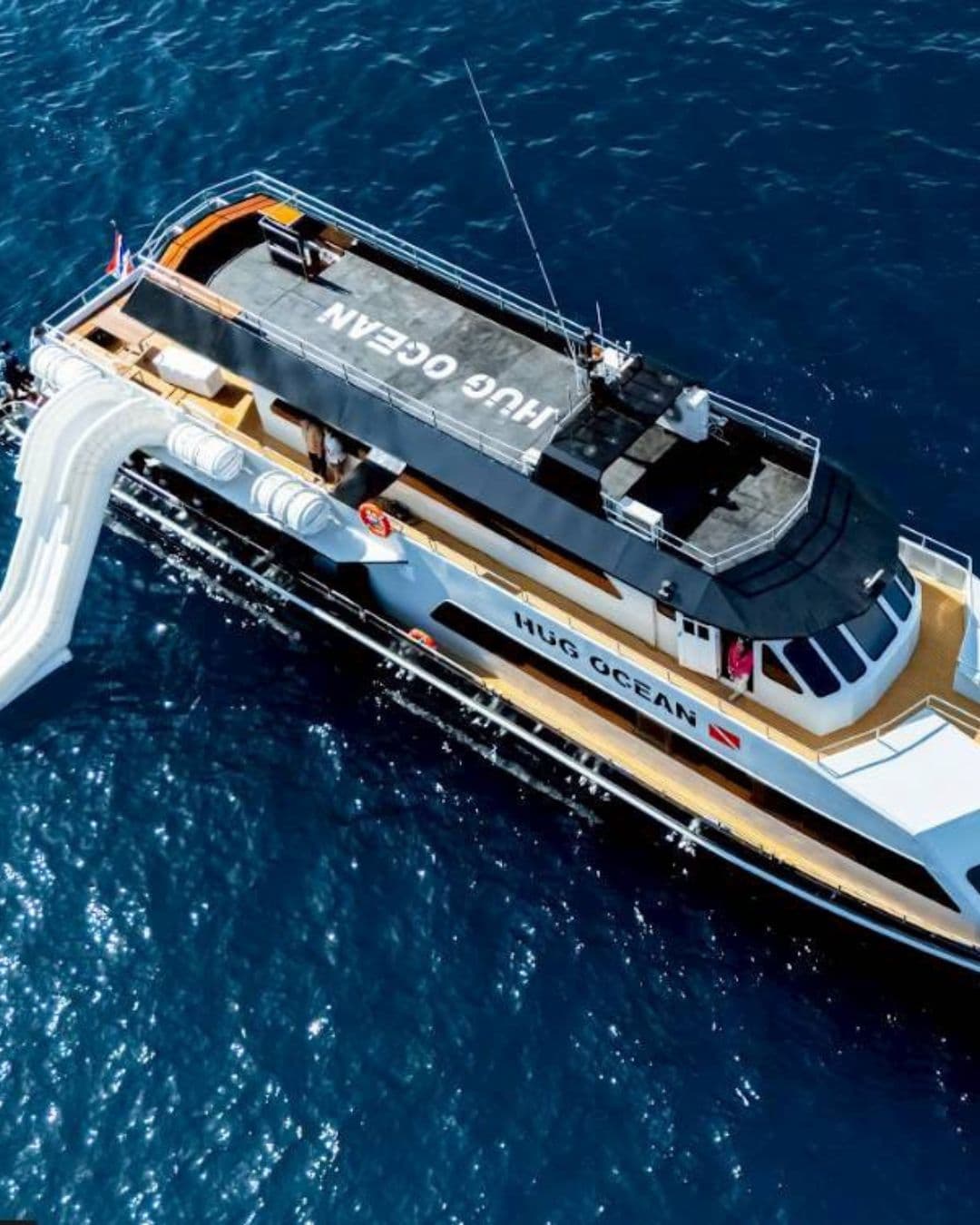
Discover Phuket's Andaman Sea aboard Hug Ocean — a luxury 3-deck dive yacht for 80 guests with a thrilling water slide, sun-soaked top deck, and PADI-certified diving at Racha Yai and Racha Noi.

Aquarian Liveaboard
liveaboard

Aquarian Liveaboard

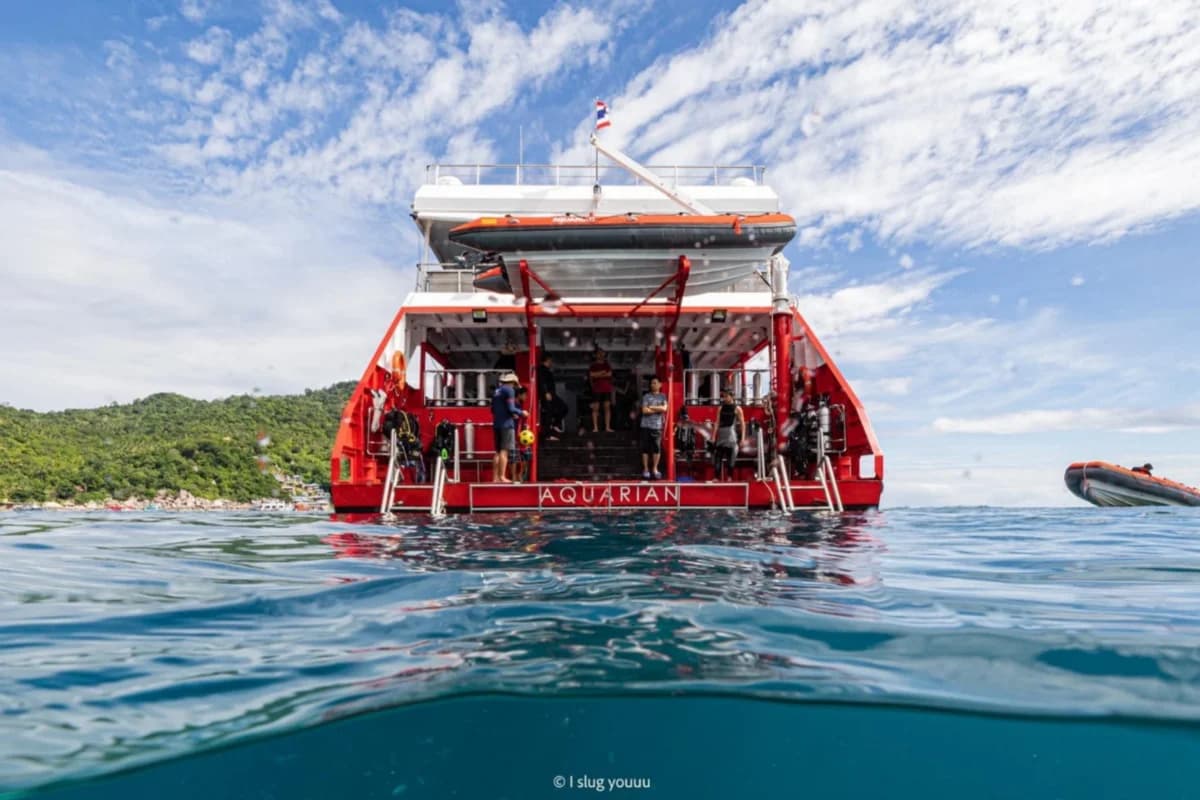
MV Aquarian — striking 2021-built red steel liveaboard, 31.4 m × 7.5 m, max 28 guests in 14 cabins. Free unlimited Nitrox via Coltri Sub membranes, one of Thailand's largest dive platforms, and full premium-hotel comfort.

Issara Liveaboard
liveaboard

Issara Liveaboard

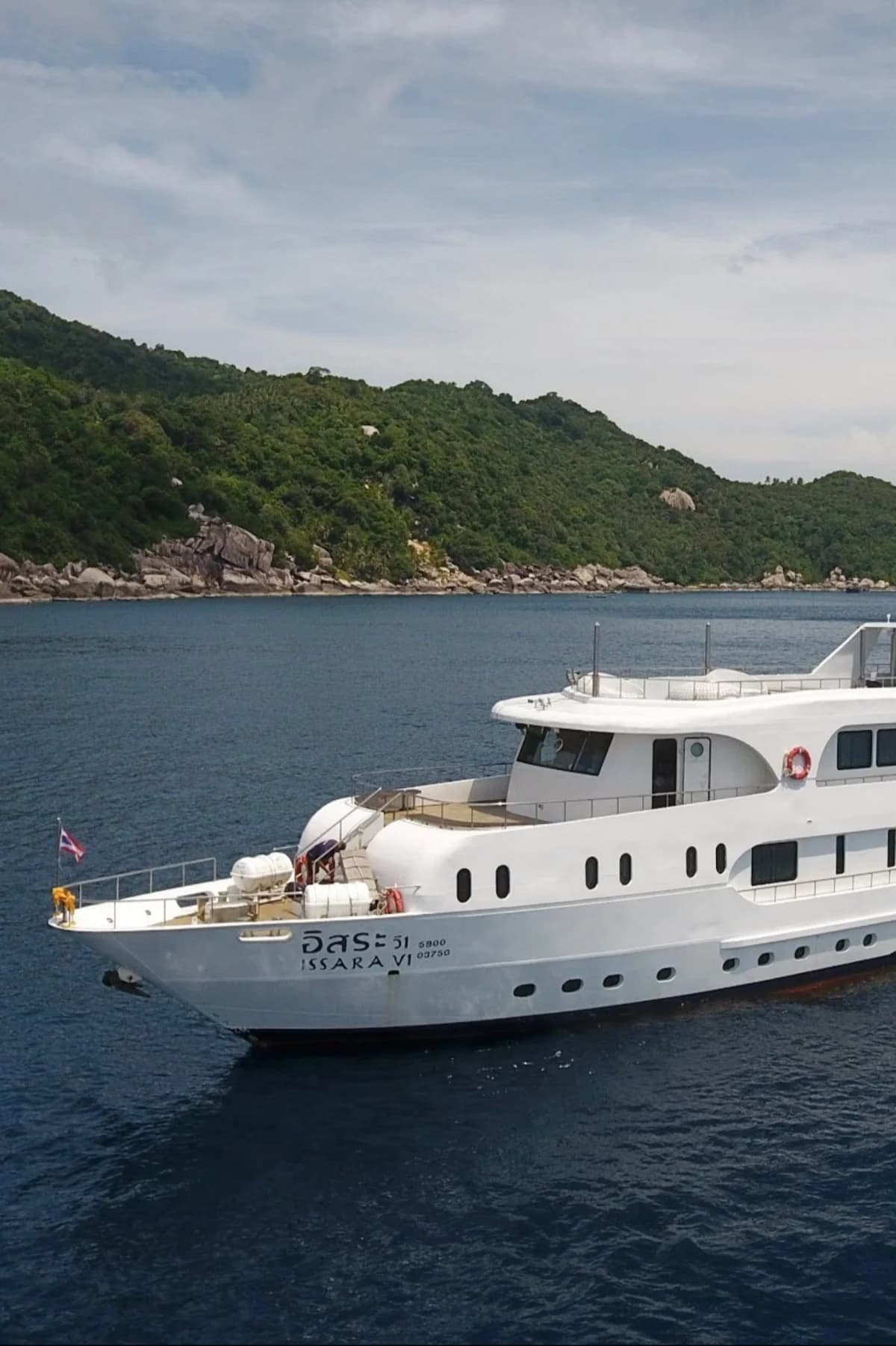
MV Issara — high-end Thai steel-hulled liveaboard built 2016–17, 28.5 m × 6.5 m, 4 decks, max 22 guests in 11 hotel-style cabins. Indoor saloon, jacuzzi sun deck, full-board buffet dining.

Mandarin Queen 5
daytrip

Mandarin Queen 5

Brand-new Phuket dive boat — 26.2 m M/V Mandarin Queen 5 with spacious dive platform, lounge and upper sun deck. Daily day trips to King Cruiser Wreck, Shark Point, Anemone Reef, Racha Yai and Racha Noi.