Scuba Day TripsSnorkelingLand TourLiveaboardDive ResortFreedive Trips
Scuba CoursesFreedive Courses
Blog
What to Eat Before Diving (And the Meal That Could Ruin It)
← Blog

What to Eat Before Diving (And the Meal That Could Ruin It)

17 เมษายน 2569

Your pre-dive meal matters more than you think. Learn the best foods, hydration tips, and what to avoid before scuba diving to stay safe and comfortable underwater.

Why Your Pre-Dive Meal Matters More Than You Think

You've checked your gear, planned your dive, and studied the site map. But have you thought about what's on your plate? What you eat and drink before scuba diving directly affects your comfort, safety, and even your risk of decompression sickness (DCS). A poorly chosen meal can turn a world-class dive into a miserable experience — or worse, a dangerous one.

Whether you're diving from a liveaboard in the Similan Islands or doing a morning shore dive in Koh Tao, getting your pre-dive nutrition right is one of the easiest ways to improve every dive you make.

The Ideal Pre-Dive Meal: Light, Smart, and Well-Timed

The golden rule is simple: eat a light, easily digestible meal 1.5 to 2 hours before your dive. This gives your body enough time to process the food without diverting blood flow away from your muscles and brain during the dive.

Focus on complex carbohydrates for sustained energy: brown rice, whole-grain toast, oatmeal, or sweet potatoes. Pair them with a moderate amount of lean protein — scrambled eggs, grilled chicken, or tofu — to keep blood sugar stable throughout your dive.

Great pre-dive meal examples:

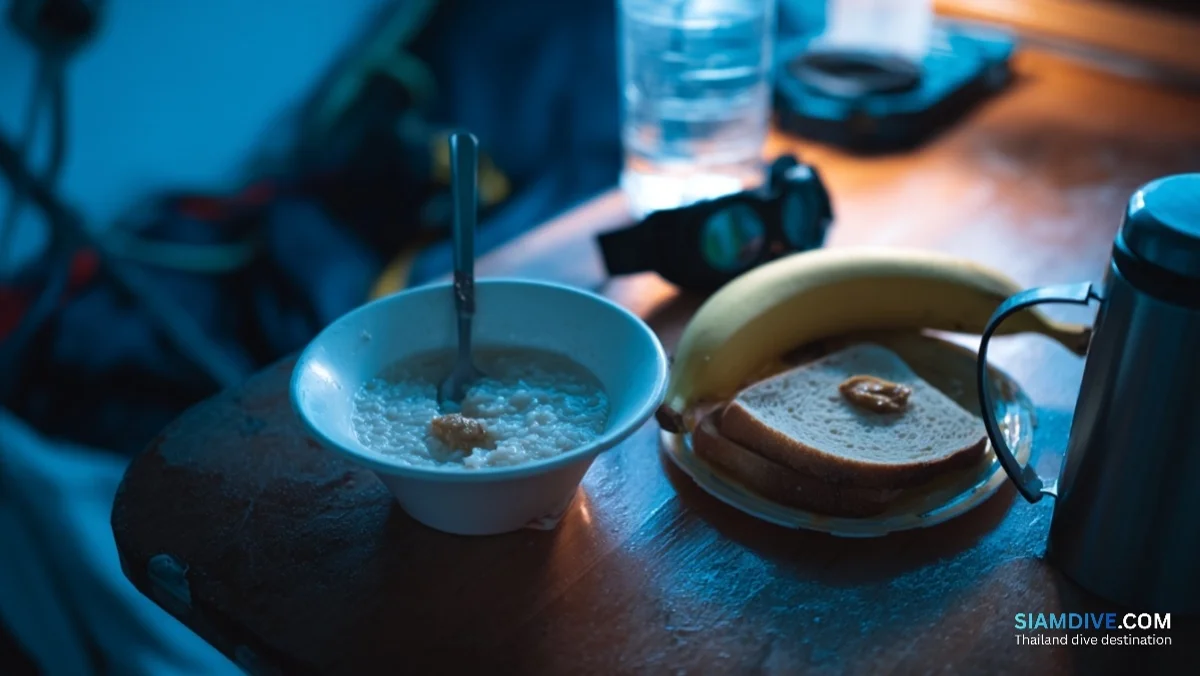
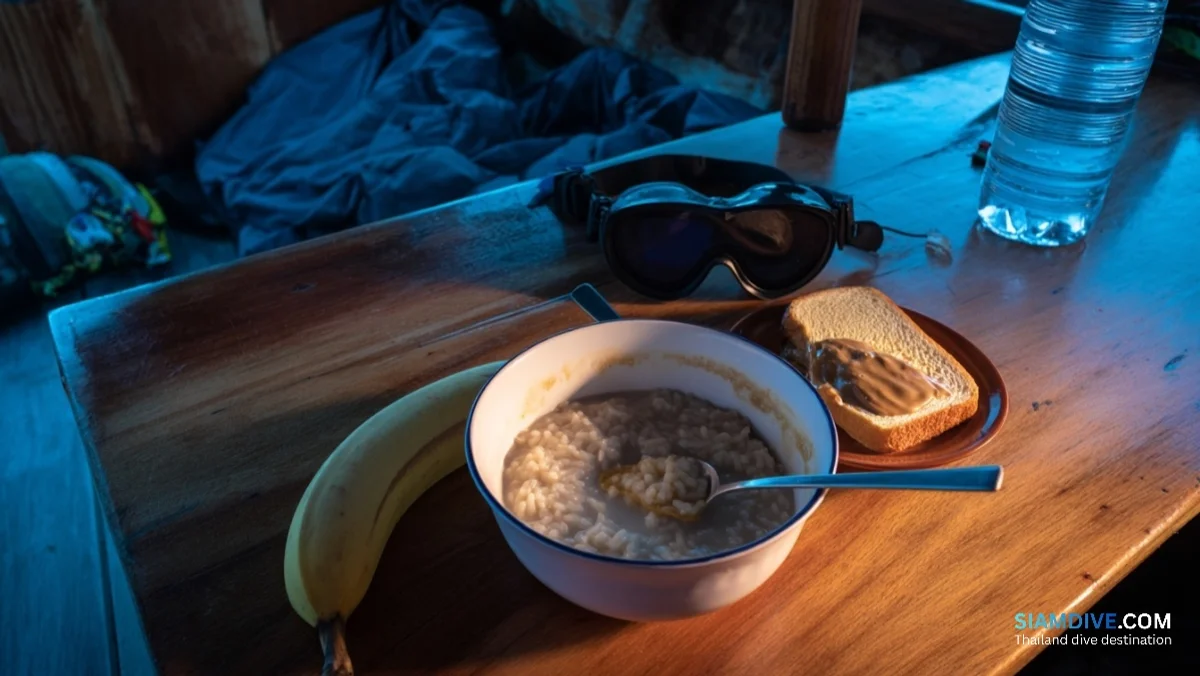
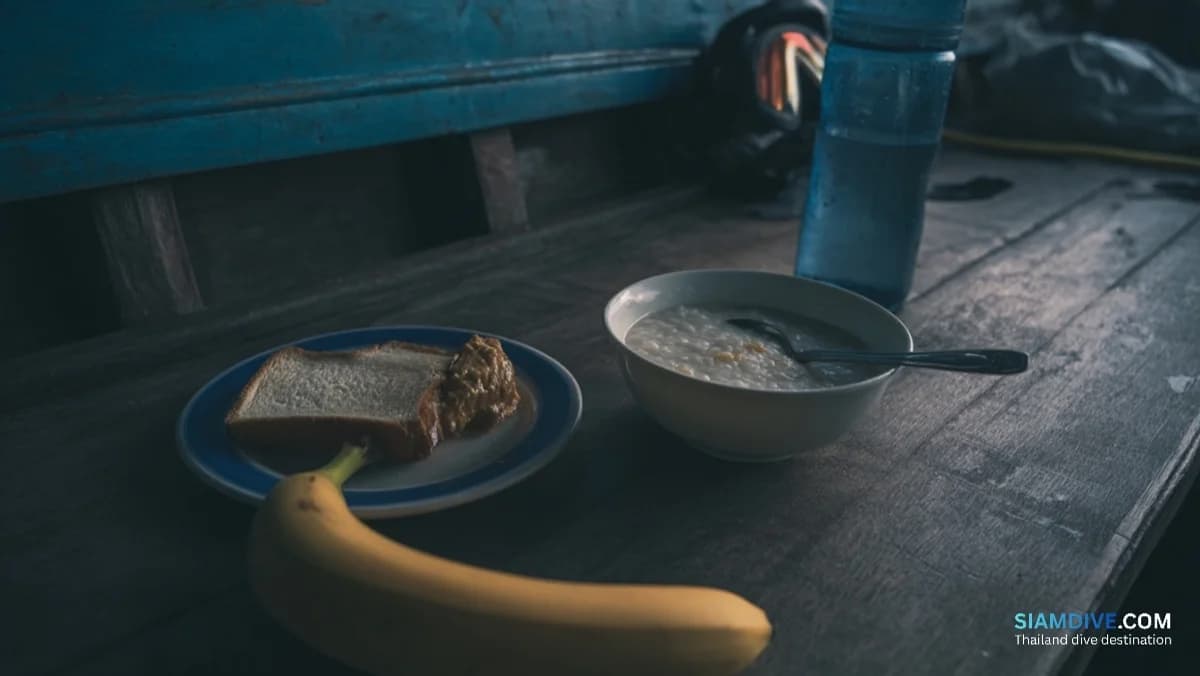
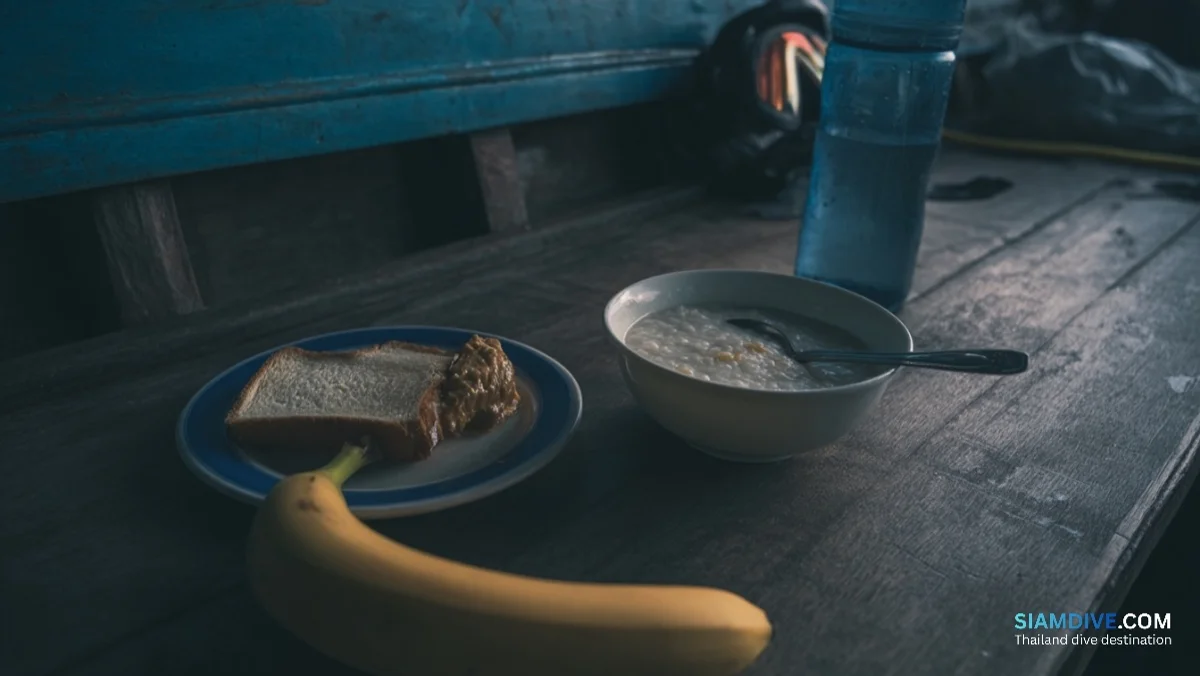
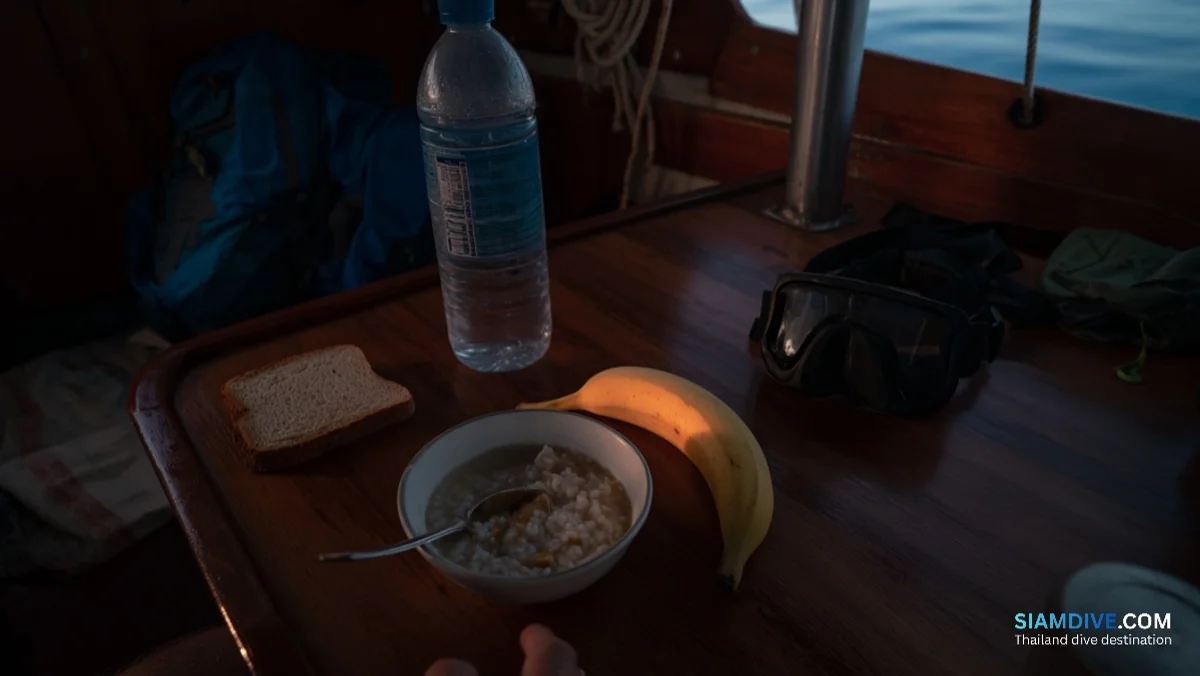
  • Oatmeal with banana slices and a drizzle of honey
  • Brown rice with grilled fish and steamed vegetables
  • Whole-grain toast with avocado and poached eggs
  • A small portion of pasta with light olive oil sauce

Hydration: The Most Underrated Safety Factor in Diving

Dehydration is one of the leading contributing factors to decompression sickness. When you're dehydrated, your blood plasma volume drops, tissue perfusion decreases, and your body becomes less efficient at off-gassing nitrogen after a dive. Research published in the International Journal of Environmental Research and Public Health found that divers who consumed approximately 700ml of water two hours before diving showed significantly fewer post-dive bubbles.

Here's a practical hydration plan:

  • Day before diving: Drink 2–3 liters of water throughout the day
  • Morning of the dive: Drink 500ml of water upon waking
  • Between dives: Sip water consistently, aiming for 200–300ml between each dive
  • Bonus tip: In tropical Thailand, fresh coconut water is widely available on dive boats and provides natural electrolytes — it's one of the best hydration options you'll find

Diving itself is dehydrating. Breathing dry compressed air, immersion diuresis (your body producing more urine underwater), and tropical heat all conspire to drain your fluids faster than you realize.

What NOT to Eat Before Diving

Some foods are a recipe for underwater disaster. Here's what to strike from your pre-dive menu:

Heavy, greasy, or fried food: That full English breakfast or plate of fried noodles might taste amazing, but high-fat meals take hours to digest. They can cause nausea on a rocking boat and leave you feeling sluggish at depth.

Spicy food: Curries, chili sauces, and heavily spiced dishes can trigger acid reflux and heartburn. Now imagine dealing with that while breathing through a regulator 20 meters underwater — not pleasant.

Gas-producing foods: This is the big one. Beans, lentils, cabbage, broccoli, cauliflower, and Brussels sprouts all produce intestinal gas. At the surface, that's merely uncomfortable. But as you ascend from depth, gas expands according to Boyle's Law. That small pocket of gas in your gut can expand painfully and cause serious abdominal discomfort during ascent.

Carbonated drinks: Same principle. The CO₂ in fizzy drinks creates gas in your stomach that expands at depth changes. Stick to still water.

Alcohol and Caffeine: The Pre-Dive Debate

Let's be direct: never drink alcohol before diving. Alcohol impairs judgment, slows reaction time, and is a powerful diuretic that accelerates dehydration. Drinking the night before a morning dive is nearly as bad — your body is still processing the alcohol, and you're starting your dive already dehydrated.

Caffeine is more nuanced. A small cup of coffee or tea is generally fine for regular caffeine drinkers, but be aware that caffeine is also a diuretic. If you do have your morning coffee, compensate by drinking extra water. Energy drinks, however, are a hard no. The combination of high caffeine, sugar, and other stimulants can increase heart rate and anxiety — the last thing you want at depth.

The Danger of Diving on an Empty Stomach

While overeating before a dive is problematic, skipping meals entirely is equally dangerous. Low blood sugar leads to poor concentration, impaired judgment, dizziness, and fatigue — all of which can have serious consequences underwater. You need mental clarity to monitor your gauges, manage buoyancy, and respond to unexpected situations.

If you're prone to seasickness and worried about eating, try a small, bland snack like plain crackers or a banana at least 30 minutes before the dive. Something is always better than nothing.

Smart Snacks for the Dive Boat

Most dive boats in Thailand provide fruit and snacks between dives. Here are the best options to reach for:

  • Bananas — easy to digest, rich in potassium, help prevent muscle cramps
  • Watermelon and pineapple — high water content helps with hydration
  • Granola bars — portable complex carbs for sustained energy
  • Trail mix — nuts and dried fruit provide a good balance of fats and carbs
  • Coconut water — natural isotonic drink, perfect in tropical heat

Avoid reaching for cookies, chips, or anything heavy between dives. Your body needs to recover and off-gas nitrogen, not divert energy to digesting junk food.

Put It All Together: Your Pre-Dive Nutrition Checklist

Getting your pre-dive nutrition right doesn't require a degree in sports science. Follow these simple guidelines and you'll notice the difference in your comfort, air consumption, and overall dive experience:

  • Eat a light meal of complex carbs and lean protein 1.5–2 hours before diving
  • Hydrate well the day before and morning of your dive
  • Avoid greasy, spicy, and gas-producing foods
  • Never dive after drinking alcohol
  • Don't skip meals — low blood sugar is dangerous underwater
  • Choose smart snacks on the boat between dives
  • In Thailand, take advantage of fresh coconut water and tropical fruits

Your dive starts long before you hit the water. Fuel your body right, and every dive will be safer, more comfortable, and more enjoyable. Ready to put this into practice on your next dive trip? Browse upcoming dive trips and liveaboards at siamdive.com and dive Thailand the smart way.
← กลับไปหน้า Blog

Gallery

What to Eat Before Diving (And the Meal That Could Ruin It) — image 1What to Eat Before Diving (And the Meal That Could Ruin It) — image 2What to Eat Before Diving (And the Meal That Could Ruin It) — image 3What to Eat Before Diving (And the Meal That Could Ruin It) — image 4

บทความแนะนำ

Koh Ngam Noi Diving Guide: Chumphon's Smaller Sister Island

Koh Ngam Noi Diving Guide: Chumphon's Smaller Sister Island

Koh Ngam Noi is the shallow Chumphon reef where Open Water divers actually relax. Coral gardens, the HTMS Prab wreck nearby, and barely any crowds.

Aow Leuk Koh Tao Diving Guide: The Island's Best Beginner Bay

Aow Leuk Koh Tao Diving Guide: The Island's Best Beginner Bay

Aow Leuk on Koh Tao's southeast coast offers shallow reefs, juvenile blacktip sharks, and easy shore diving — the perfect beginner bay on the island.

Discover the Avelo Scuba System: Revolutionizing Diving in Thailand

Discover the Avelo Scuba System: Revolutionizing Diving in Thailand

The Avelo Scuba System redefines buoyancy control with its innovative Hydrotank, offering lighter gear, stable neutrality, and longer dives perfect for Thailand's vibrant dive sites.

Shark Island Koh Tao Diving Guide: The Gulf's Best Drift Site

Shark Island Koh Tao Diving Guide: The Gulf's Best Drift Site

Shark Island off Koh Tao's southeast tip offers advanced drift diving, purple coral walls, and occasional blacktip shark sightings — here's everything you need.

Japanese Gardens Koh Tao Diving Guide: The Island's Easiest Great Reef

Japanese Gardens Koh Tao Diving Guide: The Island's Easiest Great Reef

Japanese Gardens is Koh Tao's most-used training site, but it's more than that. Shallow coral, hidden swim-throughs, and the island's most reliable dive.

Andaman Sea vs Gulf of Thailand: Picking Your Dive Region

Andaman Sea vs Gulf of Thailand: Picking Your Dive Region

Compare Thailand's two dive coasts side by side — marine life, visibility, seasons, costs, and which region fits your experience level.

HTMS Sattakut Wreck Koh Tao Diving Guide: The Island's Signature Dive

HTMS Sattakut Wreck Koh Tao Diving Guide: The Island's Signature Dive

HTMS Sattakut is Koh Tao's largest wreck, a 48-meter ex-navy landing craft sunk in 2011. Deck at 18 m, stern at 30 m — here's how to dive it right.

Koh Ha Yai Diving Guide: The Cathedral Cave and Beyond

Koh Ha Yai Diving Guide: The Cathedral Cave and Beyond

Home to the famous Cathedral cave and chimney swim-through, Koh Ha Yai delivers some of Koh Lanta's most memorable dives. Complete guide inside.

Richelieu Rock Diving Guide: Best Site in Thailand 2025

Richelieu Rock Diving Guide: Best Site in Thailand 2025

Discover Richelieu Rock, Thailand's crown jewel of scuba diving. Whale sharks, manta rays, seahorses and world-class biodiversity await in the Andaman Sea.

How to Start Scuba Diving: A Complete Beginner's Guide

How to Start Scuba Diving: A Complete Beginner's Guide

Ready to try scuba diving but don't know where to begin? This step-by-step guide covers everything from choosing a course to your first ocean dive.

Koh Haa Diving Guide: Five Islands of Crystal Clear Water

Koh Haa Diving Guide: Five Islands of Crystal Clear Water

Dive Koh Haa's lagoon, Cathedral cave, and deep pinnacles from Koh Lanta. All-level sites with 20-30m visibility and rich marine life.

Should You Get Scuba Certified? An Honest Answer

Should You Get Scuba Certified? An Honest Answer

Real costs, time commitments, physical requirements, and risks of scuba certification — plus a smart way to test the waters before you invest.

Sea Turtles in Thailand: Species Guide for Scuba Divers

Sea Turtles in Thailand: Species Guide for Scuba Divers

Meet hawksbill, green, and olive ridley turtles at Koh Tao, Similan Islands, and more. Species ID, dive sites, conservation, and photo tips.

Marine Life Etiquette: A Diver's Guide to Not Being That Person

Marine Life Etiquette: A Diver's Guide to Not Being That Person

No touching, no chasing, reef-safe sunscreen and the ethics of underwater photography — the etiquette every diver owes the ocean.

Safe Ascent Rate: The Diving Safety Rule Most Divers Break

Safe Ascent Rate: The Diving Safety Rule Most Divers Break

The 9 m/min ascent rate is the most important rule in recreational diving safety — and the one most divers quietly break every dive. Here's how to fix it.

One Country, Every Type of Dive: Why Thailand Is the Most Underrated Bucket-List Destination

One Country, Every Type of Dive: Why Thailand Is the Most Underrated Bucket-List Destination

Whale sharks, manta rays, macro critters, wrecks, pinnacles, drift, coral gardens — Thailand delivers every style of diving within one country. Here's why that matters.

Hin Phae Diving Guide: Koh Tao's Quiet Granite Pinnacle

Hin Phae Diving Guide: Koh Tao's Quiet Granite Pinnacle

Hin Phae is the small advanced pinnacle 30 m from the Sattakut wreck. Big groupers, healthy coral, and almost no other divers — here's how to dive it.

Safe Diving Techniques: 8 Skills That Prevent Accidents

Safe Diving Techniques: 8 Skills That Prevent Accidents

Master the 8 essential safe diving techniques every diver must know — from buoyancy control and air management to emergency ascents and SMB deployment.

Similan Islands: Last Weeks to Dive Before the 2026 Season Closes

Similan Islands: Last Weeks to Dive Before the 2026 Season Closes

The Similan Islands close in mid-May 2026. Here's why the final weeks offer the best diving conditions and how to book a last-minute liveaboard trip.

What Makes Thailand Special for Scuba Divers

What Makes Thailand Special for Scuba Divers

Two coasts, year-round warm water, world-class sites you can actually reach, and prices that don't punish you. Here's what really sets Thailand apart for divers.

ทริปแนะนำ

Hug Ocean Boat
daytrip

Hug Ocean Boat

Discover Phuket's Andaman Sea aboard Hug Ocean — a luxury 3-deck dive yacht for 80 guests with a thrilling water slide, sun-soaked top deck, and PADI-certified diving at Racha Yai and Racha Noi.

Aquarian Liveaboard
liveaboard

Aquarian Liveaboard

MV Aquarian — striking 2021-built red steel liveaboard, 31.4 m × 7.5 m, max 28 guests in 14 cabins. Free unlimited Nitrox via Coltri Sub membranes, one of Thailand's largest dive platforms, and full premium-hotel comfort.

Issara Liveaboard
liveaboard

Issara Liveaboard

MV Issara — high-end Thai steel-hulled liveaboard built 2016–17, 28.5 m × 6.5 m, 4 decks, max 22 guests in 11 hotel-style cabins. Indoor saloon, jacuzzi sun deck, full-board buffet dining.

Mandarin Queen 5
daytrip

Mandarin Queen 5

Brand-new Phuket dive boat — 26.2 m M/V Mandarin Queen 5 with spacious dive platform, lounge and upper sun deck. Daily day trips to King Cruiser Wreck, Shark Point, Anemone Reef, Racha Yai and Racha Noi.