One Country, Every Type of Dive: Why Thailand Is the Most Underrated Bucket-List Destination
17 เมษายน 2569
Whale sharks, manta rays, macro critters, wrecks, pinnacles, drift, coral gardens — Thailand delivers every style of diving within one country. Here's why that matters.
The Diving Secret Nobody Talks About
Ask ten divers to name the best diving in Asia and you'll hear Raja Ampat, Palau, Sipadan, the Philippines. Thailand rarely comes up — which is strange, because Thailand is the only country in the region where you can dive whale sharks, manta rays, macro, wrecks, walls, pinnacles, and coral gardens within a single two-week trip. That's not an exaggeration. It's geography.
Thailand sits between two completely different seas — the Andaman Sea to the west and the Gulf of Thailand to the east. Each one offers dive conditions, topography, and marine life you cannot find in the other. Combine them, and you get the most diverse dive country in Southeast Asia. Here's the breakdown.
The Andaman Side: Big Animals, Dramatic Topography
The Andaman coast runs from Ranong in the north down to the Malaysian border. This is where Thailand's famous liveaboard diving lives. The water is cooler, currents are stronger, and the dive sites are wilder.
Similan Islands — Boulder Fields and Coral Gardens
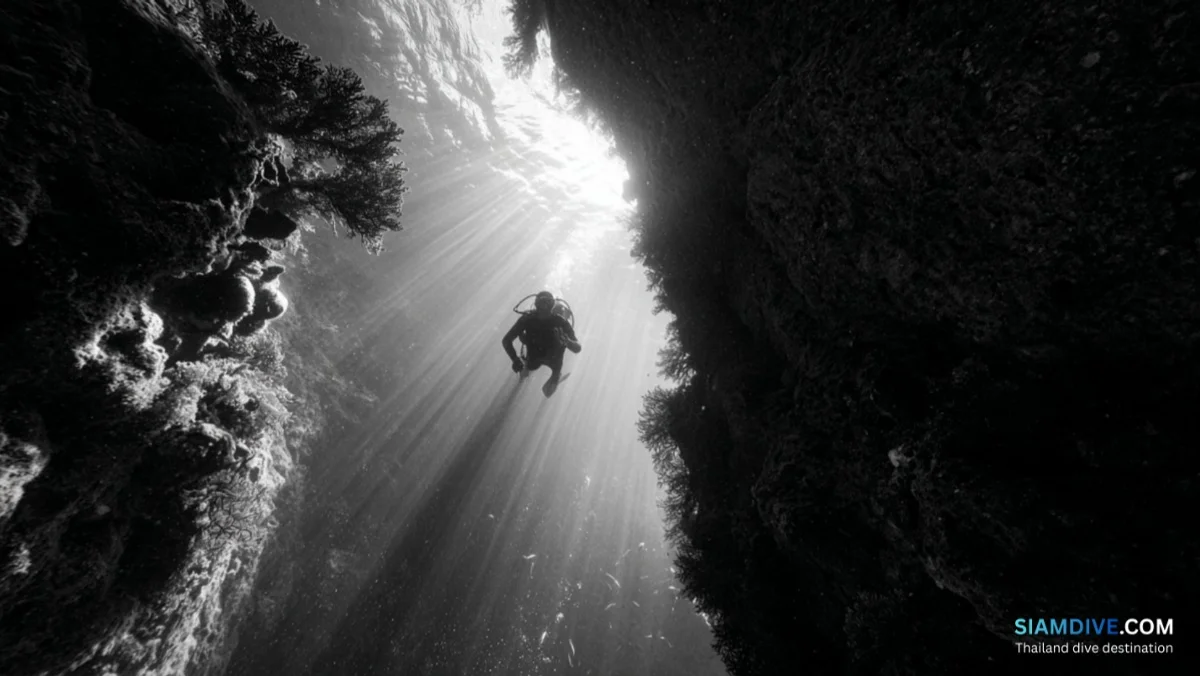
The Similans are famous for two completely different types of dive on the same trip. The east side is gentle coral gardens at 10-20 metres. The west side is massive granite boulder formations with swim-throughs, caverns, and deep cuts down to 40 metres. One liveaboard, two totally different experiences.
Richelieu Rock — The Whale Shark Pinnacle
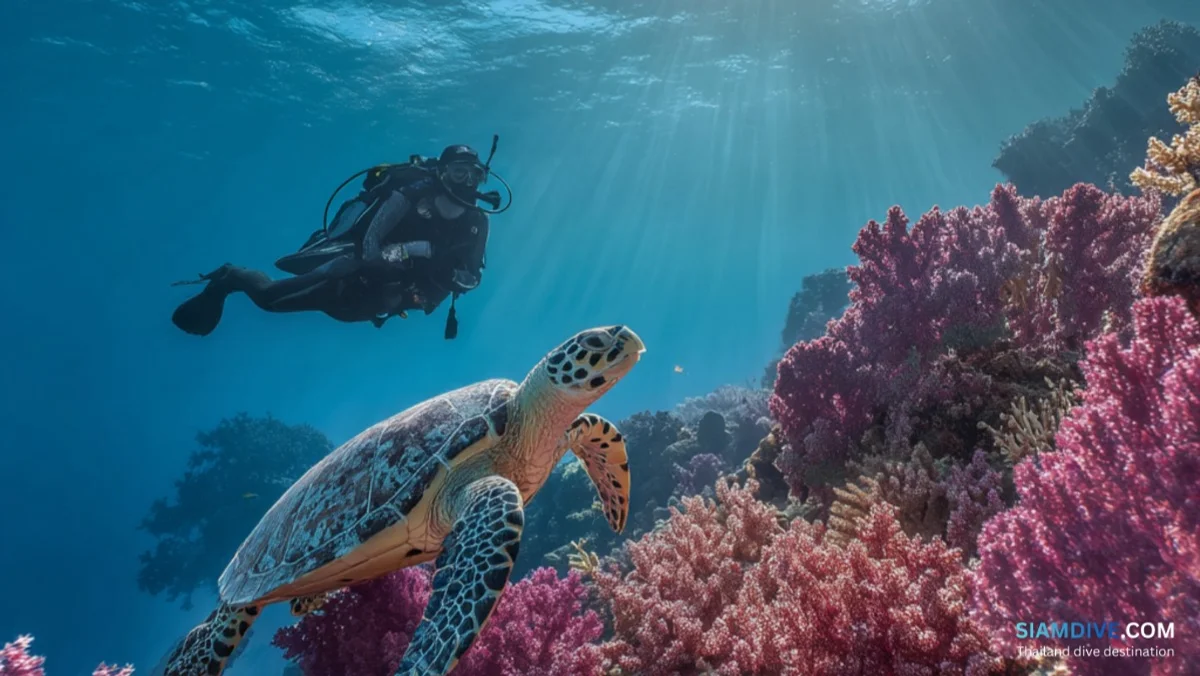
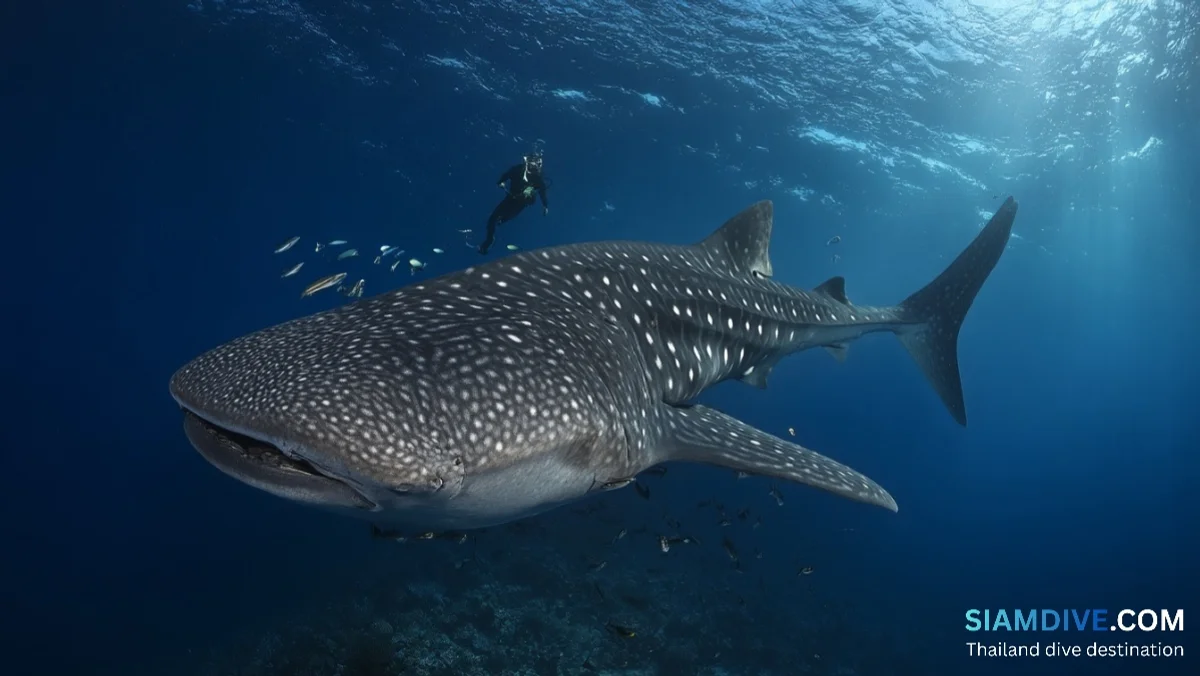
A horseshoe-shaped solitary pinnacle rising from 35 metres deep almost to the surface, Richelieu is considered one of the top ten dive sites in the world. Nutrient-rich upwellings bring plankton, plankton brings whale sharks. March and April are peak for sightings. The rock itself is carpeted in purple soft coral and hosts seahorses, ghost pipefish, and harlequin shrimp — macro and pelagic in the same dive.
Koh Bon and Koh Tachai — Manta Ray Cleaning Stations
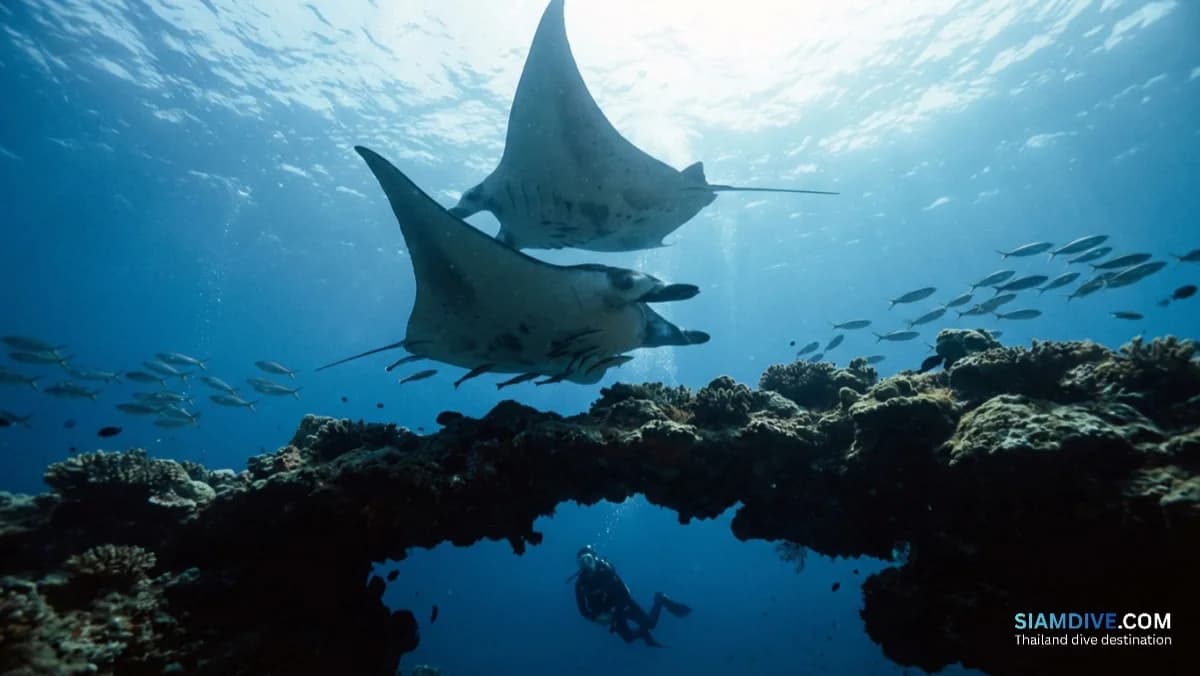
Koh Bon is the single best dive site in Thailand for manta rays, especially November to April. Mantas cruise the ridge to visit cleaning stations and frequently hover within arm's reach for 20-40 minutes. Koh Tachai, the deeper and currentier sister site, sees mantas and occasional whale sharks during the same season.
Hin Daeng and Hin Muang — The Vertical Wall
Thailand's biggest underwater wall plunges from 5 metres to 70+ metres on a pair of submerged pinnacles off Koh Lanta. Purple soft coral covers everything, manta rays are regular in the right season, and whale sharks visit often enough that locals joke this is the 'other' whale shark site nobody talks about.
Phuket Wrecks — King Cruiser and WWII
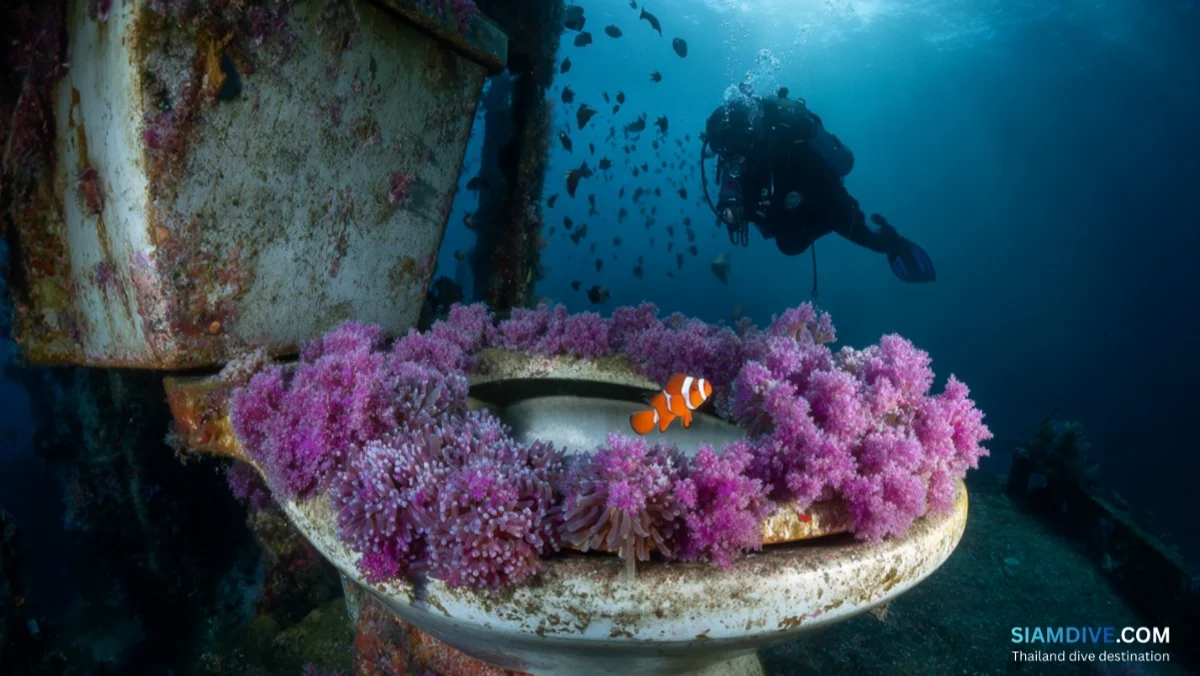
The King Cruiser, a passenger ferry that sank in 1997, sits at 32 metres in the Phi Phi channel. It's now an artificial reef covered in marine life. Beyond that, tech divers are discovering deep WWII wrecks off Phuket at 50-80 metres — a genuine frontier for technical diving.
Phuket and Phi Phi House Reefs — Critter Heaven
Koh Doc Mai, Shark Point, and Anemone Reef around Phuket are macro photographer paradises. Ghost pipefish, seahorses, harlequin shrimp, frogfish, and nudibranchs are the daily lineup. Not glamorous compared to whale sharks, but some of the best critter diving in Asia.
The Gulf Side: Calm, Affordable, and Year-Round
The Gulf of Thailand (east coast) has warmer water, calmer conditions, and a completely different character. This is where most certifications happen, and the reason Koh Tao produces more certified divers than almost any other place on Earth.
Koh Tao — The Training Capital
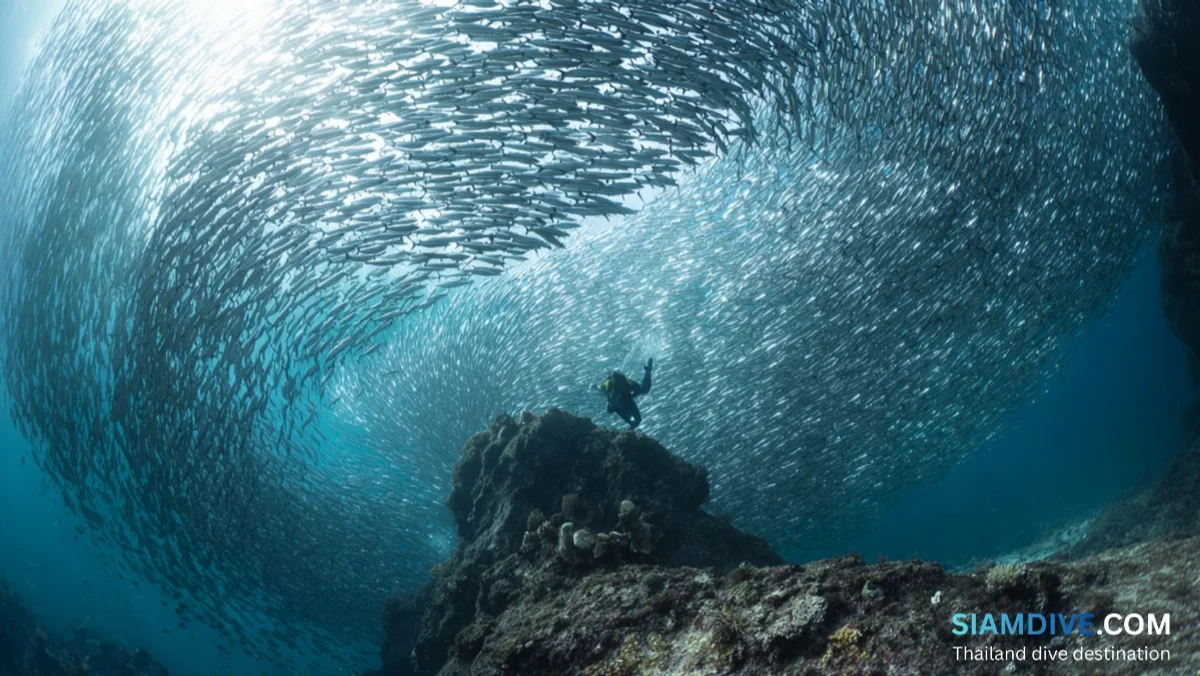
Dozens of shallow 8-15 metre sites with gentle conditions and huge schools of barracuda, trevally, and batfish. Sites like Chumphon Pinnacle and Green Rock occasionally get whale sharks in the warmer months (March-September).
Sail Rock — The Gulf's Signature Site
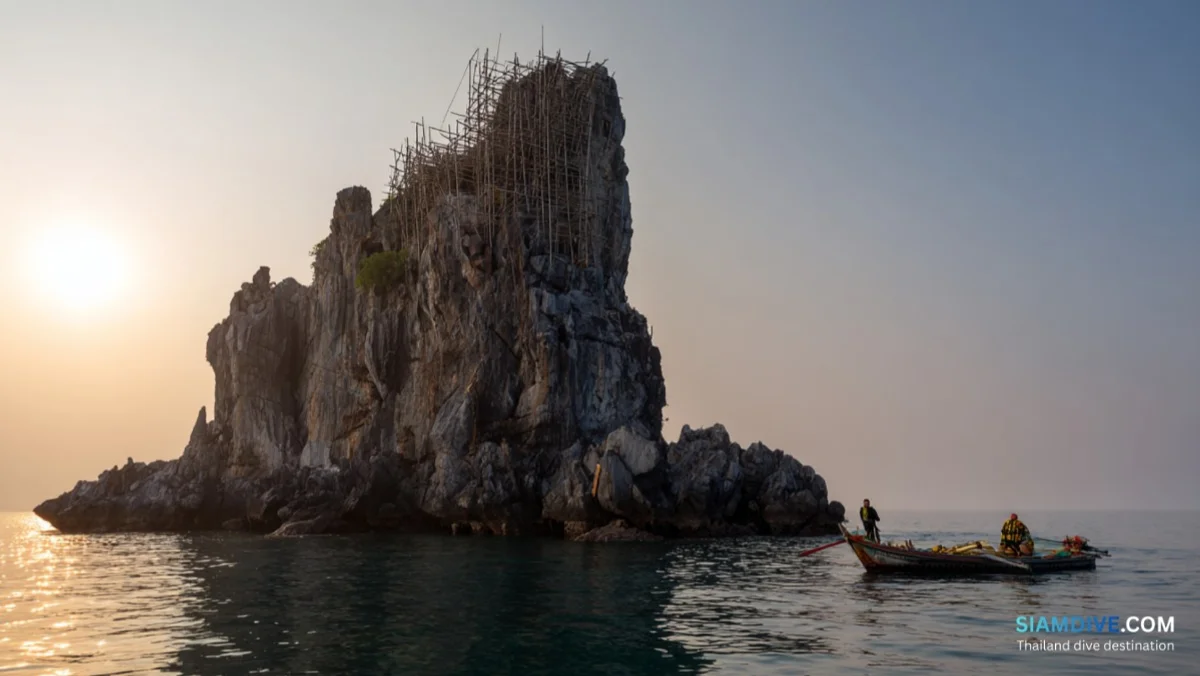
Standing alone between Koh Tao and Koh Phangan, Sail Rock is considered the best dive in the Gulf. A dramatic pinnacle from surface to 40 metres with a chimney swim-through, barracuda schools, and a serious shot at whale sharks in peak season.
Why Variety Matters More Than One 'Perfect' Destination
Most top dive destinations are one-trick ponies. The Maldives is atolls. Palau is big fish. Sipadan is one site. Raja Ampat is a long and expensive trip for high-end liveaboard diving. Thailand is every trick — macro one day, manta rays the next, wreck penetration the day after, coral garden on the final day — all on one national visa, at one-third the cost.
For a diver with 20 logged dives, this matters enormously. You haven't figured out what you love yet. You don't know whether macro photography or pelagic encounters is 'your thing'. Thailand lets you try everything.
A Real Two-Week Itinerary That Shows Off the Range
- Days 1-2: Fly to Phuket. Warm up with 3 days of Phi Phi and local reefs — check currents, buoyancy, macro spotting
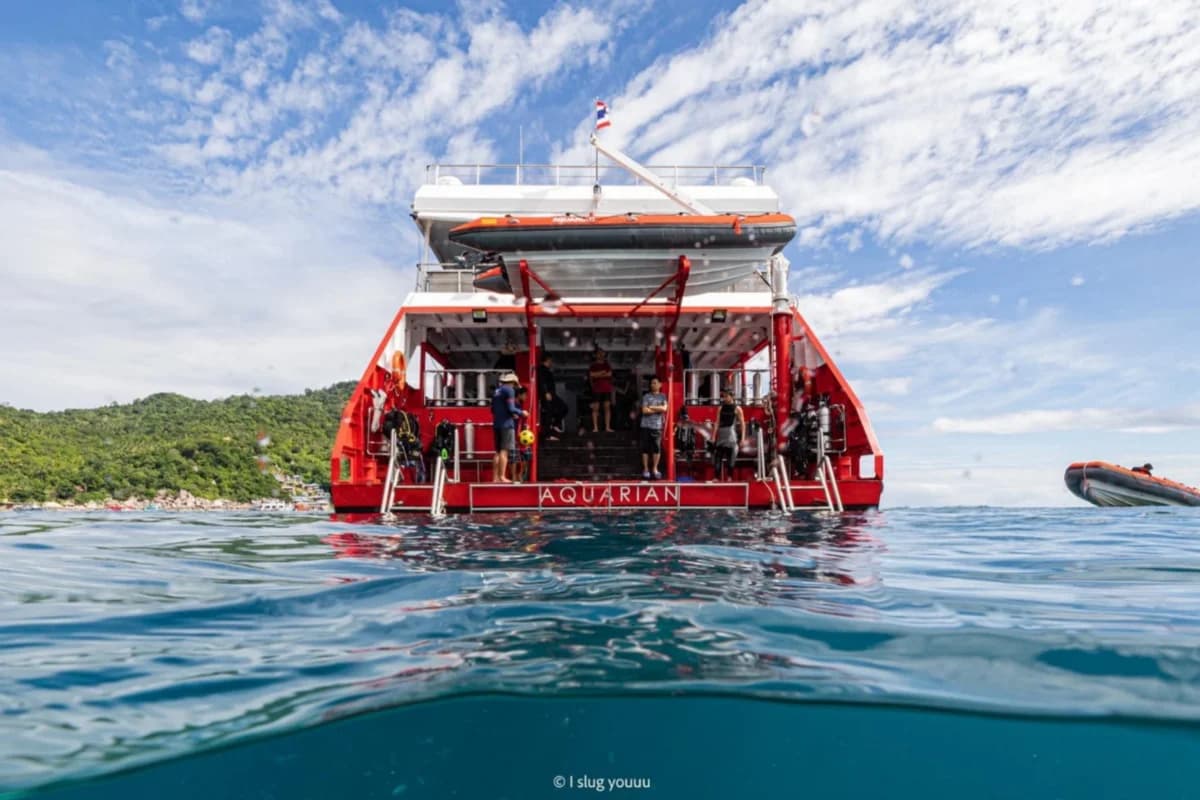
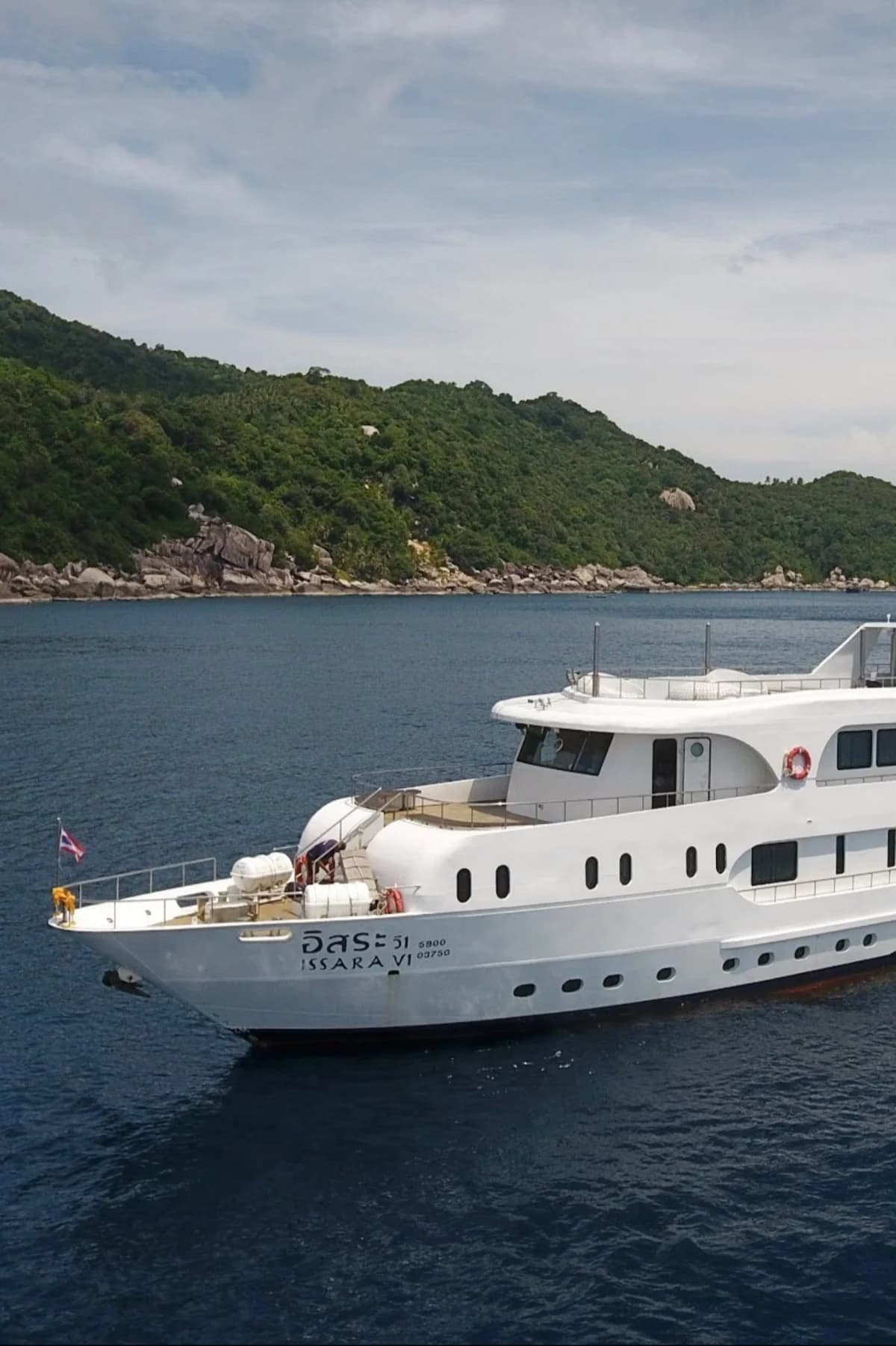
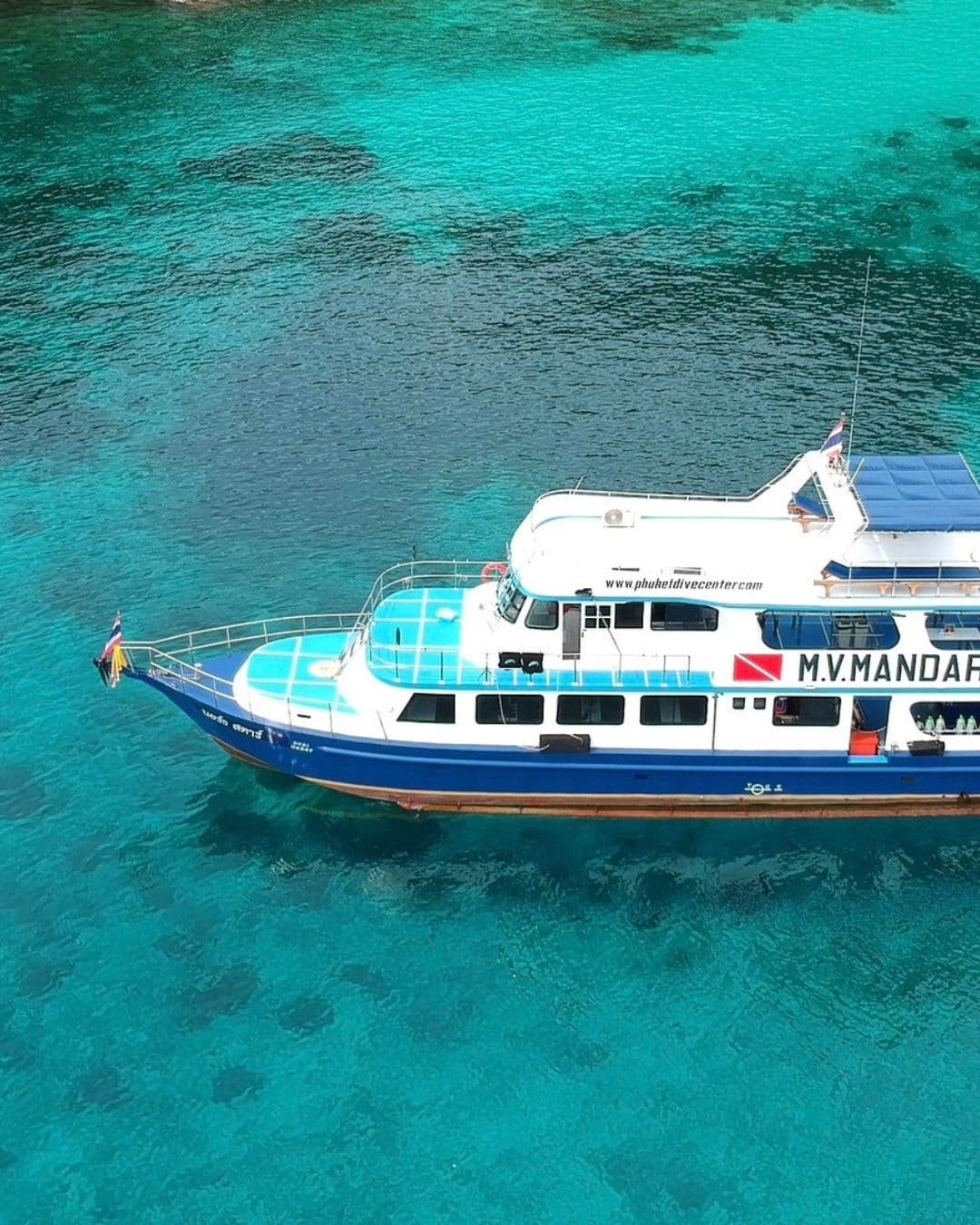
- Days 3-6: Four-day liveaboard to Similan, Koh Bon, Koh Tachai, and Richelieu Rock — 16 dives, two of the world's best pinnacles, whale shark and manta chances
- Day 7: Rest day. Travel across the country. (Or if diving from Phuket, add a wreck day on King Cruiser.)
- Days 8-11: Ferry to Koh Tao via Koh Samui. Four days of Gulf diving — Sail Rock, Chumphon Pinnacle, and shallow reef dives
- Days 12-13: Fly Bangkok, eat street food, pack bags
- Day 14: Fly home with 30+ logged dives across two entirely different seas
Season Matters — But Only a Little
The Andaman liveaboard season runs mid-October to early May. The Gulf is divable year-round but shines November to April. For a full-range trip, February and March are ideal — peak whale shark and manta season in the Andaman, calm Gulf, and warm water.
If you can only travel in monsoon season (June-September), the Gulf stays divable and you'll still get great diving. You just swap Andaman liveaboards for Gulf day trips.
The Travel Logistics Are Insane (In a Good Way)
Bangkok is one of the best-connected airports in Asia. Cheap internal flights (Bangkok-Phuket or Bangkok-Surat Thani) are 30-50 USD. Ferries between islands run multiple times a day. English is widely spoken. Visas are free or cheap for most nationalities. There is no other world-class dive country with this level of infrastructure.
How to Plan It
The best way to experience Thailand's full diving range is to combine one Andaman liveaboard (for whale sharks and mantas) with 3-4 days on Koh Tao or Koh Samui (for the Gulf experience). Browse liveaboards, dive shops, and multi-island combos on siamdive.com and message the operators directly. See you underwater — on both coasts.