Bida Nok: Where Leopard Sharks Sleep at Your Feet
14 เมษายน 2569
Bida Nok near Koh Phi Phi delivers leopard sharks, turtles, and vibrant coral walls on every dive. Here's exactly what to expect at 0-30 meters.
Bida Nok at a Glance
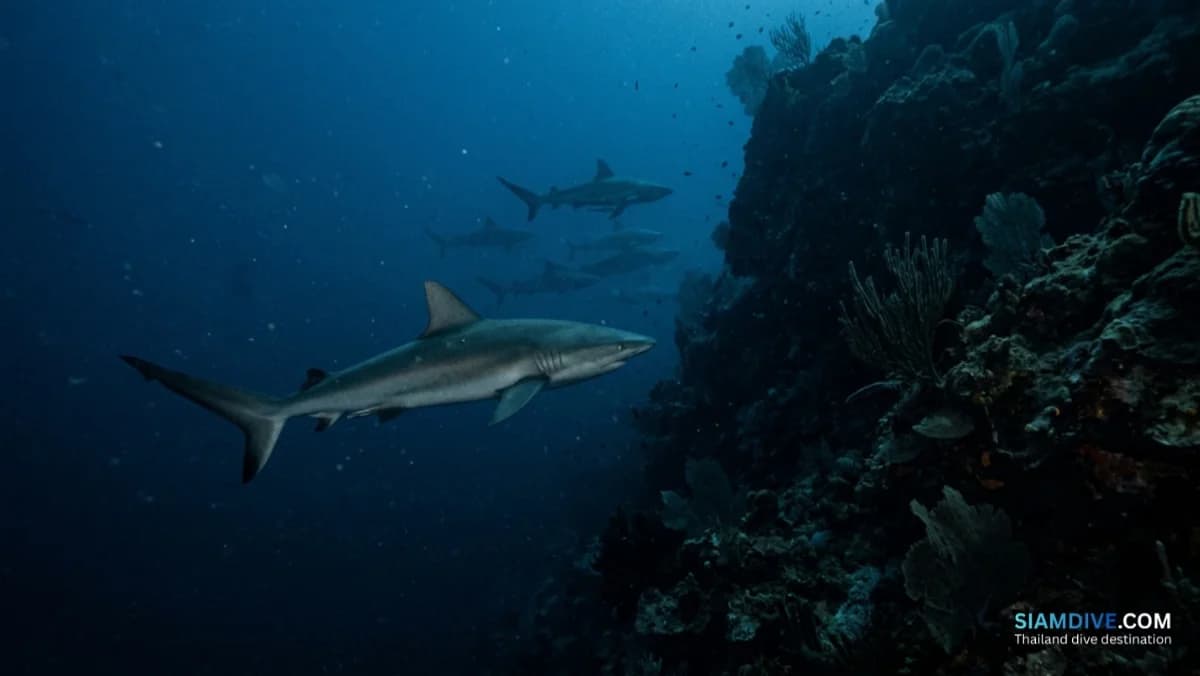
Bida Nok is a small limestone island sitting about 3 kilometers south of Phi Phi Leh, the uninhabited sister island of Phi Phi Don. The island itself is nothing more than a jagged rock jutting out of the Andaman Sea, but below the waterline, it transforms into one of the most productive dive sites in southern Thailand. Walls drop from the surface down to 30 meters, covered in soft corals, barrel sponges, and sea fans that sway with the current. The sandy flats at the base are where the real magic happens — leopard sharks rest here in groups of two or three, completely unbothered by divers who keep a respectful distance.
Visibility ranges from 10 to 25 meters depending on the season, and currents run from mild to medium. You can dive here whether you got certified last month or you have been logging dives for 20 years. That rare combination of accessibility and genuine wow-factor is what keeps Bida Nok on every Phi Phi dive shop's daily schedule.
Why Bida Nok Belongs on Your Dive List
Most dive sites around Koh Phi Phi are good. Bida Nok is the one people talk about at dinner. The difference comes down to consistency — leopard sharks show up here almost daily during the high season, resting on the sand between 18 and 25 meters. Unlike pelagic encounters that depend on luck and timing, these sharks are practically residents.
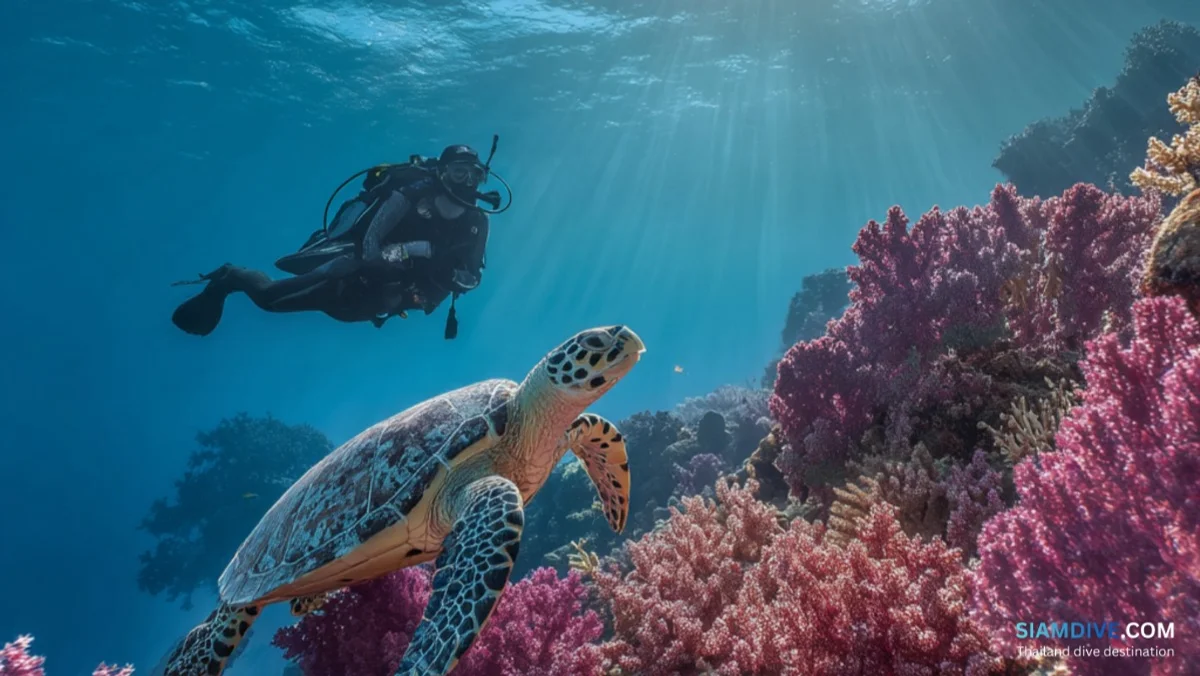
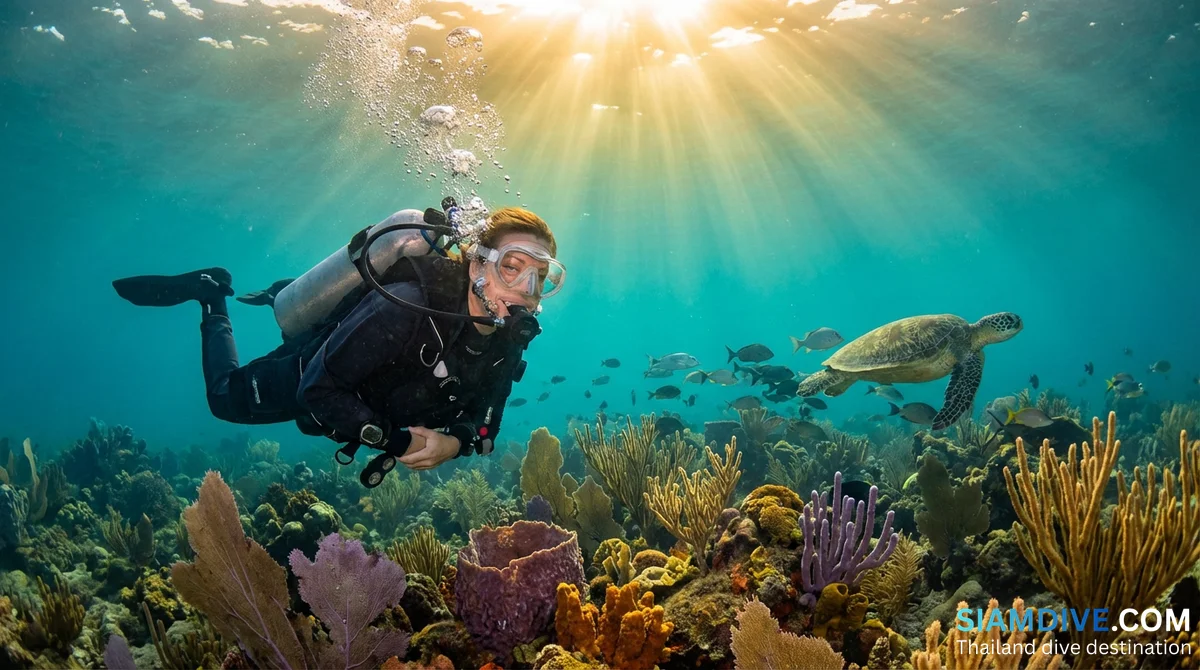
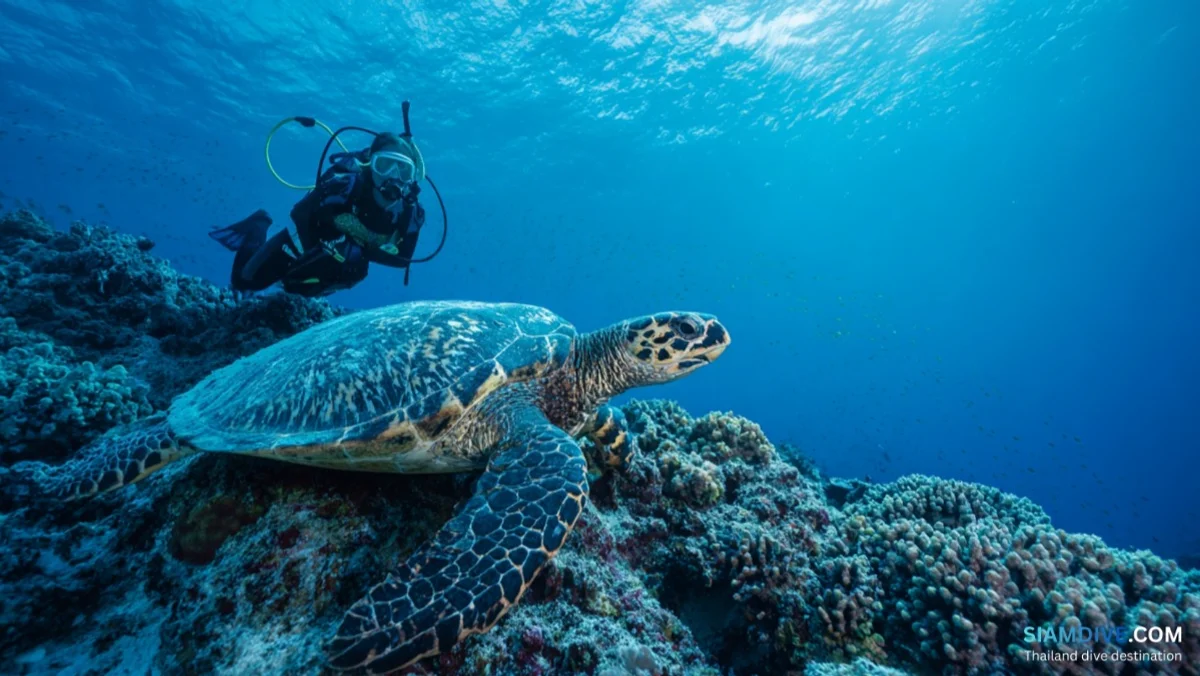
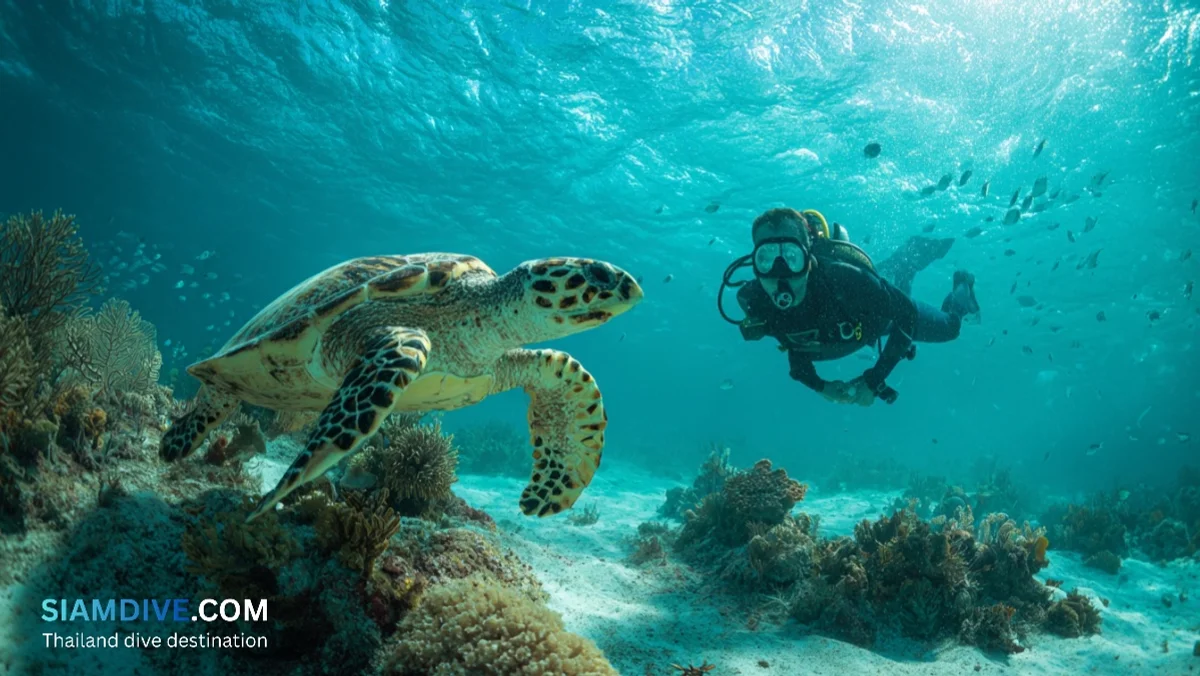
But leopard sharks are not the only draw. Baby blacktip reef sharks patrol the shallows near the island's rocky edges. Hawksbill turtles cruise the wall, stopping to munch on sponges. Schools of barracuda hang in the blue just off the reef, and big snapper stack up in the overhangs. On a single 55-minute dive, you can realistically tick off a dozen species that would each be a highlight somewhere else.
The topography helps too. Bida Nok's walls are steep enough to create dramatic scenery but broken up with ledges, swimthroughs, and sandy patches that give the dive variety. You never feel like you are just drifting along a flat reef waiting for something to happen.
The Best Dive Spots Around Bida Nok
Bida Nok is not one dive — it is several, depending on where your boat drops you and which direction the current pushes.
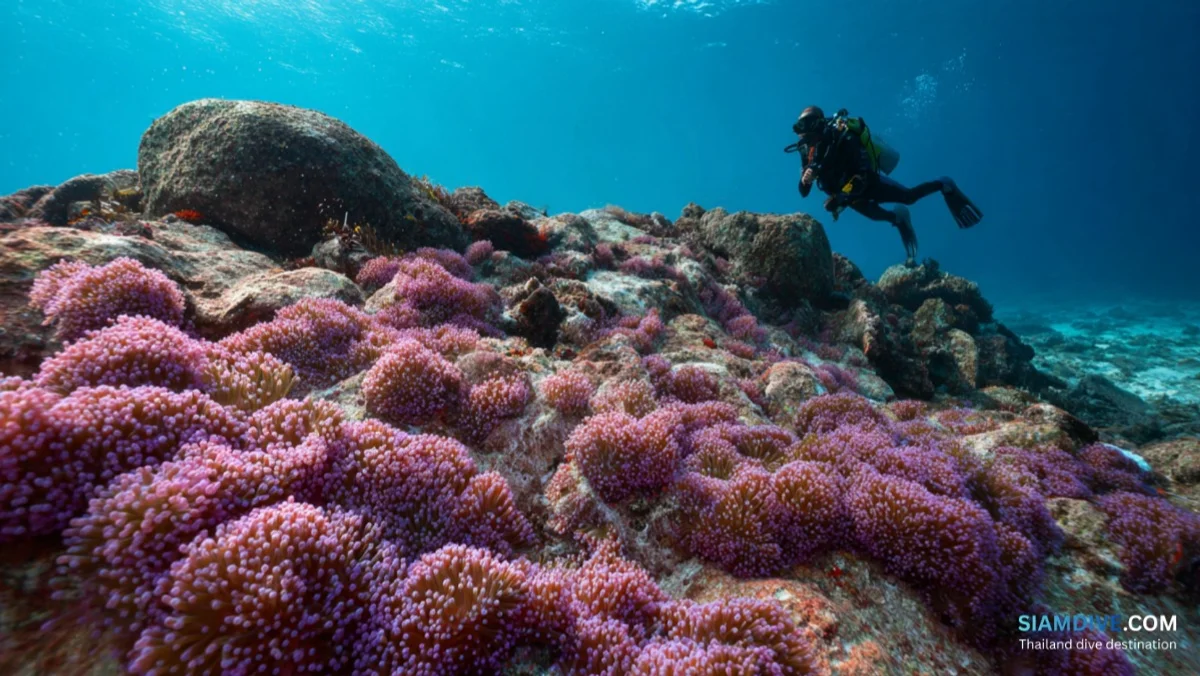
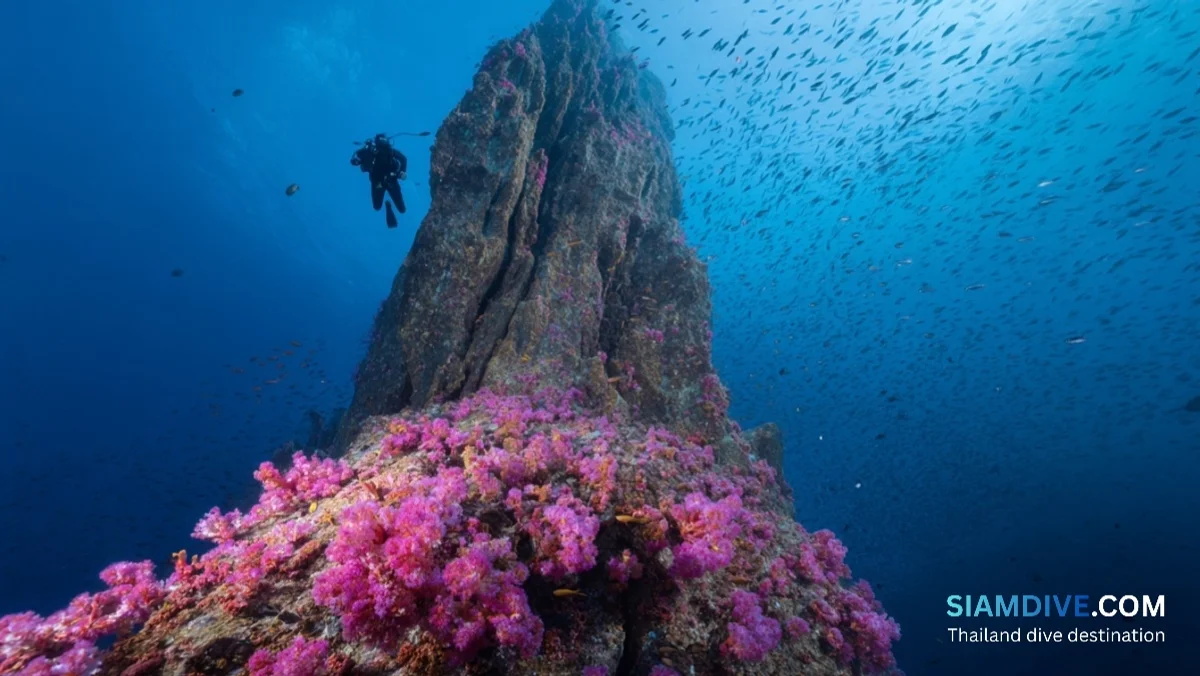
- The South Wall: This is the classic Bida Nok dive. The wall drops steeply to 28-30 meters, encrusted with purple and orange soft corals. Leopard sharks favor the sandy bottom here. Descend along the wall, check the sand, then work your way back up through gardens of sea fans.
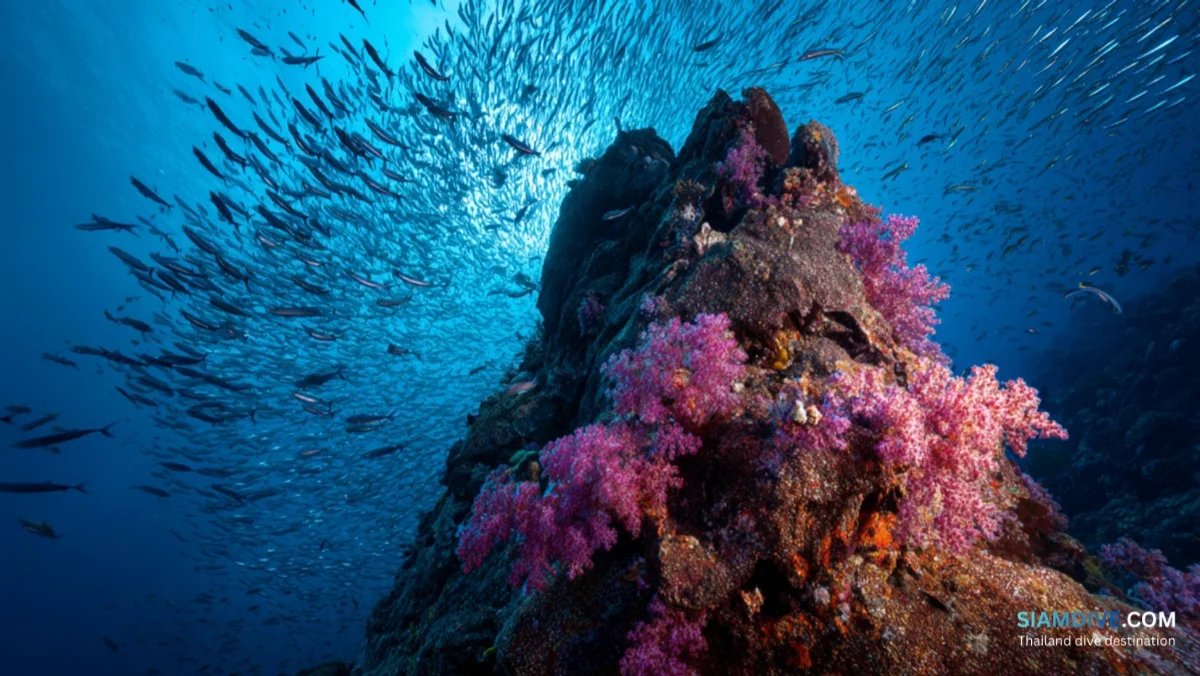
- The East Side Pinnacles: A series of underwater rock formations extending from the main island. Currents tend to be stronger here, which brings in bigger fish — barracuda schools, trevally, and occasionally whale sharks during plankton blooms. This spot suits experienced divers comfortable with current.
- The North Shallows: Perfect for second dives or newer divers. Depths stay between 5 and 15 meters, and the rocky bottom is home to triggerfish, trumpetfish, moray eels hiding in crevices, and camouflaged stonefish that your guide will point out before you get too close.
Marine Life You Will Actually See
Dive sites love to promise everything. Here is what Bida Nok actually delivers on a regular basis:
- Leopard sharks (Zebra sharks): The headliners. Found resting on sand at 18-25 meters, usually 1-4 individuals per dive. Present year-round but most reliable from November to April.
- Baby blacktip reef sharks: Juveniles patrol the shallow reef edges, typically in water less than 10 meters deep.
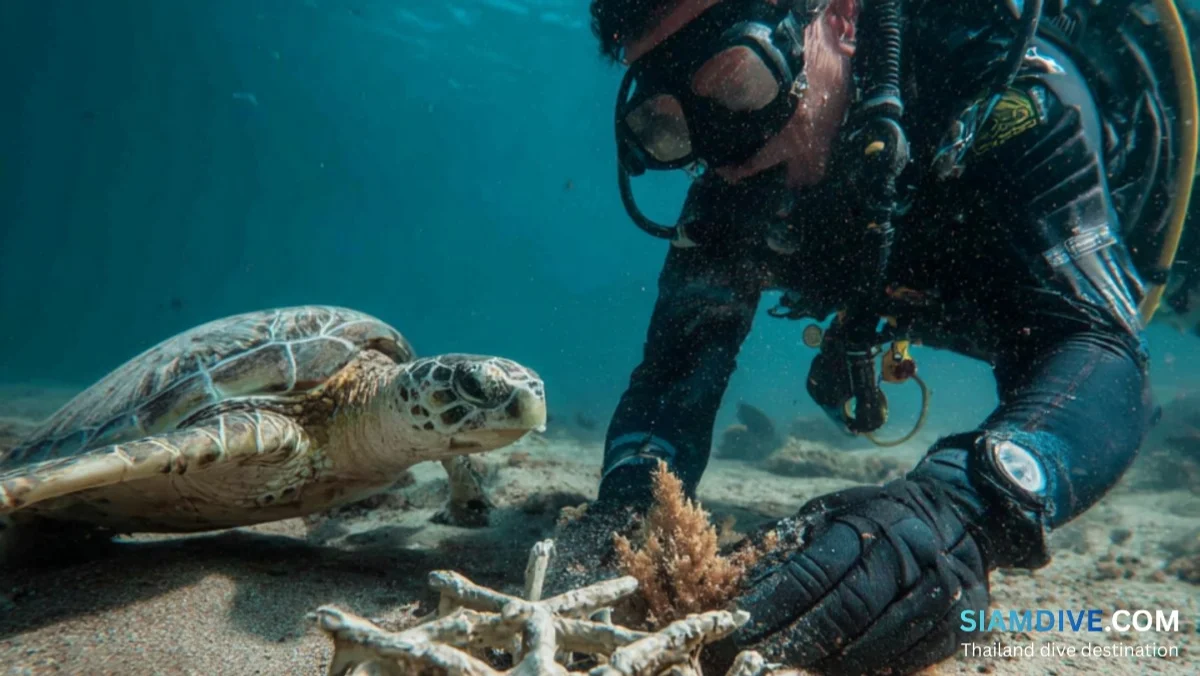
- Hawksbill turtles: At least one or two per dive, feeding on sponges along the wall. They are remarkably calm around divers.
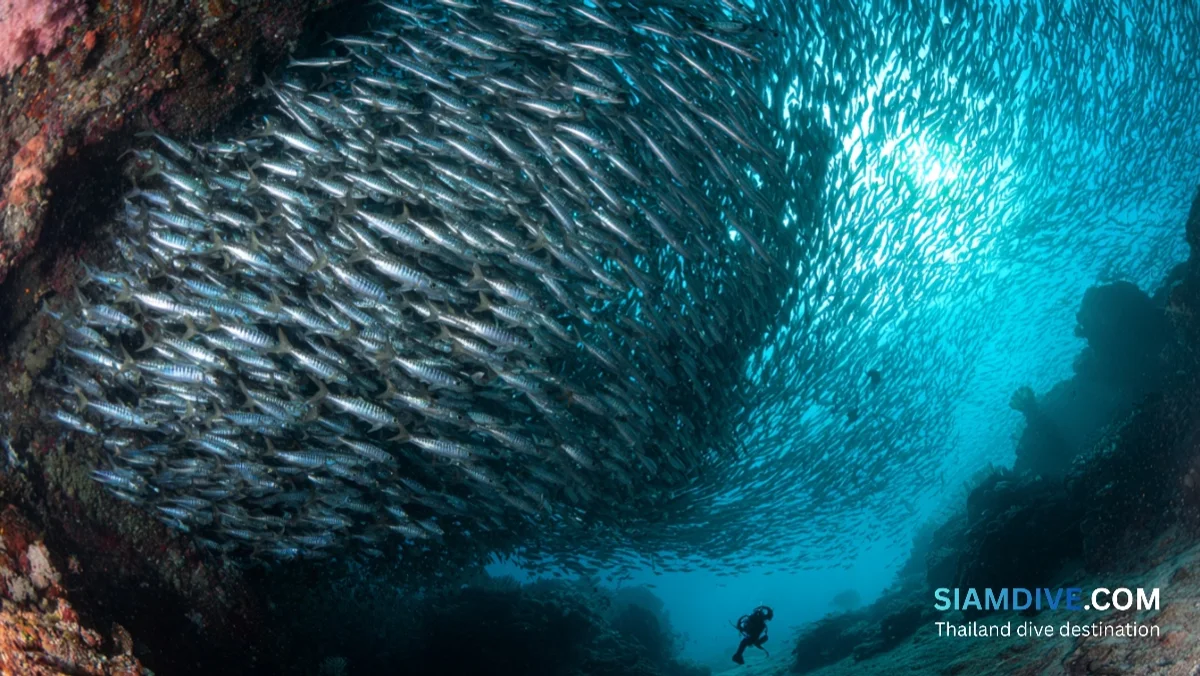
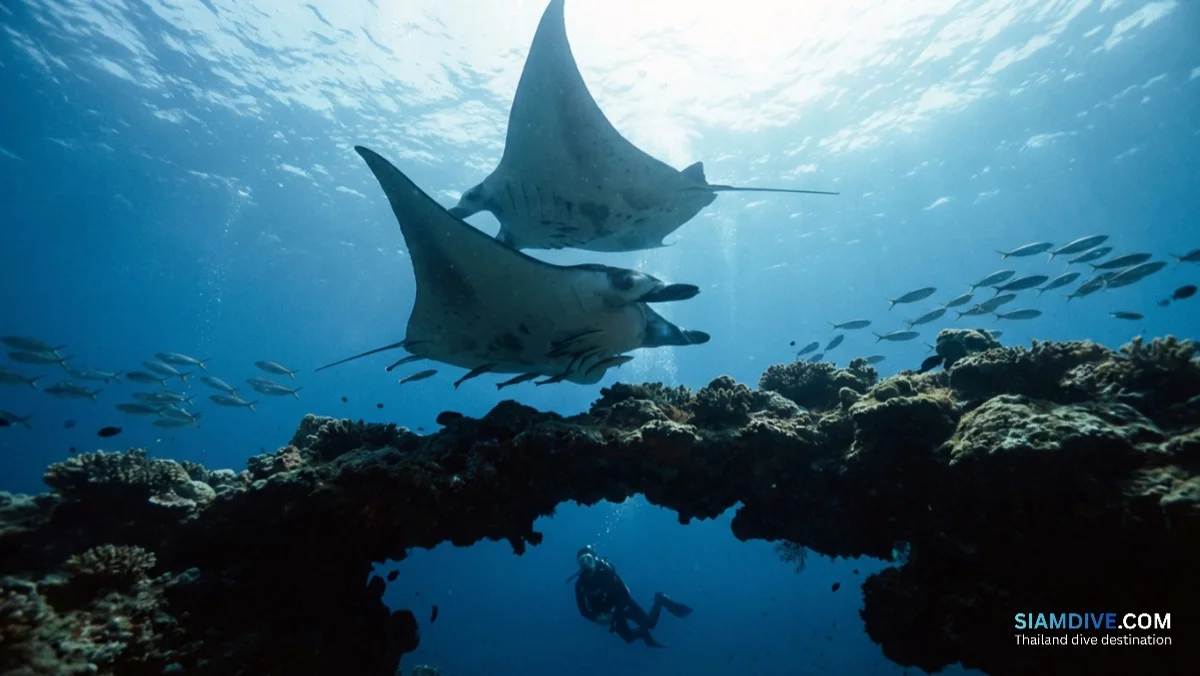
- Barracuda schools: Large chevron barracuda form columns in the blue water off the reef, especially on the east side.
- Batfish: Tall, flat, and curious — they often approach divers at safety stops.
- Moray eels: Giant morays and white-eyed morays tucked into holes and crevices along the wall.
- Stonefish and scorpionfish: Masters of camouflage on the rocky bottom. Listen to your guide.
- Big snapper and fusiliers: Constant presence, filling the water column with movement and color.
- Trumpetfish: Often shadowing other fish or hanging vertically near sea fans.
Whale sharks are possible but rare — they pass through the Bida Nok pinnacles area during plankton-rich periods, typically between February and April. Do not plan your trip around one, but keep your eyes on the blue.
When to Dive Bida Nok
The high season runs from November through April, and this is hands down the best window. Visibility peaks at 20-25 meters, currents are manageable, and the sea surface stays flat enough that even passengers prone to seasickness will survive the boat ride. Water temperature hovers around 28-30°C, so a 3mm wetsuit is more than enough.
The monsoon season (May to October) does not shut diving down completely, but conditions become unpredictable. Some days are gorgeous; others bring 5-meter visibility and currents that turn the dive into an unexpected drift. Most dive operators still run trips to Bida Nok during this period, just with more weather cancellations. If you are visiting in low season, book with a shop that offers flexible rescheduling.
For leopard shark encounters specifically, January through March tends to produce the most consistent sightings. Early morning dives (first boat out) often have the calmest water and the least crowded sites.
How to Get to Bida Nok
Bida Nok is accessed from Phi Phi Don, the main inhabited island in the Phi Phi archipelago. There is no airport on Phi Phi, so you will arrive by ferry.
- From Phuket: Ferries depart from Rassada Pier and take about 2 hours. Multiple operators run daily services, with morning departures being the most common. Expect to pay 400-800 THB one way depending on the boat speed and class.
- From Krabi: The crossing takes roughly 1.5 hours. Slightly cheaper than the Phuket route and a good option if you are coming from the east coast or the airport.
- From Koh Lanta: Seasonal ferries connect Lanta to Phi Phi, usually running during high season only. The trip takes about 1 hour.
All ferries arrive at Tonsai Pier on Phi Phi Don. From there, your dive operator handles the rest — Bida Nok is a short 30-40 minute longtail or speedboat ride south, past Phi Phi Leh and the famous Maya Bay.
One thing to know: Phi Phi sits inside a national park. Entry fees apply and must be paid in cash at the pier or through your dive operator. As of 2024, the fee for foreign adults is 400 THB. Your dive shop will confirm the current rate when you book.
7 Practical Tips for Diving Bida Nok
- Bring cash for park fees. There are ATMs on Phi Phi Don, but they charge hefty withdrawal fees. Bring enough Thai baht from the mainland.
- Book the first boat. The morning dive slot means fewer divers on site and calmer surface conditions. Leopard sharks seem less disturbed during early dives too.
- Do not chase the sharks. Leopard sharks are docile, but if you swim at them aggressively, they will move. Approach slowly, stay low, and let them come to you. Your photos will be better for it.
- Watch your buoyancy near the wall. The soft corals on Bida Nok's walls are fragile and take years to grow. One fin kick can destroy a colony. Stay at least a meter off the reef.
- Carry a reef hook if diving the east side. Currents here can pick up without warning. A reef hook lets you hold position on the rocky bottom to watch pelagics pass without exhausting yourself.
- Use a wide-angle lens underwater. The wall topography and large marine life at Bida Nok reward wide-angle shots far more than macro. A 10-17mm or fisheye setup works perfectly.
- Check your computer after the first dive. Many divers do Bida Nok as a deep first dive (25-30m) followed by a shallower second dive at Bida Nai or the north side. Make sure your nitrogen loading allows for the planned profile.
Your Next Dive Trip Starts Here
Bida Nok delivers what a lot of dive sites only promise — reliable big animal encounters, healthy coral walls, and that electric feeling of dropping into water where anything might swim past. It is the kind of site that makes you extend a two-dive day into a three-dive day, and a three-night trip into a full week on Phi Phi.
Start planning your Bida Nok dives now. Check out more dive site guides, trip reports, and Thailand diving resources at siamdive.com — your go-to source for diving in Thailand.