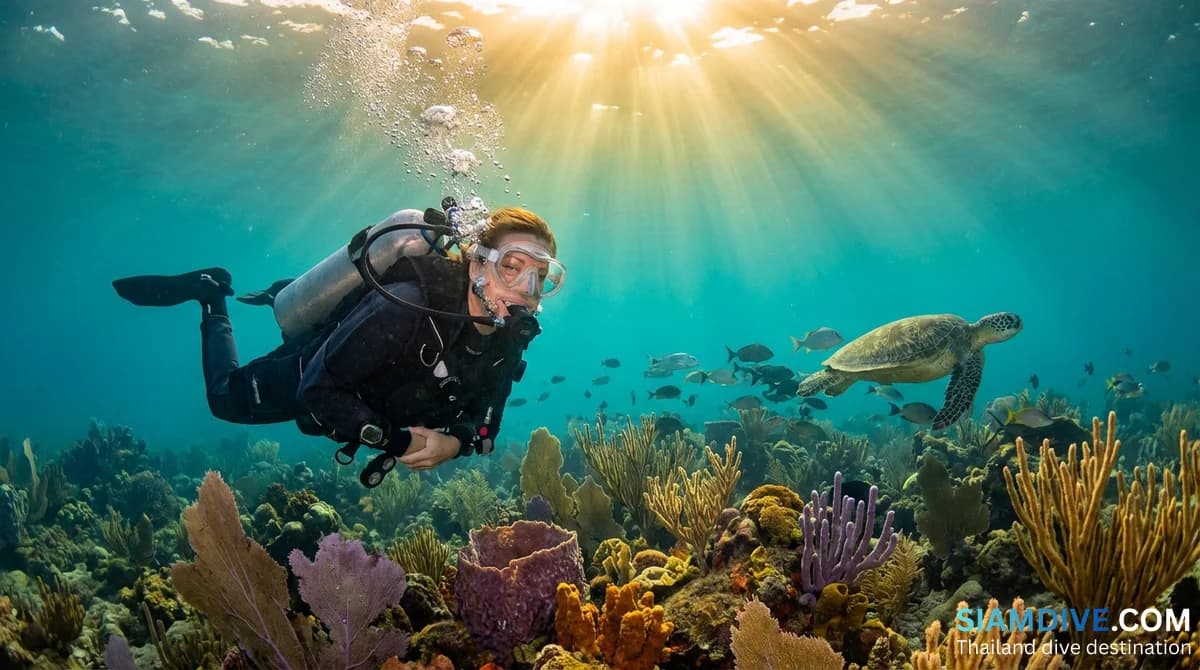
How Scuba Diving Rewires Your Brain (And Why You Can't Stop)
16 เมษายน 2569
Discover the science behind why scuba diving reduces anxiety, builds unshakable confidence, and creates a community you never want to leave.
The Moment Everything Shifts
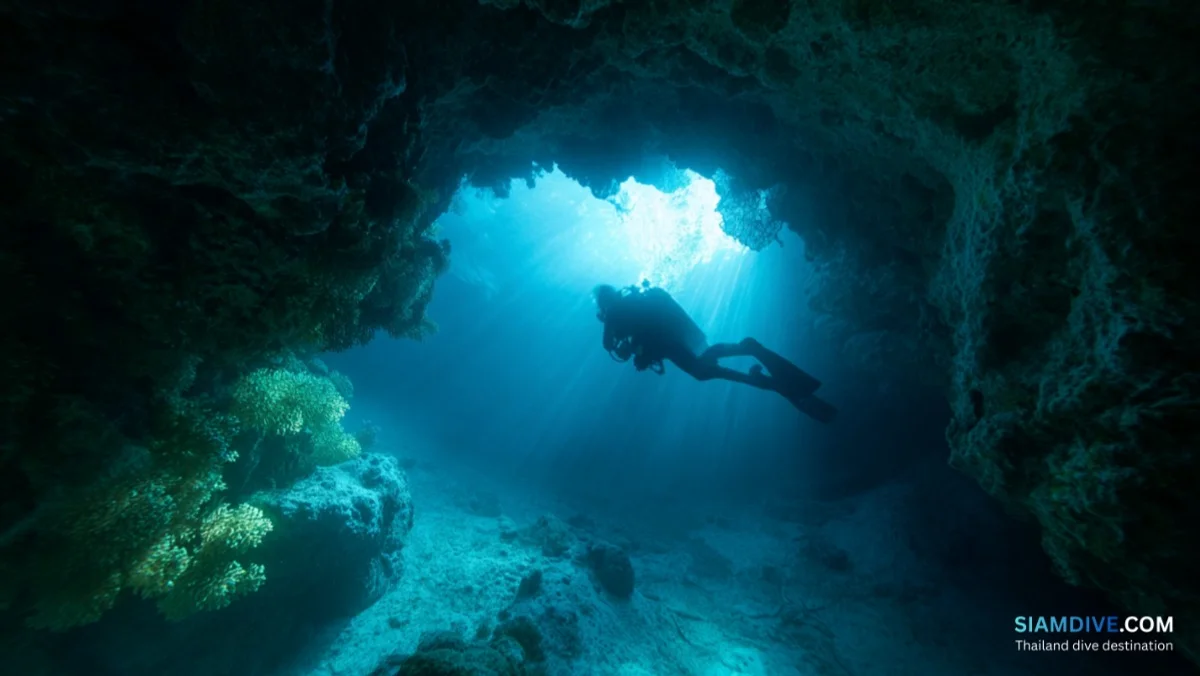
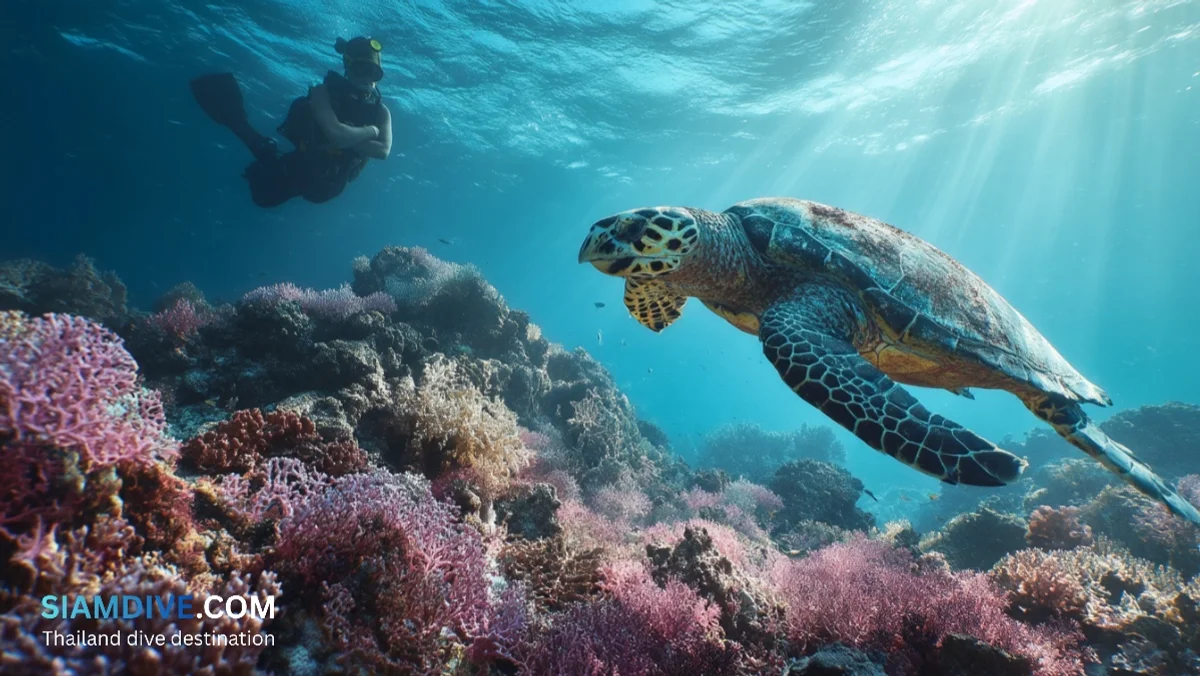
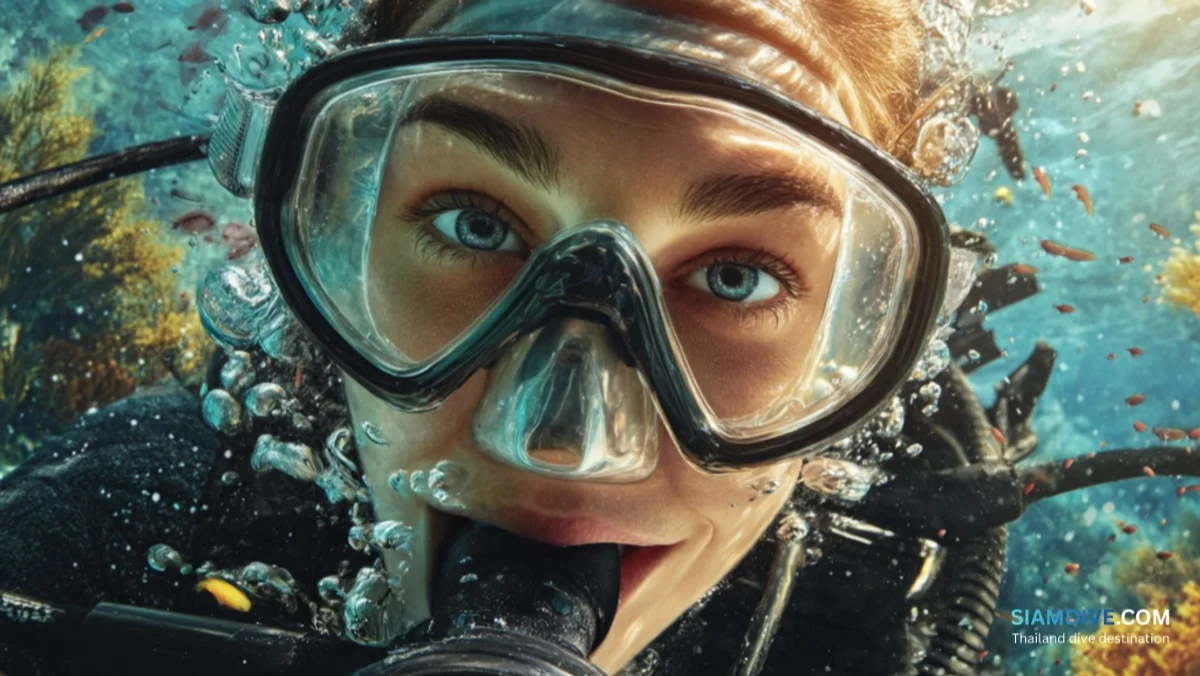
You take your first breath underwater and something fundamental changes. The noise of the surface world — notifications, deadlines, mental loops about yesterday and tomorrow — simply stops. For the next 45 minutes, you exist in a state of forced mindfulness that no meditation app has ever achieved. This is not poetry. It is neuroscience. And it is the reason millions of people who try scuba diving once find themselves unable to stop. What begins as a holiday activity quietly becomes a lifestyle, a community, and for many, a completely new direction in life. This is the story of how learning to dive changes you — physically, mentally, and socially — in ways you never expected.
Your Brain on Scuba: The Science of Underwater Calm
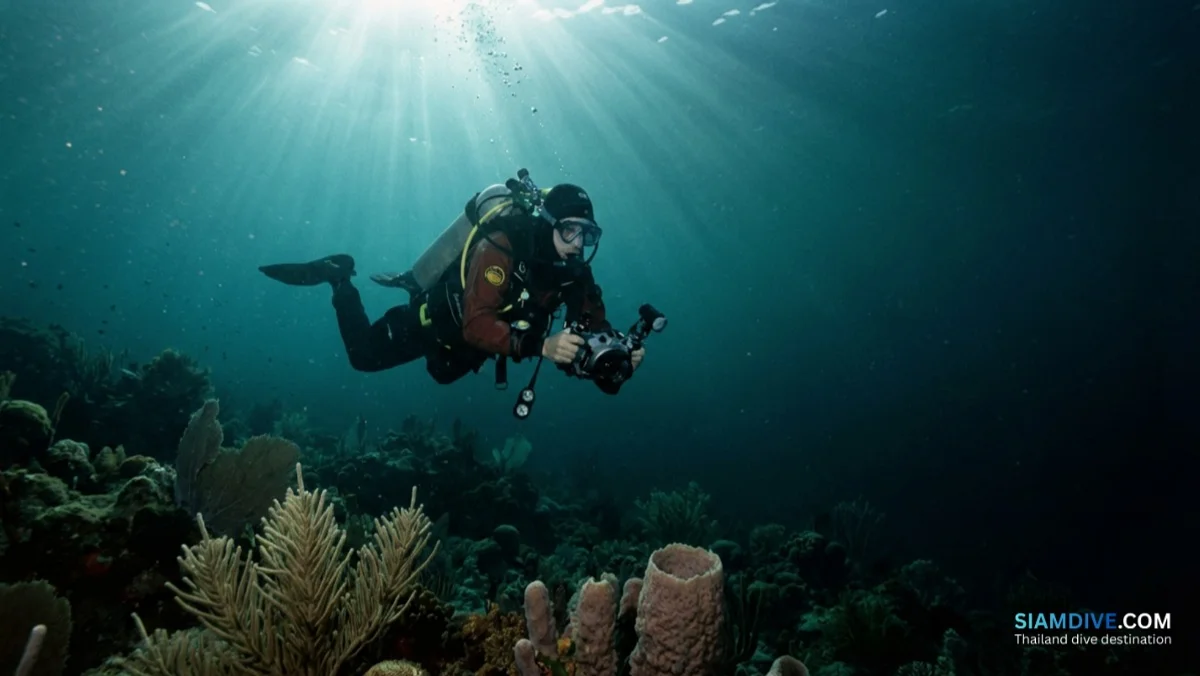
When you descend below the surface and begin breathing through a regulator, several things happen inside your body simultaneously. Deep, controlled breathing activates your parasympathetic nervous system — the "rest and digest" mode that most people rarely access in their daily lives. Your heart rate drops. Cortisol levels fall. The vagus nerve, the longest nerve in your body and the master switch for calm, fires up in response to pressure changes and controlled respiration. A peer-reviewed study published in Frontiers in Psychology found that just two scuba diving sessions produced measurable reductions in anxiety and stress that persisted for weeks. Another study in the journal Diving and Hyperbaric Medicine confirmed that recreational divers report significantly lower levels of insomnia, anxiety, and depression compared to non-divers. The ocean is not just beautiful — it is genuinely therapeutic.
Conquering Fear: How Diving Builds Bone-Deep Confidence
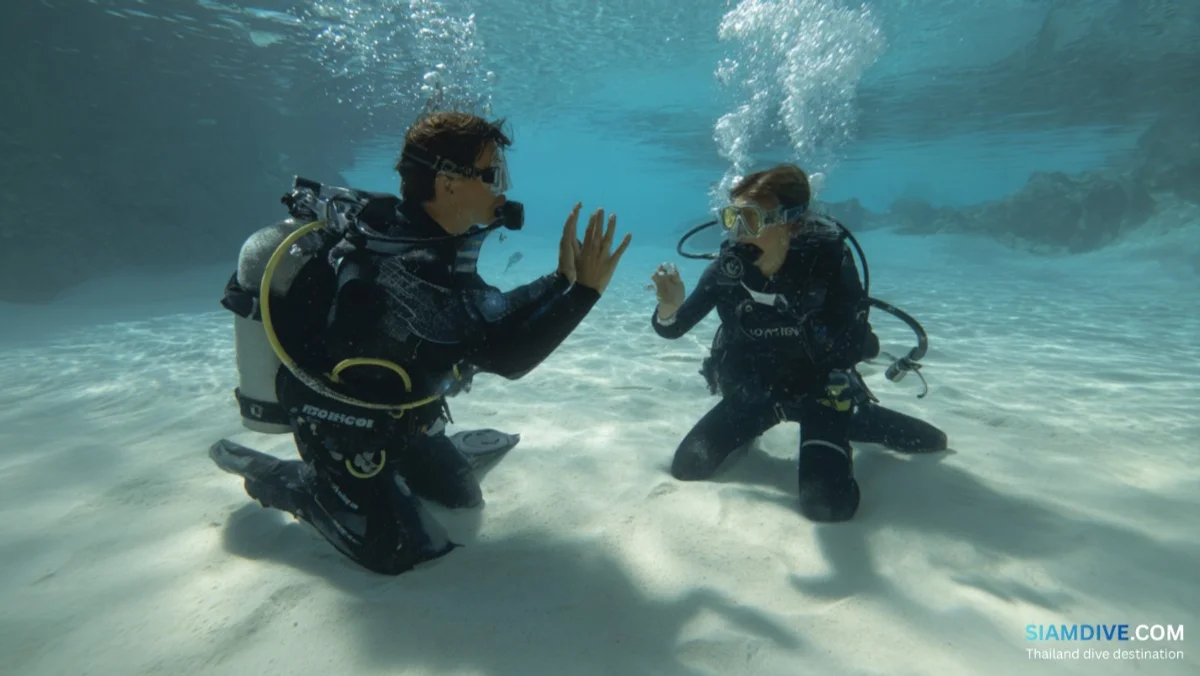
Up to 80% of new divers experience some form of anxiety before their first dive. Fear of the unknown, fear of breathing underwater, fear of marine life — these are normal human responses. What makes diving transformative is the process of working through that fear. Each skill you master during your Open Water course — clearing your mask, recovering your regulator, controlling your buoyancy — is a small victory over anxiety. Your brain registers each one as proof that you can handle the unexpected. Psychologists call this self-efficacy: the belief in your own ability to cope with challenges. Unlike the abstract confidence you get from a motivational podcast, diving confidence is earned underwater through real action. It is physical, visceral, and it transfers to the surface. Divers consistently report feeling more capable and resilient in everyday life — at work, in relationships, in stressful situations — because they have already proven to themselves that they can stay calm when everything around them is unfamiliar.
The Blue Mind: Why Water Heals
Marine biologist Wallace J. Nichols coined the term "Blue Mind" to describe the mildly meditative state people enter when they are near, in, or under water. Research supports this: proximity to water reduces stress hormones, increases creativity, and activates neural pathways associated with empathy and emotional regulation. Scuba diving amplifies the Blue Mind effect because it removes you entirely from the terrestrial environment. There are no screens, no conversations, no multitasking. The sensory environment — the blue light filtering down, the sound of your own breathing, the slow motion of marine life — creates a state of effortless presence. Many divers describe their time underwater as the only period in their week where their mind is truly quiet. For people struggling with anxiety, PTSD, ADHD, or simply the chronic overstimulation of modern life, this is not a luxury. It is medicine.
The Community You Did Not Know You Needed
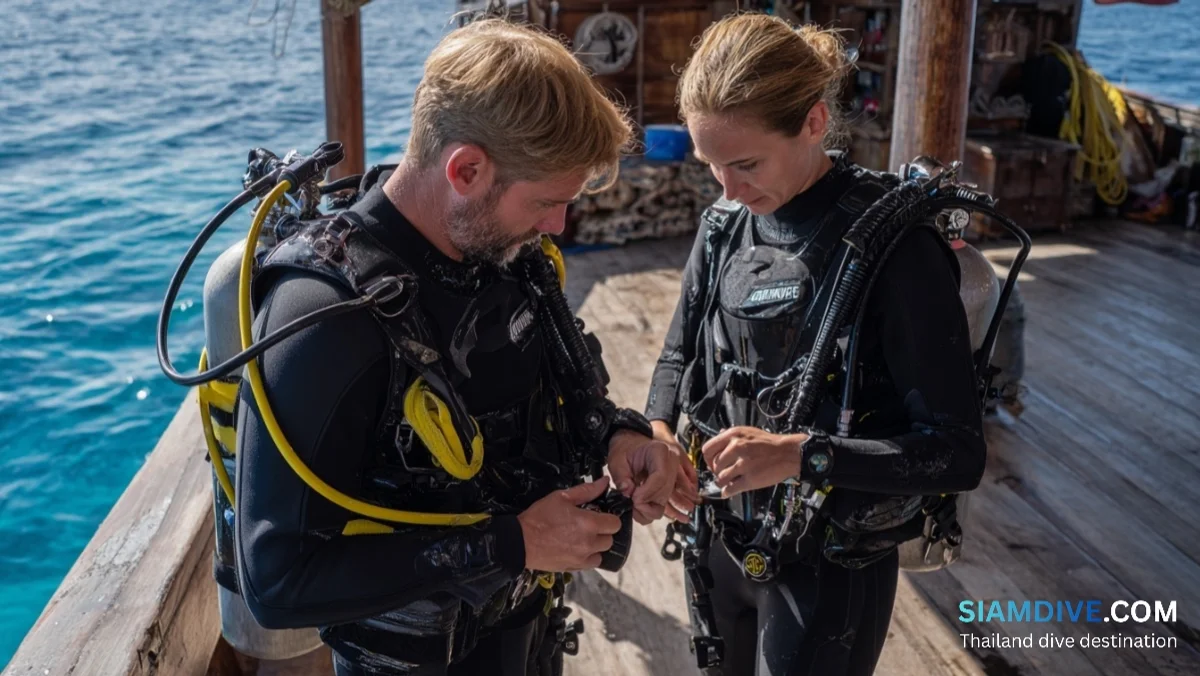
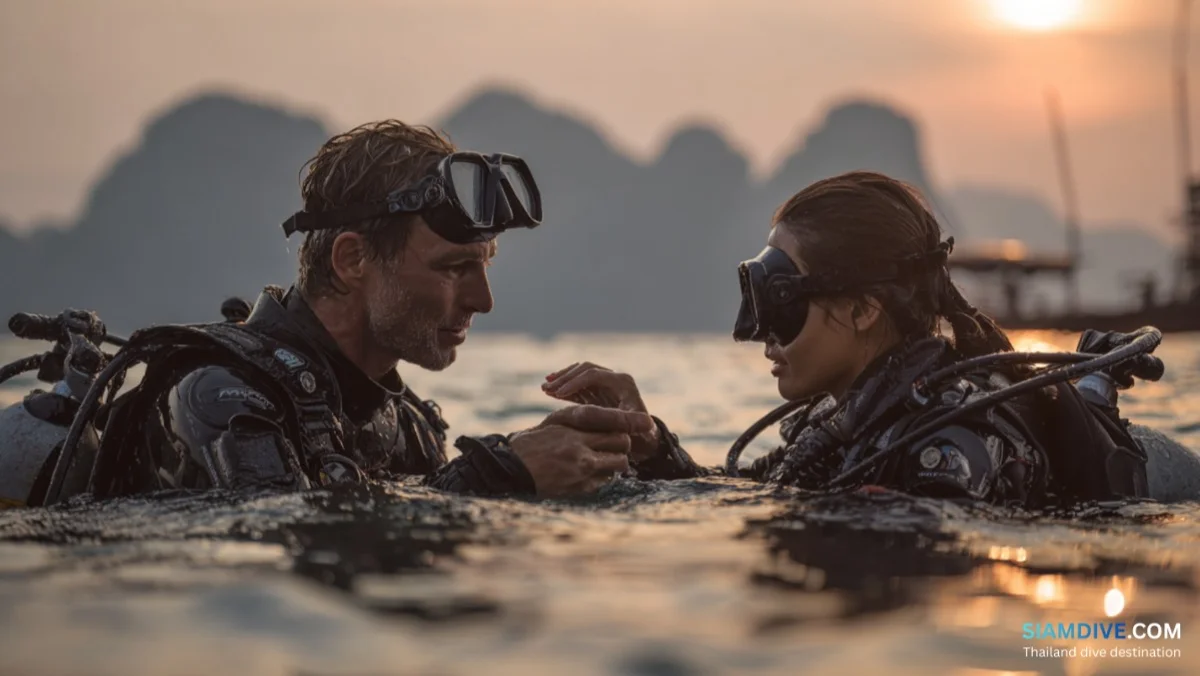
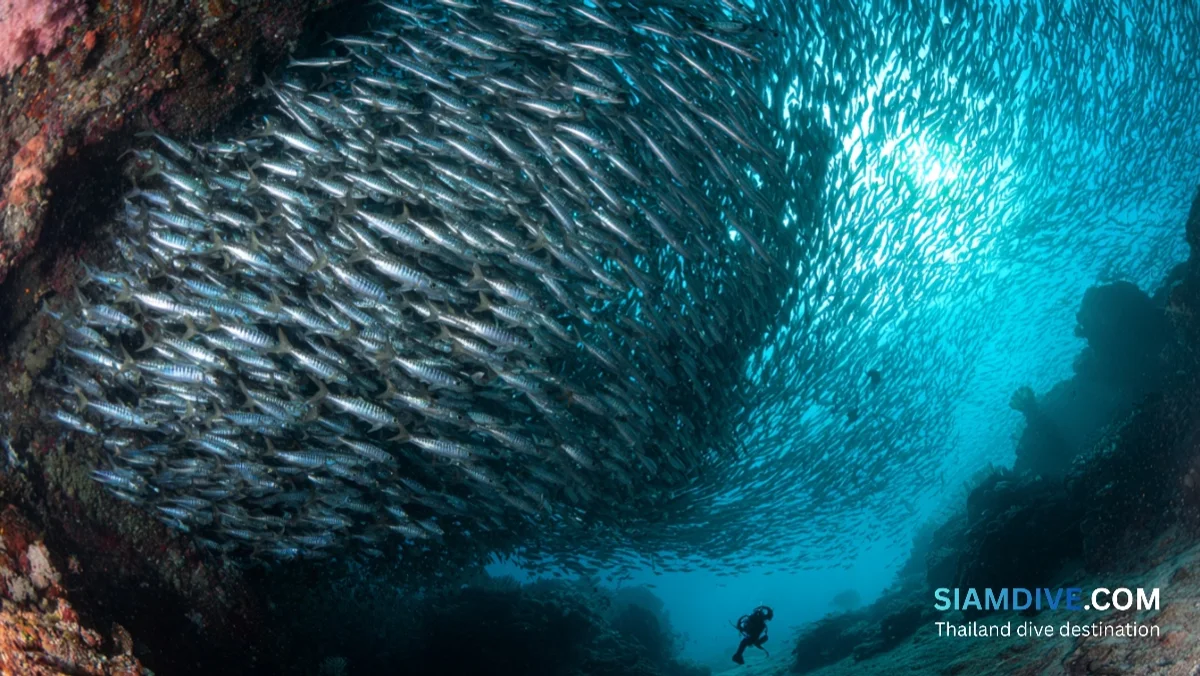
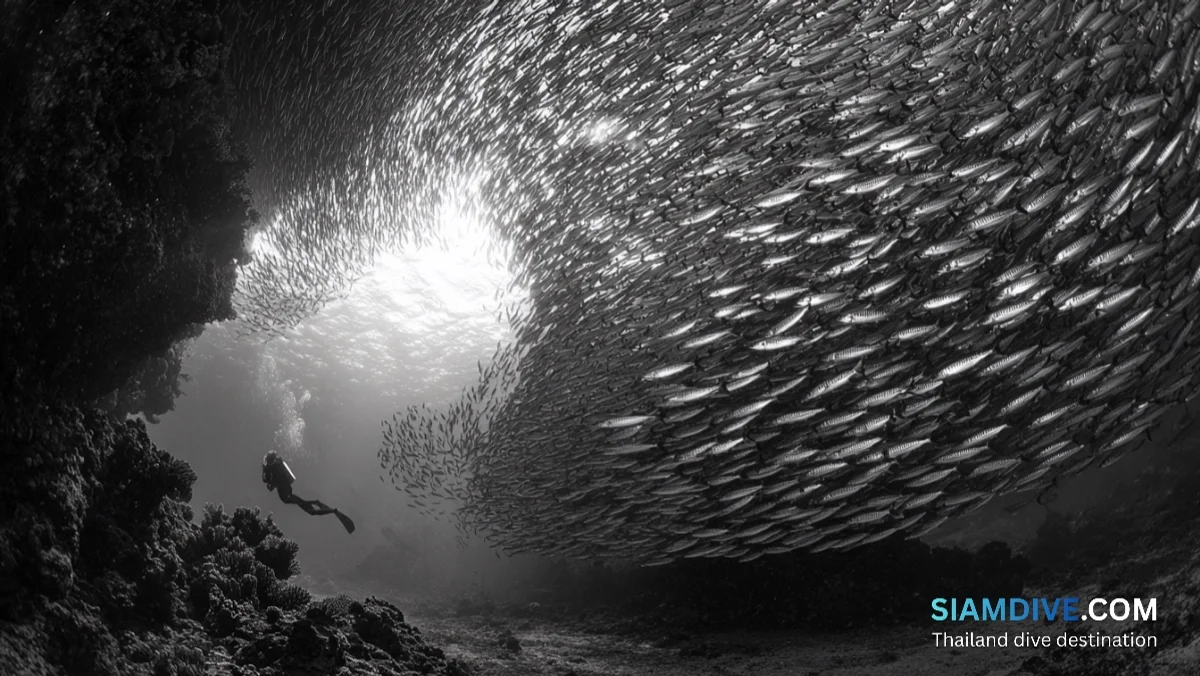
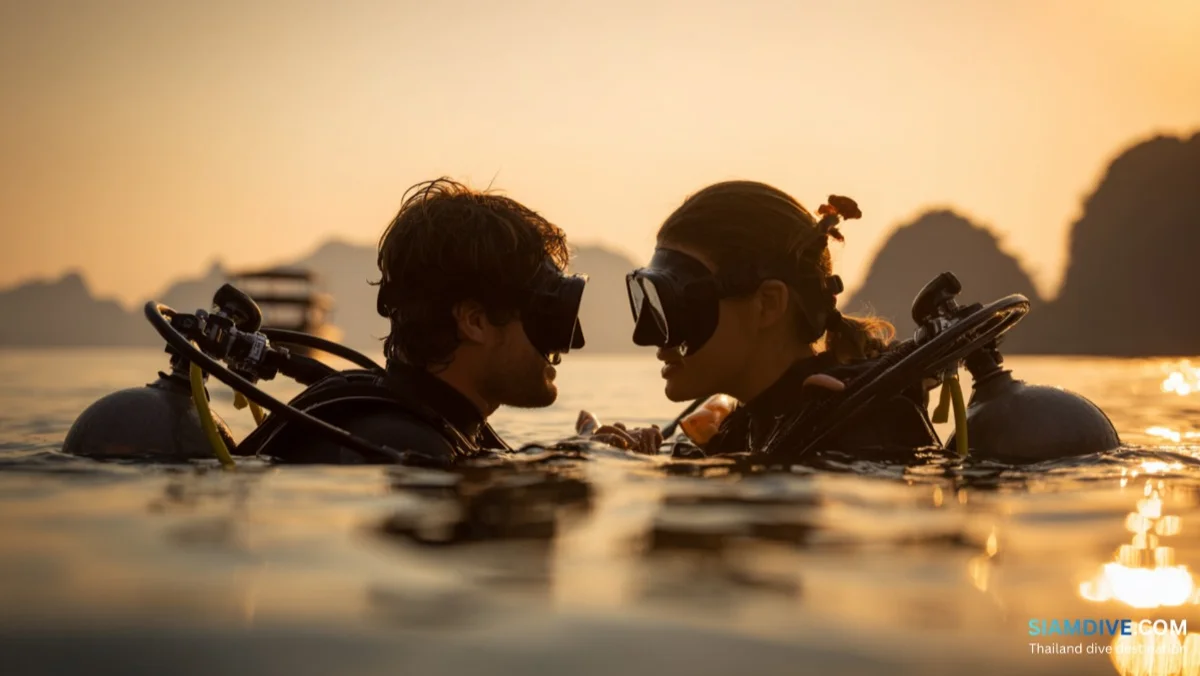
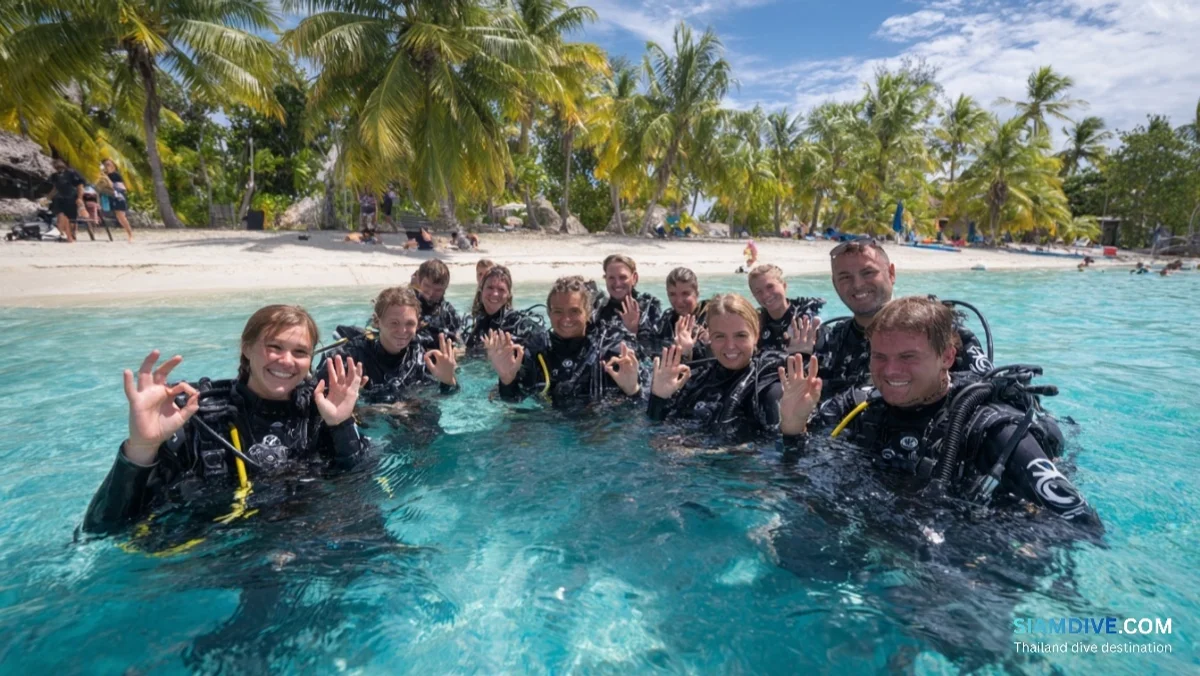
Scuba diving is built on the buddy system: you never dive alone. This simple rule creates something surprisingly powerful — a community founded on mutual trust and shared vulnerability. When you descend with someone, you are responsible for each other's safety. That bond accelerates friendship in a way that office small talk never will. Dive communities are global, welcoming, and unusually diverse. On a liveaboard in Thailand, you might share a deck with a German engineer, a Japanese photographer, a Brazilian teacher, and a retired American nurse — all united by their love of the underwater world. Many divers describe their dive community as a second family. Social isolation, which is reaching epidemic levels in many countries, dissolves quickly when you join a group that meets regularly to do something thrilling and meaningful together.
When a Holiday Hobby Becomes a Career
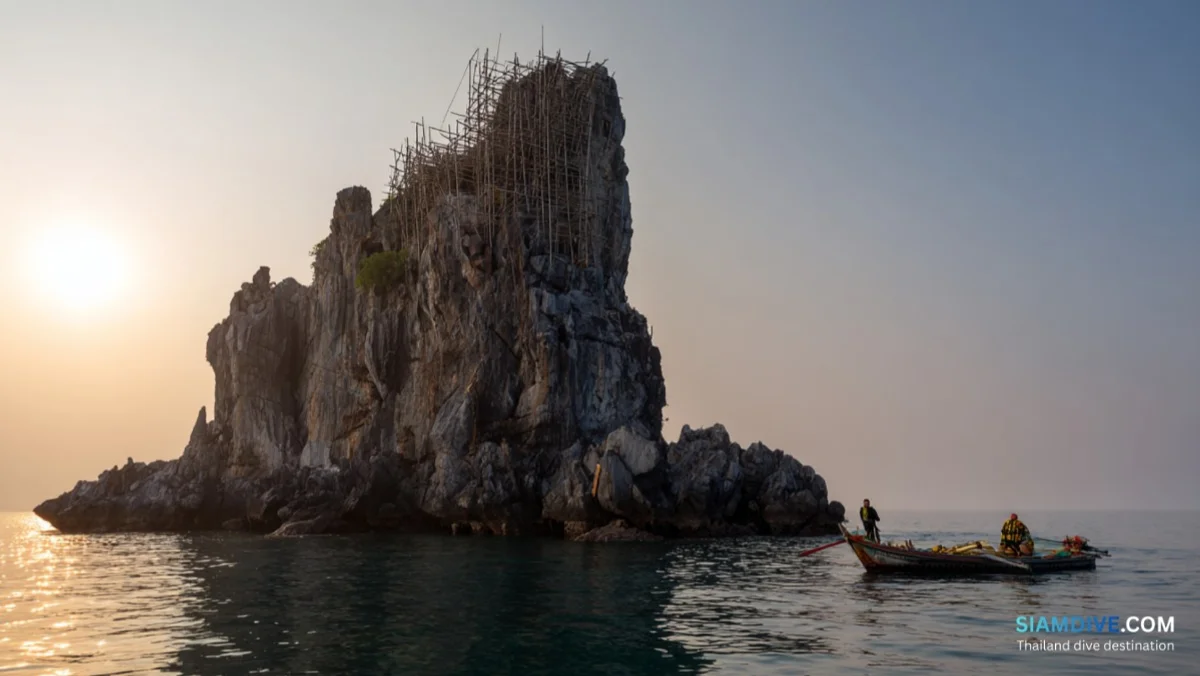
One of the most remarkable things about scuba diving is how often it changes people's professional trajectories. The path is almost cliché because it happens so frequently: someone takes an Open Water course on vacation, falls in love with diving, returns for Advanced and Rescue certifications, and within a year or two is enrolled in a Divemaster or Instructor course. Thailand, especially Koh Tao, is ground zero for this phenomenon. The island is full of former accountants, lawyers, and IT professionals who traded their desks for dive boats. Some build careers as full-time instructors. Others become underwater photographers, marine conservation workers, or liveaboard crew. The dive industry will not make you rich, but it offers something increasingly rare in the modern economy: a job where you are physically active, constantly outdoors, genuinely helping people, and surrounded by natural beauty. For many, that trade-off is not even close.
The Physical Benefits You Get for Free
While the mental and social benefits of diving get the most attention, the physical benefits are substantial and often overlooked. A single dive burns 400-700 calories depending on current, water temperature, and exertion level. Swimming against mild current provides a full-body workout that strengthens your core, legs, and cardiovascular system without the joint stress of running or gym work. Controlled breathing patterns improve lung capacity and respiratory efficiency over time. The hydrostatic pressure of water improves circulation. And because diving usually means traveling to warm, sunny locations, you also benefit from vitamin D exposure, fresh air, and the general health advantages of an active outdoor lifestyle. You do not go diving to exercise — but your body does not know the difference.
What No One Tells You Before Your First Course
If you are considering learning to dive, here is what the brochures leave out:
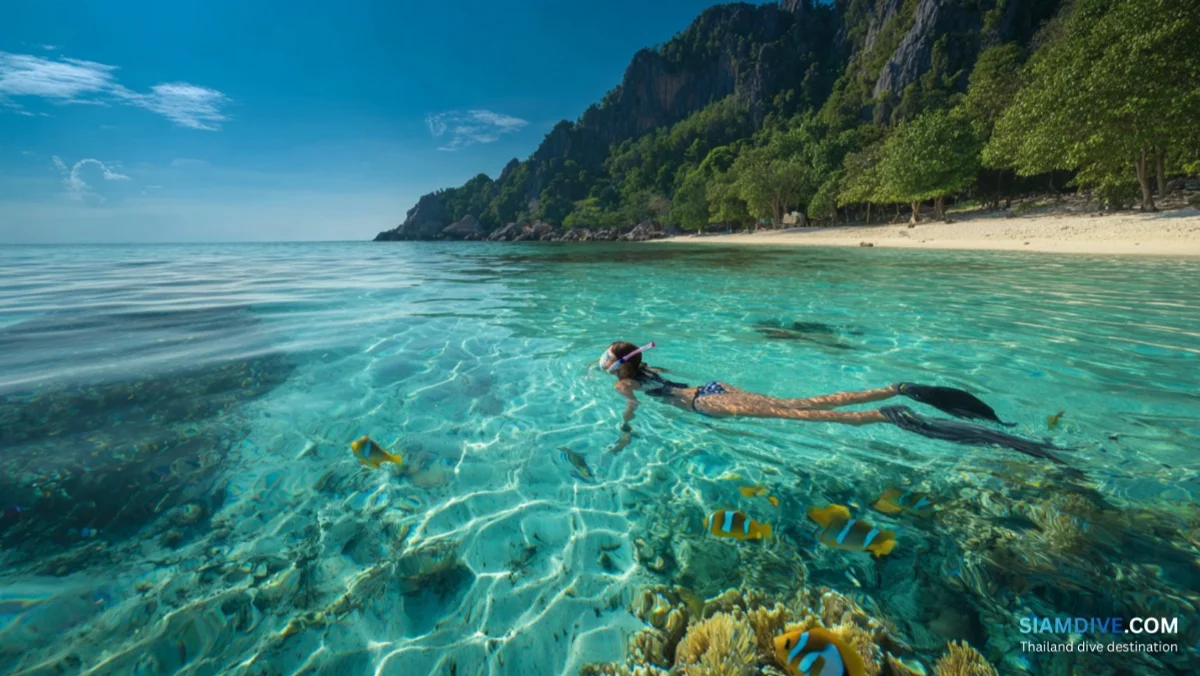
- You will see the ocean differently forever. After your first dive, snorkeling feels like watching a movie through a window. You will want to go back under.
- Your travel priorities will shift. You will start choosing destinations based on dive sites instead of hotel pools. Maldives, Raja Ampat, Galápagos — your bucket list will rewrite itself.
- You will spend money you did not plan to spend. Gear, courses, liveaboard trips — diving is not the cheapest hobby. But divers overwhelmingly say the value exceeds the cost.
- You will meet people who change your life. The dive community attracts curious, adventurous, open-minded people. Some of your closest future friendships may start on a dive boat.
- You might question your career. Sitting in an office feels different after you have spent a week diving pristine reefs. Some people handle this fine. Others hand in their notice.
Ready to Find Out for Yourself?
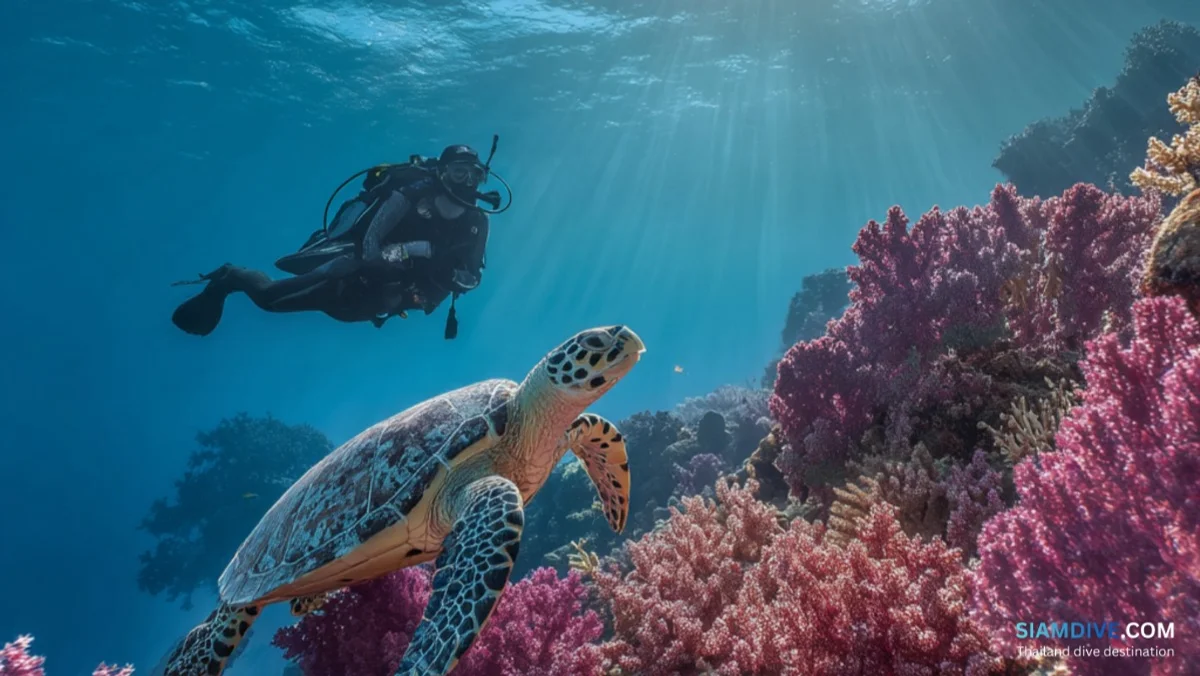
Learning to dive is not just about accessing the underwater world — although that alone would be worth it. It is about discovering a version of yourself that is calmer, more confident, more connected, and more alive. The science confirms what every diver already knows: something happens down there that does not happen anywhere else. You do not need to be athletic, young, or fearless. You just need to be curious enough to try. Find a certified dive school, book your Open Water course, and take that first breath underwater. Your brain will do the rest. Explore dive schools and courses across Thailand at siamdive.com.