The Coral Bommie at 12 Metres That Defines Similan Diving
23 เมษายน 2569
A single coral bommie off Similan Island 7 hosts more species than some entire dive sites. East of Eden's gentle slope and hard coral gardens reward every certification level.
A Reef That Starts Where the Anchor Line Ends
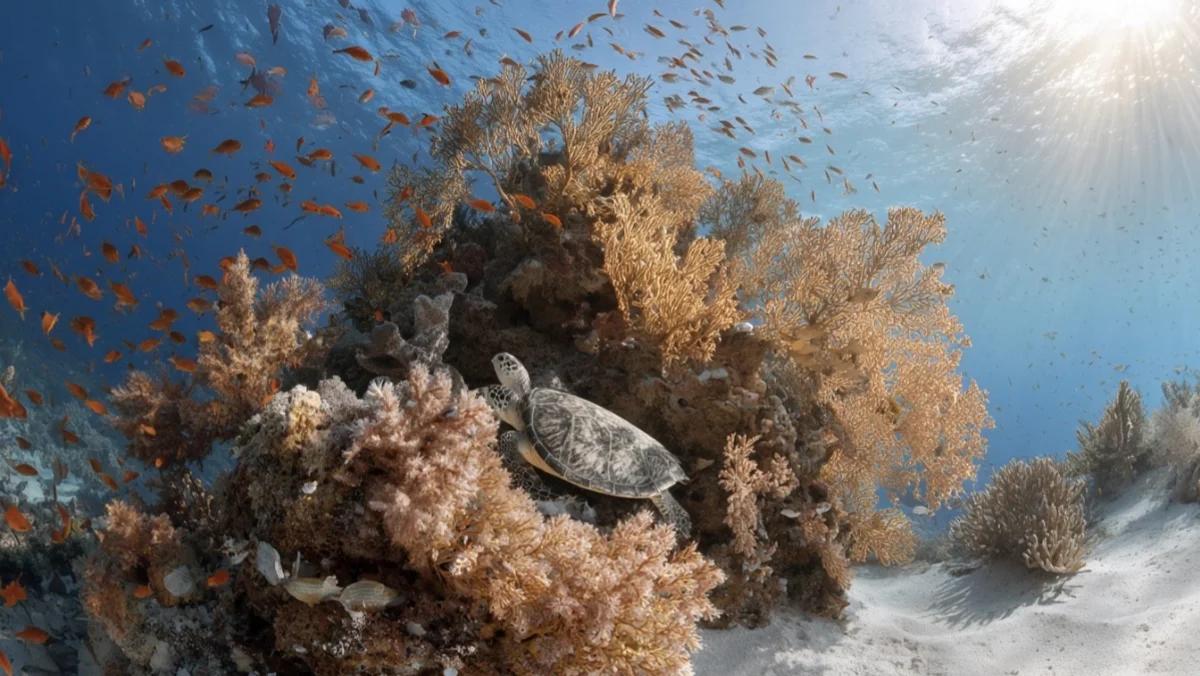
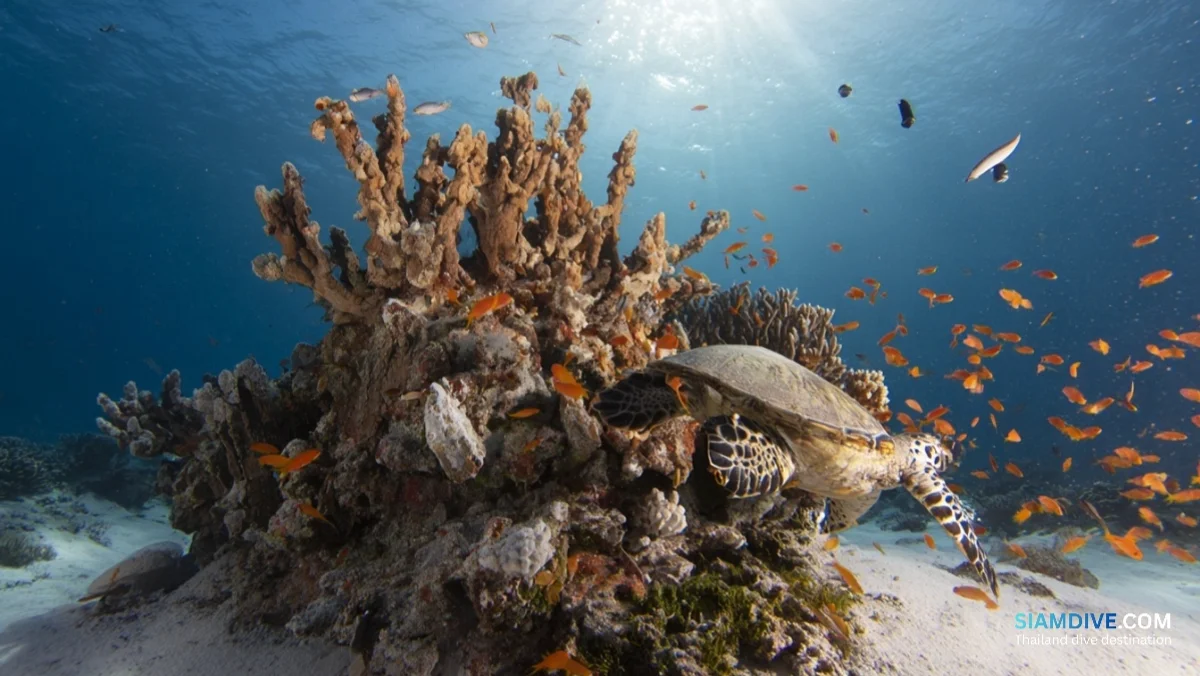
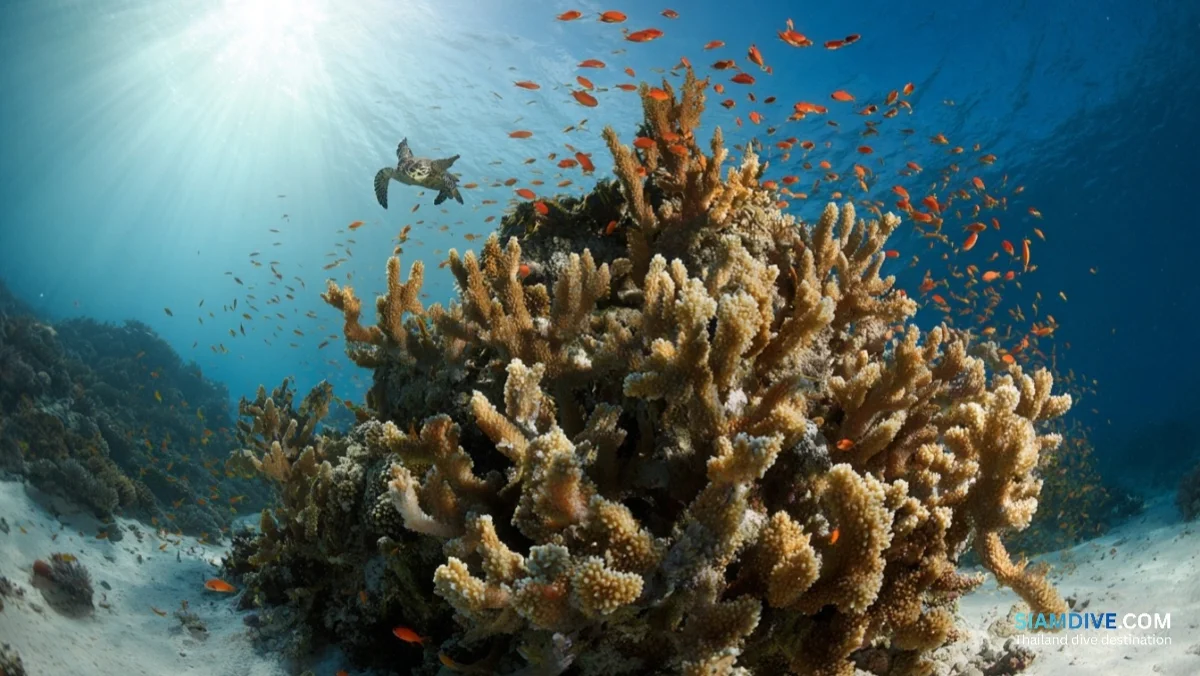
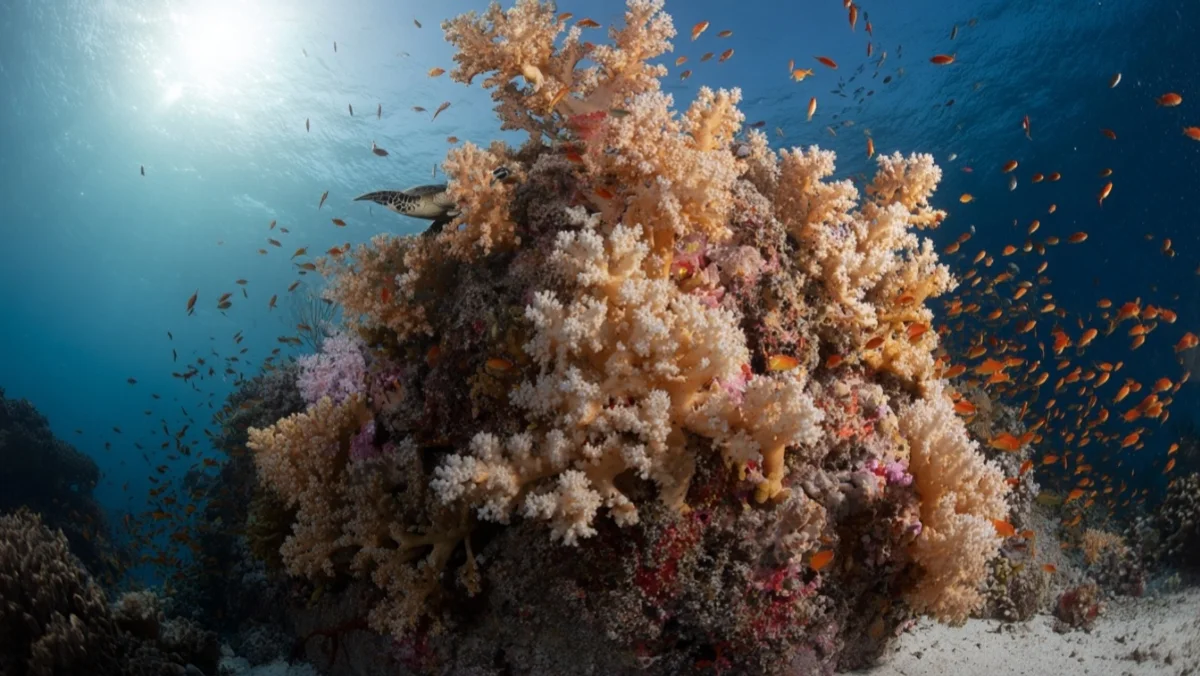
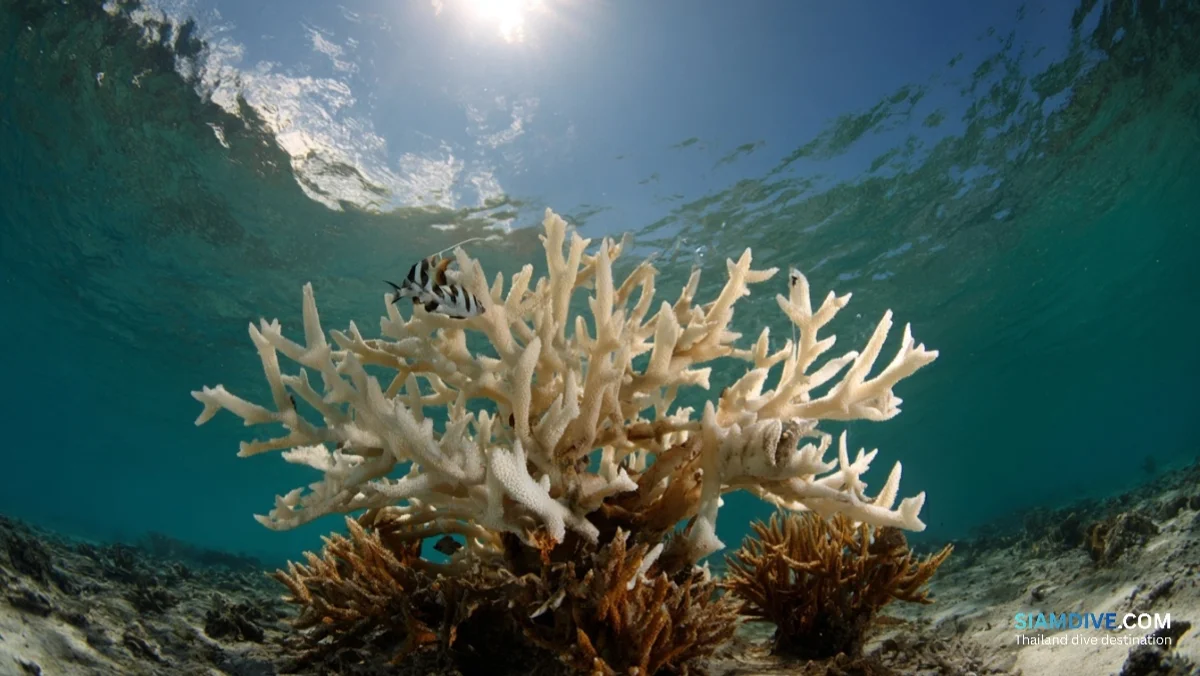
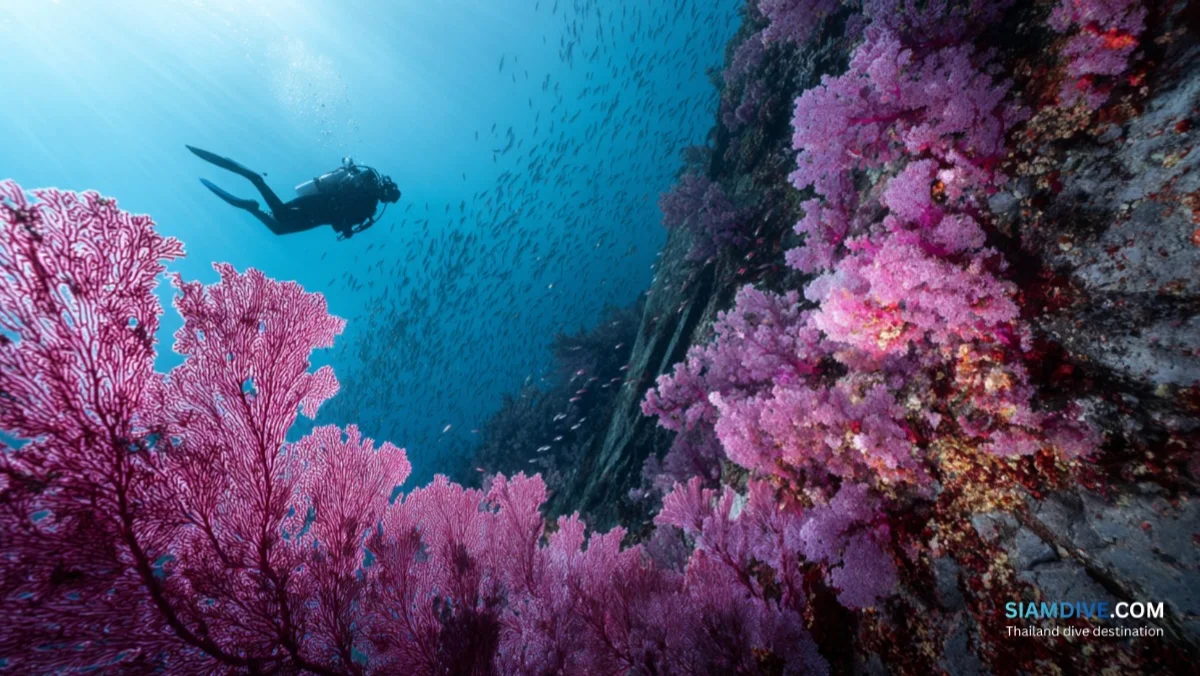
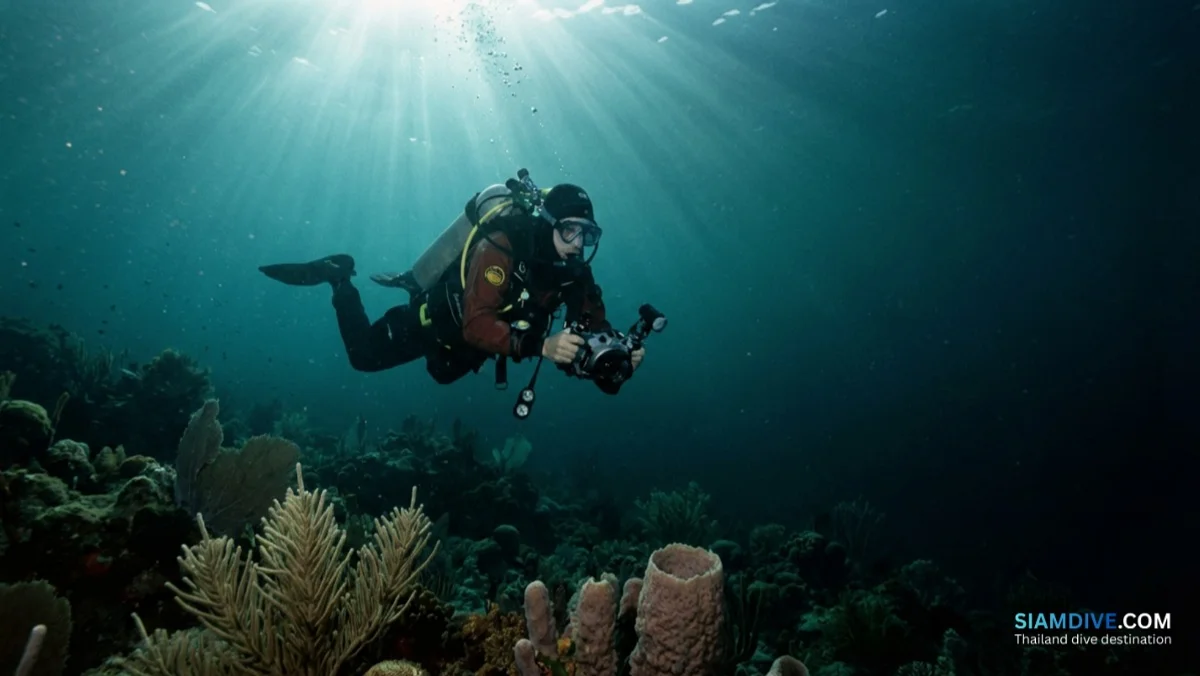
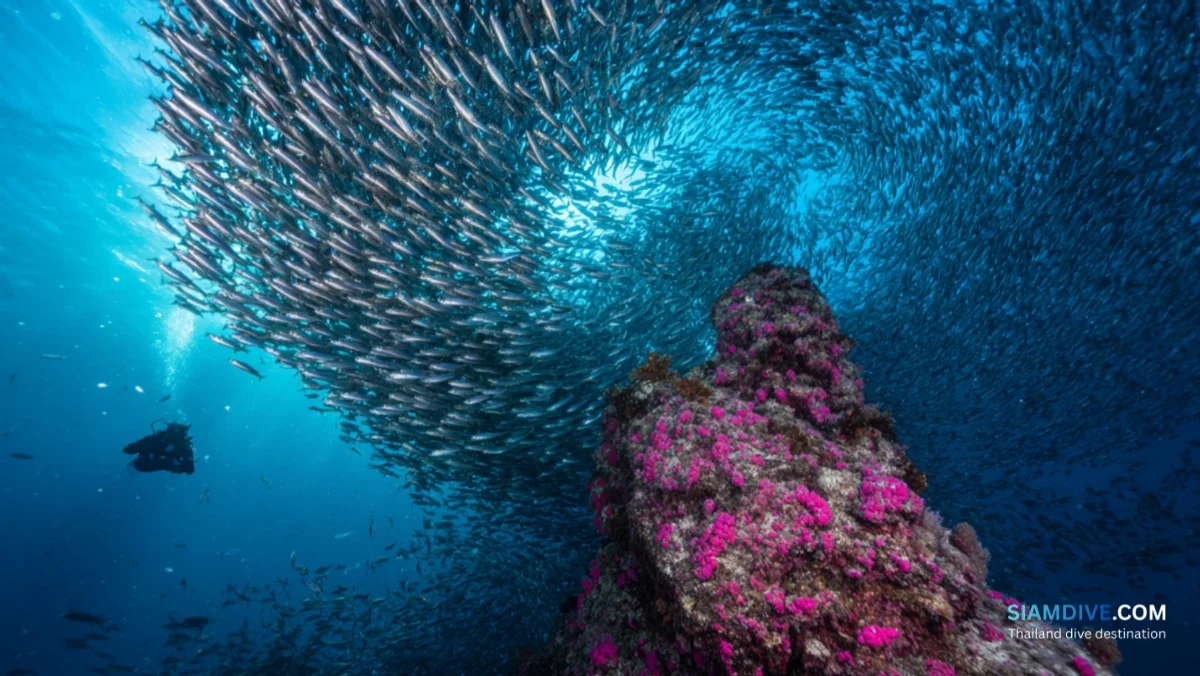
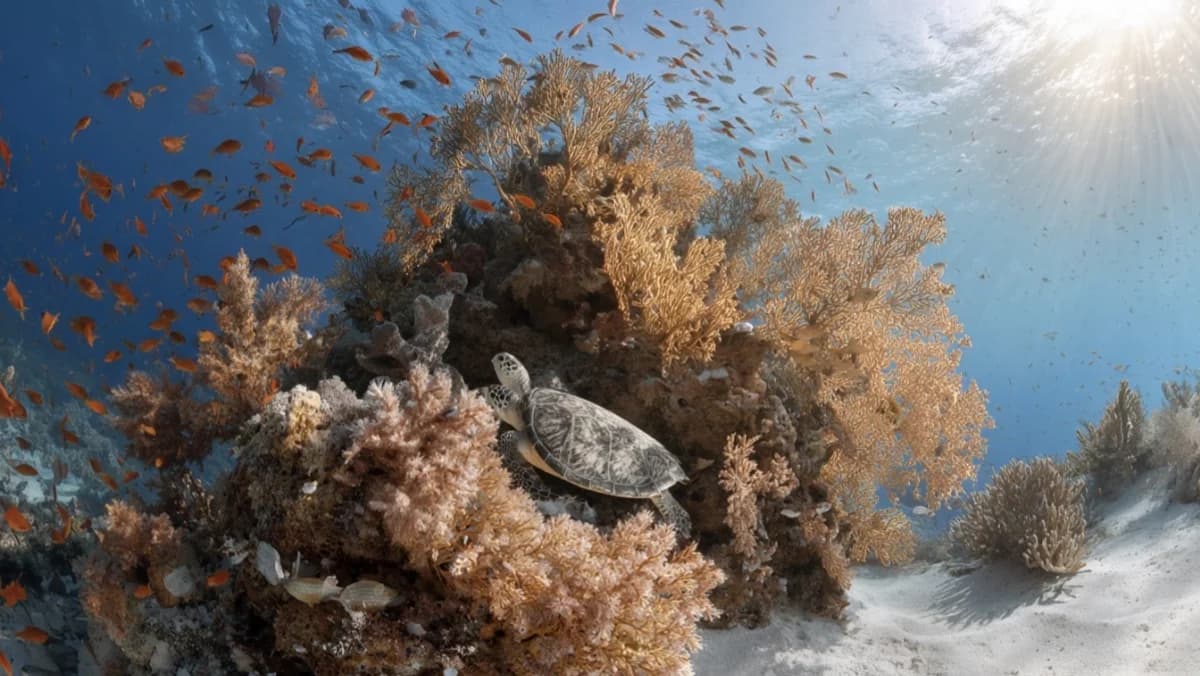
Twelve metres down, at the base of a mooring line off Similan Island number seven, a coral bommie the size of a delivery truck rises from white sand. Staghorn branches fork upward in pale violet. Orange cup corals stud every vertical face. Glassfish cloud the overhangs, thick enough to dim the sunlight filtering through. This single formation — one structure on one reef — holds more visible species than some entire dive sites in the Gulf of Thailand. And East of Eden is not one bommie. It is an entire slope of them, running south along the sheltered east coast of Koh Pa Yu for several hundred metres.
The name borrows from Steinbeck, though the literary connection stops at the marquee. What earned East of Eden its reputation among Andaman liveaboard itineraries is simpler: hard coral coverage on a gentle gradient, visibility that regularly exceeds 30 metres, and a depth range — five to roughly 25 metres on the main reef, with sand slopes pushing past 30 — that keeps the site accessible to newly certified divers while still rewarding those with hundreds of logged dives.
Topography of the East Slope
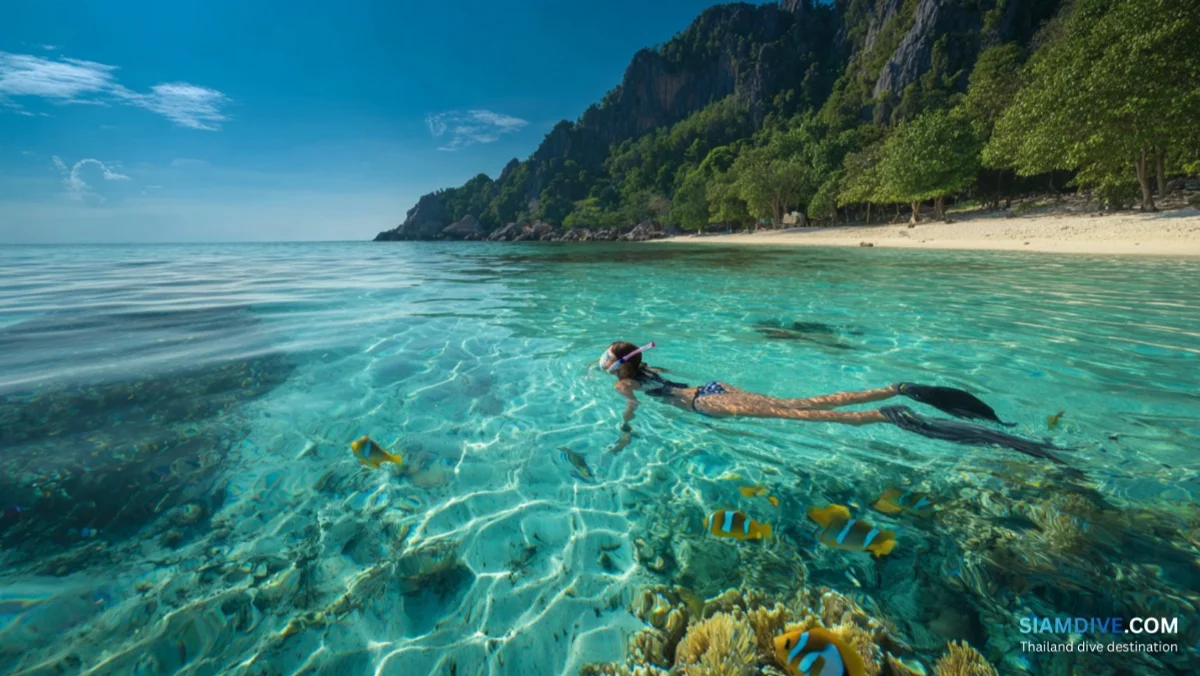
Koh Pa Yu sits near the centre of the Similan archipelago, nine granite islands strung north-south about 65 kilometres off Khao Lak. The western flanks of these islands tend toward massive boulder piles and dramatic swim-throughs — the terrain that makes Elephant Head Rock and Christmas Point famous. The east sides tell a different story. Protected from the prevailing swells by the islands themselves, the eastern reefs develop broad, gently sloping coral gardens where hard corals thrive in calm, sunlit water.
East of Eden exemplifies this pattern. The reef begins in the shallows — three to five metres — as a fringing shelf of table corals and short staghorn colonies. Moving seaward, the slope steepens slightly and the coral architecture grows more complex. Between 8 and 15 metres, large bommies appear: rounded mounds of reef rock colonised by soft corals, sponges, sea anemones, and dense schools of anthias and damselfish. The largest bommies reach two to three metres in height and host their own micro-ecosystems of cleaning stations and crevice-dwellers.
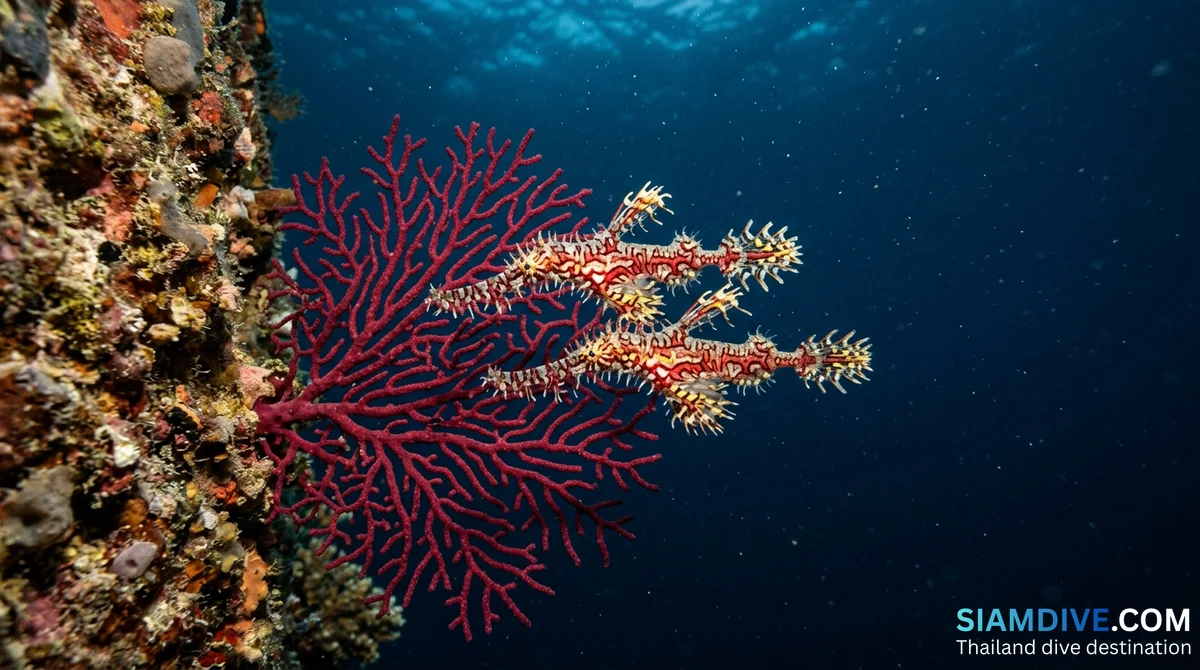
Below 20 metres, the reef transitions to sand with scattered coral outcrops. Some of the biggest gorgonian sea fans in the Similan chain grow down here, their latticed branches oriented perpendicular to the current to trap passing plankton. Leopard sharks occasionally rest on the sand flats at this depth, motionless enough to be mistaken for reef rubble until a fin twitches.
What Grows Here — and Why It Matters
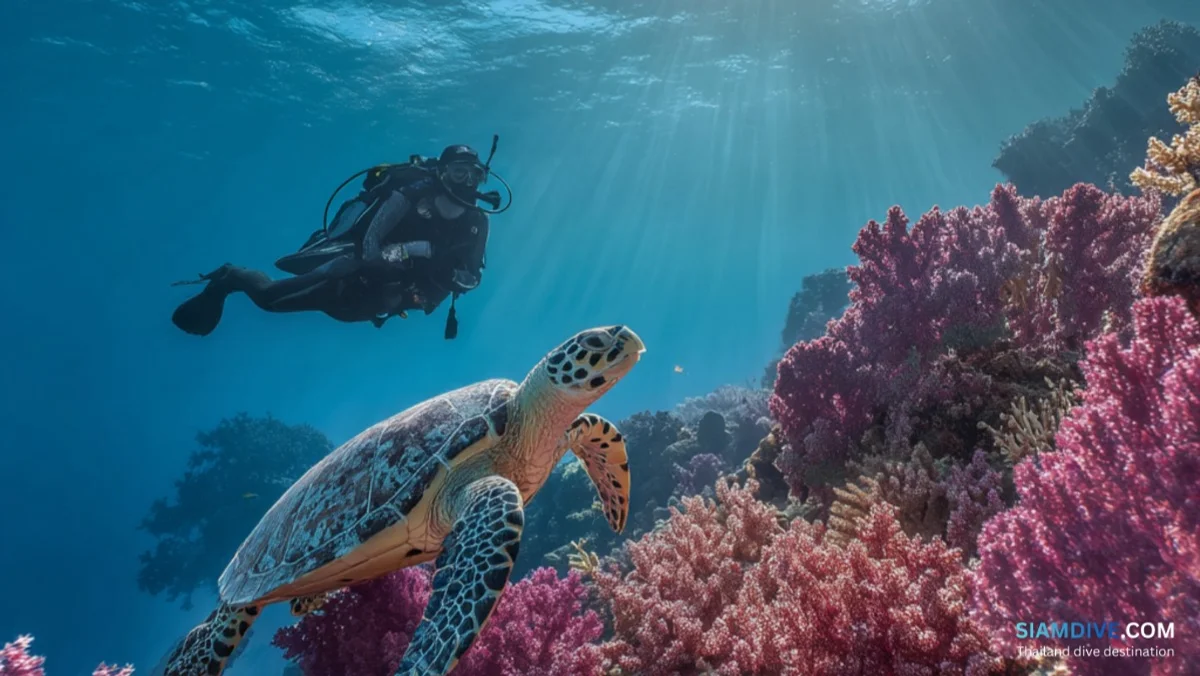
Hard coral diversity is the headline. Staghorn coral (Acropora spp.) dominates the northern section of the site, its branching colonies creating three-dimensional habitat for juvenile fish. Table corals spread wide plates across the mid-reef, their broad surfaces acting as shelter for surgeonfish and butterflyfish. Brain corals, encrusting Porites, and blue coral (Heliopora coerulea) — a species that is not technically a stony coral but builds a hard skeleton nonetheless — fill the gaps.
This coverage did not come free. Mu Ko Similan National Park lost an estimated 90 percent of its coral to bleaching events in 1998 and again in 2010, according to park authority assessments reported by Thailand National Parks. By 2019, officials declared that reefs across the archipelago had nearly fully recovered. East of Eden's sheltered position on the lee side of Koh Pa Yu, combined with good water flow and relatively shallow depth, gave its corals an advantage during the recovery period.
- Dominant hard corals: Staghorn (Acropora), table coral, brain coral, blue coral (Heliopora coerulea), encrusting Porites
- Soft coral highlights: Dendronephthya (tree soft corals), cup corals, tube corals on deeper bommies
- Invertebrates: Barrel sponges, giant sea anemones hosting Clark's and skunk anemonefish, Christmas tree worms
- Gorgonians: Large sea fans below 20 m — among the biggest in the Similans
The Fish List That Keeps Growing
A single pass over the main bommie field at 10 to 15 metres routinely turns up more than two dozen fish species. Oriental sweetlips hang motionless under coral ledges, their spotted flanks almost invisible against the dappled light. Schools of yellowtail fusiliers stream past in silver ribbons. Regal angelfish — electric blue and orange stripes — pick at sponge growth, rarely straying far from their home coral head.
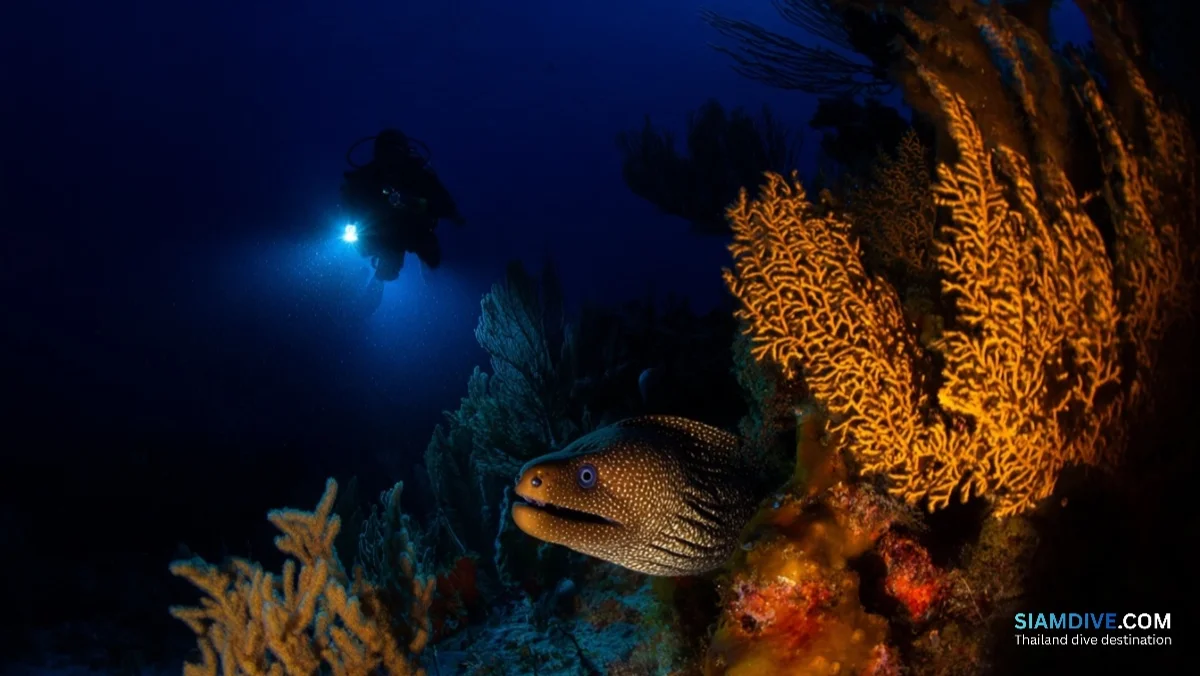
Macro photographers find reasons to linger. Purple fire gobies hover above sand patches at the reef's edge, disappearing into burrows at the first hint of a shadow. Frogfish, well camouflaged against sponge-encrusted rock, sit where they can ambush passing prey. Moray eels — giant and yellow-margin species — peer from crevices throughout the bommie zone.
- Schooling species: Yellowtail fusiliers, blue-stripe snappers, bigeye trevally
- Reef residents: Oriental sweetlips, regal angelfish, Clark's anemonefish, yellow longnose butterflyfish
- Bottom dwellers: Leopard sharks on sand, blue-spotted stingrays, Kuhl's stingrays
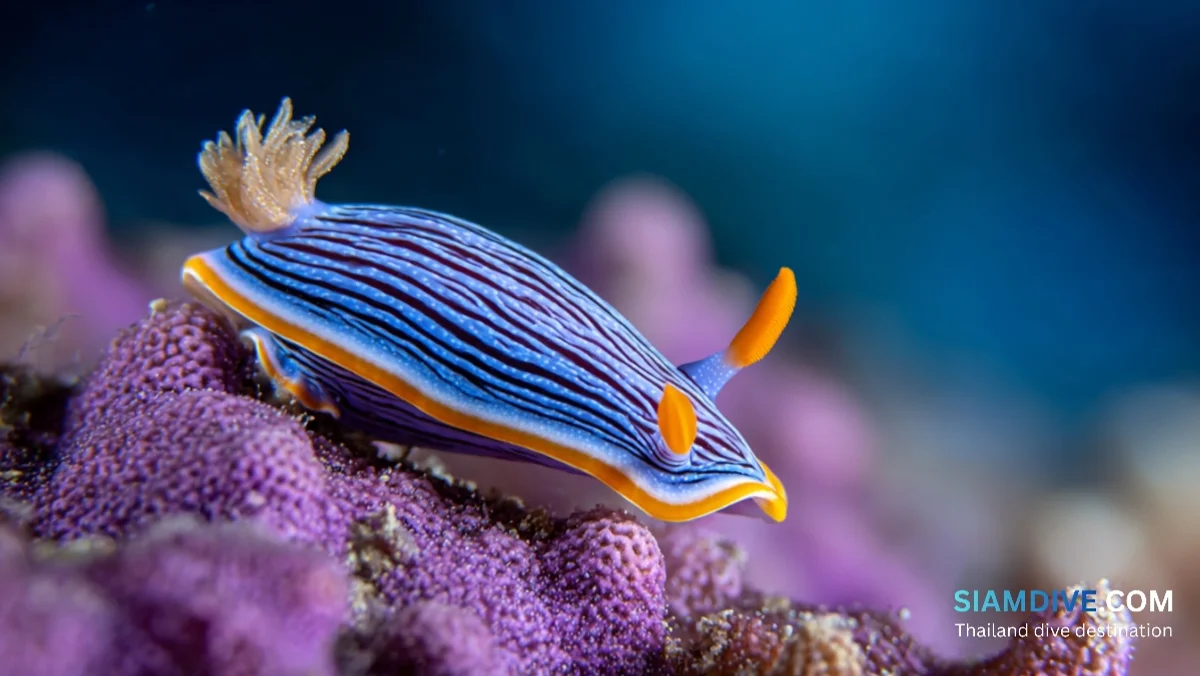
- Macro finds: Purple fire gobies, frogfish, nudibranchs, Christmas tree worms
- Visitors: Hawksbill and green turtles, banded sea kraits, occasional eagle rays
Turtles are one of East of Eden's recurring draws. Hawksbill turtles feed on sponges growing on the bommies; green turtles graze on algae across the reef flat. Neither species is guaranteed, but sighting frequency at this site ranks among the highest in the central Similan group.
How to Dive It Right
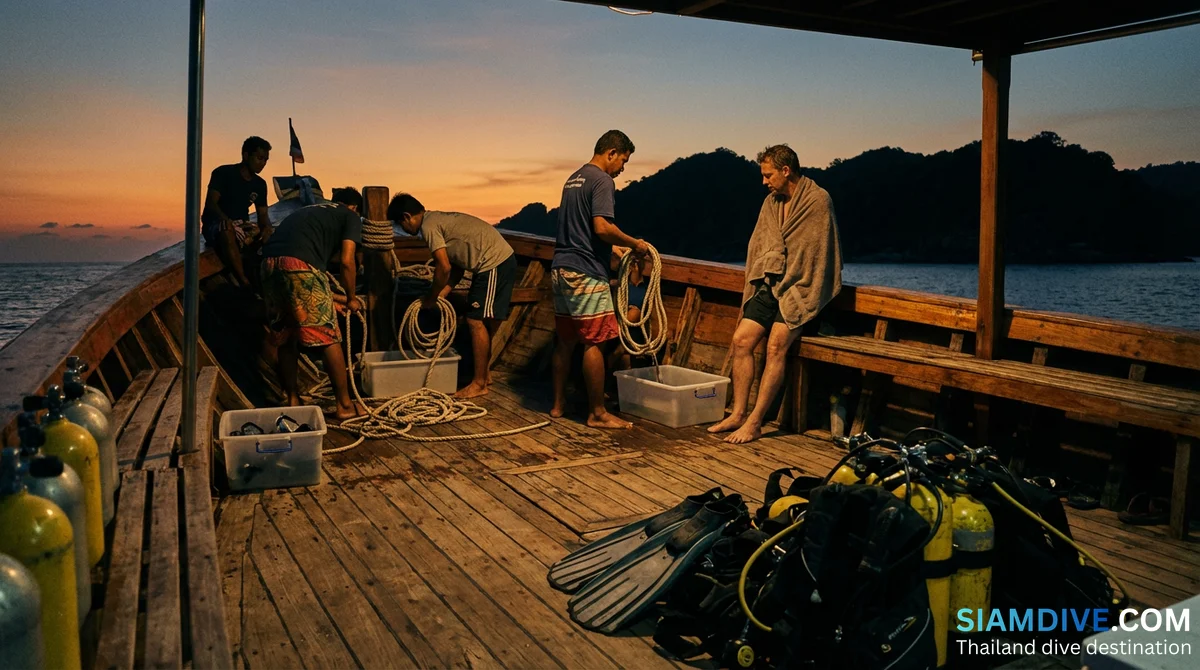
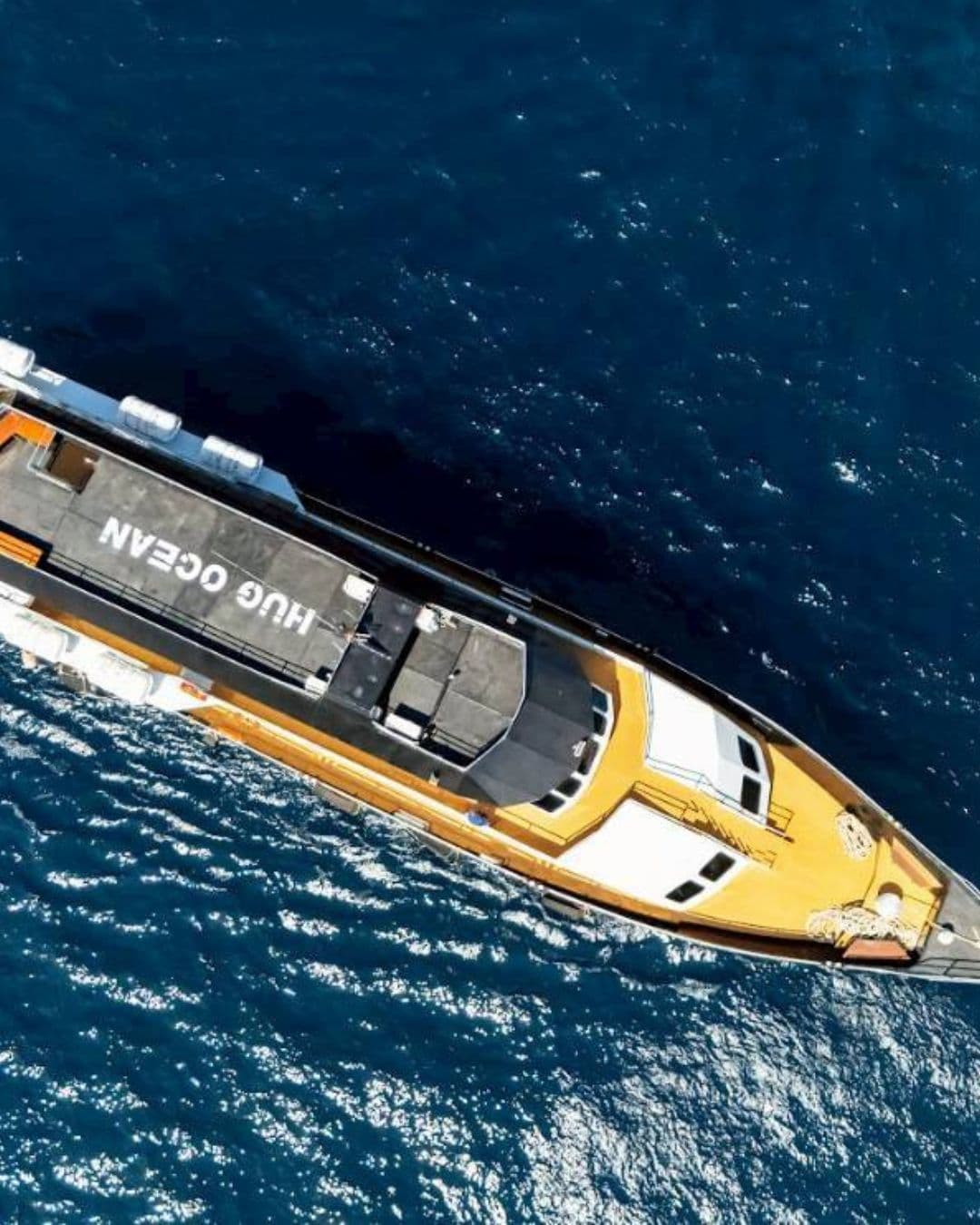
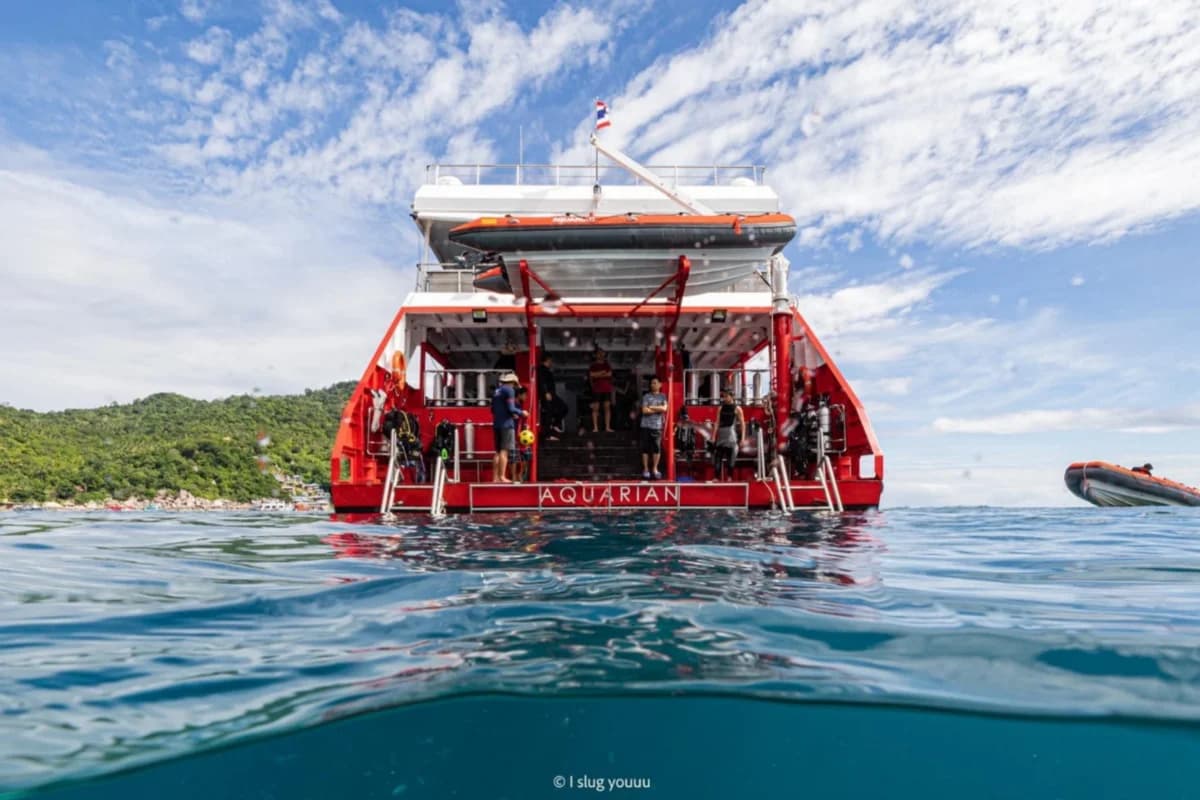
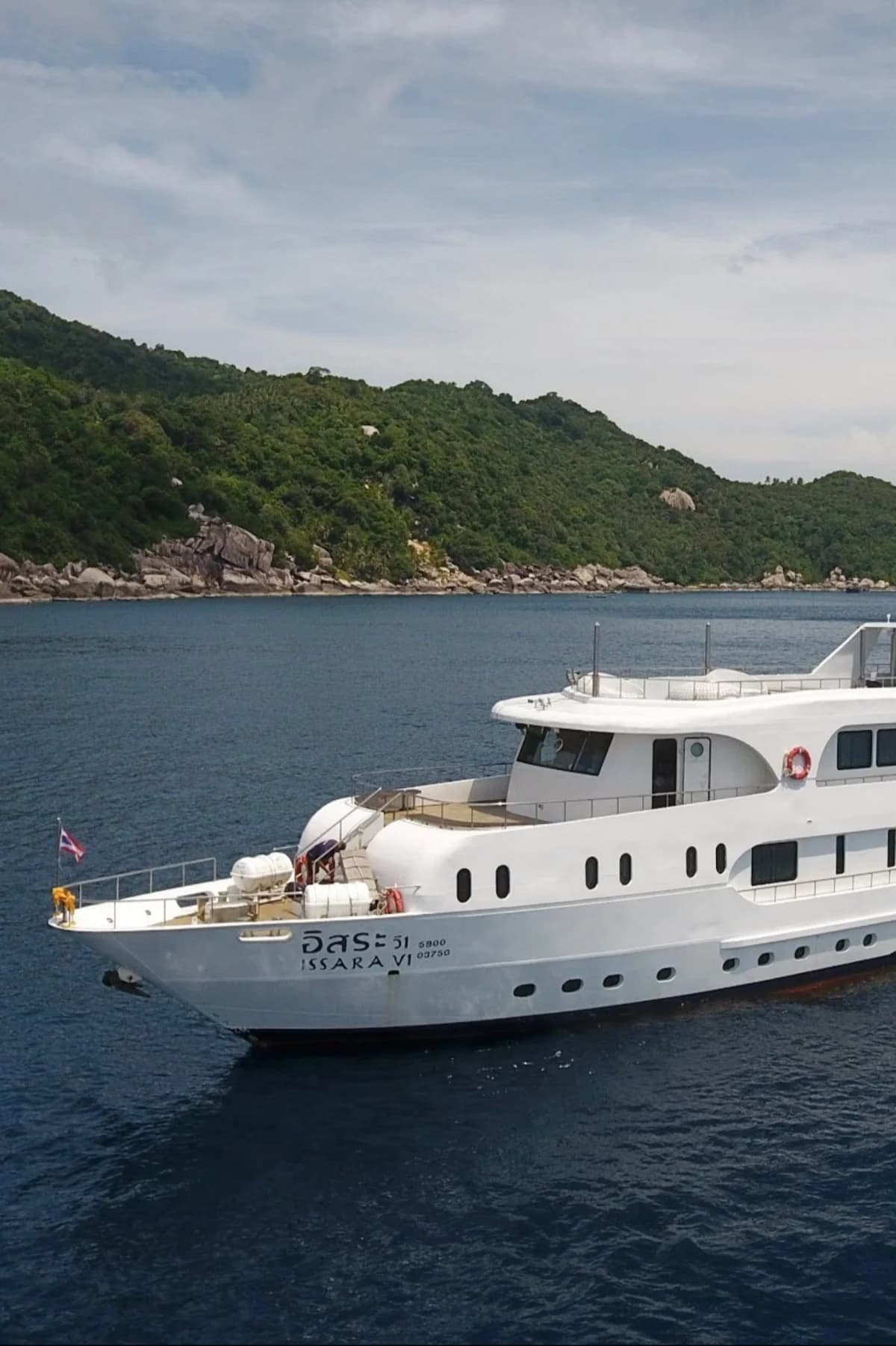
Most liveaboards and day boats moor near the northern end of the site, where the coral begins in the shallows. The standard profile drifts south along the slope, staying between 10 and 18 metres for the main bommie section before ascending gradually for a safety stop over the shallow reef flat. Bottom time at this depth profile runs 50 to 60 minutes on air — generous by Similan standards, where deeper sites like Koh Bon Pinnacle or Koh Tachai Pinnacle compress no-decompression limits quickly.
Current at East of Eden is typically mild — one of the reasons it suits less experienced divers. On occasion, however, flow picks up enough to require finning into it on the return leg. Dive guides generally plan routes to drift with any current and loop back through the shallows. For the best light on the bommies, morning dives between 08:00 and 10:00 put the sun overhead and east-facing, illuminating the slope directly.
- Depth range: 5–30 m (main reef interest at 8–20 m)
- Current: Usually mild; occasional moderate flow
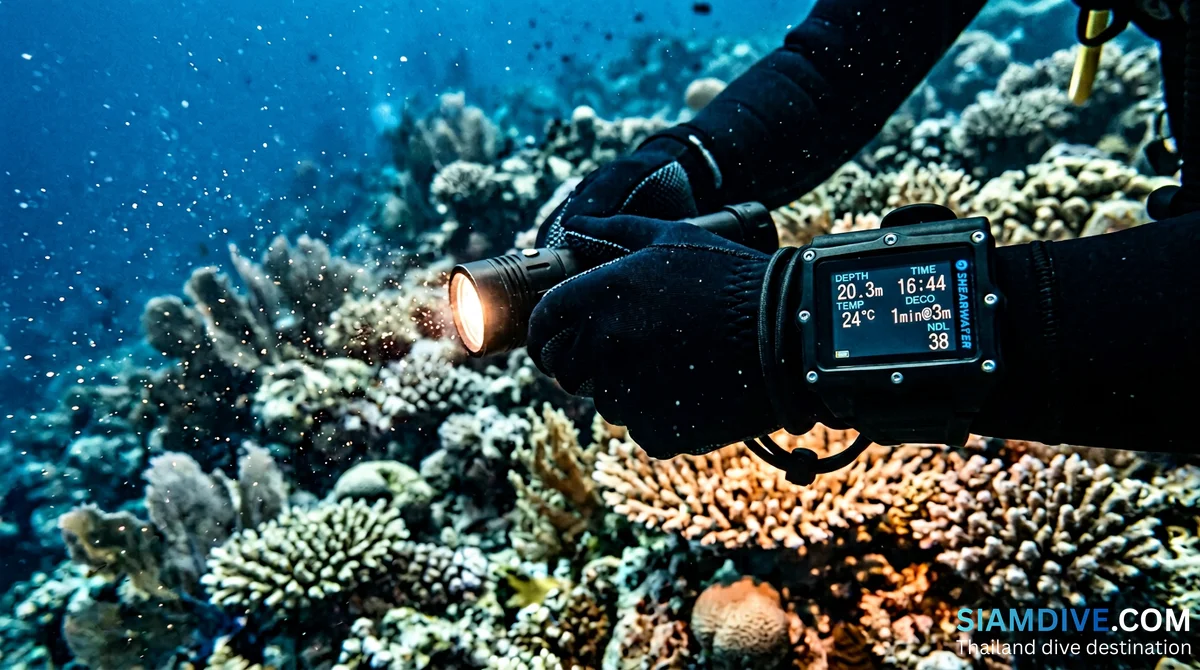
- Visibility: 20–35 m typical, 30–40 m in peak season (Dec–Apr)
- Water temperature: 28–30 °C
- Recommended certification: Open Water and above
- Best light: Morning dives, 08:00–10:00
- Bottom time at 15 m on air: 50–60 minutes
Getting There and What It Costs
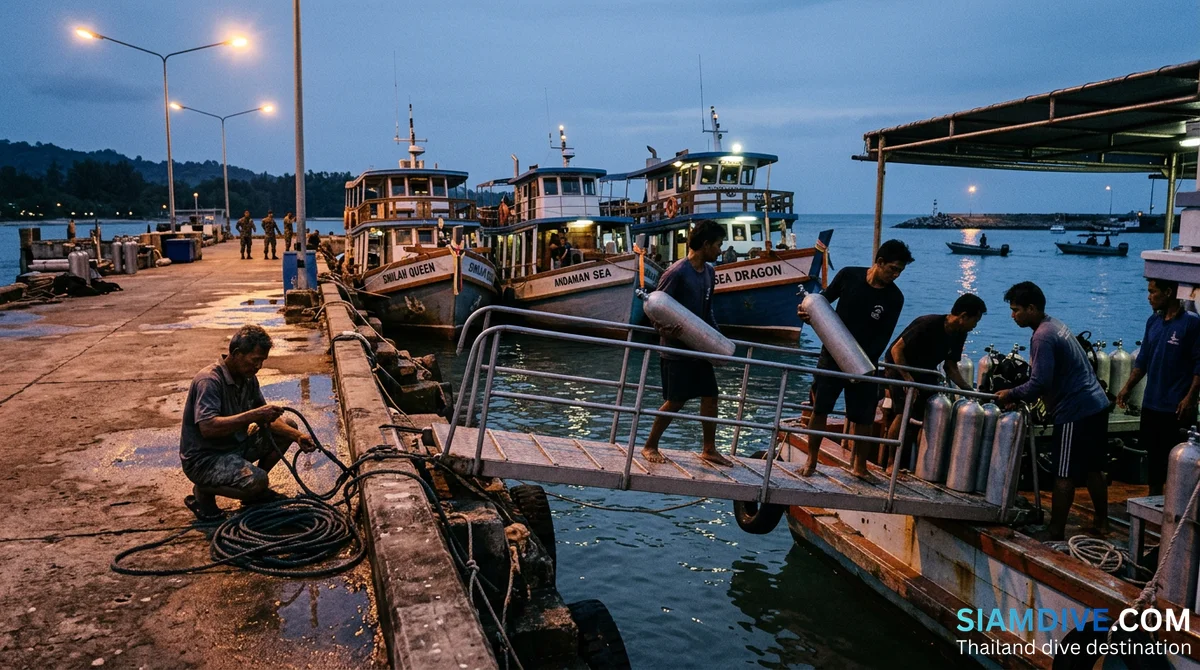
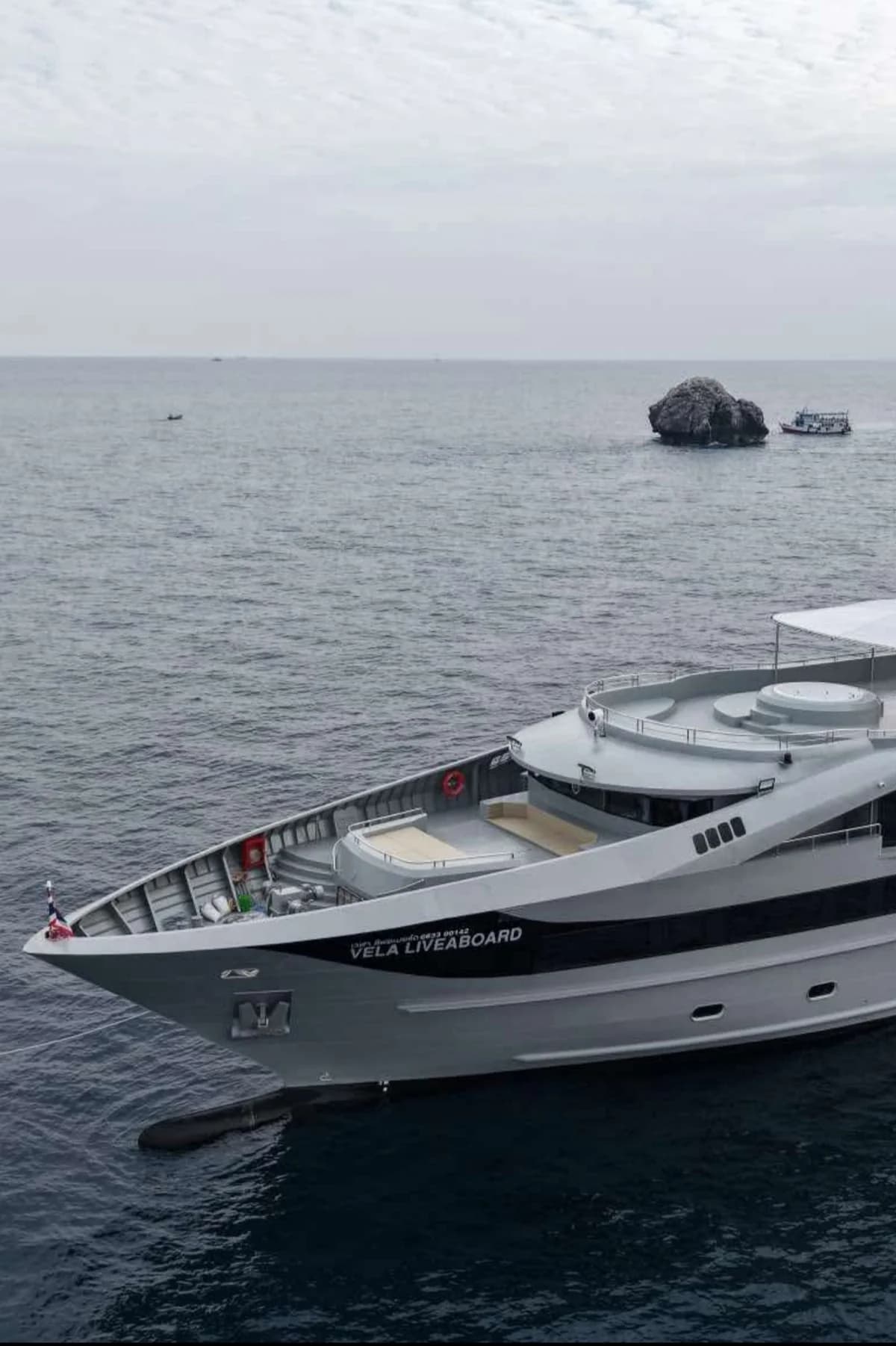
East of Eden sits within Mu Ko Similan National Park. Access is exclusively by boat from Khao Lak (about 90 minutes by speedboat) or Phuket (two to three hours via larger vessels). The site appears on virtually every Similan liveaboard itinerary and most multi-dive day trip schedules departing from Thap Lamu Pier in Khao Lak.
- Park entry fee: 400 THB for foreign visitors (paid per entry to the park)
- Liveaboard diver marine park fee: Approximately 2,300 THB (covers multi-day access)
- Day trip from Khao Lak (2 dives): From around 6,150 THB including park fees and equipment
- Liveaboard trips: Range widely by vessel class and itinerary length — two-night trips from roughly 12,000 THB; four-night routes covering Similan, Koh Bon, and Richelieu Rock from around 20,000 THB and up
- Season: October 15 – May 15 (park closed during southwest monsoon)
The park enforces a daily visitor cap of 3,325 people across the archipelago, a measure introduced to protect reef health after years of rising tourism pressure. For divers, the cap rarely becomes a bottleneck — snorkelling day-trippers account for the majority of the count — but booking well ahead of peak months (January through March) remains wise.
When Conditions Peak
The Similan season splits into two phases. Early season — mid-October through November — brings warmer water and lower visitor numbers but occasionally reduced visibility as post-monsoon sediment settles. High season — December through April — delivers the clearest water, with visibility routinely exceeding 30 metres and sometimes pushing past 40. Sea surface temperatures hold steady at 28 to 30 degrees Celsius throughout.
February and March of the 2025–2026 season have been particularly strong. Calm seas, minimal current at the sheltered eastern sites, and visibility reports consistently in the 30 to 40 metre range have made conditions at East of Eden close to textbook. The nutrient upwelling that sharpens visibility at this time of year also fuels plankton blooms at deeper sites — part of the reason manta sightings spiked at Koh Bon during the same period.
April and early May remain diveable but bring slightly reduced visibility (20–25 m on average) and occasional afternoon squalls. The trade-off is fewer boats on the mooring lines and a quieter reef.
Conservation and Closures
East of Eden has periodically been subject to temporary closures by national park authorities to allow coral recovery. These closures are not announced on a fixed schedule — they respond to observed reef stress, bleaching events, or anchor damage. During the 2025–2026 season, several Similan dive sites faced intermittent restrictions, a practice that PADI and the Department of Marine and Coastal Resources (DMCR) both support as effective reef management.
The five-month annual monsoon closure (May 15 – October 14) is itself the most significant conservation tool. With zero boat traffic, anchor drops, and diver contact for nearly half the year, Similan reefs get a recovery window that most tropical dive destinations simply do not offer. The 2019 recovery assessment — from 90 percent loss to near-full restoration in under a decade — is evidence that the model works, provided bleaching events do not recur at the same intensity.
Divers visiting East of Eden can support this system by maintaining neutral buoyancy over the reef, avoiding contact with coral formations, and following mooring-line descent and ascent protocols. The reef at 5 to 10 metres is especially fragile — table corals here grow horizontally and fracture easily under fin kicks or dragged equipment.
Sources
- Thailand National Parks — Mu Ko Similan National Park: season, fees, and coral recovery data
- PADI — Similan Islands National Marine Park dive site reference
- Divezone — East of Eden dive site profile and map
- SSI MyDiveGuide — East of Eden site data
- Scuba Diving Magazine — East of Eden feature article