5 Nitrox Mistakes That Turn Extra Bottom Time Into Real Risk
21 เมษายน 2569
EAN32 extends your no-deco limits — but only if you avoid these five errors that trip up newly certified nitrox divers on Thai dive boats.
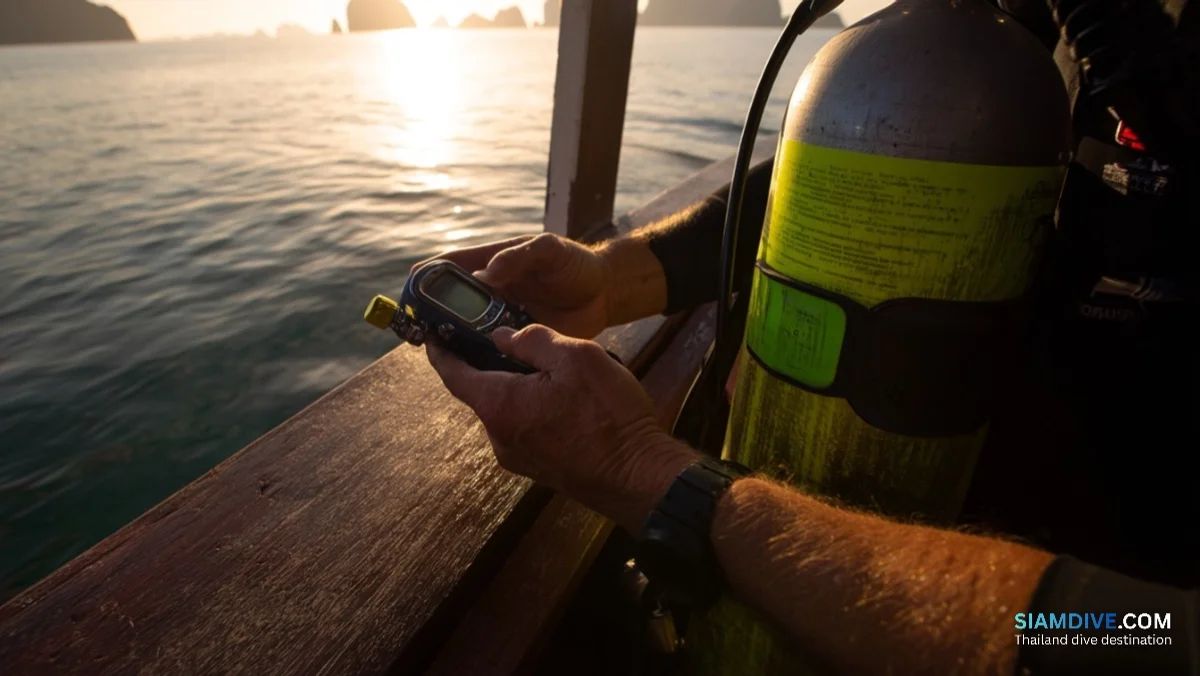
The analyzer reads 31.8 percent. Close enough to 32 — mark the tank, log it, jump in. Except the diver on the boat has just entered 21 percent on the computer. For the next 55 minutes at 24 metres, every no-decompression calculation the wrist unit runs will be wrong, and the diver will surface convinced the extra bottom time was a gift from the mix when it was actually a miscalculation from the settings screen.
Enriched air nitrox is the single most popular specialty certification in recreational diving — more popular than deep, more popular than night. The course takes half a day. The theory is straightforward. And yet the five mistakes below keep showing up on dive boats from Koh Tao to the Similans, season after season.
Trusting the Label Instead of the Analyzer
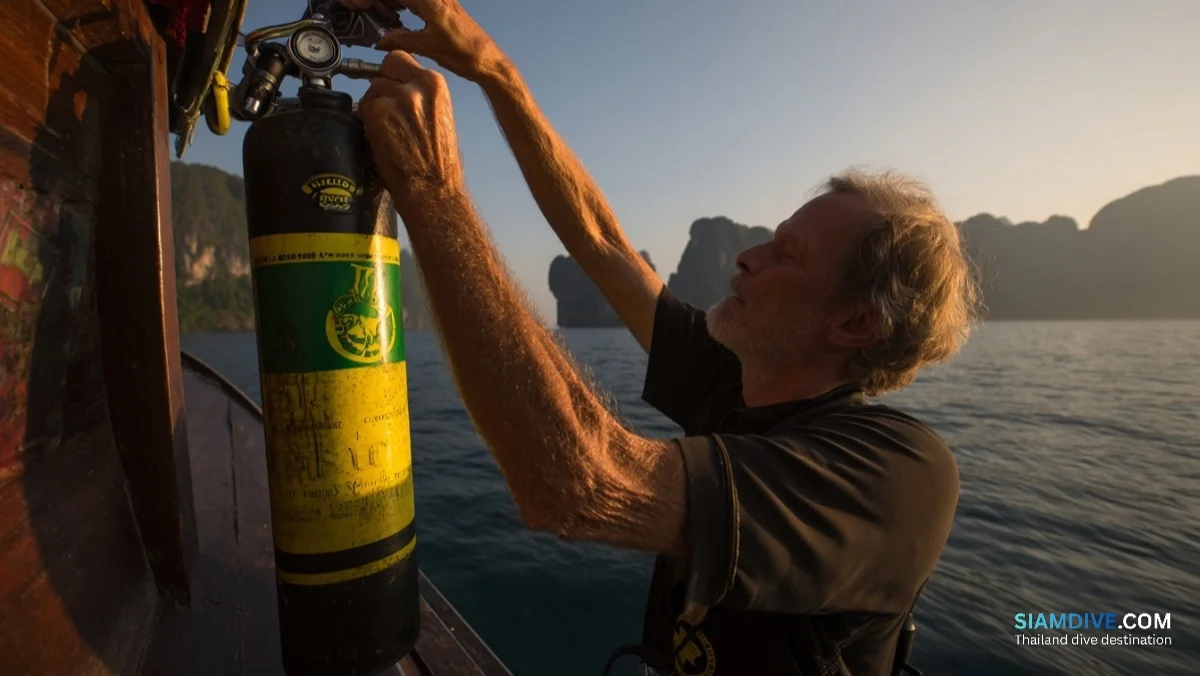
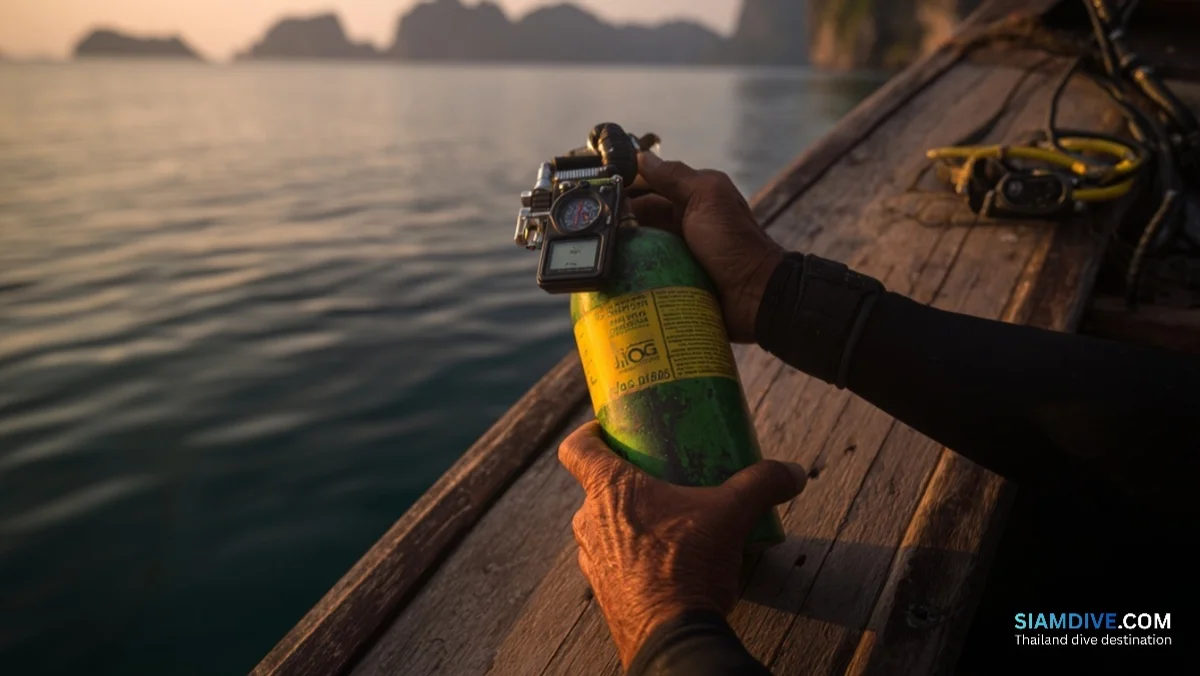
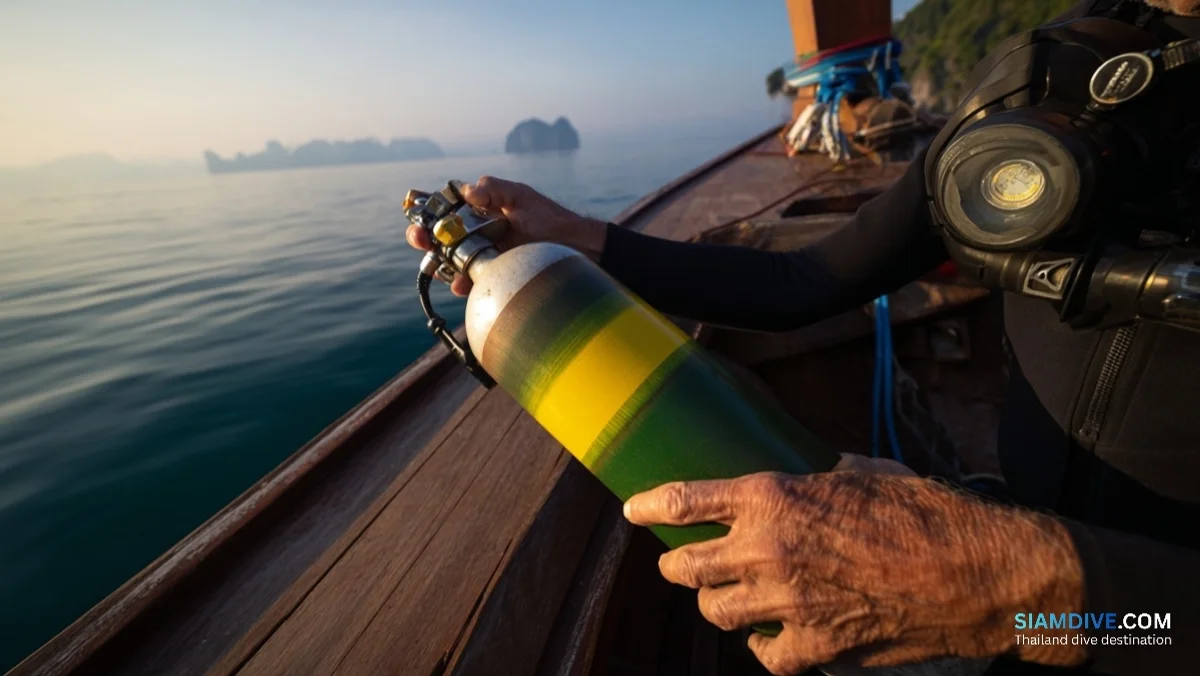
A green-and-yellow band says EAN32. The fill log at the shop says EAN32. So it must be 32 percent, right? Not necessarily. Partial fills, compressor drift, and human error mean the actual oxygen fraction inside the tank can sit anywhere from 30 to 34 percent on a nominally "32" fill. A two-point swing changes your maximum operating depth by more than three metres — enough to push a 34-metre dive into the oxygen toxicity zone.
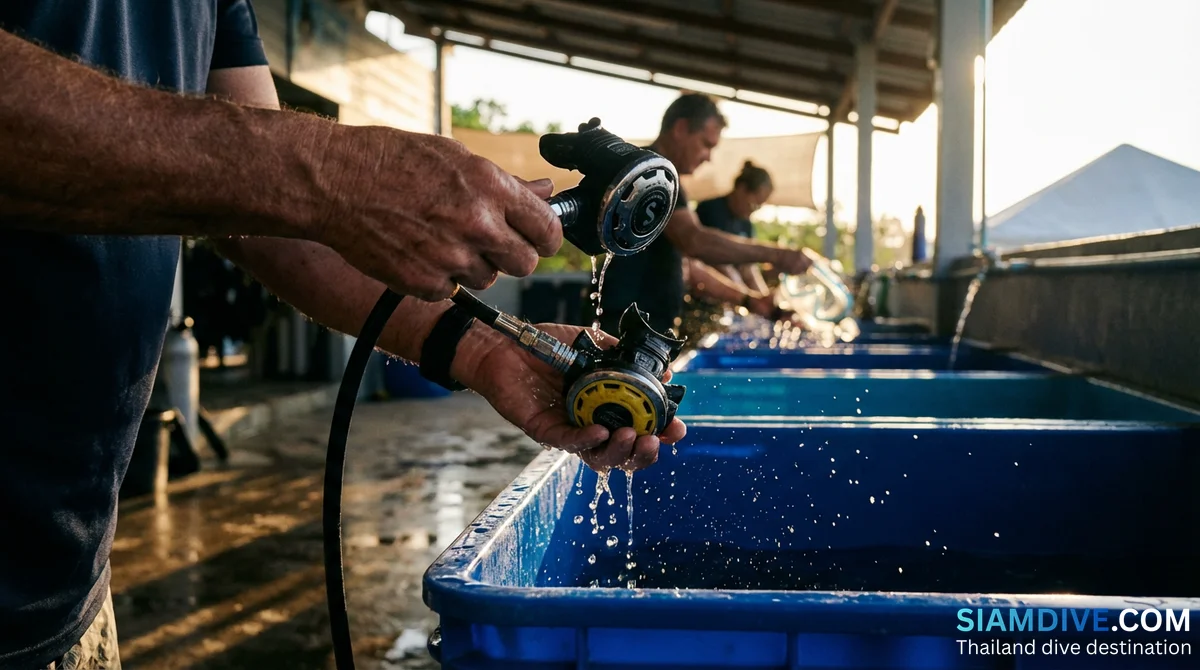
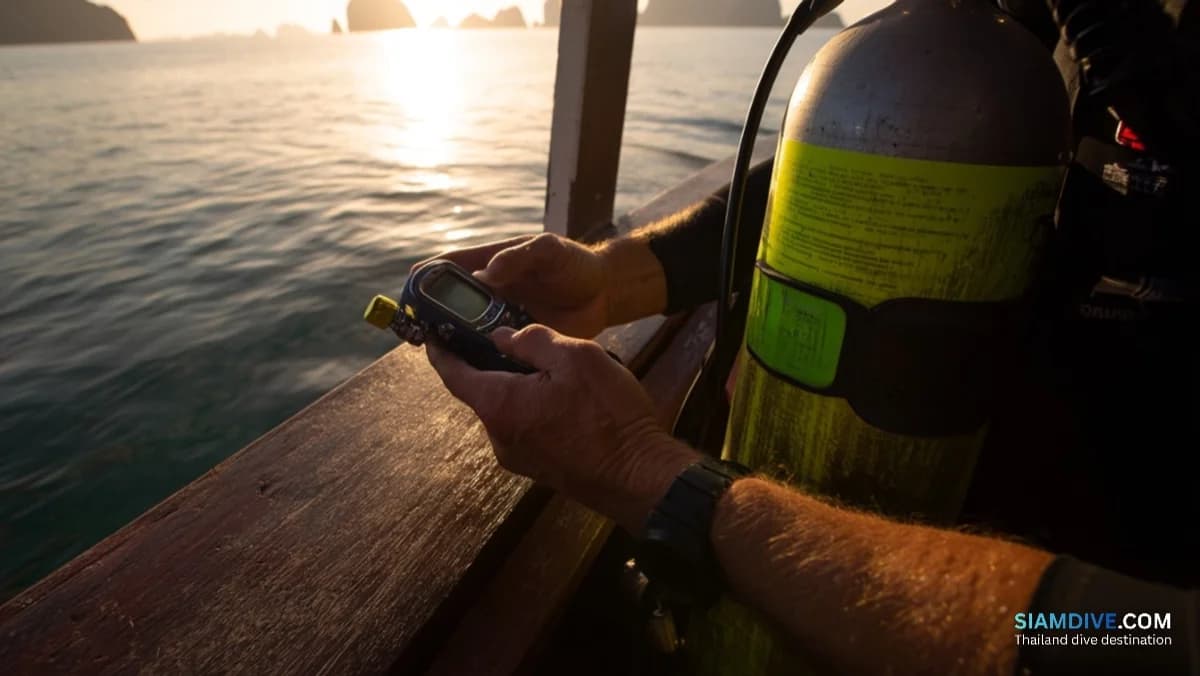
The fix: Analyze every tank yourself, every time, before every dive. Calibrate the analyzer against ambient air (20.9 percent) first. Log the reading. Mark the tank with your initials, the date, and the measured FO₂. This takes ninety seconds. Skipping it gambles with a depth ceiling you cannot see underwater.
Diving Below the 34-Metre Ceiling
New nitrox divers sometimes think of enriched air as "air plus extra bottom time" — and then plan dives to 40 metres the way they would on regular air. The problem is physics. More oxygen in the mix means the partial pressure of oxygen climbs faster with depth. At 1.4 bar PPO₂ — the recreational limit every training agency agrees on — EAN32 hits its maximum operating depth at 33.7 metres.
The formula fits on a slate:
- MOD formula
- MOD (metres) = 10 × [(PPO₂ max ÷ FO₂) − 1]
- EAN32 at 1.4 bar
- 10 × [(1.4 ÷ 0.32) − 1] = 33.7 metres
- EAN32 at 1.2 bar (conservative)
- 10 × [(1.2 ÷ 0.32) − 1] = 27.5 metres
Below that ceiling, the risk shifts from nitrogen narcosis to something worse: central nervous system oxygen toxicity. A CNS oxygen hit can cause seizures underwater with little or no warning — no gradual build-up, no reliable early symptoms. DAN's records note that lip twitching, tunnel vision, and anxiety sometimes precede a convulsion, but in many documented cases the seizure arrives without any precursor at all. A convulsion at depth with a regulator in your mouth is not a recoverable event without a trained buddy right beside you.
The fix: Treat your MOD as a hard ceiling, not a guideline. If the dive plan calls for depths beyond 34 metres, switch to air for that dive and save the nitrox for the shallower second dive where it actually earns its keep.
Forgetting to Reset the Computer
This one is embarrassingly common and potentially the most dangerous mistake on the list. After a day of nitrox diving, a diver fills regular air for the next morning — but forgets to switch the computer's gas setting back to 21 percent. Now the unit calculates nitrogen loading as if the diver were breathing 32 percent oxygen and only 68 percent nitrogen, when in reality the air mix carries 79 percent nitrogen. The computer shows generous no-deco limits. The diver trusts the screen. The actual nitrogen absorption runs ahead of every warning the computer would normally give.
The same mistake works in reverse. Set the computer to 21 percent while actually breathing EAN32 and the unit over-estimates nitrogen — which sounds conservative — except it also ignores oxygen tracking entirely. The CNS clock stays at zero while the real oxygen dose climbs.
The fix: Build a pre-dive ritual. Before you enter the water, check three things: (1) the analyzer reading on the tank, (2) the FO₂ setting on the computer, (3) that those two numbers match. Some divers tape a small reminder sticker to their console. Others pair the gas check with the buddy check — same moment, same routine.
Ignoring the Oxygen Clock on Multi-Dive Days
Three dives on EAN32 at 22 metres, 60 minutes each. The no-decompression limits are generous — that is the whole point of the mix. But oxygen exposure accumulates. Every training agency teaches the CNS oxygen clock: a running tally of how much oxygen your central nervous system has absorbed, expressed as a percentage of the single-exposure limit.
On a single dive at recreational depths, the CNS clock rarely passes 20 percent. Stack three or four dives in a day — standard on a Similan day trip or a liveaboard schedule — and the clock starts to matter. Most modern dive computers track CNS automatically, but only if the FO₂ is set correctly (see the computer-reset mistake above). Older units may not track it at all.
NOAA's updated diving standards, expected in final form by early 2026, have proposed doubling safe exposure times at a PPO₂ of 1.3 bar — a recognition that the original limits were conservative. But even with expanded tables, the principle holds: oxygen dose is cumulative, and four dives in a day add up.
The fix: Check your CNS percentage on the computer's summary screen between dives. If it climbs above 75 percent, consider switching to air for the final dive of the day or extending your surface interval. On a four-dive liveaboard day, plan the deepest dive first and save the shallowest for last — this minimises both nitrogen and oxygen loading across the sequence.
Believing Nitrox Eliminates Decompression Risk
The marketing writes itself: "breathe nitrox, dive longer, feel better after." All three claims contain truth. EAN32 does extend no-decompression limits. Many divers report less fatigue after a nitrox day compared to an air day at the same depths. But none of this means decompression sickness cannot happen on nitrox.
Enriched air reduces the fraction of nitrogen you breathe — from 79 percent on air to 68 percent on EAN32. That slower nitrogen uptake extends your NDL. It does not eliminate nitrogen absorption. A diver who pushes the extended limits to their edge on every dive, skips surface intervals, and stacks deep profiles is still loading nitrogen — just slightly less of it per minute. DCS has occurred in divers breathing nitrox who stayed within their computer's limits.
The comparison at typical Thai recreational depths tells the story:
- 18 metres — air: ~56 min NDL / EAN32: ~95 min NDL
- 22 metres — air: ~37 min NDL / EAN32: ~60 min NDL
- 30 metres — air: ~20 min NDL / EAN32: ~30 min NDL
The extra time is real and substantial — especially in the 18-to-25 metre band where most Thai dive sites sit. But it is extra time within limits, not a licence to ignore them. The smartest use of nitrox is to dive on the EAN32 table while staying within the air NDL. That builds a safety margin your computer cannot calculate but your body will appreciate after three days of back-to-back diving.
Where the 32 Percent Actually Pays Off
Think of nitrox the way a cyclist thinks of a lighter wheelset. It does not make you faster in every situation — on a flat sprint, the difference is negligible. But on a long climb, where every gram compounds, the advantage is unmistakable.
The "long climb" for nitrox is repetitive diving in the 15-to-30 metre band. A three-dive day on a Similan liveaboard — Elephant Head at 28 metres, Koh Bon Pinnacle at 24 metres, East of Eden at 18 metres — leaves an air diver with progressively shorter NDLs on each dive. The EAN32 diver, assuming correct setup and honest depth discipline, carries 30 to 50 percent more no-deco time into each profile. By the third dive, the gap between "gas limited" and "NDL limited" becomes the difference between a ten-minute cut-short and a full 55-minute exploration.
Multi-day trips amplify the benefit. Less residual nitrogen between days means the morning dive on day three feels the same as the morning dive on day one — no creeping conservatism from accumulated tissue loading.
Getting Certified in Thailand
The Enriched Air Diver specialty is the shortest certification most agencies offer. PADI and SSI versions can both be completed in a single day — sometimes in an afternoon if you finish the e-learning module beforehand. No pool work is required. The core curriculum covers gas analysis, MOD calculation, oxygen tracking, and dive planning with enriched air. Some operators include two open-water dives on nitrox; others offer a theory-only option at a lower price.
On Koh Tao, prices range from roughly 4,000 to 7,500 baht depending on the operator and whether open-water dives are included. Theory-only options sit around 5,500 to 6,000 baht. Khao Lak and Phuket operators charge similar rates. For liveaboard trips — where nitrox fills are available on board — many boats bundle the certification into the trip package or offer it at a modest surcharge.
One practical note: not every fill station in Thailand carries nitrox. Koh Tao, Koh Lanta, Phuket, and Khao Lak all have reliable supply. Smaller islands and remote day-trip operations may not. Check availability before you plan a nitrox-only trip.
The Ninety-Second Rule
Every mistake on this list traces back to the same root: rushing the setup. Analyze the tank. Check the computer. Verify the match. Log the reading. Ninety seconds of attention on the surface prevents every error that enriched air can create underwater. Nitrox is not complicated — it is just unforgiving of shortcuts.