Your Wetsuit Stinks: The Complete Care Guide That Actually Works
16 เมษายน 2569
From rinsing after every dive to patching neoprene tears, this no-nonsense guide covers everything you need to keep your wetsuit fresh, flexible, and lasting years longer.
Why Wetsuit Care Matters More Than You Think
A quality wetsuit is one of the most expensive pieces of dive gear you'll own — and one of the easiest to destroy through neglect. Saltwater, UV rays, body oils, and bacteria wage a silent war on neoprene every time you dive. The good news? A few simple habits after each session can double or triple your wetsuit's lifespan, keeping it flexible, warm, and odor-free for years.
Whether you dive in tropical Thailand or temperate European waters, this guide covers everything from the post-dive rinse to knowing when it's finally time to retire your trusted suit.
The Post-Dive Rinse: Your Most Important Habit
The single best thing you can do for your wetsuit is rinse it in cool freshwater immediately after every dive. Salt crystals, chlorine, sand, and organic matter begin breaking down neoprene fibers within hours if left to dry on the suit.
Step-by-step:
- Turn the wetsuit inside out as soon as you take it off.
- Rinse thoroughly with cool or lukewarm freshwater — never hot water, which degrades neoprene elasticity.
- Pay extra attention to the zipper, underarms, and crotch area where salt and body oils accumulate.
- If you can't rinse immediately, soak the suit in a tub or bucket of freshwater for 15–30 minutes.
Pro tip: Fill a large plastic tub at your dive site and dunk the suit before you drive home. Even a quick soak is far better than letting salt dry into the fabric.
Deep Cleaning: Wetsuit Shampoo & Deodorizing
A freshwater rinse handles day-to-day maintenance, but every 4–6 uses (or monthly for regular divers), your wetsuit needs a proper deep clean.
What to use:
- Wetsuit shampoo (brands like Gear Aid Revivex, McNett, or Rip Curl) — specifically formulated for neoprene.
- Baby shampoo — a gentle, affordable alternative that won't damage neoprene.
- Never use: dish soap, laundry detergent, bleach, or regular shampoo. These strip the neoprene's flexibility and waterproof coating.
How to deep clean:
- Fill a bathtub or large bucket with cool water.
- Add a capful of wetsuit shampoo or a few drops of baby shampoo.
- Turn the wetsuit inside out and submerge it completely.
- Gently agitate and massage the suit for 2–3 minutes, focusing on high-odor zones.
- Let it soak for 15–30 minutes.
- Drain and rinse thoroughly with fresh cool water.
Critical rule: Never machine wash your wetsuit. The agitation and spin cycle will destroy seams, stretch the neoprene, and ruin the suit in a single cycle. Never wring it out either — gently squeeze excess water and let gravity do the rest.
Drying Your Wetsuit the Right Way
How you dry your wetsuit is just as important as how you wash it. UV radiation and heat are neoprene's worst enemies after salt.
The correct method:
- After rinsing, leave the suit inside out.
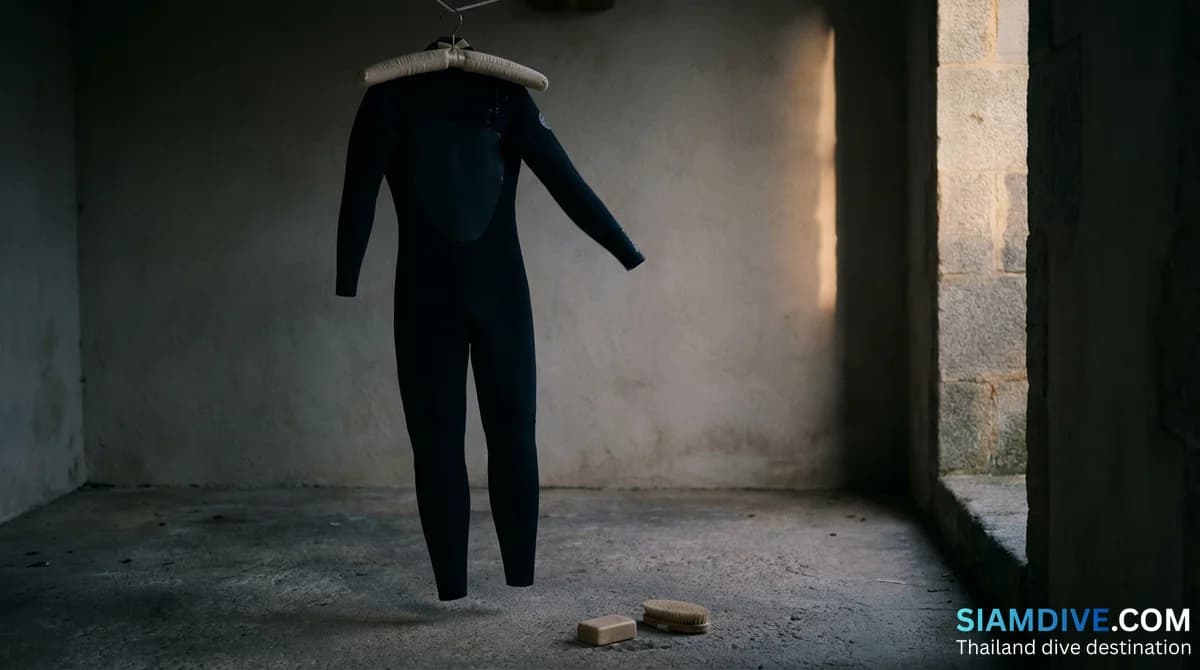
- Drape it over a wide, padded hanger or fold it at the waist over a thick rail or line. Never use thin wire hangers — they create stress points that stretch and tear the shoulders.
- Dry in complete shade with good airflow. Never in direct sunlight.
- Once the inside is fully dry, flip the suit right-side out and let the exterior dry the same way.
What to avoid:
- Direct sunlight: UV rays break down neoprene, causing it to stiffen, crack, and lose elasticity.
- Tumble dryers: The heat will literally cook your suit.
- Car trunks and dashboards: Temperatures inside a parked car can exceed 60°C — enough to permanently warp neoprene.
- Hanging from the neck: This stretches the collar and shoulders under the suit's wet weight.
Storage: Flat or Hung, Never Folded
Long-term storage habits make or break your wetsuit's shape and flexibility.
Best options:
- Wide, padded hanger in a cool, dark closet — the gold standard. Purpose-built wetsuit hangers distribute weight evenly across the shoulders.
- Laid flat on a shelf or clean surface — ideal if you don't have a good hanger.
Never:
- Fold your wetsuit tightly — creases become permanent weak points where the neoprene compresses and cracks.
- Stuff it into a bag, drawer, or gear bin.
- Store it in direct sunlight or near heat sources.
- Leave it damp — always ensure the suit is 100% dry before storage.
Tropical humidity tip: If you store your wetsuit in a humid tropical climate (like Thailand or Indonesia), consider placing silica gel packets nearby or storing it in a room with air conditioning or a dehumidifier. High humidity promotes mold and mildew growth inside neoprene, which causes persistent odors and can degrade the glue in seams. Check stored suits monthly during the off-season.
Zipper Care: The Overlooked Weak Point
Wetsuit zippers endure enormous stress and are one of the first components to fail. A little preventive care goes a long way.
Maintenance routine:
- Rinse the zipper with freshwater after every dive, working the slider back and forth to flush out sand and salt.
- Lubricate regularly with beeswax, paraffin wax, or a dedicated zipper lubricant. Run the wax along the teeth, then work the slider through to distribute it evenly.
- Never force a stuck zipper. If it jams, stop, rinse it, apply wax, and try again gently. Forcing it can strip the teeth or tear the surrounding neoprene.
- When putting on or removing your suit, have a buddy help with back zippers rather than reaching and yanking at awkward angles.
Smell Prevention & Removal
That legendary wetsuit stench comes from bacteria feeding on trapped sweat, body oils, and — let's be honest — urine. Prevention is far easier than treatment.
Prevention:
- Rinse inside out after every single dive (yes, every single one).
- Deep clean with wetsuit shampoo monthly.
- Dry completely before storage — bacteria thrive in damp, dark neoprene.
- Use the toilet before you suit up (your dive buddies will thank you).
If the smell has already set in:
- Enzyme-based cleaner (like Gear Aid Revivex or Sink the Stink): These break down the organic compounds that cause odor at the molecular level. Soak for 20–30 minutes.
- White vinegar soak: Mix one cup of white vinegar per 5 liters of cool water. Soak for 30 minutes, then rinse thoroughly. The vinegar smell disappears once the suit dries.
- Baking soda paste: For stubborn spots, make a paste with baking soda and water, apply to affected areas, let sit for 15 minutes, then rinse.
Never use bleach or harsh chemicals — they'll kill the smell but also kill the neoprene.
Repairing Small Tears & Damage
Minor cuts, tears, and punctures are inevitable but surprisingly easy to fix at home.
For small tears (under 5 cm / 2 inches):
- Clean and dry the damaged area completely.
- Open the tear and apply a thin, even layer of neoprene cement (Aquaseal, Black Witch, or Gear Aid) to both sides of the tear.
- Let the cement become tacky (about 3–5 minutes, depending on the brand).
- Press the surfaces firmly together and hold for 30–60 seconds.
- Let cure for at least 12–24 hours before using the suit.
For seam separation: Apply neoprene cement along the inside of the separated seam, press together, and let cure. For extra strength, apply a strip of seam tape over the repair.
When to go to a professional: Tears longer than 5 cm, damage near the zipper, large seam failures, or holes in high-stress areas (knees, elbows) are best handled by a professional wetsuit repair service.
When to Replace Your Wetsuit
Even the best-maintained wetsuit has a finite lifespan. Here are the signs it's time to retire yours:
- Loss of flexibility: If the neoprene feels stiff and doesn't stretch easily, the material has degraded beyond recovery.
- Permanent compression: Press the neoprene with your thumb — if it doesn't spring back quickly, the gas cells that provide insulation have collapsed.
- Loose fit: A wetsuit that used to fit snugly but now feels baggy has lost its elastic memory. Water will flush through, eliminating thermal protection.
- Persistent smell: If deep cleaning and enzyme treatments can't eliminate the odor, bacteria have penetrated too deep into the neoprene structure.
- Visible UV damage: Fading, chalking, cracking, or flaking on the exterior surface indicates serious UV degradation.
- Multiple repairs: If your suit has more patches than original material, it's time.
- Age: With good care, a quality wetsuit lasts 3–5 years of regular use. Heavy use (4+ dives per week) shortens this to 1–2 years.
Tropical vs. Temperate Care: Key Differences
Where you dive affects how you should care for your suit.
Tropical environments (Thailand, Philippines, Caribbean):
- Higher bacterial growth rate — rinse and dry promptly after every dive.
- Intense UV exposure — shade drying is even more critical.
- Humidity promotes mold during storage — use dehumidifiers or air-conditioned storage.
- Thin suits (1–3mm) dry faster but are more delicate — handle gently.
- Rinse more frequently due to sunscreen contamination, which can degrade neoprene.
Temperate environments (Europe, Japan, California):
- Thicker suits (5–7mm) take longer to dry — allow extra time and ensure complete drying before storage.
- Cold water is actually gentler on neoprene than tropical warmth.
- Salt concentration can be higher in some temperate waters — thorough rinsing is essential.
- Off-season storage may last months — ensure the suit is completely dry and stored properly.
The bottom line: Your wetsuit is a significant investment in dive comfort and safety. A 5-minute post-dive care routine and proper storage habits are all it takes to keep your neoprene performing at its best for years. Treat it well, and it'll return the favor every time you enter the water.
Ready to plan your next dive? Browse dive trips and destinations at siamdive.com — and show up with a wetsuit that's as fresh as day one.