Scuba Day TripsSnorkelingLand TourLiveaboardDive ResortFreedive Trips
Scuba CoursesFreedive Courses
Blog
I'm Afraid of the Ocean — Can I Still Learn to Dive?
← Blog

I'm Afraid of the Ocean — Can I Still Learn to Dive?

16 เมษายน 2569

Anxious about scuba diving? You are not alone. Learn how fear, claustrophobia and panic are gently managed by patient instructors, breathing techniques and Discover Scuba trials.

If your heart races at the thought of putting your face in the ocean, please breathe — you are in the right place, and you are very, very not alone. The honest truth is that most new divers show up nervous. Fear of drowning, of being far from the surface, of something brushing their leg, of a mask pressing on their face — these feelings are so common that any good instructor will simply nod, smile, and slow everything down for you.

This guide is for the anxious reader: the one who wants to try scuba diving but is quietly terrified. We will walk through what is fear, what is phobia, what science says about panic underwater, and what you can realistically ask for from a dive school on a first lesson.

Fear vs. Phobia — Which One Do You Have?

Most pre-dive anxiety is ordinary fear of the unknown. Fear responds beautifully to practice and information. After twenty minutes of breathing through a regulator in shallow water, most first-timers visibly relax. A true phobia — an uncontrollable, body-shaking terror even at the thought — is different and may need therapy (CBT, EMDR) before the pool. If you are unsure, book a Discover Scuba trial and see how your body reacts in chest-deep water. Your nervous system will tell you.

The Most Common Fears — and Why They Fade

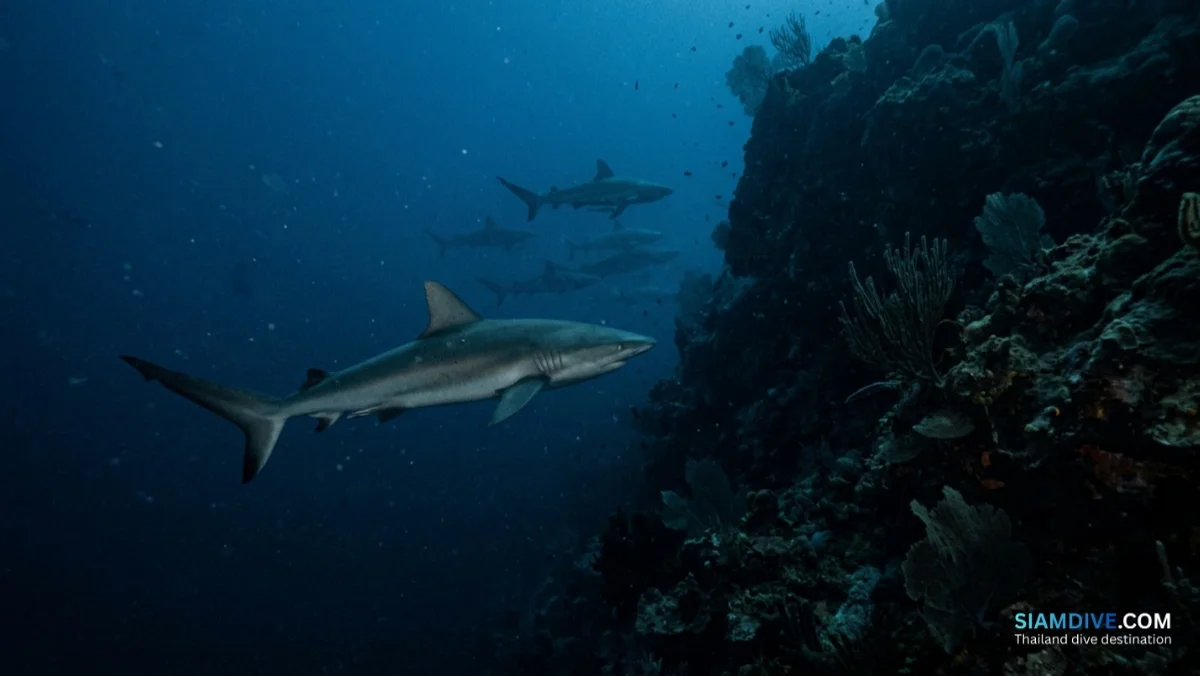
Divers report the same short list: drowning, running out of air, sharks, getting stuck, pressure headaches, and panic. Each one has a real answer. You cannot drown while breathing from a working regulator. Your gauge is checked every few minutes by both you and your instructor. Sharks in most tropical waters ignore divers. Open-water scuba has no walls — you can swim up at any time (slowly). Pressure equalises with a gentle pinch of the nose. And panic is prevented by the one thing you are already doing right now: breathing.

The Science of Underwater Panic

When we are anxious, we take short, shallow breaths. Underwater, shallow breathing traps carbon dioxide in the lungs, which your brain reads as suffocation — even though your tank is full. The fix is beautifully simple: long, slow exhales. Empty the lungs fully and the panic signal dissolves. This is why every dive professional chants the same mantra: breathe slow, breathe deep, never hold your breath.

Claustrophobia: Real vs. Imagined

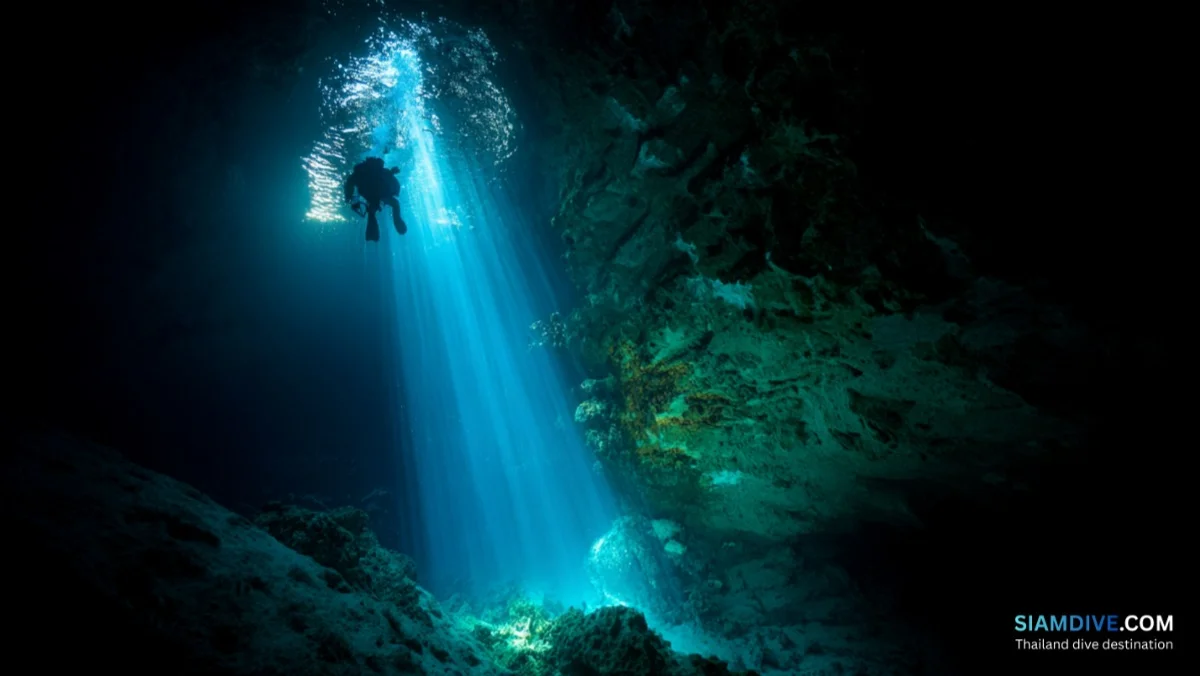
Standard open-water scuba gear is surprisingly open. There are no walls, no ceilings, no helmet sealing your face. You wear a soft silicone mask over your eyes and nose, a mouthpiece, and a wetsuit. The sea itself is the opposite of a closed space — it stretches endlessly around you. The equipment that can trigger claustrophobia — full-face masks, drysuits, hoods, cave overhead environments — is optional and not used in a beginner ocean dive in Thailand. If you know you are claustrophobic, tell your instructor: they will skip the hood and use a low-volume mask with a wide field of view.

Discover Scuba Diving — The No-Commitment Trial

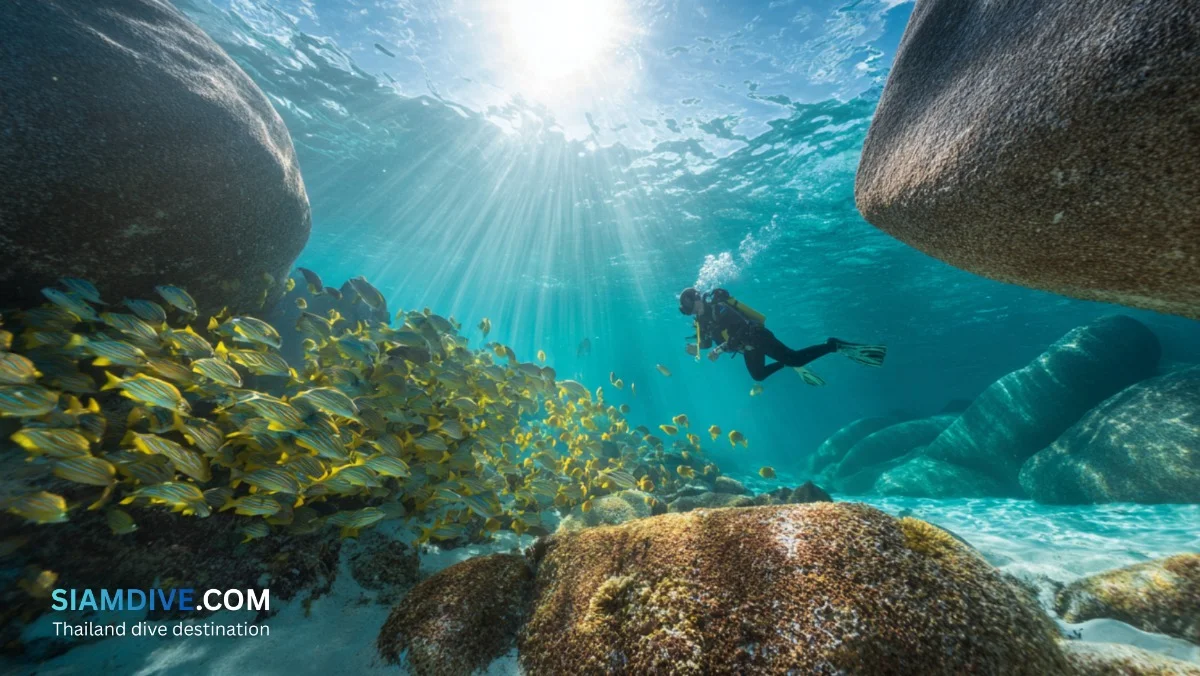
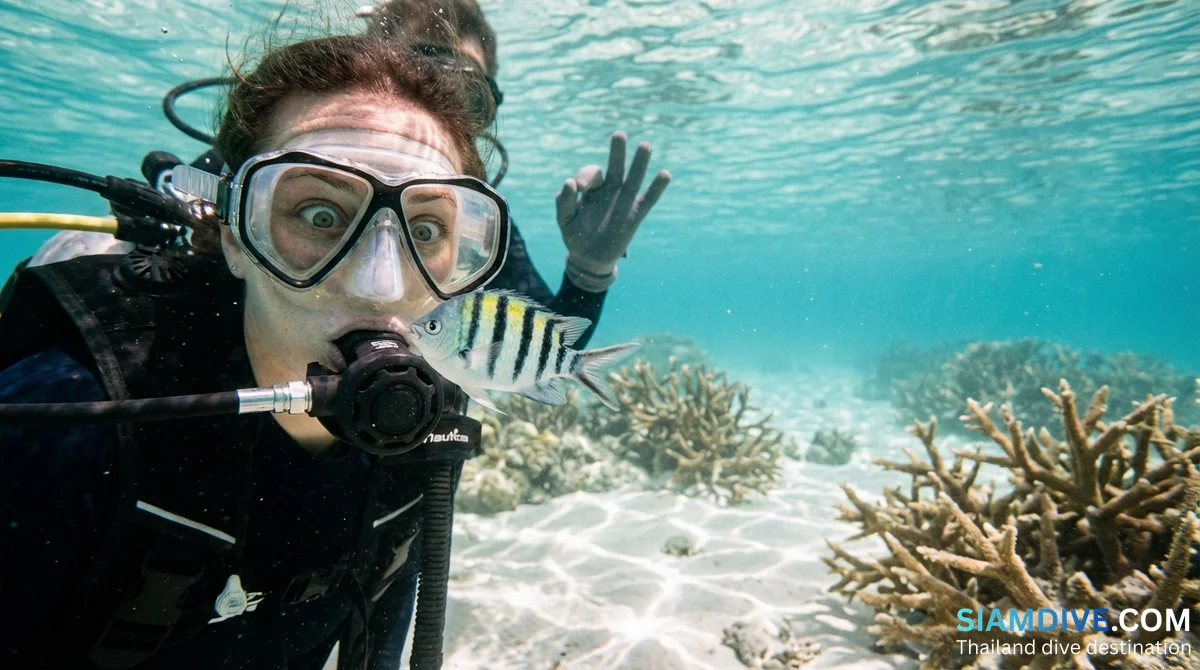
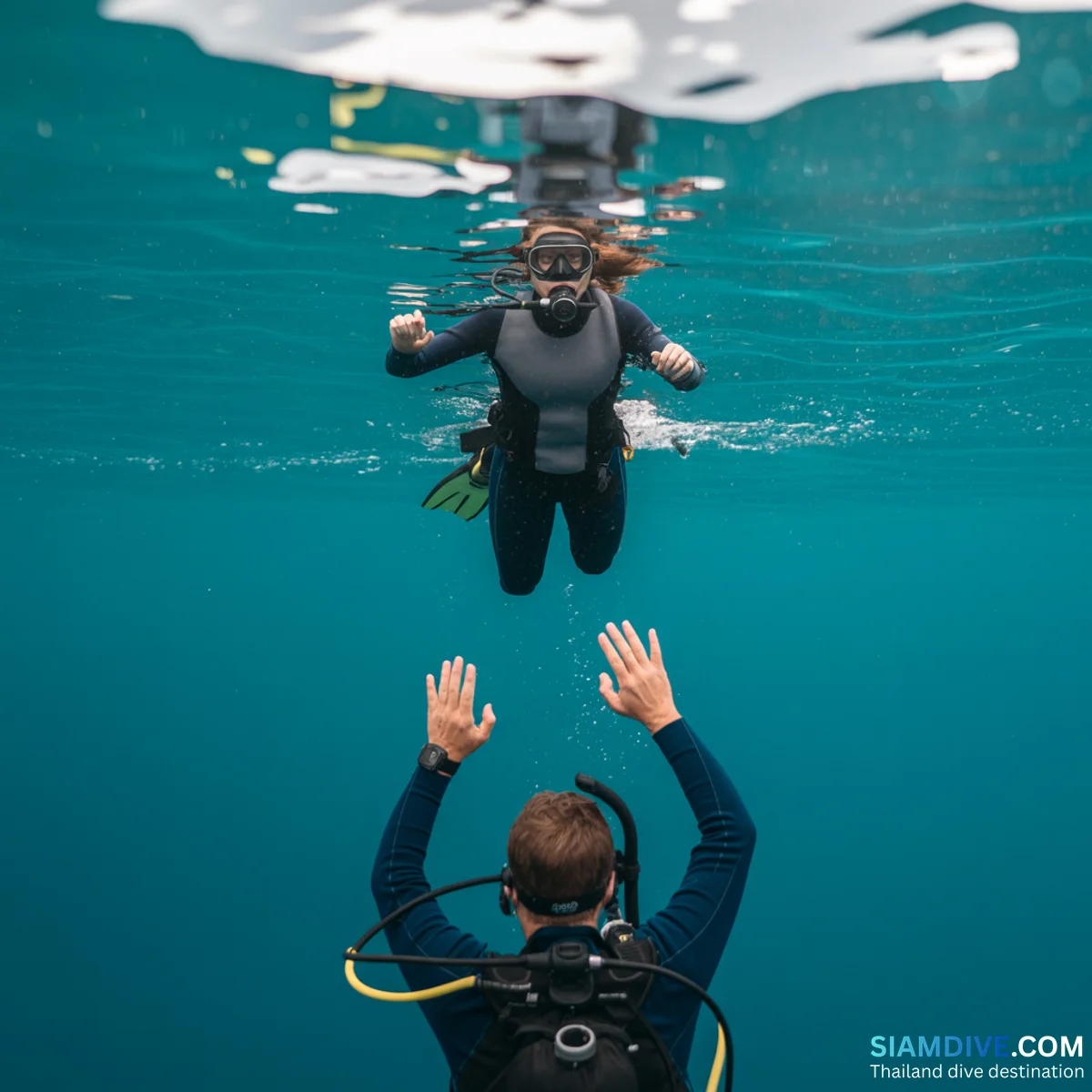
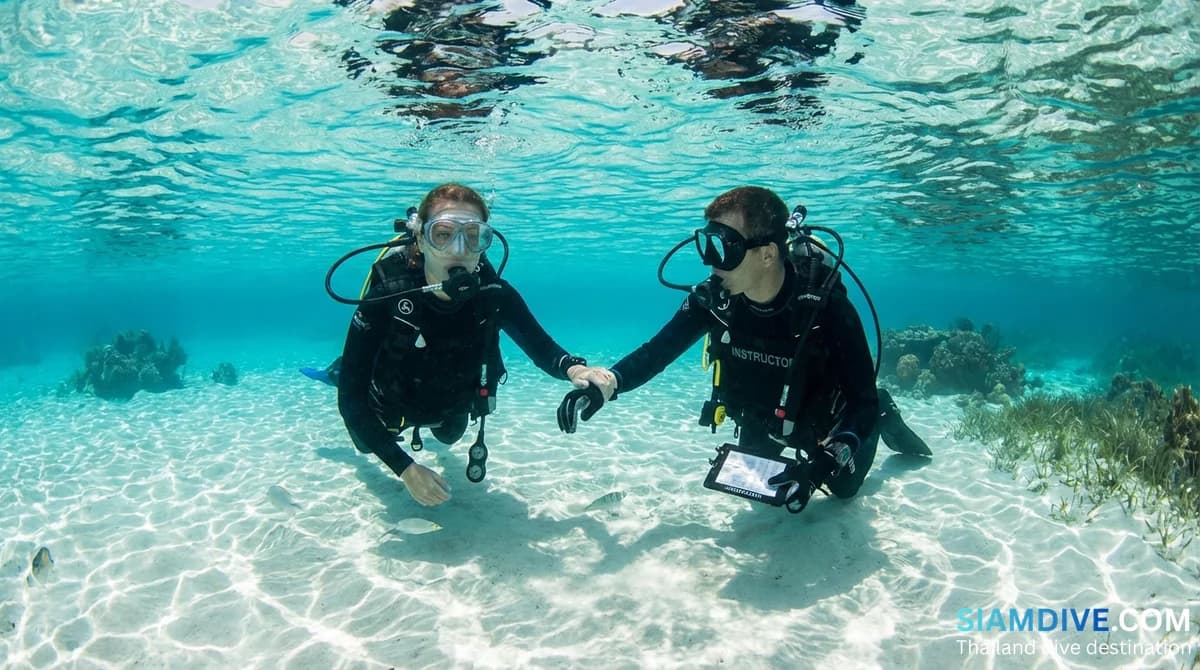
Before signing up for a four-day Open Water certification, try a half-day Discover Scuba Diving session. There is no exam, no homework, no certification pressure. An instructor stays literally within arm's reach for the entire dive, usually no deeper than 6–12 metres. If at any moment you want to stop, you signal and you go up together. Most people come back up grinning and asking when the next dive is. If you don't — you've lost half a day, not four. That is a very fair trade.

Breathing Techniques to Practise at Home

  • Box breathing (4-4-4-4): inhale 4 seconds, hold 4, exhale 4, hold 4. Repeat 5 rounds before your dive briefing.
  • 4-7-8 breathing: inhale 4, hold 7, exhale slowly for 8. Calms the nervous system fast.
  • Long-exhale breathing: inhale for 4, exhale for 6–8. Use this one underwater — it is the single most important habit you can build.
  • Belly breathing: place a hand on your stomach and make it rise before your chest does. Shallow chest-breathing feeds panic; belly-breathing starves it.

What to Ask Your Dive School (Please Ask)

You are the paying customer and you deserve a gentle experience. Before you book, write an email or WhatsApp and say these exact words: "I am nervous about diving. Can I have a private or small-group instructor, start in the pool, and go at my own pace?" A good school — and Siam Dive is one — will say yes without hesitation. A one-on-one instructor costs a little more and is worth every baht if it means the difference between a panic attack and a lifelong passion.

When Diving Is Not (Yet) For You

Please do not feel ashamed if the answer for today is "not yet." Untreated panic disorder, severe water phobia, uncontrolled asthma, and certain ear conditions are valid reasons to pause. Diving will still be there in six months. Talk to a doctor, talk to a therapist, build water confidence first in a local pool, and come back when your body feels ready. No wave, no reef, no fish is worth forcing yourself through trauma for.

You Are Not Broken — You Are Human

Almost every certified diver you will ever meet was scared on their first dive. Many report that the anxiety they carried into the water quietly disappeared somewhere around minute ten, replaced by a kind of weightless awe that is hard to describe on dry land. The ocean does not punish nervous people — it welcomes them gently if they go slow and breathe.

When you are ready, we would be honoured to meet you in the shallows. Visit siamdive.com to send us a message. Tell us your fear. We will listen, we will go slow, and we will be right next to you the whole way.
← กลับไปหน้า Blog

บทความแนะนำ

Hin Daeng & Hin Muang Liveaboard: Thailand's Wildest Walls

Hin Daeng & Hin Muang Liveaboard: Thailand's Wildest Walls

Hin Daeng and Hin Muang are Thailand's deepest soft coral walls — manta rays, whale sharks, and serious current. Here's how to dive them by liveaboard.

Sail Rock Diving Guide: The Gulf of Thailand's Best Pinnacle

Sail Rock Diving Guide: The Gulf of Thailand's Best Pinnacle

Dive Sail Rock (Hin Bai) — the Gulf of Thailand's premier pinnacle with its famous chimney swim-through, whale shark sightings, and massive barracuda schools.

Bida Nok: Where Leopard Sharks Sleep at Your Feet

Bida Nok: Where Leopard Sharks Sleep at Your Feet

Bida Nok near Koh Phi Phi delivers leopard sharks, turtles, and vibrant coral walls on every dive. Here's exactly what to expect at 0-30 meters.

Nudibranchs: 10 Mind-Blowing Facts About the Ocean's Strangest Creatures

Nudibranchs: 10 Mind-Blowing Facts About the Ocean's Strangest Creatures

They steal weapons from their prey, glow in the dark, and breathe through their backs. Here are 10 facts about nudibranchs that will change how you look at every reef.

Koh Ha Yai Diving Guide: The Cathedral Cave and Beyond

Koh Ha Yai Diving Guide: The Cathedral Cave and Beyond

Home to the famous Cathedral cave and chimney swim-through, Koh Ha Yai delivers some of Koh Lanta's most memorable dives. Complete guide inside.

What Makes Thailand Special for Scuba Divers

What Makes Thailand Special for Scuba Divers

Two coasts, year-round warm water, world-class sites you can actually reach, and prices that don't punish you. Here's what really sets Thailand apart for divers.

Hin Phae Diving Guide: Koh Tao's Quiet Granite Pinnacle

Hin Phae Diving Guide: Koh Tao's Quiet Granite Pinnacle

Hin Phae is the small advanced pinnacle 30 m from the Sattakut wreck. Big groupers, healthy coral, and almost no other divers — here's how to dive it.

Southwest Pinnacle Koh Tao Diving Guide: The Gulf's Best Big-Fish Site

Southwest Pinnacle Koh Tao Diving Guide: The Gulf's Best Big-Fish Site

Southwest Pinnacle is Koh Tao's seven-pinnacle offshore site. Whale sharks, dogtooth tuna, and giant groupers — here's how to dive it and when.

The Pre-Dive Buddy Check Most Scuba Divers Skip

The Pre-Dive Buddy Check Most Scuba Divers Skip

Half of all scuba accidents could be prevented by a five-minute BWRAF buddy check. Here's why experienced divers skip it and how to do it right.

Why Learn Scuba Diving: What the Bucket List Version Doesn't Tell You

Why Learn Scuba Diving: What the Bucket List Version Doesn't Tell You

Scuba diving stays on bucket lists for years. Here's what the course actually costs, what you see down there, and why Thailand makes it easy to start.

Surface Intervals: The Boring Part of Diving That Keeps You Alive

Surface Intervals: The Boring Part of Diving That Keeps You Alive

Everything you need to know about surface intervals — why nitrogen off-gassing matters, how long to wait between dives, what to do (and avoid) during your SI, and how dive computers calculate it all for you.

Tanote Bay Koh Tao Guide: Snorkeling, Diving, and Cliff Jumping

Tanote Bay Koh Tao Guide: Snorkeling, Diving, and Cliff Jumping

Tanote Bay on Koh Tao's east coast offers fringing reefs, a cliff jumping rock, and a sunken catamaran — the island's best all-in-one shore day.

7 Mistakes That Ruin Thailand Liveaboard Trips (and How to Dodge Them)

7 Mistakes That Ruin Thailand Liveaboard Trips (and How to Dodge Them)

Wrong boat size, wrong month, hidden fees — the mistakes that wreck Thailand liveaboard trips happen before you leave the pier. Here's how to avoid them.

Andaman Sea vs Gulf of Thailand: Picking Your Dive Region

Andaman Sea vs Gulf of Thailand: Picking Your Dive Region

Compare Thailand's two dive coasts side by side — marine life, visibility, seasons, costs, and which region fits your experience level.

What to Eat Before Diving (And the Meal That Could Ruin It)

What to Eat Before Diving (And the Meal That Could Ruin It)

Your pre-dive meal matters more than you think. Learn the best foods, hydration tips, and what to avoid before scuba diving to stay safe and comfortable underwater.

Phuket vs Koh Tao vs Khao Lak: Which Thai Dive Base Fits You?

Phuket vs Koh Tao vs Khao Lak: Which Thai Dive Base Fits You?

Honest 2026 comparison of Thailand's three big dive hubs — real prices, boat times, dive seasons, and a pick-yours matrix. No hype, no bias.

7 Phuket Dive Sites That Prove You Don't Need a Liveaboard

7 Phuket Dive Sites That Prove You Don't Need a Liveaboard

Leopard sharks, a 85m wreck, and technicolor limestone pinnacles—all under 2 hours from Chalong Pier. Here's every day-trip dive site around Phuket.

Green Rock Koh Tao Diving Guide: The Island's Best Swim-Through Site

Green Rock Koh Tao Diving Guide: The Island's Best Swim-Through Site

Green Rock off Koh Nang Yuan offers Koh Tao's best boulder maze, The Chimney swim-through, dense macro life and advanced training — here's everything divers need.

Your First Dive in Phuket: What No One Tells You

Your First Dive in Phuket: What No One Tells You

Never dived before? Here's the honest lowdown on Discover Scuba in Phuket — what day 1 really looks like, what to skip, and how to pick a shop that won't scare you.

The 15-Minute Post-Dive Rinse That Doubles Your Gear's Life

The 15-Minute Post-Dive Rinse That Doubles Your Gear's Life

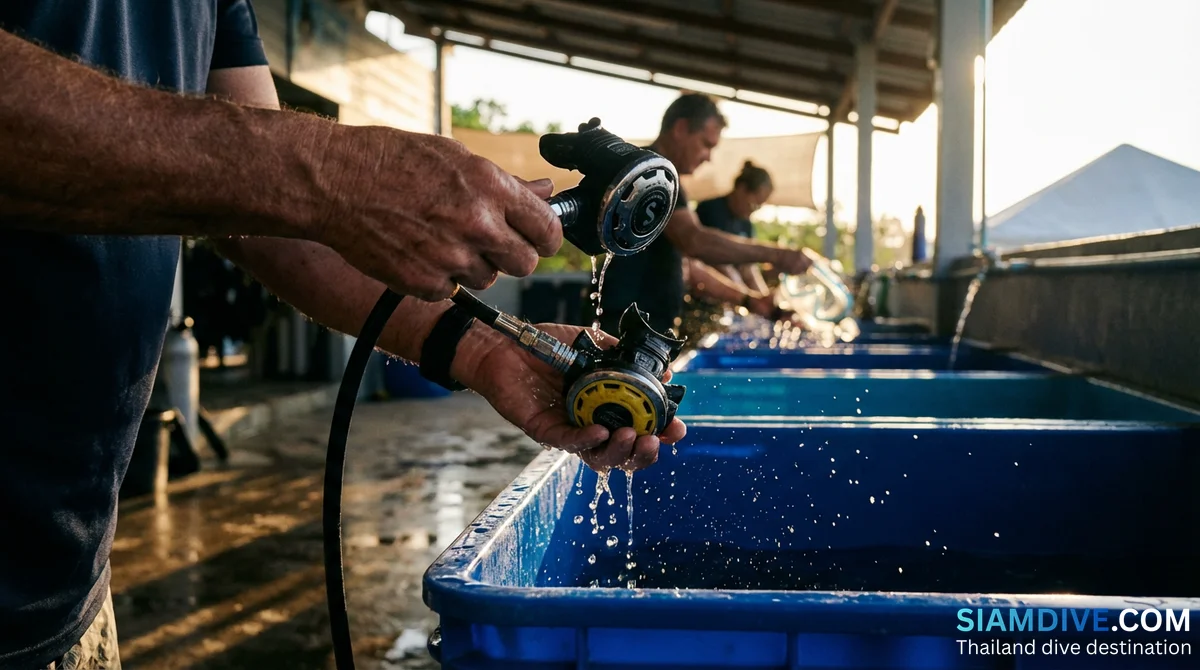
Master the complete 15-minute post-dive rinse protocol for every piece of scuba equipment. From regulator dust caps to BCD bladder flushes, this step-by-step routine prevents corrosion and extends gear life.

ทริปแนะนำ

Hug Ocean Boat
daytrip

Hug Ocean Boat

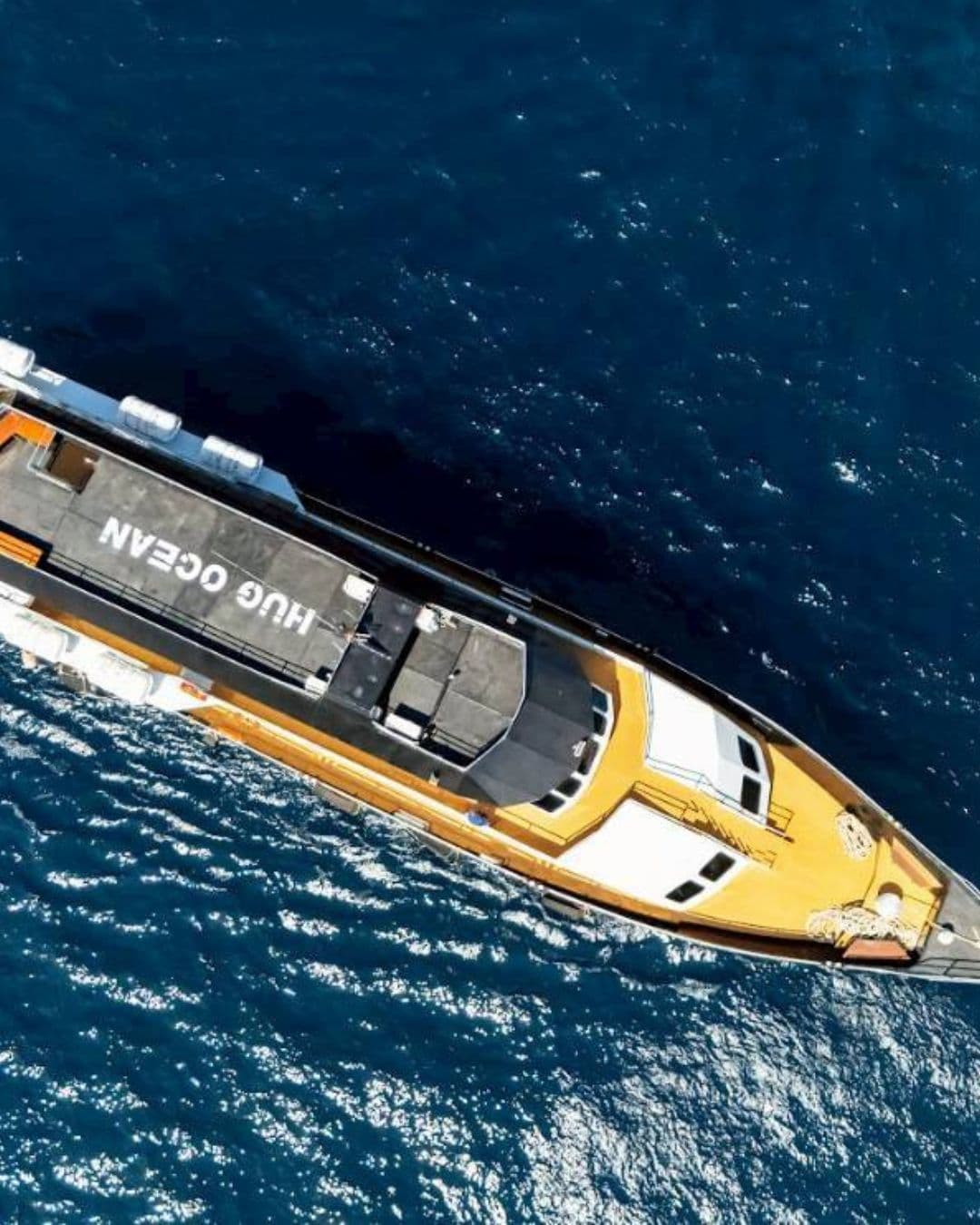
Discover Phuket's Andaman Sea aboard Hug Ocean — a luxury 3-deck dive yacht for 80 guests with a thrilling water slide, sun-soaked top deck, and PADI-certified diving at Racha Yai and Racha Noi.

Aquarian Liveaboard
liveaboard

Aquarian Liveaboard

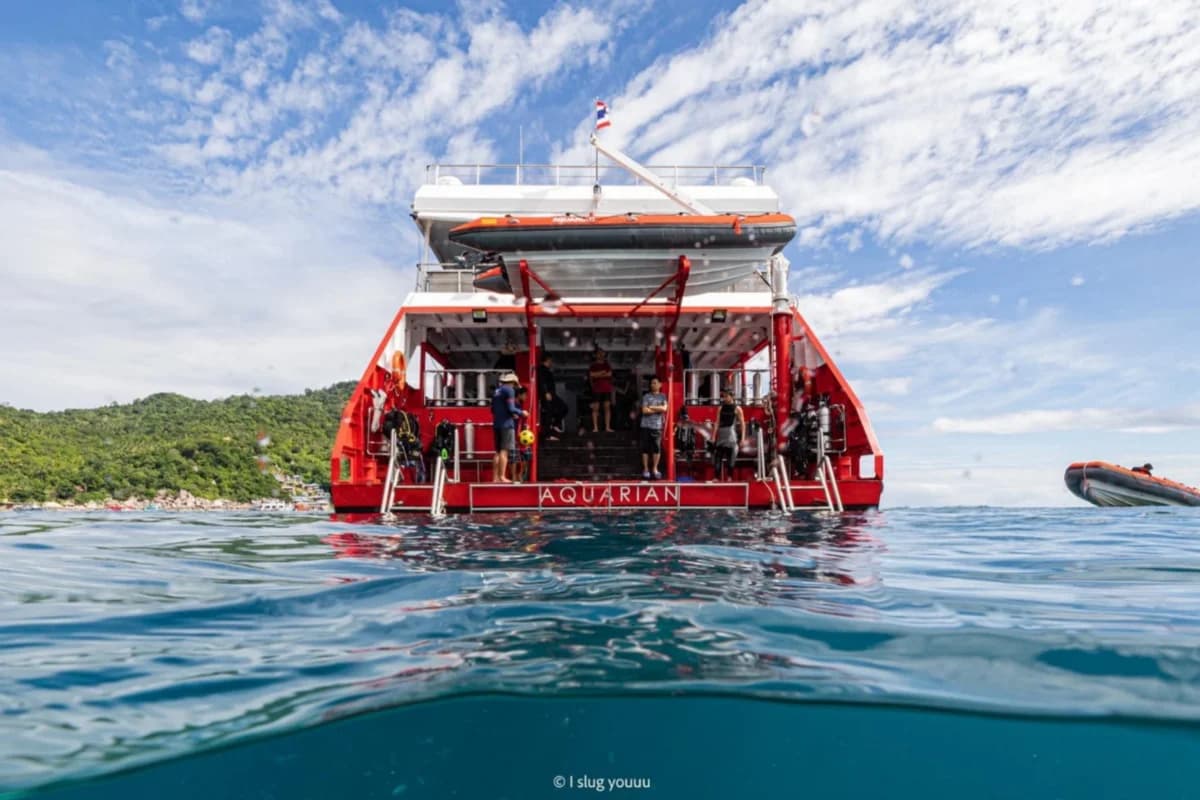
MV Aquarian — striking 2021-built red steel liveaboard, 31.4 m × 7.5 m, max 28 guests in 14 cabins. Free unlimited Nitrox via Coltri Sub membranes, one of Thailand's largest dive platforms, and full premium-hotel comfort.

Issara Liveaboard
liveaboard

Issara Liveaboard

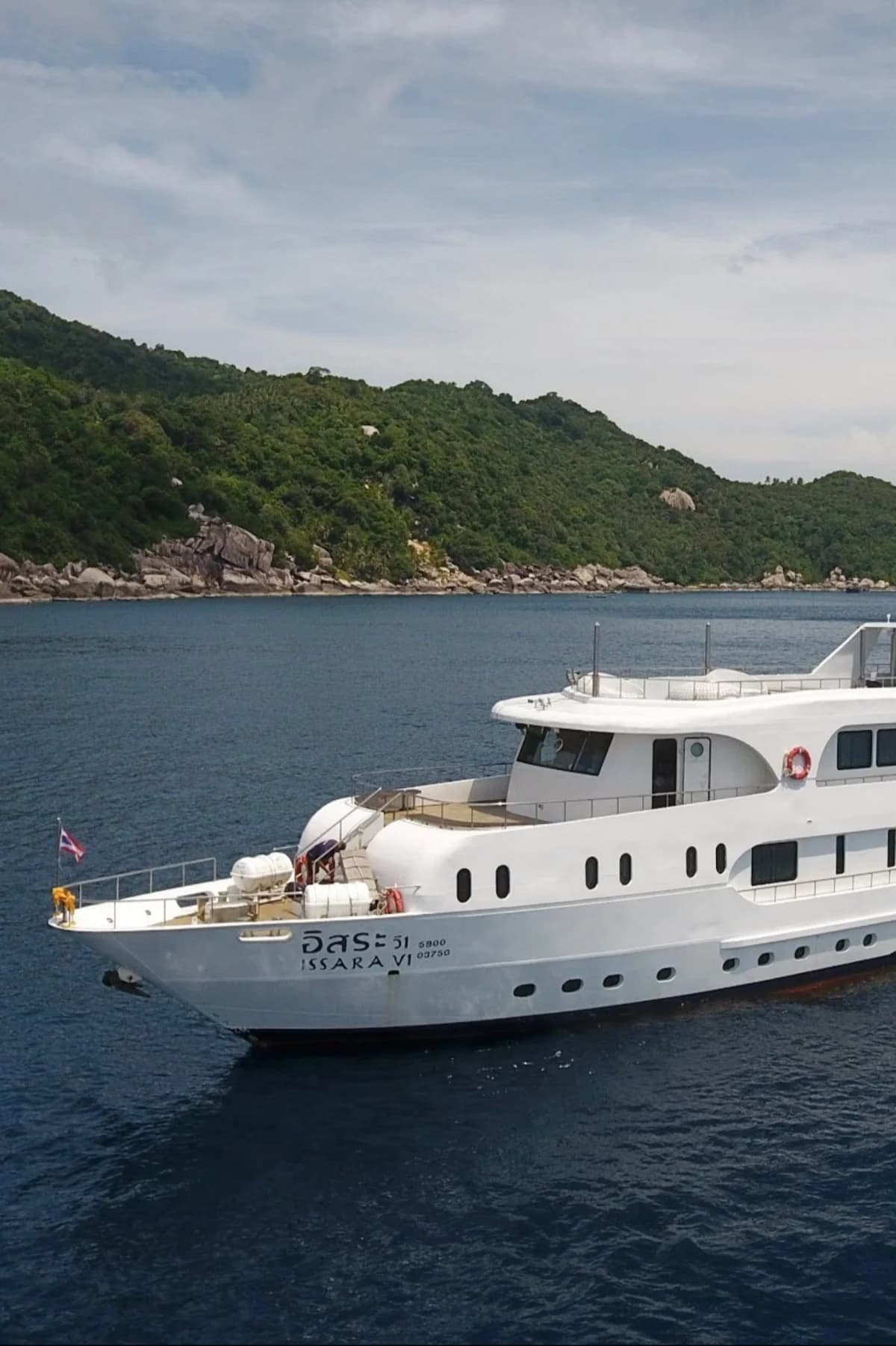
MV Issara — high-end Thai steel-hulled liveaboard built 2016–17, 28.5 m × 6.5 m, 4 decks, max 22 guests in 11 hotel-style cabins. Indoor saloon, jacuzzi sun deck, full-board buffet dining.

Mandarin Queen 5
daytrip

Mandarin Queen 5

Brand-new Phuket dive boat — 26.2 m M/V Mandarin Queen 5 with spacious dive platform, lounge and upper sun deck. Daily day trips to King Cruiser Wreck, Shark Point, Anemone Reef, Racha Yai and Racha Noi.