Scuba Day TripsSnorkelingLand TourLiveaboardDive ResortFreedive Trips
Scuba CoursesFreedive Courses
Blog
Why Learn Scuba Diving: What the Bucket List Version Doesn't Tell You
← Blog

Why Learn Scuba Diving: What the Bucket List Version Doesn't Tell You

15 เมษายน 2569

Scuba diving stays on bucket lists for years. Here's what the course actually costs, what you see down there, and why Thailand makes it easy to start.

You Keep Saying "Maybe Next Year"

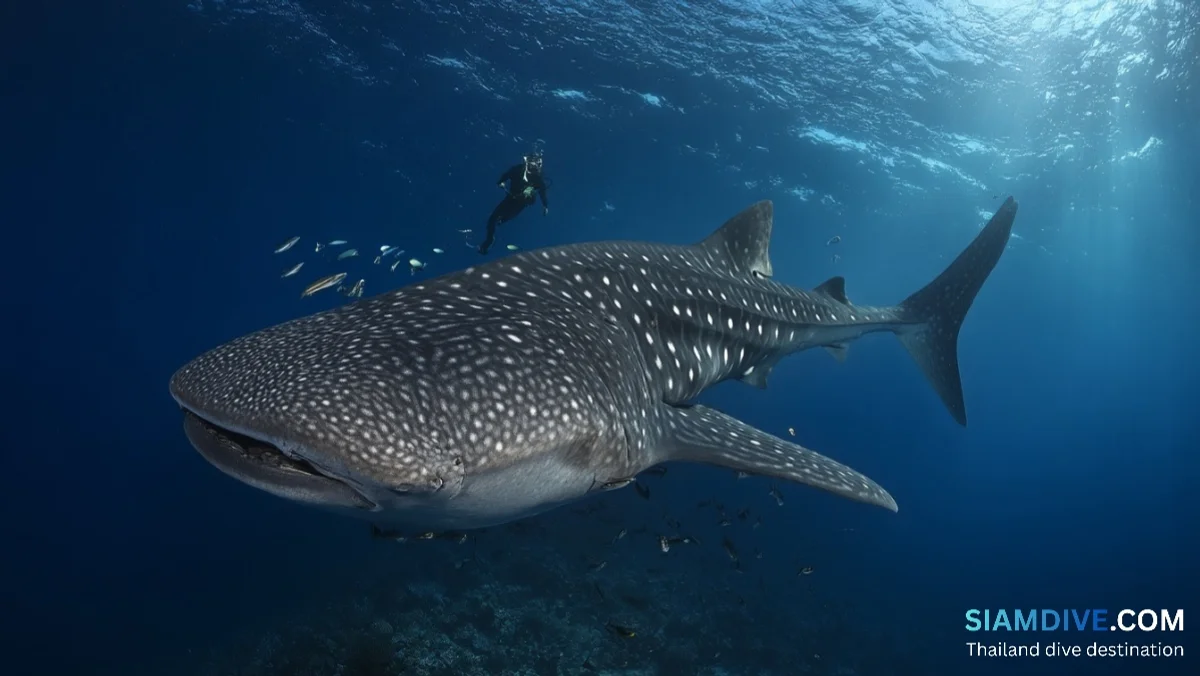
Scuba diving sits on a lot of bucket lists and never gets crossed off. The usual story: you went snorkeling once, you thought about a course, you got busy, another year passed. Meanwhile friends come back from Phuket with photos of whale sharks they swam next to, and you are watching it on a phone screen. The gap between "I'd love to try it" and actually booking the course is smaller than it feels. Most of the reasons you haven't started yet dissolve once you understand what the course actually involves.

This is not a pitch to convince you that diving is life-changing. It can be, but that is not the point. The point is that the reasons to learn are more practical than the Instagram version makes it look, and the barriers are lower than you think.

What You Actually Get Out of It

A 30-minute recreational dive burns around 400-600 calories depending on water temperature and workload — roughly the same as an hour of moderate cycling. You breathe slowly and deliberately because fast breathing wastes air, which is why divers describe the experience as forced meditation. Heart rate drops. Your focus narrows to what is in front of you and the next breath. People who struggle to sit still on a yoga mat find they can do 45 minutes underwater without noticing the time.

The less obvious benefit is spatial awareness. You learn to move in three dimensions, manage your body in neutral buoyancy, and stay calm while solving problems — a mask flood, a cramp, a buddy separation. That mindset carries out of the water. Divers talk about being calmer under pressure in general, and it is not imaginary.

The Course Is Not What You Think

Open Water takes three to four days. One day of video and theory (you can do this online before you arrive, which most shops recommend), one or two days in a pool or shallow bay learning skills like clearing your mask and sharing air, and two days doing four dives in the open water. Total cost in Thailand runs 11,000-15,000 THB at a decent shop, roughly $320-430 including gear, manuals, and certification. That is cheaper than a week of yoga retreats, a new bike, or a good dinner-and-show weekend.

You do not need to be an athlete. You need to swim 200 meters (any stroke, no time limit) and tread water for 10 minutes. That is about six laps of a standard pool at your own pace. Non-swimmers often fail at this, but weak swimmers pass it comfortably on the first try.

What You Actually See Down There

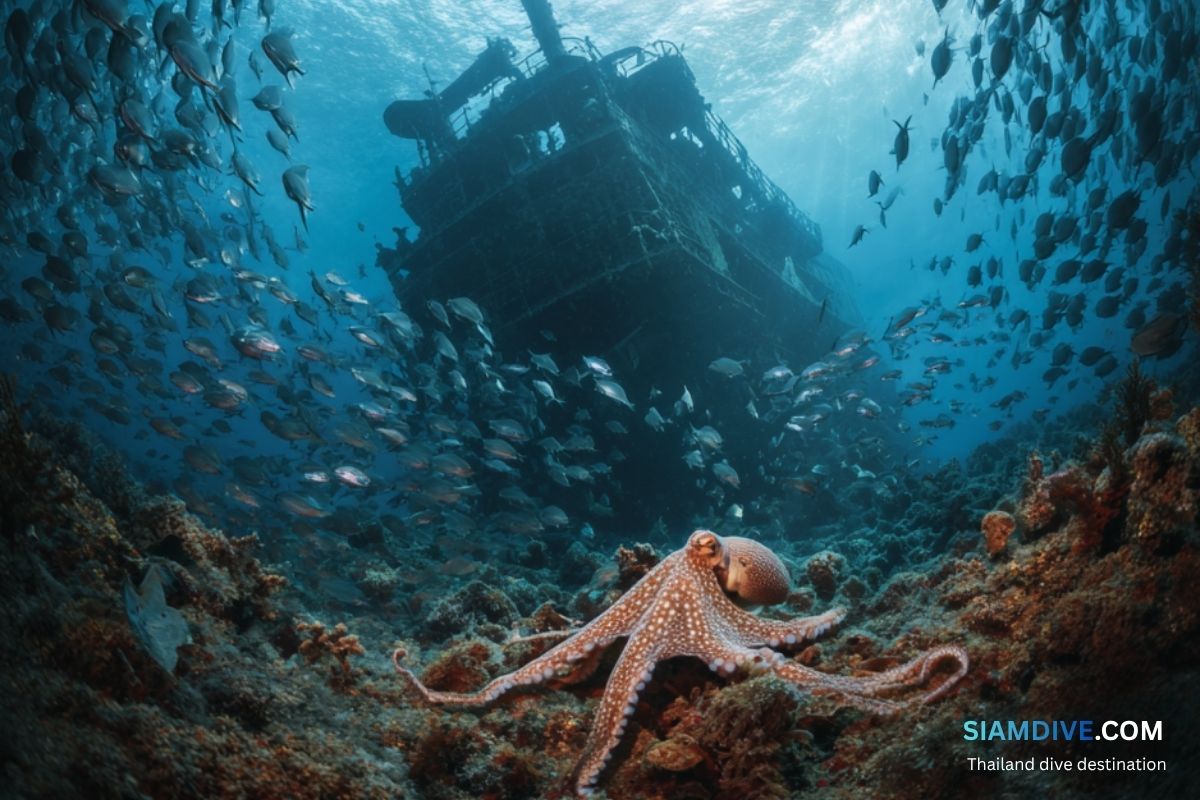
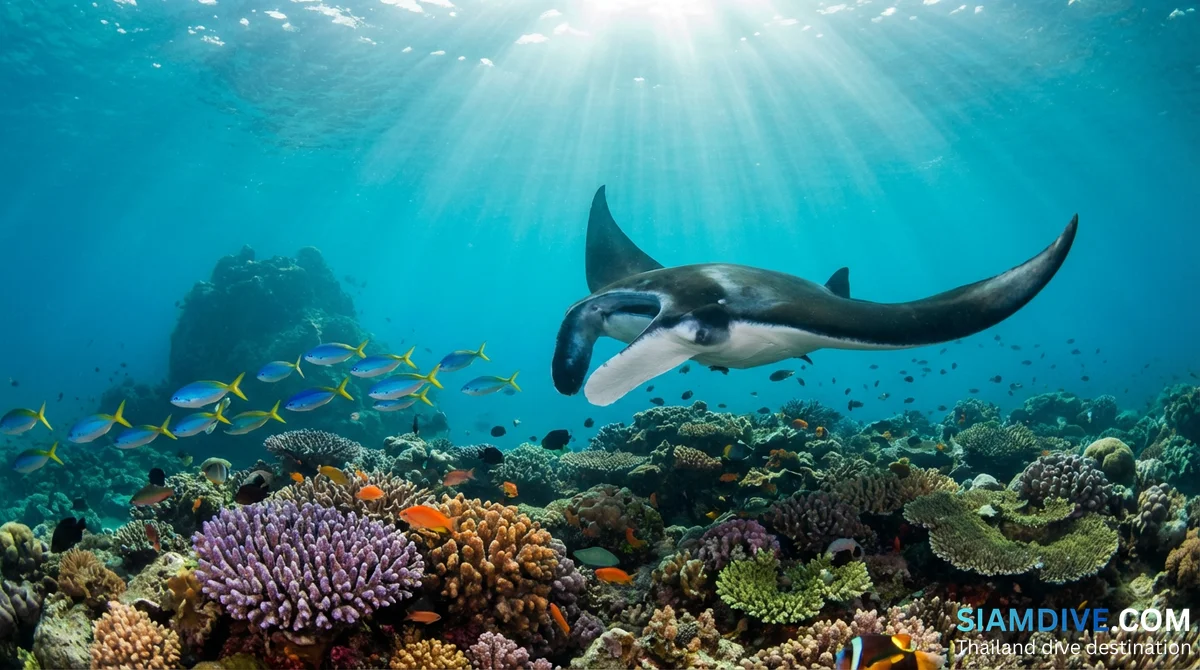
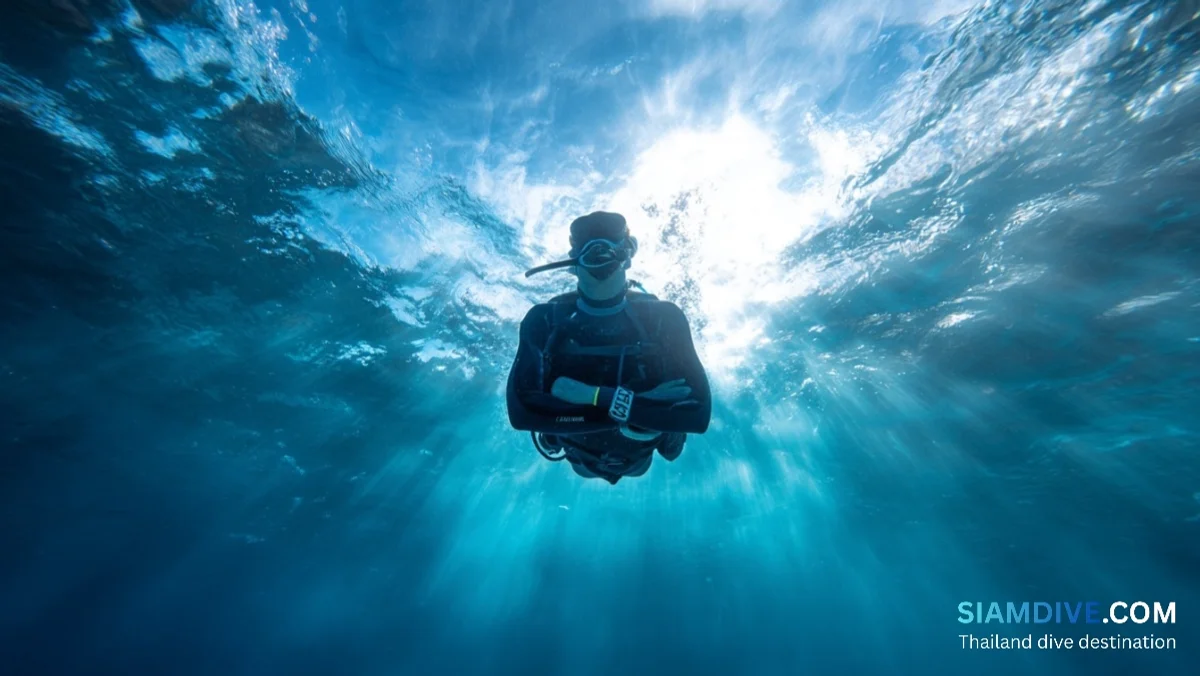
Snorkeling gets you two meters. Scuba gets you to 18 meters on an Open Water card and 30 meters once you add Advanced (one more long weekend). That depth difference is not incremental — it is an entirely different world. Reef sharks rest on sand at 12-15 meters. Turtles feed on sponges at 10-20 meters. Manta rays cruise cleaning stations at 15-25 meters. The best coral walls start where snorkeling ends.

Time underwater matters too. On a snorkel, you are up every 30 seconds for air. On scuba, you spend 45-60 minutes per dive watching a single cleaner shrimp work over a moray eel, or a cuttlefish change color at you, or a school of barracuda rotate above your head. The behaviors you see are things that do not happen in the first 30 seconds of an animal noticing you exist.

The Social Part Nobody Warns You About

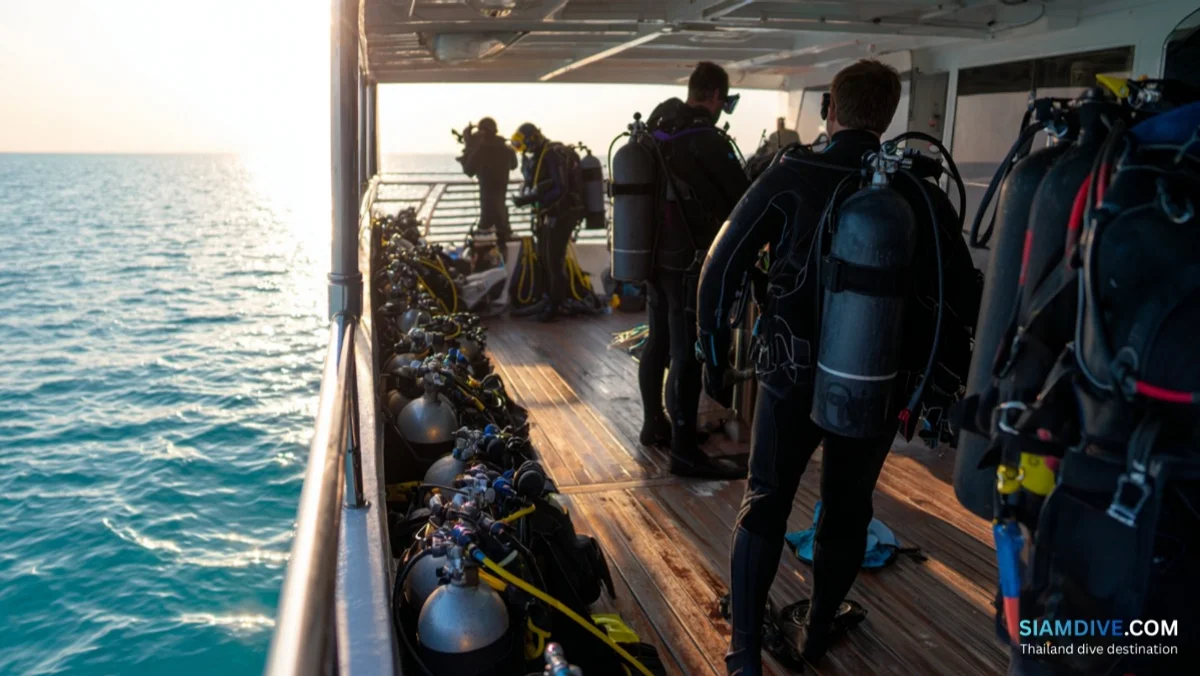
Dive shops create communities. Pretty much every serious diver has a set of friends they dive with, a WhatsApp group for trip planning, and a story about the time the boat nearly sank off Koh Phi Phi. You travel differently — instead of checking hotels, you check seasons and marine life calendars. Instead of souvenirs, you buy a better mask and start thinking about your own regulator.

The community also makes the sport safer. Nobody dives alone. Your buddy is watching your air and depth, you are watching theirs, and that reciprocity creates friendships that travel photos can't explain.

Why Thailand Is an Unreasonably Good Place to Start

Warm water year-round (26-30°C — no thick wetsuit, no numb fingers, no 7mm neoprene struggle). Visibility that hits 30+ meters in peak season. Infrastructure built around certification — every major dive town has multiple PADI and SSI shops competing on price and quality. English is the working language at every reputable shop. Course prices are half what you would pay in Europe or Australia.

The learning curve is forgiving: the Andaman in dry season is as calm as pool water in places, and the Gulf sites around Koh Tao have some of the easiest student conditions on the planet. Koh Tao alone certifies more divers annually than any other single location on earth, which tells you something about how well the system works.

The Real Reason to Stop Waiting

The marine environment you will dive in five years is not the marine environment you would dive in today. Coral bleaching events are accelerating. Shark populations in Southeast Asia are down. Some of the sites we still take students to will look different by 2035. That is not a guilt trip — it is just the timing of the decision. The fish you see this year are not guaranteed next year.

And the career of most divers is longer than they expect. People dive into their 70s. The calendar you open now is a decades-long one, not a one-week trip.

Start With SiamDive

We run PADI and SSI Open Water courses out of Khao Lak, Phuket, and Koh Tao with instructors who speak English, Thai, and in several cases German, French, or Japanese. Small class sizes, gear included, certification mailed within two weeks of completion. If you want to try a single dive first before committing to the full course, ask us about Discover Scuba Diving — half a day, no certification, no paperwork, just to see if you like breathing underwater. Check current schedules at siamdive.com.
← กลับไปหน้า Blog

บทความแนะนำ

Triangle Pinnacle Diving Guide: The Gulf's Quietest Granite Site

Triangle Pinnacle Diving Guide: The Gulf's Quietest Granite Site

Hin Sam Liam is the Gulf of Thailand pinnacle that does not show up on the standard Koh Tao board. Big groupers, anemone gardens, and almost no crowds.

Phuket vs Koh Tao vs Khao Lak: Which Thai Dive Base Fits You?

Phuket vs Koh Tao vs Khao Lak: Which Thai Dive Base Fits You?

Honest 2026 comparison of Thailand's three big dive hubs — real prices, boat times, dive seasons, and a pick-yours matrix. No hype, no bias.

HTMS Chang Koh Chang

HTMS Chang Koh Chang

Dive into the HTMS Chang wreck.

The Phuket Diving Calendar: When to Actually Book

The Phuket Diving Calendar: When to Actually Book

Honest month-by-month guide to diving Phuket and the Similan Islands: visibility, water temp, marine life, crowds and when to book your trip.

Similan Liveaboard: What 4 Days and 14 Dives Actually Cost

Similan Liveaboard: What 4 Days and 14 Dives Actually Cost

The real math on a Similan Islands liveaboard — 14 dives across 4 days, 32,000-60,000 THB, and when Richelieu Rock actually delivers mantas and whale sharks.

The King Cruiser Wreck: How a Sinking Ferry Became Phuket's Best Artificial Reef

The King Cruiser Wreck: How a Sinking Ferry Became Phuket's Best Artificial Reef

The King Cruiser sank in 1997 after hitting Anemone Reef. Today this 85-meter wreck at 18-33m depth teems with barracuda, lionfish, and soft coral.

Air Consumption in Scuba Diving: How to Make Every Tank Last

Air Consumption in Scuba Diving: How to Make Every Tank Last

Learn how to reduce your air consumption and extend dive time. Practical tips on breathing, buoyancy, trim, and gas management for every level.

Nitrox Diving Guide: Benefits, Risks & MOD Explained

Nitrox Diving Guide: Benefits, Risks & MOD Explained

Master Enriched Air Nitrox diving — understand MOD calculations, oxygen toxicity risks, EAN32 vs EAN36, and how Nitrox extends your bottom time safely.

Aow Leuk Koh Tao Diving Guide: The Island's Best Beginner Bay

Aow Leuk Koh Tao Diving Guide: The Island's Best Beginner Bay

Aow Leuk on Koh Tao's southeast coast offers shallow reefs, juvenile blacktip sharks, and easy shore diving — the perfect beginner bay on the island.

Your Second Stage at 30m: Balanced vs Unbalanced, Tested

Your Second Stage at 30m: Balanced vs Unbalanced, Tested

At recreational depths, balanced and unbalanced second stages drift apart on breathing effort. Here's what ANSTI data and gas-density research actually show.

Losin : Thailand's Best-Kept Diving Secret in the Deep Gulf

Losin : Thailand's Best-Kept Diving Secret in the Deep Gulf

Losin is a remote liveaboard-only dive site off Pattani famous for manta rays, whale sharks, and bull sharks during March-May.

Safe Ascent Rate: The Diving Safety Rule Most Divers Break

Safe Ascent Rate: The Diving Safety Rule Most Divers Break

The 9 m/min ascent rate is the most important rule in recreational diving safety — and the one most divers quietly break every dive. Here's how to fix it.

First Liveaboard Trip in Thailand: What to Actually Expect

First Liveaboard Trip in Thailand: What to Actually Expect

Your first Thai liveaboard trip means early wake-ups, compact cabins, 3-5 dives daily, and a routine that clicks by day two. Here's the honest version.

Koh Rok Diving Guide: Trang's Pristine Coral Paradise

Koh Rok Diving Guide: Trang's Pristine Coral Paradise

Explore Koh Rok's crystal-clear waters, healthy coral reefs, and rich marine life. Your complete guide to diving Thailand's best-kept Andaman secret.

BCD Care: The Bladder Flush Most Divers Skip (And Pay For Later)

BCD Care: The Bladder Flush Most Divers Skip (And Pay For Later)

Learn the essential BCD maintenance steps most divers overlook — from proper bladder flushing to dump valve care, storage tips, and when it's time to replace your buoyancy control device.

How to Not Throw Up on the Dive Boat: A Practical Seasickness Guide

How to Not Throw Up on the Dive Boat: A Practical Seasickness Guide

Seasickness ruins more dive trips than equipment failures. Learn exactly how to prevent and manage nausea on dive boats — from the right medications and natural remedies to where to sit, what to eat, and what to do if you're already green.

Ear Equalization for Divers: Techniques That Actually Work

Ear Equalization for Divers: Techniques That Actually Work

Master Valsalva, Frenzel, and Toynbee methods to equalize your ears safely. Stop ear pain on every dive with these proven techniques.

Dive Computer Essentials: Read and Trust Your Wrist

Dive Computer Essentials: Read and Trust Your Wrist

Learn how dive computers track nitrogen, calculate no-deco limits, and keep you safe underwater. A practical guide to reading displays and choosing the right model.

Hin Daeng & Hin Muang Diving Guide: Thailand's Best Pinnacles

Hin Daeng & Hin Muang Diving Guide: Thailand's Best Pinnacles

Discover Hin Daeng and Hin Muang, Thailand's most thrilling deep-water pinnacles off Koh Lanta with manta rays, whale sharks, and 70m walls.

Diving in Currents: How to Stay Safe and Enjoy the Ride

Diving in Currents: How to Stay Safe and Enjoy the Ride

Learn to read, manage, and enjoy underwater currents. From drift diving to handling downcurrents, this guide covers what every diver needs to know.

ทริปแนะนำ

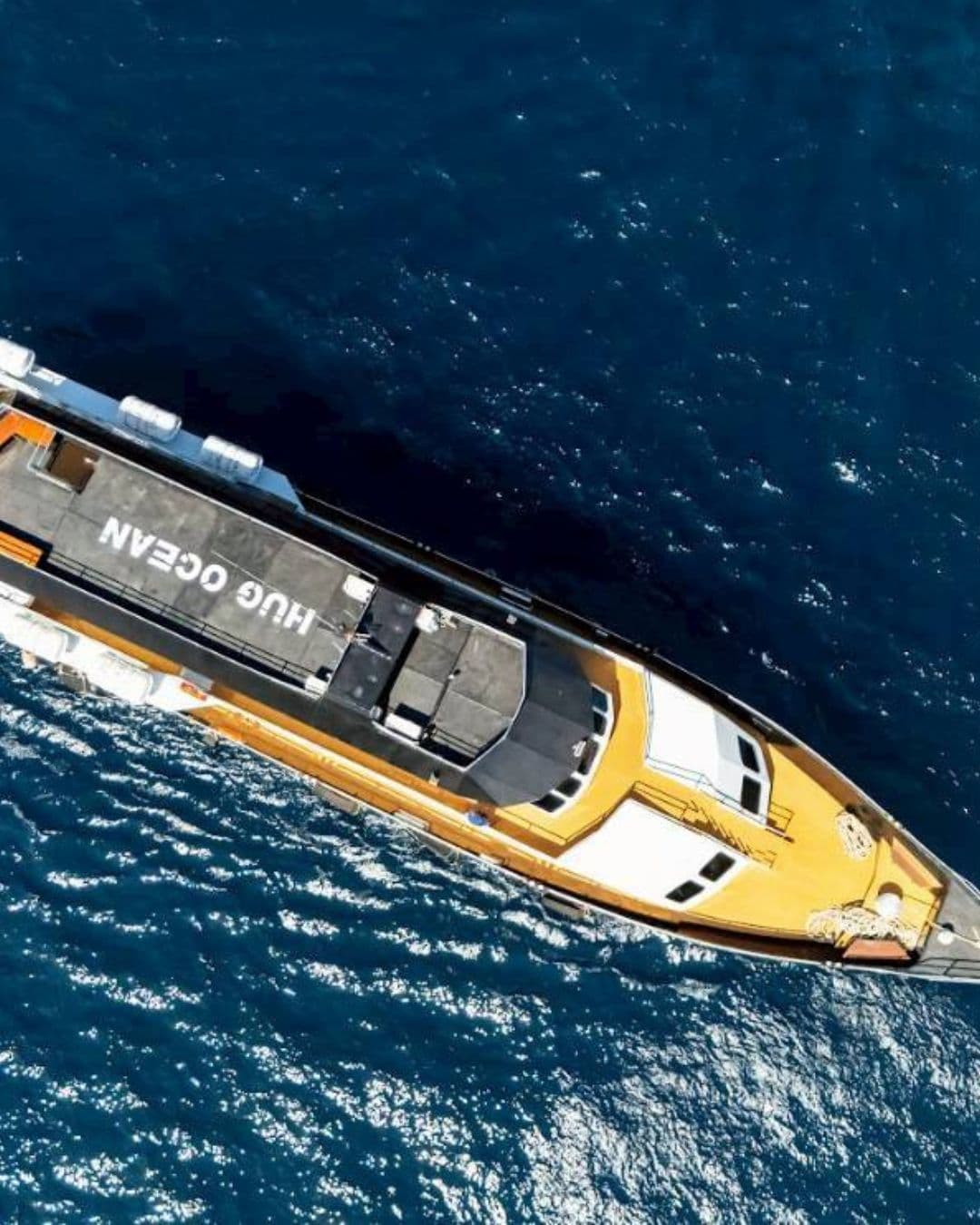
Hug Ocean Boat
daytrip

Hug Ocean Boat

Discover Phuket's Andaman Sea aboard Hug Ocean — a luxury 3-deck dive yacht for 80 guests with a thrilling water slide, sun-soaked top deck, and PADI-certified diving at Racha Yai and Racha Noi.

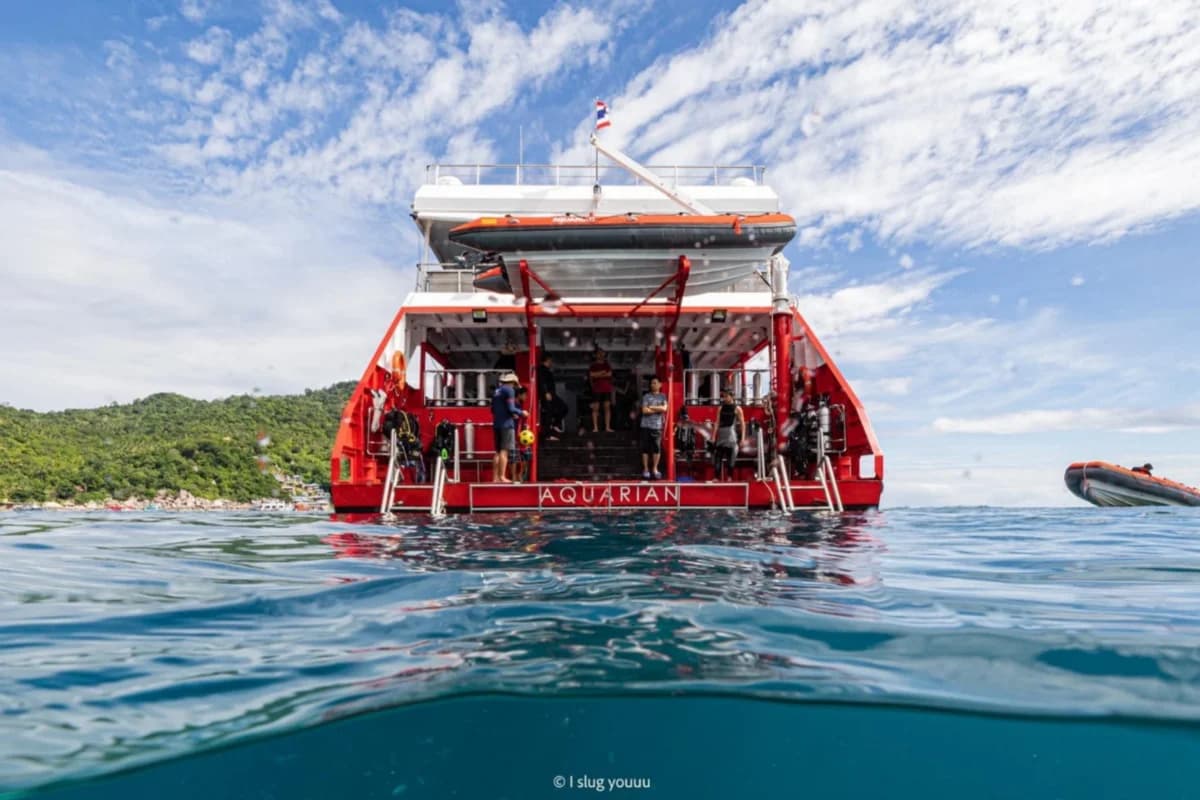
Aquarian Liveaboard
liveaboard

Aquarian Liveaboard

MV Aquarian — striking 2021-built red steel liveaboard, 31.4 m × 7.5 m, max 28 guests in 14 cabins. Free unlimited Nitrox via Coltri Sub membranes, one of Thailand's largest dive platforms, and full premium-hotel comfort.

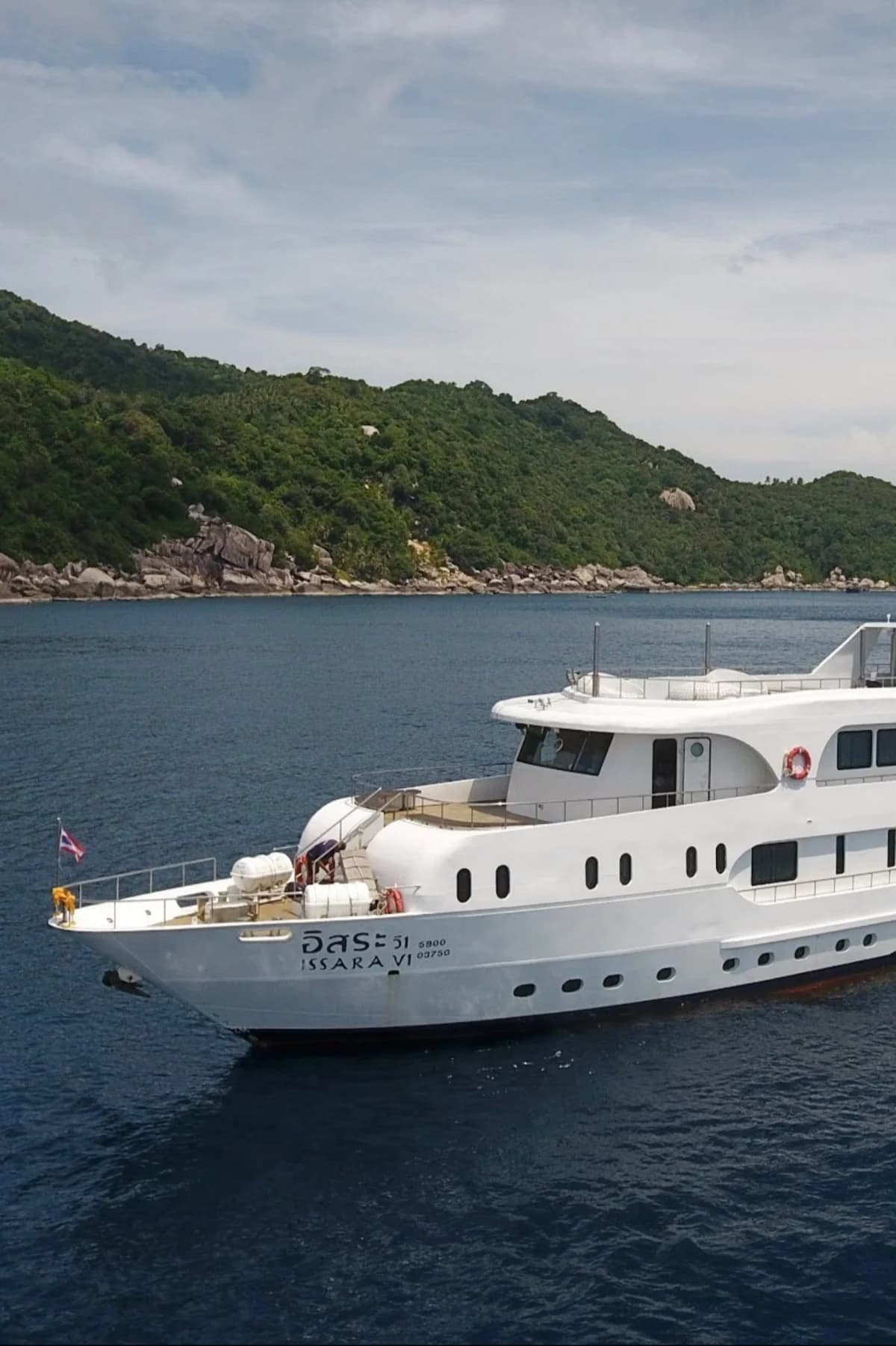
Issara Liveaboard
liveaboard

Issara Liveaboard

MV Issara — high-end Thai steel-hulled liveaboard built 2016–17, 28.5 m × 6.5 m, 4 decks, max 22 guests in 11 hotel-style cabins. Indoor saloon, jacuzzi sun deck, full-board buffet dining.

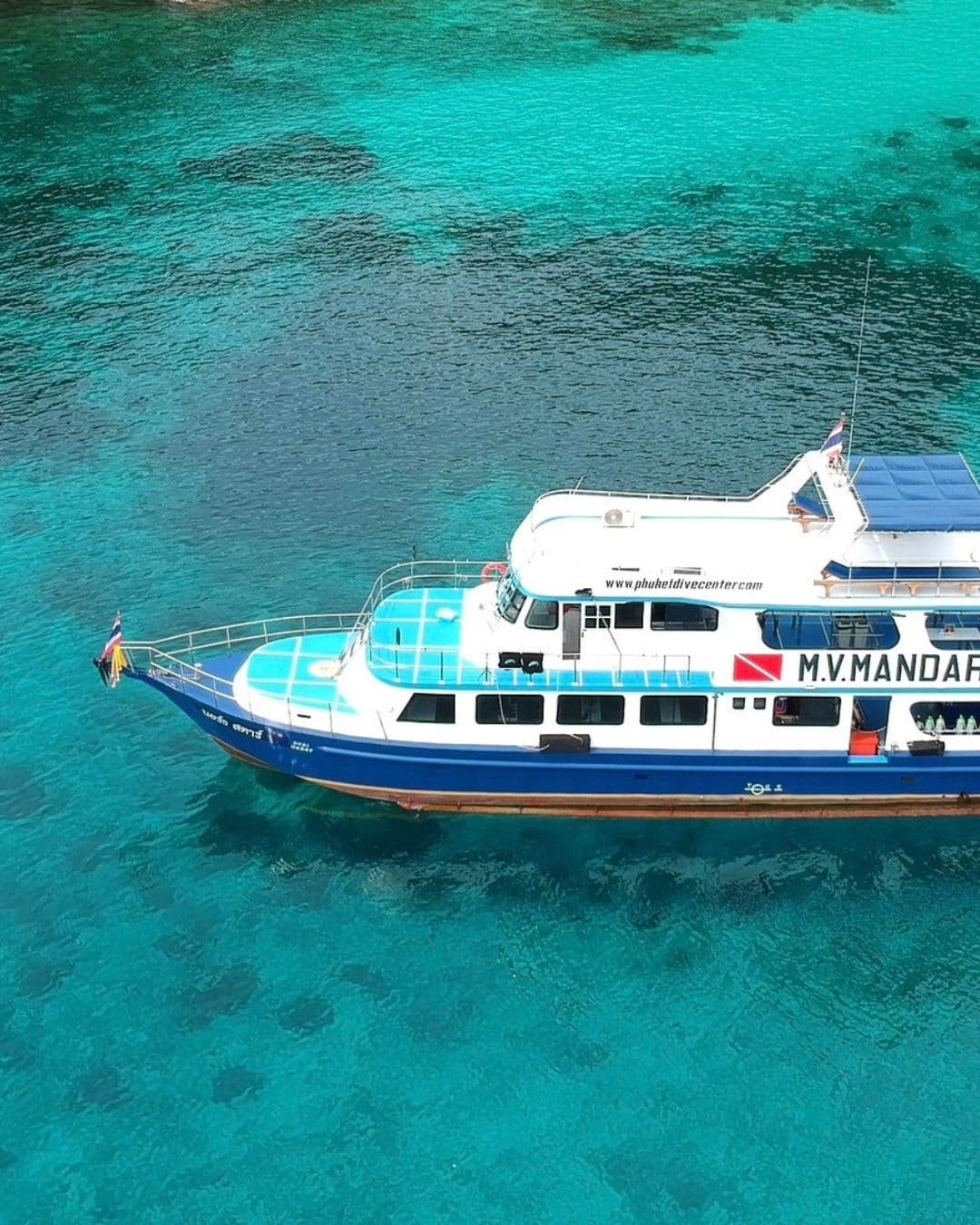
Mandarin Queen 5
daytrip

Mandarin Queen 5

Brand-new Phuket dive boat — 26.2 m M/V Mandarin Queen 5 with spacious dive platform, lounge and upper sun deck. Daily day trips to King Cruiser Wreck, Shark Point, Anemone Reef, Racha Yai and Racha Noi.