BCD Care: The Bladder Flush Most Divers Skip (And Pay For Later)
16 เมษายน 2569
Learn the essential BCD maintenance steps most divers overlook — from proper bladder flushing to dump valve care, storage tips, and when it's time to replace your buoyancy control device.
Why BCD Maintenance Is the Most Overlooked Part of Dive Gear Care
Your buoyancy control device (BCD) is the command center of every dive — it keeps you neutrally buoyant at depth, helps you ascend safely, and holds your tank, weights, and accessories together. Yet most recreational divers treat their BCD like a backpack: rinse the outside, hang it up, and forget about it until the next dive trip.
That casual approach has consequences. Salt crystals build up inside the bladder, dump valves corrode and stick, and mold colonizes damp folds you never knew existed. Within a few seasons, a premium BCD can degrade into a liability. The good news? A 10-minute post-dive routine and one annual service appointment are all it takes to keep your BCD performing like new for a decade or more.
Post-Dive Bladder Flush: The Step Most Divers Skip
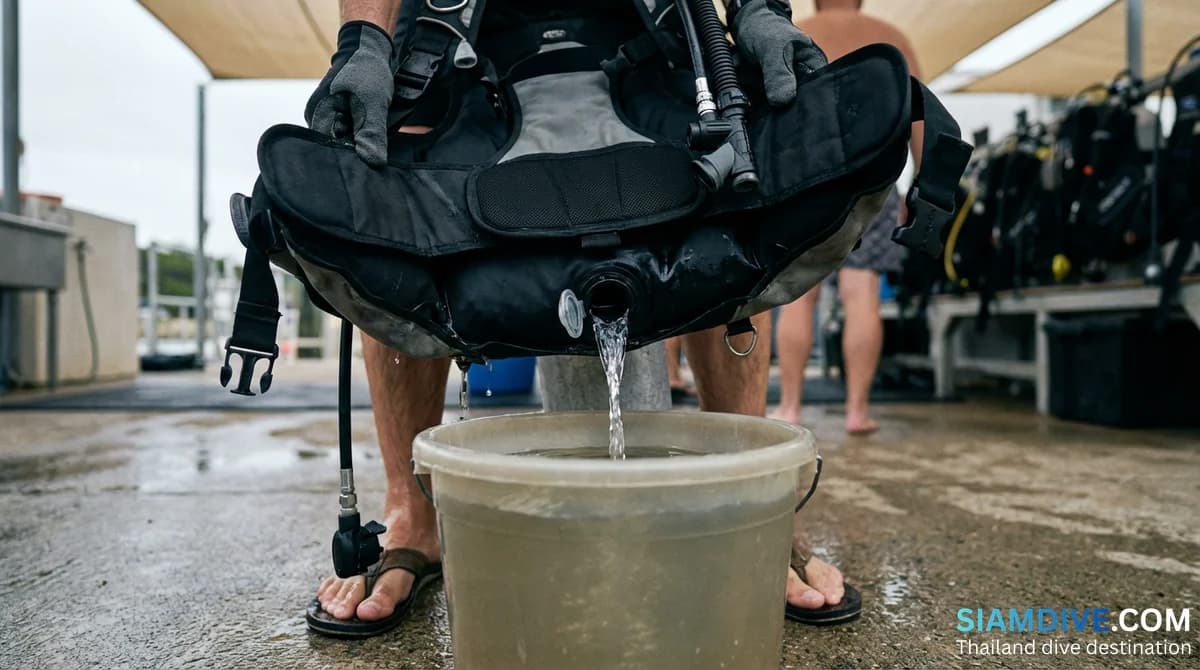
During every dive, small amounts of salt water seep into your BCD bladder through the dump valves and low-pressure inflator. If left inside, that water evaporates and leaves behind salt crystals — some sharp enough to score and eventually puncture the bladder from the inside out.
How to flush your BCD bladder properly:
- Hold the BCD upside down with the oral inflator hose pointing down. Press the deflate button and drain any trapped water.
- Fill with fresh water: While pressing and holding the deflate button on the oral inflator, run a gentle stream of clean fresh water into the mouthpiece. You should feel the bladder filling up.
- Shake vigorously: Once the bladder is about one-third full, release the deflate button. Shake and slosh the BCD in every direction so the fresh water reaches all internal surfaces.
- Drain through the dump valves: Pull each dump valve cord to let the water flow out. This simultaneously flushes salt and debris from the valve seats.
- Repeat at least twice: Two full flush-and-drain cycles is the minimum. If the water coming out still tastes salty, keep going.
This entire process takes under five minutes but prevents the single most common cause of premature BCD failure: internal salt crystal damage.
External Rinse: Buckles, Straps, Pockets, and Fabric
After flushing the bladder, give the entire exterior a thorough freshwater rinse. Pay special attention to:
- Buckles and clips: Salt can jam spring-loaded buckles. Work each buckle open and closed while rinsing.
- Velcro closures: Brush out sand and debris trapped in hook-and-loop surfaces.
- Pockets: Open every pocket, empty any debris, and rinse inside. Forgotten items (lead shot, snack wrappers) promote corrosion.
- Straps and webbing: Flex adjustable straps through their full range while running water over them.
- Integrated weight pockets: Remove the weight pouches completely, rinse both the pockets and the BCD rails they slide into. Check that the release mechanism clicks securely back into place.
If you have been diving in particularly silty or muddy conditions, soaking the entire BCD in a rinse tank for 15–20 minutes before the active rinse helps dissolve stubborn deposits.
Power Inflator Maintenance
The power inflator (low-pressure inflator) is arguably the most safety-critical component on your BCD. A stuck inflate button can cause an uncontrolled ascent — a genuine emergency.
After every dive:
- Disconnect the low-pressure hose from the first stage before rinsing.
- Run fresh water over and into the inflator mechanism.
- Press the inflate and deflate buttons repeatedly while rinsing to flush salt from the valve seats.
- Check that both buttons move freely and spring back without sticking.
Warning signs to watch for:
- A button that feels gritty or sluggish
- The inflator that trickles air when the button is not pressed
- A hissing sound from the connection point
If you notice any of these, do not dive with the BCD until it has been professionally serviced. A free-flowing inflator is one of the most dangerous equipment malfunctions in recreational diving.
Dump Valve Inspection and Cleaning
Most BCDs have two to three dump valves — typically one on the left shoulder (combined with the oral inflator), one on the lower right back, and sometimes one on the lower left. These valves use simple spring-loaded mechanisms with rubber seats that can degrade over time.
Regular inspection checklist:
- Pull test: Tug each dump valve cord. The valve should open smoothly and snap closed when released.
- Visual check: Look for cracking, discoloration, or deformation of the rubber valve seat.
- Leak test: Fully inflate the BCD, submerge it in water, and watch each valve for bubble streams. A slow, steady trickle of bubbles means the valve seat needs replacement.
- Flush during rinse: As described in the bladder flush section, always drain water through the dump valves to keep their internal passages clear.
Dump valve O-rings and seats are inexpensive consumables. Most dive shops can replace them in minutes during an annual service.
Storage: Partial Inflation, Cool and Dark
How you store your BCD between dives — and especially between dive seasons — has a massive impact on its longevity.
The golden rules of BCD storage:
- Partially inflate: Store your BCD with the bladder about one-quarter to one-third inflated. This prevents the inner walls from sticking together (which can damage the bladder coating) while avoiding excess pressure on seams.
- Never store fully deflated: A collapsed bladder traps moisture between the inner walls, creating a breeding ground for mold and mildew.
- Never store fully inflated: Prolonged full inflation stretches seams and stresses dump valve springs, especially in warm environments where air expands.
- Hang or lay flat: Hanging from a wide hanger is ideal as it allows air circulation. If you must lay the BCD flat, avoid placing heavy items on top of it.
- Cool, dark, and dry: Avoid car trunks, attics, or anywhere temperatures exceed 49°C (120°F) or drop below -18°C (0°F). UV light degrades nylon and neoprene, so keep it out of direct sunlight.
- Hose down: Store with the inflator hose pointing downward so any residual moisture drains to the lowest point. After a day or two, press the deflate button to release collected water.
Annual Professional Service: What to Expect
Manufacturers recommend a full professional BCD service every 12 months or every 100 dives, whichever comes first. Many warranty programs require annual servicing to remain valid.
A typical annual service includes:
- Complete disassembly of the power inflator mechanism
- Inspection and replacement of all O-rings, valve seats, and seals
- Bladder pressure test (leak check)
- Over-pressure relief valve calibration
- Inspection of all stitching, webbing, and attachment points
- Lubrication of moving parts with manufacturer-approved silicone
- Integrated weight system inspection and release mechanism testing
- Reassembly and final function test
A professional service typically costs between $50 and $100 USD, a small price to pay for peace of mind that your life-support equipment is in proper working order.
When to Replace Your BCD: The 5–10 Year Reality Check
With proper care, a quality BCD can last 5 to 10 years or even longer. However, no amount of maintenance can overcome certain types of wear. It is time to start shopping for a replacement when you notice:
- Leaking bladder: If the bladder cannot hold air after valve seats have been replaced, the bladder fabric itself has failed.
- Sticky or unreliable inflator: When the power inflator continues to malfunction after professional servicing, internal corrosion may have compromised the mechanism beyond repair.
- Cracked or warped backplate: Structural damage to the backplate or harness attachment points makes the BCD unsafe.
- Delaminating fabric: When the outer shell separates from the inner bladder, the BCD has reached end of life.
- Obsolete parts: If your manufacturer no longer produces replacement parts, ongoing maintenance becomes impossible.
Do not wait for a failure underwater. If your BCD shows any of these signs, retire it and invest in a new one. Your safety is worth more than squeezing out one more season from aging gear.
Common BCD Mistakes That Shorten Its Life
Even experienced divers make these errors. Avoid them and your BCD will thank you:
- Storing wet and folded: This is the number-one BCD killer. Folding traps moisture, and moisture breeds mold and mildew that eat away at bladder material and produce foul odors that are nearly impossible to eliminate.
- Never flushing the bladder: Divers who only rinse the outside are leaving salt crystals to accumulate inside the bladder with every dive. After a season or two, the damage is done.
- Over-inflating in direct sun: Leaving a fully inflated BCD on a hot boat deck or beach causes the air inside to expand dramatically. This can blow out seams, pop dump valve springs, or permanently stretch the bladder.
- Using harsh chemicals: Bleach, alcohol-based mouthwash, or iodine solutions can chemically react with the bladder's plastic elasticizer, making the material brittle and prone to cracking. Use only manufacturer-approved BCD cleaning solutions or plain fresh water.
- Skipping annual service: Many divers service their regulators religiously but ignore the BCD. The inflator mechanism has moving parts and O-rings that need the same attention as any other life-support component.
Your BCD is an investment — typically $300 to $800 or more for a quality model. Ten minutes of post-dive care and one annual service visit protect that investment and, more importantly, keep you safe on every dive. Make the bladder flush a non-negotiable part of your post-dive routine, and your BCD will reward you with years of reliable, comfortable diving. Visit siamdive.com for more dive gear guides and tips.