Diving in Currents: How to Stay Safe and Enjoy the Ride
13 เมษายน 2569
Learn to read, manage, and enjoy underwater currents. From drift diving to handling downcurrents, this guide covers what every diver needs to know.
Why Currents Matter More Than Most Divers Think
Currents bring nutrients, attract pelagic life, and create some of the most exhilarating dives on the planet. Sites like Richelieu Rock in Thailand, the channels of Komodo, and the walls of Cozumel owe their reputation to moving water. But currents also account for a significant portion of diving incidents — divers swept away from boats, pushed into deep water, or exhausted from fighting flow they should have worked with instead of against.
The difference between a terrifying experience and a world-class dive often comes down to preparation. Knowing what types of currents exist, how to read them before you jump in, and what to do when conditions change mid-dive separates skilled divers from those who just got lucky.
Types of Underwater Currents
Horizontal currents flow parallel to the seabed or reef wall. These are the most common type and what most people mean when they talk about drift diving. Tidal currents drive most horizontal flow — they shift direction as tides change and can reach speeds above 3 knots in narrow channels. The current is typically strongest mid-water and weakens near the bottom where reef friction slows it down.
Downcurrents pull you deeper. They form where water hits a wall or reef and deflects downward, or where cold water sinks in thermocline areas. Downcurrents are dangerous because they can push you past your planned depth before you realize what is happening. The sensation is subtle at first — you are descending without kicking, and your depth gauge is climbing faster than expected.
Upcurrents push you toward the surface. They are common around pinnacles and reef walls where water deflects upward. The danger is an uncontrolled ascent, which risks decompression sickness and lung overexpansion. Upcurrents feel deceptive — expanding air in your BCD accelerates the lift, creating a feedback loop that gets worse the higher you go.
Washing machine currents are chaotic zones where multiple flows collide. These unpredictable areas typically form around points, channels, and exposed seamounts. There is no reliable technique for managing them other than avoiding them or staying low where the chaos diminishes.
Reading Currents Before You Jump In
Check the surface before entry. Debris, foam lines, and the drift of the boat at anchor all indicate current direction and strength. Ask the crew — experienced boat captains read currents daily and can tell you what to expect at depth.
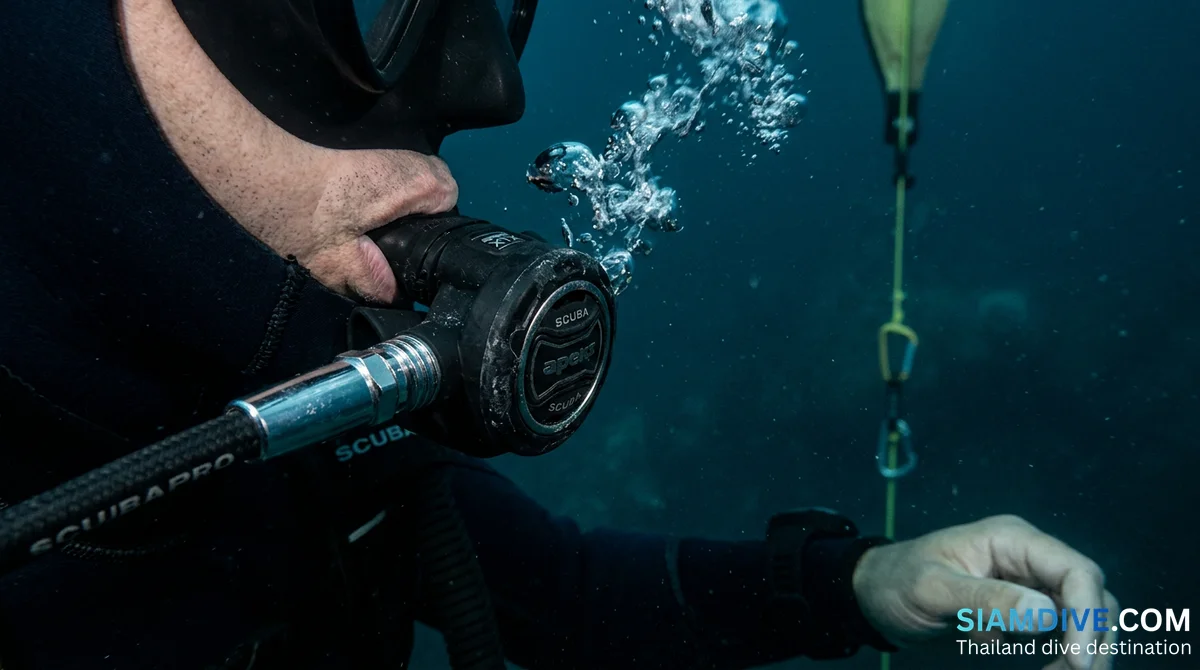
Bubble check: watch your bubbles during the first few meters of descent. If they drift sideways instead of going straight up, you have current. The angle tells you the direction, and the speed of drift gives a rough idea of strength.
Plan your dive around the current, not against it. Enter upcurrent and let the flow carry you back toward the boat or pickup point. Fighting a current burns air at double or triple your normal rate and accomplishes nothing. If the dive plan requires swimming against flow, reconsider the plan.
Tidal charts are your friend. Currents at most dive sites follow predictable tidal patterns. In Thailand, the Similan Islands have strongest currents during tidal changes — timing your dive for slack water between tides gives you calmer conditions and often better visibility.
Drift Diving Techniques
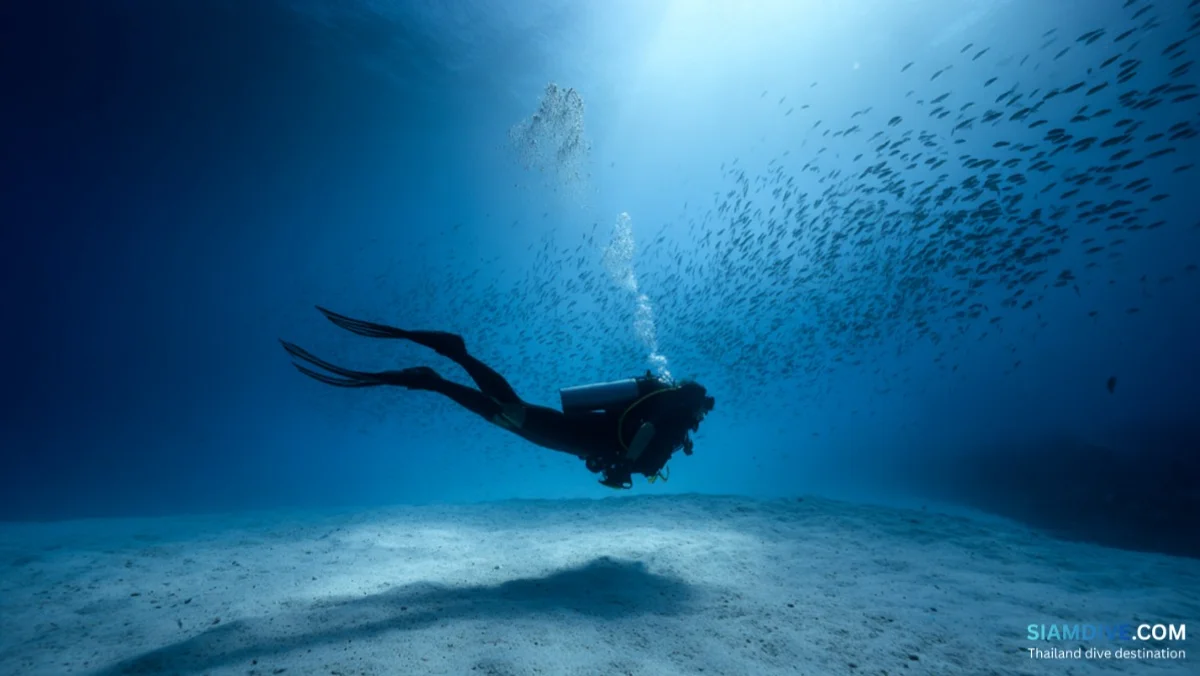
Drift diving is not swimming — it is flying. Maintain neutral buoyancy, tuck your arms, streamline your body, and let the current do the work. Your only job is minor depth adjustments and staying aware of your surroundings. Fighting the current even a little wastes energy and air.
Stay horizontal. A flat, streamlined profile minimizes drag and gives you the most efficient position in moving water. Head up or feet down catches flow like a sail and makes you work harder for no benefit.
Keep the reef to one side. In a lateral current, orient yourself so the reef is always on the same side. This prevents disorientation and gives you a constant reference for direction and speed. If the reef starts passing faster, the current is accelerating.
Deploy your SMB (Surface Marker Buoy) at your safety stop, not before. The line can tangle in current, and the inflated buoy pulling on you makes depth control harder. Practice SMB deployment in calm water first — doing it for the first time in a 2-knot current is a recipe for a tangled mess.
Handling Downcurrents
The moment you feel yourself sinking without kicking, act immediately. Do not wait to see if it stops. Kick hard with powerful fin strokes to stabilize your position first — adding air to your BCD while you are being pushed down can backfire if the current suddenly releases and you start rocketing up.
Swim perpendicular to the downcurrent, not straight up. Downcurrents are typically narrow columns or bands. Moving sideways a few meters often takes you out of the flow entirely. If you cannot swim out, descend to the bottom — reef friction weakens the current significantly, and you can hold position on the seabed.
Add air to your BCD in short bursts, not one long press. As you descend, your wetsuit compresses and you lose buoyancy in a compounding effect. Small BCD adjustments every 3-5 meters of unintended descent prevent the overcorrection that leads to an uncontrolled ascent once the downcurrent stops.
Signal your buddy immediately. A downcurrent that separates diving partners is far more dangerous than the current itself. Maintain visual contact, and if you get separated, follow your briefed procedure — typically ascend slowly, do a safety stop, and surface.
Handling Upcurrents
Dump air from your BCD the moment you feel yourself rising without finning. Do not wait — expanding air at shallower depths will accelerate your ascent rapidly. Keep your deflator hose in hand during any dive where upcurrents are expected.
Exhale slowly and continuously if the ascent is happening despite your BCD being empty. This prevents lung overexpansion. Your exhaled bubbles also slow you slightly and help maintain orientation. Stay calm — panicking and holding your breath is the single most dangerous response.
Ascend in stages. If you feel the lift, stop every 5 meters: check your depth, check your buddy, assess the current, and adjust buoyancy. A slow, staged ascent through an upcurrent zone is far safer than trying to fight it all at once.
Flare your body to increase drag. Spread your arms and legs wide, arch your back slightly — this increases your cross-sectional area and slows the lift. Combined with BCD deflation and controlled breathing, it gives you the tools to manage most upcurrents.
Essential Equipment for Current Diving
A reef hook is a metal hook on a short line that clips to your BCD. In strong current, hook onto a dead rock or solid reef structure and hang in the flow like a flag. This lets you observe the dive site without burning energy or air. Reef hooks are standard equipment at high-current sites like Richelieu Rock and Koh Bon in Thailand.
Your SMB is not optional in current dives. It marks your position for the boat, signals that you are ascending, and gives the crew time to position for pickup. Carry a reel with at least 20 meters of line — currents can push you far from the planned ascent point.
Audible signals matter more in current. Whistles, air horns, and shakers carry further than hand signals when you and your buddy are separated by moving water. Clip them where you can reach them with one hand.
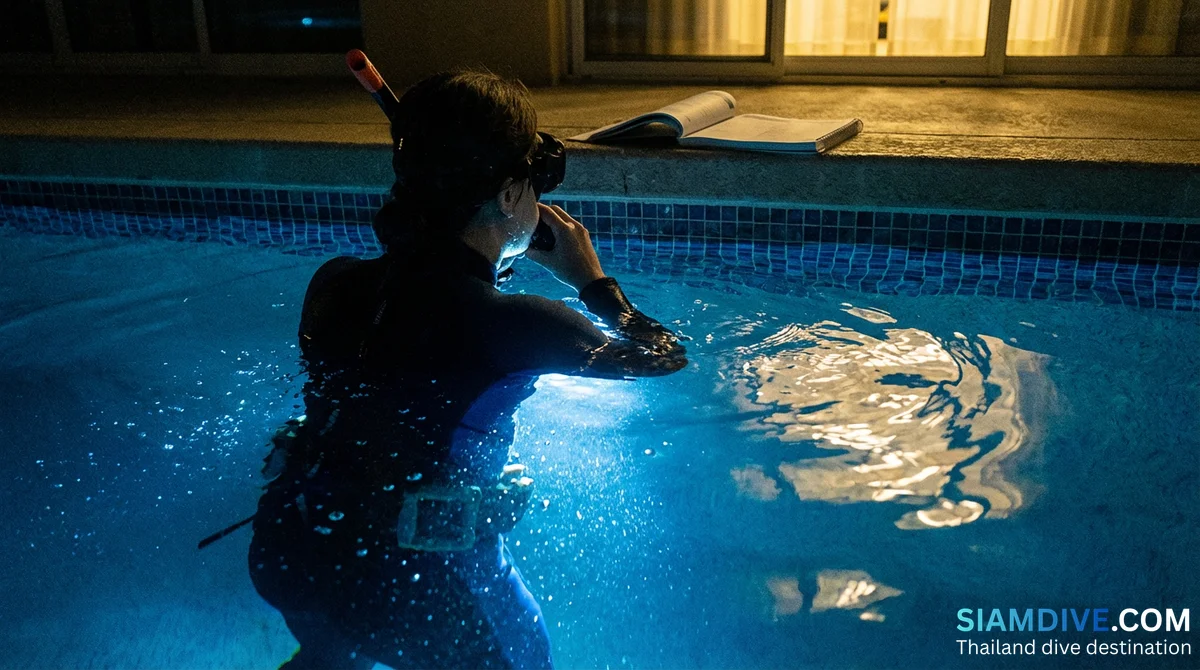
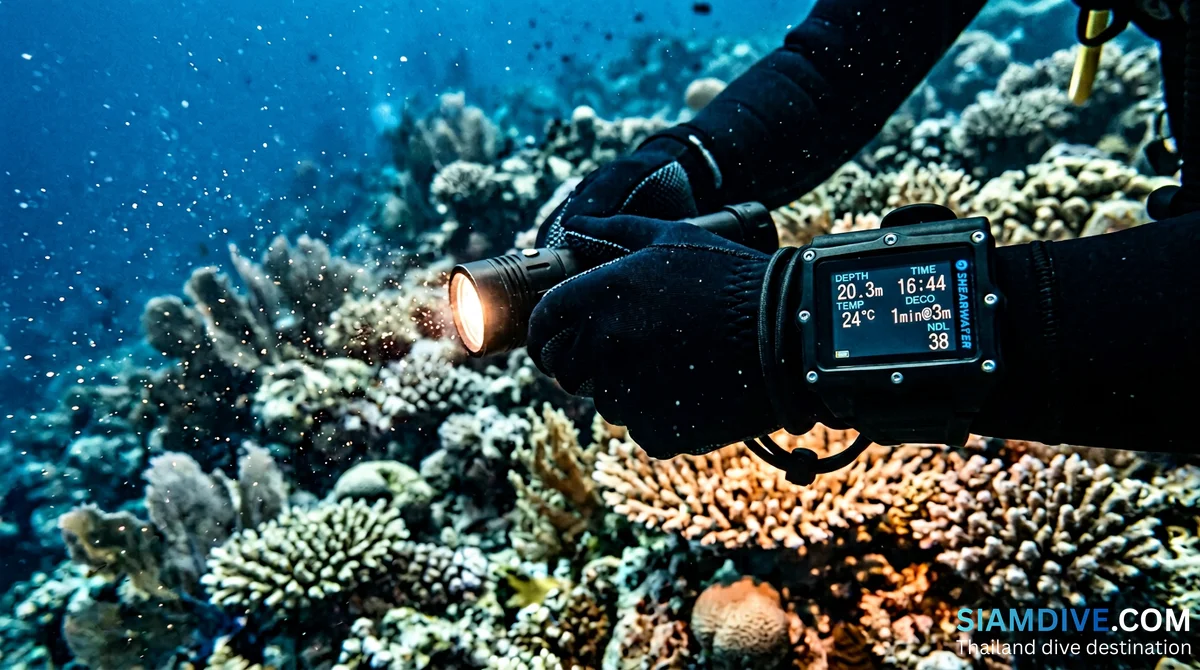
Carry a dive light even during the day. If you end up in a washing machine zone or separated from the group, a light is visible to other divers and boat crews at distances that hand signals cannot reach.
Thailand Current Diving: Where to Go
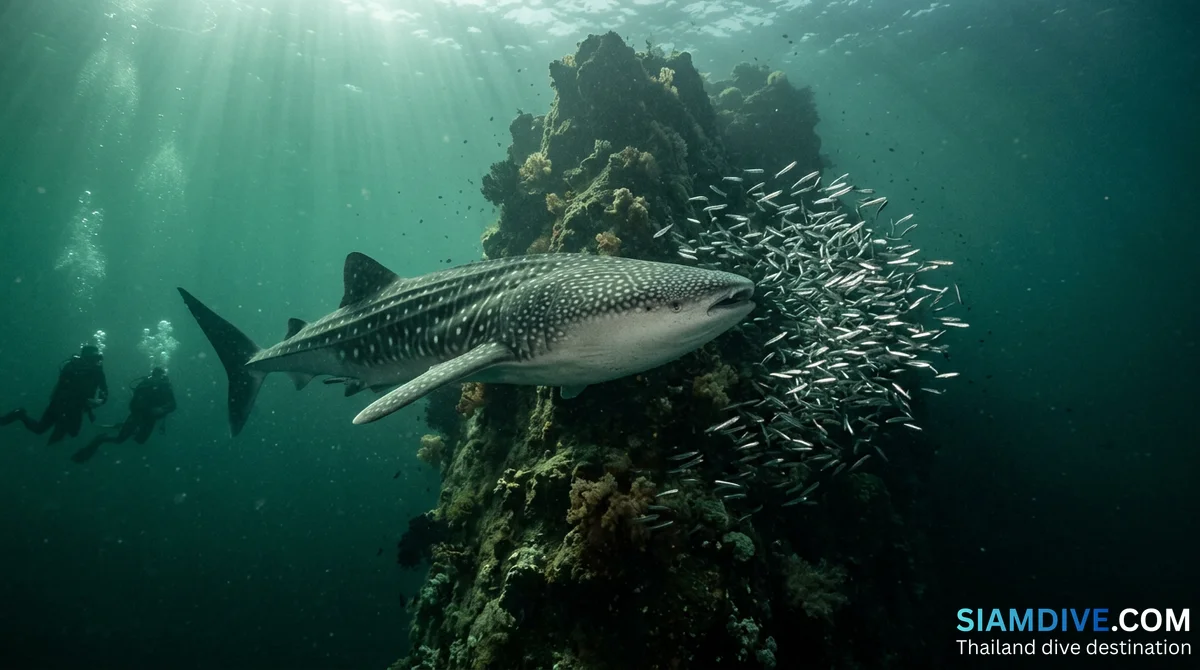
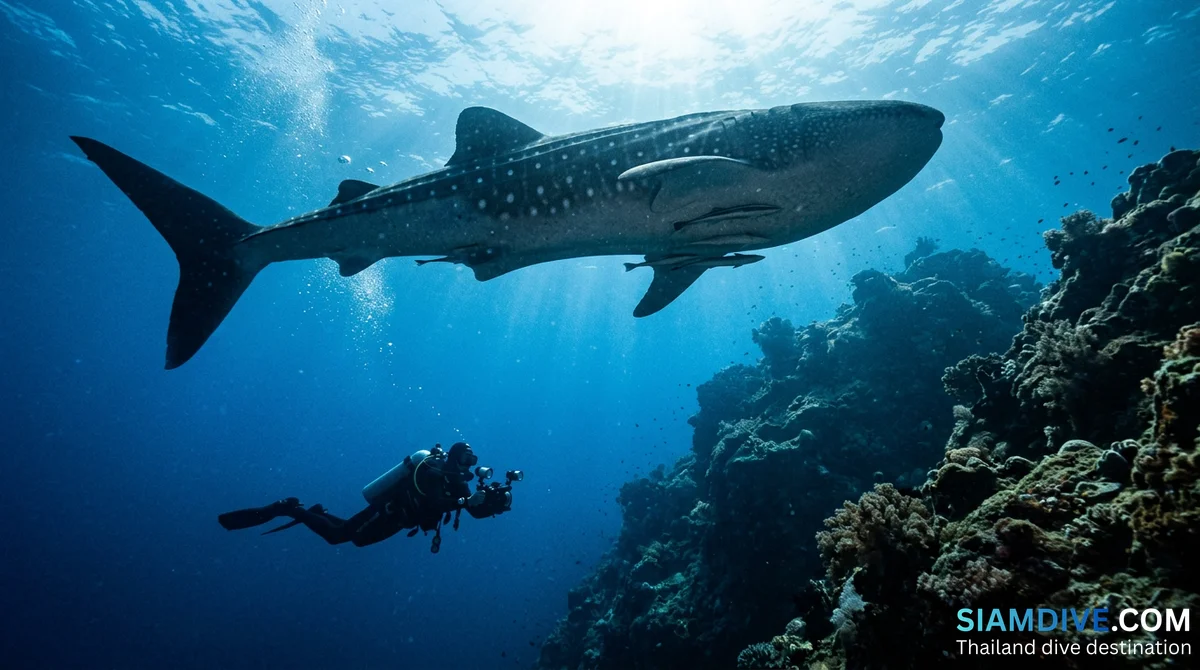
The Similan Islands offer a range of current conditions from gentle drift to powerful flow. East side sites tend to be calmer, while the west side — particularly around Koh Bon and Koh Tachai — sees stronger currents that attract manta rays and whale sharks. The season runs November to April, with strongest currents during full and new moon tidal changes.
Richelieu Rock is Thailand's most famous current dive. The horseshoe-shaped pinnacle creates sheltered areas on the lee side, so you can tuck behind the rock when the flow gets strong and pop out to enjoy the pelagic action when you are ready. Depths range from 5 to 35 meters with visibility between 10 and 25 meters depending on the plankton blooms that attract whale sharks.
Hin Daeng and Hin Muang in the southern Andaman offer wall dives with moderate to strong currents. The deep walls drop to 60+ meters, so buoyancy management is critical — a downcurrent here can push you well beyond recreational limits.
The Mindset That Keeps You Safe
Never fight a current you cannot beat. If the flow is too strong to swim against, go with it. Fighting wastes air, exhausts you, and puts you in a worse position than drifting with the flow and surfacing away from the boat. Boats can come to you — your air supply cannot be refilled mid-dive.
Communicate with your buddy and dive team before every current dive. Agree on what to do if separated, how deep you will go, and where the pickup point is. Predive briefings are not formalities — they are survival plans.
Ready to experience Thailand's best current diving? Browse liveaboard trips and dive sites at siamdive.com — find operators with experienced guides who know how to read local currents and keep you safe while showing you the big stuff.