Scuba Day TripsSnorkelingLand TourLiveaboardDive ResortFreedive Trips
Scuba CoursesFreedive Courses
Blog
The 30-Day Plan to Not Embarrass Yourself on Your First Dive
← Blog

The 30-Day Plan to Not Embarrass Yourself on Your First Dive

16 เมษายน 2569

Booked your Open Water course? Here's the exact 30-day prep plan divers wish they had: fitness, ear training, eLearning, packing, and what NOT to do.

You Booked the Course. Now What?

Congratulations, you just paid for your Open Water Diver course. The boat is booked, the instructor is waiting, and in 30 days you'll be breathing underwater for the first time. The single biggest mistake new divers make is showing up unprepared, running out of breath on the 200m swim test, and spending the first day stressed instead of stoked. This 30-day plan fixes that.

Follow it and you'll arrive fit, calm, equalized, and genuinely ready. Your instructor will love you, your air consumption will be better, and you'll actually enjoy the experience instead of just surviving it.

Week 4 (T-30 Days): Paperwork and Planning

  • Download the PADI/SSI medical form and answer honestly. Asthma, high blood pressure, recent ear surgery, pregnancy, diabetes, and certain medications require a doctor's clearance before your course. Do NOT lie on this form.
  • Book accommodation near the dive shop. Early starts (7am briefings) are normal. Walking 10 minutes to class beats a sleepy taxi ride.
  • Confirm what's included in your course fee: certification card, eLearning, equipment rental, park fees. In Thailand, national park fees (Similan, Surin, Phi Phi) are often extra.

Week 3 (T-21 Days): Cardio and Ears

The Open Water swim test is non-negotiable: 200m swim continuous (any stroke) OR 300m with mask/snorkel/fins, plus 10 minutes treading water. If you can't do that today, start now.

  • Swim 3x per week, building up to 200m front crawl or breaststroke without stopping. If you stop at 100m, pace yourself slower.
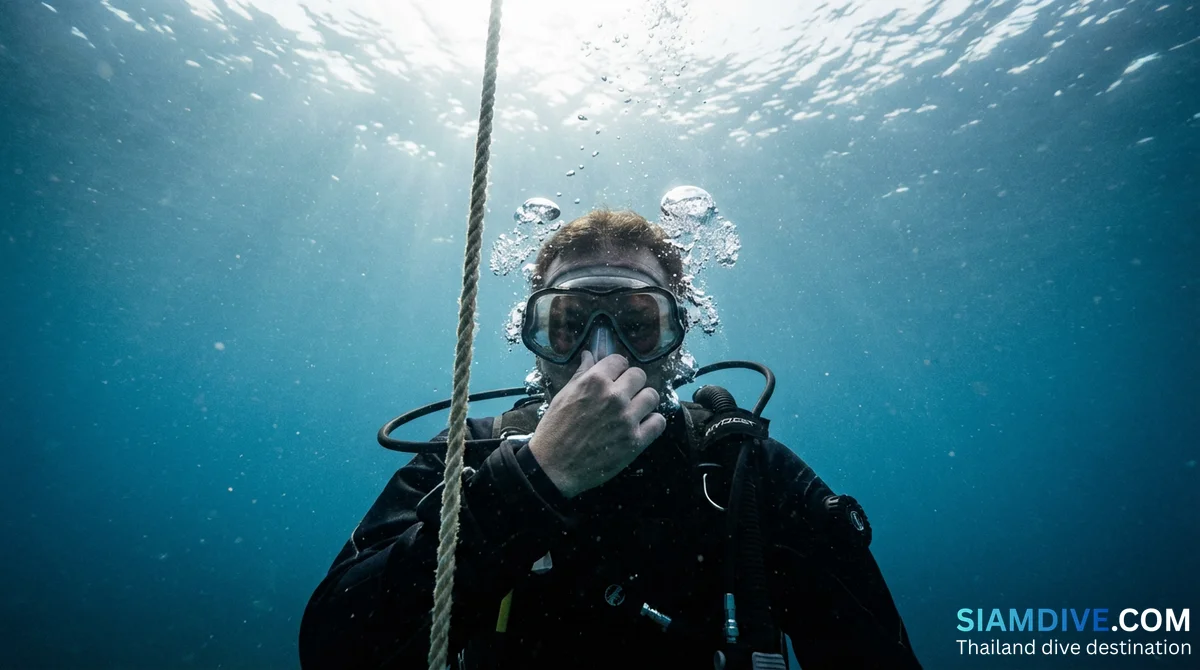
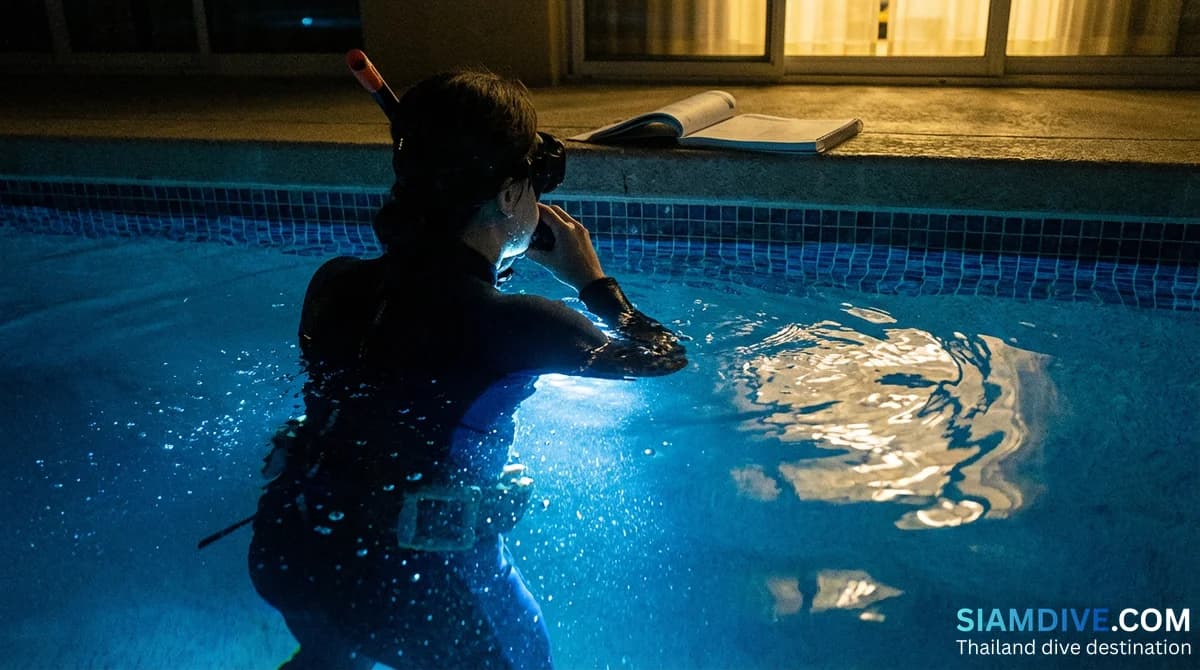
  • Practice the Valsalva maneuver dry: pinch your nose, close your mouth, and gently blow until your ears pop. Do it 10 times per day while commuting. If you can't pop them on land, you won't at 5 metres.
  • Try swallow-and-yawn equalization too. Some divers equalize easier that way.

Week 2 (T-14 Days): eLearning and Insurance

  • Start your eLearning modules. PADI Open Water eLearning is roughly 8-12 hours of videos and quizzes. Do 1-2 modules per night. Arriving with theory done means you spend your course in the water, not in a classroom.
  • Buy travel insurance that explicitly covers recreational scuba diving. Most standard policies exclude it. DAN (Divers Alert Network) and World Nomads (diving add-on) are the usual picks.
  • Start hydrating. Dehydration is a top cause of decompression issues. Aim for 2-3 litres of water a day from now on.

Week 1 (T-7 Days): Pack and Polish

Finish all eLearning modules and do the final knowledge review. Then pack.

Essential Packing Checklist

  • Logbook (buy it, or your dive shop will sell you one)
  • 2 swimsuits (one wet, one dry — rotate daily)
  • Rash guard or thin long-sleeve for sun and jellyfish protection
  • Reef-safe sunscreen (oxybenzone-free — mandatory in Thai marine parks)
  • Seasickness tablets (non-drowsy, take 1 hour before boarding)
  • Waterproof dry bag for the boat
  • Reusable water bottle
  • Flip-flops plus one pair of closed shoes
  • Passport photocopy and dive medical form (if required)
  • Cash in Thai baht for park fees and certification card (usually 1,000-2,000 THB)
  • Personal mask if you own one (fit matters more than rental quality)

Day Before and Day Of

  • No alcohol the night before. Alcohol dehydrates you and increases decompression sickness risk. This is not optional.
  • Eat a light, carb-focused dinner and a normal breakfast with low fat. Not a greasy fry-up.
  • Sleep 8 hours. Fatigue = stress = higher air consumption = shorter dive.
  • Arrive 15 minutes early. Your instructor is setting up gear for 6 students. Be the easy one.

What NOT to Do — The Dangerous Shortcuts

  • Don't take pseudoephedrine or decongestants to dive with a blocked nose. Rebound congestion at depth can cause a reverse block and ruptured eardrum. If your sinuses are blocked, reschedule.
  • Don't skip breakfast. Low blood sugar plus nerves plus nitrogen absorption is a recipe for nausea and bad decisions.
  • Don't fly within 18 hours of your last dive (24 hours for multiple dives). Plan your flight home accordingly.
  • Don't drink the night before certification day. We said it already. We're saying it again.

Swim Test Reality Check

Seriously — can you swim 200 metres front crawl or breaststroke right now, without stopping, without a time limit? If you're not sure, go to a pool tomorrow and find out. If the answer is no, you have three weeks to fix it. Pool passes in Thailand cost 100-300 THB. It is the cheapest insurance you'll ever buy against failing your certification.

Ready to Dive In?

Follow this plan and your Open Water course becomes a holiday, not a stress test. If you haven't booked yet — or if you want help choosing between Koh Tao, Phuket, and the Similan Islands — browse courses, liveaboards, and dive centres on siamdive.com and message the shops directly. See you underwater.
← กลับไปหน้า Blog

บทความแนะนำ

HTMS Chang Koh Chang

HTMS Chang Koh Chang

Dive into the HTMS Chang wreck.

Pattaya's Sunken Warships: How Navy Wrecks Became Thriving Coral Reefs

Pattaya's Sunken Warships: How Navy Wrecks Became Thriving Coral Reefs

Decommissioned Royal Thai Navy ships off Pattaya are now covered in coral and teeming with marine life. Here's what you'll find 18–30 meters below the surface.

Air Consumption in Scuba Diving: How to Make Every Tank Last

Air Consumption in Scuba Diving: How to Make Every Tank Last

Learn how to reduce your air consumption and extend dive time. Practical tips on breathing, buoyancy, trim, and gas management for every level.

Ear Equalization for Divers: Techniques That Actually Work

Ear Equalization for Divers: Techniques That Actually Work

Master Valsalva, Frenzel, and Toynbee methods to equalize your ears safely. Stop ear pain on every dive with these proven techniques.

Saving Racha Yai: Inside Thailand's 3D-Printed Coral Reef Project

Saving Racha Yai: Inside Thailand's 3D-Printed Coral Reef Project

Discover how 3D-printed artificial reefs are reviving marine life and transforming Racha Yai into a thriving center for conservation and scuba diving.

Koh Rok Diving Guide: Trang's Pristine Coral Paradise

Koh Rok Diving Guide: Trang's Pristine Coral Paradise

Explore Koh Rok's crystal-clear waters, healthy coral reefs, and rich marine life. Your complete guide to diving Thailand's best-kept Andaman secret.

Samaesan Wreck Diving: Sattahip's Quieter Alternative to Pattaya

Samaesan Wreck Diving: Sattahip's Quieter Alternative to Pattaya

HTMS Hardeep, drift sites at Koh Chuang and Koh Chan, and a 2-hour drive from Bangkok. The honest guide to diving Samaesan and Sattahip.

Koh Ngam Noi Diving Guide: Chumphon's Smaller Sister Island

Koh Ngam Noi Diving Guide: Chumphon's Smaller Sister Island

Koh Ngam Noi is the shallow Chumphon reef where Open Water divers actually relax. Coral gardens, the HTMS Prab wreck nearby, and barely any crowds.

Koh Lipe Diving Guide: Thailand's Hidden Andaman Gem

Koh Lipe Diving Guide: Thailand's Hidden Andaman Gem

Explore Koh Lipe's top dive sites from Jabang's soft coral gardens to 8 Mile Rock's granite pinnacles. Season, costs, and how to get there.

Bida Nok: Where Leopard Sharks Sleep at Your Feet

Bida Nok: Where Leopard Sharks Sleep at Your Feet

Bida Nok near Koh Phi Phi delivers leopard sharks, turtles, and vibrant coral walls on every dive. Here's exactly what to expect at 0-30 meters.

Your First Dive in Phuket: What No One Tells You

Your First Dive in Phuket: What No One Tells You

Never dived before? Here's the honest lowdown on Discover Scuba in Phuket — what day 1 really looks like, what to skip, and how to pick a shop that won't scare you.

10 Things Every Certified Diver Should Know (But Open Water Didn't Teach)

10 Things Every Certified Diver Should Know (But Open Water Didn't Teach)

Gas management, dive planning, SMBs, owning your gear, DAN insurance and the right to call a dive — the practical skills certified divers actually need.

Similan Liveaboard: What 4 Days and 14 Dives Actually Cost

Similan Liveaboard: What 4 Days and 14 Dives Actually Cost

The real math on a Similan Islands liveaboard — 14 dives across 4 days, 32,000-60,000 THB, and when Richelieu Rock actually delivers mantas and whale sharks.

Diving Thailand Month by Month: The Two-Coast Strategy That Beats the Monsoon

Diving Thailand Month by Month: The Two-Coast Strategy That Beats the Monsoon

Thailand has two dive seasons on opposite coasts. Here's the month-by-month guide to picking the right side so monsoon never ruins your trip.

Regulator Care and Setup: The Complete Guide for Divers

Regulator Care and Setup: The Complete Guide for Divers

Your regulator keeps you alive underwater. Learn how to set it up, maintain it between dives, and know when it needs professional servicing.

Safe Diving Techniques: 8 Skills That Prevent Accidents

Safe Diving Techniques: 8 Skills That Prevent Accidents

Master the 8 essential safe diving techniques every diver must know — from buoyancy control and air management to emergency ascents and SMB deployment.

Similan Islands Diving Guide: Thailand's Underwater Paradise

Similan Islands Diving Guide: Thailand's Underwater Paradise

Everything you need to know about diving the Similan Islands — best dive sites, marine life, seasons, liveaboard tips, and how to get there from Khao Lak.

Shark Point Phuket: Where Leopard Sharks Sleep Among Purple Coral

Shark Point Phuket: Where Leopard Sharks Sleep Among Purple Coral

Shark Point (Hin Musang) is Phuket's top marine sanctuary with leopard sharks, purple soft coral, and 30-meter visibility from November to April.

What Your Body Needs in the 24 Hours After a Dive

What Your Body Needs in the 24 Hours After a Dive

Your dive may be over, but your body is still working hard. From rehydration and nutrition to no-fly rules and DCS warning signs, here's your complete post-dive recovery checklist.

Hin Daeng & Hin Muang Liveaboard: Thailand's Wildest Walls

Hin Daeng & Hin Muang Liveaboard: Thailand's Wildest Walls

Hin Daeng and Hin Muang are Thailand's deepest soft coral walls — manta rays, whale sharks, and serious current. Here's how to dive them by liveaboard.

ทริปแนะนำ

Hug Ocean Boat
daytrip

Hug Ocean Boat

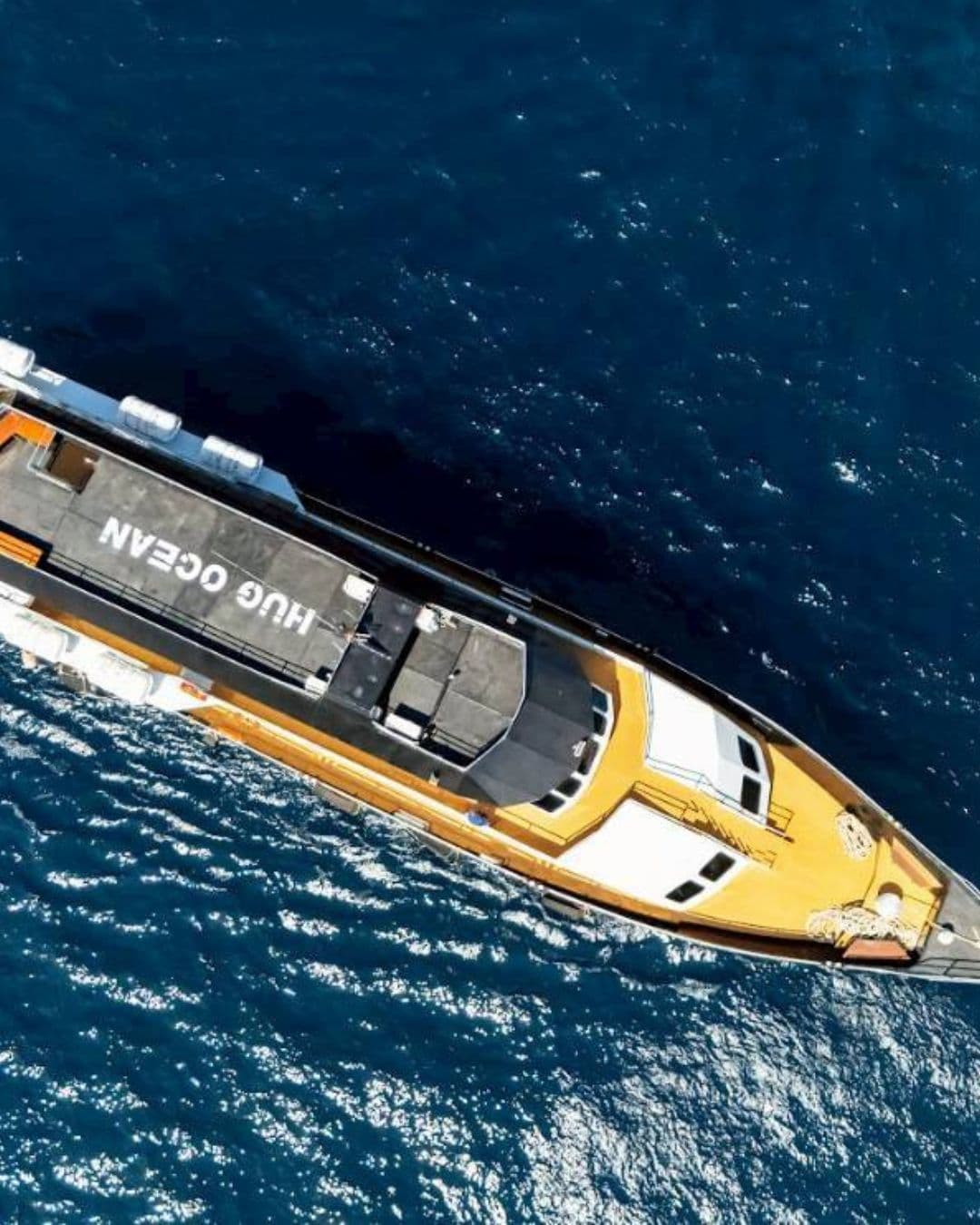
Discover Phuket's Andaman Sea aboard Hug Ocean — a luxury 3-deck dive yacht for 80 guests with a thrilling water slide, sun-soaked top deck, and PADI-certified diving at Racha Yai and Racha Noi.

Aquarian Liveaboard
liveaboard

Aquarian Liveaboard

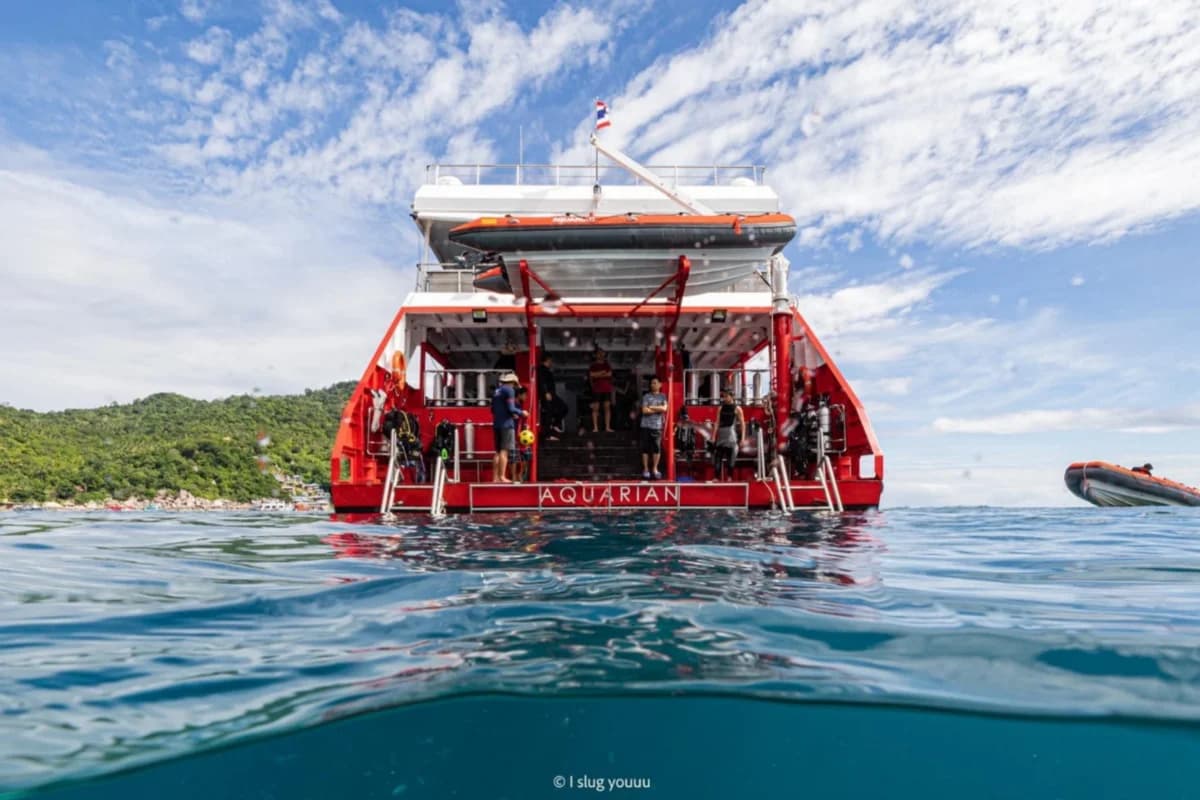
MV Aquarian — striking 2021-built red steel liveaboard, 31.4 m × 7.5 m, max 28 guests in 14 cabins. Free unlimited Nitrox via Coltri Sub membranes, one of Thailand's largest dive platforms, and full premium-hotel comfort.

Issara Liveaboard
liveaboard

Issara Liveaboard

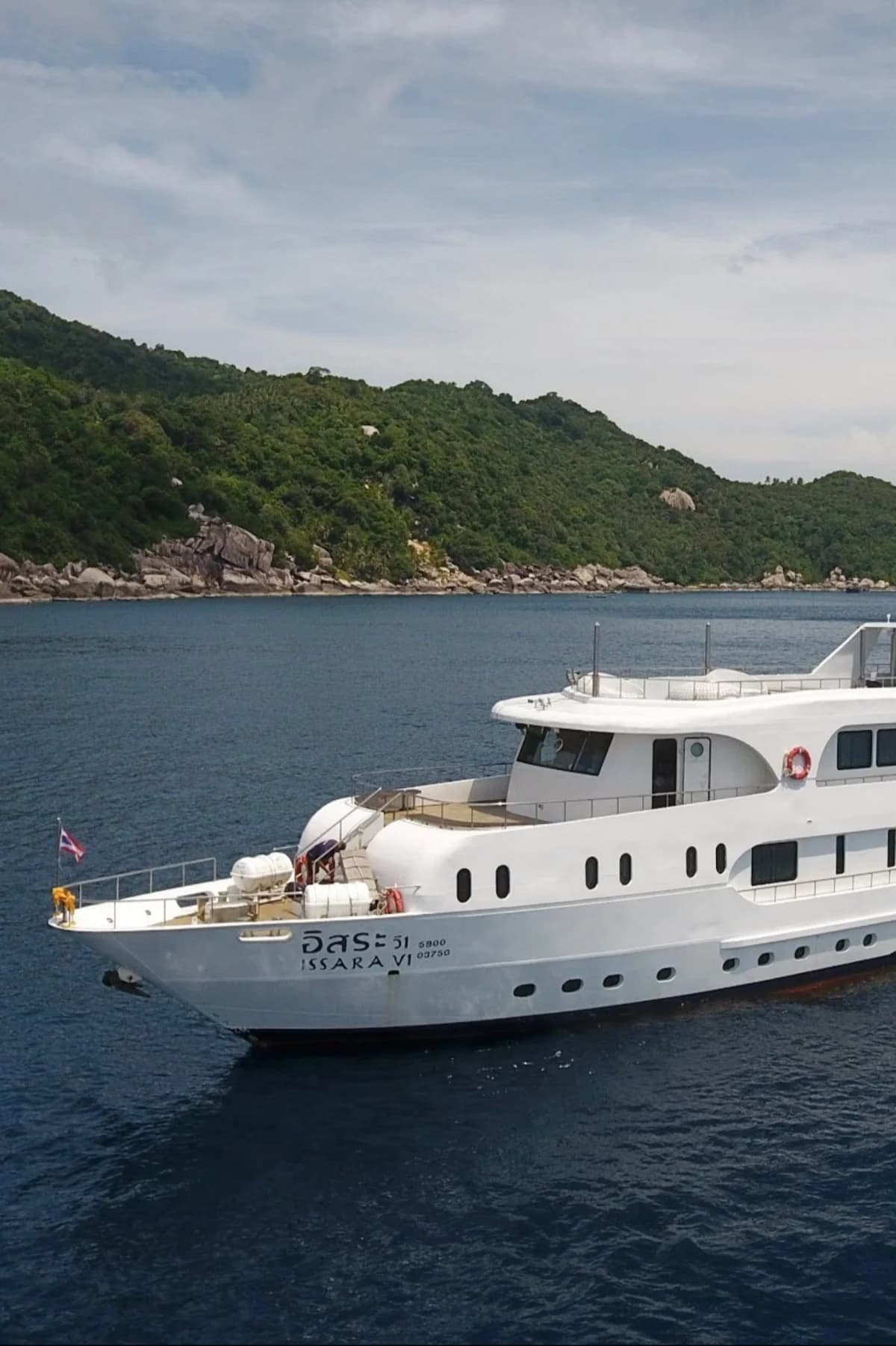
MV Issara — high-end Thai steel-hulled liveaboard built 2016–17, 28.5 m × 6.5 m, 4 decks, max 22 guests in 11 hotel-style cabins. Indoor saloon, jacuzzi sun deck, full-board buffet dining.

Mandarin Queen 5
daytrip

Mandarin Queen 5

Brand-new Phuket dive boat — 26.2 m M/V Mandarin Queen 5 with spacious dive platform, lounge and upper sun deck. Daily day trips to King Cruiser Wreck, Shark Point, Anemone Reef, Racha Yai and Racha Noi.