Scuba Day TripsSnorkelingLand TourLiveaboardDive ResortFreedive Trips
Scuba CoursesFreedive Courses
Blog
Your First Dive in Phuket: What No One Tells You
← Blog

Your First Dive in Phuket: What No One Tells You

16 เมษายน 2569

Never dived before? Here's the honest lowdown on Discover Scuba in Phuket — what day 1 really looks like, what to skip, and how to pick a shop that won't scare you.

You're on holiday in Phuket, you've seen the Instagram reels, and now you're wondering if you could actually breathe underwater. Short answer: yes, almost certainly. The longer answer — the one the glossy brochures skip — is what this guide is about. I'll walk you through your real first day, the fears that are and aren't worth having, and how to pick a dive shop that treats you like a person, not a ticket number.

DSD vs Open Water: which one do you actually want?

There are two ways to start diving in Phuket, and shops will sometimes push the wrong one because of margins. A Discover Scuba Diving (DSD) day is a taster — one morning of briefing, a shallow skills session, then one or two real dives to about 12 meters with an instructor glued to your shoulder. It costs roughly 3,500-4,500 THB and you get zero certification, but you'll know within 90 minutes whether diving is for you. The PADI Open Water course is 3-4 days, around 12,900-15,250 THB, includes 4 real dives, and leaves you with a lifetime license to dive anywhere in the world to 18 meters. If you have three days in Phuket and genuinely think you'll dive again, skip the DSD — the money you spend on it doesn't transfer fully to the full course.

What day 1 actually feels like (minute by minute)

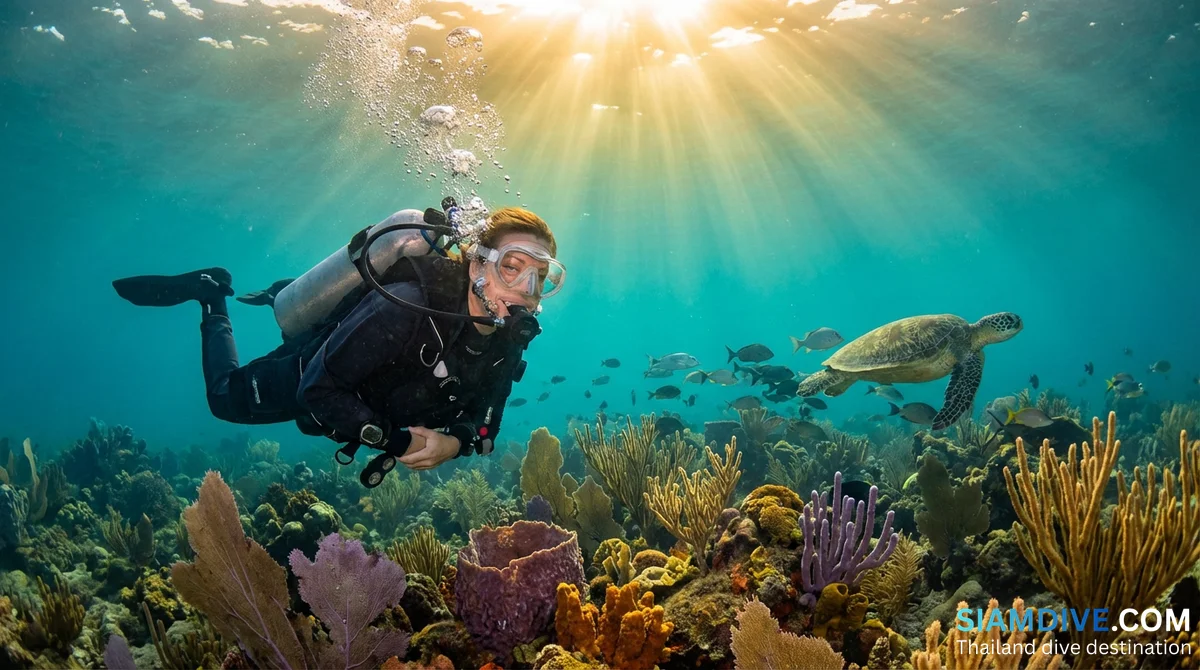
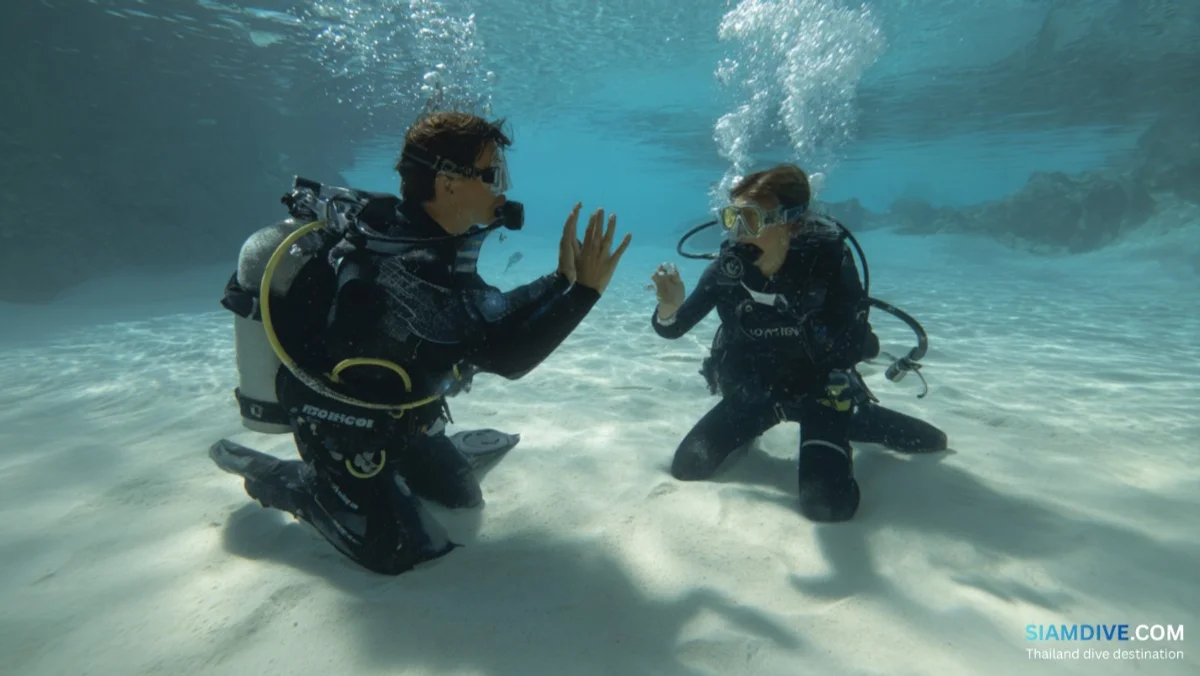
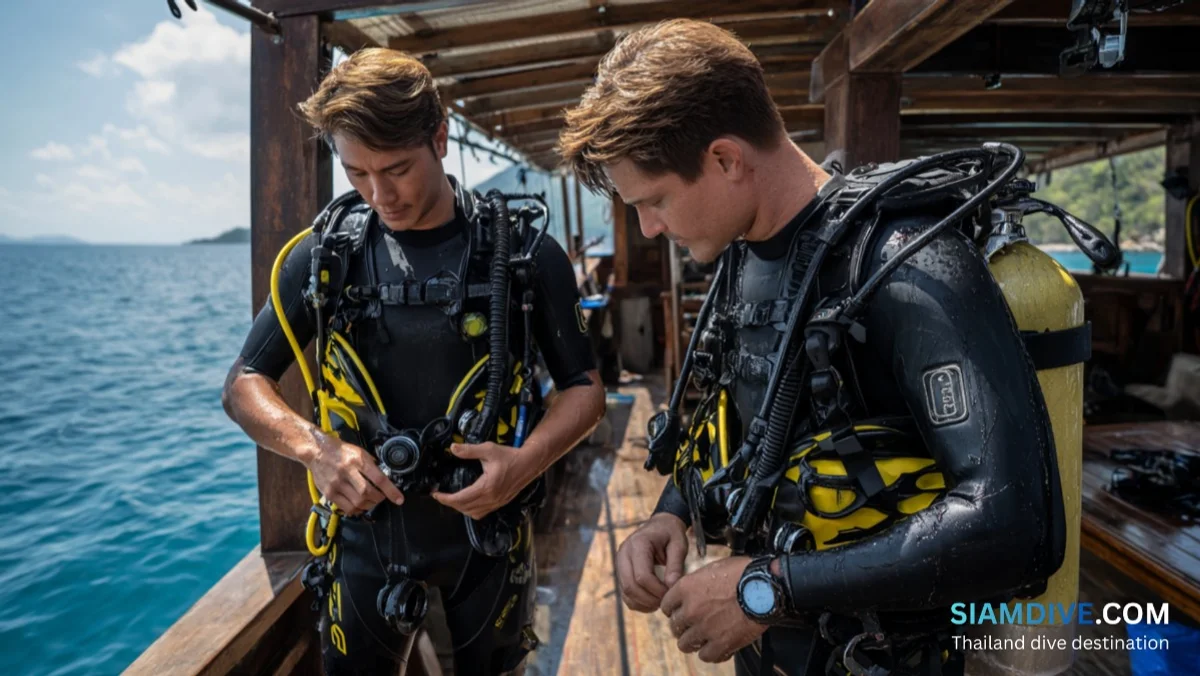
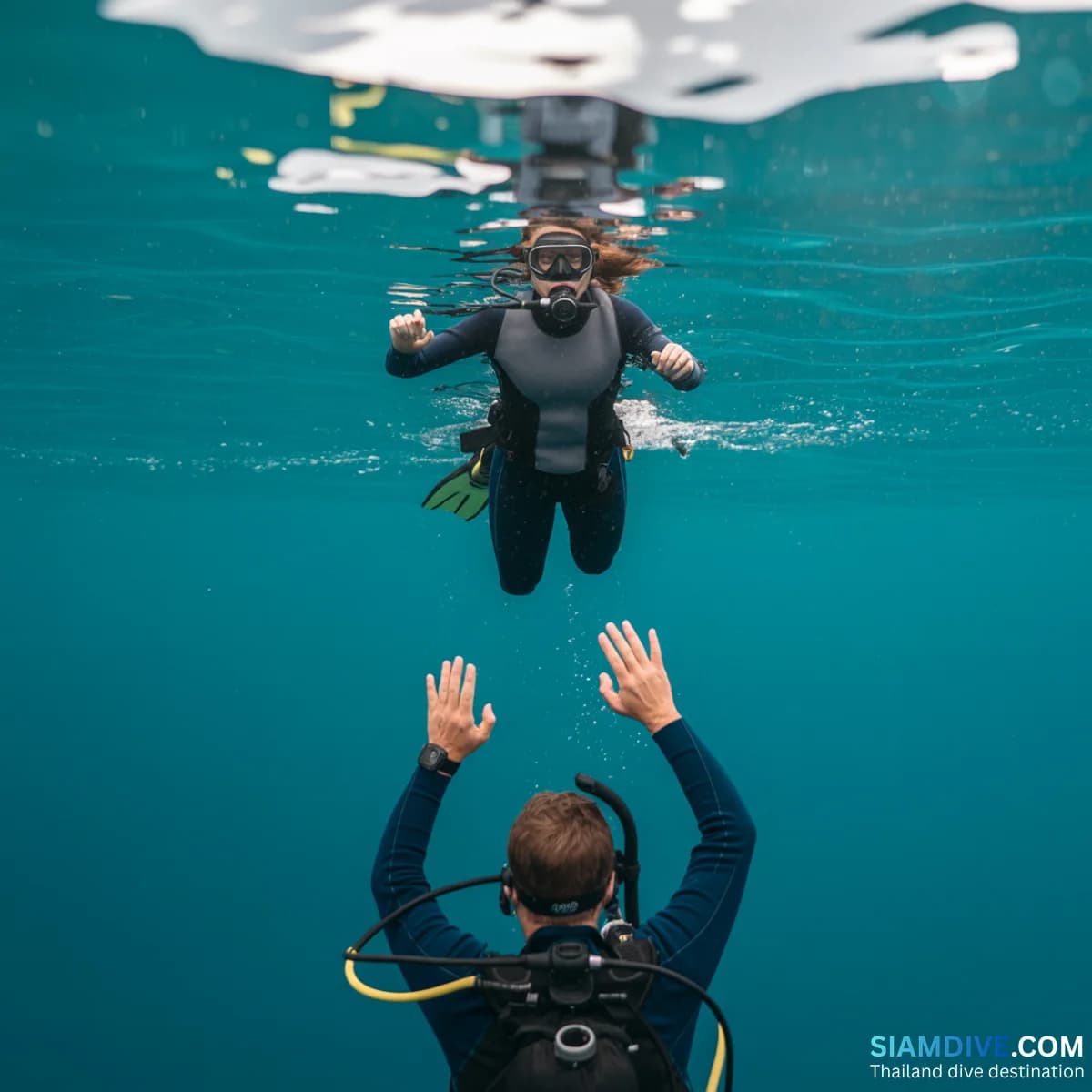
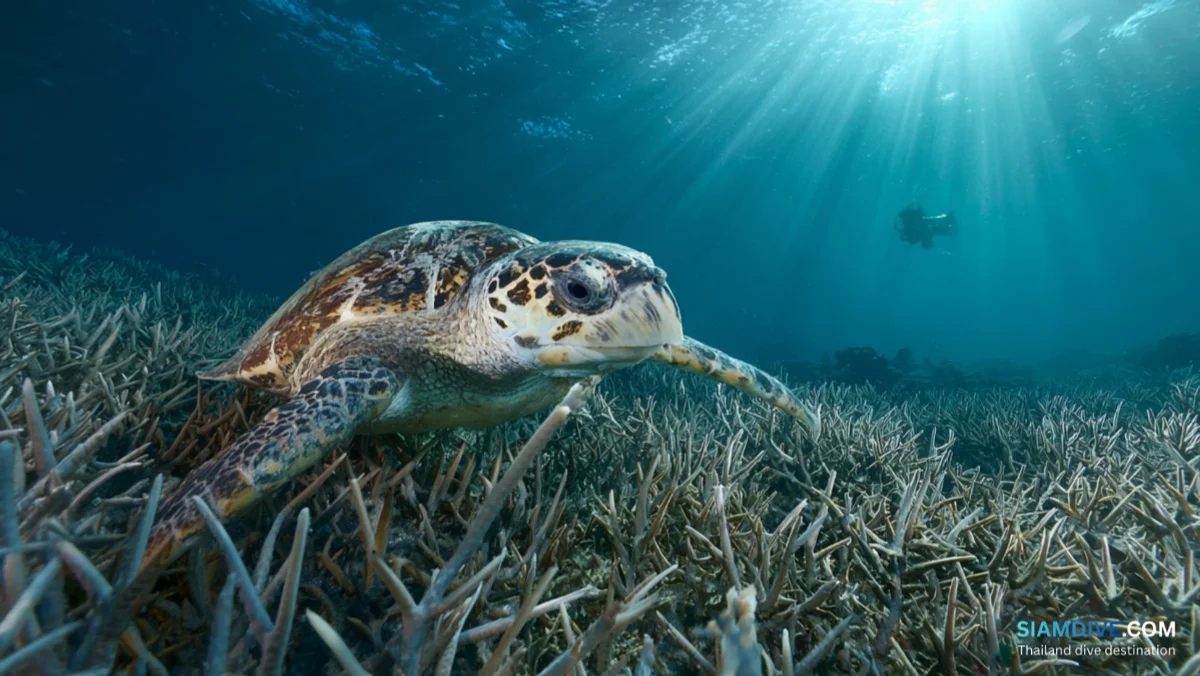
You'll be picked up around 7:00-7:30 AM from your hotel. The boat leaves Chalong Pier by 8:30 and cruises about 90 minutes to Racha Yai. On the way, your instructor hands you a short booklet and goes through hand signals, equalizing, and what to do if something feels wrong. You'll put on a wetsuit that never fits on the first try. Then you step into waist-deep water off the beach or a shallow sandy bay, kneel down, and practice three things: clearing water from your mask, recovering your regulator if it slips out, and equalizing your ears. That's it. Thirty minutes later you're drifting over a coral garden at 8-10 meters, watching parrotfish crunch coral and maybe a turtle cruising past. Most first-timers surface grinning and slightly dazed.

The fears worth having (and the ones that aren't)

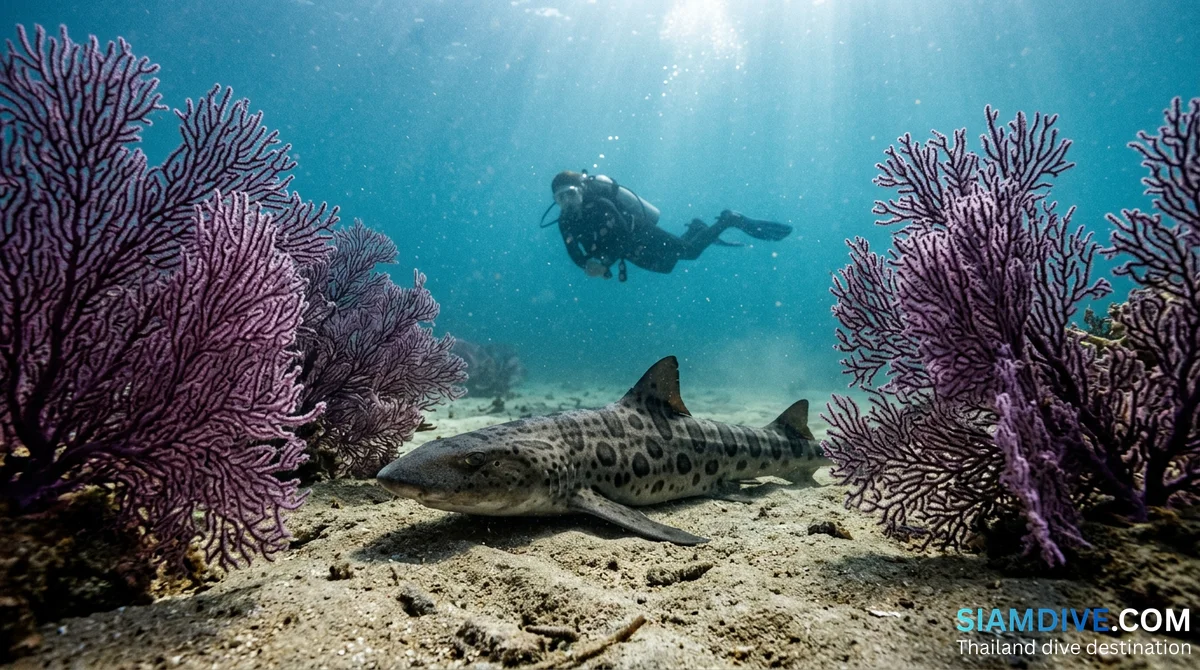
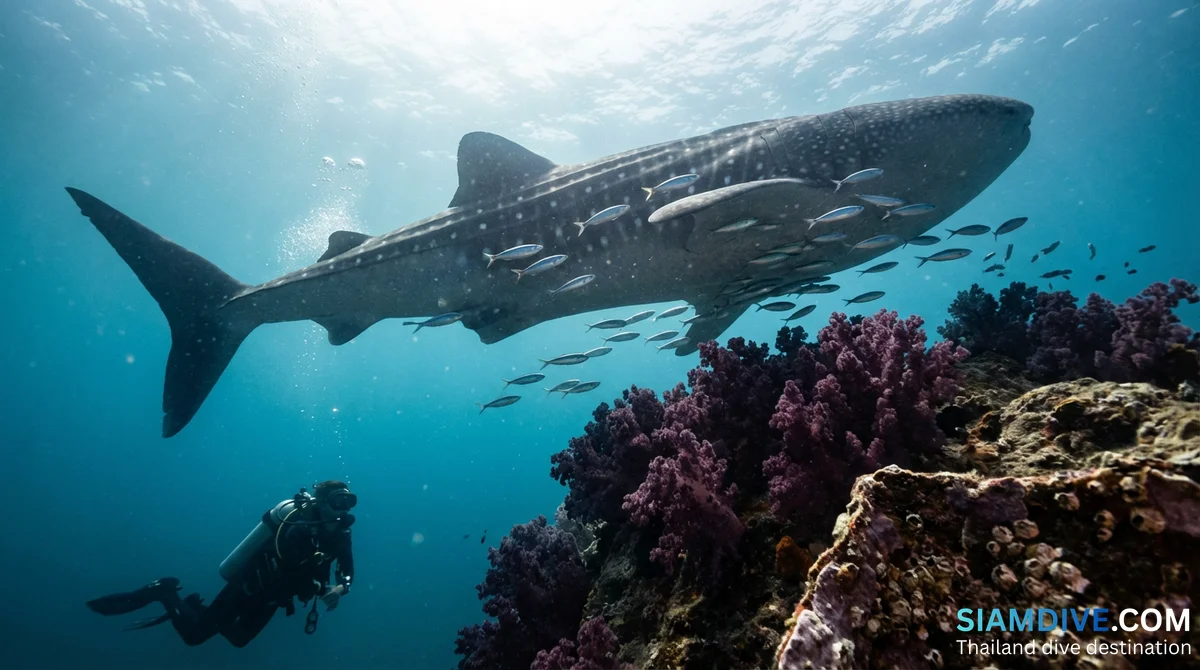
Worth taking seriously: ear equalization. If you can't pop your ears on a plane, tell your instructor — you'll need to descend slowly, and if your sinuses are congested from AC or a cold, postpone. Pushing through ear pain is how people get hurt. Not worth panicking about: sharks (the reef sharks around Phuket are tiny and shy), running out of air (your gauge is right there and the instructor watches it too), or being a weak swimmer. You don't swim — you float, propelled gently by fins. If you can wade in a pool without drowning, you can do a DSD.

Where beginners actually dive from Phuket

Ignore anyone who tries to take you to the Similans for your first dive — those are overnight liveaboards for certified divers. Real beginner sites near Phuket are:

  • Racha Yai (Bay 1 & Bungalow Bay) — the undisputed classroom. Sandy bottoms, 15-25m visibility, minimal current, friendly reef fish. 90% of first dives happen here.
  • Racha Noi (south side) — slightly deeper, sometimes used for the second dive once you've got buoyancy sorted.
  • Shark Point / Anemone Reef — skip these as a total beginner; currents can pick up.
  • Coral Island (Koh Hae) — a cheaper half-day option if you're on a budget, but visibility is often worse.

How to pick a dive shop that won't screw you over

Phuket has 100+ dive shops and they are genuinely not all equal. Five things to check before you pay:

  • Ratio. For a DSD, PADI allows up to 4 students per instructor. Ask. Two is comfortable. Four is a factory.
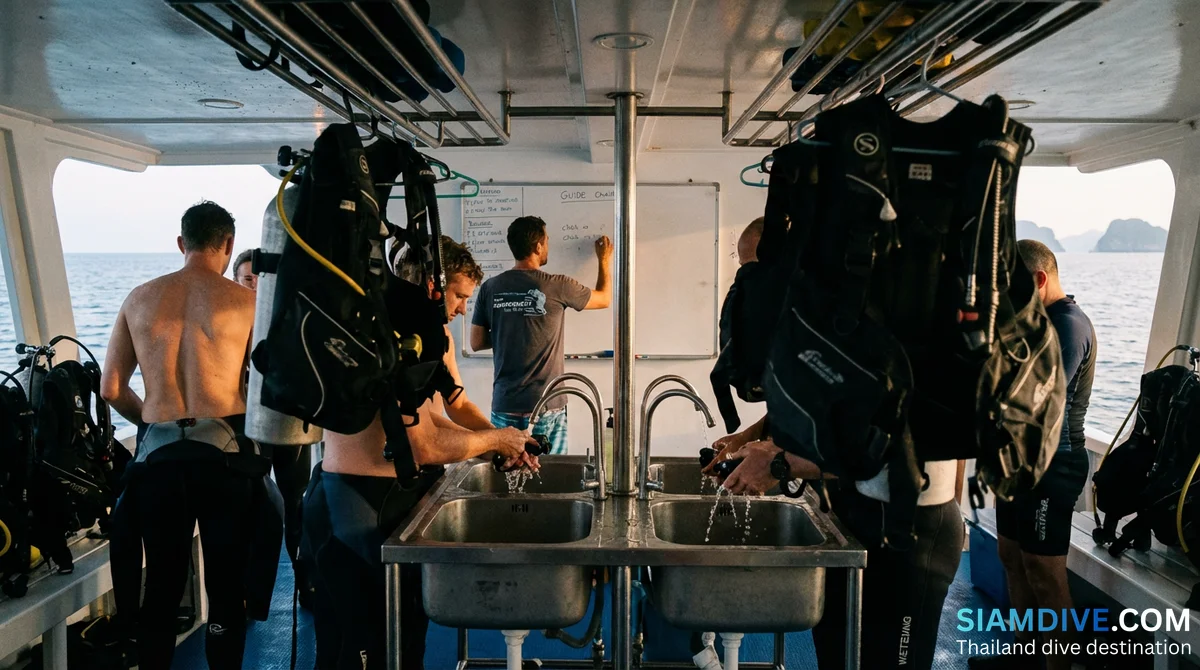
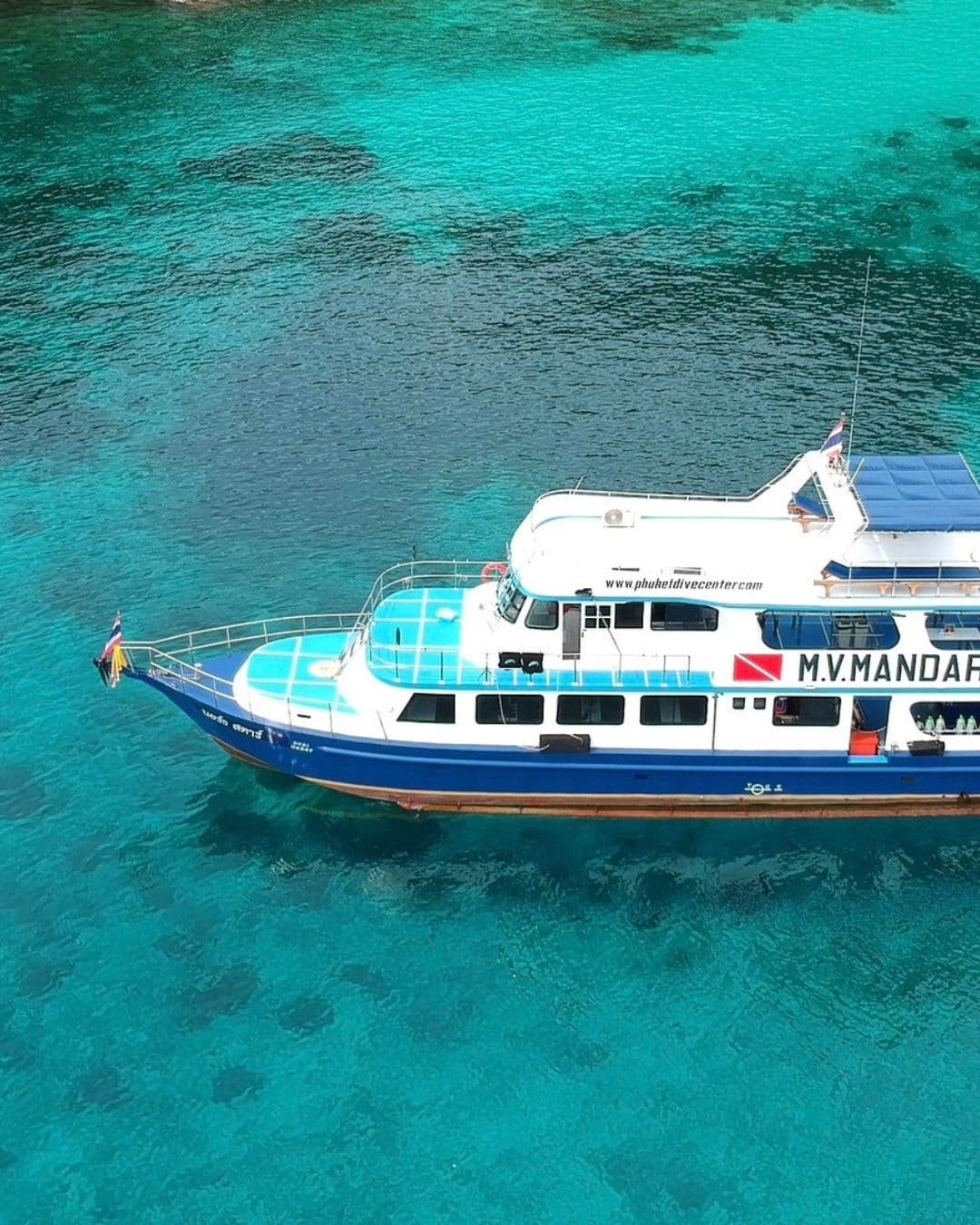
  • Boat. Big steel boats with a proper dive platform and toilet beat wooden longtails every time, especially if you get seasick.
  • Language. Your instructor's English (or your language) must be good enough to explain what to do if something goes wrong underwater. Don't be polite about this.
  • Reviews from the last 90 days, not 2019. Dive shops change ownership constantly in Thailand.
  • Insurance. Reputable shops are DAN members and include dive insurance. If they dodge the question, walk away.

What to actually bring (and what to leave)

Bring: swimsuit worn under your clothes, a dry change, flip-flops, reef-safe sunscreen (apply 30 minutes before — not on the boat, where it ends up on your mask), a 1L water bottle, motion sickness tablets taken 45 minutes before departure, and a towel. Leave: your GoPro (unless you already know how to handle one — it's a distraction on dive 1), jewelry, contact lenses if you can wear prescription masks instead, and any cotton t-shirt you want to keep dry. Most shops rent underwater cameras for 500-800 THB and the instructor will film you — pay for it, you will want this footage.

The one thing beginners always get wrong

They hold their breath. Your lungs aren't used to compressed air, and the instinct on the way up is to clamp down. Don't. The single most repeated rule in scuba diving is breathe continuously, never hold your breath. A held breath during ascent can cause serious lung injury even from a few meters. Slow inhale, slow exhale, like you're meditating. If you can do that, you can dive.

After the dive: should you keep going?

If you loved it, book the Open Water course before you leave the boat — you'll often get a discount if the shop already has your DSD on file. If you're on the fence, sleep on it. The worst reason to get certified is pressure on a boat surrounded by happy divers. The best reason is that you genuinely cannot stop thinking about it by day 2. That was me in 2011, and I haven't stopped since.

Planning your first Phuket dive and want help picking a shop or trip that actually matches your level? siamdive.com has vetted beginner programs, real reviews, and liveaboards for when you're ready to level up.
← กลับไปหน้า Blog

บทความแนะนำ

White Rock Koh Tao Diving Guide: The Island's Best Night Dive

White Rock Koh Tao Diving Guide: The Island's Best Night Dive

White Rock (Hin Khao) is Koh Tao's most-used dive site for a reason. Staghorn gardens, turtles, and the island's top night dive — here's how to dive it.

March in Thailand: Why the Andaman Always Wins the Dive Trip

March in Thailand: Why the Andaman Always Wins the Dive Trip

Thailand has two seas. In March, only one delivers peak visibility, whale shark odds, and liveaboard access. Here's why seasoned divers always pick the Andaman.

7 Mistakes That Ruin Thailand Liveaboard Trips (and How to Dodge Them)

7 Mistakes That Ruin Thailand Liveaboard Trips (and How to Dodge Them)

Wrong boat size, wrong month, hidden fees — the mistakes that wreck Thailand liveaboard trips happen before you leave the pier. Here's how to avoid them.

One Country, Every Type of Dive: Why Thailand Is the Most Underrated Bucket-List Destination

One Country, Every Type of Dive: Why Thailand Is the Most Underrated Bucket-List Destination

Whale sharks, manta rays, macro critters, wrecks, pinnacles, drift, coral gardens — Thailand delivers every style of diving within one country. Here's why that matters.

Shark Point Phuket: Where Leopard Sharks Sleep Among Purple Coral

Shark Point Phuket: Where Leopard Sharks Sleep Among Purple Coral

Shark Point (Hin Musang) is Phuket's top marine sanctuary with leopard sharks, purple soft coral, and 30-meter visibility from November to April.

Green Rock Koh Tao Diving Guide: The Island's Best Swim-Through Site

Green Rock Koh Tao Diving Guide: The Island's Best Swim-Through Site

Green Rock off Koh Nang Yuan offers Koh Tao's best boulder maze, The Chimney swim-through, dense macro life and advanced training — here's everything divers need.

Diving Thailand Month by Month: The Two-Coast Strategy That Beats the Monsoon

Diving Thailand Month by Month: The Two-Coast Strategy That Beats the Monsoon

Thailand has two dive seasons on opposite coasts. Here's the month-by-month guide to picking the right side so monsoon never ruins your trip.

Why Learn Scuba Diving: What the Bucket List Version Doesn't Tell You

Why Learn Scuba Diving: What the Bucket List Version Doesn't Tell You

Scuba diving stays on bucket lists for years. Here's what the course actually costs, what you see down there, and why Thailand makes it easy to start.

Your Wetsuit Stinks: The Complete Care Guide That Actually Works

Your Wetsuit Stinks: The Complete Care Guide That Actually Works

From rinsing after every dive to patching neoprene tears, this no-nonsense guide covers everything you need to keep your wetsuit fresh, flexible, and lasting years longer.

Aow Leuk Koh Tao Diving Guide: The Island's Best Beginner Bay

Aow Leuk Koh Tao Diving Guide: The Island's Best Beginner Bay

Aow Leuk on Koh Tao's southeast coast offers shallow reefs, juvenile blacktip sharks, and easy shore diving — the perfect beginner bay on the island.

Tanote Bay Koh Tao Guide: Snorkeling, Diving, and Cliff Jumping

Tanote Bay Koh Tao Guide: Snorkeling, Diving, and Cliff Jumping

Tanote Bay on Koh Tao's east coast offers fringing reefs, a cliff jumping rock, and a sunken catamaran — the island's best all-in-one shore day.

How Scuba Diving Rewires Your Brain (And Why You Can't Stop)

How Scuba Diving Rewires Your Brain (And Why You Can't Stop)

Discover the science behind why scuba diving reduces anxiety, builds unshakable confidence, and creates a community you never want to leave.

How to Start Scuba Diving: A Complete Beginner's Guide

How to Start Scuba Diving: A Complete Beginner's Guide

Ready to try scuba diving but don't know where to begin? This step-by-step guide covers everything from choosing a course to your first ocean dive.

Whale Shark Encounters: What Every Diver Should Know

Whale Shark Encounters: What Every Diver Should Know

Whale shark behavior, encounter ethics, and Thailand's best sites from Richelieu Rock to Sail Rock — a factual guide for responsible divers.

How to Choose the Right Liveaboard Trip in Thailand

How to Choose the Right Liveaboard Trip in Thailand

A practical guide to picking the best Thailand liveaboard for your budget, experience level, and dream dive sites from Similan to Richelieu Rock.

Andaman Sea vs Gulf of Thailand: Picking Your Dive Region

Andaman Sea vs Gulf of Thailand: Picking Your Dive Region

Compare Thailand's two dive coasts side by side — marine life, visibility, seasons, costs, and which region fits your experience level.

Cleaning Stations: The Secret Social Hubs of the Reef

Cleaning Stations: The Secret Social Hubs of the Reef

Discover cleaning stations — where predators open their mouths for tiny fish and shrimp to crawl inside. The most fascinating animal behavior you can witness on any dive.

Three Coasts in Seven Days: Our Thailand Dive Sampler Route

Three Coasts in Seven Days: Our Thailand Dive Sampler Route

Phuket to Koh Tao to Pattaya in a week: the three-coast Thailand dive sampler we ran last April, with real transfers, park fees and what showed up.

Safe Diving Techniques: 8 Skills That Prevent Accidents

Safe Diving Techniques: 8 Skills That Prevent Accidents

Master the 8 essential safe diving techniques every diver must know — from buoyancy control and air management to emergency ascents and SMB deployment.

BCD Care: The Bladder Flush Most Divers Skip (And Pay For Later)

BCD Care: The Bladder Flush Most Divers Skip (And Pay For Later)

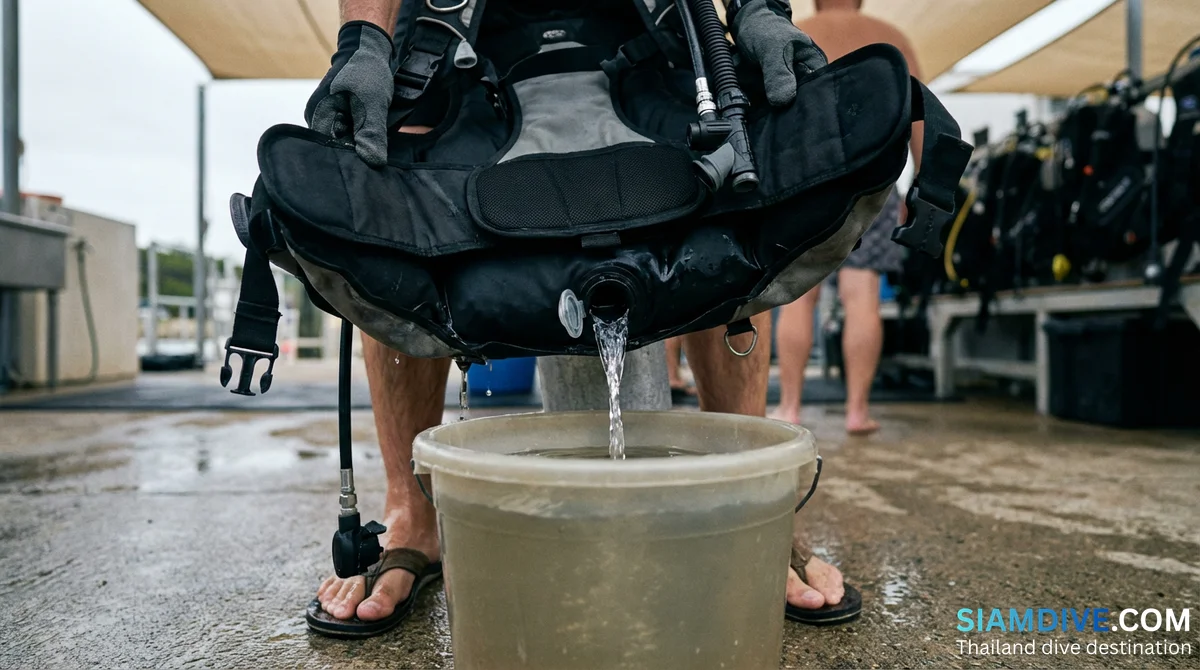
Learn the essential BCD maintenance steps most divers overlook — from proper bladder flushing to dump valve care, storage tips, and when it's time to replace your buoyancy control device.

ทริปแนะนำ

Hug Ocean Boat
daytrip

Hug Ocean Boat

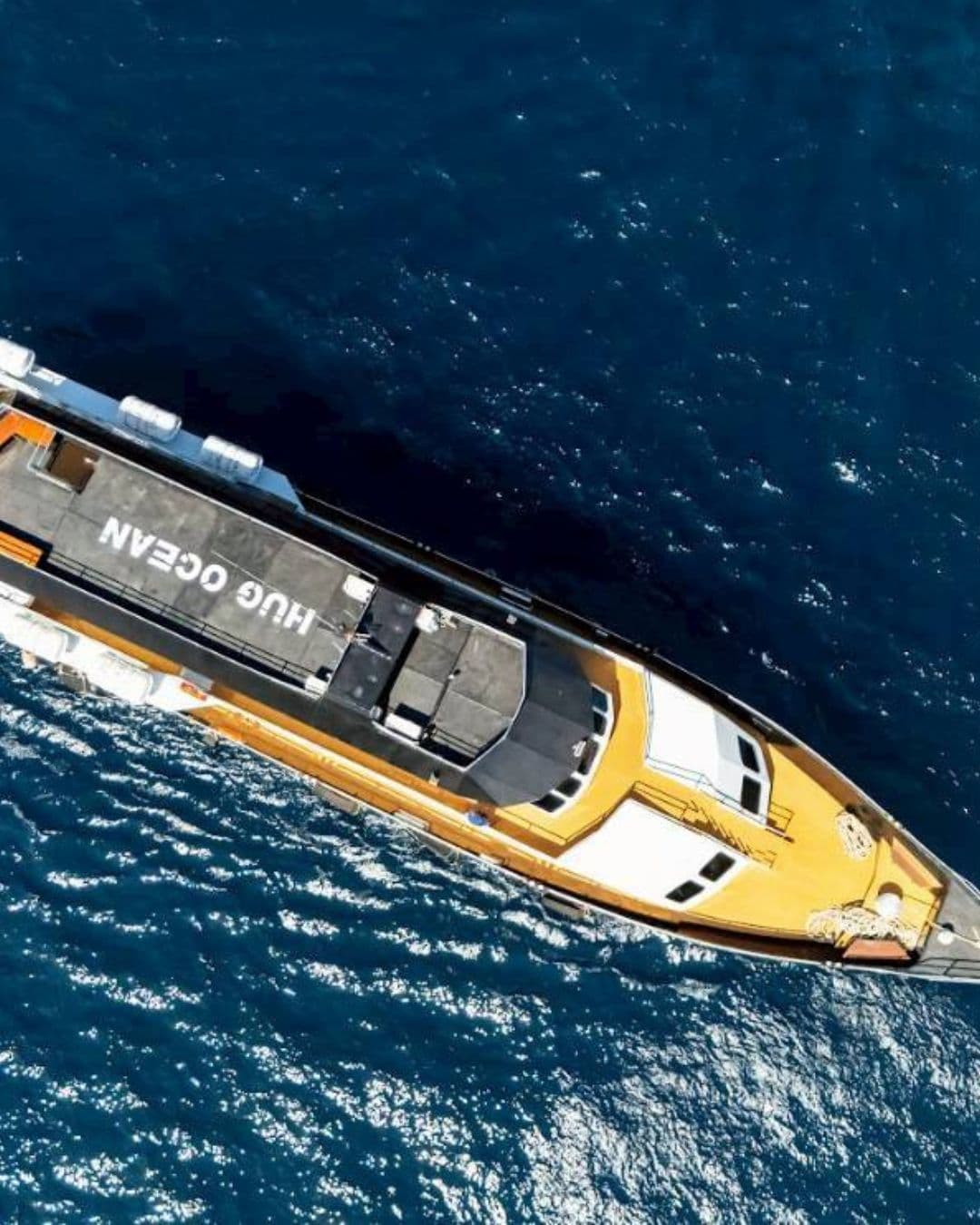
Discover Phuket's Andaman Sea aboard Hug Ocean — a luxury 3-deck dive yacht for 80 guests with a thrilling water slide, sun-soaked top deck, and PADI-certified diving at Racha Yai and Racha Noi.

Aquarian Liveaboard
liveaboard

Aquarian Liveaboard

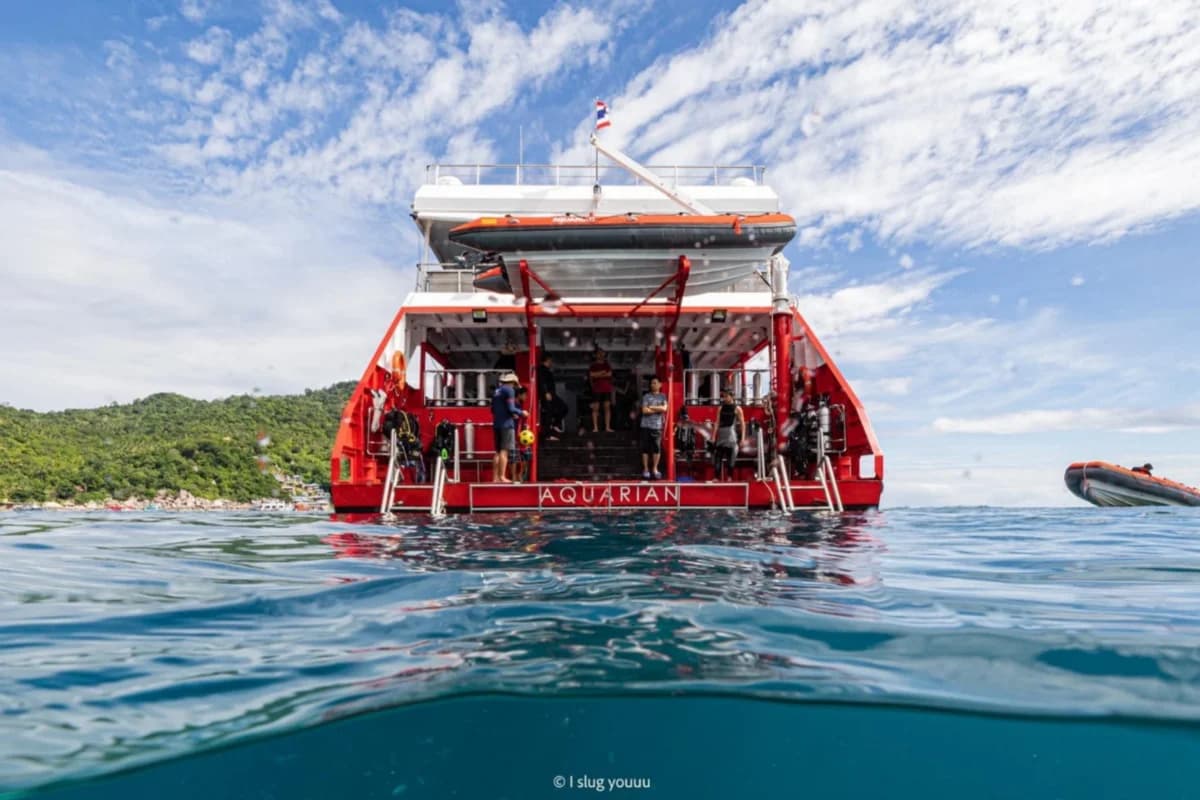
MV Aquarian — striking 2021-built red steel liveaboard, 31.4 m × 7.5 m, max 28 guests in 14 cabins. Free unlimited Nitrox via Coltri Sub membranes, one of Thailand's largest dive platforms, and full premium-hotel comfort.

Issara Liveaboard
liveaboard

Issara Liveaboard

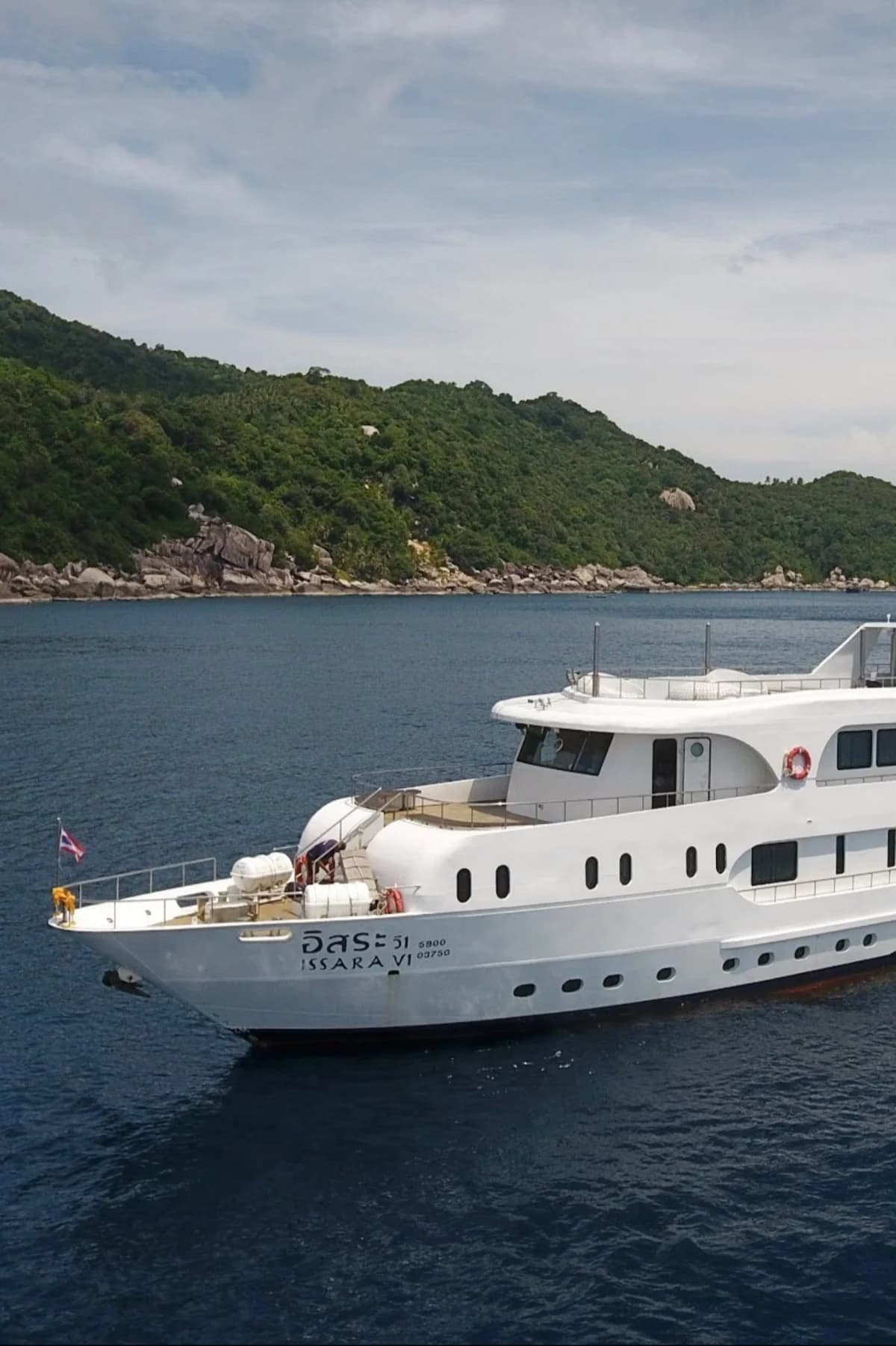
MV Issara — high-end Thai steel-hulled liveaboard built 2016–17, 28.5 m × 6.5 m, 4 decks, max 22 guests in 11 hotel-style cabins. Indoor saloon, jacuzzi sun deck, full-board buffet dining.

Mandarin Queen 5
daytrip

Mandarin Queen 5

Brand-new Phuket dive boat — 26.2 m M/V Mandarin Queen 5 with spacious dive platform, lounge and upper sun deck. Daily day trips to King Cruiser Wreck, Shark Point, Anemone Reef, Racha Yai and Racha Noi.