Night or Deep First? Thailand's Reefs Already Chose for You
19 เมษายน 2569
Thailand's most popular reefs peak between 10 and 25 metres — which makes one specialty far more useful than the other for your first card.
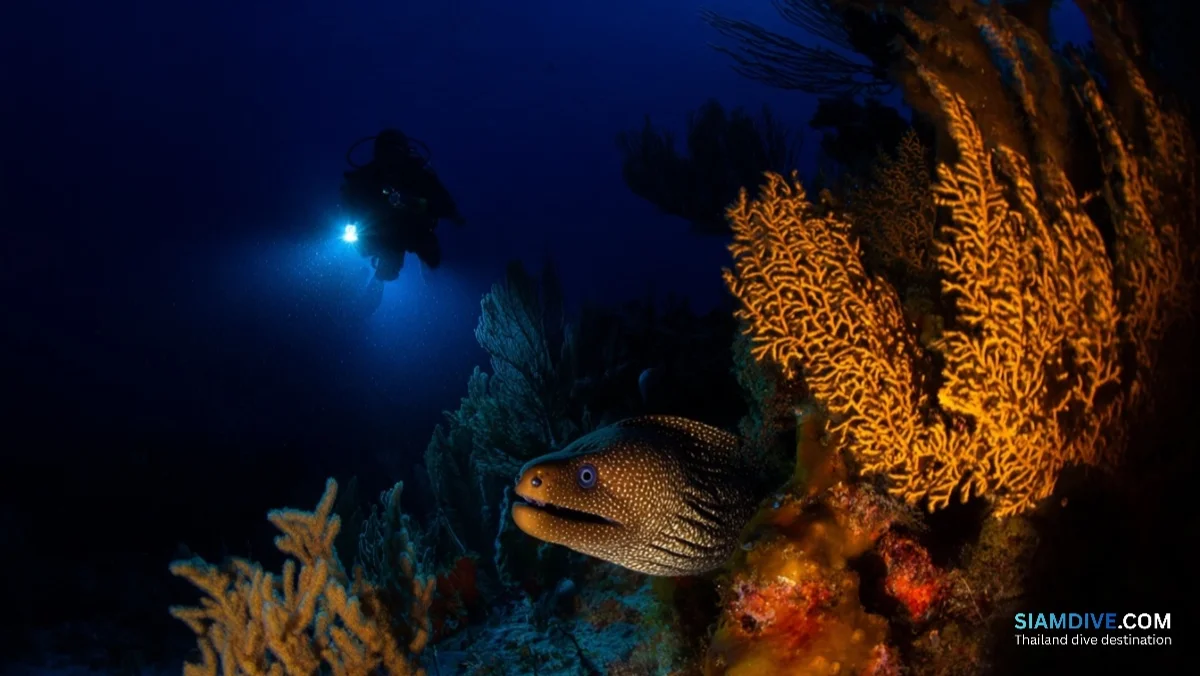
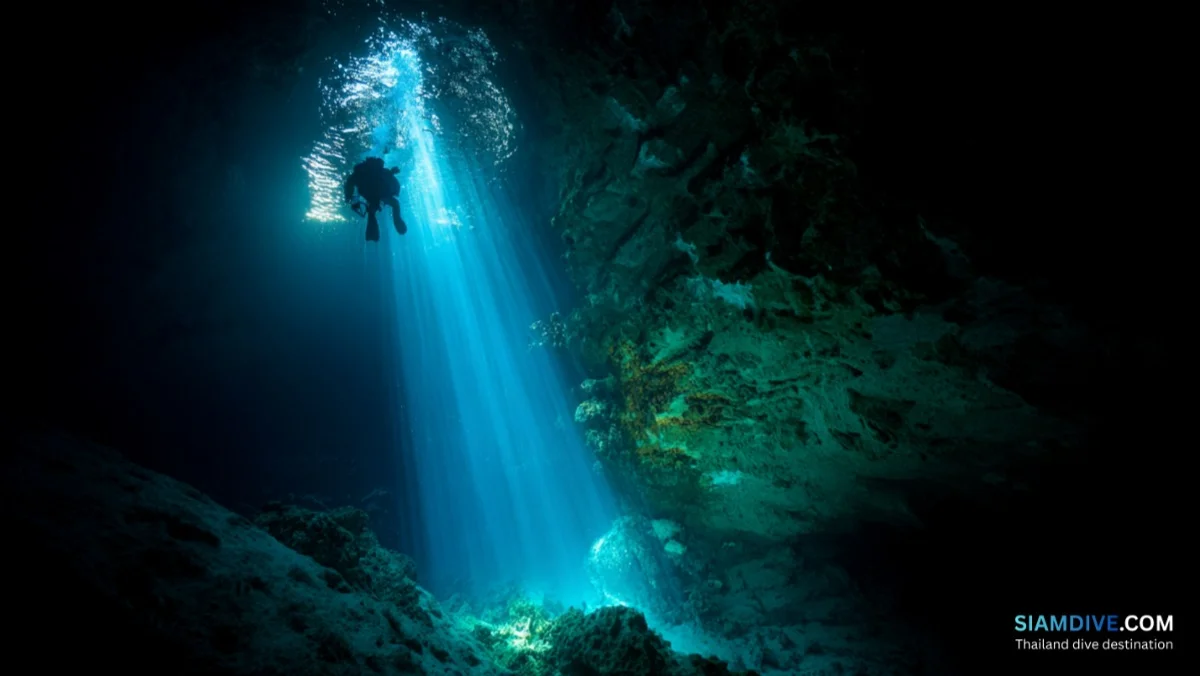
Walk into any dive shop on Koh Tao between November and April and ask which specialty to take first — night or deep — and the whiteboard behind the counter will likely have both scheduled for the same week. The question sounds like a coin flip. It is not. Thailand's reef geography, typical site depths, and the skills each course builds make one specialty measurably more useful here than the other. The answer is night, and the reefs themselves explain why.
What Each Specialty Actually Teaches
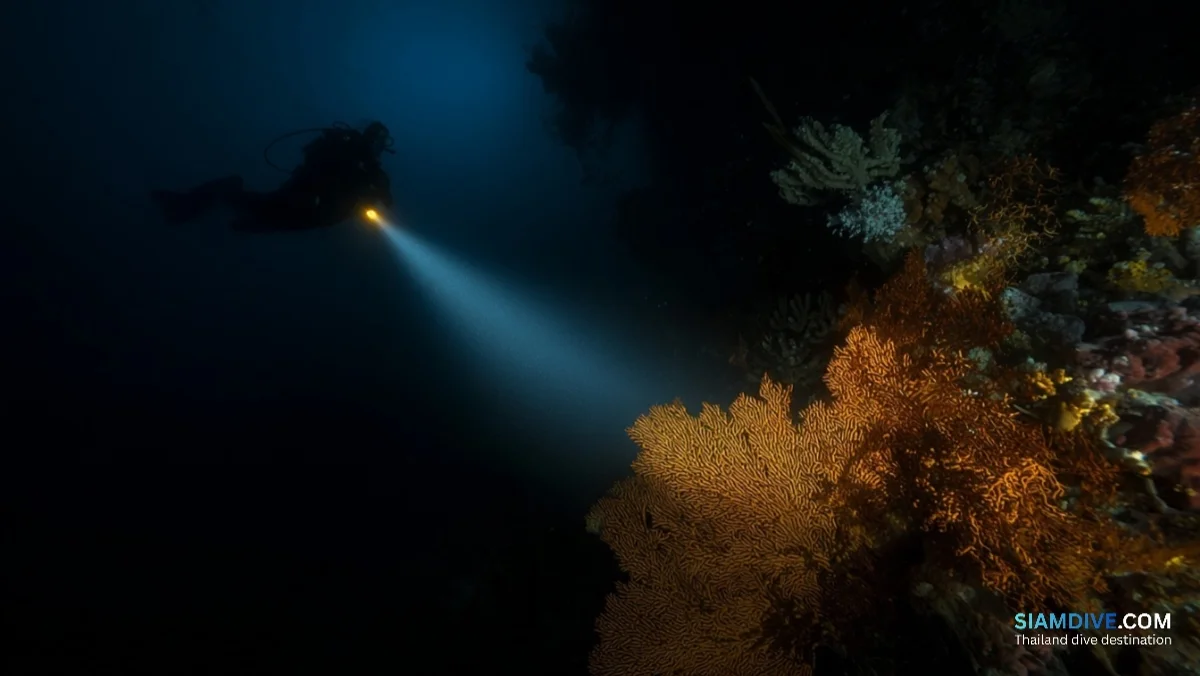
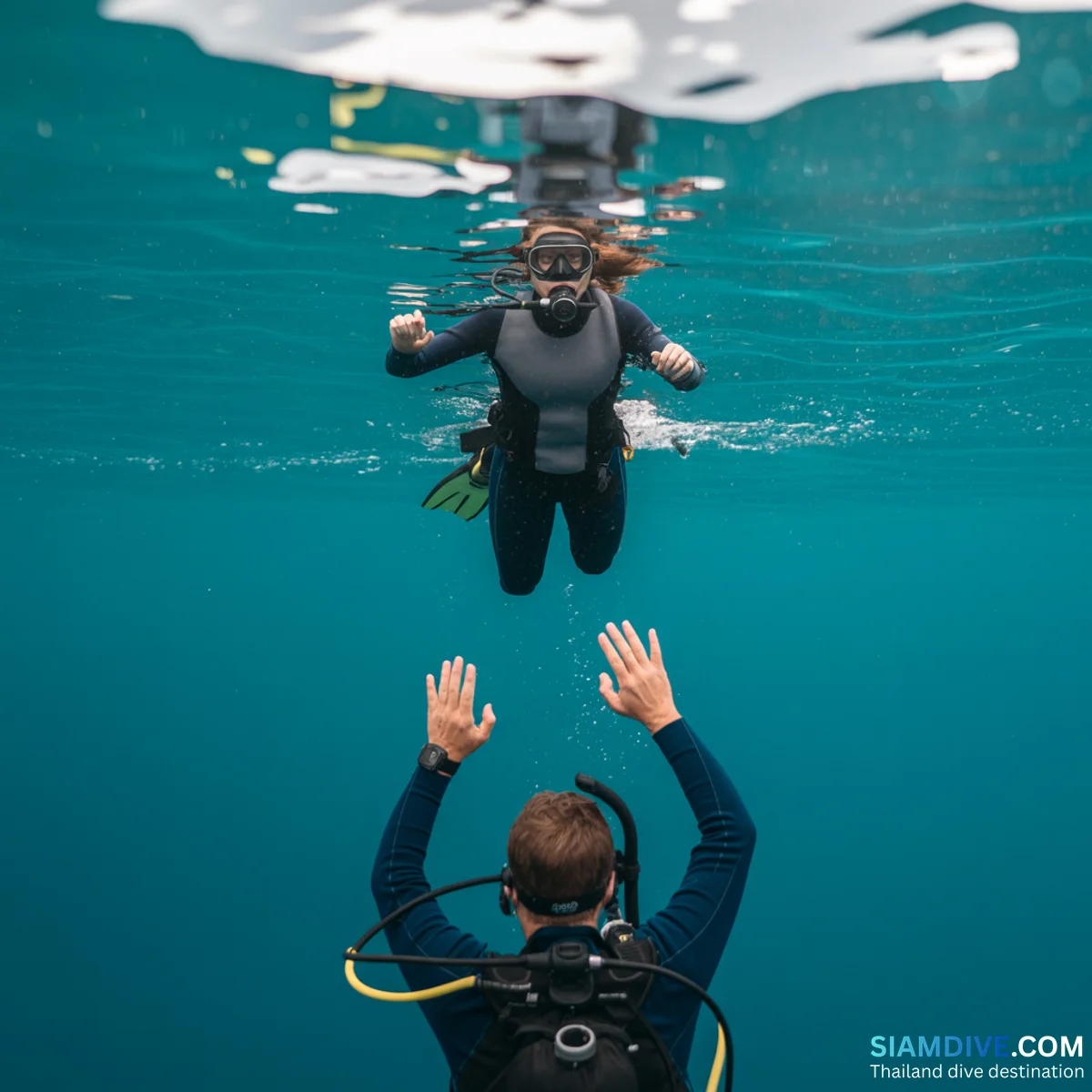
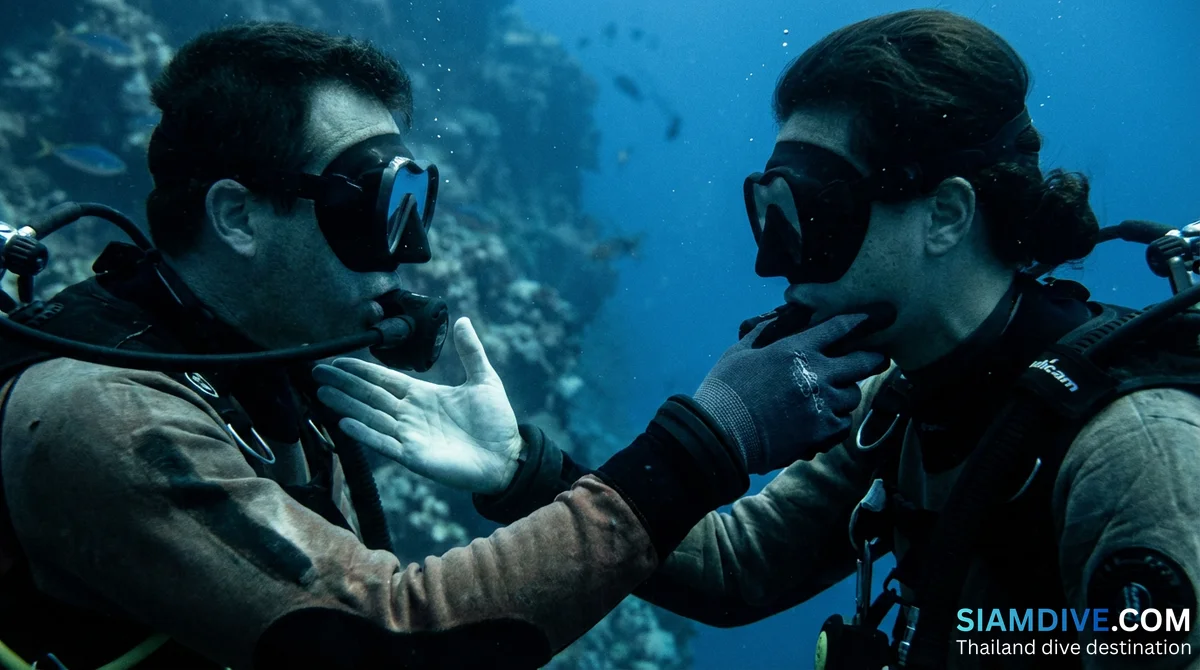
The PADI Night Diver course runs three supervised dives after sunset. It requires only an Open Water certification and around ten logged dives. The focus is navigation by compass and natural reference when visibility collapses to whatever your torch beam covers — typically two to four metres of useful range. Students learn buddy signalling with lights, how to manage sensory reduction, and how to navigate without the surface as a visual anchor. By the third dive, the darkness stops feeling like a limitation and starts feeling like a filter that removes distraction.
The Deep Diver specialty asks more of you before you start. Prerequisites include Advanced Open Water or Adventure Diver certification, a minimum age of fifteen, and a solid handle on buoyancy. Four dives go progressively deeper, reaching a maximum of 40 metres. The curriculum covers narcosis recognition, gas management at depth, ascent rate discipline, and emergency decompression procedures. It is a serious course — and it should be, because the margin for error shrinks with every additional atmosphere of pressure.
Both cards are valuable. The question is which one opens more diving in Thailand — and that depends on where the reefs actually are.
The Depth Map Thailand Doesn't Advertise
Certification-path articles love to talk about depth limits in the abstract. Here is what matters more: the actual depth profile of Thailand's most-dived sites, drawn from park records and operator depth logs.
- White Rock, Koh Tao: 6–22 m — night dive favourite, best coral action at 12–16 m
- Twins, Koh Tao: 8–18 m — shallow enough for OW divers, rich at every level
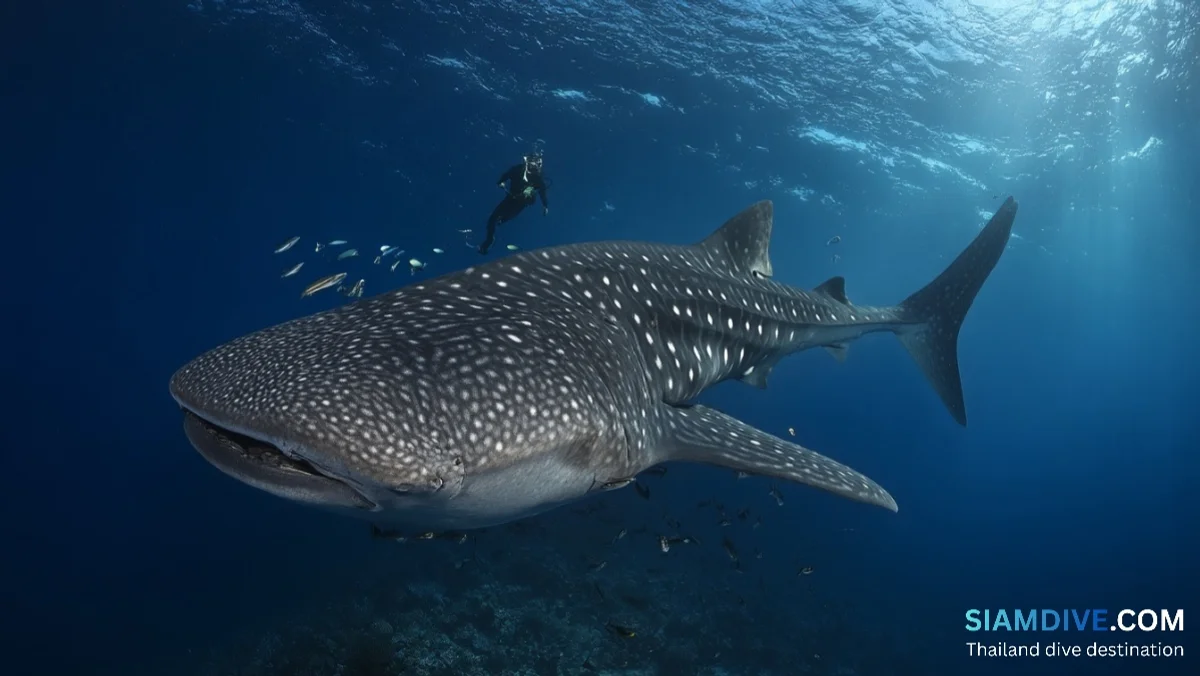
- Chumphon Pinnacle, Koh Tao: 14–36 m — whale shark aggregation zone sits at 14–20 m
- Southwest Pinnacle, Koh Tao: 5–26 m — barracuda schools circle at 15 m
- Sail Rock, Gulf of Thailand: 5–40 m — the Chimney swim-through drops to 18+ m
- Shark Point, Phuket: 8–24 m — leopard sharks rest on sand at 16–20 m
- King Cruiser Wreck, Phuket: 12–33 m — superstructure starts at 16 m
- Elephant Head, Similan Islands: 12–35 m — the famous swim-throughs sit at 20–28 m
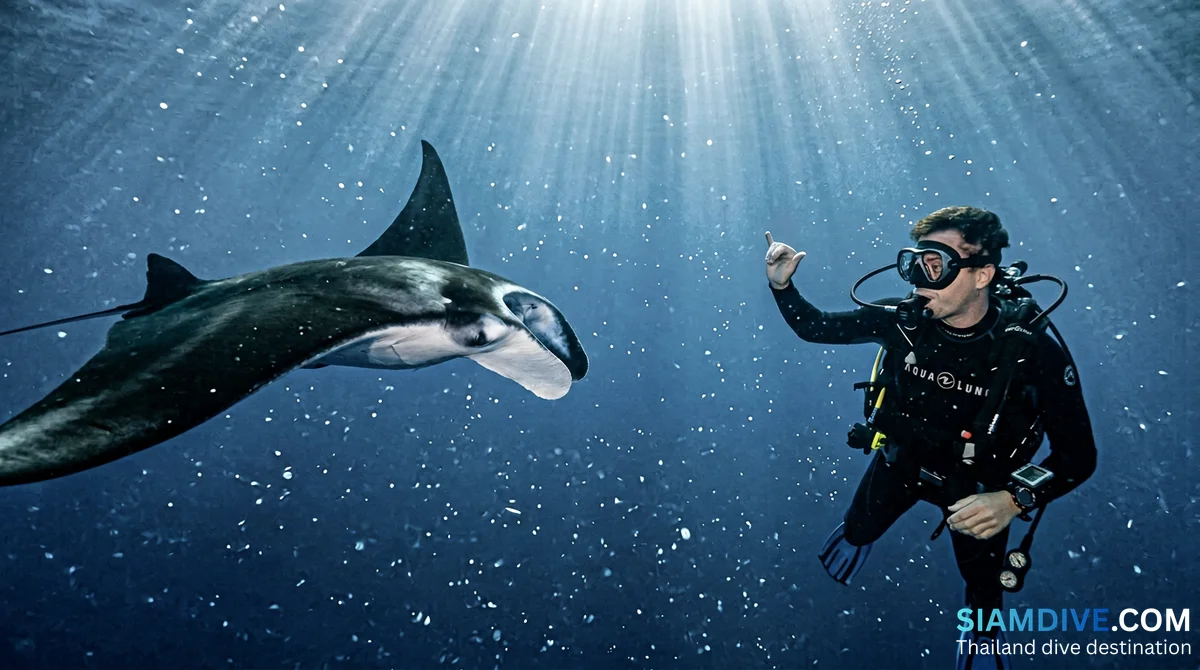
- Richelieu Rock, Andaman Sea: 5–35 m — manta cleaning station at 18–22 m
- Bida Nok, Phi Phi: 5–26 m — leopard sharks on sand at 12–18 m
- Hin Daeng, Koh Lanta: 10–60+ m — gorgonian fans peak at 18–30 m
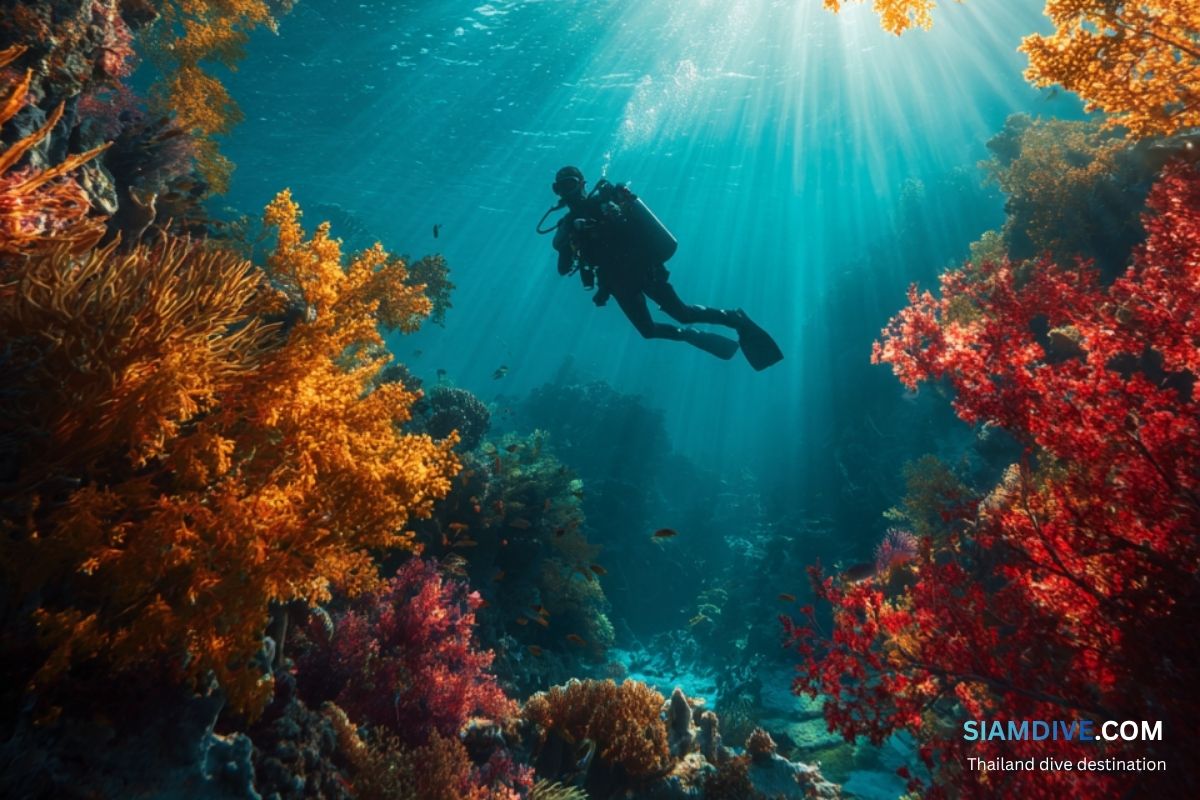
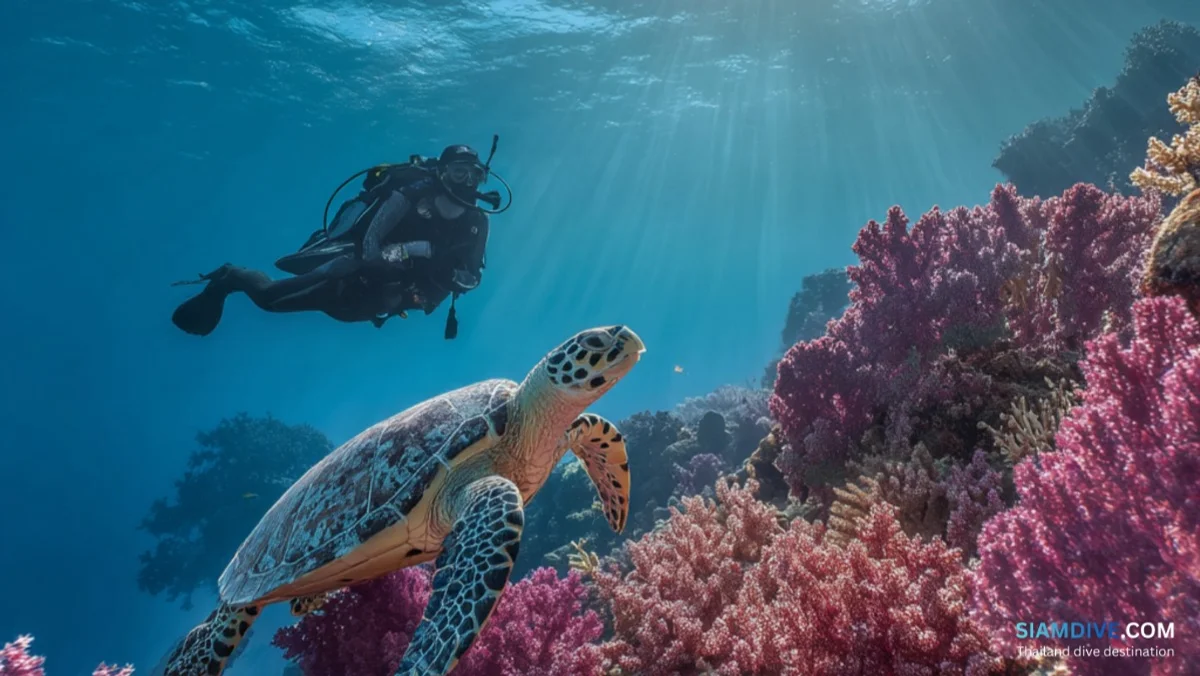
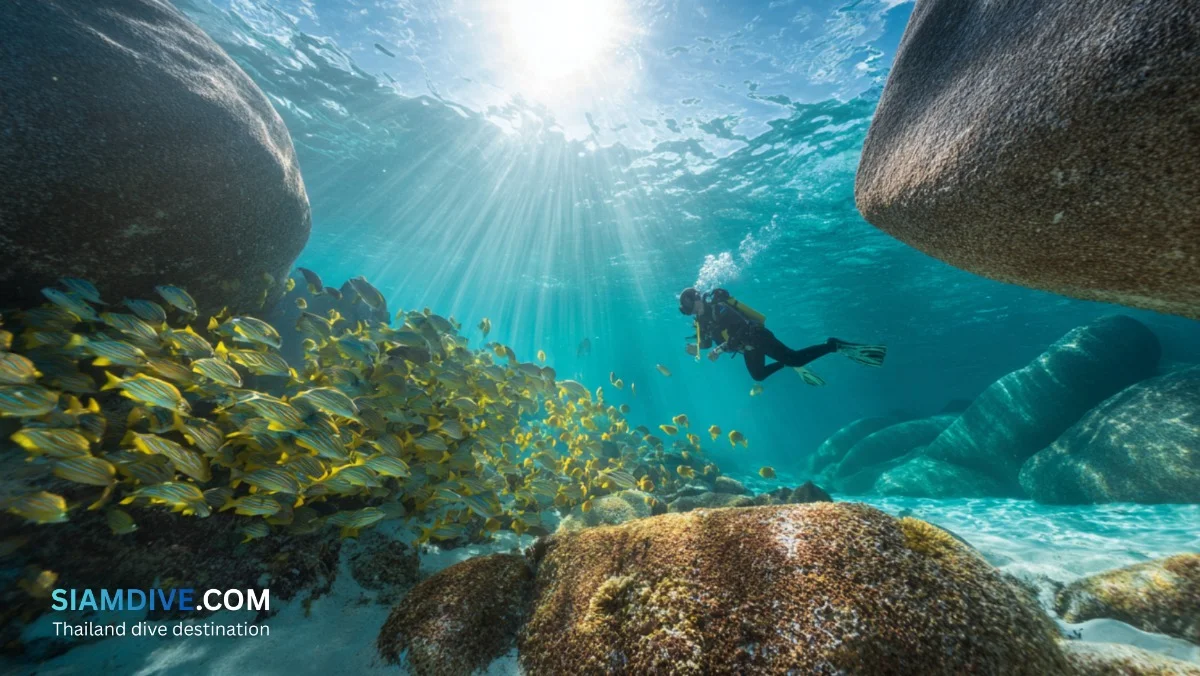
A pattern emerges. The marquee marine life at most Thai sites — whale sharks at Chumphon, mantas at Richelieu, leopard sharks at Phi Phi — appears between 10 and 25 metres. That range falls comfortably within the Advanced Open Water depth limit of 30 metres. Only a handful of sites regularly reward going below 30: Sail Rock's Chimney base, the keel of King Cruiser, and the deep walls at Hin Daeng. Those dives represent a small fraction of what most visitors log during a two-week trip.
What Night Reveals on a Shallow Reef
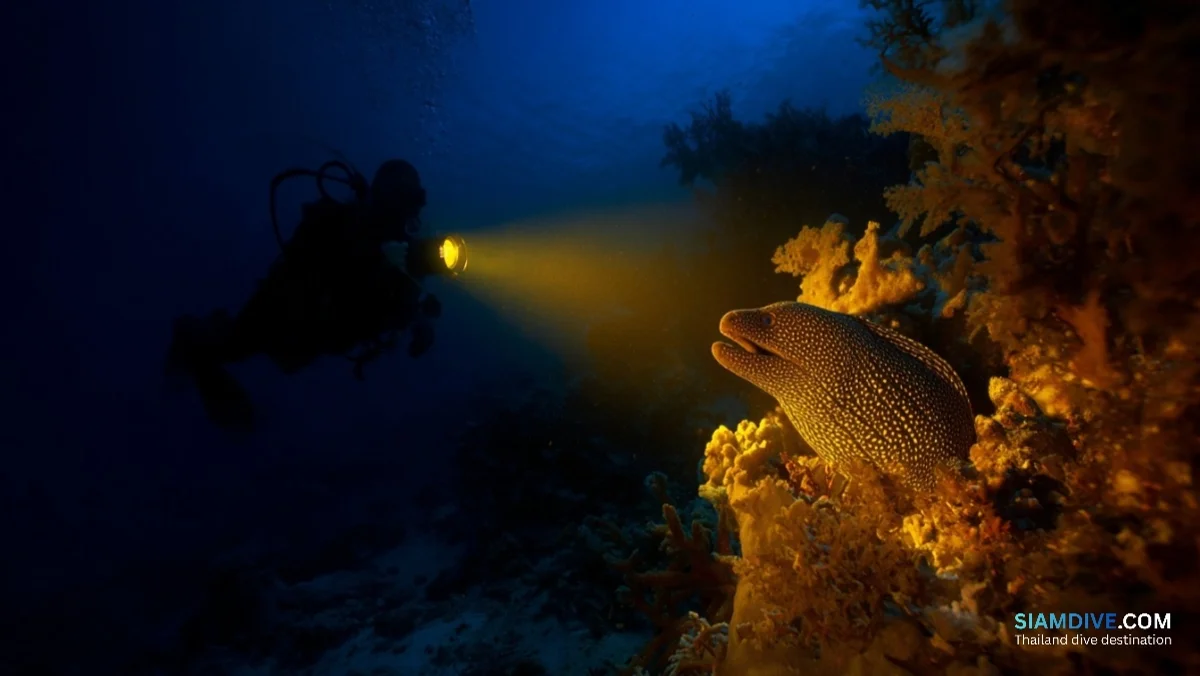
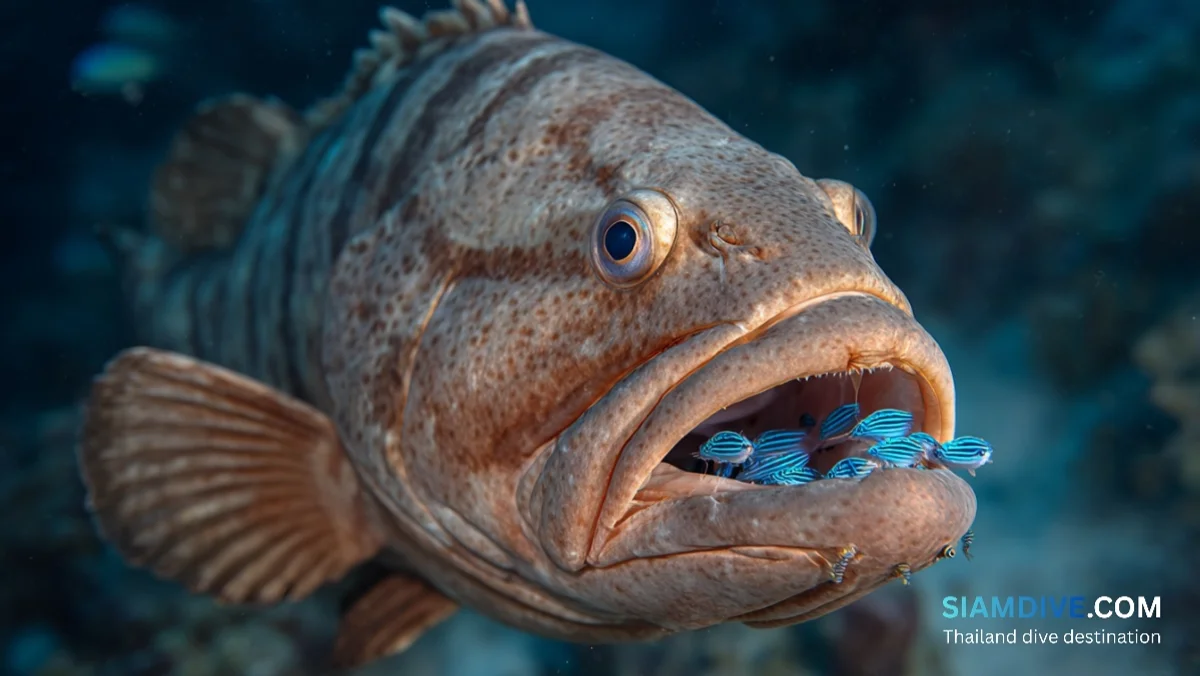
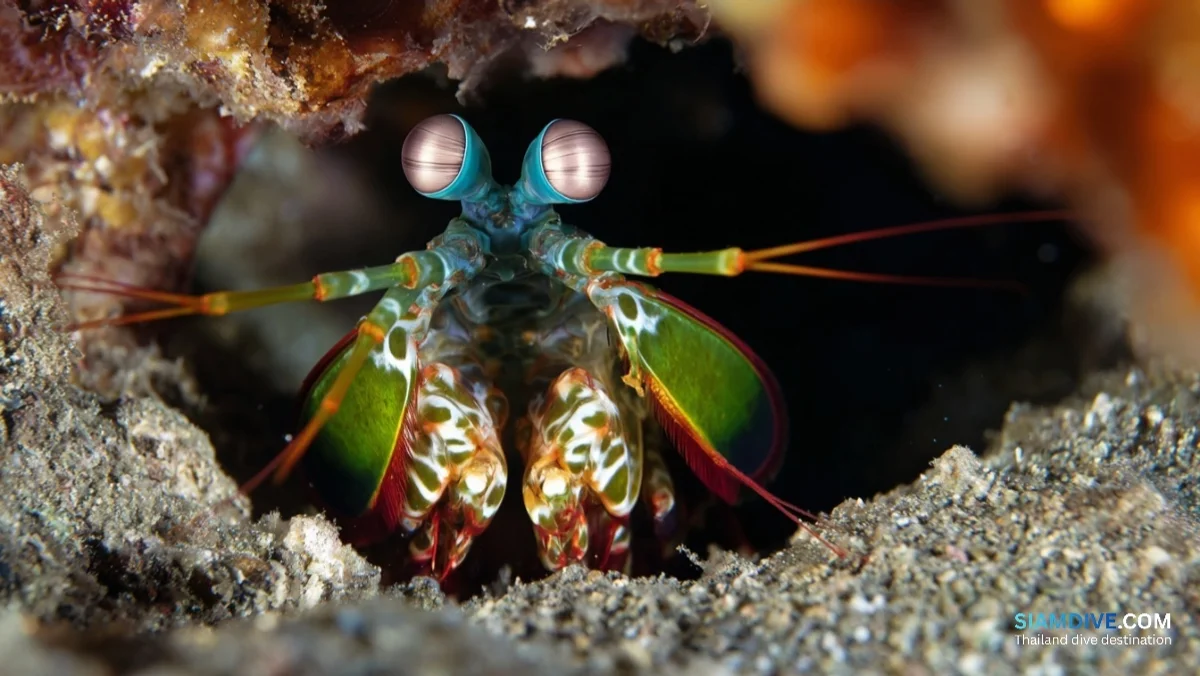
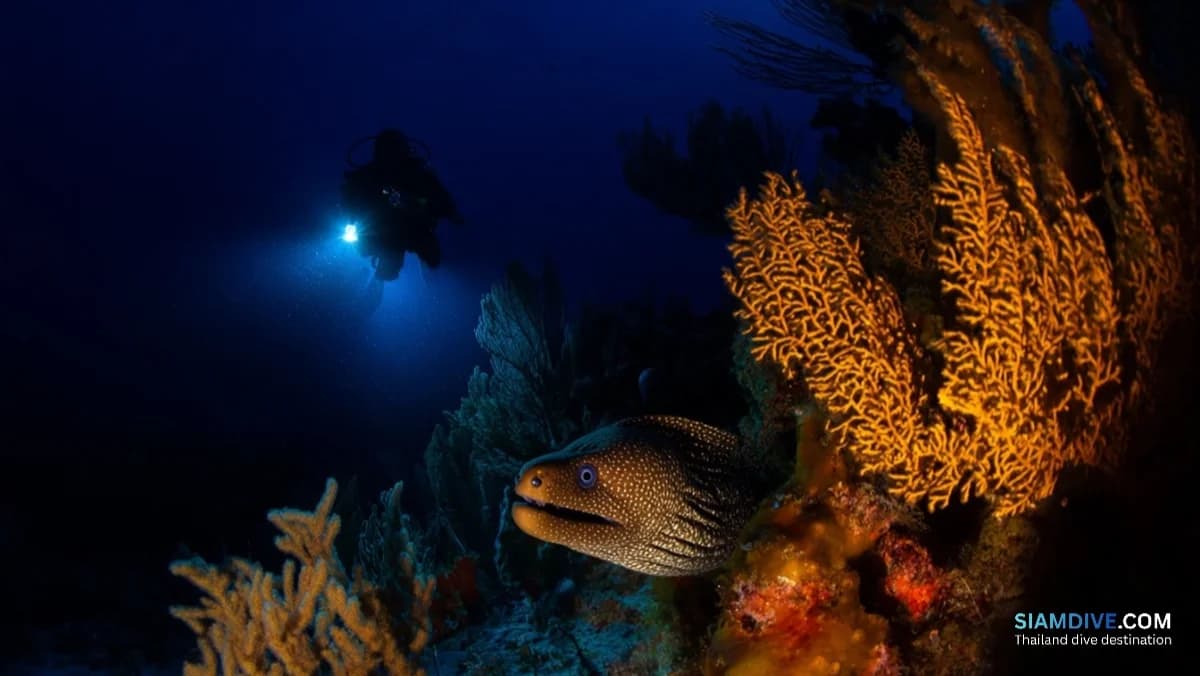
Sunset does not just change the light — it changes the cast. The same White Rock you dived at noon becomes unrecognisable after dark. Parrotfish spin mucus cocoons around themselves and wedge into crevices, motionless. Spanish dancers — nudibranchs the size of a dinner plate, coloured like raw steak — crawl across rocks that looked bare at midday. Octopuses abandon camouflage and hunt in the open, flushing colour changes under the torch beam faster than you can track them.
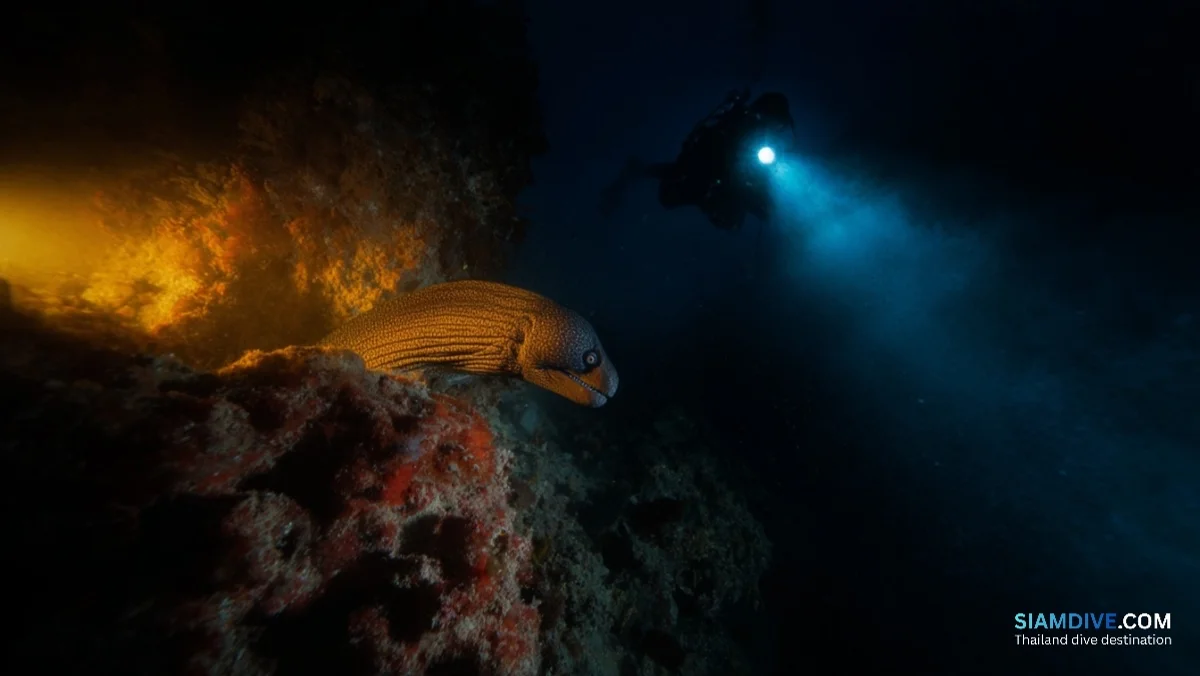
Moray eels leave their holes to swim free across the reef, something daytime divers almost never witness. Decorator crabs shuffle along carrying their living disguises. Banded boxer shrimp wave white antennae from cleaning stations, advertising services to fish that come out only after dark.
On Koh Tao, White Rock and Twins are the standard night dive sites — accessible directly from the beach or a short longtail ride. On Phuket's east coast, Shark Point and the Racha Islands offer night conditions where lionfish gather in numbers that daytime divers never see. Bida Nok and Bida Nai off Phi Phi host leopard sharks resting flat on sand at night, unbothered by torchlight, close enough to study their gill movements.
None of these encounters requires going deeper than 18 metres. The night specialty trains you for an entirely different dimension of the same reefs you already know, at the same depths you are already comfortable with.
Then there is bioluminescence. Divers at White Rock who switch off their torches during plankton-rich months — typically November to February — report fields of blue-green sparks trailing from every fin kick. Recent trip reports from early 2026 on Koh Tao forums describe particularly strong bioluminescence displays during January's new-moon nights, with some divers calling them the best in three seasons. That experience costs nothing extra in depth. It only requires the confidence to manage a night environment.
When 40 Metres Matters
The Deep Diver specialty is not a redundant card. Specific Thailand sites demand it:
- Sail Rock's Chimney: A vertical swim-through from 18 metres down past 30. Certified deep divers can explore the full shaft and exit near the base — one of the Gulf's signature experiences.
- HTMS Sattakut wreck, Koh Tao: The deck sits at 30 metres. Full hull exploration takes divers to 33–35 m, where the stern section offers penetration opportunities.
- Hin Daeng's deep wall, Koh Lanta: The wall drops past 60 metres. The most dramatic gorgonian sea fans start at 35 m, and occasional manta sightings happen in the blue beyond the wall edge.
- King Cruiser wreck, Phuket: The keel sits at 33 metres. Penetration dives go deeper, and the fish life around the hull concentrates near the bottom.
If your trip plan includes these specific sites, the Deep specialty earns its place. A Similan liveaboard itinerary that hits Hin Daeng, or a dedicated Sail Rock trip focused on the Chimney, justifies prioritising Deep. But for the majority of recreational diving in Thailand — Koh Tao day boats, Phuket shore dives, Phi Phi trips — night dives per week outnumber deep dives by a wide margin.
Building the Progression Stack
PADI's Master Scuba Diver rating requires Rescue Diver certification plus five specialties and at least 50 logged dives. Both Night and Deep count toward that total. The question is sequence, and sequence matters more than most divers realise.
Starting with Night gives three advantages in Thailand's context. First, it builds navigation and awareness skills that transfer directly to every subsequent dive. A diver who can hold a compass heading and track natural references in darkness finds daytime navigation effortless. Spatial awareness sharpens because you cannot rely on seeing the boat or the reef edge — you must track position mentally.
Second, it adds dives to your logbook without requiring additional certification. After the Night Diver card, you can join night dives at any site within your depth rating. In Thailand, that covers most of the best reefs. Every evening becomes a potential dive, not just a sunset beer on the pier.
Third, it creates a foundation for the Deep course itself. Buoyancy control, task loading, and gas awareness all sharpen during night dives because sensory input narrows. When you later take Deep, those skills — managing attention under reduced feedback, trusting instruments over instinct — are already second nature. The transfer is direct: the darkness teaches you to rely on gauges and procedures, exactly what depth demands.
A practical progression sequence for a Thailand-based diver building toward MSD:
- Night Diver — OW prerequisite, ~10 dives, opens evening diving everywhere
- Enriched Air Nitrox — extends bottom time, pairs with every other specialty
- Deep Diver — AOW prerequisite, 20+ dives recommended, opens Chimney and wreck penetrations
- Two more specialties based on interest — Wreck, Underwater Photography, Fish Identification, or Peak Performance Buoyancy
Cost, Time, and the Numbers
Specialty pricing varies across Thailand, but the structure is consistent. Ranges below reflect publicly listed prices from multiple Koh Tao and Phuket dive shops as of early 2026:
- Night Diver specialty: 6,500–8,000 THB — 3 dives over 1–2 evenings
- Deep Diver specialty: 8,000–10,000 THB — 4 dives over 2 days
- Advanced Open Water: 10,000–14,000 THB — 5 dives over 2–3 days
- Enriched Air Nitrox: 5,000–7,000 THB — theory only at some providers
Time matters as much as cost. Night dives happen in the evening, which means the Night specialty can run alongside daytime fun dives or even another course during the day. Deep dives require dedicated morning slots with surface intervals and careful depth management. The Night course fits a holiday schedule more flexibly — no lost daytime dive slots.
For divers on a two-week holiday, doing Night first means more evening dives for the rest of the trip. Every remaining night on the island becomes a chance to practise. Doing Deep first opens deeper daytime profiles at sites where the marquee life sits at 15–25 metres anyway. The maths favours the torch.
One Question Settles It
On your next ten dives in Thailand, how many will go below 30 metres?
For most divers — whether island-hopping Koh Tao, running day boats from Chalong Pier, or joining a Similan liveaboard — the honest answer is one or two. The other eight or nine will happen between 10 and 25 metres, on reefs that transform completely after sunset.
The Night Diver specialty doubles the environments available to you. The Deep Diver specialty opens a thin slice of additional depth at a handful of sites. In Thailand's reef geography, the night card earns more dives per baht, builds more transferable skills, and fits more naturally into the progression toward Master Scuba Diver.
The reefs chose. The torch is next.