Ghost Pipefish at 16 Metres: Koh Doc Mai's Macro Wall
19 เมษายน 2569
Koh Doc Mai's vertical limestone drops straight to 30 metres — and every crack hides a nudibranch, seahorse, or ghost pipefish. A macro photographer's field guide to Phuket's only wall dive.
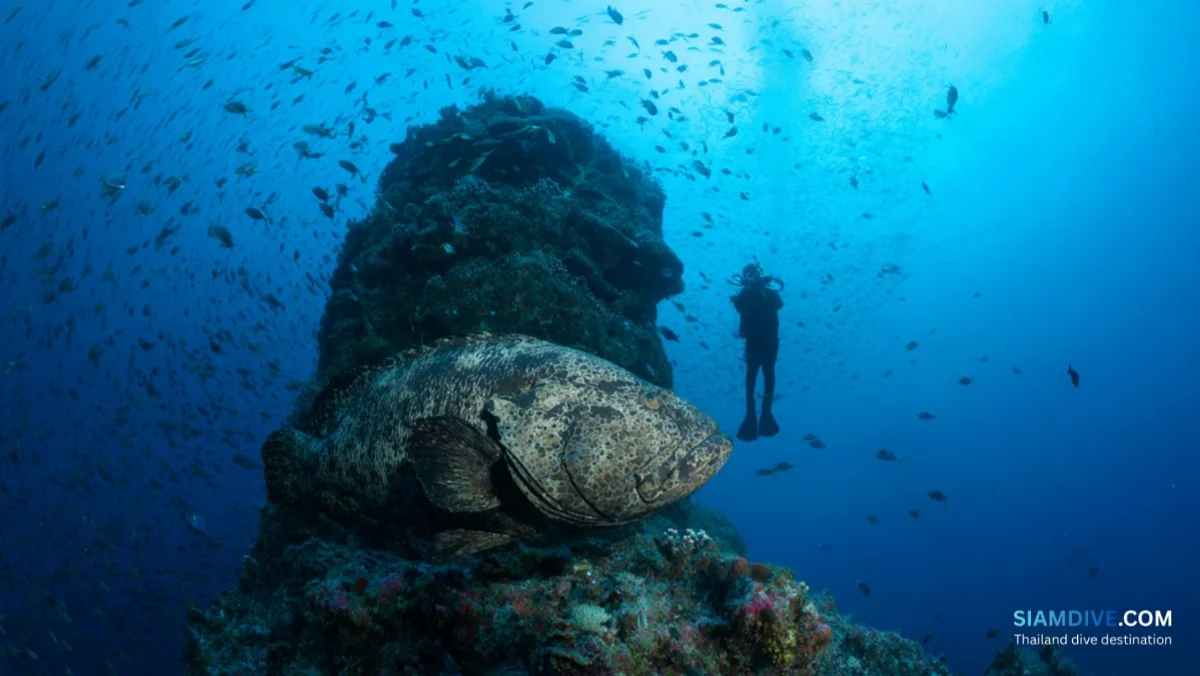
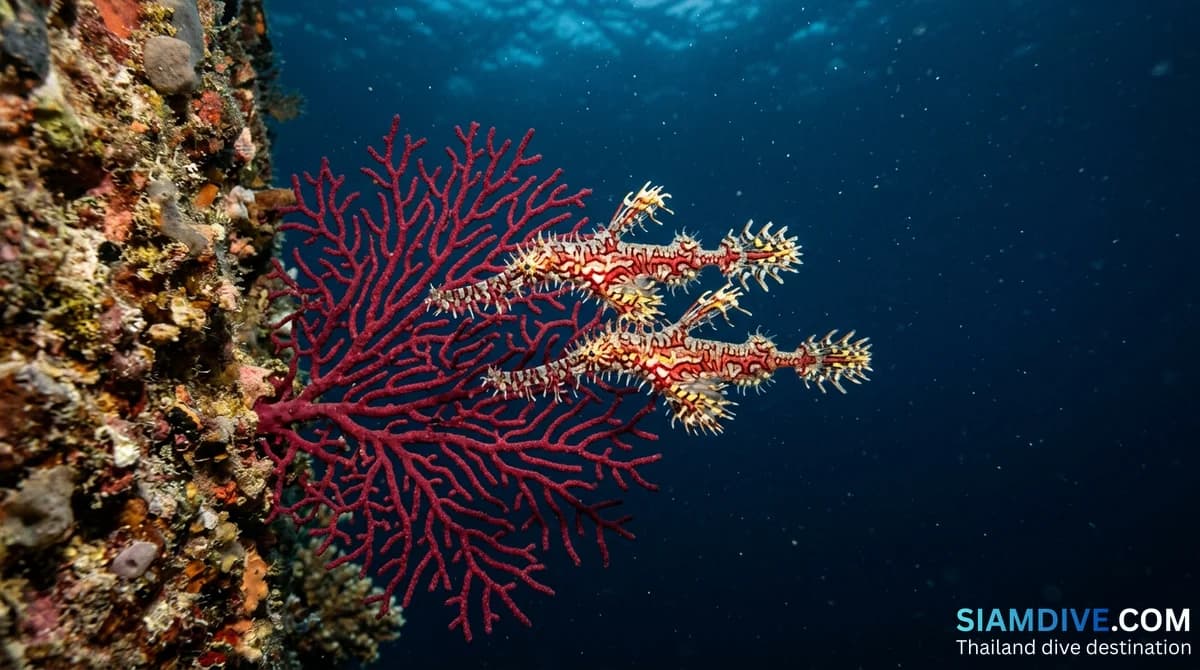
Four ornate ghost pipefish hang motionless against Koh Doc Mai's east wall at 16 metres, each one barely distinguishable from the gorgonian fan it mimics. A diver could pass within arm's reach and never notice. This limestone tower 20 kilometres east of Phuket drops straight into the Andaman — no sand slope, no coral garden, just a vertical reef smothered in macro subjects from the surface down to 30 metres. Phuket's only true wall dive rarely headlines a day-trip brochure, yet macro photographers who know the site often burn an entire 60-minute tank within a single 50-metre stretch of rock.
What Makes This Wall Different
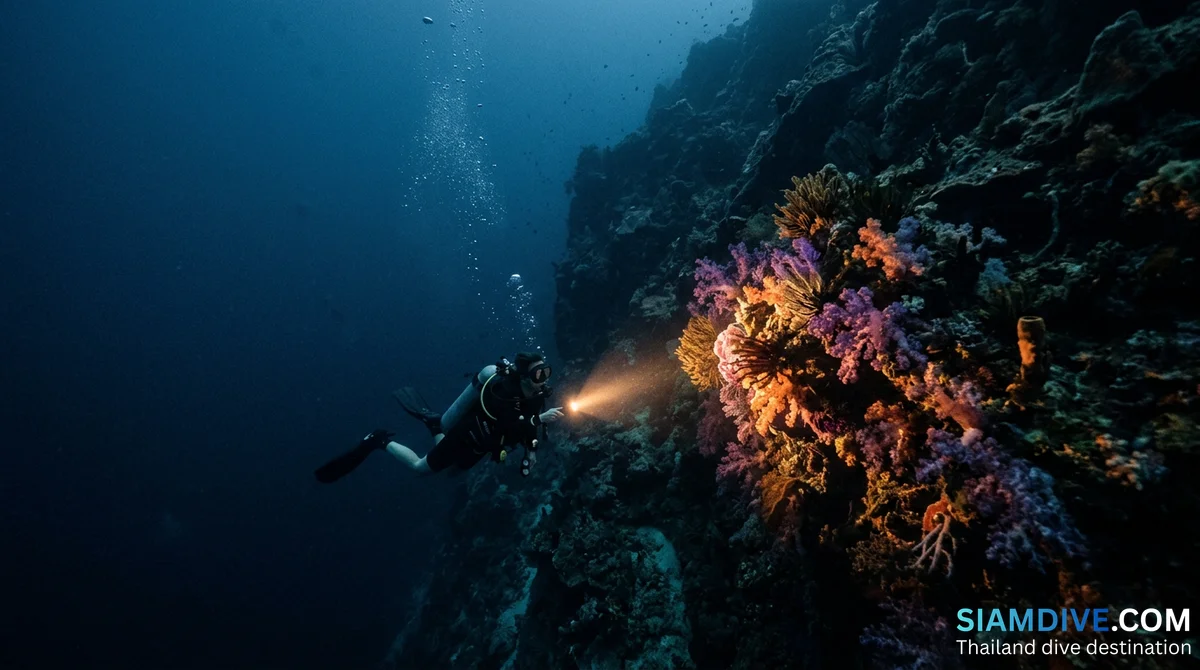
Most Phuket dive sites are sloping reefs or submerged pinnacles. Koh Doc Mai — Flower Island in Thai — is a sheer limestone cliff that continues underwater with the same near-vertical geometry it shows above the surface. The island itself is small: a rocky tooth rising about 30 metres above sea level, uninhabited, ringed by sheer cliffs on every side. Both the east and west walls plunge past 25 metres, with the east wall being the more sheltered and more frequently dived of the two.
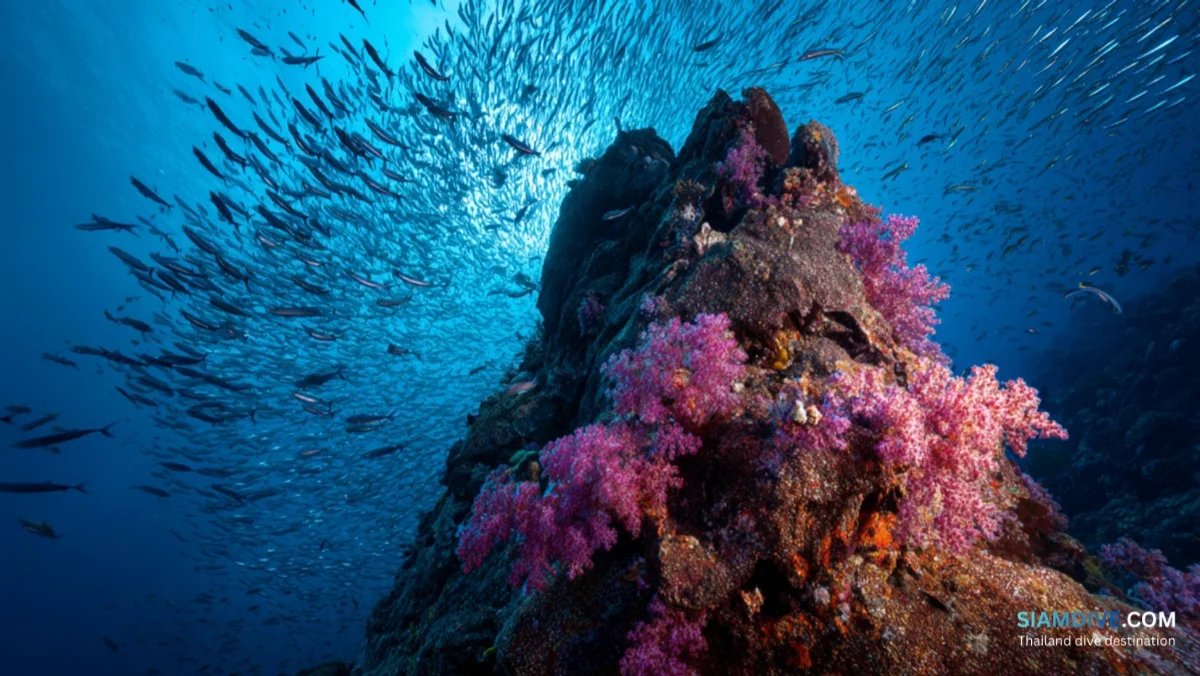
The rock itself creates the magic. Limestone is riddled with pits, overhangs, and shallow crevices that form thousands of micro-habitats at every depth band. Nudibranchs wedge into cracks. Seahorses anchor to gorgonian fans. Ghost pipefish drift beside whip corals that grow horizontally out of the face. Where a coral slope scatters its residents across an open field, the wall concentrates them onto a vertical canvas barely wider than a double-decker bus — and every centimetre is occupied. The density of small life per square metre is remarkable for the Andaman Sea, and this site sits just 45 minutes by boat from Chalong Pier.
The East Wall Macro Census
Between 5 and 12 metres, soft corals and small gorgonians carpet the wall. Blue Dragon nudibranchs (Pteraeolidia ianthina) feed on hydroids here, often in clusters of three or four — their electric-blue cerata catching the light even without a strobe. Flabellina, Phyllidia, and Glossodoris species appear at regular intervals. Flatworms share shelf space with the nudibranchs, and distinguishing the two groups makes a surprisingly good exercise in observation. On a single dive, spotting ten or more nudibranch species is common rather than exceptional.
Drop to 16–19 metres and the character shifts. This depth band is ghost pipefish and seahorse territory. Tiger-tail seahorses grip gorgonian stems near the cave entrance, their prehensile tails curled tight, bodies swaying gently with the surge. Ornate ghost pipefish hover in pairs or small groups nearby, nearly invisible against matching debris. Their bodies mimic the shape and colour of dead crinoid arms so precisely that most divers swim right past them. The area directly below the cave mouth — roughly 16 to 19 metres — is the most reliable spot on the island for both species, and a patient diver who parks here for 15 minutes will almost certainly find them.
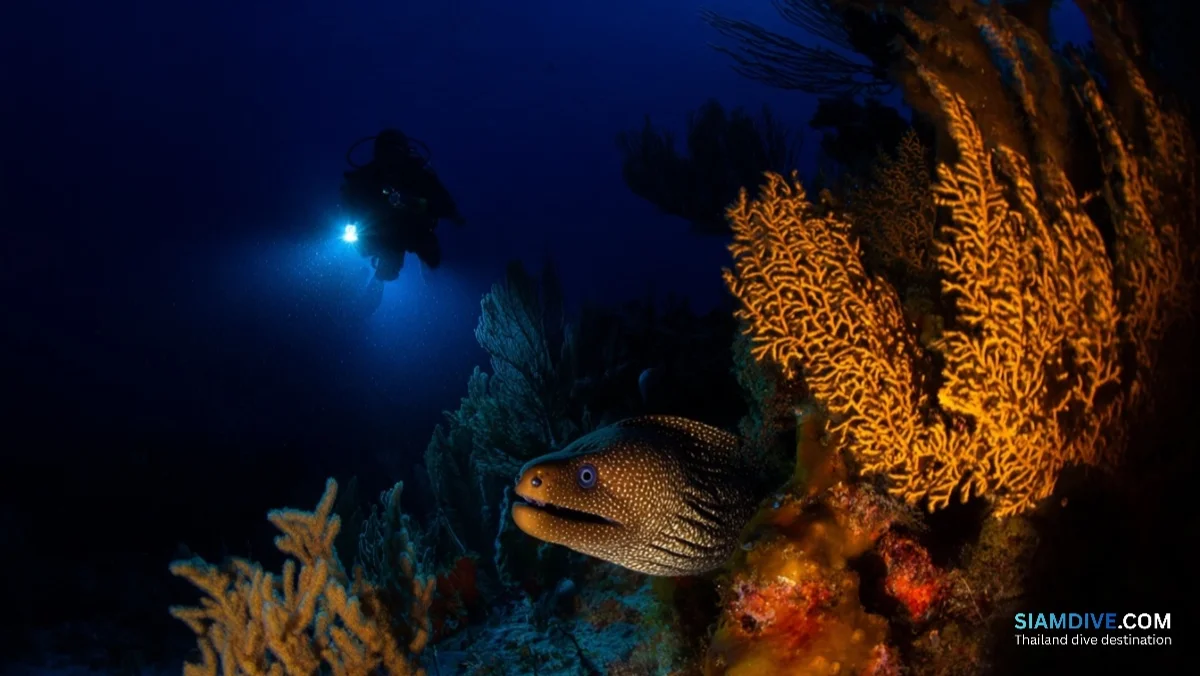
Below 20 metres, the wall steepens and current picks up. Peacock mantis shrimp patrol rubble patches at the base, their compound eyes tracking anything that moves. Coral whip shrimp, among the most well-camouflaged critters on the reef, cling to their host whip corals and require a focused beam to spot. Frogfish occasionally appear pressed flat against sponge colonies, rewarding the slow, methodical photographer who scans every surface with a dive torch. Tiny white-eyed moray eels peer from holes in the rock, and on rare occasions a banded sea krait passes along the wall's lower section.
Inside the Grotto
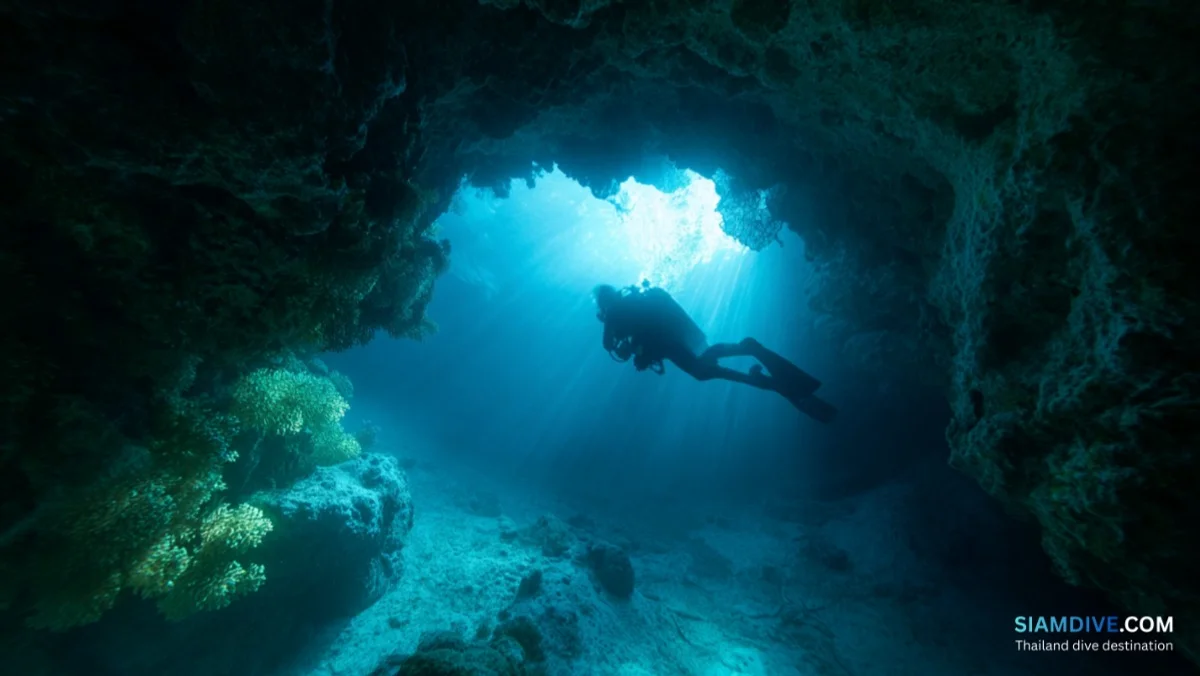
A narrow entrance on the east wall at around 15 metres leads into Koh Doc Mai's best-kept feature: a limestone cave with a spacious interior, a formation column, and an air dome at the ceiling where divers can surface and breathe trapped air. The passage is tight enough that only one diver at a time should enter, but the chamber opens up beyond the squeeze into a room several metres across.
Dancing shrimp cluster on the cave walls — groups of ten or more are typical, their translucent bodies swaying in unison. White-eyed moray eels thread through crevices near the entrance. Banded coral shrimp and hingebeak prawns occupy cracks deeper inside. For photographers, the cave presents opportunity and challenge in equal measure: the subjects are reliable and densely packed, but confined space demands precise buoyancy and careful strobe positioning to avoid backscatter from suspended sediment. Stirring the silt floor turns the chamber opaque in seconds. A shorter camera rig — no tray extensions — makes the difference between a clean shot and a frustrated exit.
When Visibility and Current Cooperate
Koh Doc Mai is diveable year-round, which sets it apart from Similan-area sites that close from May to October. Peak season runs November through April, when visibility ranges from 15 to 25 metres and water temperature sits between 27 and 30 °C. January through March typically delivers the clearest water, with some days exceeding 30 metres — the kind of conditions that turn a macro dive into a wide-angle temptation.
Conditions swing more than at other Phuket sites. Visibility can jump from 30 metres one day to under 5 the next, driven by current direction and cold-water upwelling from deeper channels. This unpredictability is part of the site's character: there is no guaranteed 20-metre day. Currents generally run north-to-south or the reverse, mild enough for comfortable diving on most days. The west wall during full-moon tidal cycles is a different story — strong enough to qualify as a drift dive, best left to divers with experience reading moving water. The north tip, where east and west currents merge, can produce whirlpool-like eddies during spring tides that even experienced divers respect.
Even during the southwest monsoon (June to September), Phuket's landmass shields the island from the worst swell. Several operators run trips through low season, though visibility tends to settle between 5 and 10 metres. Macro photographers may actually prefer those numbers: a green-water background isolates subjects against the wall better than open blue, and the reduced boat traffic means the site is often yours alone.
Chalong Pier to the Wall
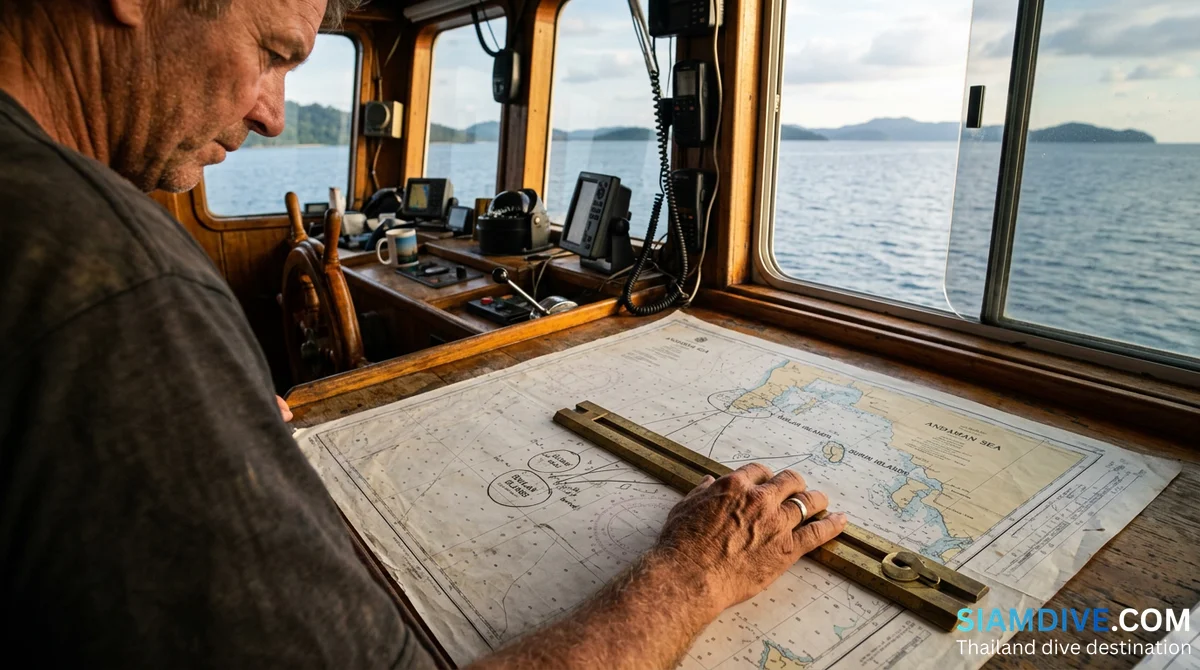
Nearly every Phuket day-trip running the Shark Point cluster includes Koh Doc Mai as one of three dives. The standard route covers Shark Point, King Cruiser Wreck, and Koh Doc Mai — order depends on the day's current. Boats leave Chalong Pier between 08:00 and 09:00 after hotel pickup from Patong, Kata, or Karon starting around 07:00. The ride is 45 to 60 minutes depending on sea state — short enough that if the boat ride bothers your stomach, most remedies have time to work before the first dive.
- Trip format — 3 dives, full day, return by 16:00–17:00
- Price range — 3,700–4,500 THB per person (certified diver, gear included)
- Marine access fee — 500 THB cash, payable on board
- Boat time to site — approximately 45–60 minutes from Chalong
- Nitrox — available on most boats, additional 200–300 THB per tank
Koh Doc Mai is typically the third dive of the day, which means bottom time is generous — 50 to 65 minutes in 5–18 metres. For macro photographers, request it as the first or second dive when air consumption allows deeper work in the ghost pipefish zone at 16–19 metres. The third-dive slot works well for photographers content to stay in the shallows and hunt nudibranchs, where the bottom time is long and the nitrogen load is low. Pay attention to your surface interval if you plan to push below 20 metres on any of the three dives.
Camera Settings for a Vertical Reef
Wall dives demand a different approach than reef flats. Subjects cling to a vertical surface, which means the camera must point horizontally or slightly upward rather than down. Shooting upward against blue water isolates the subject and avoids the cluttered background that plagued every reef-flat photo you deleted last season. On the east wall, morning dives catch the light slanting in from the east — that angular light picks up texture on nudibranchs and reveals the translucency of ghost pipefish fins.
- Lens — 60 mm or 105 mm macro (full-frame equivalent) for seahorses and ghost pipefish; add a diopter with flip adapter for nudibranchs smaller than 15 mm
- Strobes — dual, angled at 45° to minimise backscatter on the wall; diffusers give a softer look on soft-coral close-ups
- Focus light — essential; ghost pipefish are nearly invisible without a modelling light to pick out texture and help autofocus lock
- Buoyancy — one hand on the camera, zero contact with the reef; a shorter rig without tray extensions makes the cave section manageable
- Shutter speed — maximum flash sync speed (typically 1/200 or 1/250) to kill ambient light and darken the water background behind your subject
The Blue Dragon nudibranch — the most common species here — is best photographed at eye level on its feeding hydroid. Get neutrally buoyant at the creature's depth, frame with rhinophores sharp, and shoot horizontal. The technique applies to most nudibranch species on the wall: level camera, dark water background, subject pinned by strobe light against a clean patch of rock. For ghost pipefish, a 105 mm lens gives working distance that avoids spooking the animal, and a single strobe from slightly above picks up the skeletal transparency of their fins without flattening the image.
Who Should Dive Koh Doc Mai
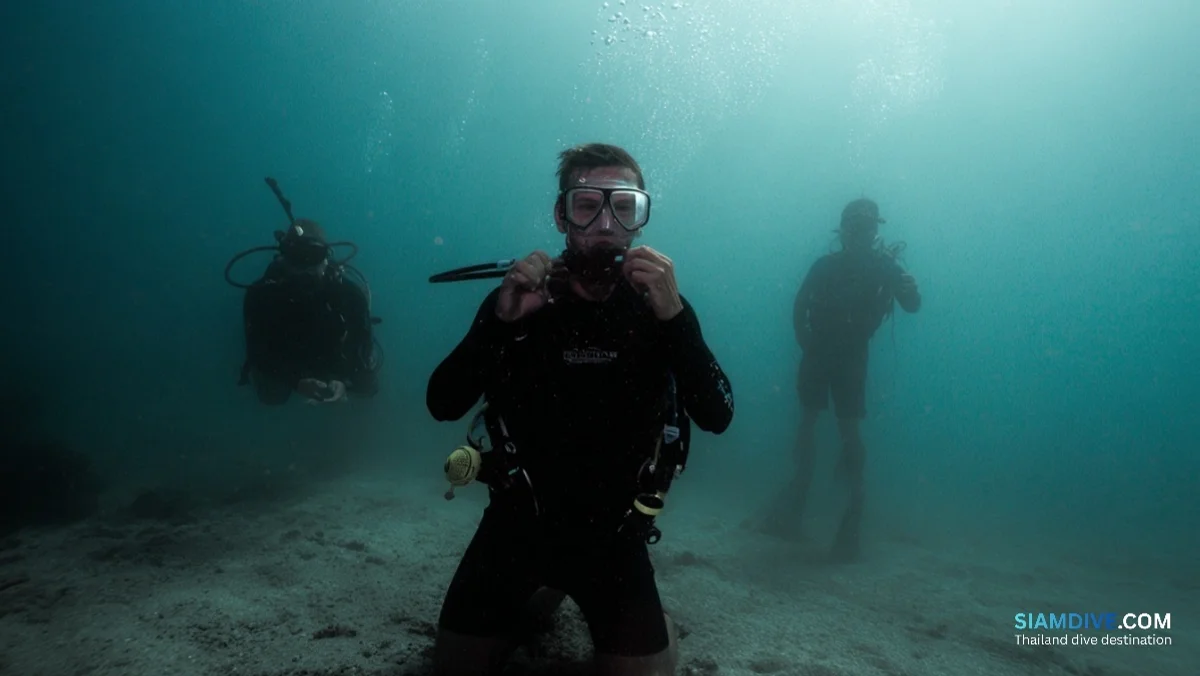
The sheltered east wall in calm conditions suits Open Water divers comfortable with wall orientation and mild current. The majority of macro subjects live in the upper 18 metres, well within recreational limits. A diver with decent air consumption and basic buoyancy can spend 60 minutes here and see more than enough to fill a memory card.
The cave raises the bar. Good buoyancy control and awareness of overhead environments are non-negotiable — Advanced Open Water or equivalent experience is a reasonable minimum for entering it. Silting out the cave is distressingly easy with poor fin technique, and the narrow entrance means turning around inside takes coordination. The west wall during spring tides is a genuine drift dive best left to divers who have logged time in moving water; the current can shift direction mid-dive.
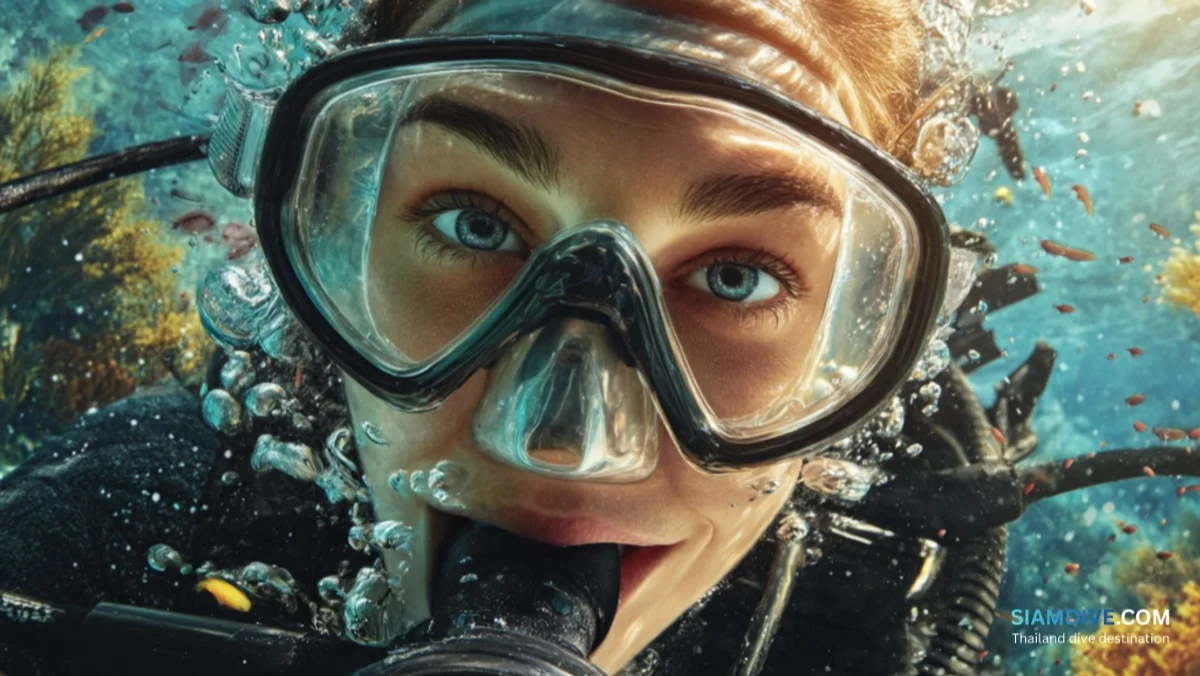
For photographers, Koh Doc Mai rewards patience and refined buoyancy more than expensive gear. Holding position on a wall while framing a 2-centimetre nudibranch is harder than any flat-reef macro shot. First-time underwater photographers will find easier subjects on a sandy slope; this wall is where the practice hours pay dividends. A diver who has mastered buoyancy on fifty reef dives will finally understand why those fifty dives mattered when they hover three centimetres from a ghost pipefish and nail the shot.
As of early 2026, Phuket operators report consistent sightings of ornate ghost pipefish and tiger-tail seahorses through the current high season. Visibility during February and March 2026 has averaged 15–20 metres on the east wall, with occasional days exceeding 25 metres — in line with typical peak-season performance. The site remains one of the most underrated stops on a Thailand dive itinerary, overshadowed by flashier names like Shark Point and Richelieu Rock but quietly delivering some of the best macro diving in the country.