BCD Basics: Choosing, Fitting, and Using Your Buoyancy Device
14 เมษายน 2569
Everything divers need to know about BCDs — from jacket vs back-inflate vs wing, to getting the right fit, underwater technique, and long-term care.
What a BCD Actually Does
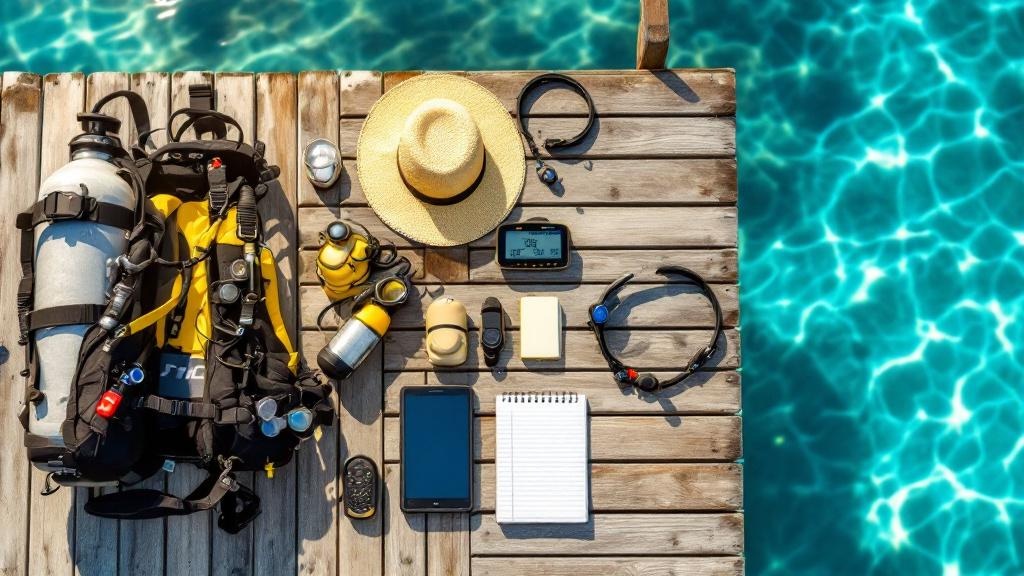
Most new divers think of a BCD as the thing that makes them float or sink. That is technically true, but it undersells the piece of gear you will rely on more than anything else underwater. A buoyancy compensator device holds your tank on your back, routes your regulator hoses, carries your weights (if it has integrated pockets), and gives you attachment points for lights, cameras, reels, and SMBs through D-rings sewn into the harness.
The bladder inside inflates with air from your tank via a low-pressure inflator hose, and you dump that air through one or more exhaust valves when you need to descend or hold a stop. Between those two actions — adding a small puff and venting a small amount — you control whether you rise, sink, or hover in place. But the BCD also shapes your body position in the water. A poorly fitting BCD forces you into awkward postures, which burns air and kills trim. A good one disappears on your body and lets you focus on the dive.
Types of BCDs: Jacket, Back-Inflate, and Wing
Three main designs dominate the market, and each one suits a different kind of diver. Understanding what each does well (and where it falls short) saves you from buying the wrong BCD twice.
Jacket-style BCDs wrap the air bladder around your torso — front, sides, and back. When you inflate on the surface, the air surrounds you and holds you upright in a comfortable sitting position. This is why nearly every dive school uses jackets for training. The trade-off is that all that air around your sides can feel bulky underwater and push you into a slightly head-up position, which creates drag.
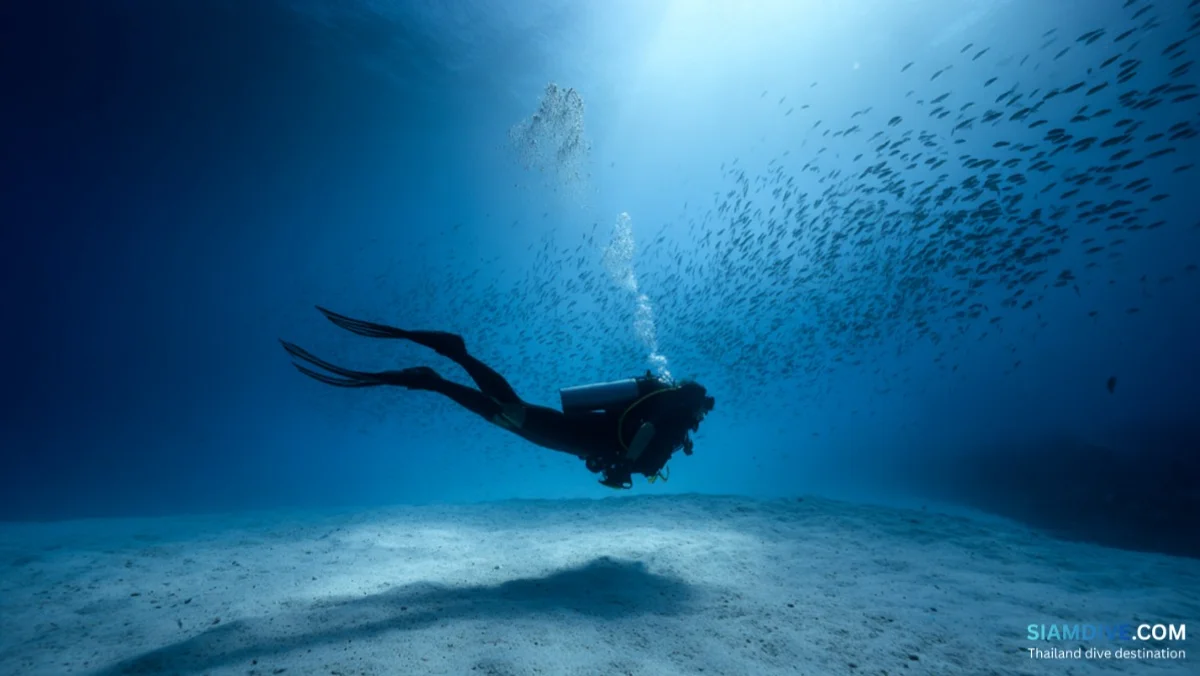
Back-inflate BCDs put the entire bladder behind you. Underwater, this naturally pushes your chest down and encourages a horizontal, streamlined position — exactly what you want for efficient swimming. On the surface, though, you tend to lean forward because all the buoyancy is behind you. It takes some getting used to, especially for newer divers who want to float upright during surface waits.
Wing-style BCDs (backplate and wing) separate the harness from the bladder completely. A metal or carbon backplate sits against your back, a wing-shaped bladder bolts behind the plate, and webbing straps hold everything together. Tech divers love this setup because it is infinitely adjustable, extremely durable, and can accommodate single or double tanks. It is overkill for most recreational divers, but some experienced single-tank divers switch to wings for the clean trim and simplicity.
| Feature | Jacket | Back-Inflate | Wing |
|---|---|---|---|
| Surface comfort | Excellent (upright float) | Moderate (leans forward) | Moderate to low |
| Underwater trim | Decent | Very good (horizontal) | Excellent |
| Best for | Beginners, warm water | Intermediate, travel | Tech, advanced rec |
| Typical weight | 3-5 kg | 2.5-4 kg | 2-6 kg (plate dependent) |
| Integrated weights | Usually yes | Usually yes | Sometimes (belt common) |
How to Choose the Right BCD
Your dive style should drive the decision, not marketing. If you are finishing your Open Water course and plan to dive a few times a year on vacation, a jacket BCD with integrated weight pockets is the practical choice. It does everything well enough, it is comfortable at the surface when you are waiting for the boat, and every dive shop in the world has one on the rack if yours breaks.
Once you have around 50 dives logged, you start to understand what you actually want from your gear. That is when most divers consider switching to a back-inflate model — the better trim and reduced drag make a noticeable difference in air consumption and comfort. Jumping to a wing setup before you have the fundamentals dialed in usually creates more problems than it solves.
Travel weight matters more than people expect. A nylon-shell BCD built for travel weighs around 2 to 3 kilograms and folds into a carry-on. A heavy-duty Cordura BCD designed for cold water and abuse weighs 4 to 5 kilograms and eats your luggage allowance. If you fly to dive, check the packed weight before you buy — the difference adds up fast when you factor in the rest of your kit.
Always try a BCD with the exposure suit you will actually dive in. A BCD that fits perfectly over a rashguard will be too tight over a 5mm wetsuit. If you dive in different thermal protection depending on the destination, you need a BCD with enough adjustment range to handle both.
Getting the Fit Right
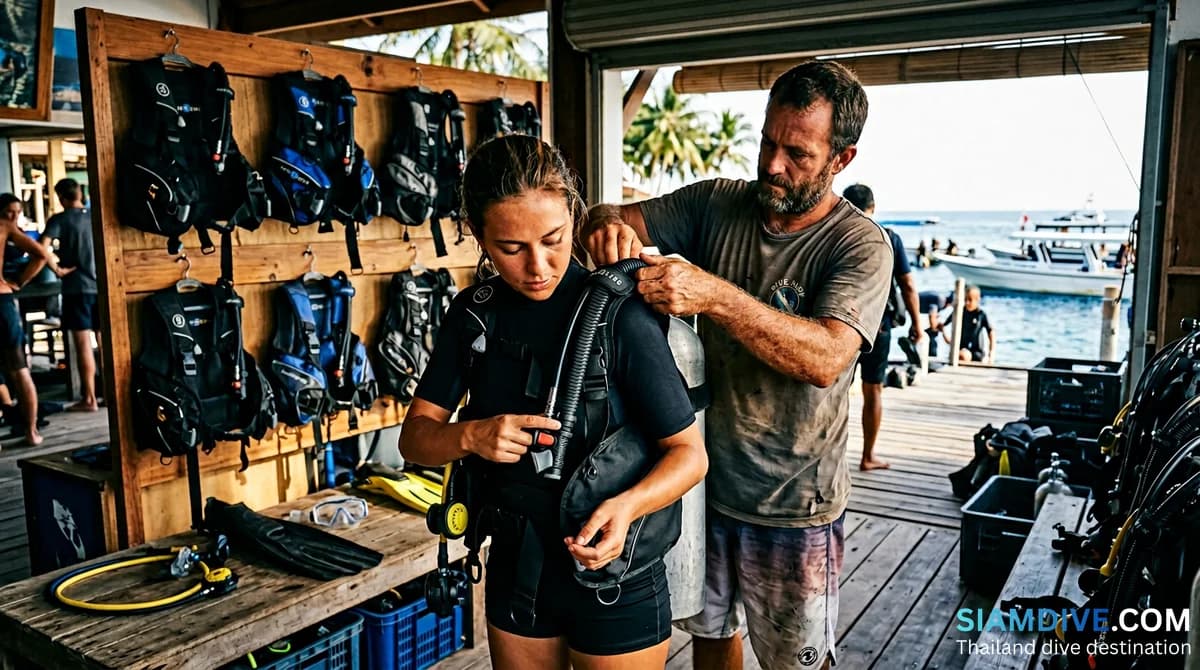
A BCD that does not fit properly is worse than rental gear, because at least rental gear gets swapped at the shop. The most common mistake is buying a size based on your street clothes. Dive gear sizes run differently, and the exposure suit underneath changes everything.
Start with the shoulder straps. They should sit snug on your shoulders without digging in. If you raise your arms overhead and the whole BCD lifts off your body, the straps are too loose. If you cannot take a full breath because the chest strap compresses your ribs, it is too tight. You want firm contact, not a bear hug.
The cummerbund — that wide waistband that wraps around your stomach — prevents the BCD from riding up when the bladder inflates. If you inflate the BCD fully on land and the whole thing creeps toward your ears, the cummerbund needs tightening or the size is wrong. A good cummerbund has some elastic panel so it stretches with your breathing but still locks the BCD in place.
Here is a trick that experienced divers use: wet the tank band before you mount the cylinder. A wet band grips the tank better and does not slip during the dive. Tighten the band, give the tank a firm twist to check — if it rotates, tighten more or use a tank band pad for extra grip.
Do your fitting session wearing the actual wetsuit or drysuit you will dive in. The 3 to 5 millimeters of neoprene changes your chest and waist measurements enough to shift you between sizes on some brands.
Using Your BCD Underwater
The golden rule of BCD use underwater is small adjustments. New divers tend to hold the inflator button for two or three seconds and wonder why they rocket to the surface. A single short tap — maybe half a second — adds enough air to start a slow, controlled ascent or to arrest a gentle descent. Then wait. It takes a few seconds for the air to expand and for your body to respond.
Your lungs are actually a better fine-tuning tool than the inflator. Once you are roughly neutral, a slightly deeper inhale lifts you 20 to 30 centimeters. A full exhale drops you the same amount. Experienced divers use their breathing for micro-buoyancy adjustments and only touch the BCD when their depth changes by several meters — like swimming over a reef wall from 12 meters down to 18.
Dump valves matter more than most people realize. A standard BCD has at least two: one on the inflator hose (you hold it above your head and press the deflate button) and one on the lower right rear (you pull a toggle). In a normal feet-down or slightly head-up position, the inflator hose dump works fine. But if you are horizontal or slightly head-down — common when photographing something on the bottom — the air pools at the highest point, which is now your backside. The rear dump valve clears it faster in that position.
During ascent, air expands continuously as pressure drops. You need to vent almost constantly on the way up, especially in the last 10 meters where pressure changes are greatest. Never hold your inflator button during an ascent. Keep one hand on the deflate button and release air in small bursts to maintain a controlled 9-meters-per-minute rate. Your dive computer will warn you if you go faster.
Pre-Dive BCD Inspection
A two-minute check before every dive prevents the kind of problems that ruin a dive or create a real emergency. Do this on the boat, after your gear is assembled but before you get in the water.
First, inflate the BCD fully using the oral inflator or the power inflator button. Listen for hissing — any sound of escaping air means a leak in the bladder, a dump valve, or a connection. Hold the inflated BCD for 30 seconds. If it softens noticeably, you have a slow leak. Then press the deflate button and make sure all the air dumps quickly and completely. A BCD that will not deflate is dangerous — it turns into an uncontrolled lift bag.
Check the power inflator button specifically. Press it, then let go. The button should spring back and stop adding air immediately. A sticky inflator button is one of the most common BCD malfunctions and one of the most dangerous — it causes uncontrolled ascents. If the button feels sluggish or keeps hissing after you release it, do not dive that BCD.
Pull each dump valve toggle to confirm they open and close. Check every buckle, clip, and strap for function. If you have integrated weight pockets, seat them into the BCD and tug firmly — they should lock in but release cleanly when you pull the handle with intent. You do not want a weight pocket that falls out during a giant stride entry, and you do not want one that refuses to release in an emergency.
Maintenance and Storage
A BCD that gets rinsed properly after every dive will last 8 to 10 years. One that gets tossed in a gear bag and forgotten will start falling apart in two. The difference is about five minutes of care.
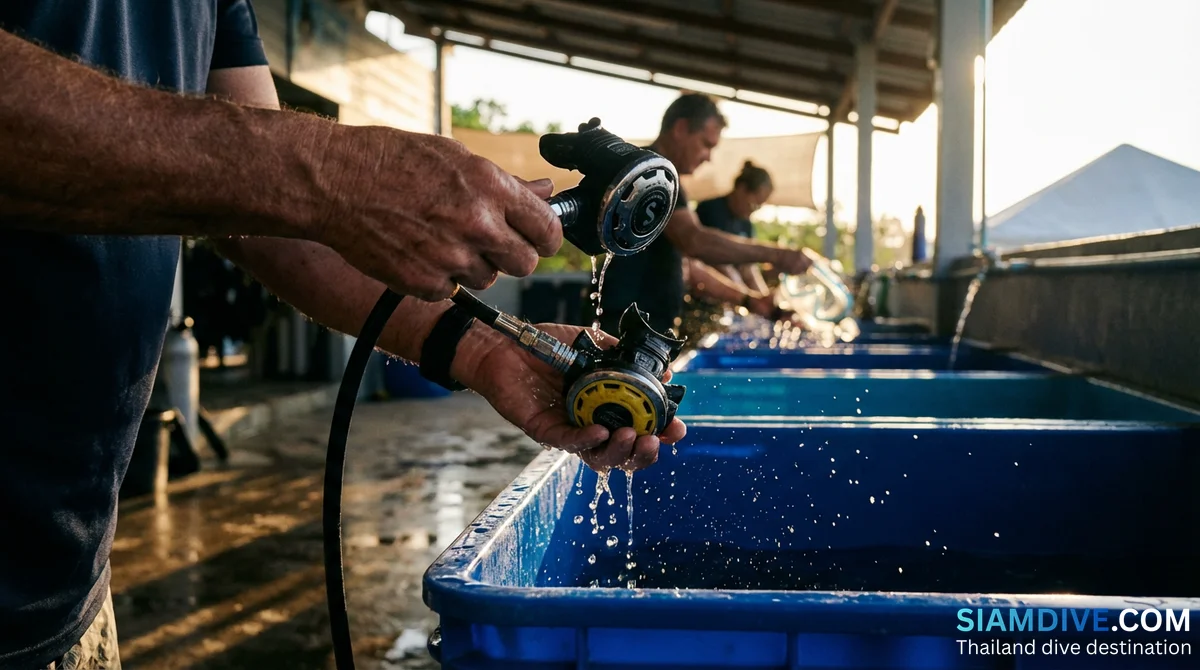
After every dive — salt water or fresh — rinse the outside of the BCD with fresh water, paying attention to buckles, dump valves, and the inflator mechanism where salt crystals love to hide. Then flush the inside of the bladder: connect a garden hose to the oral inflator (or just hold the hose to the mouthpiece with the deflate button pressed), fill the bladder about one-third full with fresh water, slosh it around, and drain. Repeat once. This removes salt deposits from the internal bladder walls that eventually cause the fabric to delaminate.
Dry the BCD partially inflated so the inner walls do not stick together. Hang it in shade — direct sunlight degrades nylon and rubber faster than salt does. Once dry, store it in a cool, dry place with some air in the bladder. Storing a BCD completely flat and deflated for months causes creases in the bladder that can become weak points.
Lubricate rubber O-rings and the inflator mechanism with silicone grease once or twice a year. Avoid petroleum-based products — they eat rubber. And once a year, take the BCD to a certified technician for a professional service. They will pressure-test the bladder, inspect the overpressure relief valve, rebuild the inflator if needed, and check every weld and seam. The service costs around 2,000 to 4,000 THB depending on the brand, and it is the single best investment in your gear longevity.
Your BCD Is Your Diving Foundation
Every skill you learn as a diver — buoyancy control, trim, air management, emergency procedures — connects back to the BCD. A well-chosen, properly fitted BCD that you maintain and understand is the foundation for comfortable, efficient diving. Divers who upgrade thoughtfully and learn to use their BCD with precision consistently have better air consumption, better trim, and more relaxed dives than those who treat it as an afterthought.
Take the time to understand your BCD the way you would any piece of critical safety equipment. Practice inflating and deflating with your eyes closed. Know where every dump valve is by feel. Practice removing and replacing your weight pockets until it is muscle memory. These small investments in familiarity pay off on every single dive.
Looking for your next BCD or planning dives where you can practice your buoyancy skills? Browse dive operators, gear reviews, and liveaboard trips on siamdive.com and find the right setup for your next adventure underwater.