Where Did Koh Tao's Whale Sharks Go After 1,409 Sightings?
23 เมษายน 2569
Between 1991 and 2023, Koh Tao logged 1,409 whale shark sightings — nearly half of Thailand's total. Then the encounters dropped to near zero.
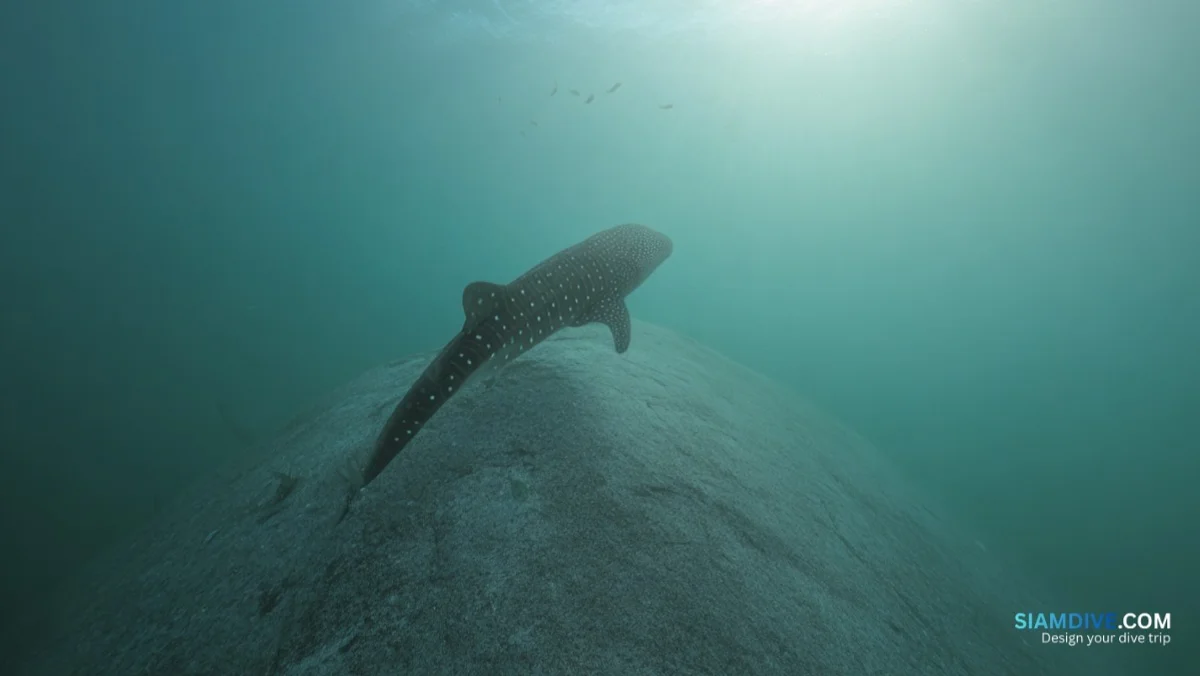
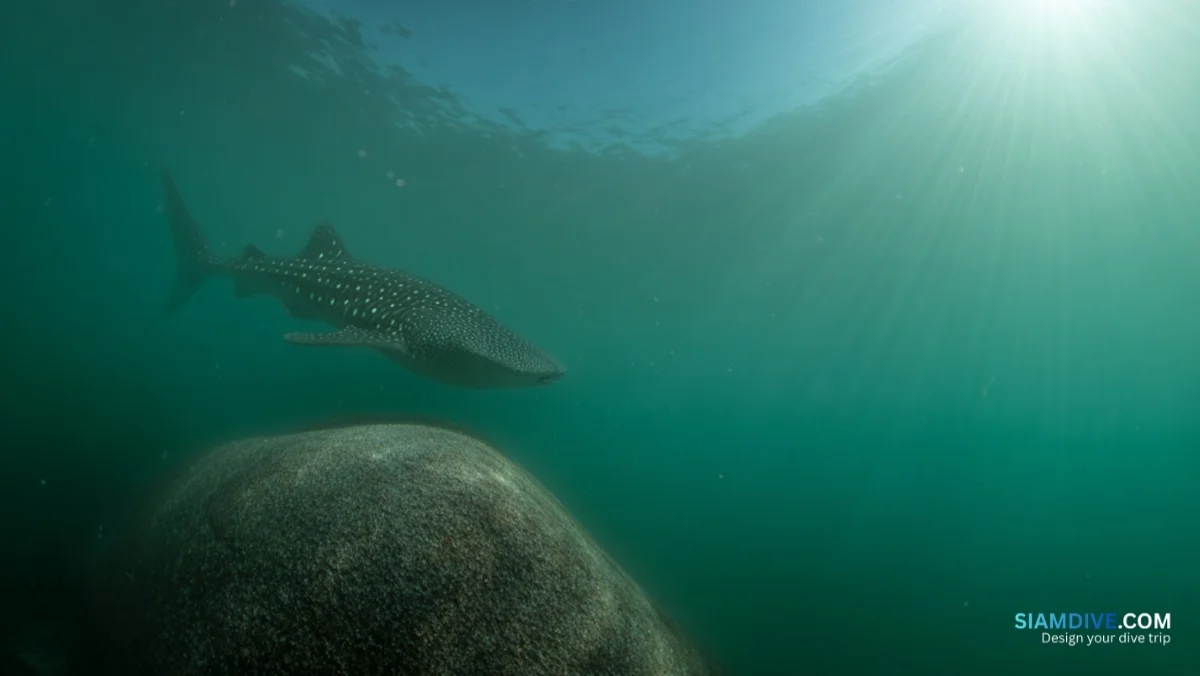
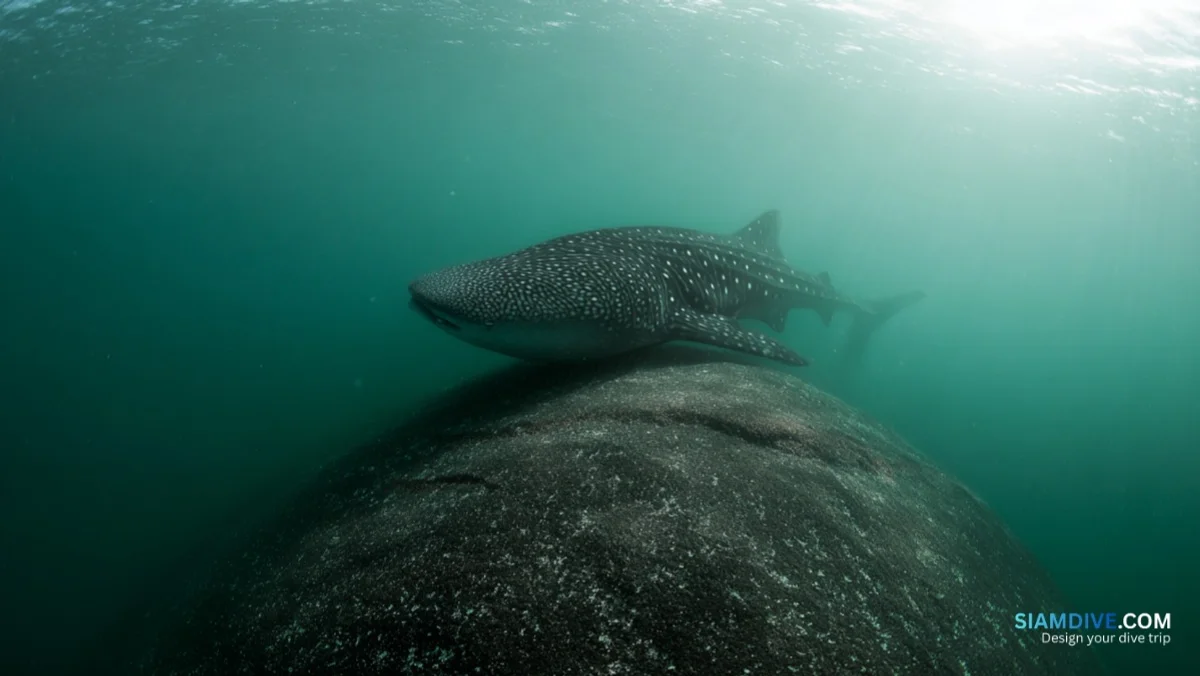
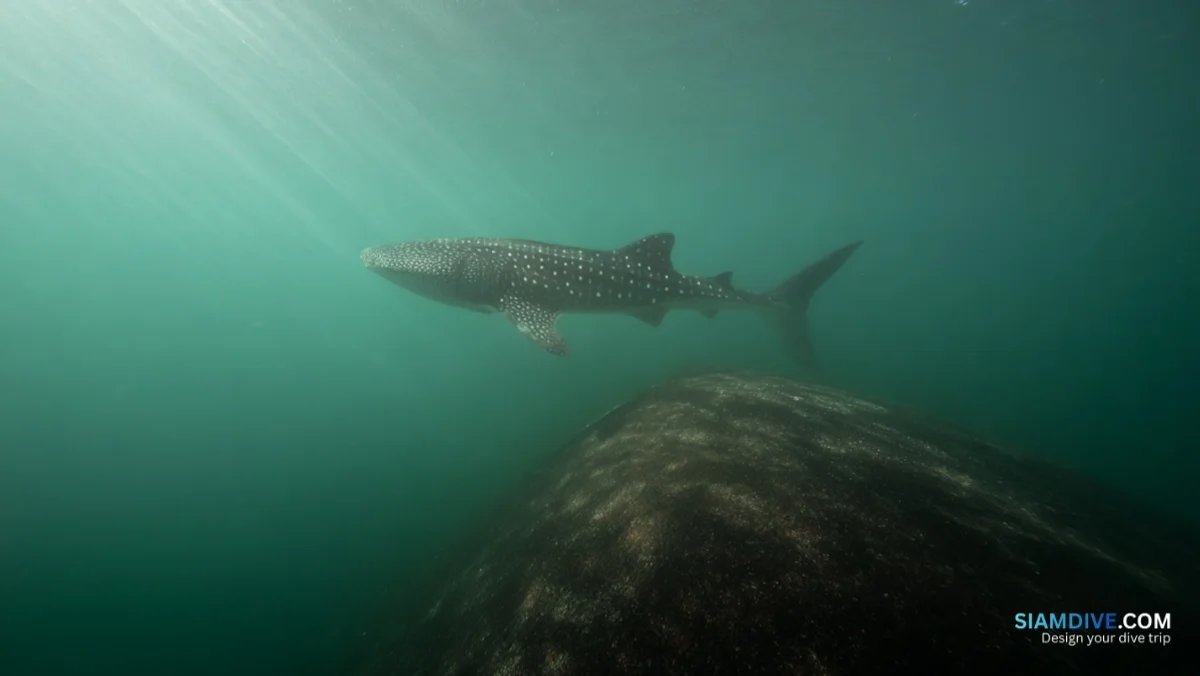
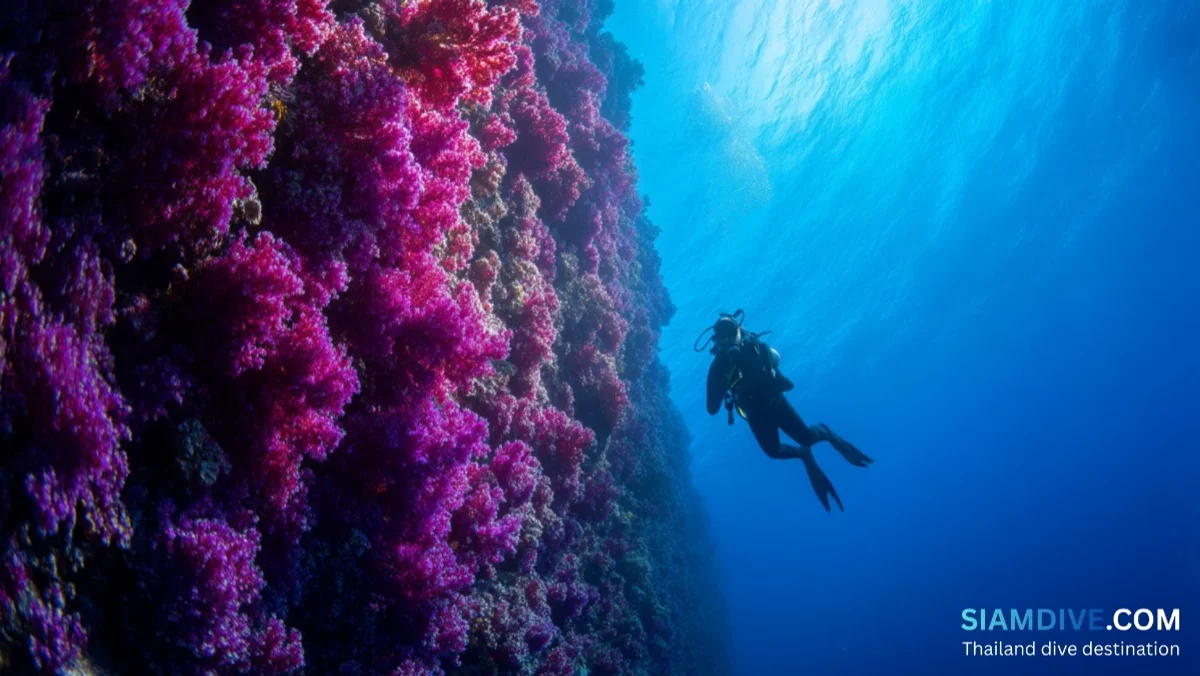
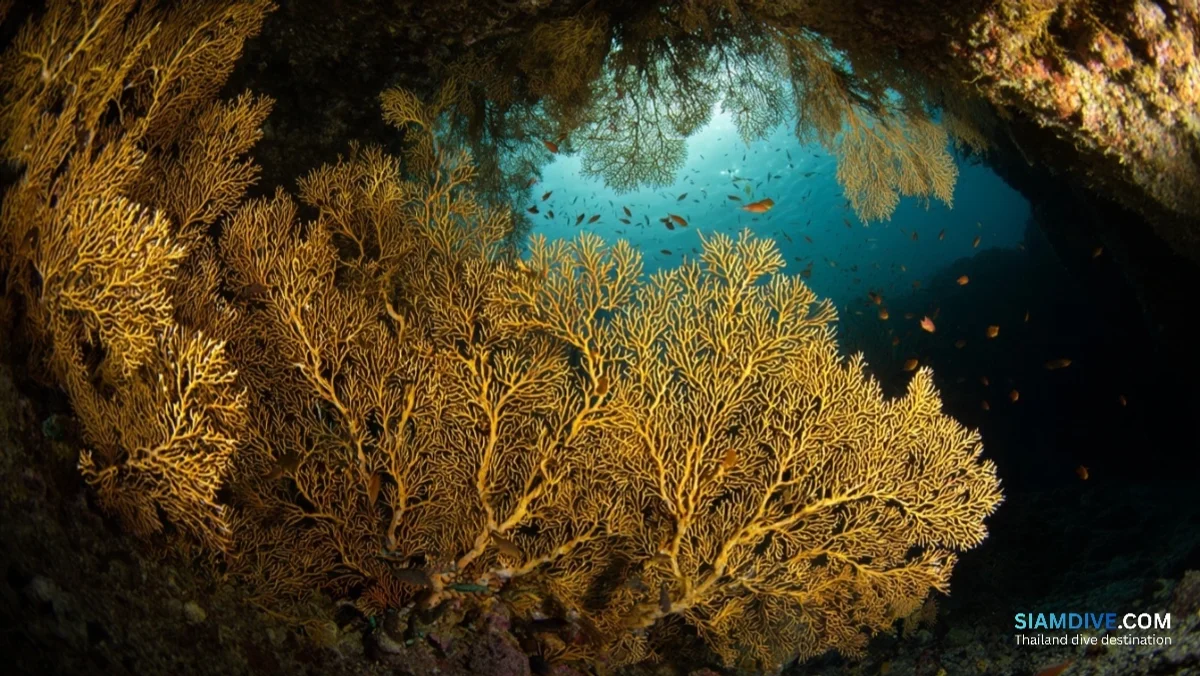
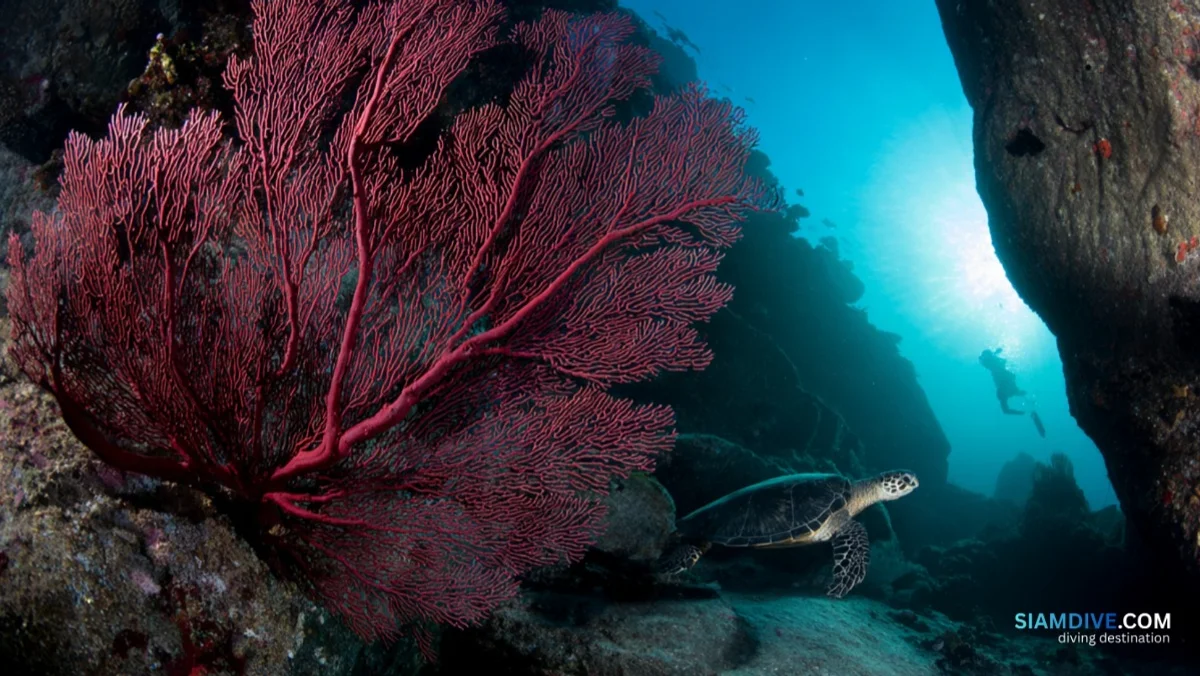
At Chumphon Pinnacle, thirty metres down on a good day in April, the water turns green with plankton. Schools of chevron barracuda orbit the granite tops in tight formation. Batfish drift in lazy circles near the mooring line. A leopard shark rests on a ledge, motionless. And somewhere in the blue beyond the visibility line — nothing arrives.
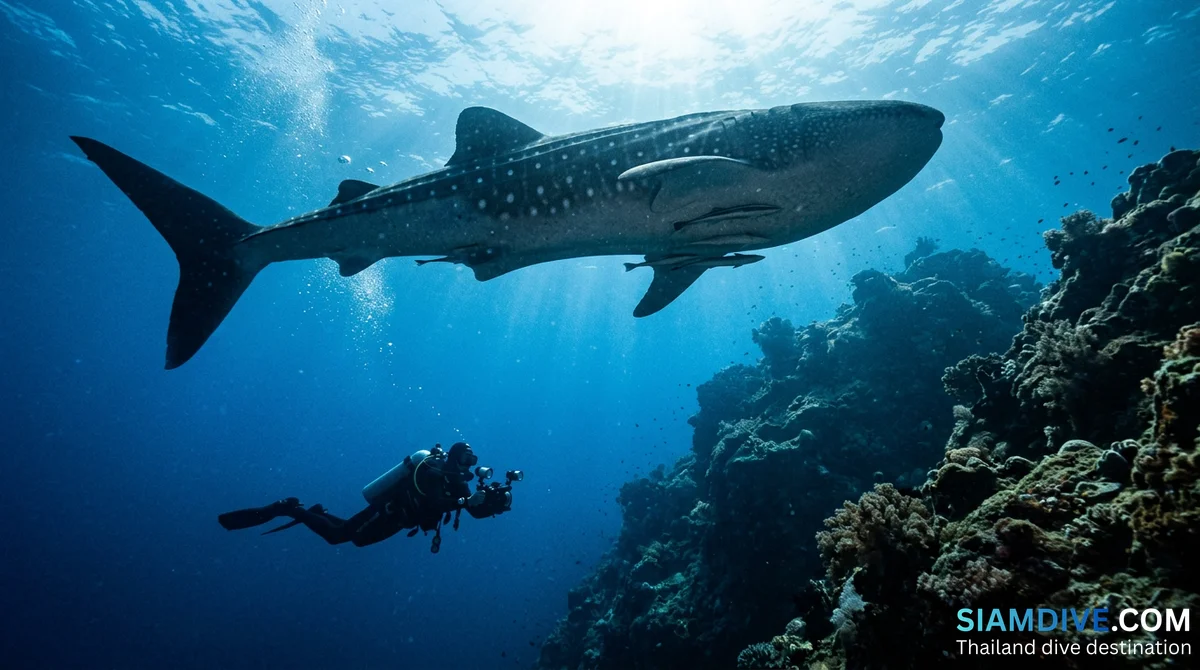
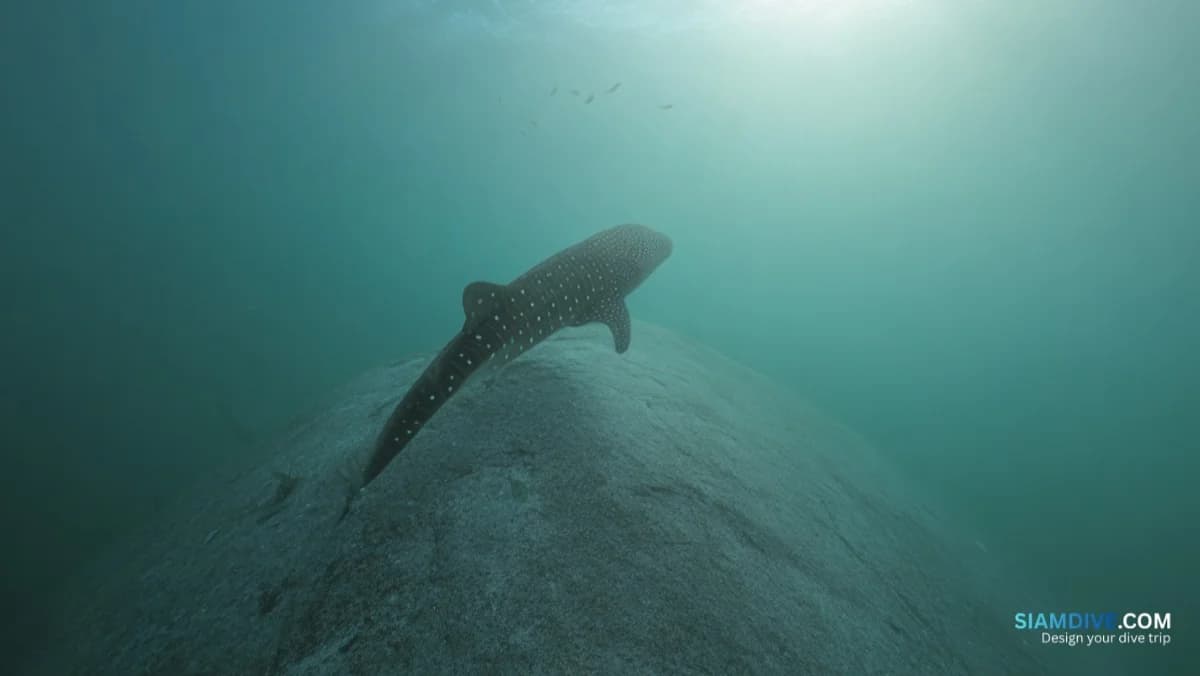
A decade ago, this scene would have played out differently. Dive briefings at Koh Tao's deepest pinnacle routinely ended with the same phrase: keep an eye on the blue. Between 2015 and 2019, whale shark sightings around the island exploded in frequency. Photo-identification databases swelled with new individuals. Social media lit up with shaky GoPro clips of eight-metre spotted silhouettes drifting over the pinnacle. Then the encounters slowed, thinned, and for many seasons effectively stopped. Dive operators adjusted their marketing. The briefing phrase stayed, but the expectation behind it faded.
The question that now runs through every logbook entry at Koh Tao is the same one marine biologists are trying to answer with satellite tags and DNA sampling: where did they go?
1,409 Records and What They Reveal
The numbers make the silence harder to ignore. Between 1991 and 2023, divers and snorkellers recorded 1,409 whale shark observations at three sites in the Koh Tao area — Sail Rock, Chumphon Pinnacle, and Southwest Pinnacle. That figure, compiled for the Koh Tao Important Shark and Ray Area (ISRA) assessment, represents 48% of every whale shark sighting logged across all of Thailand during the same period — 2,911 total nationwide.
Photo-identification work between 2004 and 2019 catalogued 178 individual whale sharks from 249 separate encounters. Researchers matched spot patterns on the left flank — each whale shark's equivalent of a fingerprint — to distinguish new individuals from repeat visitors. The distribution of those 178 IDs tells its own story: 89% of the records fell within a single five-year window, 2015 to 2019, when a growing community of citizen scientists fed data into platforms like the Thai Whale Sharks project and social media amplified reporting rates.
After 2019, the curve bent sharply downward. Fewer sightings appeared in the databases. Operators who had built whale-shark-season marketing around April and October began hedging their language. Tourism boards quietly stopped guaranteeing encounters. The animals hadn't just become harder to find — at certain sites in the Chumphon Archipelago, they appeared to have stopped coming altogether.
Transit Fish, Not Residents
One clue to the disappearance sits buried in residency statistics. A study published in Frontiers in Marine Science analysed lagged identification rates — a metric that tracks how often the same individual reappears at a site — across multiple global aggregation hotspots. At Koh Tao, the lagged identification rate declined rapidly toward zero. Individual whale sharks almost never showed up twice within a six-month window. The adjusted residency estimate came in at less than one day.
That number reframes the entire Koh Tao whale shark story. Contrast it with Ningaloo Reef in Western Australia, where tagged individuals return year after year and stay for weeks, or Isla Holbox in Mexico, where seasonal aggregations build to dozens of animals feeding in the same bay. Koh Tao has never been an aggregation site. It has been a corridor — a waypoint on migration routes presumably linked to plankton blooms triggered by monsoonal upwelling.
Whale sharks passed through the Chumphon Archipelago on those routes, paused at pinnacles long enough for a single dive encounter, then continued into open water. That transit nature is what made the sightings thrilling — every one felt like a gift from the current — but it also makes the population acutely vulnerable to disruption. Even a small shift in the conditions that concentrate plankton at these pinnacles could redirect whale sharks away from the archipelago entirely, with no change in the global population needed to explain the local absence.
A Gulf That Lost 91% of Its Sharks
But the global population has changed — and the regional numbers are stark. The IUCN reclassified the whale shark from Vulnerable to Endangered after inferring a 63% global decline over three generations, roughly 75 years. Three-quarters of the world's whale sharks live in the Indo-Pacific, and some regional assessments within that basin put the decline as steep as 92%.
Thailand sits inside that zone of sharpest loss. A WildAid analysis, corroborated by Save Our Seas Foundation research, found that shark populations in Thai waters dropped by 91% over two decades. The causes are layered, compounding, and familiar to anyone who has watched tropical marine ecosystems unravel:
- Industrial trawling legacy — the Gulf of Thailand's trawling fleet peaked in the 1980s and 1990s, collapsing prey fish stocks and restructuring the food web that whale sharks and other filter feeders depend on
- Bycatch pressure — gill nets and purse seines continue to operate across the Gulf; whale sharks, which feed at or near the surface, rank among the most vulnerable species to incidental capture
- Coastal habitat loss — mangrove clearance, coastal development, and repeated coral bleaching events have degraded the nearshore reef systems that anchor the plankton-producing base of the food chain
- Ship strike risk — ferry and speedboat traffic between Koh Samui, Koh Phangan, and Koh Tao has intensified year over year, putting surface-feeding whale sharks directly in the path of propellers
Thailand's legal protection for whale sharks carries serious weight — up to 15 years in prison and fines exceeding 1.5 million baht for hunting, killing, or trading the species. Whale sharks and four species of hammerhead are the only shark species with that level of statutory protection in Thai waters. But the law was designed to stop targeted take. The threats now pushing whale sharks out of the Gulf are indirect: bycatch in fisheries targeting other species, habitat degradation that erodes the plankton base, and climate-driven changes in the oceanographic conditions that bring whale sharks to the Gulf's granite pinnacles in the first place.
Warming Water, Shifting Routes
Whale sharks track plankton, and plankton follows temperature. The species favours sea surface temperatures between 26°C and 30°C — a range the Gulf of Thailand comfortably offered for decades. Ocean warming is now narrowing that window and shifting it geographically.
A Conservation International study modelled the impact of rising sea surface temperatures on whale shark distribution and projected that suitable habitat could shift up to 1,000 kilometres toward the poles within coming decades. For a species that already transits the Gulf of Thailand in under a day, even a modest northward displacement of the thermal sweet spot could redirect individuals away from Chumphon Pinnacle toward cooler, deeper waters off Myanmar or into the Andaman basin.
Koh Tao's seasonal sighting peaks — April to May and October to November — align with monsoon transitions that trigger nutrient-rich upwelling along the Chumphon coast. Cold, nutrient-dense water rises from depth, fuels phytoplankton blooms, and draws zooplankton in concentrations dense enough to attract filter feeders from hundreds of kilometres away. If those transitions weaken, shift timing, or deposit nutrients at different depths, the plankton signal that historically drew whale sharks to the pinnacles may simply stop broadcasting at the right frequency.
The First Satellite Tags in Thai Waters
For years, everything known about whale shark movements in Thailand came from a single source: diver sighting reports. The Thai Whale Sharks project, launched in 2017, formalised that approach by building a citizen-science platform where anyone who encounters a whale shark in Thai waters can submit photos and location data. The project's photo-ID database now tracks individuals across the Gulf and Andaman coasts, matching left-flank spot patterns against a growing catalogue.
In 2024, the project crossed a critical threshold. The Department of Marine and Coastal Resources (DMCR) granted official permission for satellite tagging — the first authorised whale shark tagging programme in Thai waters. Once attached, the tags transmit location, depth, and temperature data for months, mapping migration corridors that sighting reports alone can never reveal. If a whale shark tagged at Chumphon Pinnacle surfaces three weeks later off the coast of Myanmar, the data could rewrite assumptions about Gulf connectivity and justify transboundary conservation agreements.
On Koh Tao, grassroots conservation keeps the pressure on. Shark Guardian's annual Swim for Sharks returns in 2026 with a 3.4-kilometre open-water challenge designed to raise both funds and public awareness. Events like these maintain whale shark conservation visibility on an island where the animals themselves are increasingly absent. The ISRA designation — recognising the Koh Tao area as an Important Shark and Ray Area — adds the scientific credibility that marine spatial planning requires, though whether it translates into expanded no-take zones or fishing restrictions in the Chumphon Archipelago remains a political question with no clear timeline.
A Single Sighting, 300 Kilometres Away
On 14 March 2026, a whale shark estimated at three to five metres in length was spotted near Koh Bida Nai in Hat Noppharat Thara–Mu Ko Phi Phi National Park, on the Andaman coast — roughly 300 kilometres from Koh Tao. The sighting generated national media coverage. A decade ago, a juvenile whale shark near Phi Phi would barely have made a dive shop's morning whiteboard.
That shift in baseline says more than any dataset. When a single encounter with a three-metre whale shark becomes front-page news, the frame of reference has moved. The Gulf of Thailand, which once contributed nearly half the country's whale shark records, is producing fewer data points with each passing season. Meanwhile, Koh Ran Ped and other Andaman sites continue to report encounters at higher rates — suggesting that whale sharks have not vanished from Thai waters entirely but may be redistributing toward the Andaman coast, where deeper water, stronger currents, and more consistent upwelling maintain the plankton densities these animals need.
The redistribution hypothesis fits the available evidence, but it remains unproven. Satellite tags from the DMCR programme could confirm or disprove it within two to three years. Until then, every sighting logged in the Gulf carries outsized scientific value.
What Every Dive Can Contribute
A whale shark sighting logged in the Gulf of Thailand in 2026 is no longer just a holiday highlight — it is a data point with scientific consequences. Reporting takes minutes and costs nothing:
- Thai Whale Sharks — submit sighting reports with photos via thaiwhalesharks.org or the project's social media channels; left-flank shots are preferred for photo-ID matching
- Wildbook for Whale Sharks — upload images to the global photo-ID platform, which matches spot patterns against a database of over 12,000 catalogued individuals worldwide
- Encounter ethics — maintain a minimum of three metres distance, never touch or ride the animal, avoid blocking its path, and skip flash photography entirely
- Boat protocol — skippers should cut to idle speed within 50 metres of a sighting; propeller strikes remain a documented source of shark injury in Thai waters
The briefing phrase at Chumphon Pinnacle — keep an eye on the blue — has not changed in a decade. What changed is what comes back from the blue. Where there were once whale sharks, there is now data: 1,409 sighting records, 178 photo-identified individuals, residency models, genetic samples, and soon satellite migration tracks. Whether that data arrives in time to guide the recovery of the pinnacles whale sharks once visited depends on how quickly science, policy, and the thousands of divers who descend on Koh Tao each year align behind the same goal.
Sources
- Important Shark and Ray Areas — Koh Tao ISRA assessment and sighting data
- Frontiers in Marine Science — Whale shark residency estimation using global sighting data
- IUCN Red List — Rhincodon typus (Whale Shark) Endangered assessment
- Conservation International — Climate change and whale shark range shifts
- Shark Guardian — Swim for Sharks Koh Tao 2026