Why 94 Species Choose Racha Yai's Most Trampled Sand
1 พฤษภาคม 2569
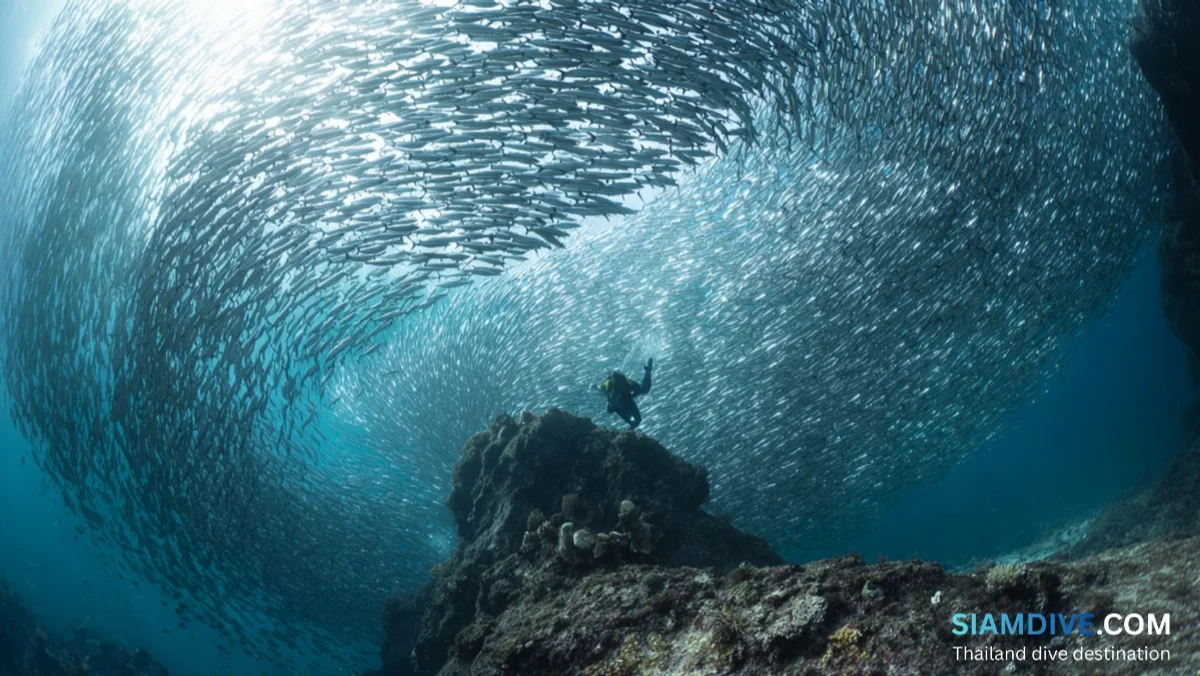
Researchers counted 94 fish species at Racha Yai Island — most within sight of the sand patch where hundreds of diving students kneel every single week.
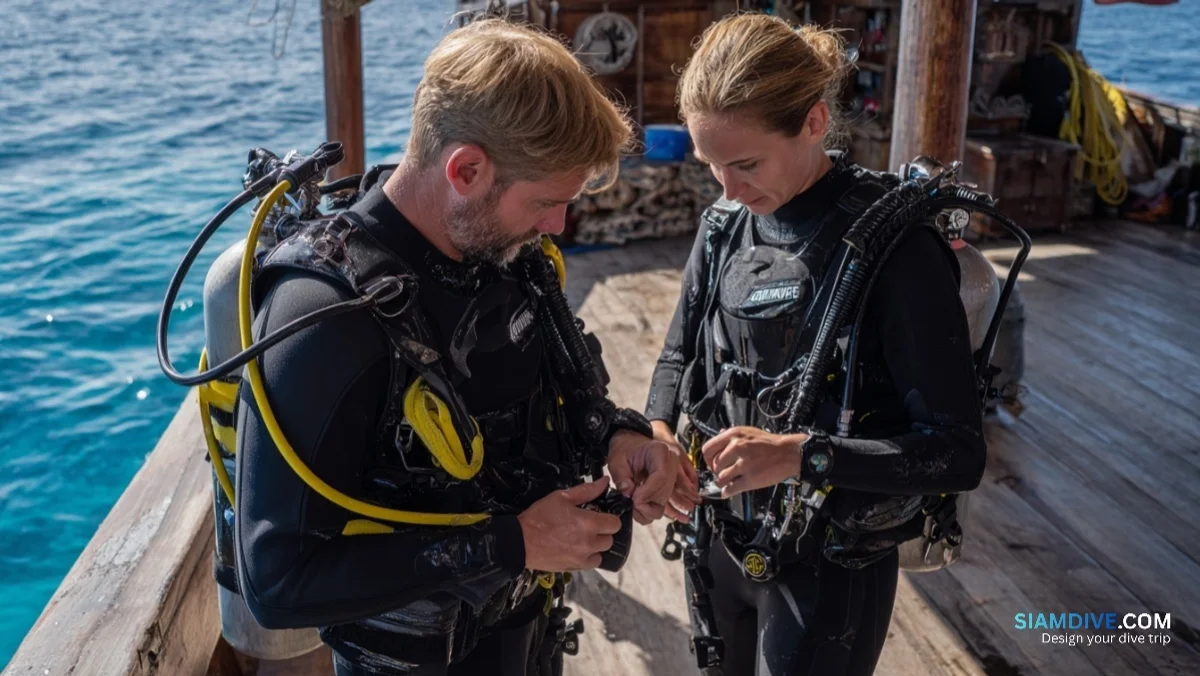
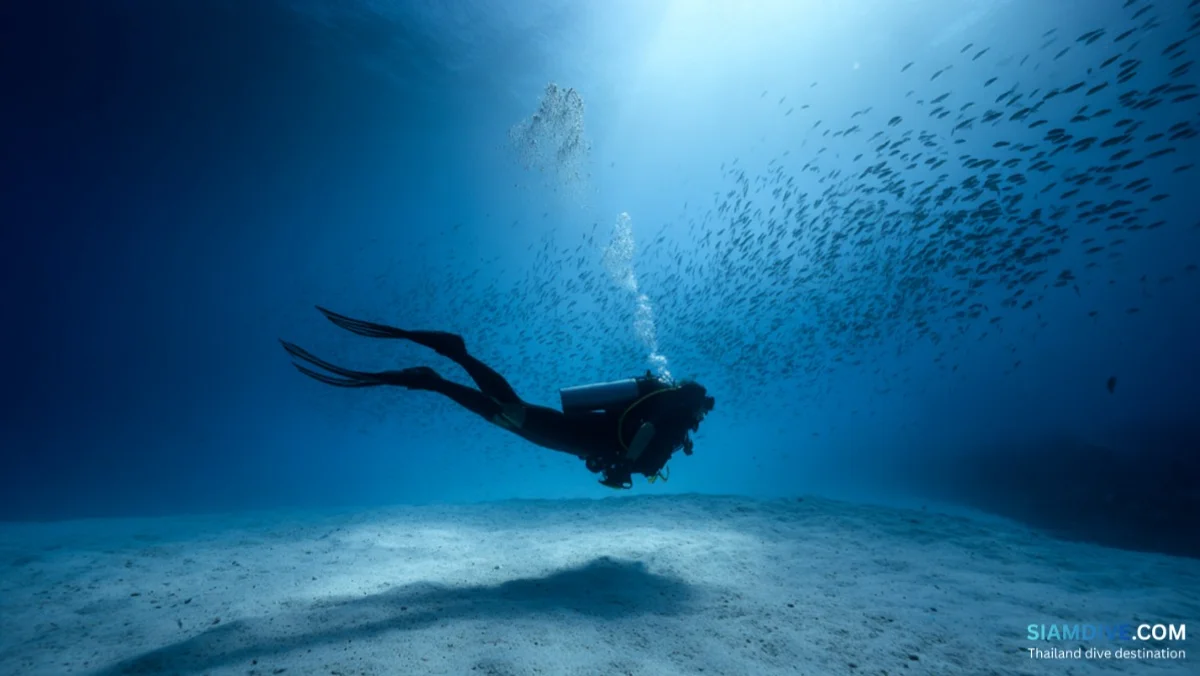
Eight o'clock on a Monday morning at Bay 1, and four boats are already jostling for the same 200-metre arc of mooring line. Below the hulls, where white sand slopes to five metres, a row of Open Water students kneels in a tidy line. They are practising mask clears. None of them notice the peacock mantis shrimp watching from its burrow less than an arm's length to the left, or the spotted garden eels swaying in the sand flat just beyond the group's collective fin wash. This is Racha Yai's most visited patch of seafloor — and, according to a multi-year university fish census, one of its richest.
A Shelf That Barely Breaks 12 Metres
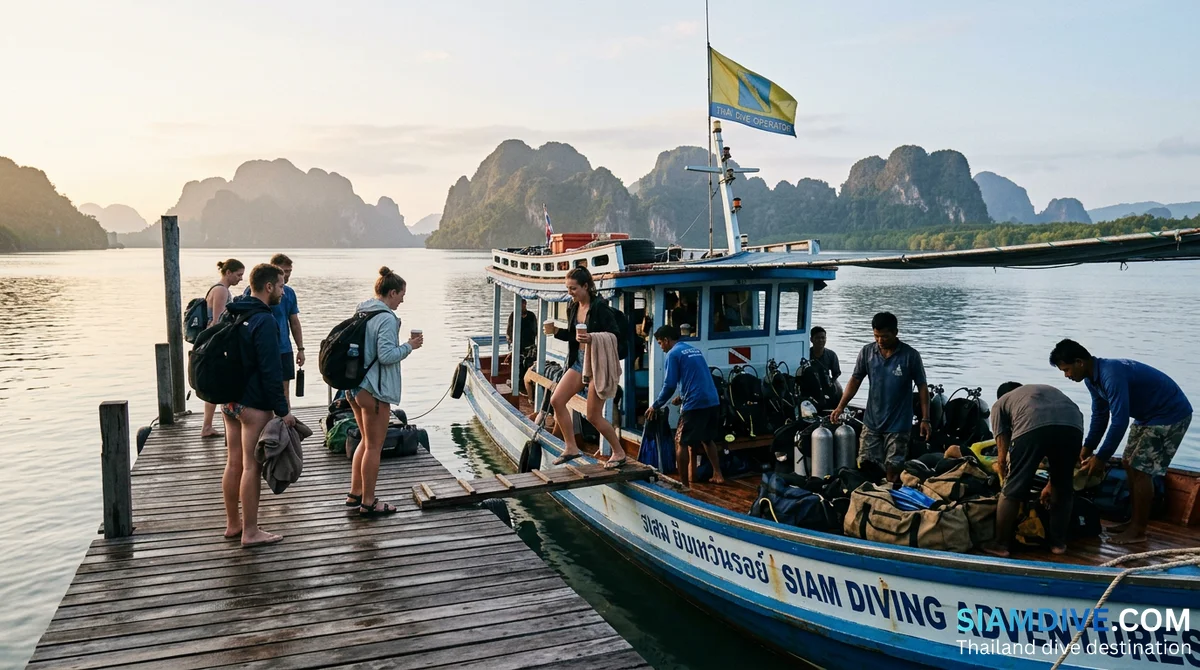
Bay 1 sits on the eastern side of Racha Yai Island, roughly 15 kilometres due south of Phuket's Chalong Bay. The crossing by dive boat takes about an hour, often with dolphins surfacing in the channel during calm mornings between November and April.
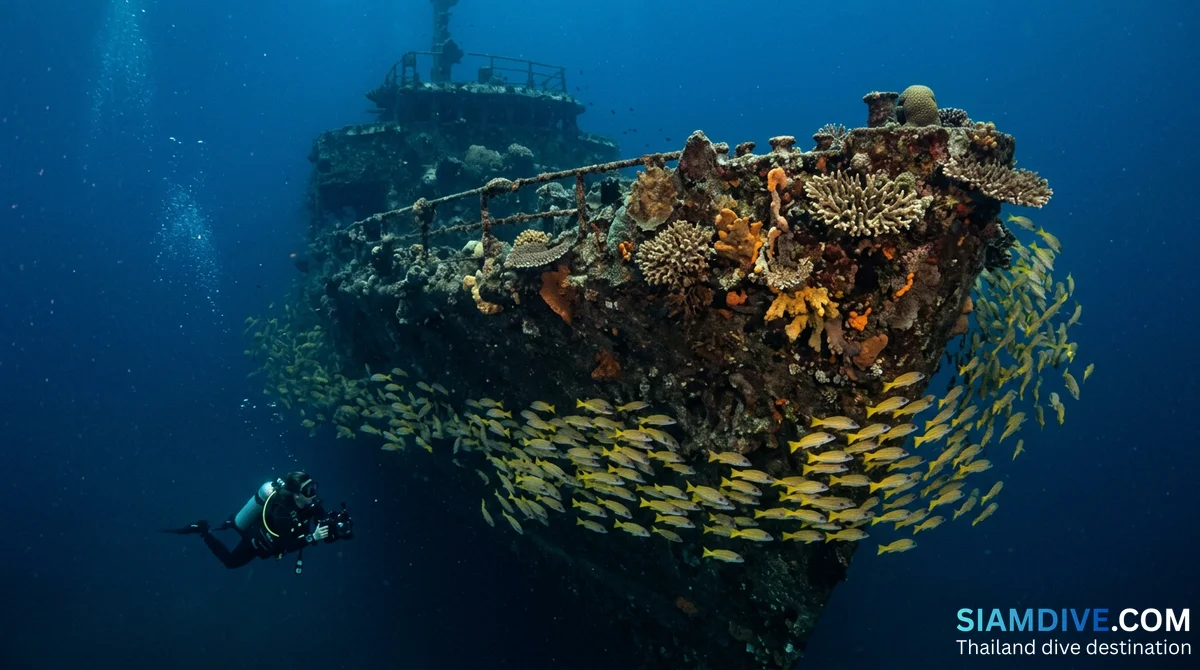
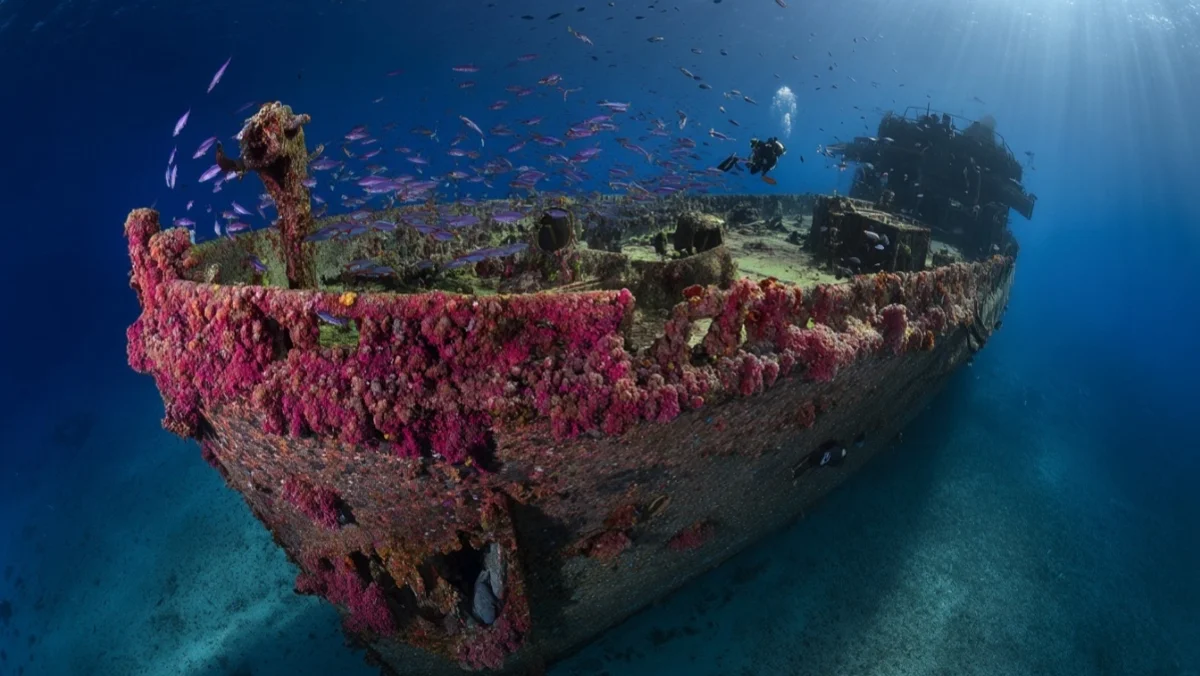
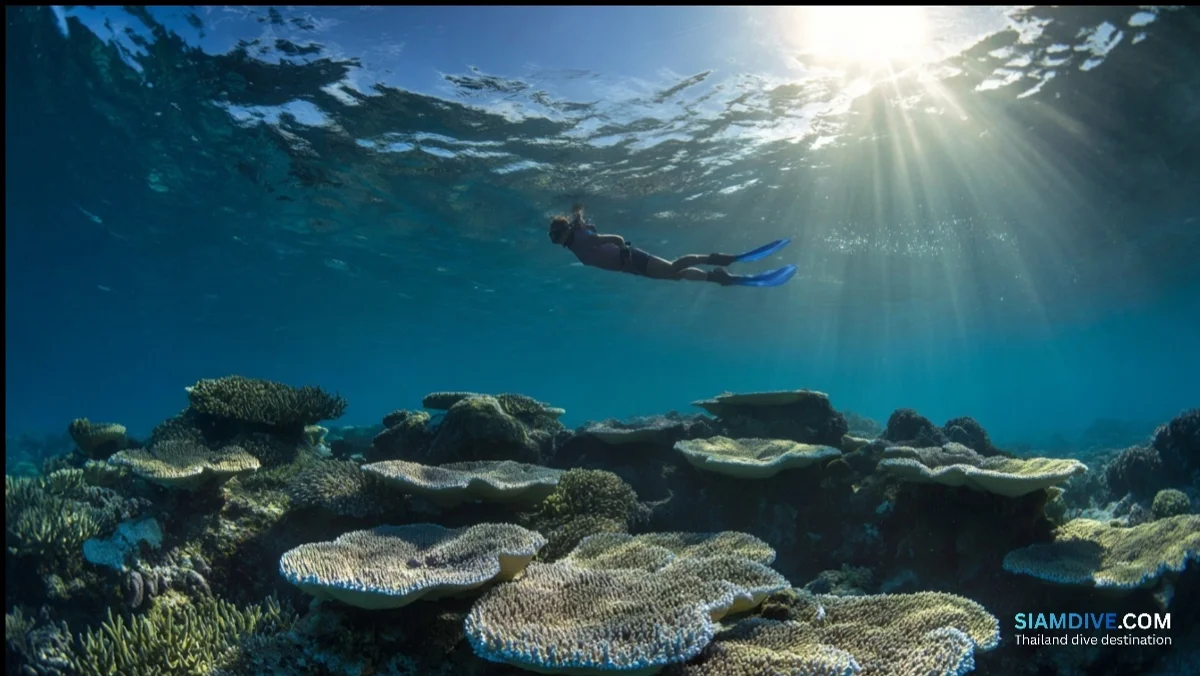
The bay itself is wide and shallow. Sand begins at the mooring lines around 3 metres and slopes gently to a reef fringe at 10–12 metres, where clusters of hard coral — staghorn, massive Porites, and tabletop Acropora — break up the white expanse. Beyond the fringe, the bottom drops more steeply toward 25–30 metres, where artificial structures and at least two purposely sunk wrecks sit in the blue.
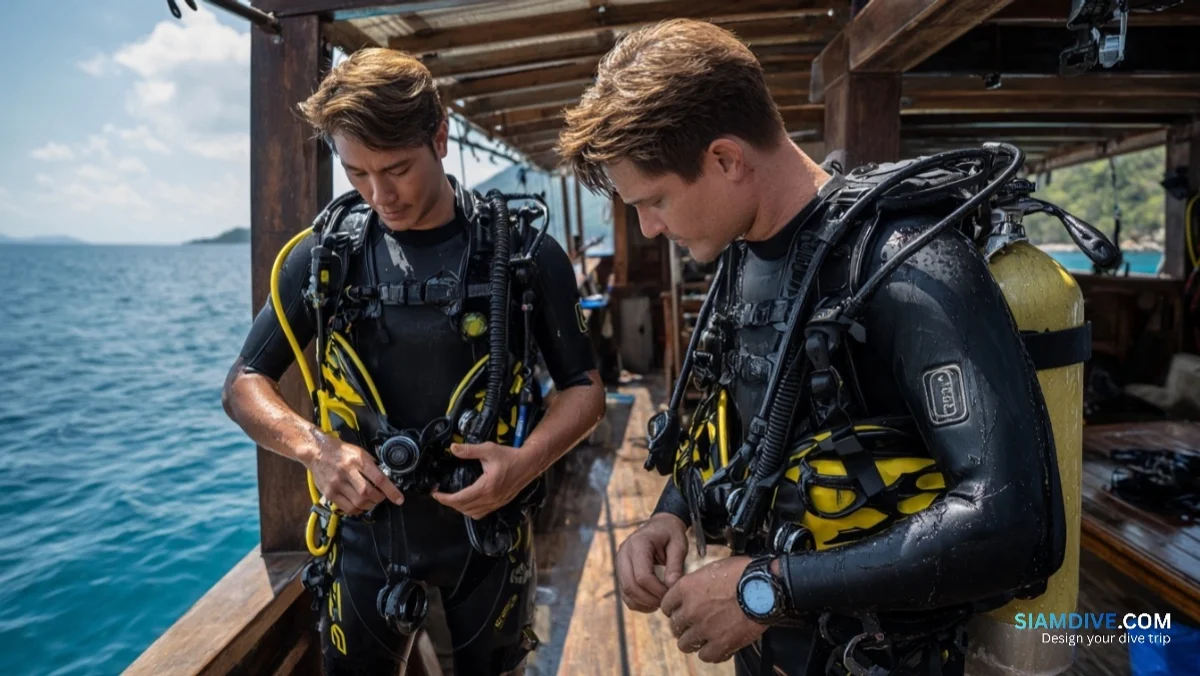
For PADI instructors, this profile solves a logistical problem that most students never think about. Confined-water skill practice, open-water ascents, buoyancy work, and emergency drills can all happen on a single trip without repositioning the boat. No wall, no current, no surge — just warm sand and time. The site appears on PADI's dive-site database as a recommended training location, and virtually every dive school within Phuket's Chalong marina runs courses here.
Visibility averages 15–20 metres year-round, pushing past 25 metres during the dry-season peak from February through April. Water temperature hovers between 28 and 30 °C, dipping to 27 °C only during the monsoon months. Current inside the bay is negligible — a rare feature that even seasoned divers learn to value when they attempt a rescue scenario in less sheltered water.
- Working depth
- 3–12 m (main bay); 15–30 m (cubes and wrecks)
- Visibility
- 15–20 m average, up to 30 m in peak season
- Water temperature
- 28–30 °C year-round
- Current
- Negligible inside the bay
- Bottom type
- White sand with hard and soft coral patches
94 Species on a Floor That Looks Like Nothing
The sand appears barren from the surface. Instructors call it "the classroom floor." Students spend their dives watching gauges and buddies, not substrate. Most leave Bay 1 believing they dived over empty sand with a few fish on the edges.
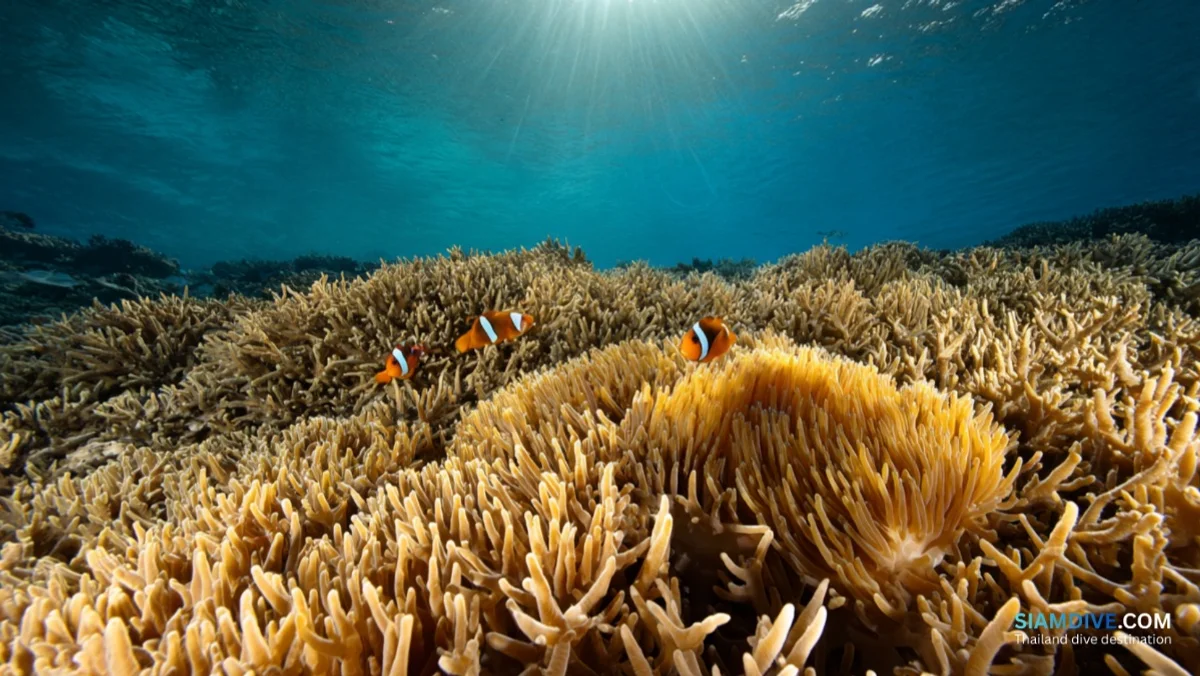
They are wrong. Between 2013 and 2018, a research team from Walailak University ran systematic surveys across Racha Yai's bays, deploying 50-metre transects along the reef slope at 8–10 metres depth. At Khonkae Bay — adjacent to Bay 1 and sharing the same reef system — they logged 6,326 individual fish across 94 species in 27 families. The dominant families were Pomacentridae (damselfish), Labridae (wrasses), and Chaetodontidae (butterflyfish), but the survey also catalogued pipefish, ghost pipefish, scorpionfish, shrimpfish, and at least three species flagged on the IUCN watch list.
The richness is not accidental. Bay 1's sandy substrate provides habitat for burrowing and sand-dwelling species that hard-reef sites lack. Spotted garden eels colonise the mid-bay flat in hundreds, vanishing into the sand like retractable periscopes when a diver fin-kicks too close. Blue-spotted stingrays cruise the transition zone between sand and coral, while Kuhl's stingrays lie flat on the bottom, their outlines invisible until a fin shadow crosses their disc. Parrotfish, bannerfish, and at least four species of moray eel hold territory year-round in the coral fringe.
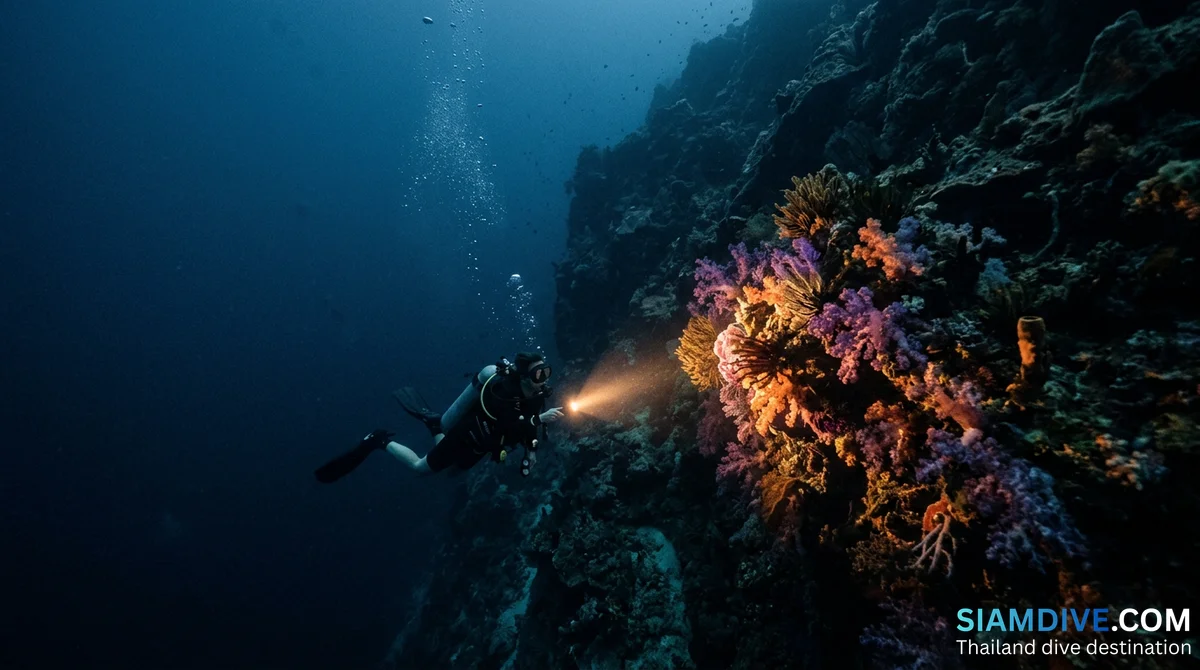
At dusk, the picture shifts. Nocturnal hunters emerge — lionfish unfold their pectorals, sleeping parrotfish wrap themselves in mucus cocoons, and a torch beam aimed at the wrong angle can disrupt the entire sequence. Few training dives stay long enough to witness the changeover. The species are there regardless.
The Cubes at 15 Metres
South of the main sand shelf, the bottom drops to 15 metres, and the view changes completely. A grid of concrete cubes — 109 structures in total — stretches across the slope in rows like a half-finished city block. These artificial reef units were deployed in the years following the 2010 mass bleaching event, when abnormally warm water killed large tracts of branching coral across Racha Yai's eastern bays. The goal was straightforward: give displaced organisms a new substrate to colonise while natural reef recovery ran its course.
Fifteen years later, the experiment has exceeded expectations. Staghorn corals branch from the cubes' upper faces. Pore corals and encrusting sponges cover vertical surfaces. Giant clams wedge into crevices between blocks. The structures have become habitat in their own right — a reef that built itself on a scaffolding of concrete.
Marine life around the cubes reads like a different dive site. Lionfish hang motionless under cube overhangs, dorsal spines fanned wide. Batfish circle in loose schools above the grid. Scorpionfish sit so still on cube edges that divers photograph them by accident while framing coral growth. Octopuses thread between the gaps after dark. A 2024 field study published in the journal Discover Sustainability examined Racha Yai's cube installations as reference models for next-generation 3D-printed modular artificial reefs — evidence that these structures have graduated from rehabilitation project to research benchmark.
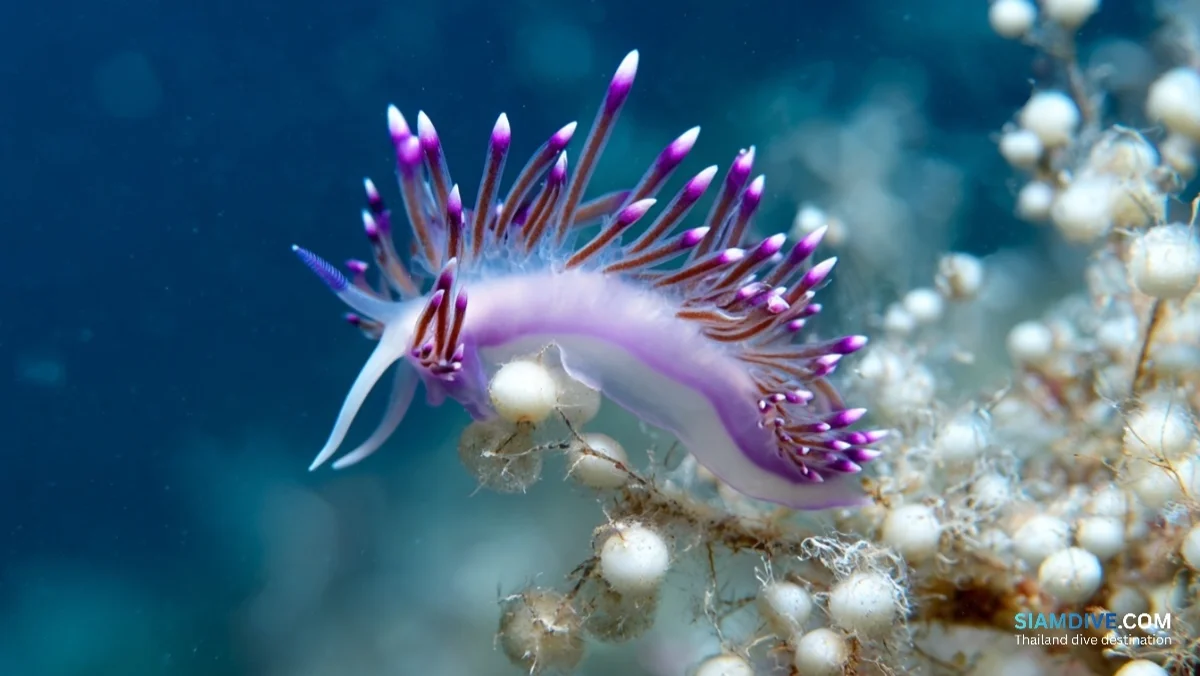
For certified divers with stable buoyancy, the cubes are Bay 1's genuine highlight. Advanced Open Water deep-dive training often uses them as waypoints. Fun divers and underwater photographers treat the grid as a macro playground, spending entire dives on a single cube face hunting nudibranchs and juvenile fish. The irony is sharp: the most compelling section of the site most associated with beginners is the one beginners cannot yet reach.
What Hides Between the Kneecaps
Back on the sand shelf at five metres, the creatures that make Bay 1 quietly remarkable demand one thing: stillness.
Spotted garden eels ripple like grass across the mid-bay flat, their slender bodies swaying in the mild tidal flow. Approach too fast and the colony retracts in a wave, burrow by burrow, until the sand looks bare again. Peacock mantis shrimp — carrying the fastest strike in the animal kingdom at roughly 23 metres per second — peer out from rubble patches between coral heads, their compound eyes tracking movement on two independent axes. Cuttlefish hover in pairs above the sand during breeding season from December through March, their chromatophores pulsing in patterns visible from two metres away.
And then there are the stonefish. They sit on the bottom, camouflaged so effectively against rubble and dead coral that even experienced divers walk past them. Instructors mention stonefish in every briefing, but the reality of a venomous fish sitting precisely where students kneel concentrates the mind more sharply than any slide deck. Understanding what panic does to breathing matters more on a sand shelf with concealed stonefish than on a deep wall, because here the hazard is underfoot, not overhead.
- Spotted garden eels — mid-bay flat, best observed from distance with neutral buoyancy
- Peacock mantis shrimp — rubble patches between coral heads, 3–8 m depth
- Cuttlefish pairs — sand shelf, breeding season Dec–Mar
- Blue-spotted stingrays — sand-to-reef transition, year-round
- Stonefish — camouflaged on rubble and dead coral, uncommon but present
- Moray eels — at least 4 species resident in coral overhangs throughout the bay
Why Instructors Keep Coming Back
The sigh is real. Bay 1 is the most-dived patch of reef in Phuket's orbit. On peak-season mornings, five or six boats crowd the same anchorage. Sand clouds billow from fin kicks across the classroom zone. Aggregate TripAdvisor reviews from early 2026 flag overcrowding and rushed dive schedules as recurring frustrations — particularly on snorkel-and-dive combo tours that compress two dives and a beach stop into a single departure.
Instructors who run courses here three or four times a week know every moray by location, every cube by orientation, every sand patch where a stonefish last appeared. The routine can flatten any site.
And yet, they return. Not from affection — from arithmetic. Bay 1 delivers a reliable 5-metre sand platform, negligible current, 28-degree water, and boat access 365 days a year. No other site within day-trip range of Chalong offers the same package. Shark Point, 30 minutes further east, has stronger pelagic life but current that rules out students on their second dive. Racha Noi, the island's wilder southern neighbour, drops past 30 metres fast and runs heavy drift. Even Bay 3 on Racha Yai's northern shore catches more swell.
Reliability beats spectacle when the job is getting a nervous student through four open-water dives in two days without incident. Bay 1 does that job every time. The spectacle, for anyone who slows down and looks, is already there — hiding in plain sight on the most trampled sand in the Andaman Sea.
Timing, Cost, and the One-Month Sweet Spot
April is the month. Water temperature peaks near 30 °C. Visibility frequently pushes past 25 metres. The southwest monsoon has not yet begun throwing swell against the eastern bays, and the high-season crowds thin as European holiday schedules wind down. For a diver planning a first visit to Bay 1 — or a return trip with a camera — this narrow window offers the best of both worlds: clear water and fewer boats.
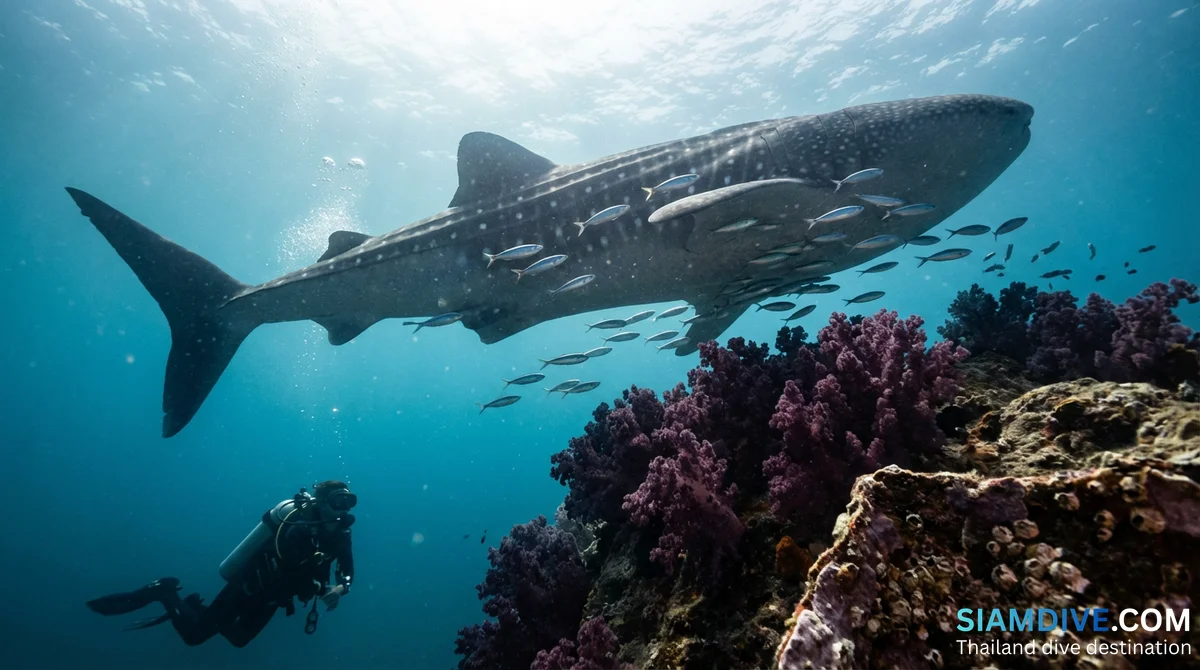
By mid-May, conditions turn variable. Rain squalls arrive in the afternoons. Visibility drops to 10–15 metres on some days. The east-side bays may become inaccessible during heavier monsoon periods from June through September, though operators shift to west-side sites when conditions demand it. Low season carries its own appeal — fewer boats, cheaper island accommodation, and the occasional whale shark sighting that rewards the patient — but it is not the Bay 1 that training brochures promise.
- Peak season (Nov–Apr) — visibility 20–30 m, calm seas, daily departures from Chalong
- Shoulder months (May, Oct) — variable conditions, still diveable most days, fewer boats
- Low season (Jun–Sep) — monsoon swell on east side, reduced trip frequency, west bays accessible
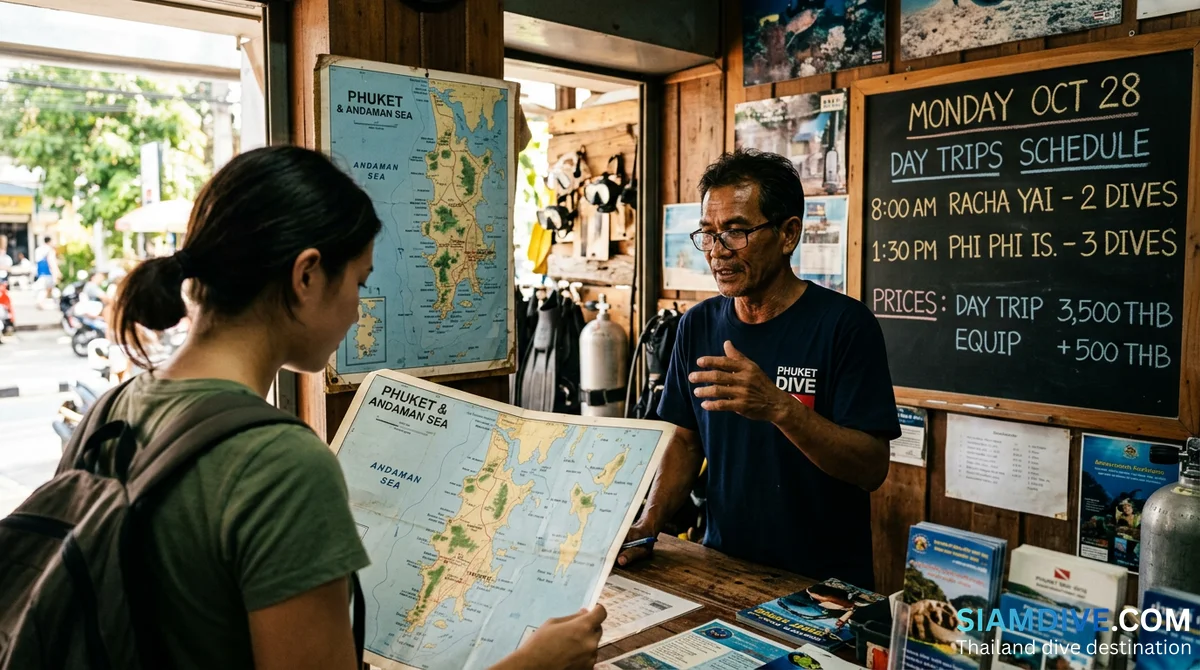
- Day trip cost — 3,500–3,600 THB for 2–3 dives (certified divers); equipment rental ~750 THB
- Discover Scuba Diving — from 3,500 THB including gear and instructor
- Travel time — approx. 60 min by dive boat from Chalong Bay pier
The anchor damage that heavy boat traffic causes is visible at Bay 1's mooring zone — broken coral heads and drag scars along the sand-to-reef edge. This is the trade-off of accessibility: the site that trains more new divers than any other in the Andaman Sea also absorbs the most daily impact. Whether those 94 species keep choosing this patch of sand depends, in part, on how the next generation of reef builders — concrete, 3D-printed, or otherwise — decides to reinforce what the cubes started fifteen years ago.
Sources
- Journal of Fisheries and Environment — Diversity of Coral Reef Fishes at Racha Yai Island, Thailand
- PADI — Racha Yai Island dive site reference
- Discover Sustainability — 3D-printed modular artificial reefs, Koh Racha field study 2024
- Divezone — Racha Yai Island site profile
- กรมทรัพยากรทางทะเลและชายฝั่ง — Thailand Department of Marine and Coastal Resources