Why Divers Pay $350 to See Almost No Fish at the Blue Hole
26 เมษายน 2569
Almost no coral, limited fish, total darkness below 90 metres. Yet divers pay $350 to descend into Belize's Blue Hole. The answer hangs from the ceiling.
Three hundred and eighteen metres of dark circle punched into turquoise reef — visible from the International Space Station, instantly recognisable from any satellite feed, and home to almost nothing alive. The Great Blue Hole off Belize's coast holds no thriving coral garden, no manta cleaning station, no whale shark highway. Caribbean reef sharks loop its rim. Nurse sharks rest on its sandy shelf. Below 91 metres, a thick layer of hydrogen sulfide seals off the bottom like a chemical floor, and everything beneath it is dead. Divers still fly halfway around the world to drop into it — and they pay handsomely for the privilege. The reason is not biological. It is geological, and the oldest evidence hanging inside this hole predates modern humans by more than 100,000 years.
What Swallowed a Dry Cave 15,000 Years Ago?
Long before the Caribbean flooded this part of the Lighthouse Reef Atoll, a limestone cave system sat on dry land roughly 70 kilometres off what is now the Belizean mainland. During the Quaternary glaciation, when sea levels dropped tens of metres below their current mark, mineral-rich water dripped through the cave ceiling for millennia — building stalactites centimetre by centimetre in humid tropical darkness. The cave survived multiple glacial cycles. Then the ice sheets retreated for the last time, and the ocean returned.
Sea levels rose in at least four documented stages. Analysis of recovered stalactites dates the formation processes to 153,000, 66,000, 60,000, and 15,000 years ago. Each rise flooded a new section of cave, and successive roof collapses left distinct ledges visible today at 21, 49, and 91 metres depth — each one a frozen record of where the ocean surface once paused on its way up. The final collapse produced the near-perfect circle that Jacques Cousteau would make famous 14 millennia later: 318 metres across, 124 metres deep, now part of the Belize Barrier Reef Reserve System that UNESCO designated a World Heritage Site in 1996.
Colour Drains Fast After the Rim
The first 12 metres of the descent pass over a gently sloping sand-and-coral shelf that rings the entire hole — bright, warm, unremarkable. Barracuda hold station near the surface. Small reef fish work the edges. Then the wall drops away and the water shifts from Caribbean turquoise through deep indigo to something closer to ink. By 30 metres the temperature falls a couple of degrees, ambient light dims to a gloomy dusk, and the scale of the void becomes undeniable: an open limestone cylinder with no visible floor.
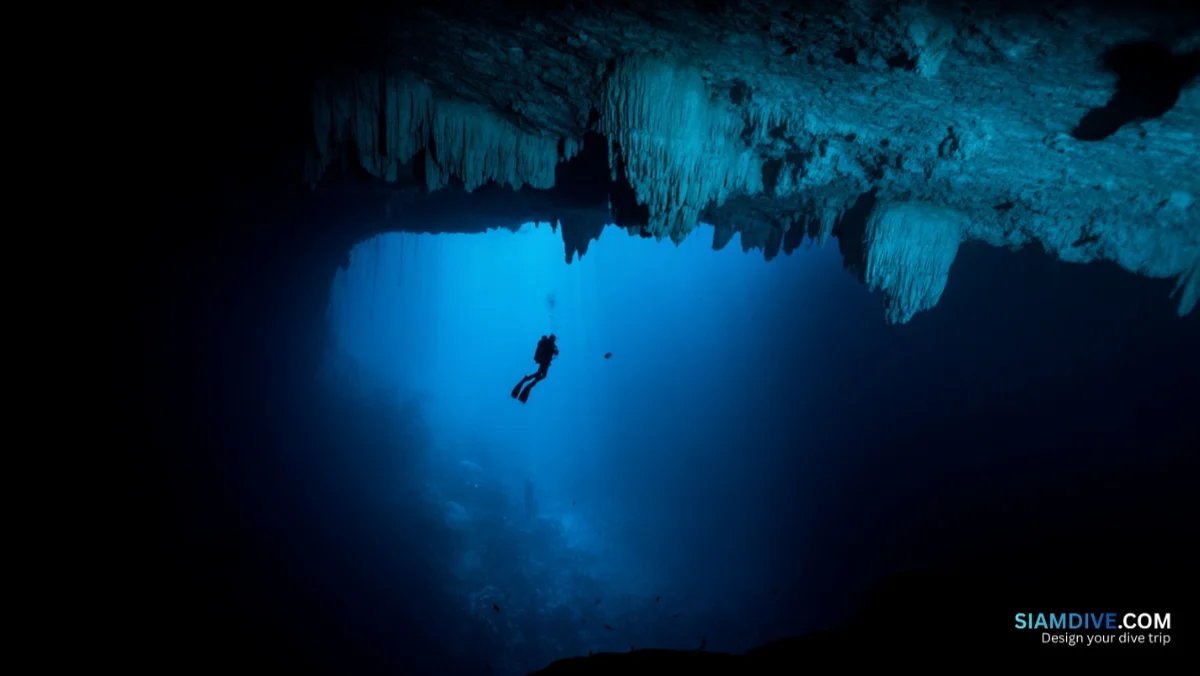
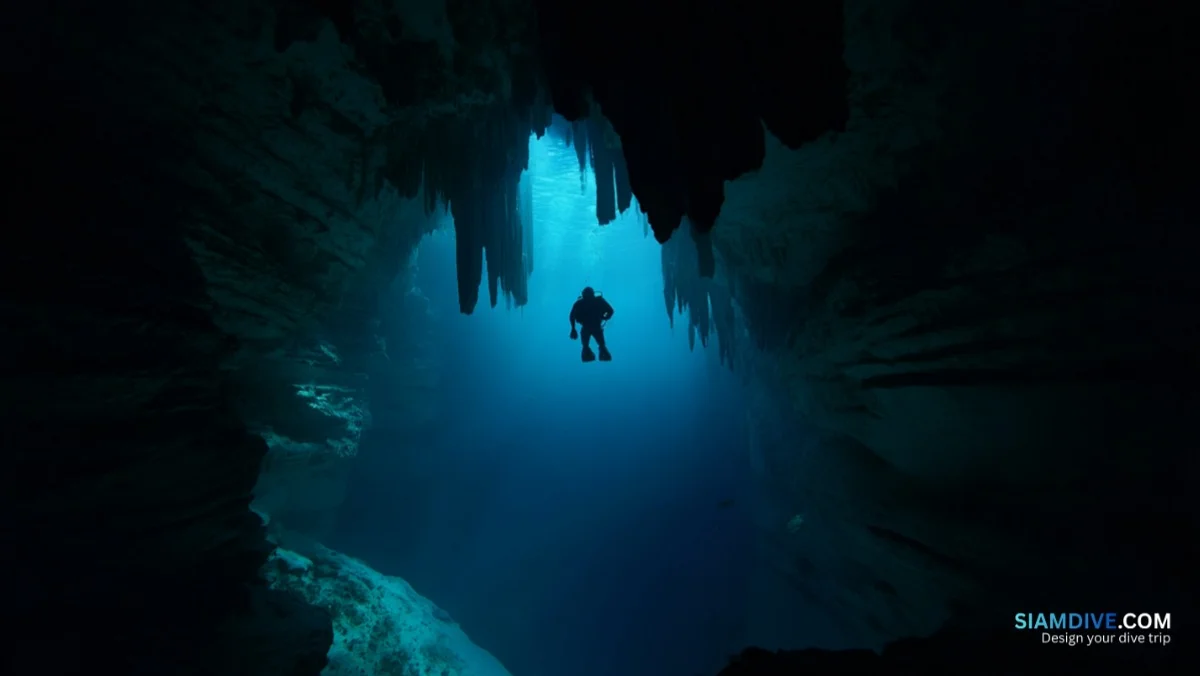
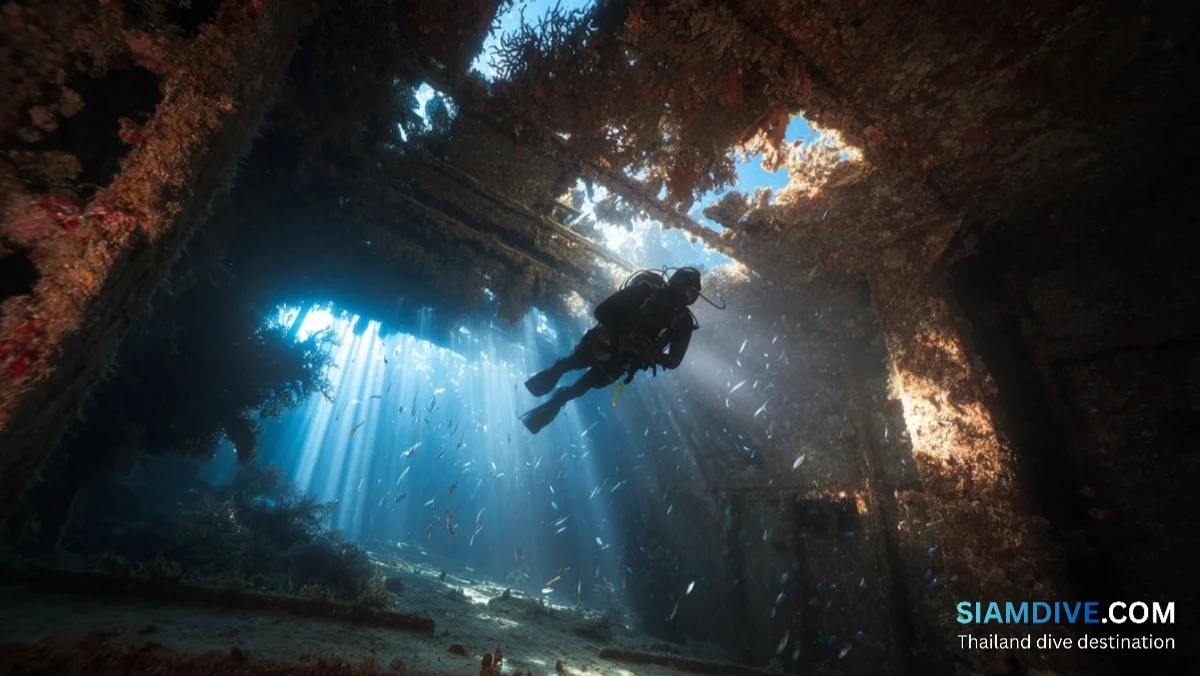
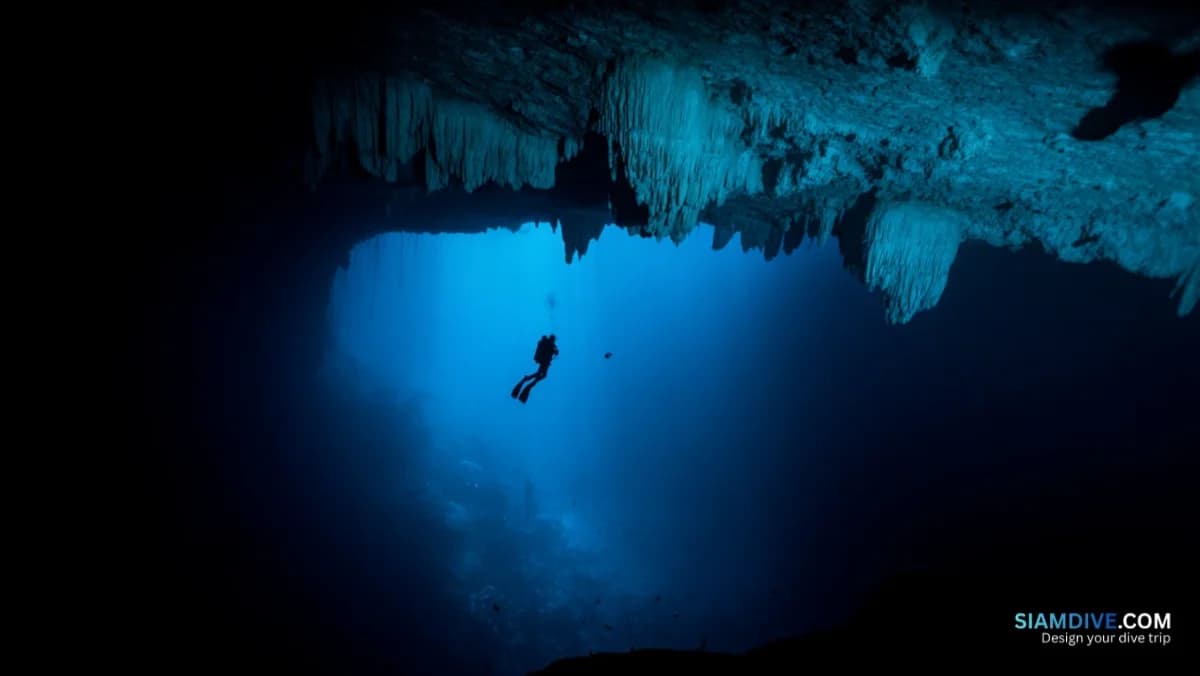
At around 40 metres the ancient cave ceiling begins to jut inward. This is where the stalactites appear — massive formations hanging from overhanging ledges, some reaching 12 metres in length, frozen mid-drip for tens of thousands of years. Dive guides thread groups through the formations in a careful zigzag, torches picking out the ridged surfaces of stone that could only have formed in air. The silence at this depth is total except for the crack of expanding bubbles overhead. The whole sequence — descent, stalactite zone, turnaround — typically spans 12 to 14 minutes of bottom time before the ascent and safety stop begin.
- Maximum recreational depth: 40 m (130 ft) — most operators cap the dive here
- Total hole depth: 124 m (407 ft), confirmed by the Cambrian Foundation in 1997
- Diameter: 318 m (1,043 ft)
- Visibility: 30 m average; best from November through May
- Water temperature: 26–28 °C at recreational depth
- Typical bottom time at 40 m: 12–14 minutes
Stalactites That Predate Modern Humans
The real draw hangs from the ceiling, and it could not exist underwater. Stalactites form only in air — they need gravity pulling mineral-laden water droplets through limestone, each drop depositing a thin ring of calcium carbonate before falling away. Their presence at 40 metres below the Caribbean surface is the geological fingerprint of an Ice Age world that vanished when the glaciers melted. The oldest formations inside the Blue Hole date to 153,000 years ago — more than 130,000 years before the first humans reached the Americas.
What makes them remarkable for divers rather than just geologists is the combination of scale and access. Formations up to 12 metres long hang from ledges that a certified Advanced Open Water diver can reach on a single tank of standard air. No cave penetration is required. The stalactite zone sits along the interior wall of an open sinkhole, not inside a restricted overhead environment. That pairing — deep geological time visible at recreational depth without cave training — exists almost nowhere else on the planet. The closest comparison might be the cenote systems of Mexico's Yucatan, but most formations of equivalent age and size there require full cave certification to reach.
What Actually Lives in the Hole?
Not much — and that is part of the point. The interior of the Blue Hole lacks the sunlight, current flow, and substrate that reef ecosystems need. There is no coral below the rim shelf. Plankton thins out quickly with depth. The hydrogen sulfide layer at 91 metres creates a hard biological boundary: below it, the water is anoxic and permanently lifeless.
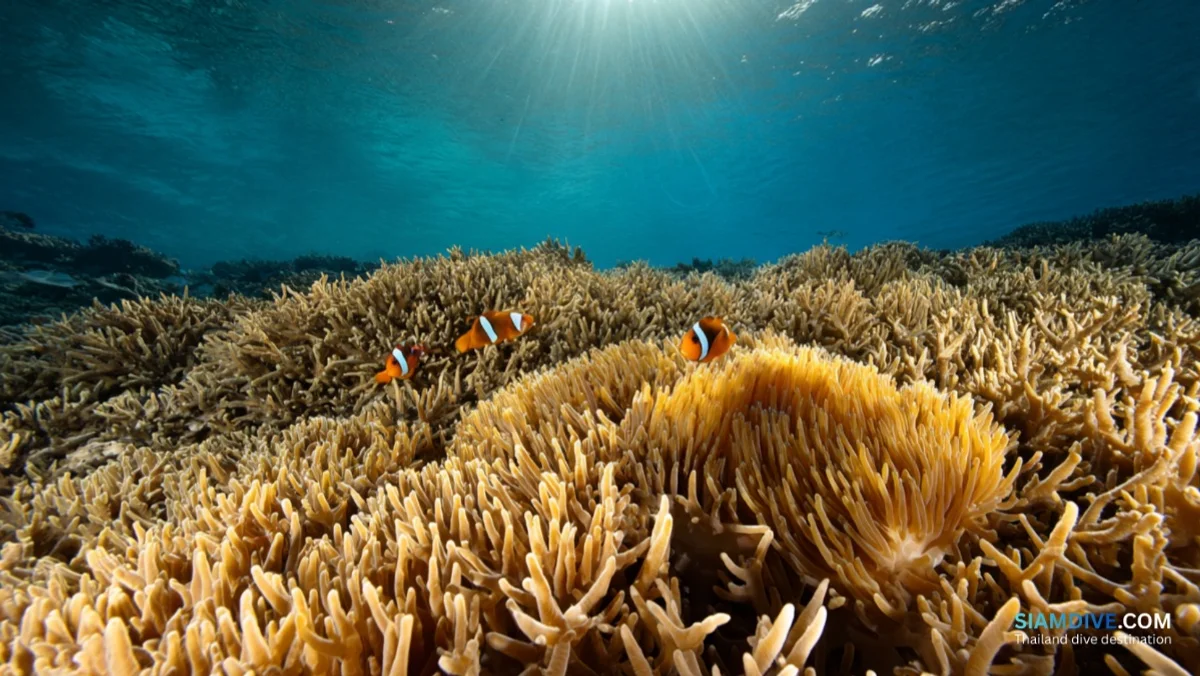
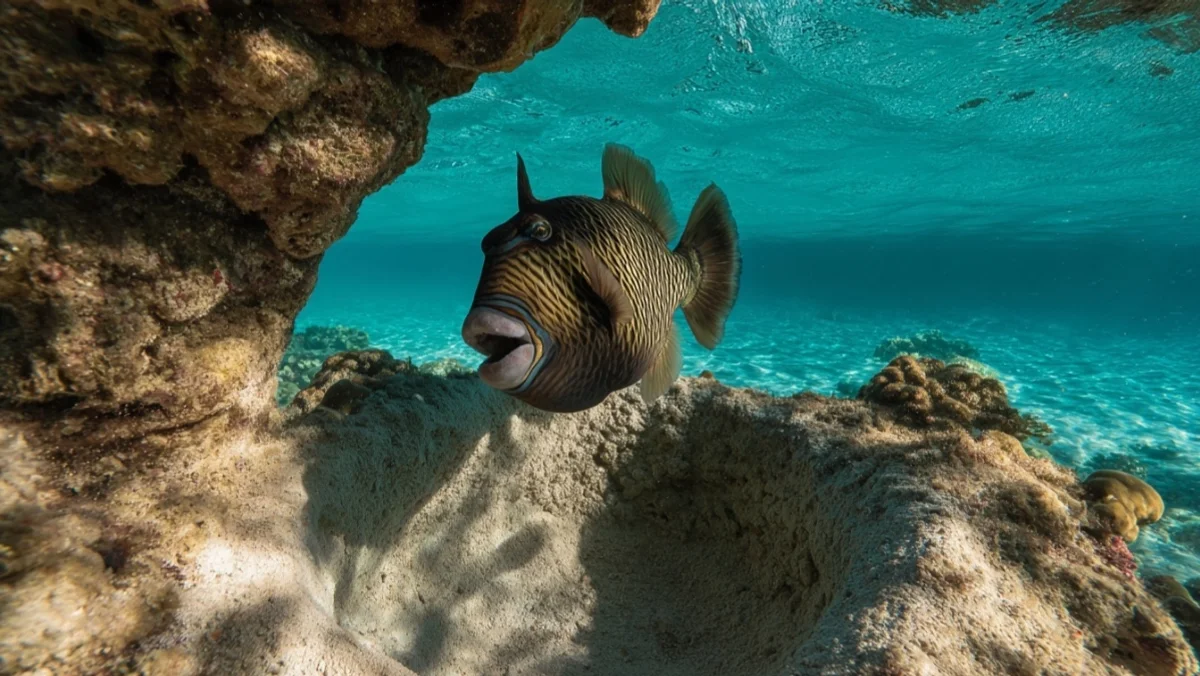
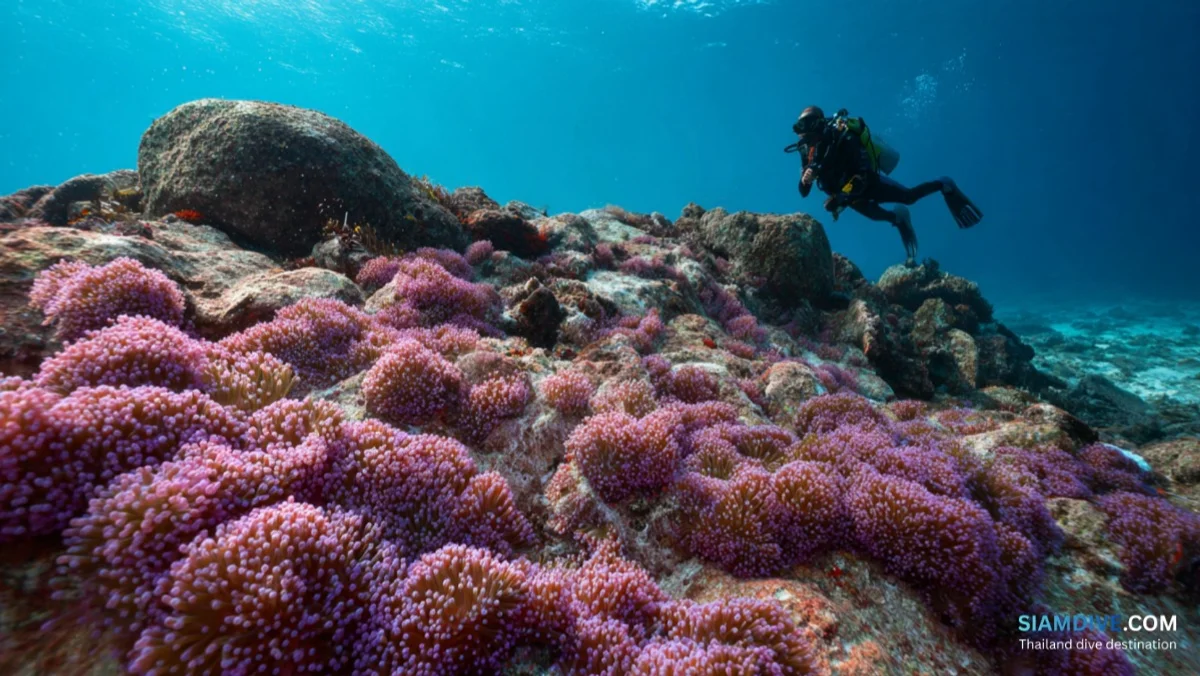
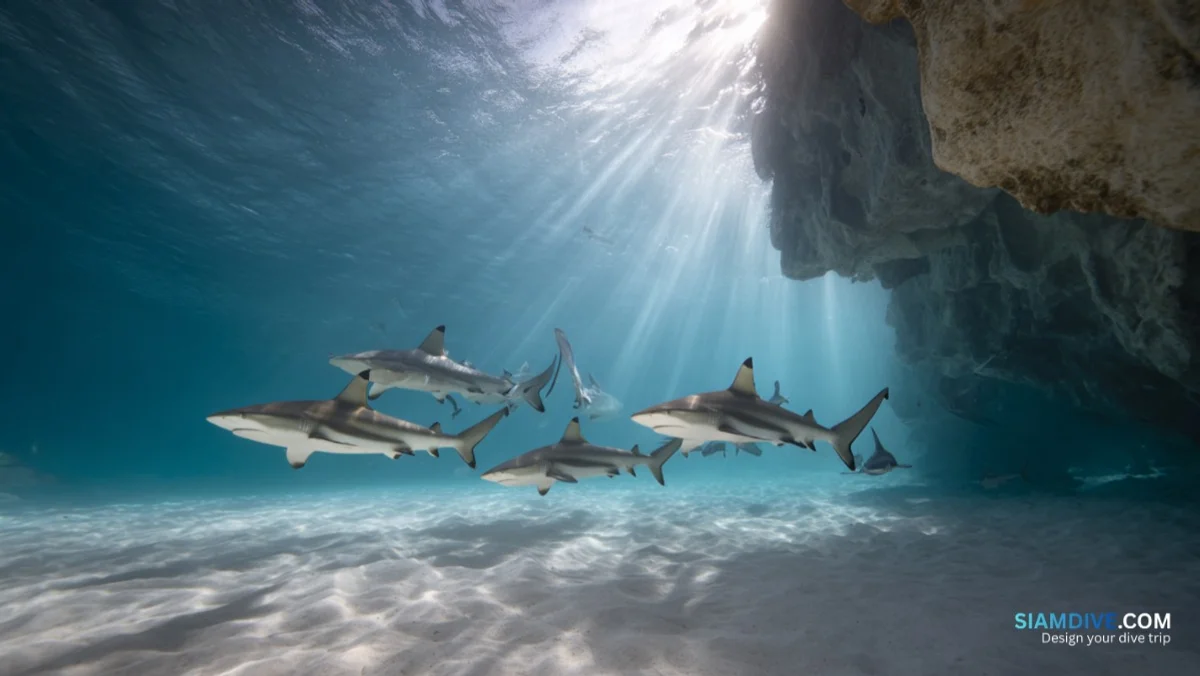
Above that chemical floor, the hole supports a narrow cast of residents. Caribbean reef sharks — typically four to eight on any given dive — patrol the upper wall in slow circuits. Nurse sharks rest on the sandy shelf near the entry point. Giant groupers lurk in the shadows of the stalactite overhangs. Occasionally a bull shark or hammerhead passes through, though sightings are uncommon and seasonal. The supporting dives on the day trip — Half Moon Caye Wall and Long Caye Aquarium — deliver far more biodiversity per minute of bottom time, with eagle rays, turtles, and dense reef fish schools that the hole simply cannot match.
Experienced divers who arrive expecting a shark-packed spectacle sometimes leave underwhelmed. Those who understand they are entering a geological museum rather than an aquarium tend to surface with a different kind of satisfaction.
What Branson's Submarine Settled in 2018
For 47 years after Cousteau's Calypso expedition, the floor of the Blue Hole remained unmapped. Cousteau's 1971 team declared the site one of the world's top five diving destinations and retrieved stalactite samples that confirmed its karst limestone origin — but they never surveyed the entire interior. That changed in December 2018, when two Aquatica submarines carrying Cousteau's grandson Fabien and Virgin Group founder Richard Branson descended to the bottom.
Over 22 dives spanning late November to mid-December 2018, the expedition produced the first complete 3D sonar map of the hole's interior. The most significant confirmation: a dense hydrogen sulfide layer sitting at approximately 91 metres, exactly where the deepest formation ledge marks the oldest sea-level pause. Below that layer the water is pitch-black and oxygen-free. Conch shells and hermit crabs that tumbled over the rim litter the floor, suffocated in the dead zone. The team also located the remains of two divers who had gone missing in previous years, and reported the discovery to Belizean authorities.
The sonar data revealed that stalactite formations extend well below the 40-metre recreational limit, continuing into the hydrogen sulfide layer where no diver can follow without closed-circuit rebreather equipment and technical cave training. What recreational visitors see at 40 metres is only the upper edge of a far larger subterranean gallery, sealed away in permanent chemical darkness.
Three Dives, $350, and a Long Boat Ride
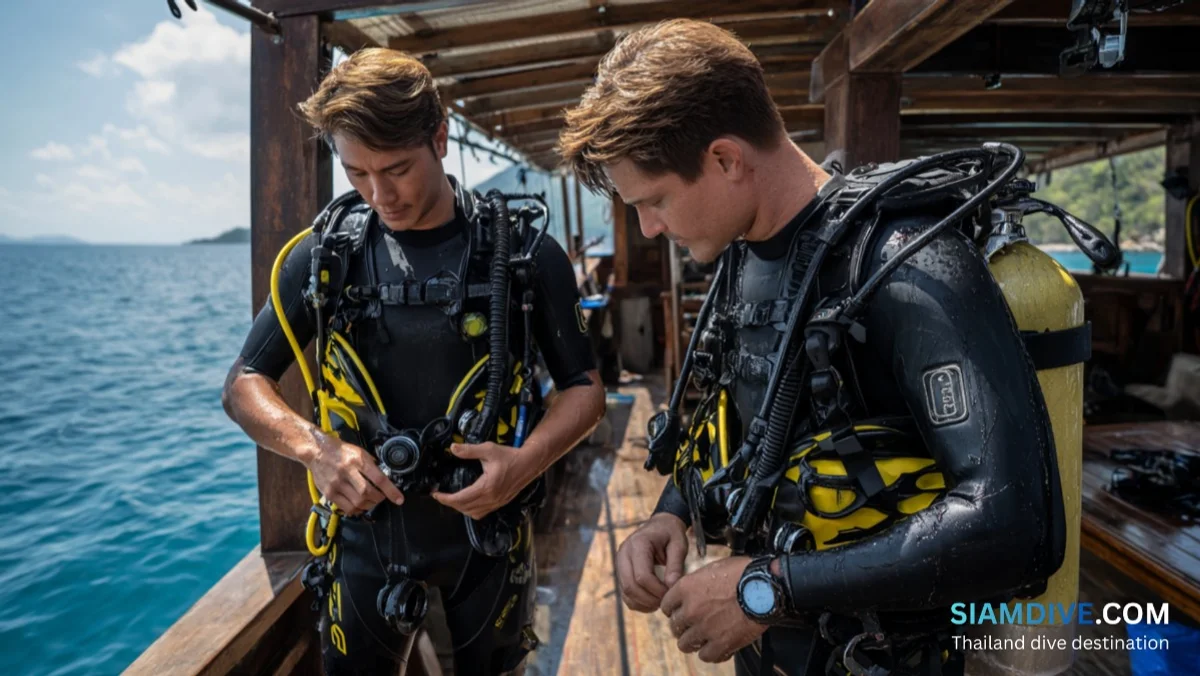
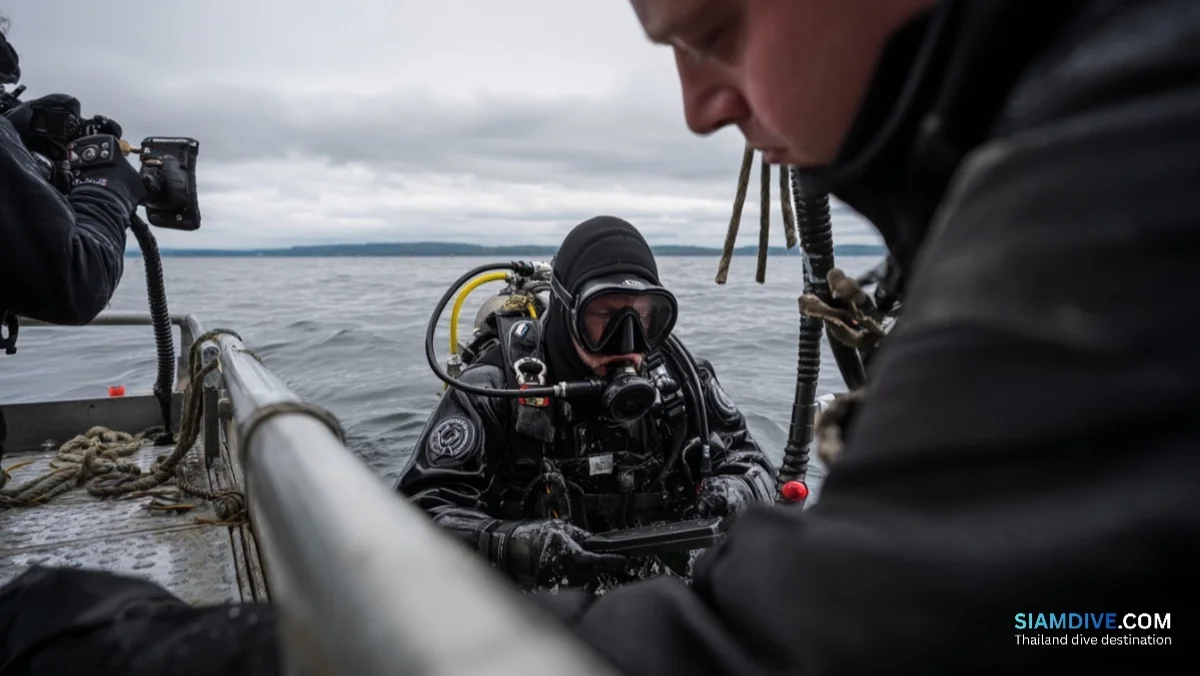
Reaching the Blue Hole takes commitment and an early alarm. The site sits in the Lighthouse Reef Atoll, roughly 70 kilometres offshore — a 2.5 to 3-hour boat ride from Ambergris Caye or Caye Caulker. Most operators depart around 05:30 and return by mid-afternoon, packaging the Blue Hole descent with two additional reef dives at the atoll: typically Half Moon Caye Wall and Long Caye Aquarium, both rich enough in marine life to justify the trip even if the hole itself were closed.
- Day trip cost: $250–350 USD per person (3-tank package)
- Lighthouse Reef park fee: $40 USD cash, paid at check-in
- Package includes: continental breakfast, lunch, water, tanks, weights, guide
- Total boat time: 5–6 hours round trip
- Best season: November through May — dry season brings calmer seas and 30 m+ visibility
- Peak window: mid-December to mid-April, when boats fill to capacity most days
Only a handful of established dive operations in San Pedro and Caye Caulker run Blue Hole trips — the fuel costs and logistics limit the field. During peak season through April 2026, TripAdvisor reviews from Q1 report boats reaching capacity regularly, with advance booking of three to four months securing preferred dates. Wet season trips (June through October) face higher cancellation risk from afternoon storms and reduced visibility from river sediment reaching the atoll.
Should You Actually Do It?
Honest answer: it depends entirely on why you dive. If reef life, colour, and relaxed multilevel profiles are what fill your logbook, the barrier reef sites a few minutes from shore deliver more per dollar and per minute of bottom time. Half Moon Caye Wall — one of the two bonus dives included in the day trip — appears in diver reviews as the highlight of the day more often than the Blue Hole itself.
But the Blue Hole is not a reef dive. It is a geology dive — the experience of descending into a structure that formed before anatomically modern humans walked the Earth, seeing the physical proof of four Ice Age sea-level stages hanging from the ceiling, and floating in the same cylinder of water that Cousteau put on the global map in 1971. That context, not the fish count, is what the $350 buys. For divers who have already logged hundreds of reef dives and want something that no coral garden can replicate, the Blue Hole delivers a category of experience that sits alone.
Requirements are non-negotiable: Advanced Open Water certification at minimum, with most operators strongly recommending a deep dive specialty and recent logged dives below 30 metres. Dive computers are mandatory. Nitrox is available from some operators but not standard — confirm availability when booking. Anyone prone to nitrogen narcosis at depth should weigh the 40-metre descent carefully; at that depth, self-rescue capability matters more than it does on a shallow reef wall.