5 Narcosis Red Flags Your Buddy Misses at 30 Metres
25 เมษายน 2569
Nitrogen narcosis hits at Chumphon's 36-metre floor. Five warning signs appear before a diver knows they're impaired — here's how to catch them.
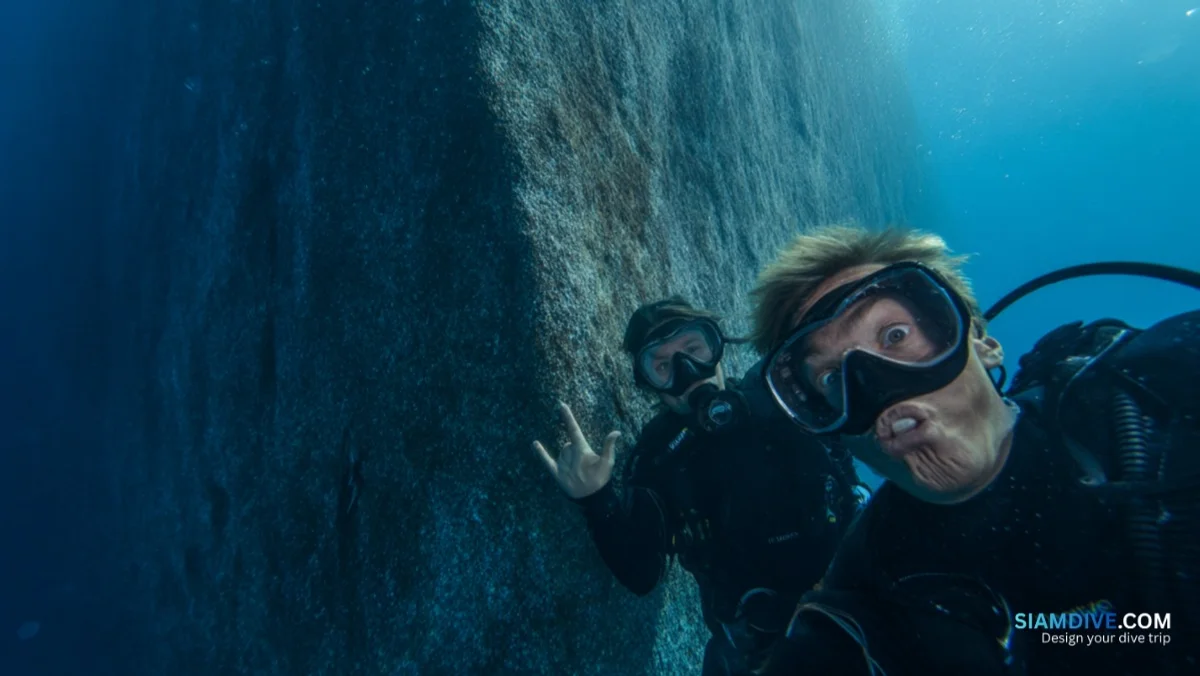
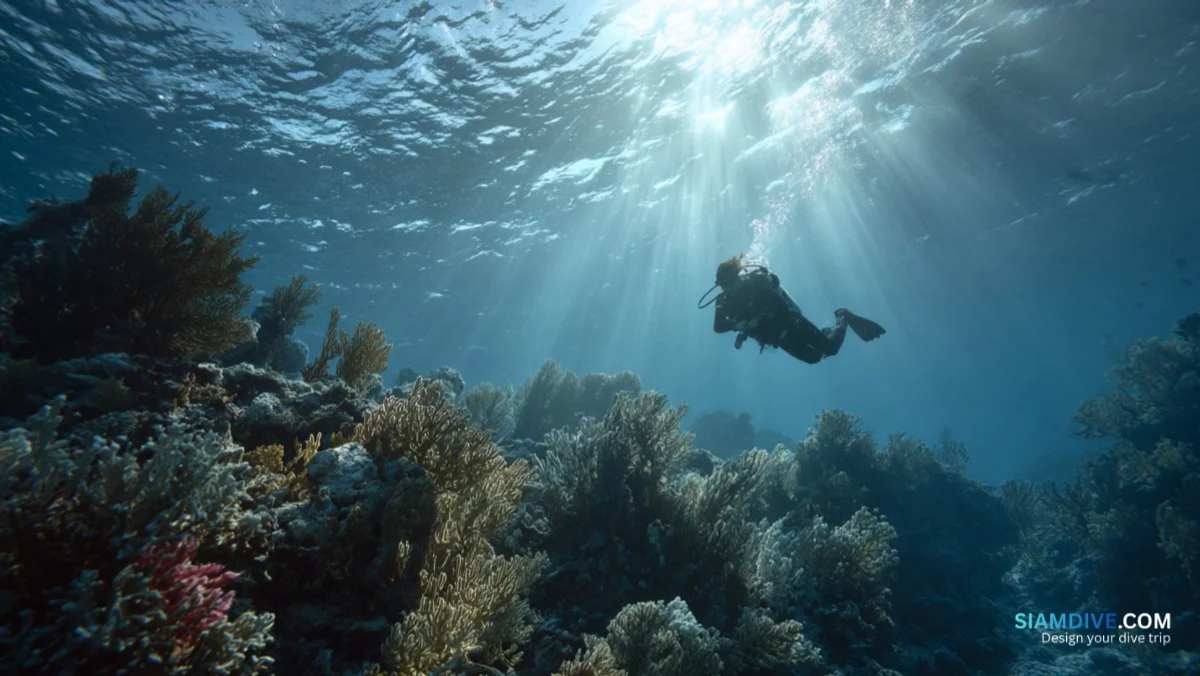
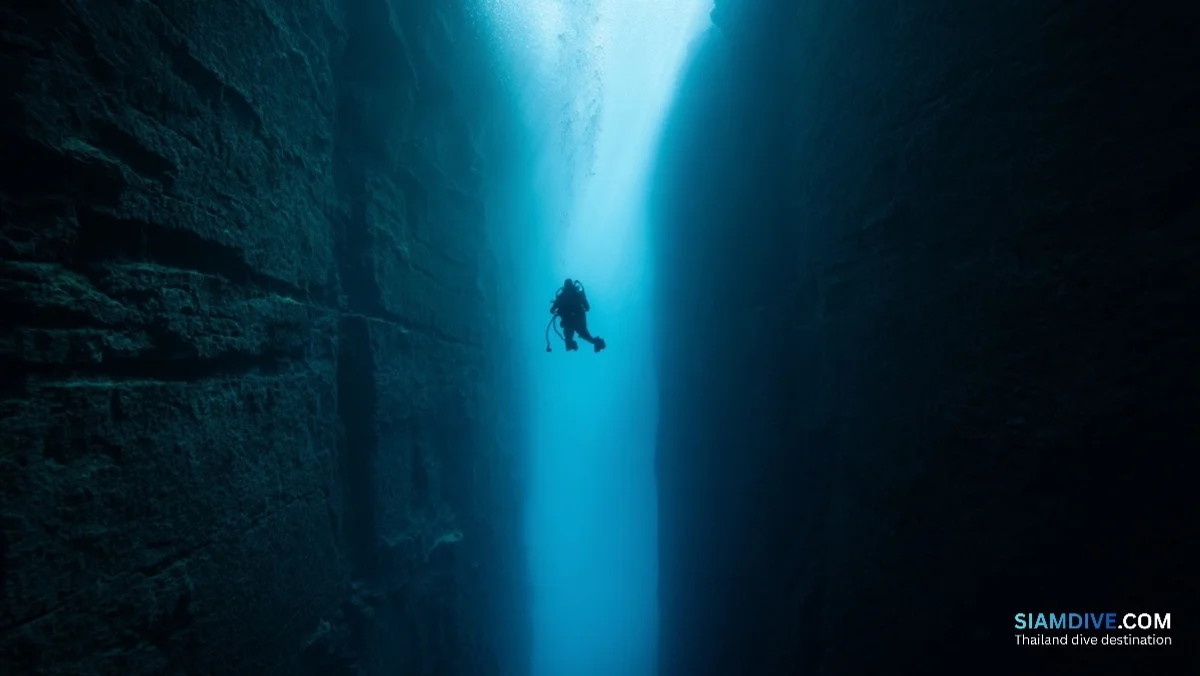
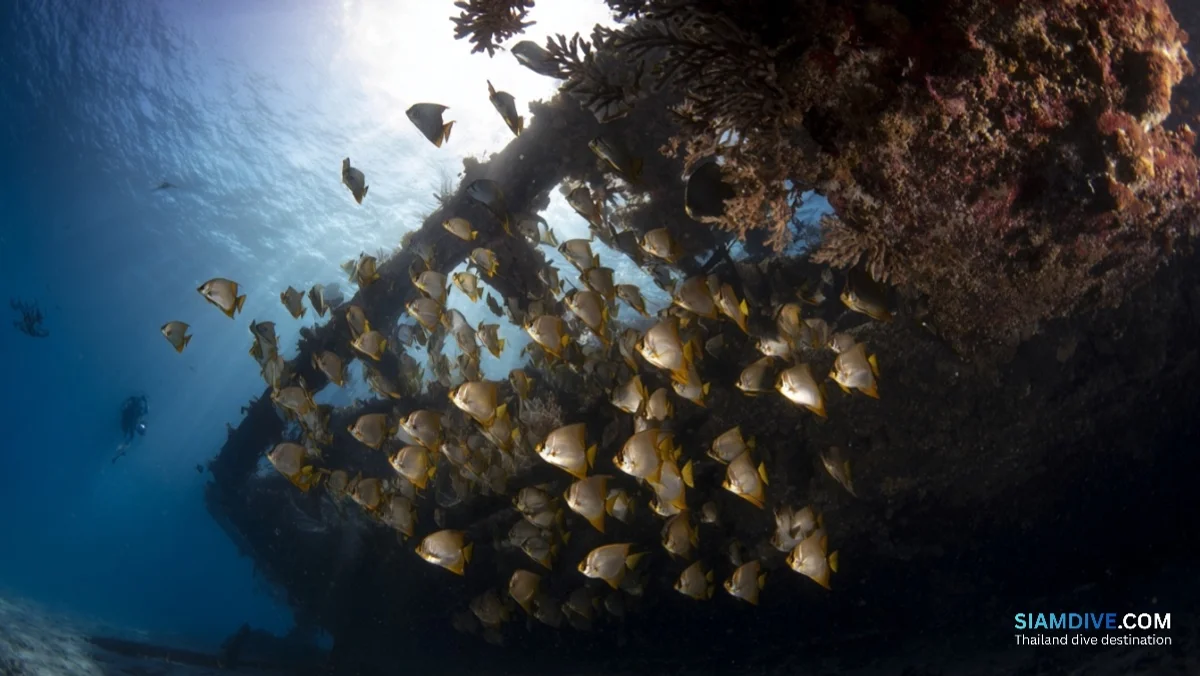
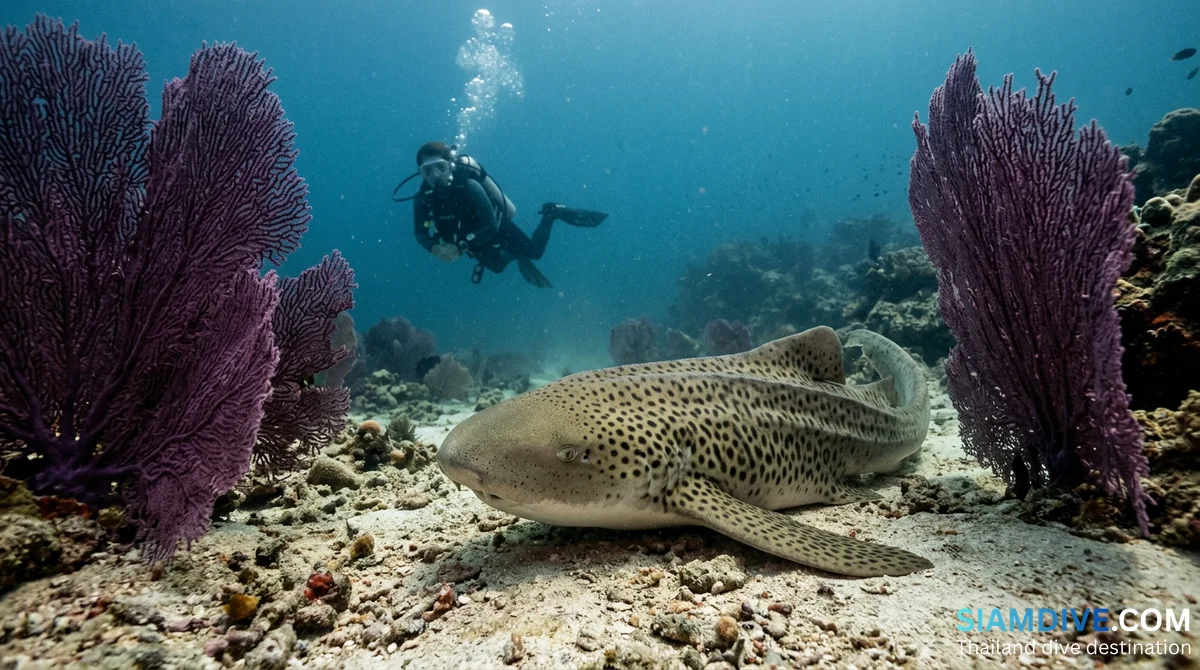
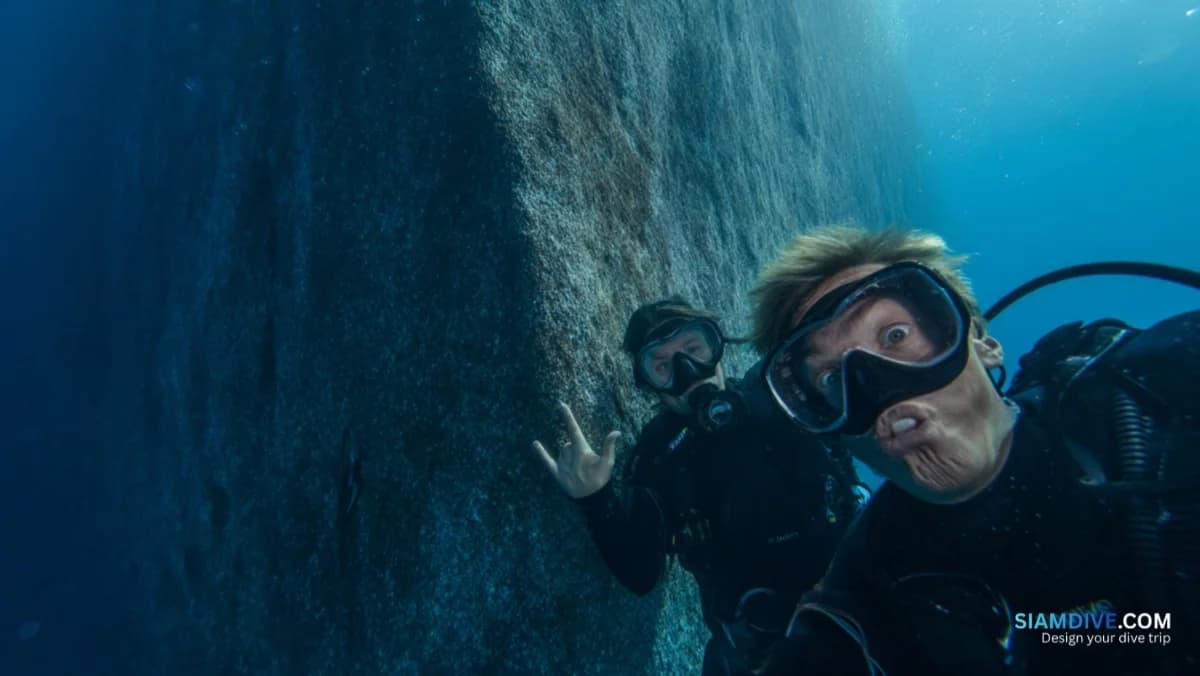
The granite drops away at 28 metres and the light shifts from blue to charcoal. A barracuda school parts overhead, reforming like mercury. Your buddy turns, catches your eye — and grins at nothing. Not at the fish, not at you, not at the whale shark that isn't there. Just grins. That smile is the first sign that nitrogen is running the show, and everything that happens in the next ninety seconds depends on whether you recognise it.
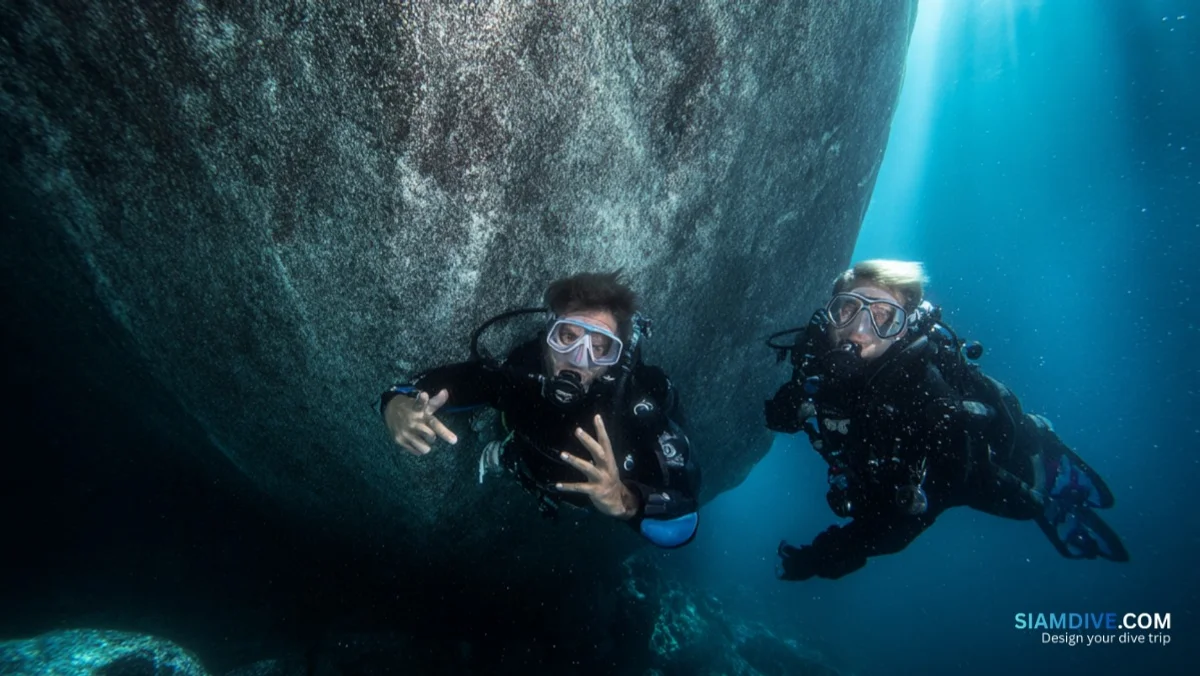
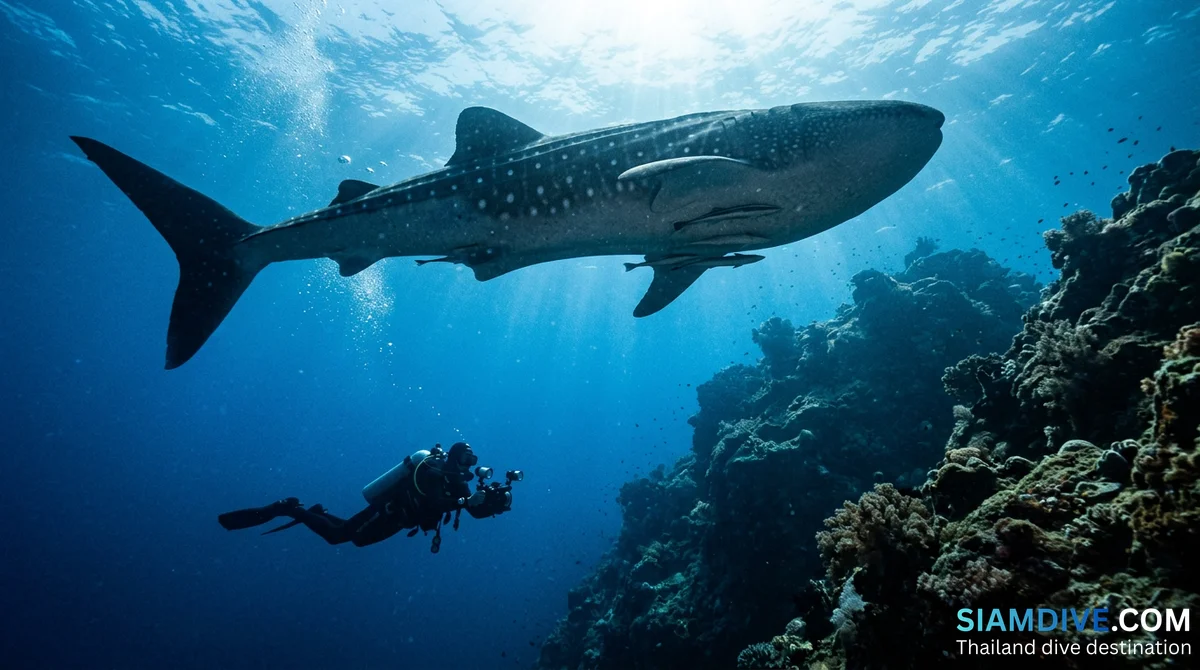
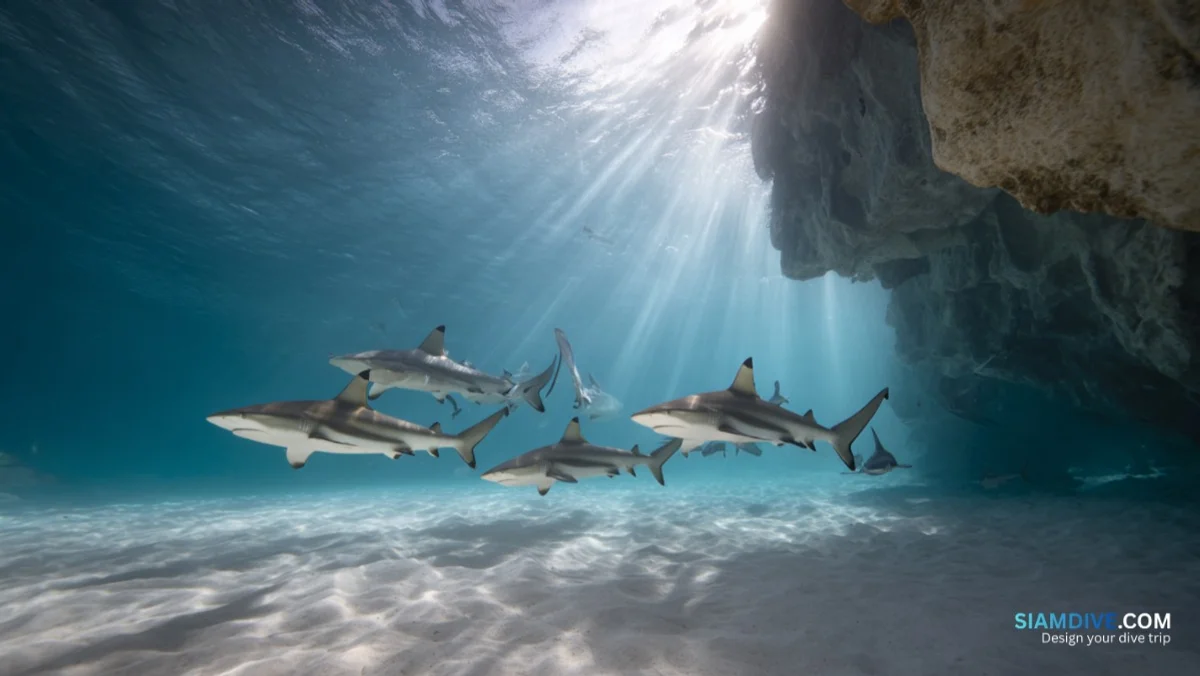
Chumphon Pinnacle sits 11 kilometres northwest of Koh Tao, a granite tower rising from 36 metres to roughly 14 metres below the surface. It pulls advanced divers for whale sharks, giant groupers, and the biggest barracuda formations in the Gulf of Thailand. It also pulls them past 30 metres on compressed air — the depth where nitrogen stops being an inert passenger and starts acting like an uninvited bartender.
Why 30 Metres on Air Changes the Equation
Nitrogen makes up roughly 78% of compressed air. At the surface it is metabolically inert — the body neither uses it nor notices it. Descend to 30 metres, where ambient pressure is four atmospheres absolute, and the partial pressure of nitrogen triples compared to what your tissues are used to. At that pressure, nitrogen dissolves more readily into neural tissue and disrupts neurotransmitter signalling in ways that researchers are still mapping.
The dive community calls it the Martini Rule: every 10 metres of descent produces impairment roughly equivalent to one martini on an empty stomach. At 30 metres, that is three drinks deep. At Chumphon's 36-metre floor, the maths tips past the point most recreational divers have trained for.
Published medical data place narcosis as a direct contributor to up to 6% of recreational diving fatalities worldwide (NIH StatPearls, 2025). Australia's long-running Project Stickybeak database recorded it in 9% of fatal incidents. The percentages sound small — until you are the diver grinning at nothing while the current pushes you off the pinnacle.
Red Flag 1 — The Grin That Doesn't Match the Moment
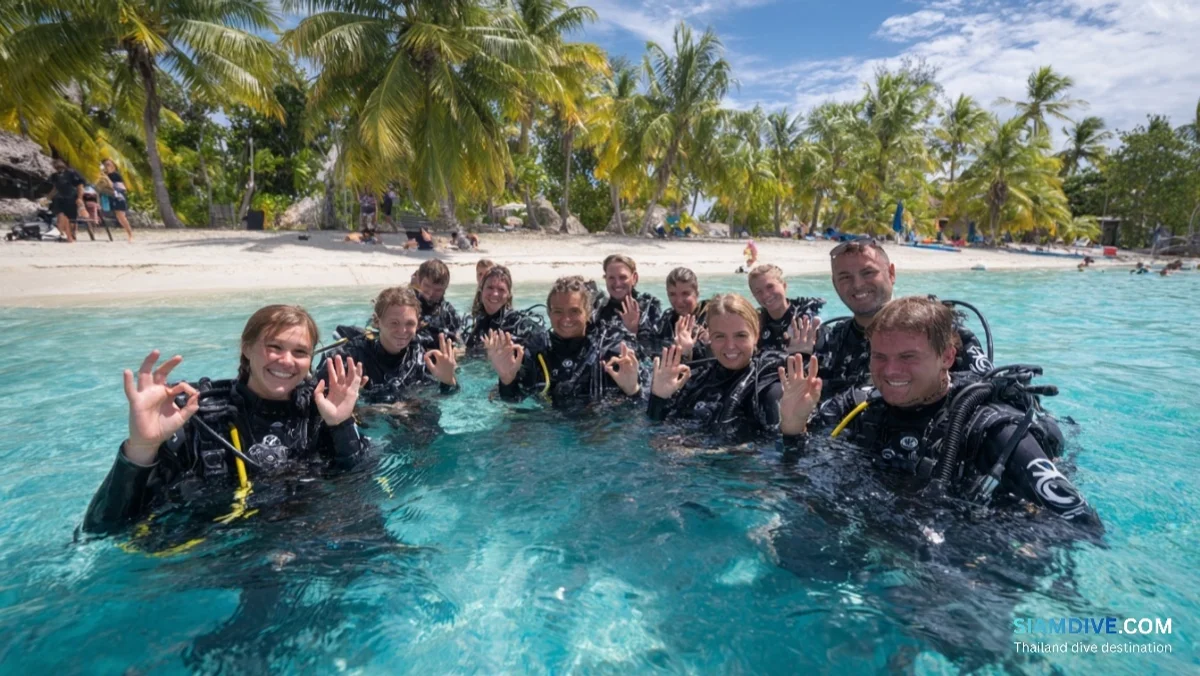
Euphoria is narcosis announcing itself politely. A diver laughing into their regulator, flashing unprompted OK signs, or radiating a calm confidence at a depth that should demand sharp focus has likely crossed the impairment threshold. The danger is not the happiness itself. Euphoric divers stop monitoring depth, dive computer warnings, and no-decompression limits because everything feels fine — better than fine.
What to watch: behaviour shifts from task-oriented to loose and expressive. Your buddy makes eye contact more often but responds to your signals less precisely. They may wave you over to look at something unremarkable — a patch of barnacles, their own exhaled bubbles — with the enthusiasm of someone who has just spotted a manta.
Red Flag 2 — Fixation on a Single Object
Task fixation — staring at a nudibranch for two solid minutes, endlessly adjusting a camera housing, or watching one's own bubbles rise — is among the most documented cognitive effects of elevated nitrogen partial pressure. The brain narrows its attention to a single input and stops processing everything else: depth gauge, buddy position, current direction, time.
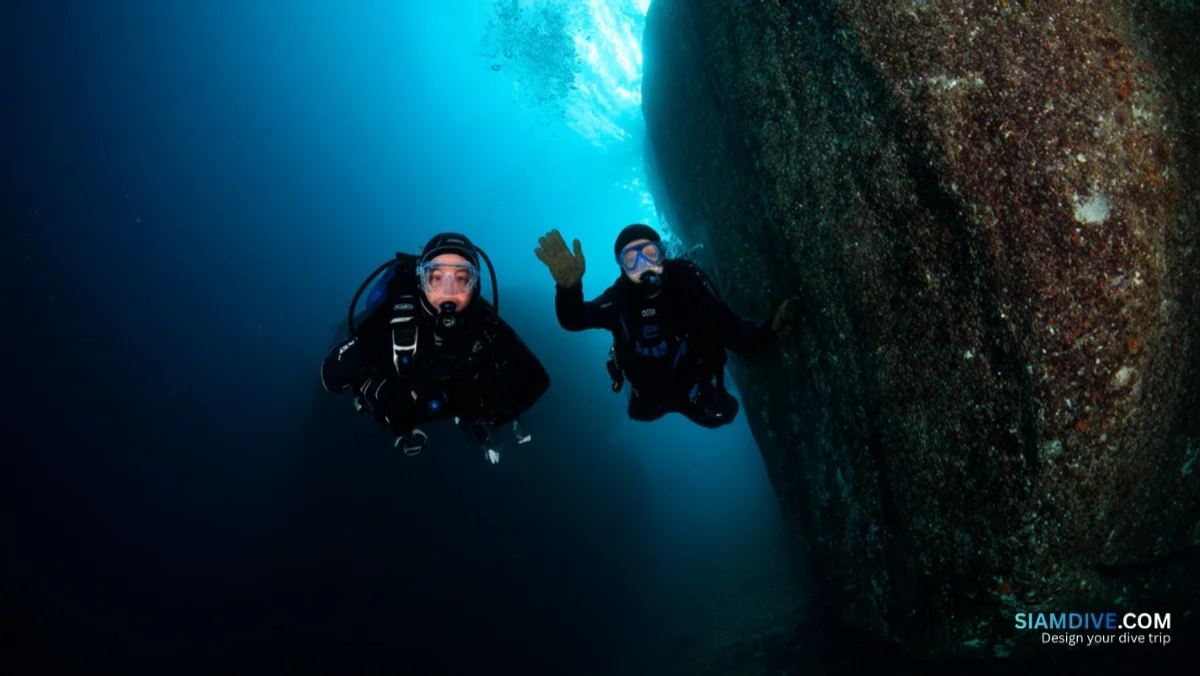
At Chumphon Pinnacle, where currents shift mid-dive and the granite ridges drop away steeply on every side, a fixated diver drifts. They lose position relative to the group, sometimes descending without realising the rock has fallen away beneath their fins. The site's topography — a main pinnacle surrounded by smaller satellite rocks — makes it easy to drop into open water between structures while staring at something on the wall.
What to watch: a buddy who stops scanning. Healthy dive behaviour at depth involves continuous head movement — checking gauge, checking buddy, checking surroundings, checking above. A head locked in one direction at 30-plus metres is a warning worth acting on.
Red Flag 3 — Hand Signals Go Wrong
Motor and cognitive impairment arrive together. A narcosed diver asked to show remaining air pressure may flash the wrong number, freeze for several seconds, or signal something unrelated entirely. Fine motor control degrades alongside cognition — difficulty clipping off a reel, struggling with an inflator button, fumbling a camera shutter.
A simple field test exploits this: one diver holds up a random number of fingers, and the buddy must respond with that number plus one. At the surface, the response takes under a second. At 30 metres on a clear-headed diver, maybe two seconds. A narcosed diver pauses, counts on their fingers, or returns the wrong number entirely. The test is not clinical — it works because basic arithmetic is one of the first cognitive functions nitrogen disrupts at elevated partial pressures.
What to watch: delayed or incorrect responses to any standard signal. If you ask "how much air?" and receive a thumbs-up instead of a number, the nitrogen is doing the talking.
Red Flag 4 — The Dive Plan Vanishes
Every dive at Chumphon Pinnacle begins with a briefing on the boat: maximum depth, planned bottom time, turn pressure, rally point at the mooring line. Narcosis erases the plan like chalk in rain. A diver who agreed to hold 28 metres drifts to 34. One who planned a 20-minute bottom time checks the computer at 25 minutes with genuine surprise — or stops checking altogether.
Impaired judgment is the most dangerous symptom precisely because the diver has lost the cognitive faculty needed to recognise that their judgment is impaired. The circularity is the trap: you cannot think your way out of a problem that has disabled your ability to think. This is exactly why buddy monitoring matters more than self-assessment below 30 metres.
What to watch: any deviation from the briefed plan — deeper than agreed, longer than agreed, swimming in a direction nobody discussed. If your buddy was disciplined and methodical at 20 metres and visibly looser at 32, the depth is making their decisions. The pattern often shows up in air consumption too — narcosed divers breathe faster without realising it.
Red Flag 5 — Post-Dive Amnesia
This flag only shows itself on the boat. After surfacing, a narcosed diver often cannot recall portions of the dive. They may not remember the grouper that hovered a metre from their mask, or they describe events in the wrong sequence, or they insist the dive lasted ten minutes when the computer logged twenty-two.
Short-term memory is one of the first cognitive functions nitrogen disrupts. A single episode is unremarkable — fatigue, distraction, and sensory overload can all produce patchy recall. But a pattern of memory gaps from dives below 30 metres signals higher-than-average susceptibility. Future dives should adjust maximum depth, switch to enriched air nitrox to reduce nitrogen partial pressure, or both.
What to watch: debrief conversations. Ask specific questions after the dive: "Did you see the chevron barracuda school at 22 metres?" A confident "no" for something that passed two metres from their face is the clearest retroactive indicator.
The 3-Second Buddy Test You Should Run Before the Deep Section
Forget waiting for symptoms. Run the finger test proactively — before entering the deepest portion of the dive. At Chumphon, that usually means the transition from the main pinnacle's shoulder at 24 metres down to the base structures at 34–36 metres.
- Step 1: Face your buddy. Hold up a random number of fingers — say, three.
- Step 2: They respond with that number plus one — four fingers. Allow three seconds maximum.
- Step 3: Correct and fast means cognitive function is intact. Wrong, slow, or confused means you both ascend 5–6 metres and retest.
- Step 4: Swap roles. The tester is not immune — narcosis hits both divers, and the one who feels sharpest is sometimes the one who isn't.
Agree on this protocol during the surface briefing so neither diver is caught off guard underwater. The test takes ten seconds and provides information no instrument on your wrist can deliver.
Conditions That Stack the Odds at Chumphon
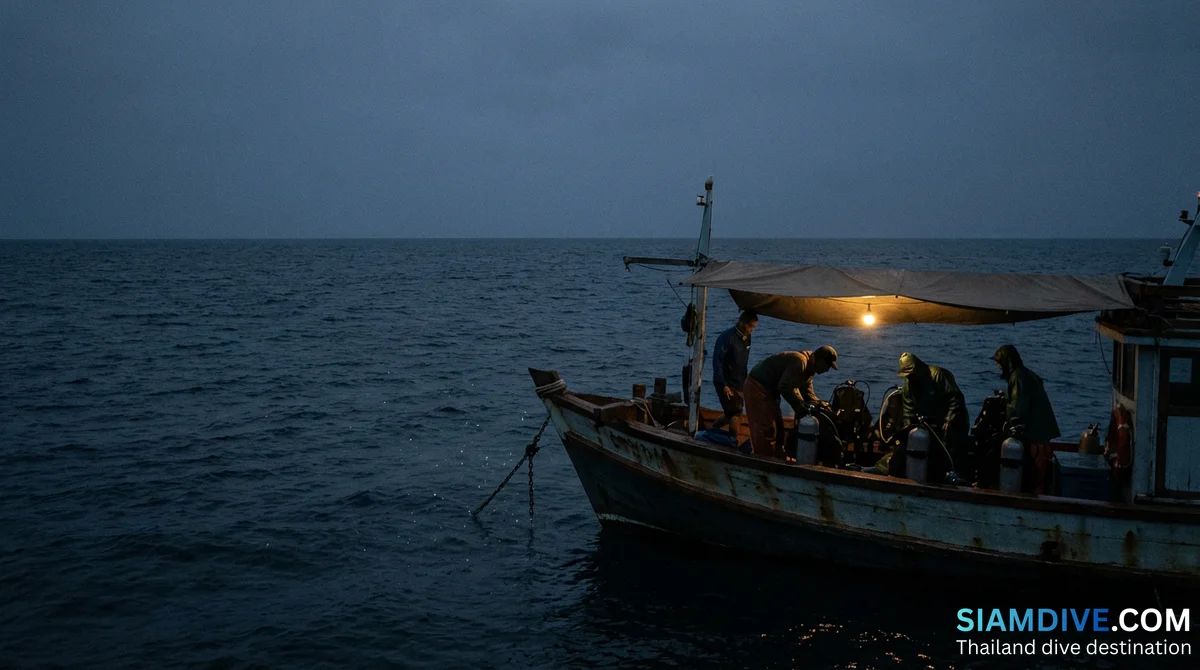
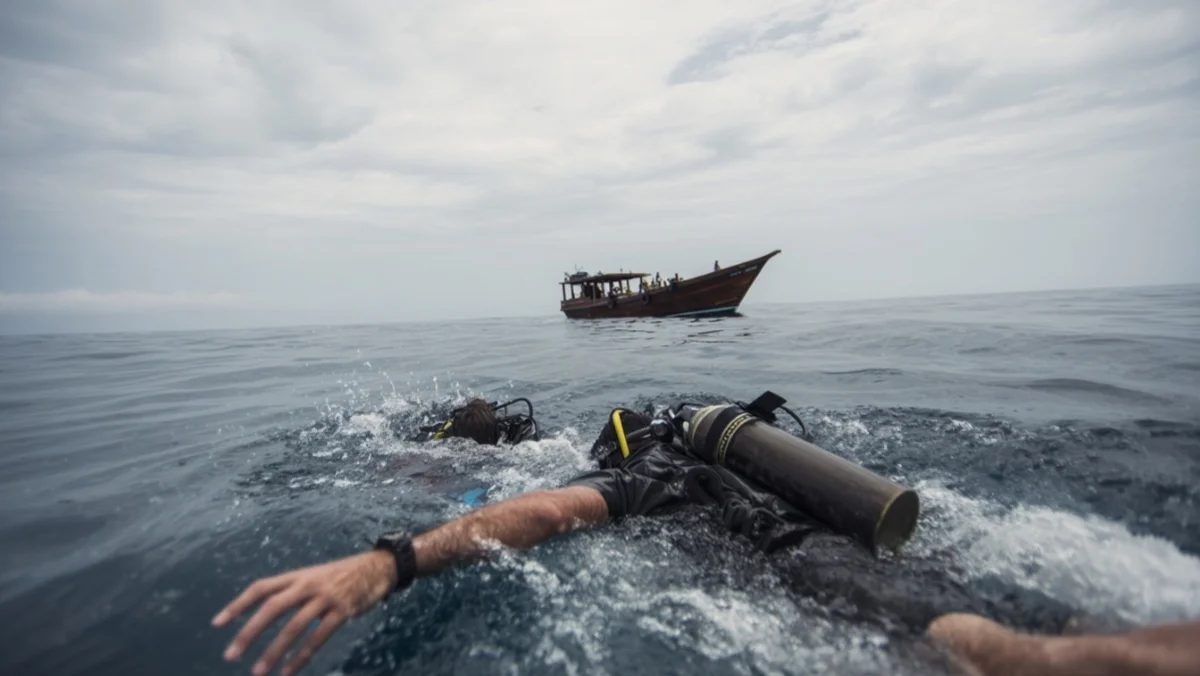
At dawn, the long-tail boats line up at Mae Haad pier and the pinnacle is 45 minutes of open-Gulf chop away. By the time a diver rolls backward off the gunwale, several narcosis amplifiers may already be loaded:
- Depth profile: The pinnacle top sits at 14–18 m, but the features divers travel for — the deeper granite ledges where giant groupers hold station, the satellite rocks with their swim-throughs — pull them past 30 m routinely.
- Current: Gulf currents at Chumphon are unpredictable and can reverse direction mid-dive. Fighting current at depth elevates breathing rate and CO₂ retention, which intensifies narcosis independent of depth.
- Thermoclines: Surface water at Koh Tao runs 28–30°C in April 2026, but thermoclines below 25 m can drop temperature to 26°C or lower. Even that modest chill is a documented narcosis risk factor.
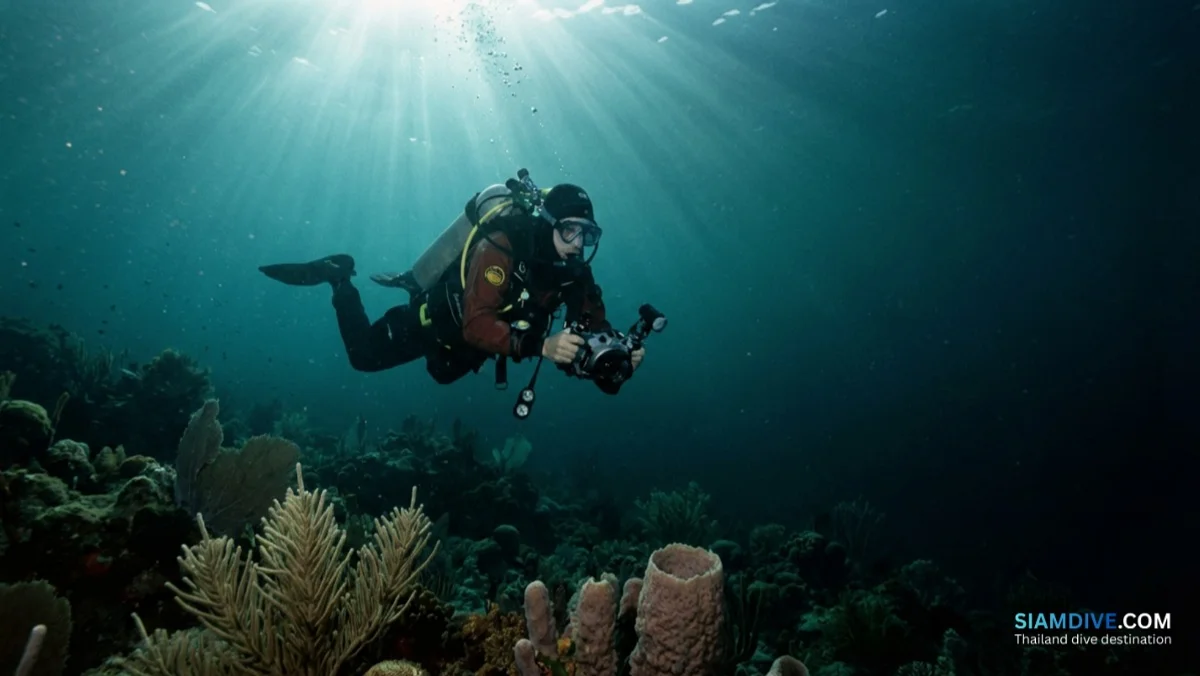
- Task loading: Photographers hauling housings, divers deploying SMBs, anyone adjusting unfamiliar rental exposure protection — each task compounds the cognitive burden narcosis exploits.
- Residual nitrogen: Chumphon is often the second dive of a morning trip. Residual loading from a first dive to 20–25 m means the second profile starts at a higher baseline, lowering the effective threshold for narcosis onset.
- Fatigue and dehydration: A 06:00 alarm, a rough crossing, drowsiness from seasickness medication — these erode baseline cognitive performance before a diver enters the water.
What To Do When You Spot a Flag
The response protocol is simple. Executing it on a buddy who does not agree they are impaired is the hard part.
- Ascend — not to the surface, just shallower. A 5–6 metre ascent typically restores clarity within one to two minutes. Narcosis symptoms resolve completely once nitrogen partial pressure drops, leaving no lasting injury.
- Signal clearly. Use the standard ascend thumb and hold eye contact. A narcosed buddy may resist — not from stubbornness but because they have lost context for why ascending matters. Stay calm, repeat the signal, and begin ascending yourself. Most buddies follow.
- Control the ascent rate. A panicked bolt from 32 metres risks decompression injury — a problem far more serious than narcosis. Ascend at the normal rate, hold the safety stop at 5 metres, and save the conversation for the boat. If you need a refresher on managing an unresponsive buddy, this rescue-tow scenario is worth reading.
- Log everything. Record depth, bottom time, water temperature, current strength, task load, and observed symptoms. Pattern data across ten or twenty dives is how a diver learns their personal narcosis threshold — which shifts with sleep, hydration, fitness, and even altitude of their home city.
April 2026 at Chumphon — What Divers Face Right Now
Koh Tao's April window sits squarely in peak season. Surface water temperature hovers around 30°C, visibility at Chumphon regularly pushes past 20 metres, and whale shark encounters were reported at the pinnacle during Q1 2026. Conditions like these draw larger groups and more ambitious depth profiles — the exact combination where narcosis incidents climb.
Most Koh Tao dive operations restrict Chumphon Pinnacle to AOW-certified divers with logged deep-dive experience. Some structure the site as a two-dive morning trip, placing the deep profile first while nitrogen loading is lowest. For divers planning their first descent past 30 metres on air, Chumphon's clear water, manageable current windows, and accessible depth gradient make it a strong training environment — provided the buddy team arrives with a checklist, not just a camera.