Hin San Chalarm: Best Coral Pinnacle in Samae San
23 เมษายน 2569
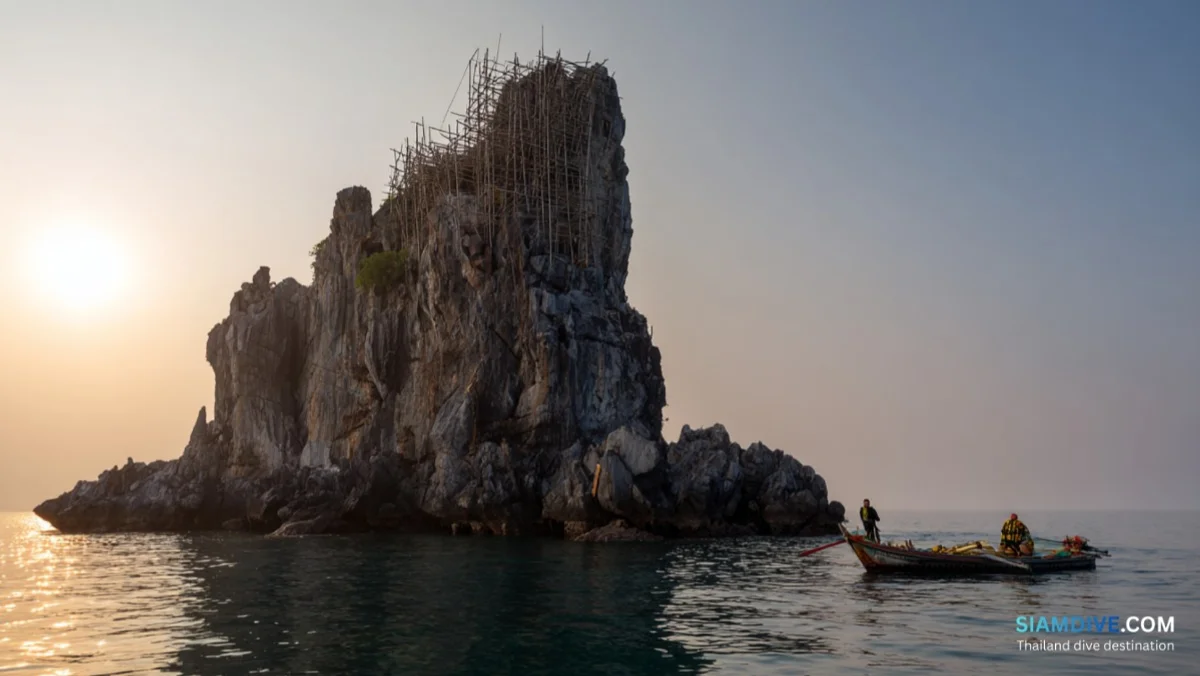
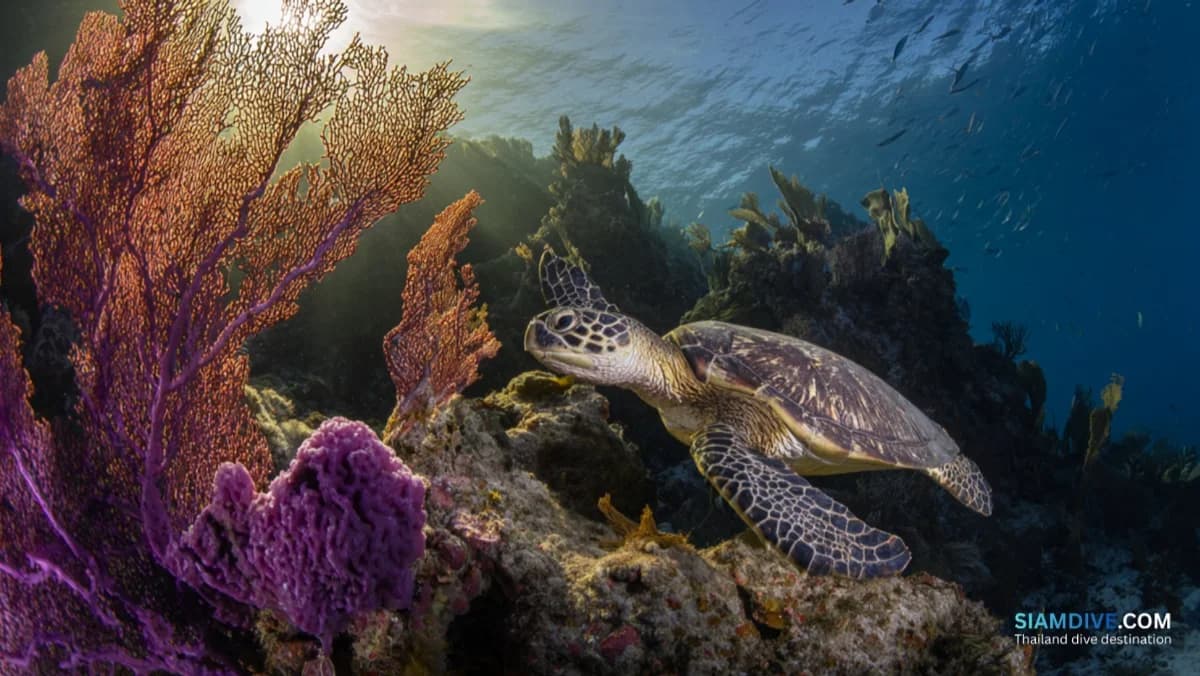
Hin San Chalarm -- Shark Fin Rock -- rises from the Gulf of Thailand near Samae San, harbouring 28-metre coral walls, resident sea turtles, and the clearest visibility in the Sattahip archipelago.
A Shark Fin Breaks the Surface -- and Everything Below It Thrives
Roughly nine kilometres south of Samae San pier, a dark wedge of rock splits the waterline of the Gulf of Thailand. From a distance the silhouette could pass for the dorsal fin of a large shark -- hence the site's Thai name, Hin San Chalarm (หินสันฉลาม), literally "Shark Fin Rock." Beneath that dramatic crest, a submerged ridge plunges to 28 metres, its surfaces carpeted in soft corals so vivid that local dive professionals consistently rank it the most photogenic site in the entire Samae San archipelago.
While the nearby Hardeep Wreck draws history buffs and the infamous Samaesan Hole lures trimix-trained deep divers, Hin San Chalarm offers something rarer in the eastern Gulf: clear water, dense coral cover, and reliable encounters with green sea turtles -- all within recreational depth limits. For divers making the day trip from Bangkok or Pattaya, this pinnacle is often the highlight reel's best frame.
Where Exactly Is Hin San Chalarm?
Hin San Chalarm sits in the protected waters of Mu Ko Samae San, a marine park established in 2021 under the supervision of the Royal Thai Navy. The park spans nine islands and their surrounding reefs in Sattahip District, Chonburi Province -- roughly 45 minutes southeast of Pattaya and about 2.5 hours by road from Bangkok.
The pinnacle lies south of the main Samae San island cluster, positioned where the archipelago gives way to open Gulf waters. That geographic placement matters: currents flowing between the islands funnel nutrient-rich water across the rock, feeding the dense coral growth that sets this site apart from its neighbours.
- GPS area: approximately 12.53°N, 100.96°E
- Distance from pier: ~9 km (about 40 minutes by dive boat)
- Departure point: Khao Mar Jor Pier (ท่าเรือเขามาจอ), Sattahip
- Marine park: Mu Ko Samae San, Royal Thai Navy jurisdiction
- Park fees: 300 THB (Thai nationals) / 600 THB (foreigners), includes Navy transport
Site Profile: Depth, Terrain, and Conditions
The name "Shark Fin Rock" describes only what sits above water. Below the surface, a rock ridge extends laterally, its flanks stepping down through distinct depth bands that create habitat variety unusual for a single pinnacle in the Gulf of Thailand.
- Maximum depth: 28 metres
- Typical dive depth: 8-22 metres
- Visibility: 10-20 metres (often the best in the Samae San area)
- Water temperature: 27-30°C year-round
- Current: none to strong, depending on tidal phase
- Bottom composition: rock ridge with hard coral, soft coral, and sand patches
- Minimum certification: Open Water Diver (Advanced recommended when currents run)
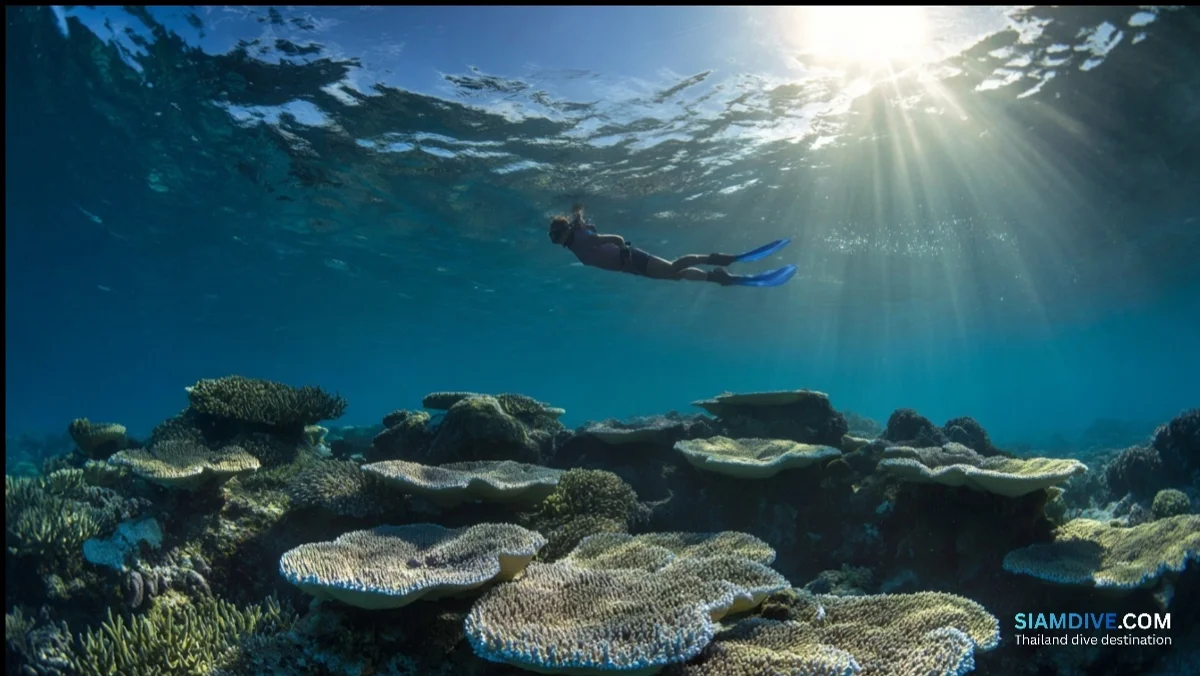
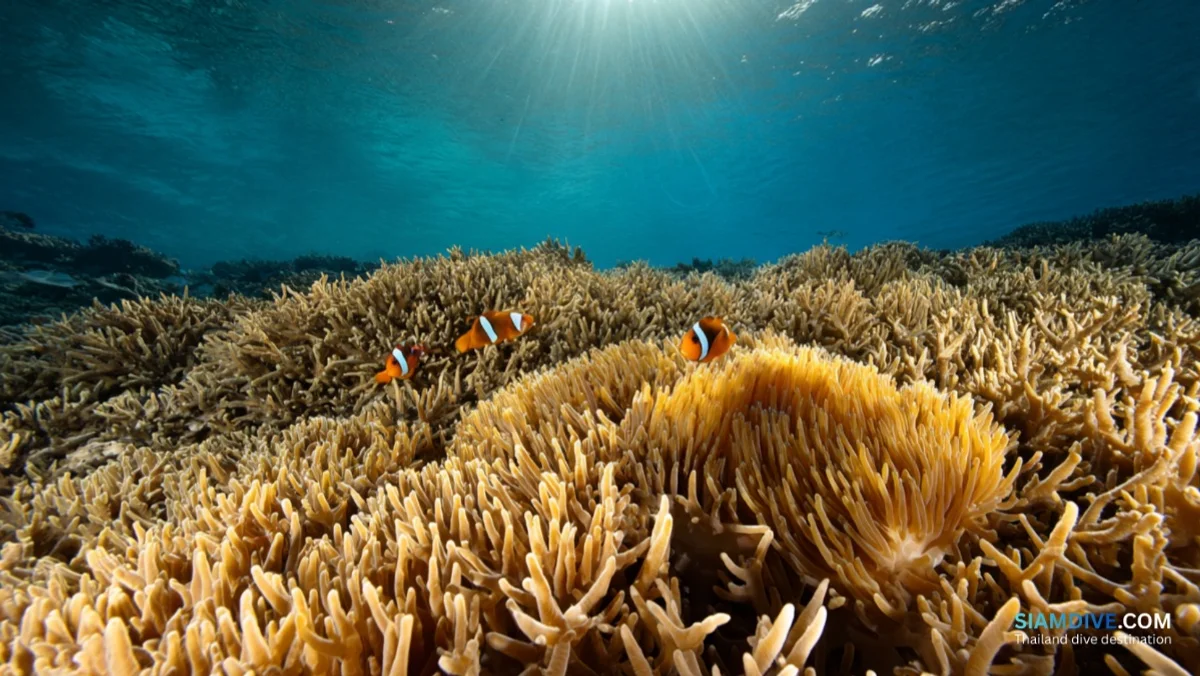
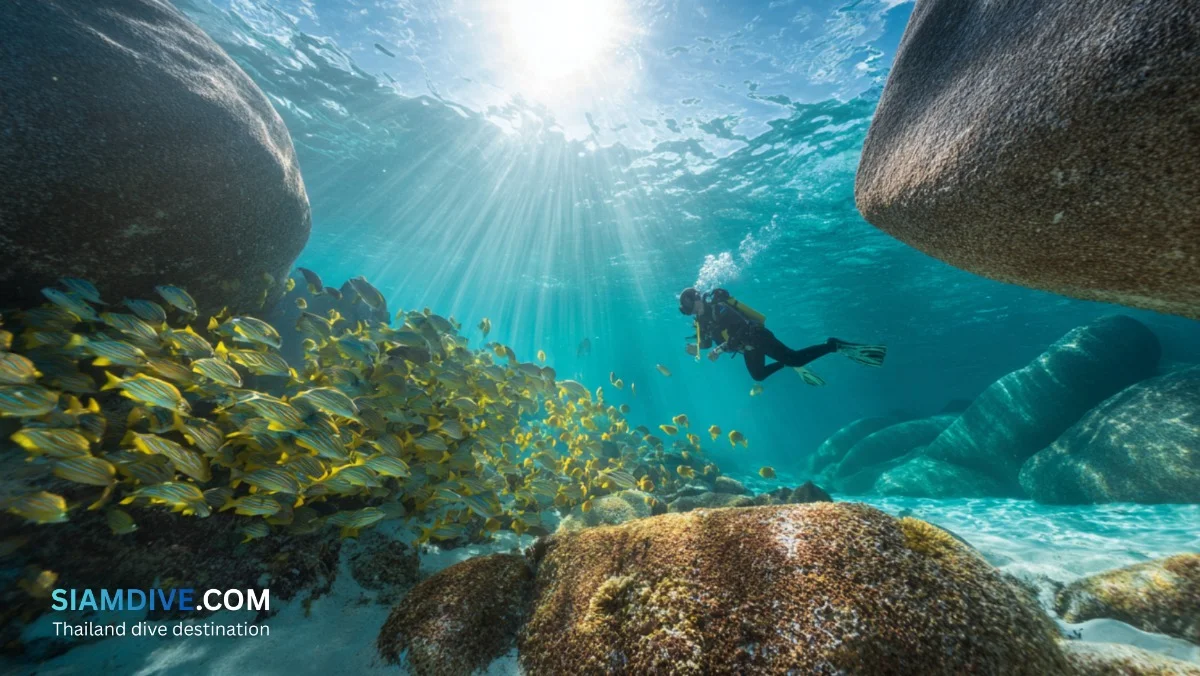
The ridge's top sections, between 5 and 12 metres, host the densest hard coral gardens -- tabletop formations, massive brain corals, and branching staghorn colonies that create a three-dimensional canopy. Clownfish tend anemones wedged into the rock, and damselfish swarm defensively above their chosen coral heads. This shallow zone alone could fill a 60-minute dive for anyone willing to slow down and look closely.
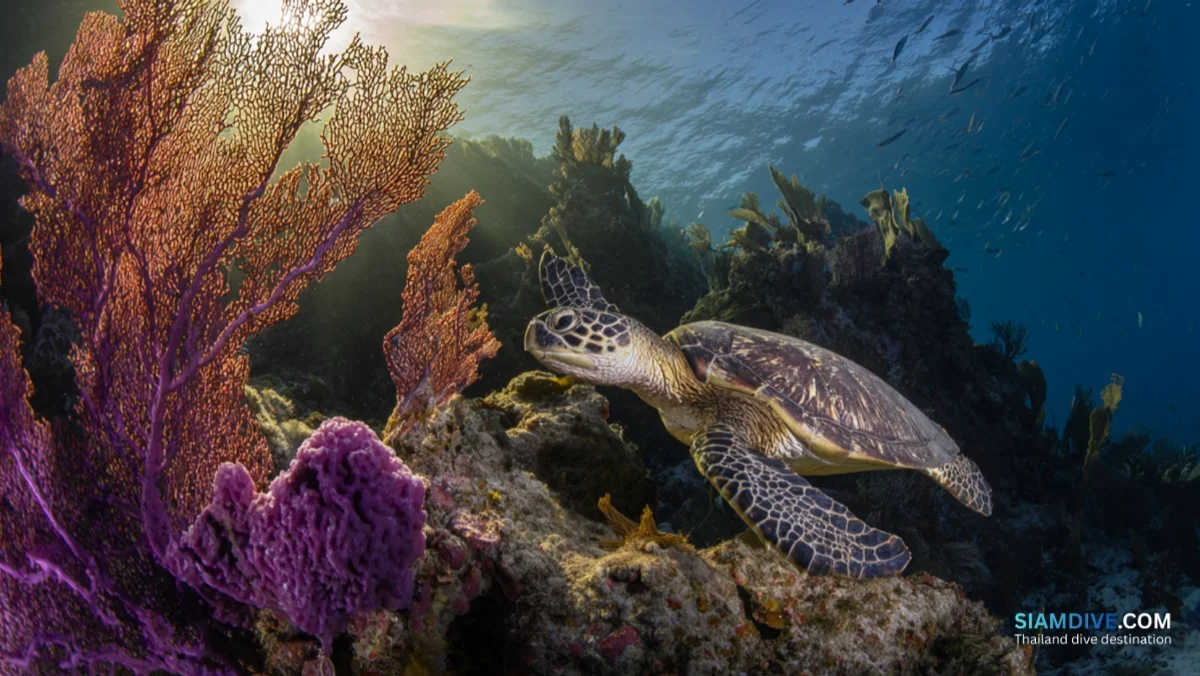
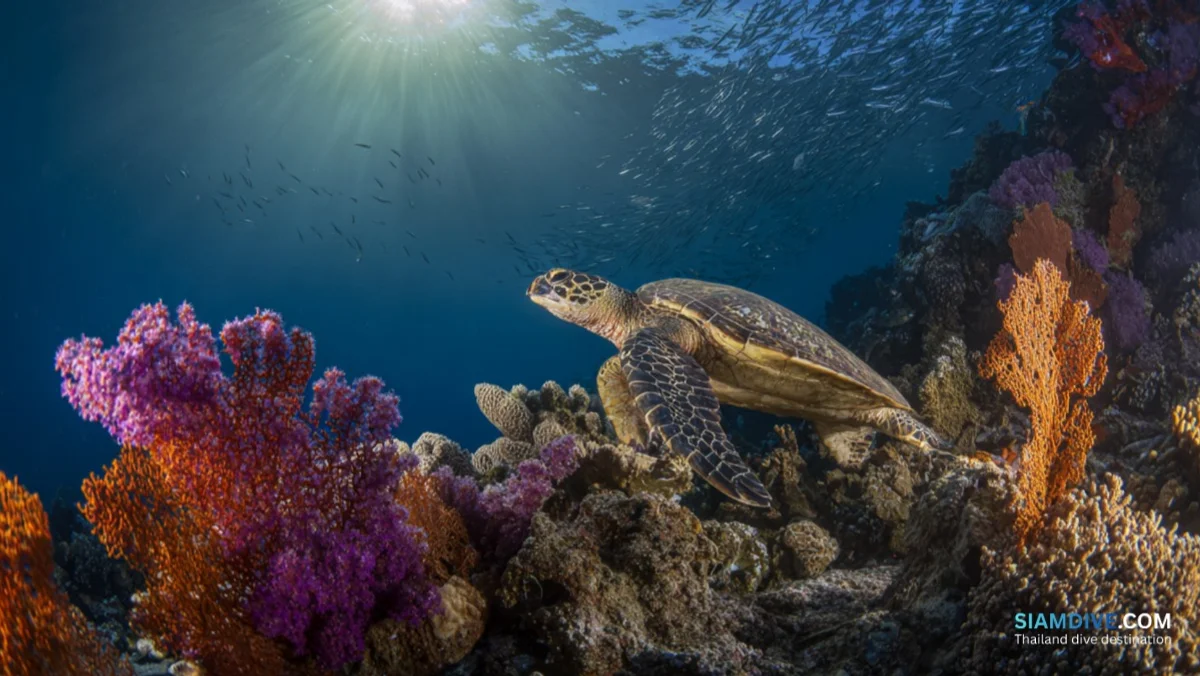
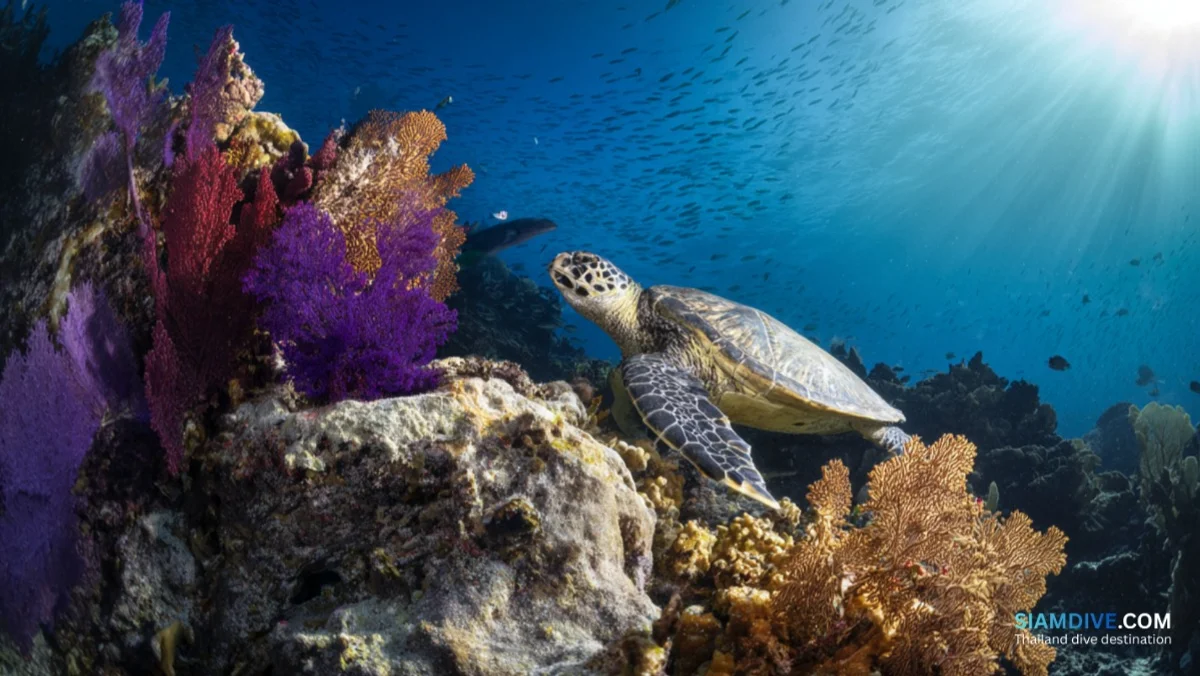
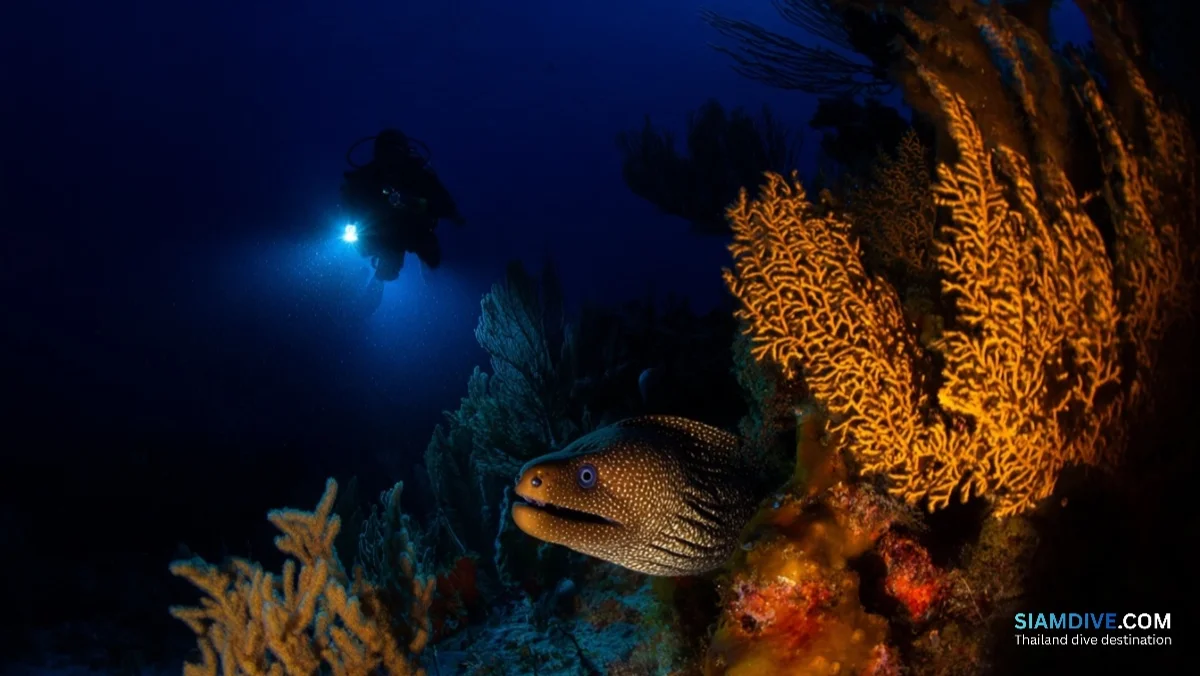
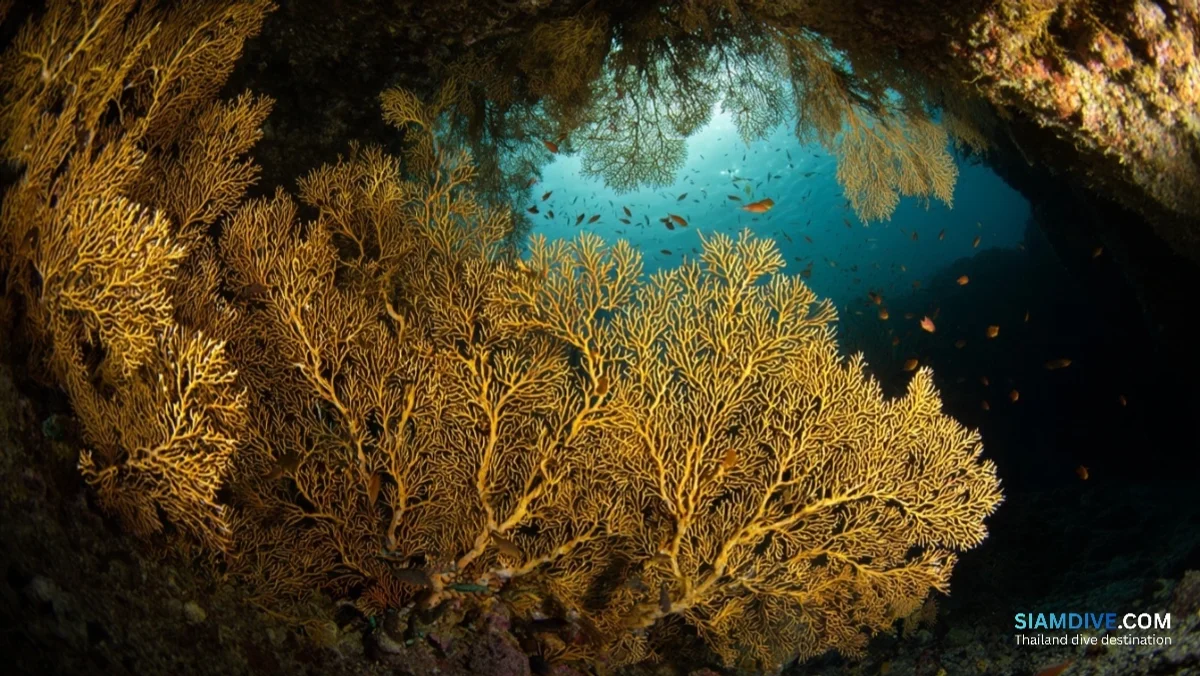
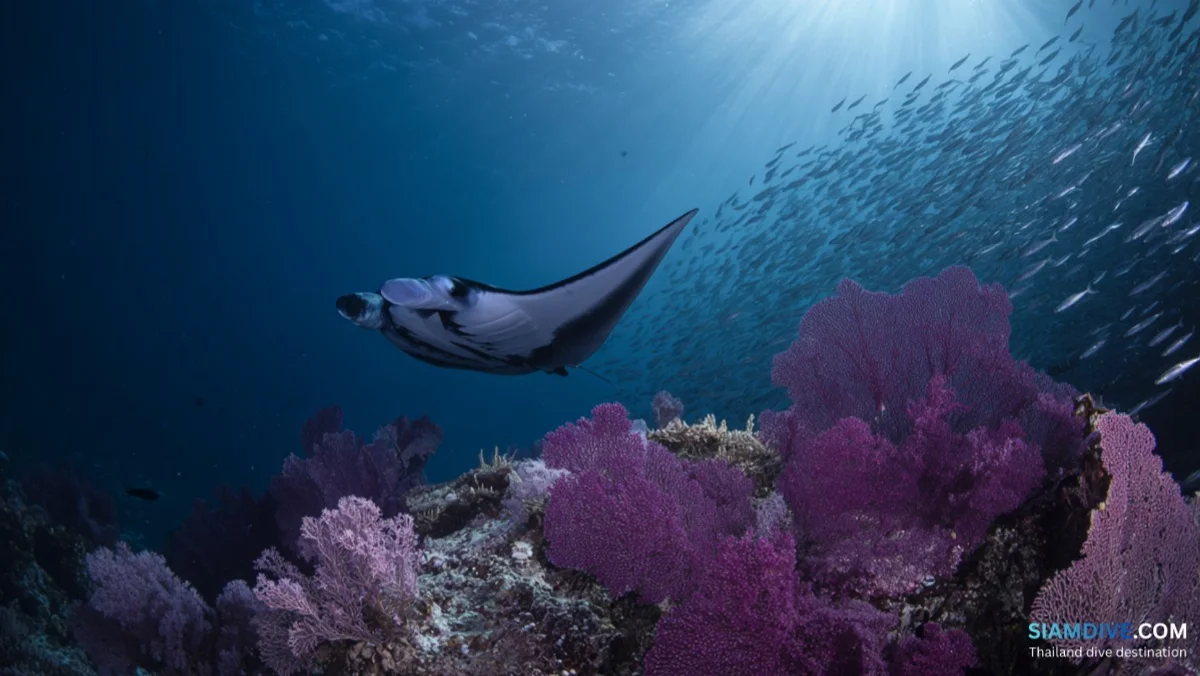
Mid-depth ledges from 12 to 20 metres support the site's famous soft corals and sea fans. Gorgonians spread perpendicular to the prevailing current, maximising their filter-feeding surface area. Whip corals extend outward from overhangs, and clusters of dendronephthya soft corals in pink, orange, and violet give this zone its signature colour palette. Photographers working this depth band should carry a focus light or strobe; the colours that pop at depth are muted under ambient light alone.
Below 20 metres, the rock gives way to sandy slopes -- productive territory for macro subjects like nudibranchs and razor fish. Scorpionfish lie camouflaged against rubble patches, and the careful observer may spot xeno crabs clinging to whip coral stems. The sand-to-reef interface is also where cleaning stations attract passing trevally and fusiliers.
Current strength varies with the tidal cycle. During neap tides the water barely moves, making the site comfortable for newly certified divers. On spring tides, the flow between islands can pick up considerably, sometimes creating drift conditions that demand solid buoyancy control and an SMB. The area sees significant boat traffic, so surfacing without a deployed marker is inadvisable regardless of conditions. Experienced divers who time their entries to slack water get the best of both worlds: clear visibility and calm conditions.
Coral Cover That Earned Its Reputation
Hin San Chalarm is consistently described as the most visually striking dive in the Samae San group, and the coral density explains why. The rock ridge functions as a substrate highway: hard corals dominate the shallows, transitioning to gorgonian sea fans, whip corals, and soft coral colonies as depth increases.
The broader Samae San area holds scientific distinction. Two soft coral species new to science -- Chironephthya sirindhornae and Chironephthya cornigera -- were first described from specimens collected in these waters. Barrel sponges anchor themselves along the ridge, providing shelter for resident fish and cleaning stations for passing pelagics.
Thailand's Department of Marine and Coastal Resources (DMCR) has conducted coral transplantation studies in the Mu Ko Samae San area, and the Navy's restricted access policy -- limiting daily visitor numbers and controlling anchor points -- has helped keep reef damage well below what comparable sites near Pattaya have experienced. The result is a reef system that still looks close to its natural baseline.
Marine Life: Turtles, Pelagics, and 150 Species of Nudibranch
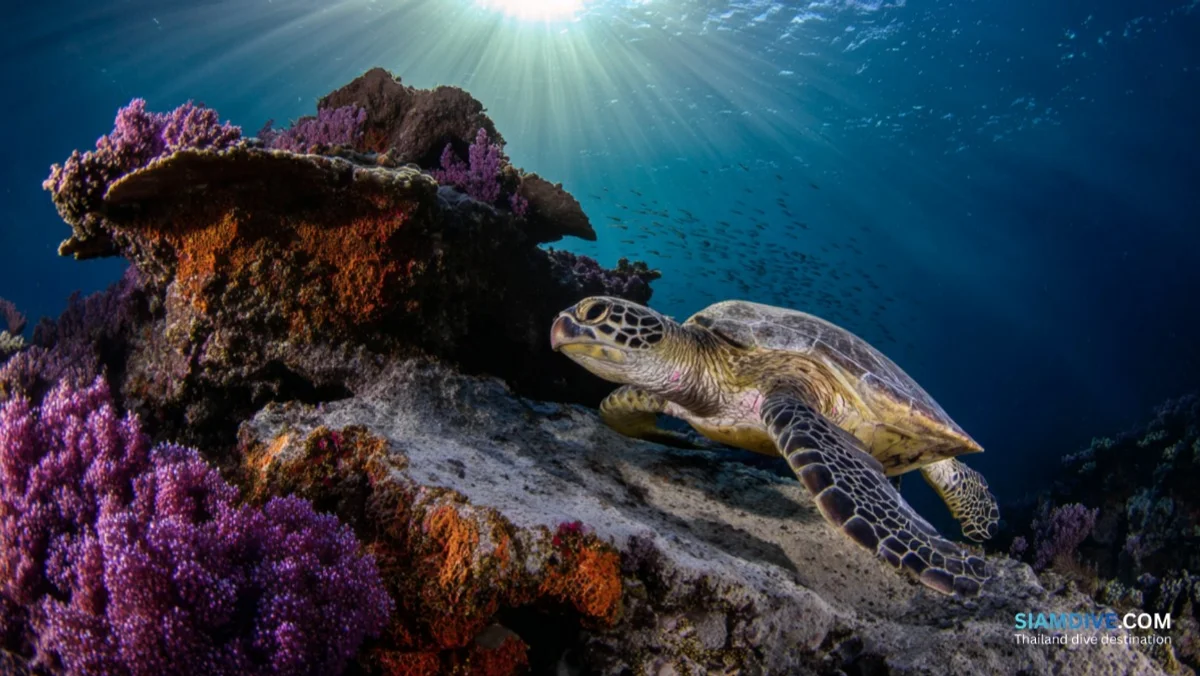
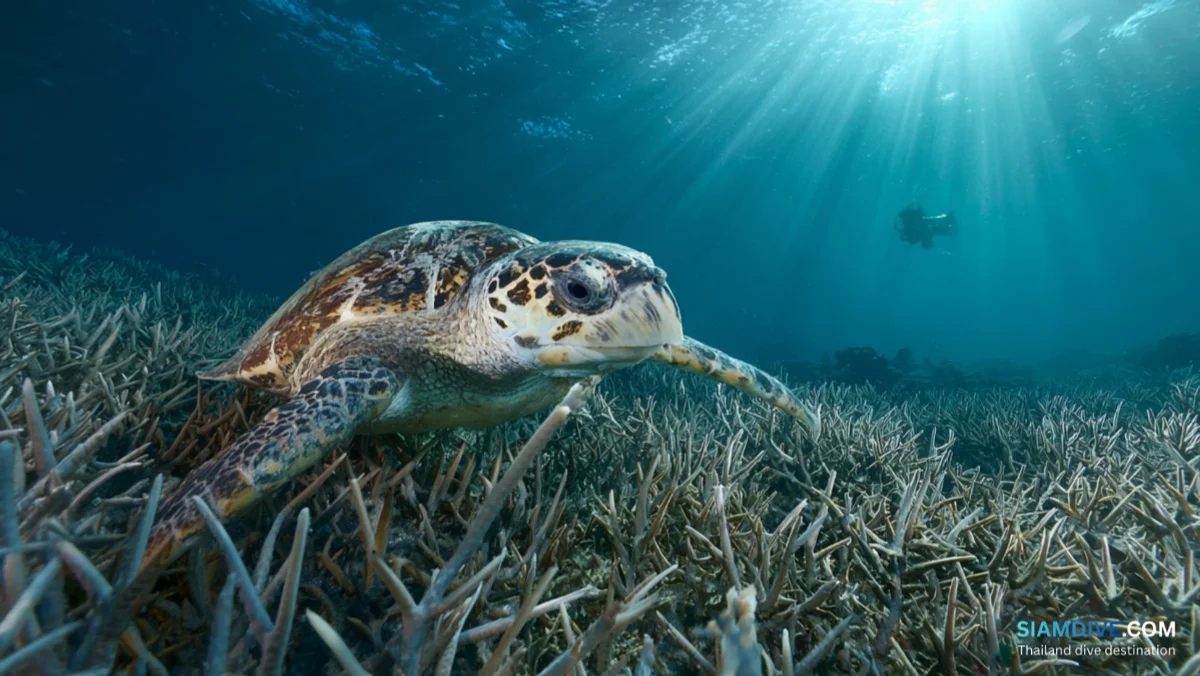
Green sea turtles are the headline act at Hin San Chalarm. Sightings are frequent enough that many operators consider them near-guaranteed during calm conditions. The turtles cruise the mid-depth corals, resting on ledges or feeding on algae-covered rock. Hawksbill turtles appear less regularly but are documented in the area.
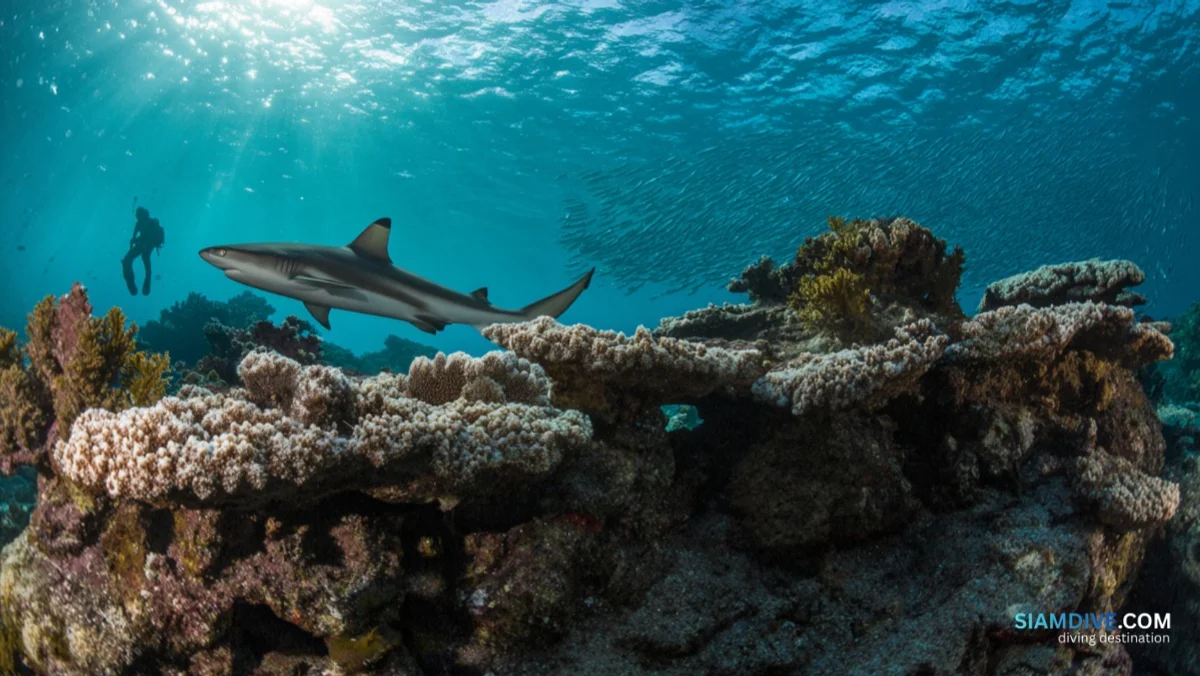
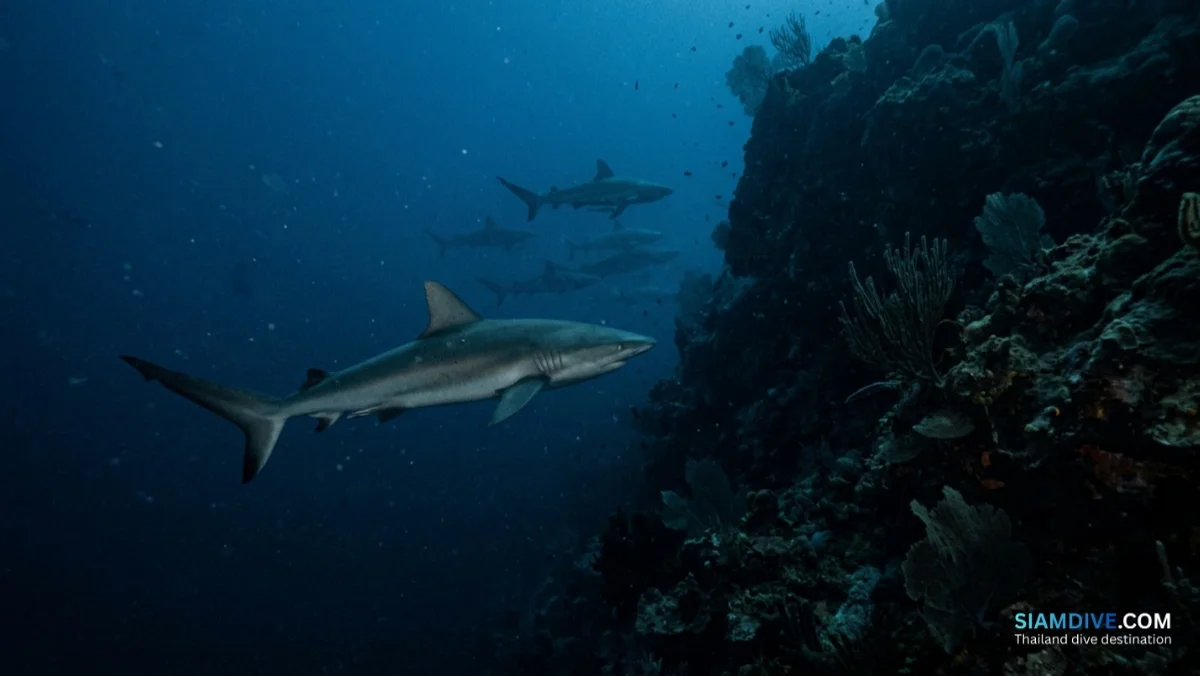
The site's position at the edge of open water brings pelagic visitors that rarely reach the inner islands. Barracuda schools patrol the ridge's exposed flanks. During the right season -- typically the cooler months between October and February -- blacktip reef sharks and bamboo sharks have been recorded here. Whale sharks and mobula rays pass through on rare but verified occasions, drawn by the same nutrient currents that feed the corals.
For macro enthusiasts, the sandy areas below the ridge offer exceptional hunting. The Samae San archipelago has logged over 150 nudibranch species through citizen science records in the Sea Slug Thailand Group -- one of the highest counts for any Gulf of Thailand location. Hin San Chalarm's mix of hard substrate and sand provides habitat for many of these species, alongside scorpionfish, razor fish, pipefish, and xeno crabs.
A typical species checklist for a single dive might include:
- Reptiles: green sea turtle, hawksbill turtle
- Reef fish: butterflyfish, parrotfish, angelfish, clownfish, damselfish
- Pelagics: barracuda schools, trevally, occasional blacktip reef shark
- Invertebrates: nudibranchs, barrel sponges, xeno crabs, cleaner shrimp
- Macro: razor fish, scorpionfish, pipefish, seahorses
Planning the Dive: Season, Logistics, and Access
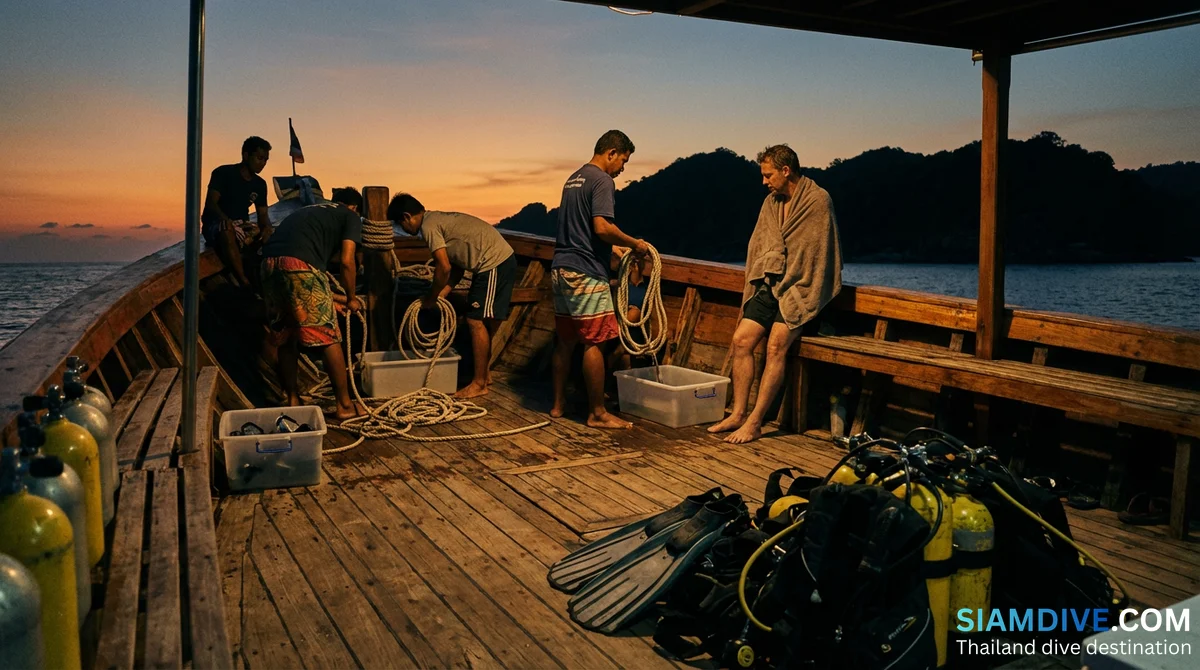
Mu Ko Samae San operates under Navy control, which shapes logistics differently from most Thai dive destinations. There is no independent boat access; all visitors depart from Khao Mar Jor Pier in Sattahip on Navy-supervised vessels. Boats run daily, with six departures between 9:00 AM and 2:00 PM. The park fee covers both transport and basic services. Dive equipment is not provided at the pier, so divers should arrange gear through their chosen operator in advance.
The drive from Bangkok takes roughly 2.5 hours via Motorway 7, and from Pattaya the pier is about 45 minutes south along the coast road. Some operators offer hotel pickup from Pattaya as part of their dive packages. Arriving early is advisable -- the first morning departures tend to deliver the calmest surface conditions and the best underwater visibility before afternoon winds pick up.
- Best season: September-December (peak visibility and calm seas)
- Good season: January-March (slightly reduced visibility, still reliable)
- Challenging months: July-September (possible rain squalls, though many sites remain diveable)
- Dive time from pier: approximately 40 minutes
- Typical dive plan: 2-dive trip combining Hin San Chalarm with a second Samae San site
- Nearest hyperbaric chamber: Queen Sirikit Hospital, Royal Thai Navy, Sattahip (~20 minutes by road)
Most operators pair Hin San Chalarm with a visit to Koh Chan or Koh Kham, creating a varied two-dive itinerary that covers both pinnacle and fringing reef environments. Divers seeking deeper challenges can combine the site with Hin Yai or the deeper reefs around Koh Rong Khon.
A key logistical note: because Samae San falls under military jurisdiction, access policies can change. Checking current permit requirements before booking is essential. Weekend trips tend to fill faster than weekday departures.
The Samaesan Hole Next Door: Context for the Abyss
No discussion of Hin San Chalarm is complete without mentioning its notorious neighbour. The Samaesan Hole -- a vertical shaft dropping to 85-100 metres -- sits nearby and holds the record as the deepest dive site in the Gulf of Thailand. First descended in 1998 by technical divers Steve Burton and Claes Martinsson, it demands hypoxic trimix, multiple redundant systems, and formal technical training.
The two sites could hardly be more different. Hin San Chalarm offers sunlit corals at recreational depths; the Samaesan Hole is a dark, current-swept shaft over a former military ordnance dump. But their proximity means that technical divers visiting for the Hole often add Hin San Chalarm as a second dive -- and frequently report that the colourful pinnacle was the more memorable experience.
For recreational divers with no interest in triple-digit depths, the important takeaway is simpler: the same oceanographic forces that carved an 85-metre shaft also created the current patterns and nutrient delivery that make Hin San Chalarm's reefs so healthy. The deep channel funnels cold, nutrient-laden water upward past the pinnacle, supporting the food chain from coral polyps to the barracuda schools that patrol the ridge at midday.
Why This Pinnacle Deserves a Spot on Your Gulf Itinerary
The Gulf of Thailand's eastern seaboard has long played second fiddle to the Andaman coast in dive marketing. Sites like Hin San Chalarm challenge that hierarchy. A pinnacle with 28-metre depth range, reliable turtle encounters, visibility that regularly exceeds 15 metres, and coral cover that has drawn the attention of marine taxonomists is not a consolation dive -- it is a destination.
The Navy's access controls, while occasionally inconvenient, function as an accidental conservation mechanism. Fewer boats, regulated anchoring, and capped visitor numbers have preserved reef quality that open-access sites of similar depth and exposure lost years ago. Add a hyperbaric chamber less than 20 minutes away and a location reachable as a day trip from Bangkok, and the practical case strengthens further.
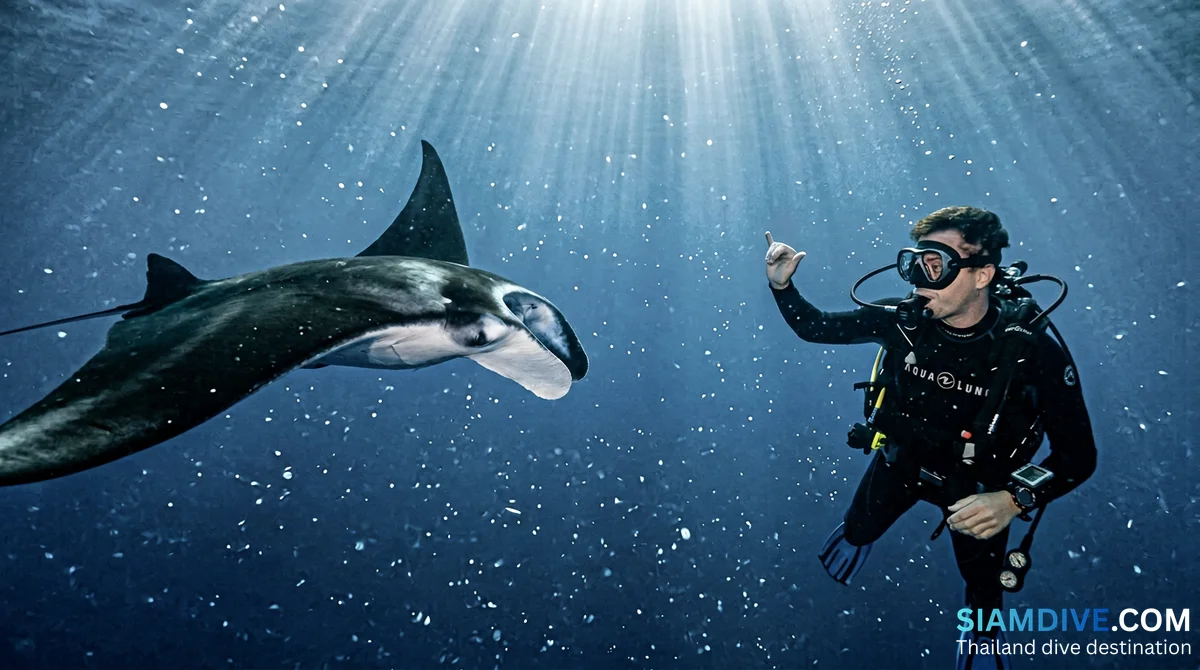
Hin San Chalarm will not give you manta rays circling a cleaning station or whale sharks queueing at a seamount. What it will give you is a compact, healthy pinnacle reef -- sea fans bending in gentle current, a turtle gliding over hard coral tabletops, nudibranchs tucked into every crevice -- all within a marine park that is still earning its reputation rather than trading on one established decades ago.