158 Sharks in One Bay: How Phi Phi's Blacktips Came Back
25 เมษายน 2569
A July 2025 drone survey counted 158 blacktip reef sharks in Maya Bay. The story behind that number starts with a radical decision in 2018.
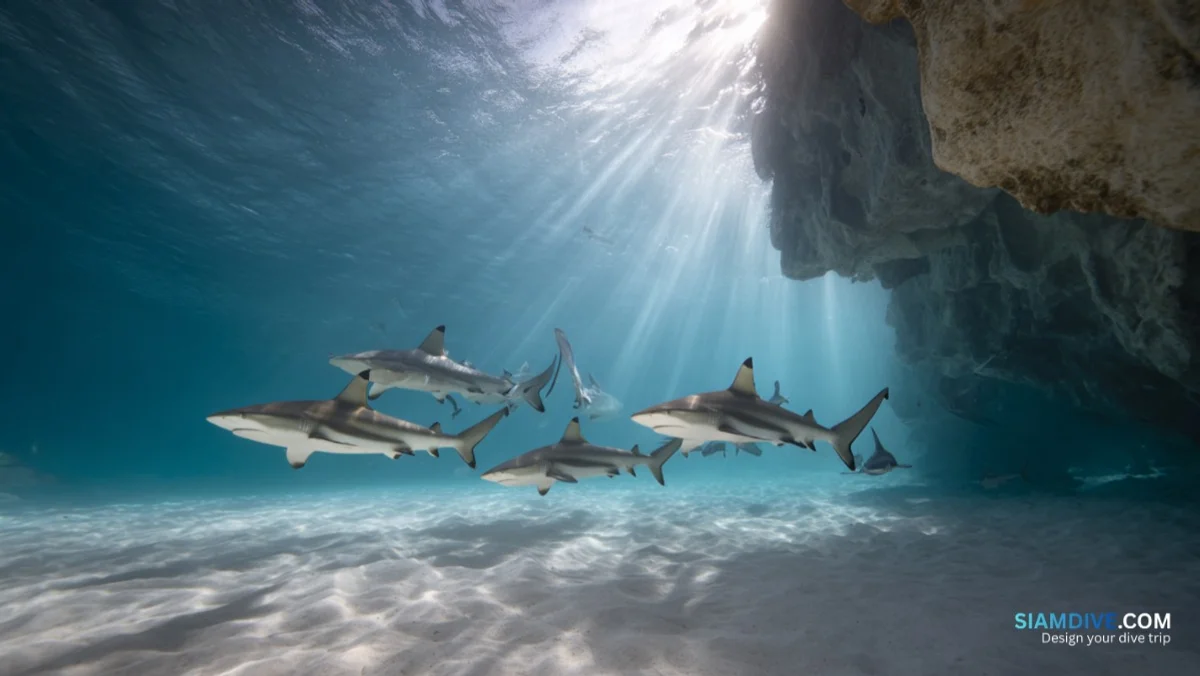
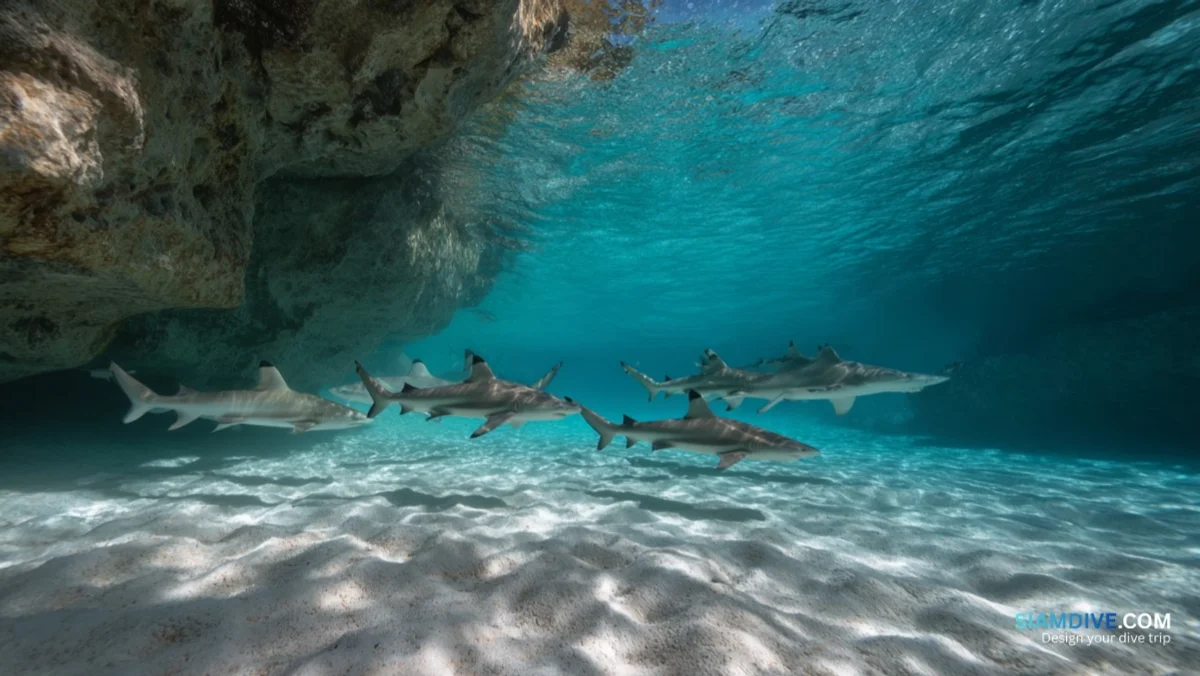
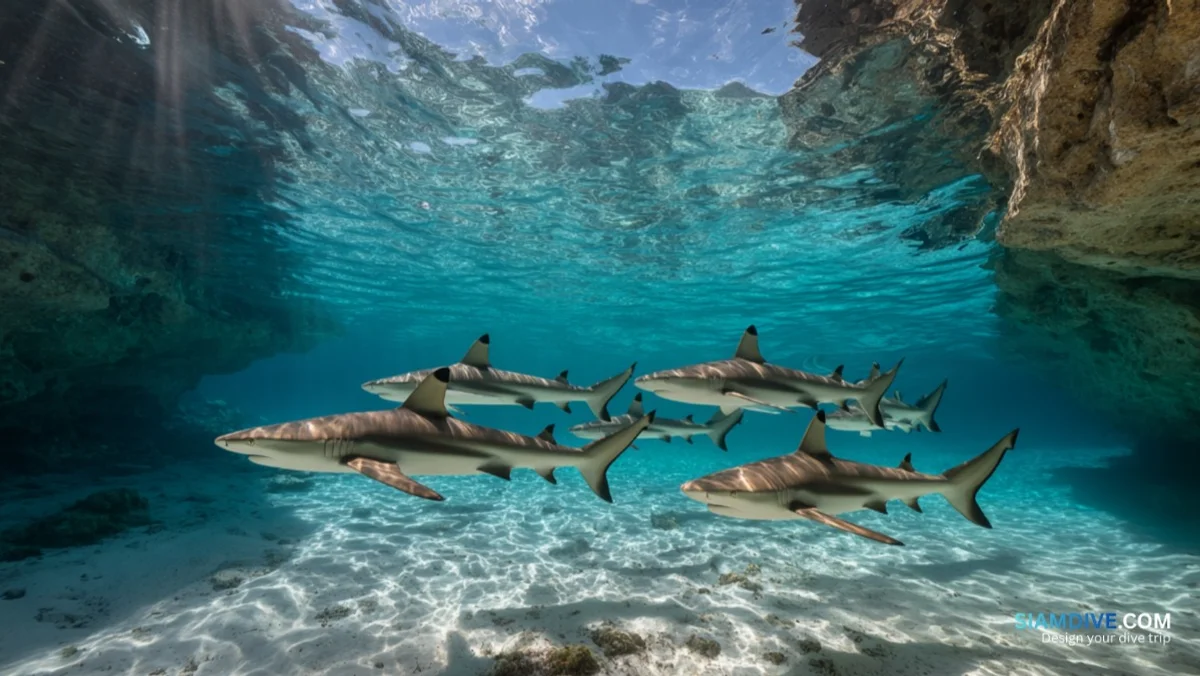
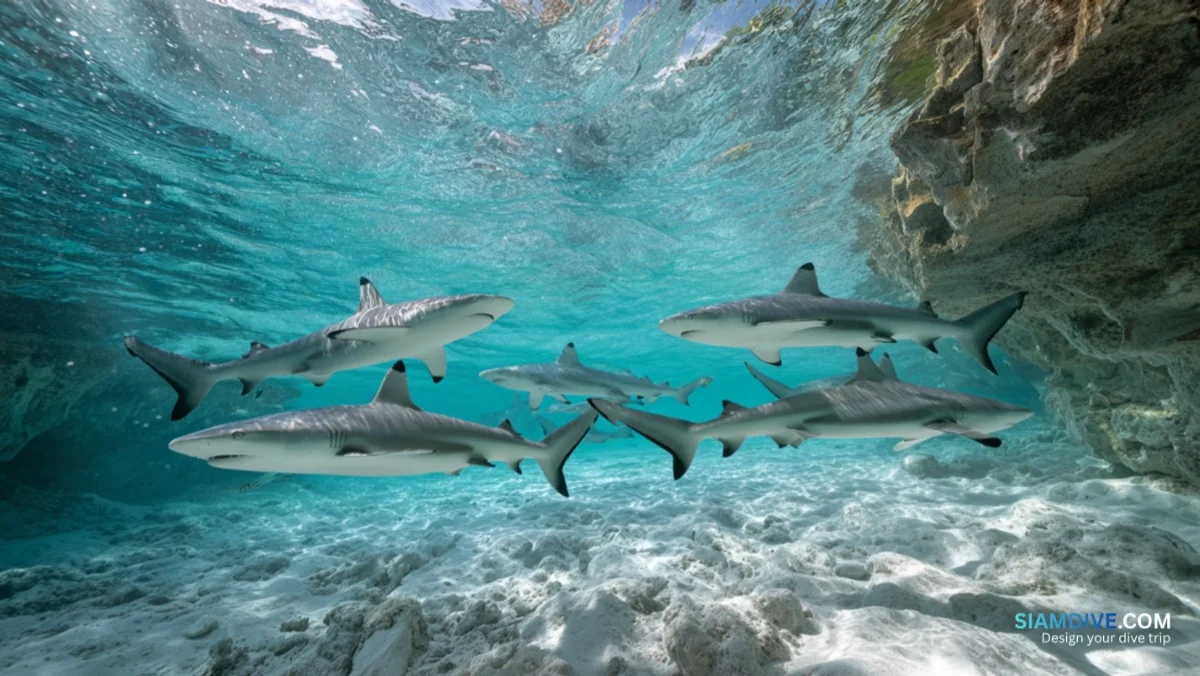
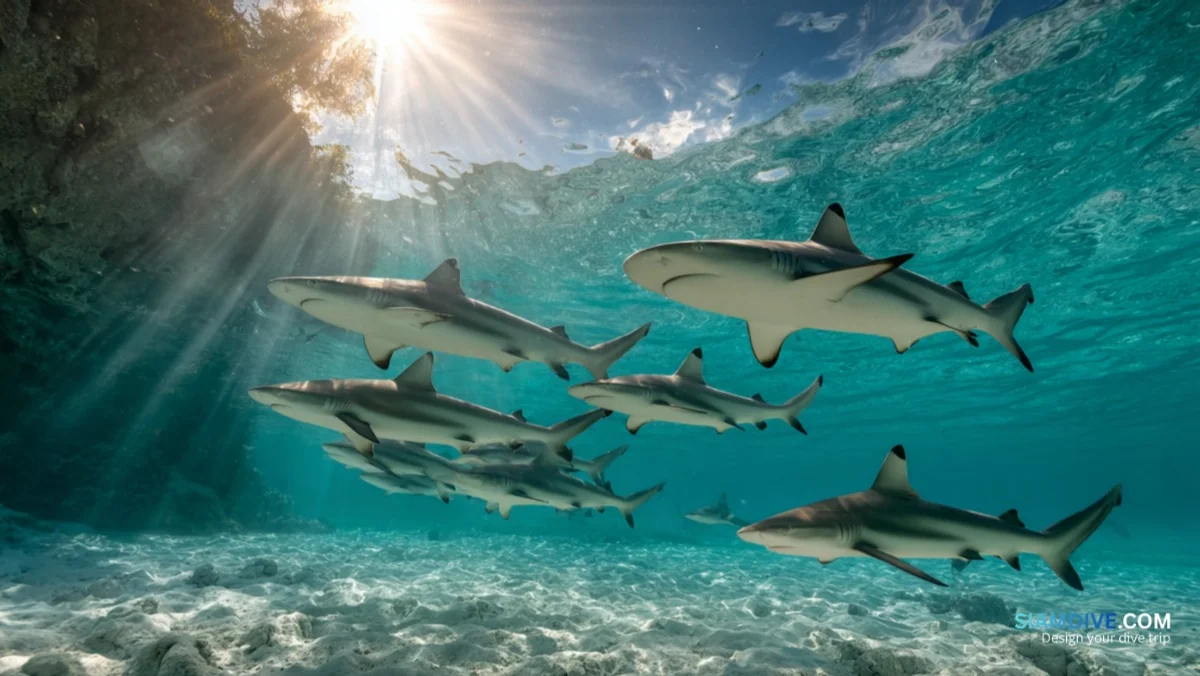
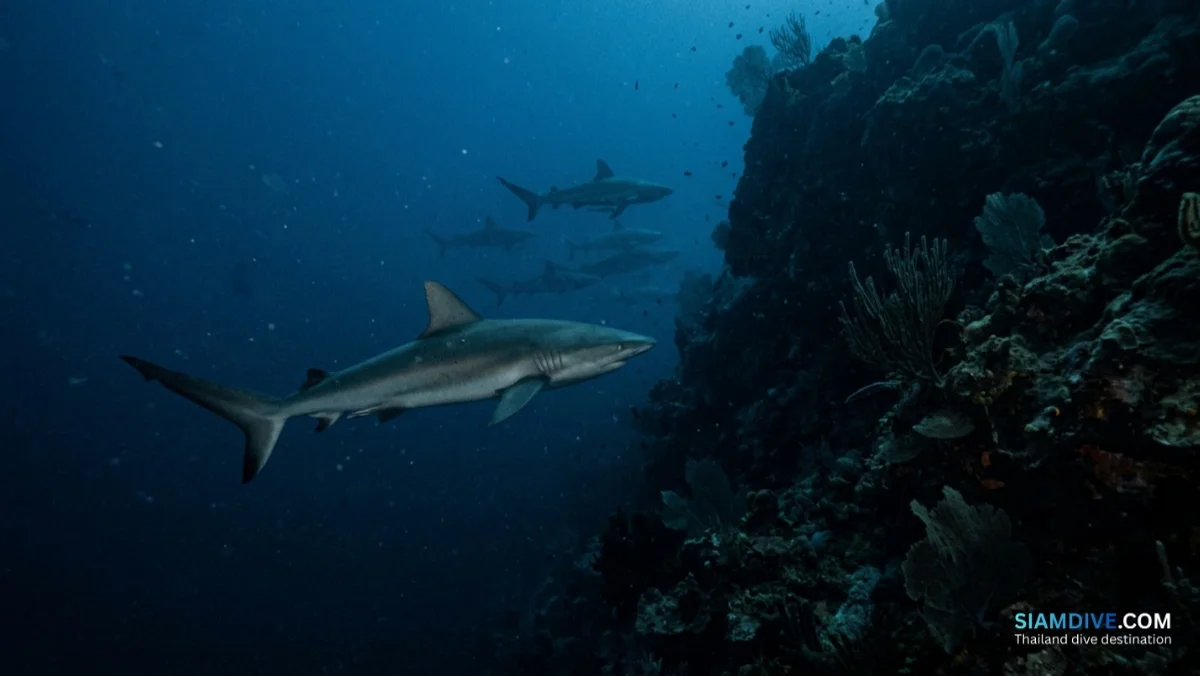
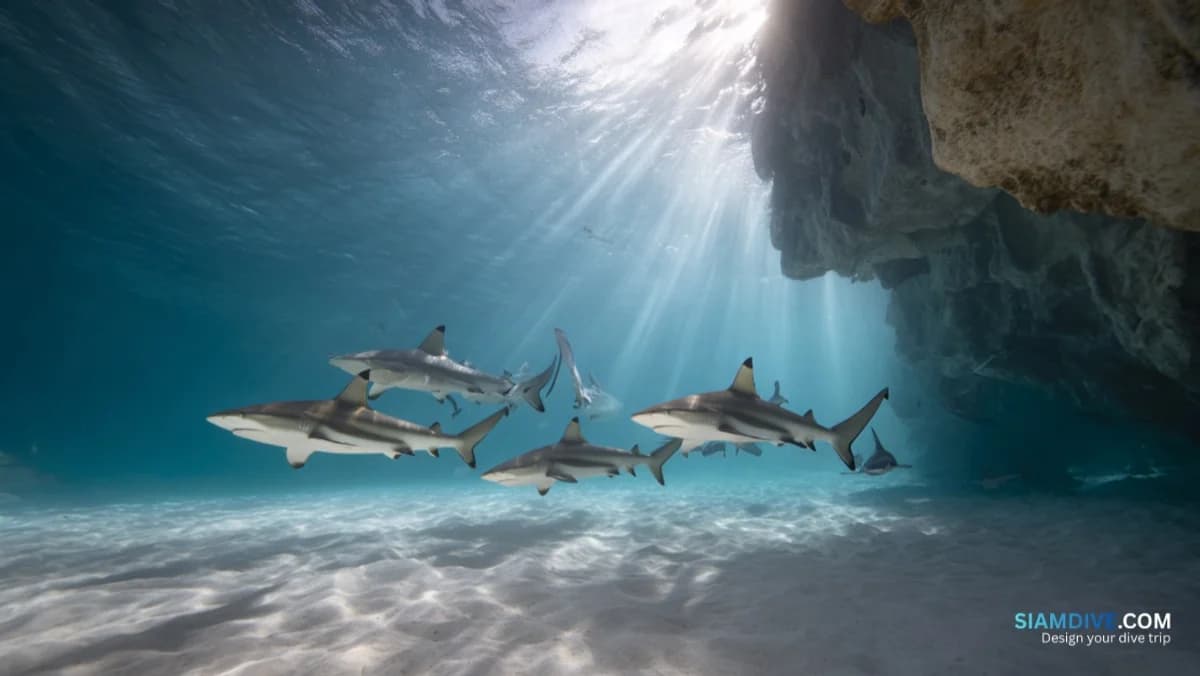
On the morning of July 3, 2025, a drone lifted above Maya Bay and its camera picked up something that five years earlier would have been fantasy — 158 blacktip reef sharks turning lazy circles in chest-deep turquoise water, dorsal fins drawing figure eights across white sand. The bay that once absorbed 5,000 tourists a day had become, by any measurable standard, the most productive shark nursery in the Andaman Sea.
How a single Thai beach pivoted from ecological collapse to a record-setting shark haven is not a simple feel-good story. It took closing the most famous bay in Southeast Asia, enduring a pandemic, rewriting park rules from scratch, and — crucially — banking on a biological trait that most visitors have never heard of: blacktip reef sharks almost never leave home.
A Bay Goes Silent
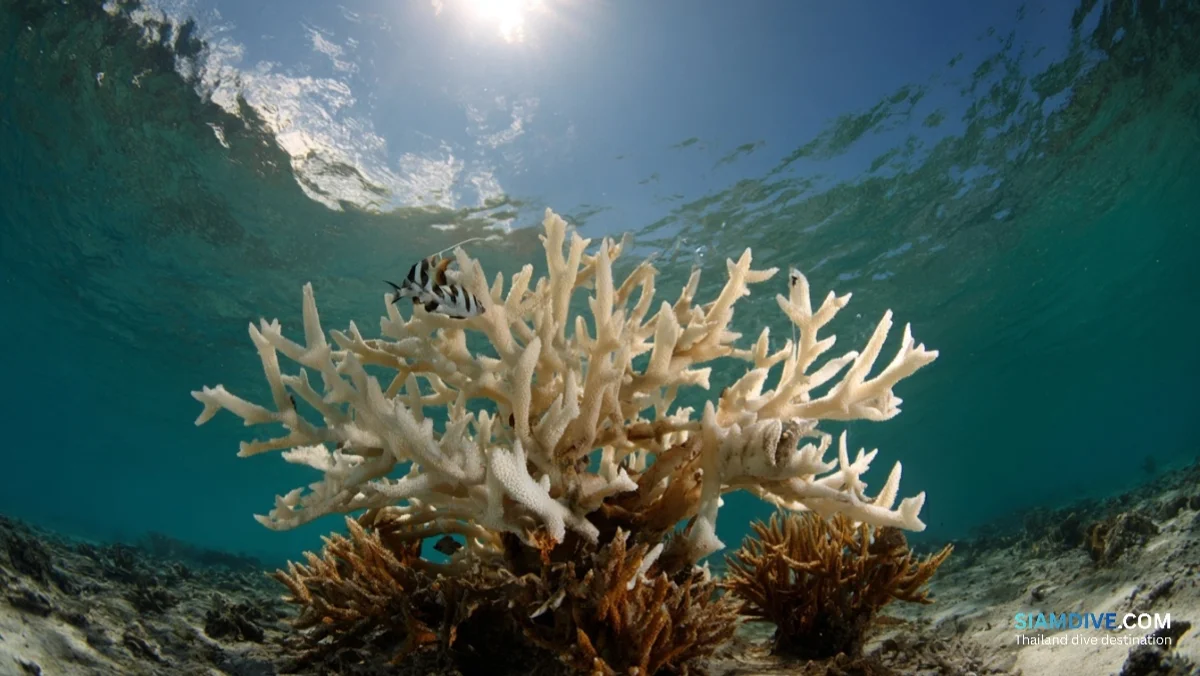
June 2018. Thai authorities did what no tourism ministry wants to do — they padlocked Maya Bay, the white-sand cove made globally famous by the 2000 Leonardo DiCaprio film The Beach. Years of unchecked mass tourism had pushed the ecosystem past its limits. Coral cover had dropped below 20 percent. Longtail-boat propellers had gouged channels into the reef flat. Marine biologists documented near-total disappearance of reef sharks from the inner bay, an area that had once been a known nursery zone.
The original closure was planned for four months. It stretched to nearly four years. COVID-19 extended the shutdown through 2020 and 2021, delivering the kind of uninterrupted reef rest that no conservation plan would have dared propose. No engine noise. No anchor drops. No sunscreen plumes. When limited access resumed in January 2022 under a strict new management regime, the bay barely resembled its former self — seagrass had crept back across the shallows, juvenile fish swarmed the reef edges, and at dawn, blacktip dorsal fins sliced the surface in numbers that rangers had not seen in a decade.
Four Years, Four Times the Sharks
The blacktip reef shark count around Maya Bay roughly quadrupled between 2018 and 2022, according to park monitoring data from Hat Noppharat Thara–Mu Ko Phi Phi National Park. The rebound was not gradual — it accelerated sharply in years three and four of the closure, once the seagrass meadows and reef structure had recovered enough to support the prey base that sharks depend on: small wrasses, gobies, mantis shrimp, and juvenile parrotfish.
- Pre-closure (2017): Fewer than 30 individuals regularly observed in morning surveys
- Mid-closure (2020): Drone counts exceeding 80 during dawn passes
- Post-reopening (2022): Rangers reporting 100+ sharks on calm mornings
- Record survey (July 2025): 158 individuals counted simultaneously from a single drone frame
The trajectory matters because blacktip reef sharks (Carcharhinus melanopterus) occupy a mid-to-top position in the reef food web. Their return is not just a headline — it signals that every trophic layer below them, from invertebrates to herbivorous fish to coral, is functioning well enough to sustain a resident predator population. When the sharks stay, the reef is working.
The Morning That Rewrote the Record
Between July 2 and 8, 2025, a research team from the Marine National Park Study and Research Center 3 in Trang province ran a week-long census inside Maya Bay as part of the Shark Watch Project. Their toolkit was simple but effective: aerial drones for surface counts and BRUV units — baited remote underwater video cameras — to capture behavior below the waterline without diver disturbance.
Dawn on July 3 delivered the peak. One hundred and fifty-eight blacktip reef sharks visible simultaneously in a single drone frame. Not aggregated over hours. Not modeled from statistical samples. One hundred and fifty-eight animals, in one bay, at one moment. The Bangkok Post, Nation Thailand, and Khaosod English all ran the number within the following week, and the Marine National Park office confirmed it as the highest single-day count ever documented at the site.
Timing was everything. Early morning, before the first tour boats round the headland, sharks move freely across the shallow sand flats to thermoregulate and hunt. Their body temperature tracks ambient water temperature, and the sun-warmed shallows of Maya Bay — barely two metres deep across most of the lagoon — offer an energetic advantage at dawn. By 9 AM the pattern breaks. Engine noise pushes sharks toward the reef edges and deeper channels, scattering the aggregation into fragments that no drone can count cleanly.
Built to Stay Put
Blacktip reef sharks are homebodies. Published research across the Indo-Pacific consistently shows that adults maintain extremely small home ranges — often less than a few square kilometres of reef — and exhibit strong site fidelity, returning to the same structures for years. A shark born in Maya Bay is likely to spend its entire adult life within a short swim of where it first opened its gills.
This sedentary nature is both the species' engine and its vulnerability. When a reef is healthy and undisturbed, site fidelity means population density builds quickly — each generation stays and adds to the local headcount. But when a reef is degraded or overfished, the same trait locks sharks in place as conditions worsen. They do not simply relocate to a better patch. They stay, decline, and eventually vanish from the site even while the species remains common elsewhere across its range.
The IUCN lists Carcharhinus melanopterus as Vulnerable with a decreasing global population trend. Adults reach up to 180 cm, feed primarily on reef fish and crustaceans, and give live birth — typically two to five pups per litter — in the warm, sheltered shallows that double as nursery habitat. Maya Bay's sandy inner lagoon is a textbook example: shallow, protected from open-ocean swell, and rich in the small prey that pups need during their first months. Remove the daily crush of 5,000 visitors wading through that nursery zone, and it functions exactly as evolution shaped it to.
Where Divers Meet Them
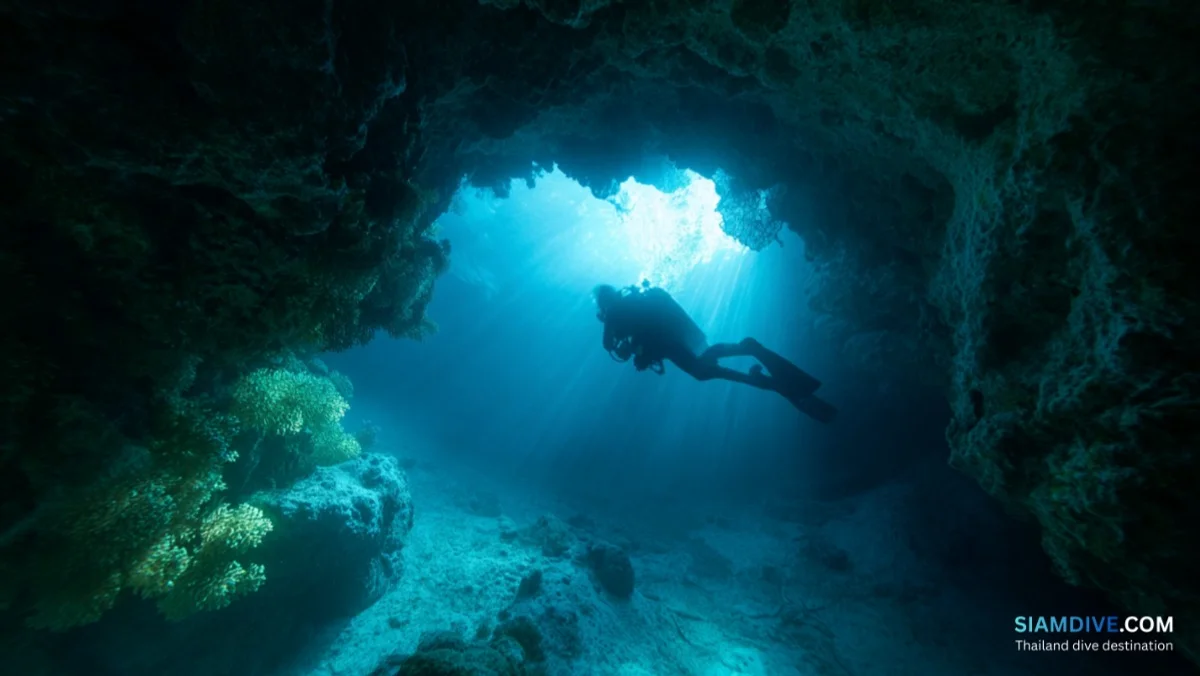
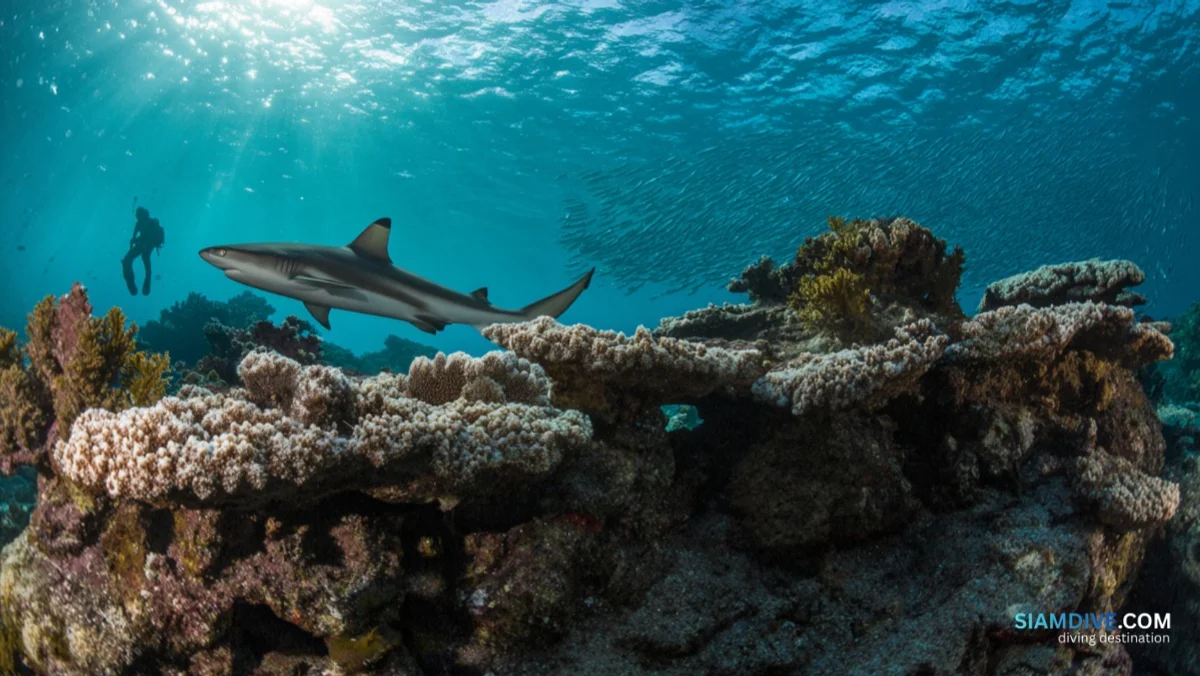
Swimming inside Maya Bay itself is banned — the no-swim rule protects the nursery — but blacktip reef sharks range freely across the wider Phi Phi archipelago, and divers encounter them regularly at several established sites.
- Bida Nok — The southern pinnacle pair, 8–26 metres. Blacktips patrol the sandy channel between the two Bida rocks, often in loose groups of three to five. Morning dives before the current strengthens give the best odds. Blacktip encounters here rival those at Samae San's Koh Chan, though the topography is entirely different.
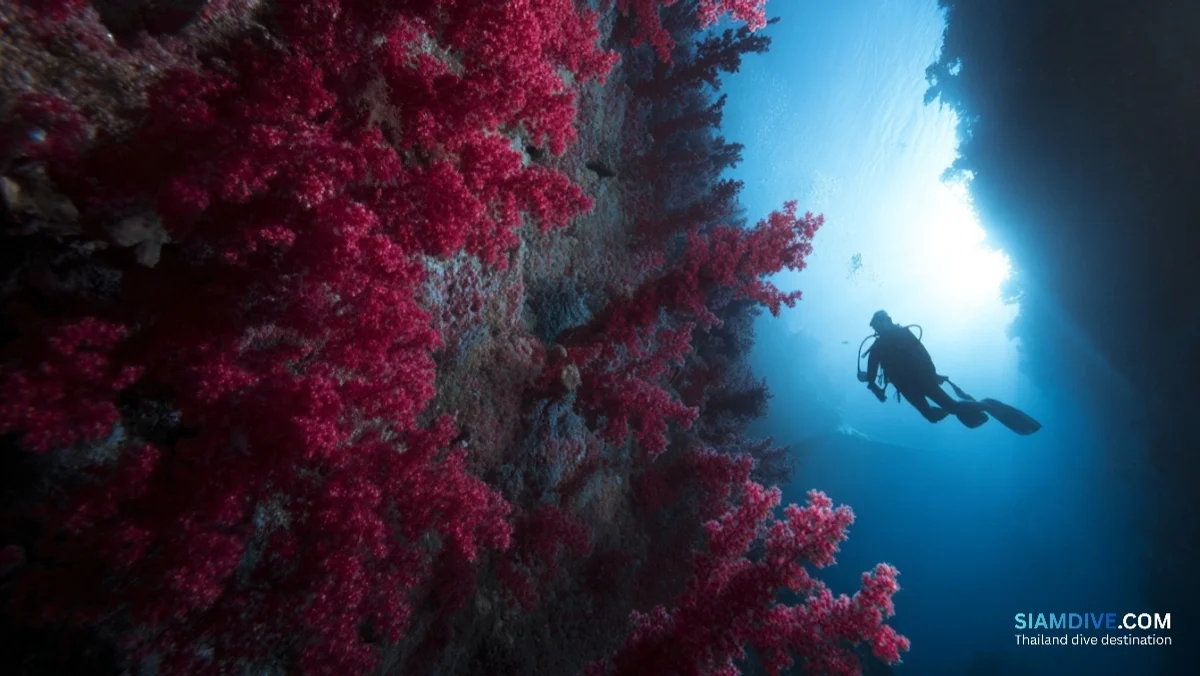
- Palong Wall — A vertical limestone cliff face on Phi Phi Leh's western side, 5–22 metres. Blacktips cruise the base where wall meets sand, especially during incoming tides when small fish get pushed against the rock. Visibility peaks between January and April at 25–30 metres.
- Shark Point (Hin Musang) — Three submerged pinnacles sitting between Phi Phi and Phuket, 8–24 metres. Leopard sharks rest on the sand flats here too, making it a reliable two-species site. Currents can run strong — surface marker buoys are standard equipment.
Peak shark-sighting season runs November through April, when Andaman visibility regularly exceeds 20 metres and water temperatures sit around 29–30°C. Early morning dives — ideally on the water before 8 AM — consistently produce more blacktip encounters than afternoon slots, a pattern that holds across every Phi Phi dive site. The reason tracks the same thermoregulation behavior observed in Maya Bay: sharks favor the sun-warmed shallows at dawn and retreat to deeper water as boat traffic builds.
The Rules That Keep the Count Climbing
Maya Bay's recovery did not happen by accident, and it does not sustain itself by luck. It runs on a strict operational framework designed to hold human pressure below the threshold the ecosystem can absorb.
- Visitor cap: 375 people per hour, 6 AM to 6 PM, enforced by rangers at the boardwalk entry point
- No swimming: Only knee-deep wading in a small designated zone — the rest of the lagoon is closed to water entry
- Seasonal shutdown: Maya Bay closes every year August 1 through September 30 for breeding-season rest and reef recovery
- No longtail entry: Tour boats dock at Loh Samah Bay on the opposite coast; visitors walk in via an elevated boardwalk that keeps foot traffic off the beach
- Escalated fines: Thailand has toughened penalties for feeding sharks, stepping on coral, or entering restricted zones within national park waters
In the 2026 season, the bay operates January 1 through July 31, closes for the August–September breeding window, then reopens October 1. The two-month shutdown aligns with both the blacktip pupping cycle and the southwest monsoon, giving the reef a double layer of protection — biological and meteorological — during its most vulnerable period.
Whether this model can absorb rising visitor demand is the question that park managers are not yet answering publicly. Phi Phi receives upward of two million tourists a year. The 375-per-hour cap holds for now, but every percentage point of growth in Thailand's post-COVID tourism rebound puts pressure on the ceiling. Marine threats extend well beyond footfall — abandoned fishing nets remain a persistent hazard for sharks across Andaman waters.
What 158 Sharks Tell Us About Thai Reefs
Since 2012, trained divers across Thailand have logged more than 9,500 dives for the eOceans citizen-science project, building the country's broadest shark observation dataset across 153 sites. The two most frequently recorded species: blacktip reef sharks and leopard sharks. Both are shallow-water, site-faithful animals whose presence functions as a direct indicator of local reef health.
Maya Bay's 158-shark count sits inside that larger picture — one data point in an ongoing question about whether Thai reefs can sustain predator populations under managed tourism. The answer from Phi Phi, nine years into the experiment, is yes, but only under rules that most Thai beach destinations have not adopted. Koh Tao's whale shark decline offers a cautionary counterpoint from the Gulf side. Whether the Maya Bay management model can scale to Similan, Surin, or the Chumphon archipelago remains an open question. The sharks, characteristically, are not going anywhere. They never do.