5 Depths Where Hin Daeng's Red Wall Changes Completely
21 เมษายน 2569
From snorkelling reef to 60-metre drop-off, each depth band on Hin Daeng's crimson wall delivers a different dive and different animals. Here is what to expect at every level.
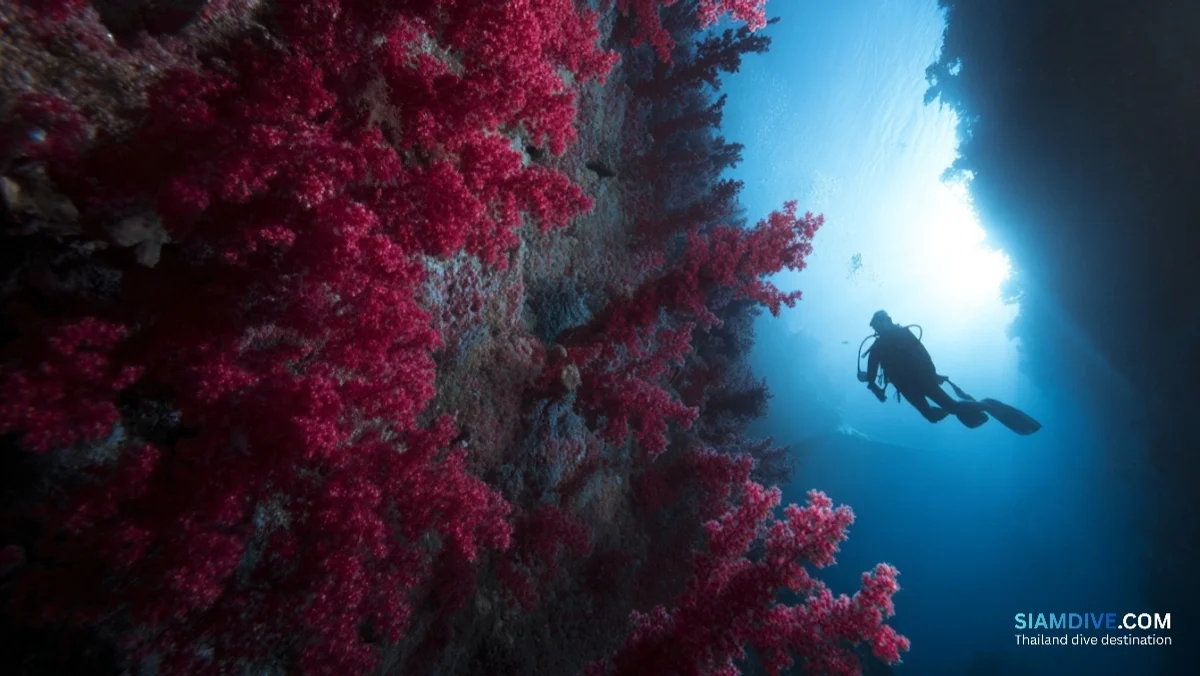
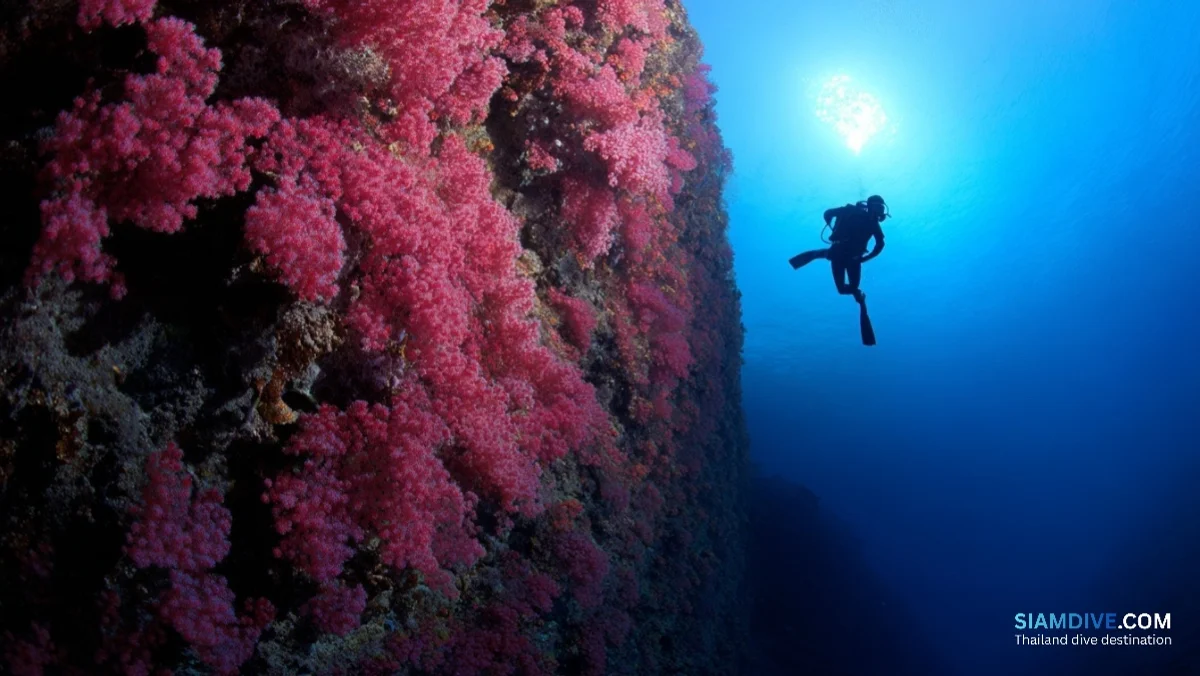
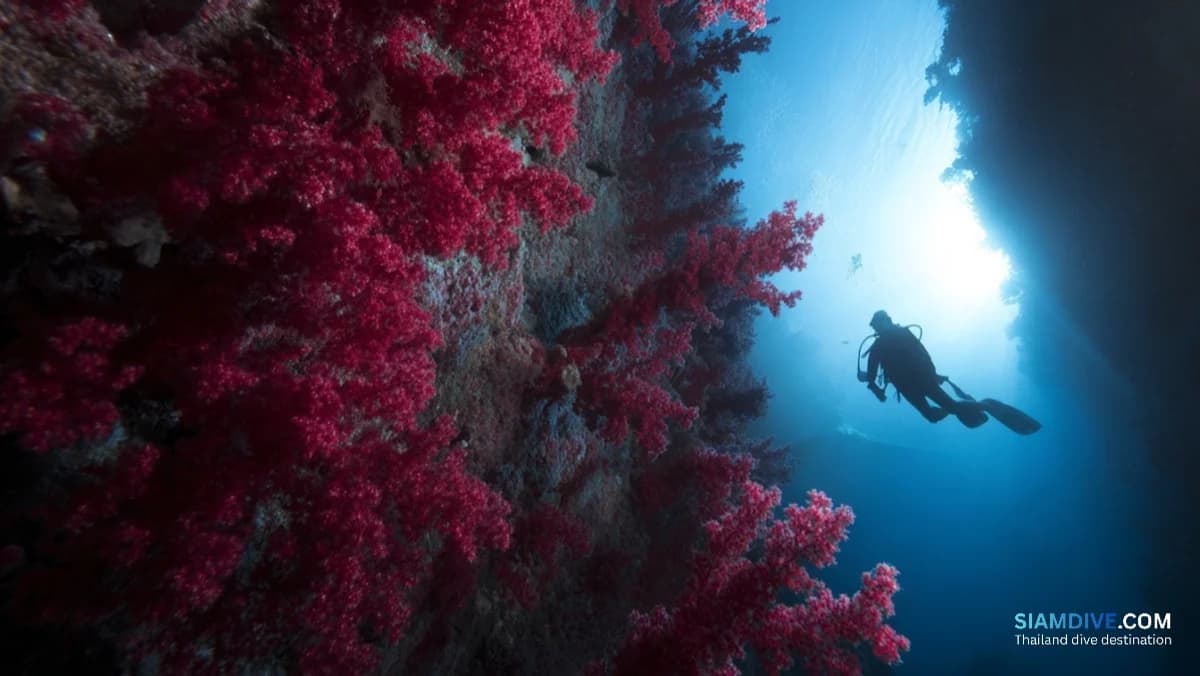
The red starts at twelve metres. Not a faint blush — a full arterial crimson that coats every surface of the limestone, soft corals packed so tight they obscure the rock beneath. Hin Daeng earns its Thai name ("Red Rock") not from above, where it barely dimples the surface at low tide, but from divers who descend its western flank and find themselves dropping through what looks like the inside of a living artery. This wall — plunging past 60 metres on its south face — is the deepest continuous soft-coral wall in Thailand's Andaman Sea, and each depth band delivers a different dive.
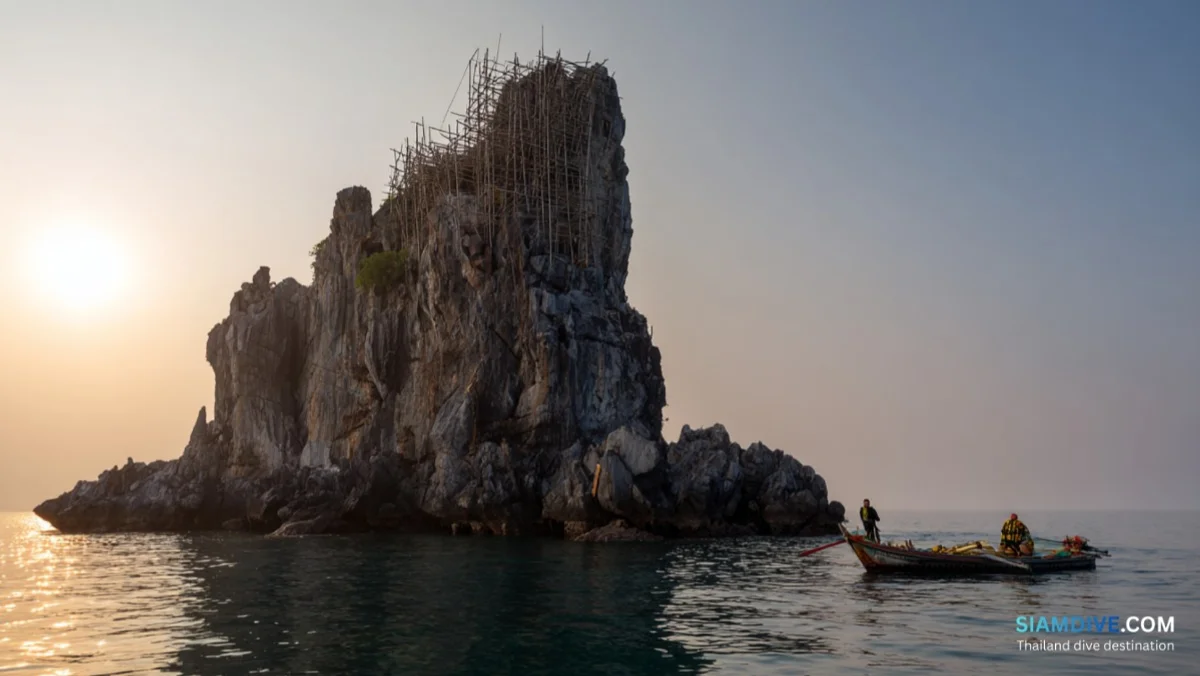
Two limestone seamounts sit roughly 200 metres apart, 25 kilometres from the nearest island (Koh Rok Nai) and about 60 kilometres southwest of Koh Lanta. No beach, no trees, no mobile signal — just open Andaman water and a pair of rocks that happen to host one of the highest concentrations of Oceanic Manta Rays in the country. The site falls within Mu Koh Lanta National Marine Park and holds IUCN Important Shark and Ray Area (ISRA) designation — a recognition based on more than a decade of manta identification data. Below is what each layer of the wall holds, from the snorkelling reef at the top to the blue void at the bottom.
The Reef Crown — 5 to 12 Metres
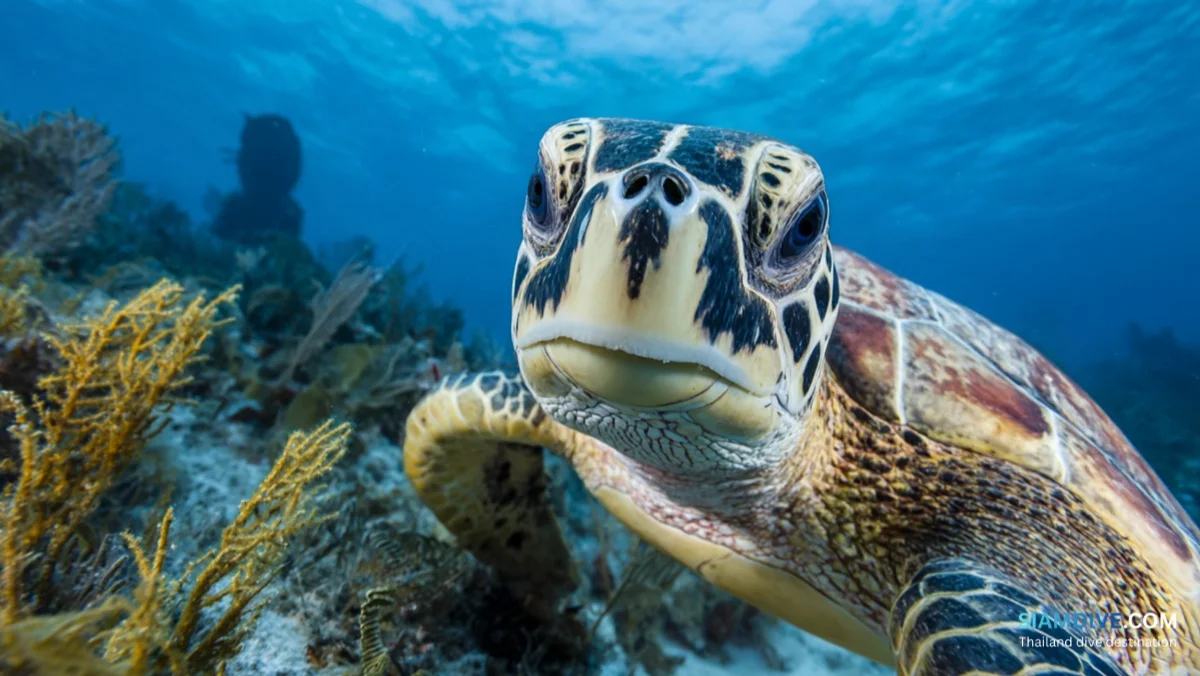
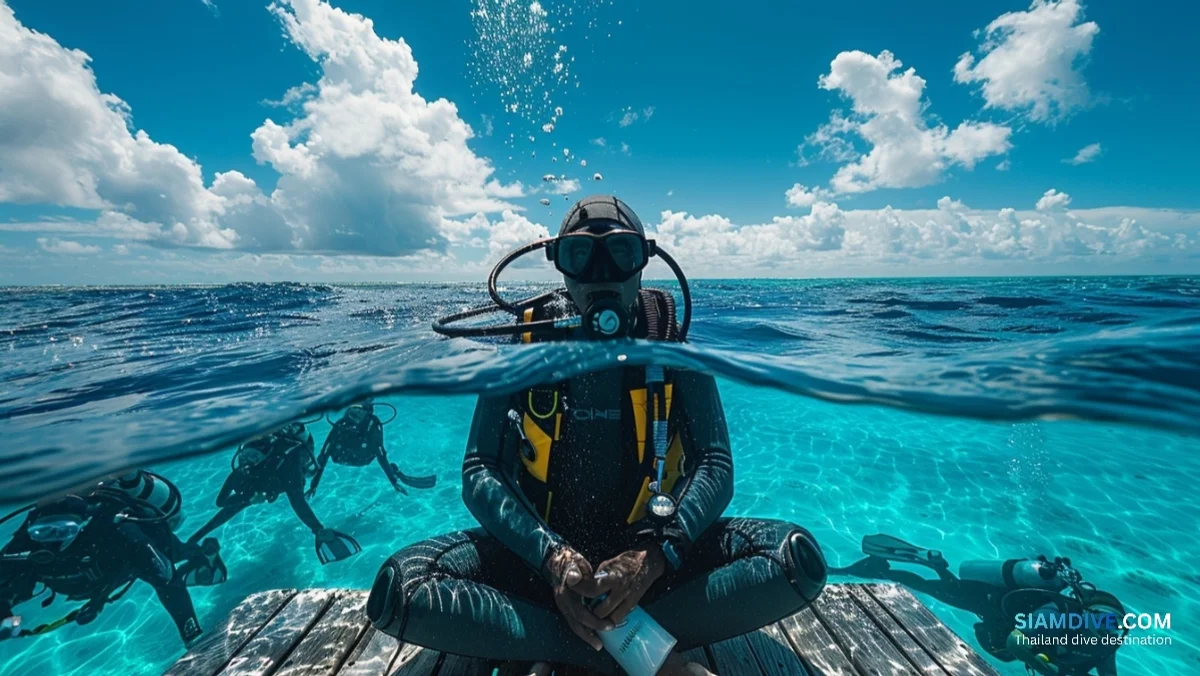
First surprise: Hin Daeng has a shallow reef worth visiting on its own. Hard coral gardens cap both seamounts, healthy enough for snorkelling on calm days. Staghorn and table corals dominate the 5–8 metre plateau, sheltering clouds of glassfish, blue-streak cleaner wrasse, and the occasional giant moray peering from a crevice. Banded sea kraits hunt through the shallows, unfazed by divers, while hawksbill turtles cruise the edges looking for sponge meals. This is where safety stops happen — and where patient divers sometimes catch a reef manta cruising overhead, silhouetted against the surface light.
The hard coral here reflects the water quality of a site far from shore. Nutrient upwelling from the deep supports growth without the sediment load that plagues nearshore reefs. The IUCN's coral health conversations matter here because Hin Daeng's isolation has so far buffered it from the mass bleaching events that hit shallower Gulf reefs in recent years. That buffer is geographic, not magical — warming still applies — but for now the crown remains vibrant.
One more reason to pay attention on the ascent: cleaning stations. Cleaner wrasse set up shop at 8–12 metres, and mantas queue here to have parasites picked off their gill rakers. Hold neutral buoyancy, stay off the coral, keep your fins still, and a five-metre wingspan may park directly above you for minutes at a time.
Where the Red Begins — 12 to 24 Metres
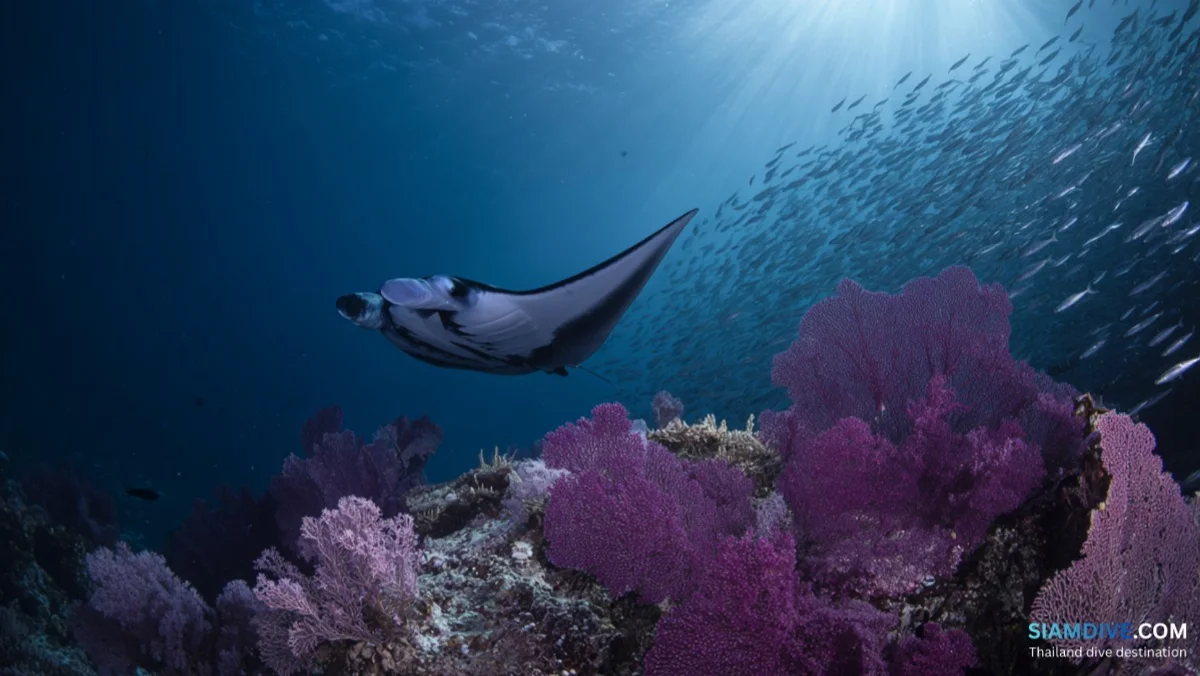
Below the hard-coral cap, the wall transitions fast. Soft corals take over — Dendronephthya in crimson, orange, and purple, interspersed with gorgonian sea fans that stretch outward into the current. Between 15 and 20 metres, coverage is so dense that photographers struggle to find bare rock for a sense of scale. Nudibranch hunters work the soft coral branches slowly; Spanish dancers, chromodoris species, and the occasional leaf scorpionfish reward macro shooters who resist the temptation to stare only into the blue.
This depth band is where most recreational divers spend their bottom time, and for good reason. Visibility at Hin Daeng typically ranges from 20 to 30 metres, occasionally exceeding 30 during peak season. Water temperature holds between 27 and 29°C year-round. The wall faces west, catching afternoon light that turns the reds almost fluorescent — morning dives show softer tones, but sunset dives from a liveaboard, when the operator schedules them, turn the wall into something that barely looks real.
Look into the blue from this depth. Hin Daeng's position in open water means pelagic traffic is constant: grey reef sharks patrol the wall edge, yellowfin tuna cut through in loose schools, and during February to April — the peak window — groups of three to four Oceanic Manta Rays pass with regularity. Citizen-science data compiled for the site's ISRA designation records a maximum of 19 individually identified mantas in a single day.
Nitrox pays for itself here. EANx32 stretches no-deco time at 24 metres from roughly 30 minutes on air to over 40 — enough extra bottom time to wait out a manta pass or explore one more overhang before starting the ascent.
Vertical Territory — 24 to 40 Metres
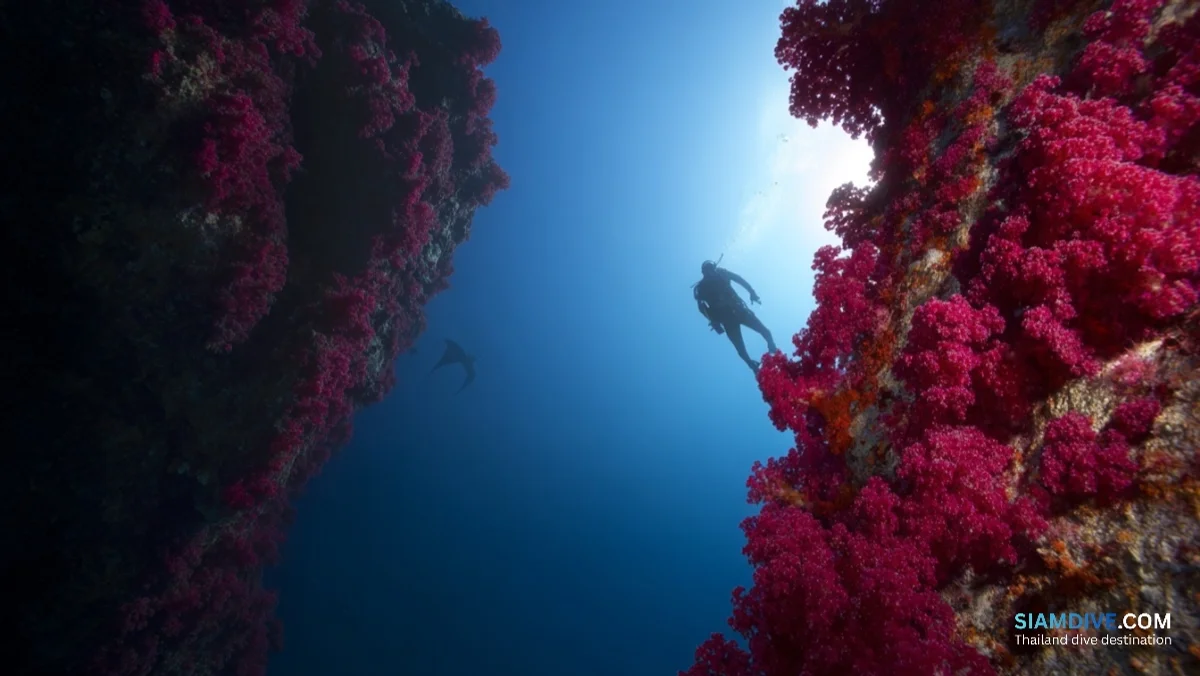
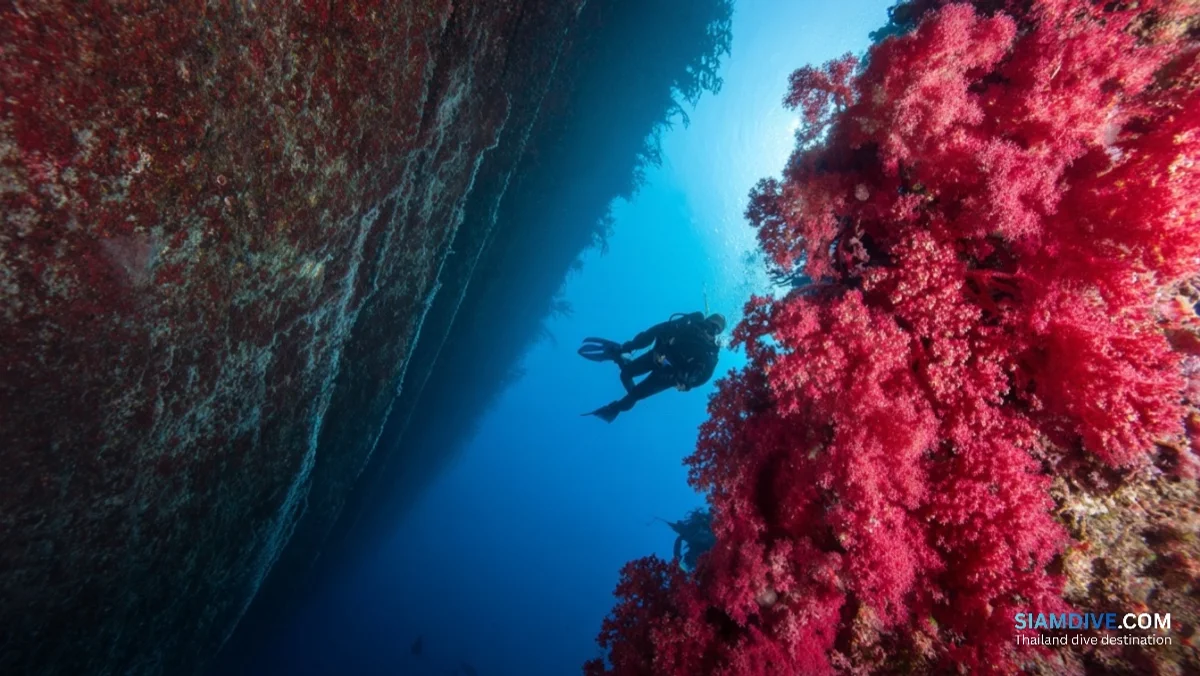
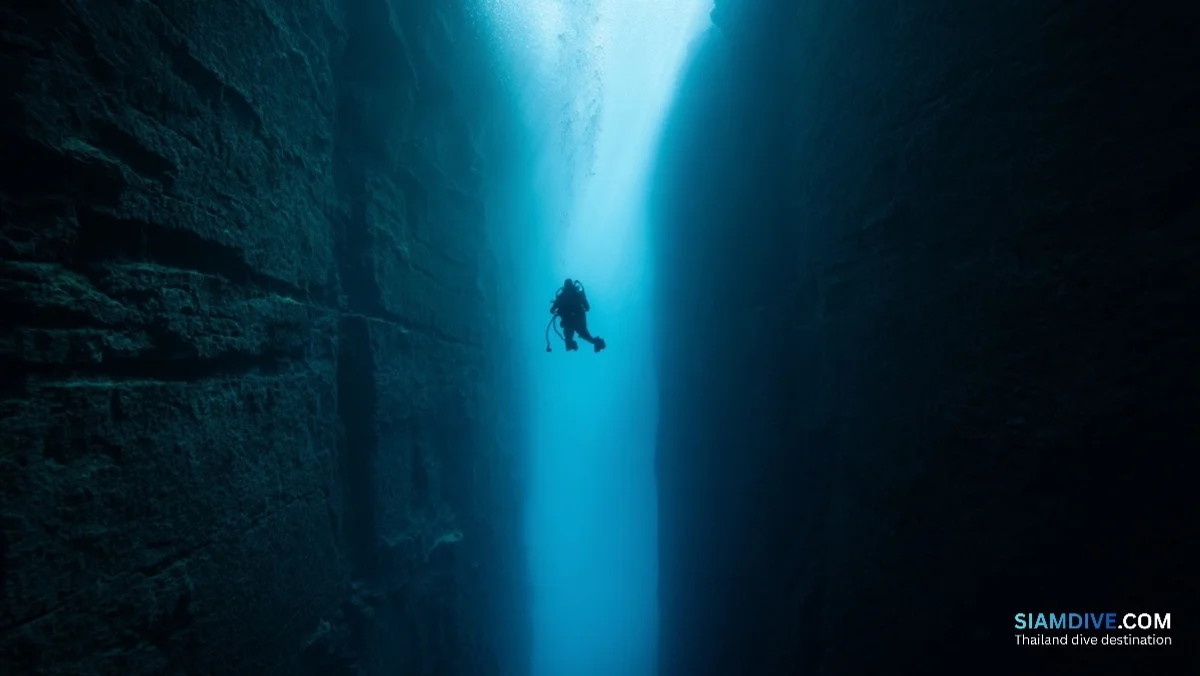
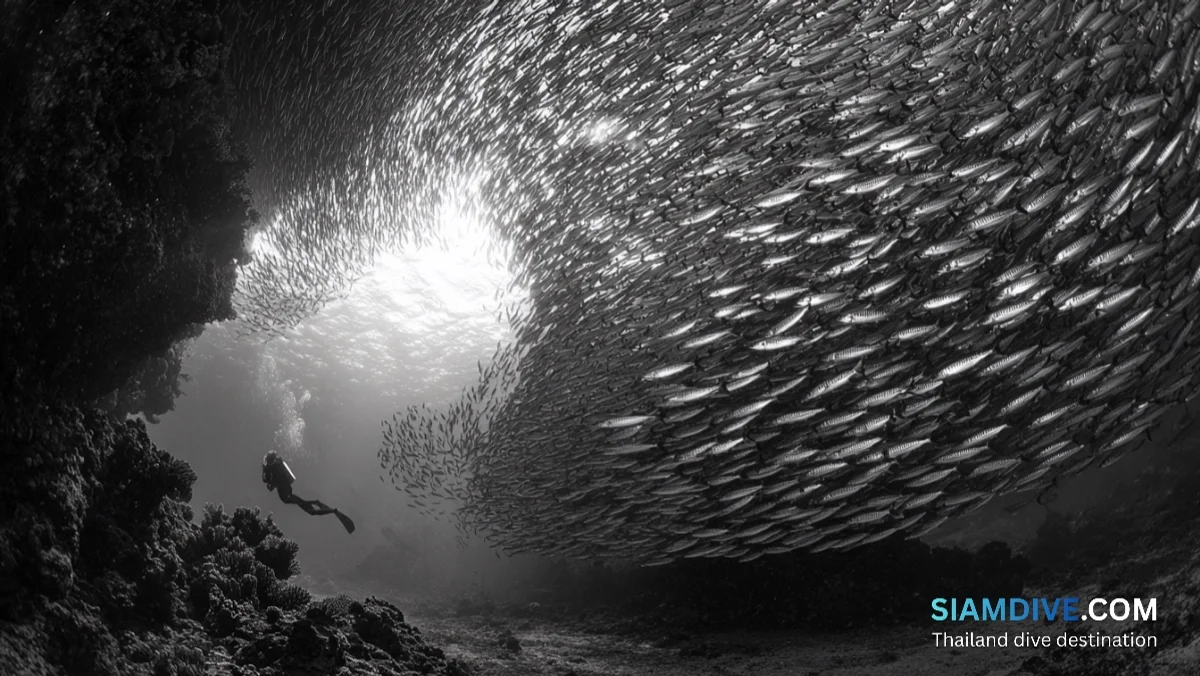
Below 24 metres, the wall steepens to near-vertical on the west and south faces. The soft-coral palette shifts: reds give way to deeper purples and occasional yellows as light attenuates. Sea fans grow larger here — some spanning over a metre — anchored to the limestone where current delivers plankton. Between the fans, longfin bannerfish hang in pairs and barracuda form loose columns that scatter and reform as the current shifts direction.
This band is where Hin Daeng separates itself from its neighbour Hin Muang, 200 metres to the south. Hin Muang's wall drops deeper (some charts mark 70 metres plus), but Hin Daeng's 24–40 metre zone offers more structural complexity: overhangs, small swim-throughs, and ledges where whitetip reef sharks rest during the day. Leopard sharks occasionally appear on sandy patches at the wall's base near 40 metres on the east side, where the contour slopes rather than drops.
Current patterns matter at this depth. Hin Daeng typically sees moderate flow from the north or south, with the wall providing shelter on the lee side. Strong-current days push the dive profile shallower — experienced guides read surface conditions at the mooring and choose entry points accordingly. Drift diving skills and solid buoyancy control are prerequisites, not suggestions. Divers who cannot hold a hover at a fixed depth without grabbing the reef will find themselves either swept off the wall or dragged through the soft coral — neither outcome is acceptable.
- Working depth — 18–30 m (most recreational dive plans)
- Maximum depth — 60 m+ on the south wall face
- Visibility — 20–30 m; often exceeds 30 m December–March
- Water temperature — 27–29°C year-round
- Current — moderate, occasionally strong; sheltered lee side available
- Season — November to April (best conditions December–March)
Below 40 — The Blue Edge
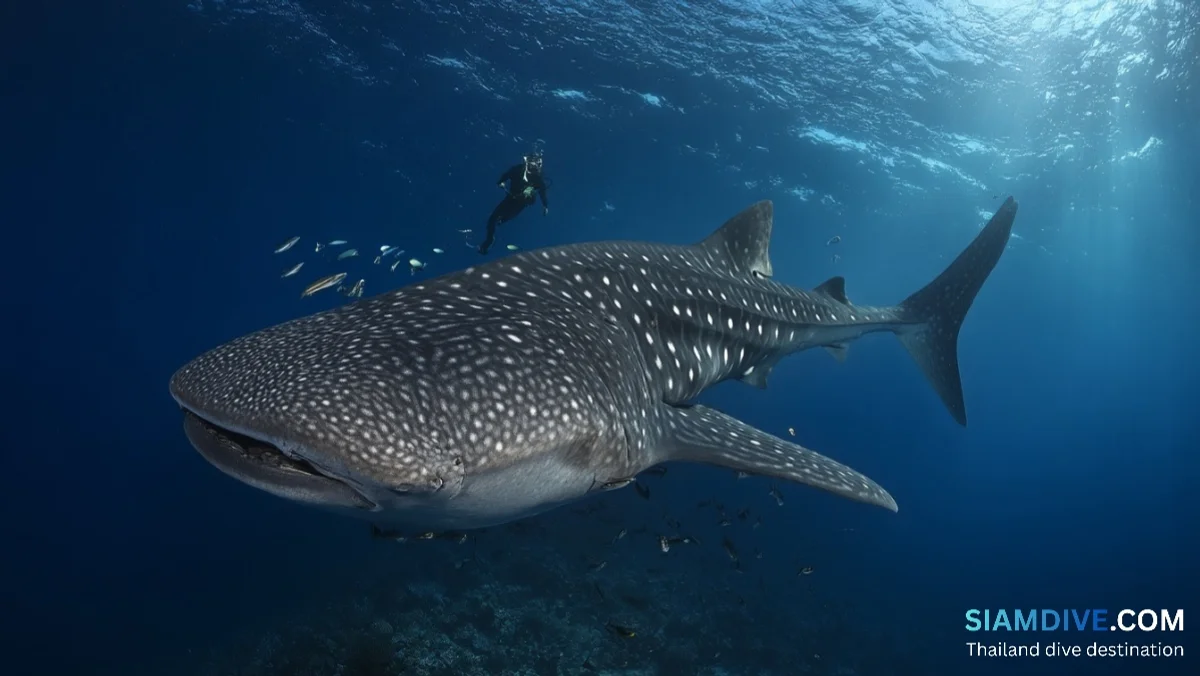
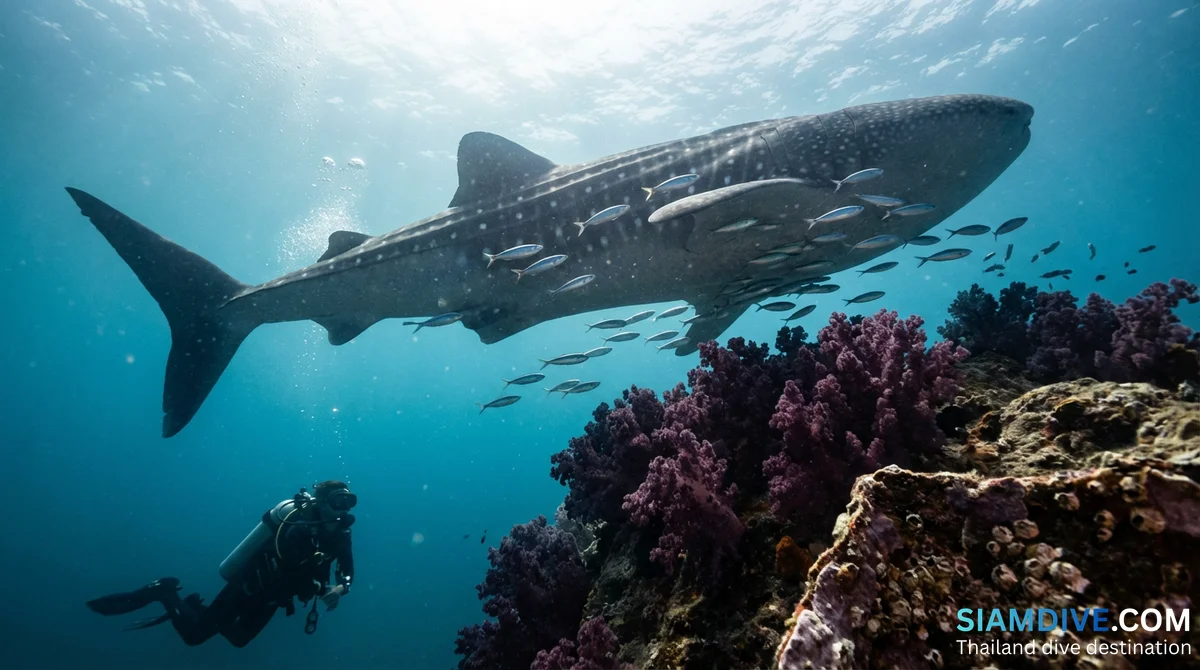
Past the recreational ceiling, Hin Daeng's south wall continues to at least 60 metres. Technical divers on trimix have explored the base and report sparse soft coral giving way to clean limestone and then sand. The appeal down here is not coral but encounters: whale sharks pass Hin Daeng an average of three to four times per season, and sightings tend to occur in the deep blue off the wall rather than against the rock itself. Eagle rays sometimes glide through in chevron formations, their spotted backs catching the last traces of filtered sunlight.
For Advanced Open Water divers, 40 metres is the hard limit — and the site rewards restraint. Most of the colour, life, and encounters concentrate between 12 and 30 metres. Going deep at Hin Daeng burns air and bottom time for diminishing visual returns. The exception worth knowing: a deep start at 35 metres on the south face, spiralling up the wall to finish your safety stop on the hard-coral crown, gives a single-dive cross-section of everything the site offers. Many experienced guides default to this profile on a diver's first Hin Daeng visit.
That spiral ascent also fits the Deep Diver specialty requirements. Several liveaboard operators combine the Hin Daeng wall with a checkout dive at Koh Haa's shallower caverns for a two-site specialty completion over a single trip.
The Manta Question
February to April accounts for 68% of Oceanic Manta Ray sightings at Hin Daeng, according to the ISRA citizen-science database. The mantas come to feed on plankton concentrated by current upwelling along the wall, and they use the reef crown as a cleaning station where cleaner wrasse remove parasites. Mean group size is four individuals, but aggregations can swell — the largest documented encounter recorded 19 mantas in a single day, an interaction that lasted roughly an hour.
These are Oceanic Manta Rays (Mobula birostris), not the smaller reef species. Wingspan reaches five metres or more. They arrive from open water, circle the pinnacle, and often hover at cleaning stations between 8 and 15 metres — close enough that divers on the wall need only hold still and watch. Since 2006, 141 encounters with 118 individually identified mantas have been logged here, representing a full quarter of all Oceanic Manta Ray sightings in Thailand. Pregnant females have been documented twice in the records, suggesting the area serves as a social hub beyond simple feeding.
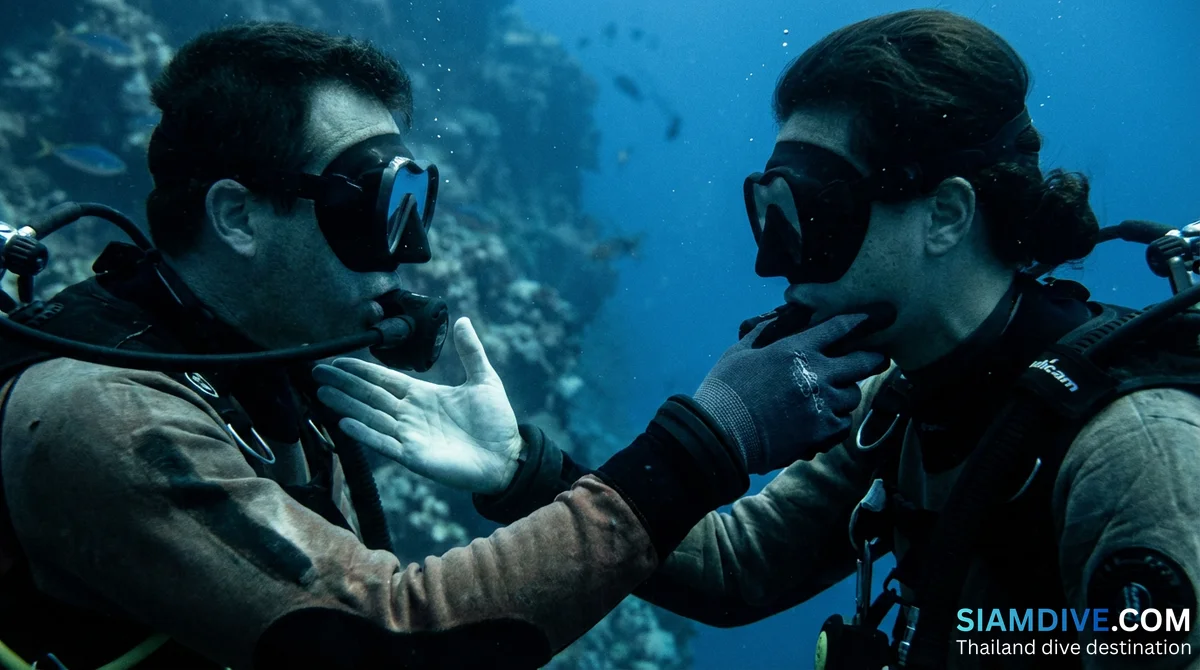
Manta etiquette is non-negotiable. Stay horizontal, breathe slowly, keep hands and fins away from the animal's path. Flash photography and bubble columns directly beneath a hovering manta disrupt cleaning behaviour and can push the animal away from the station — a loss for every diver on the site, not just the one who caused it. Most liveaboard guides brief this explicitly; on day-trip boats with less experienced groups, the standard varies.
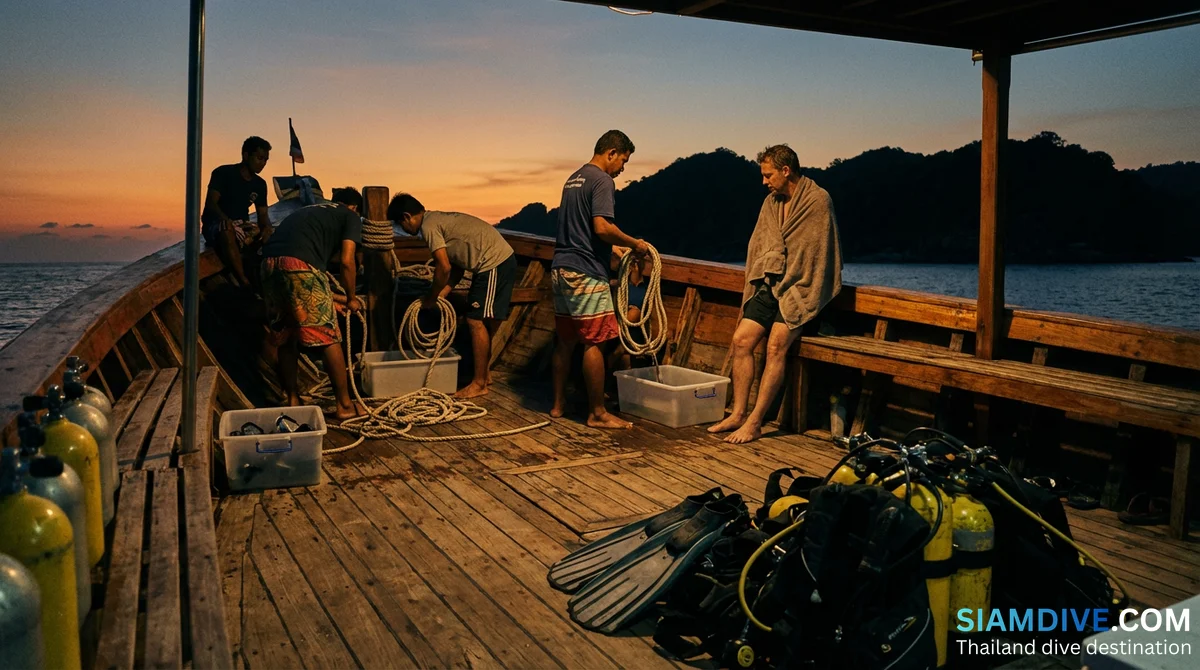
The practical implication for trip planning: if mantas are the priority, book a trip that reaches Hin Daeng between mid-February and late March. Day boats from Koh Lanta run roughly three hours each way — a liveaboard anchors overnight and offers first-light dives before day-trip traffic arrives. That early-morning window, before engines and bubbles fill the water column, is when cleaning-station behaviour peaks.
Planning the Dive
- Certification — Advanced Open Water or PADI Deep Diver specialty. Open Water divers with 50+ logged dives may qualify at the operator's discretion. Some shops offer an assessment dive at a local site before clearing Hin Daeng.
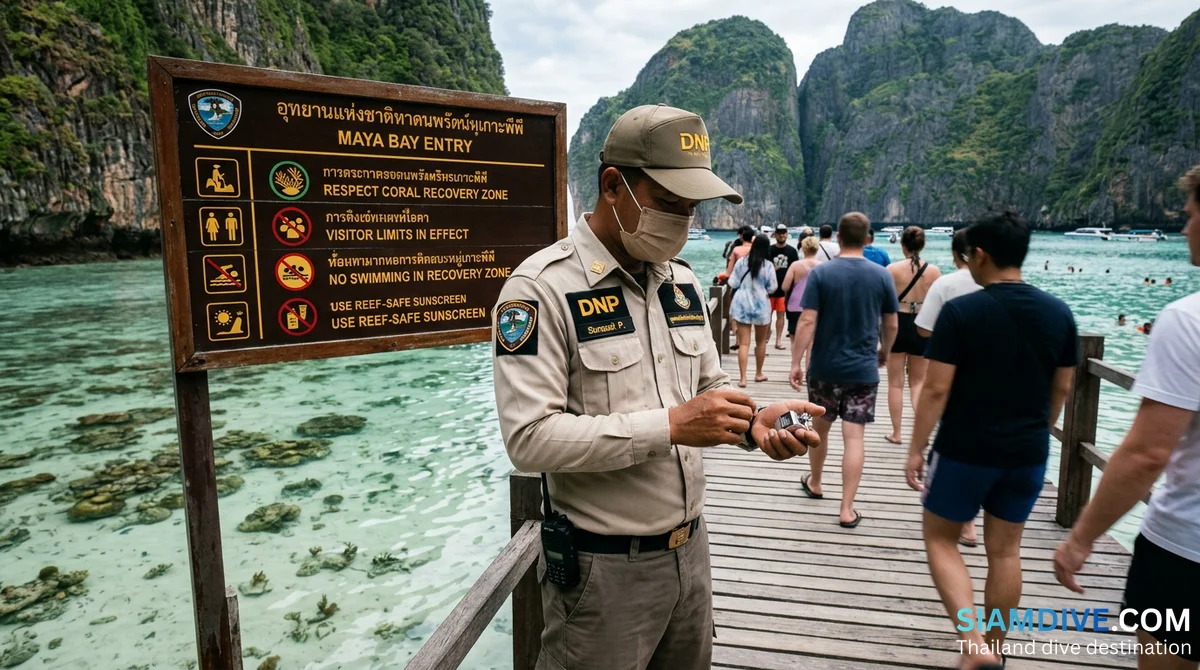
- Park fee — Hin Daeng sits within Mu Koh Lanta National Marine Park. Foreign adults pay 200 THB (Thai nationals 40 THB), collected by the operator and typically included in trip pricing.
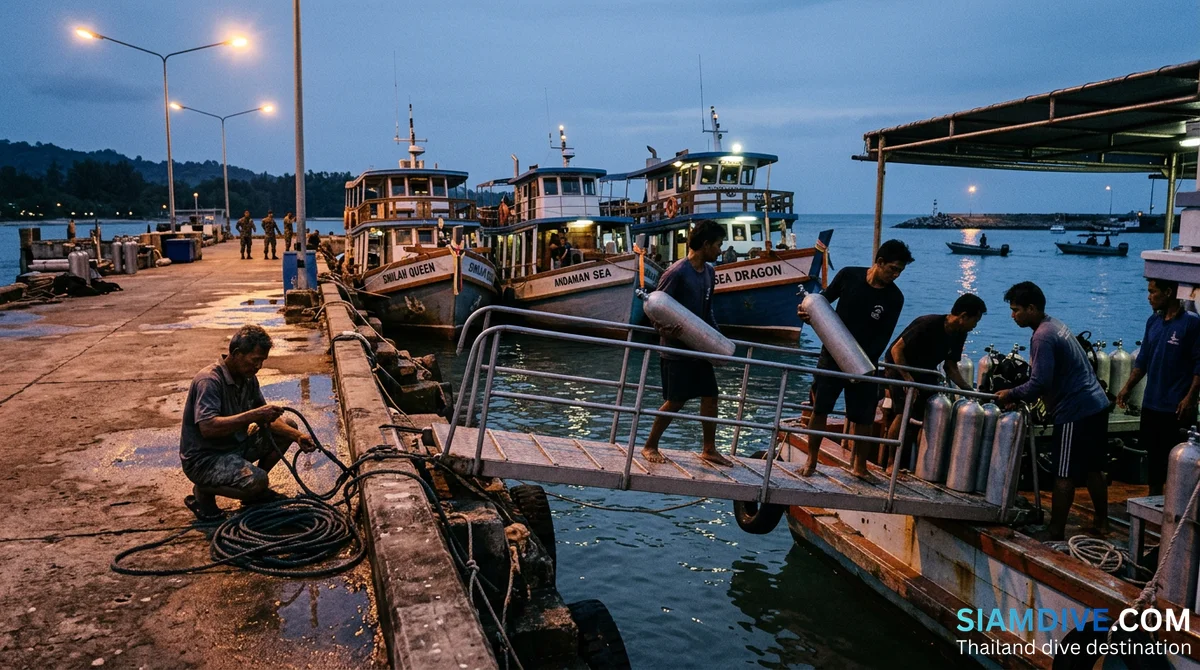
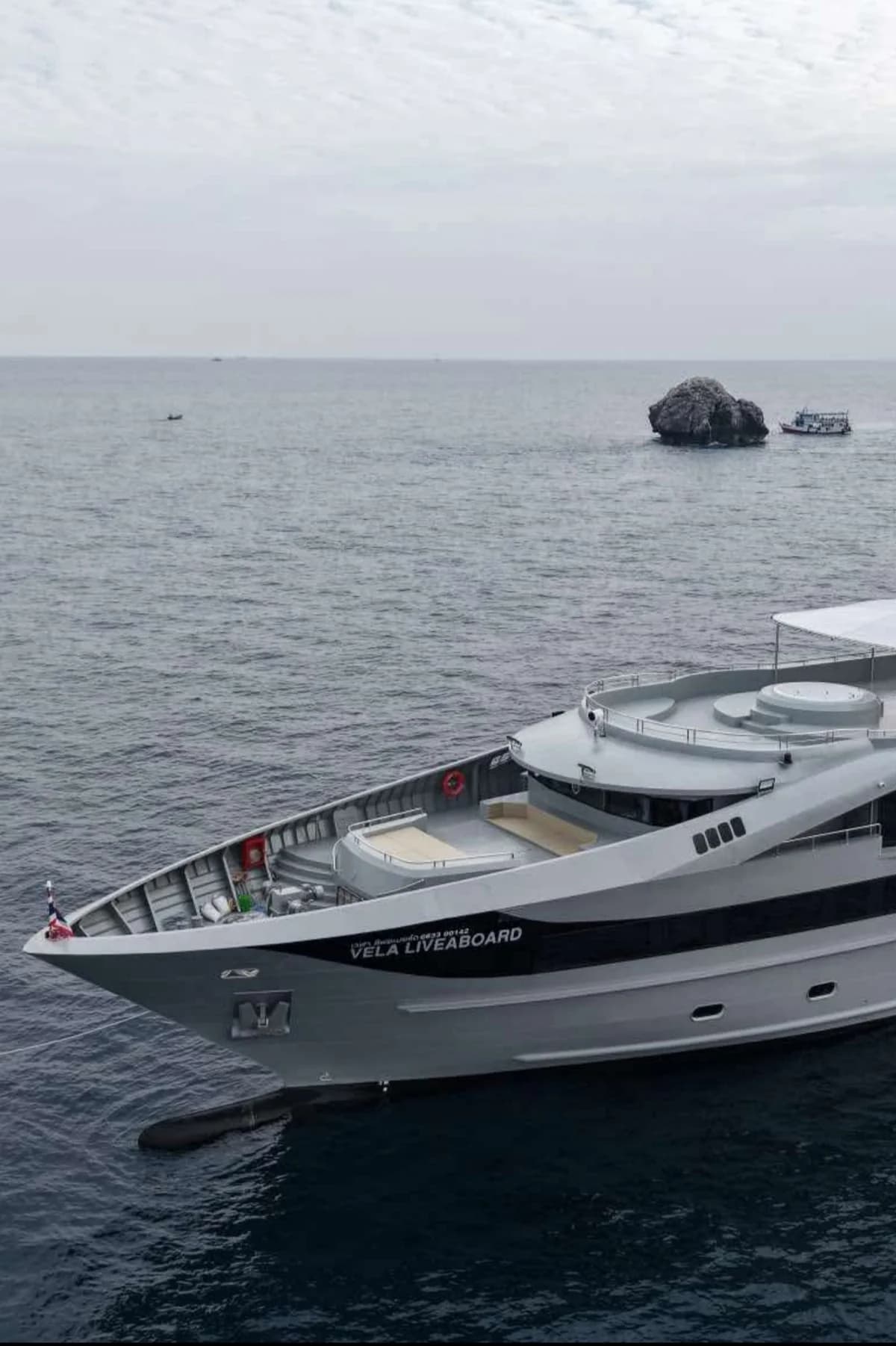
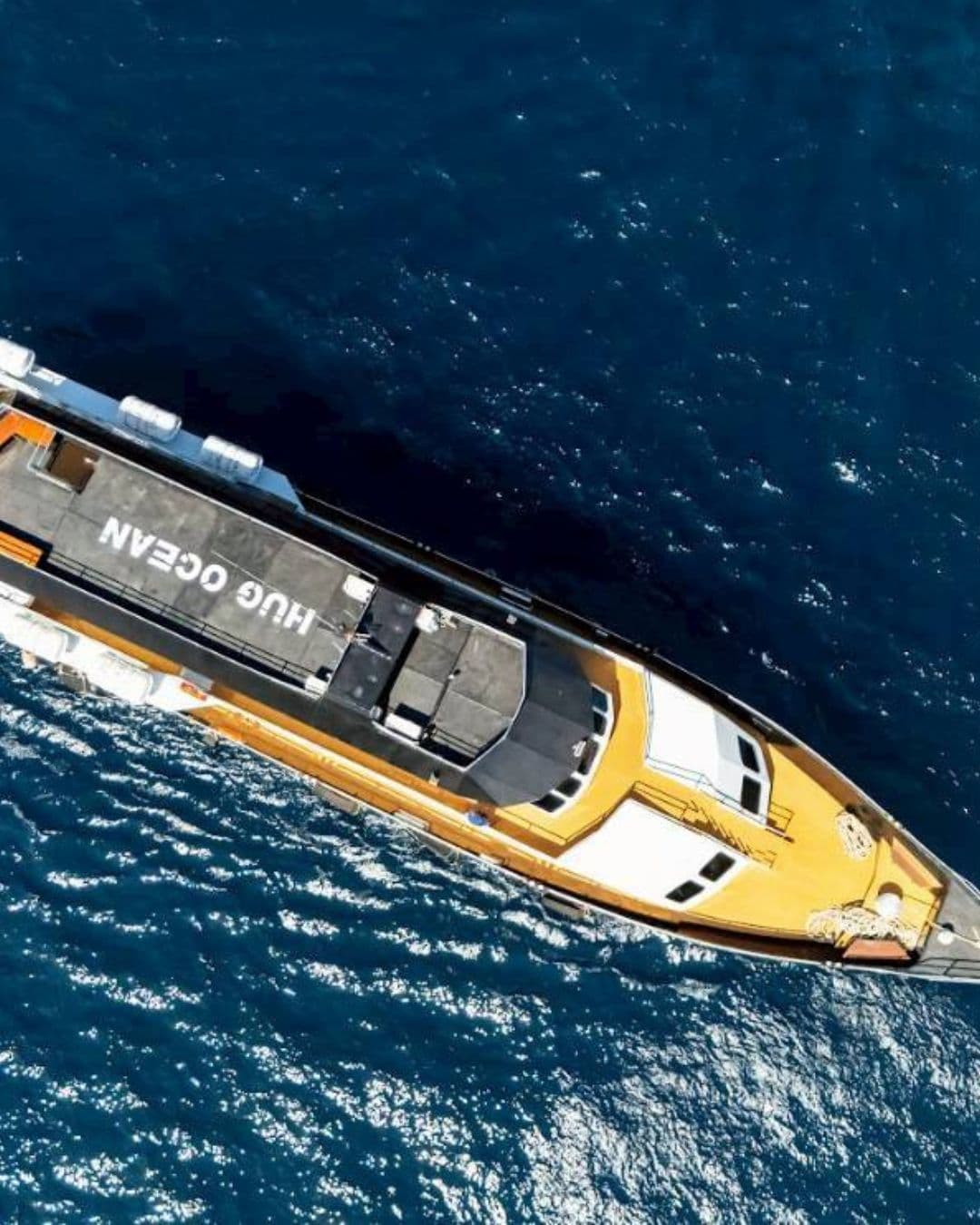
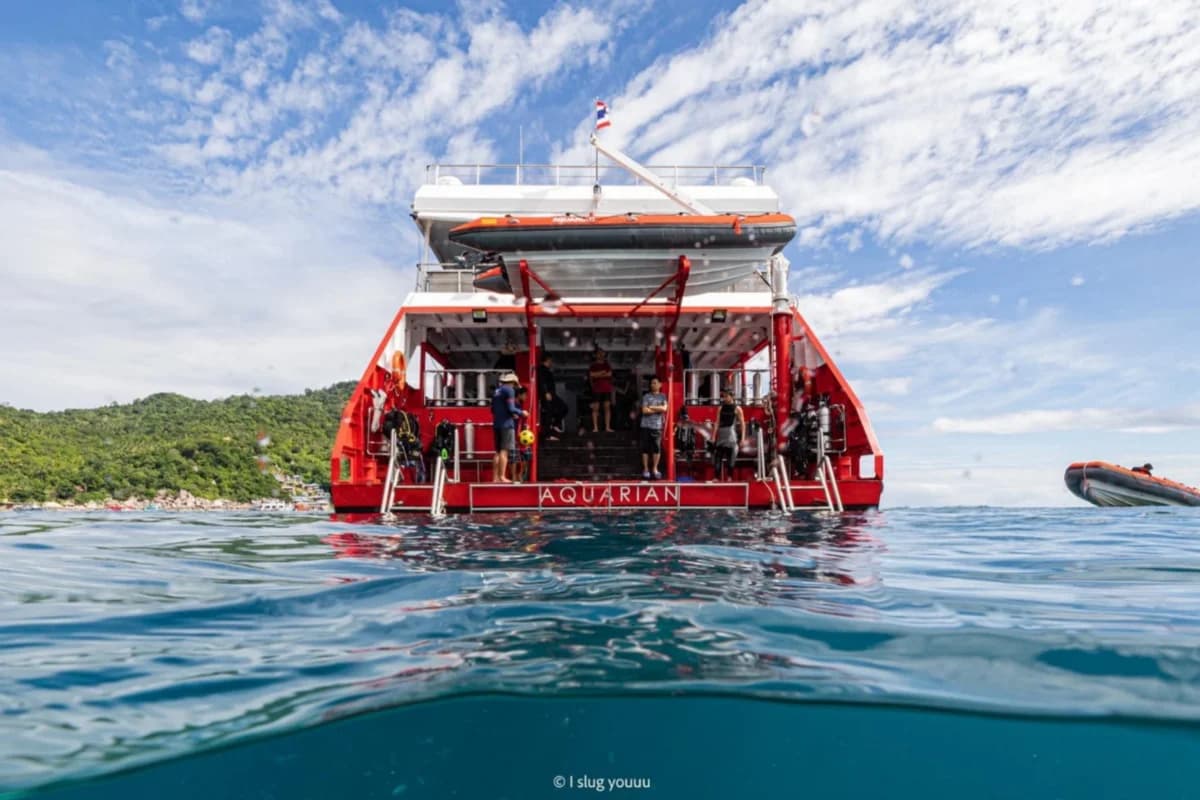
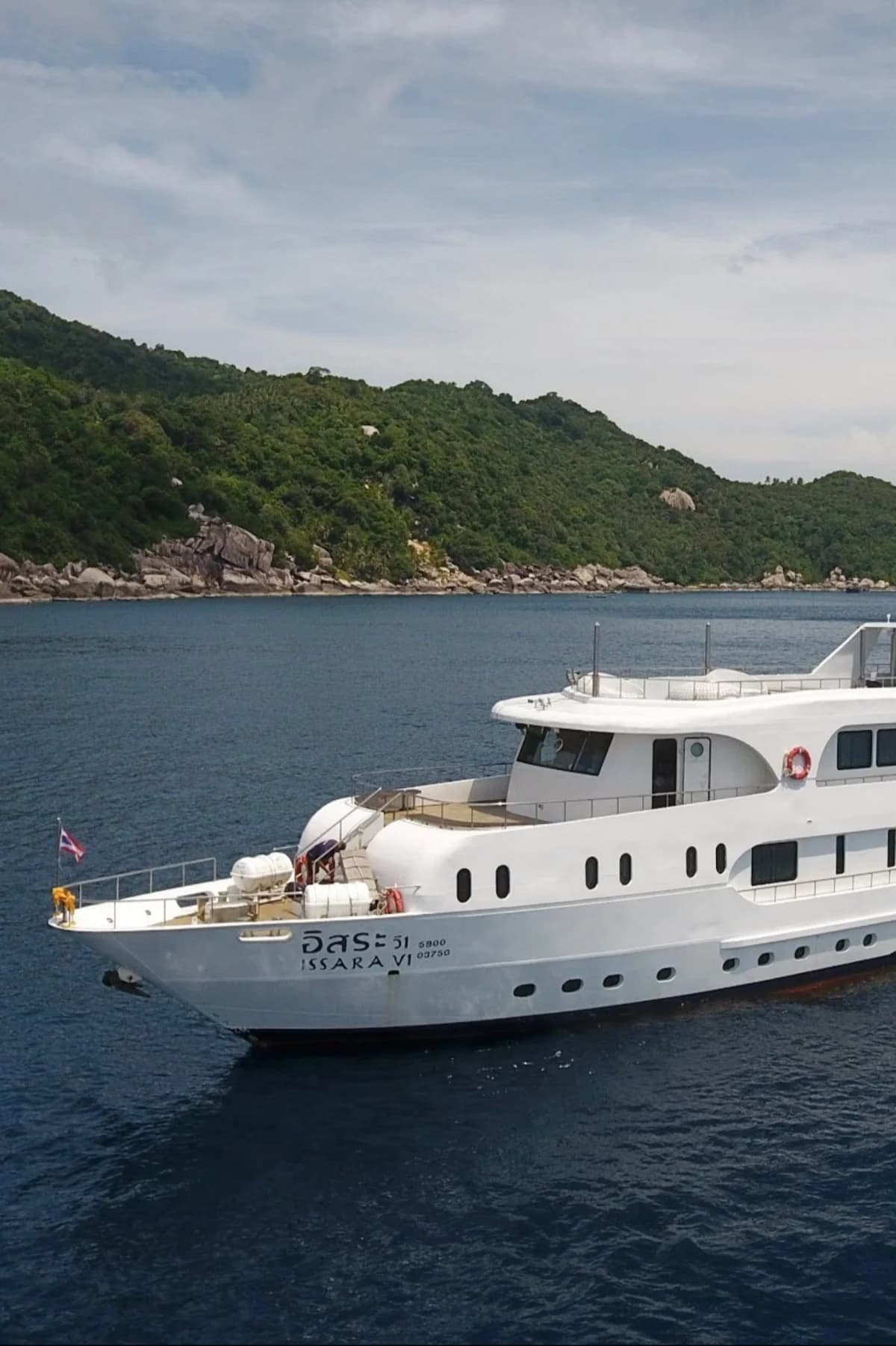
- Access — Liveaboards from Phuket or Khao Lak (overnight sail, often combining Richelieu Rock and Koh Haa in a single itinerary). Day-trip boats from Koh Lanta reach the site in roughly three hours.
- Best months — December through March for flat seas, warm water, and peak pelagic activity. November and April are shoulder months with variable conditions and rougher surface swells.
- Nitrox — Recommended for any wall dive below 18 metres. EANx32 extends no-deco time at 24–30 metres significantly. Confirm availability and pricing before booking.
- Guide ratio — Most operators run 1:4 or 1:6 at Hin Daeng due to current and depth. Solo diving is not permitted at any operation running trips to this site.
Hin Daeng is not a site you dive once and tick off a list. The wall changes with the tide, the light, and the season — and the mantas keep their own schedule. What stays constant is the red. Twelve metres down, the colour hits, and it does not stop until the blue takes over.