Why Surin's Snorkel Reefs Make 30-Metre Dives Look Overrated
30 เมษายน 2569
At Surin, the coral starts at arm's length. Five bays where snorkel-depth reefs rival the density you'd chase on a deep dive — no tank required.
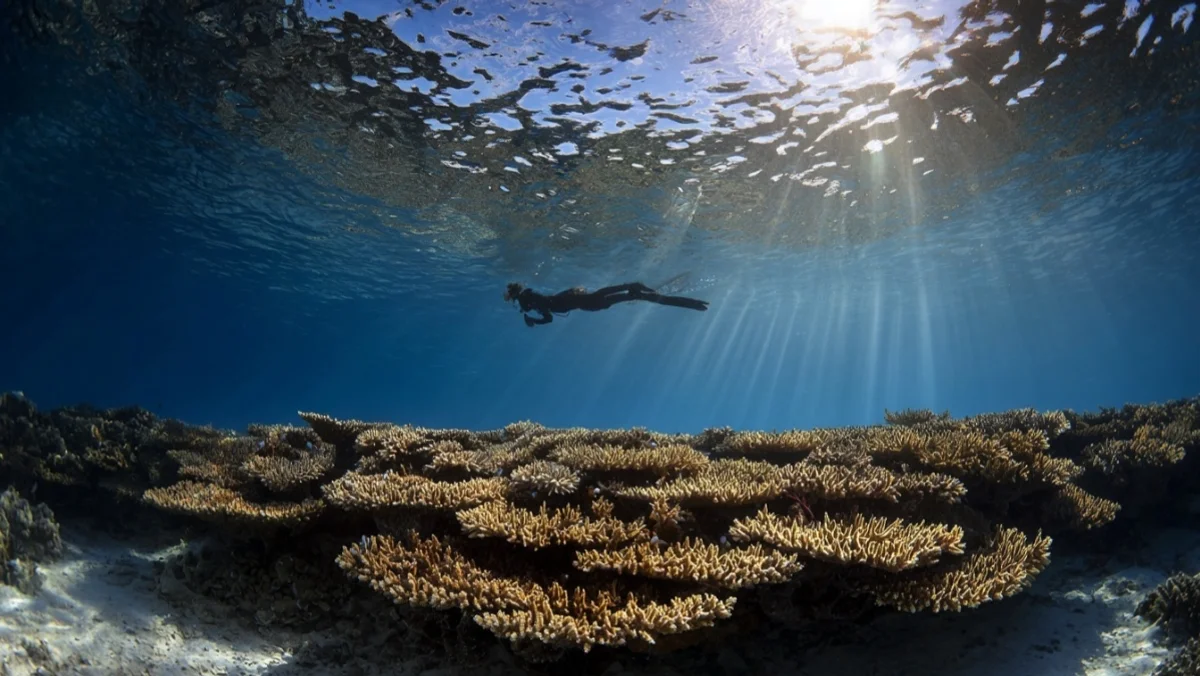
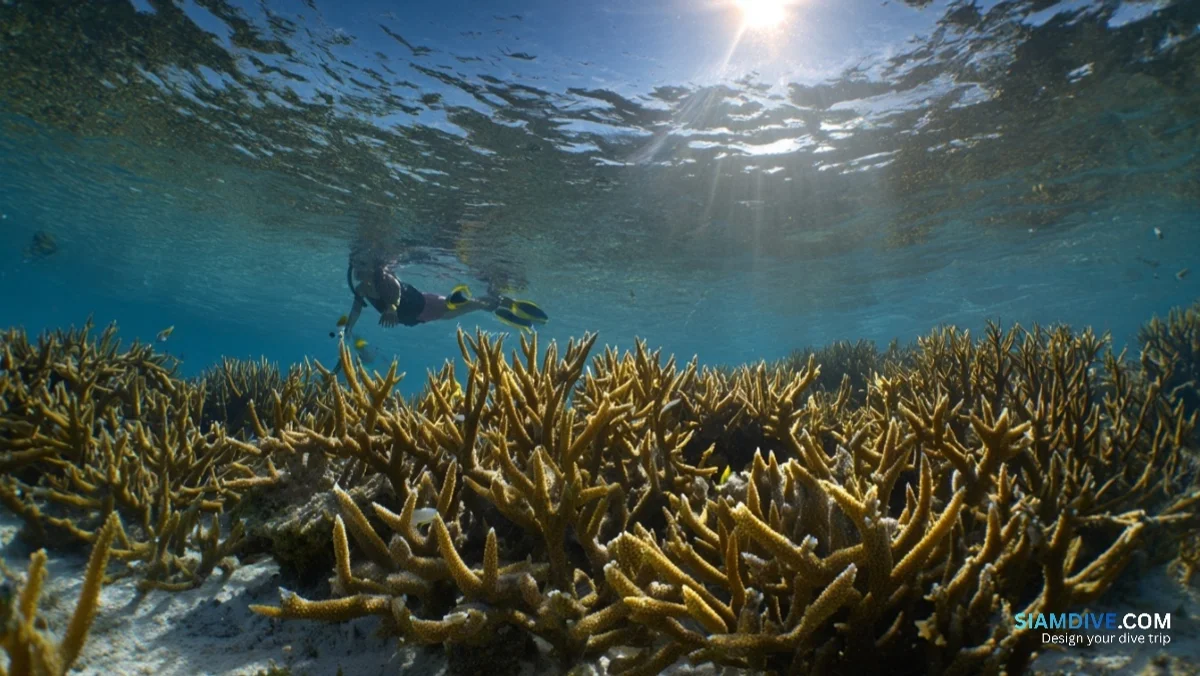
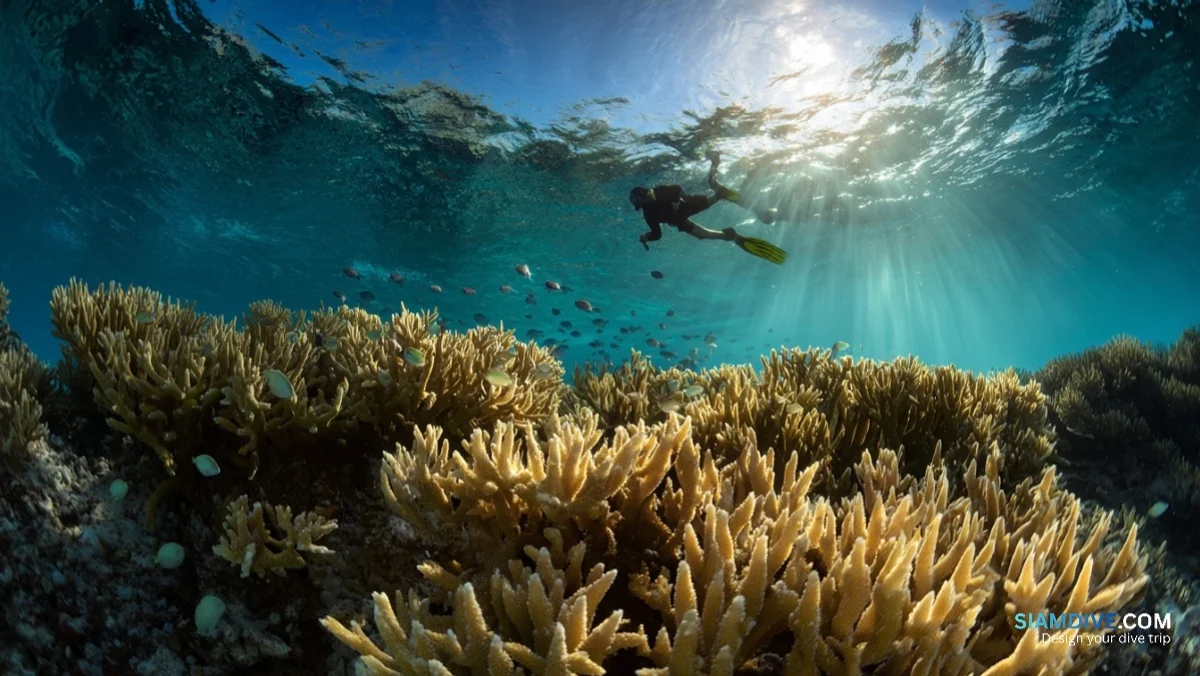
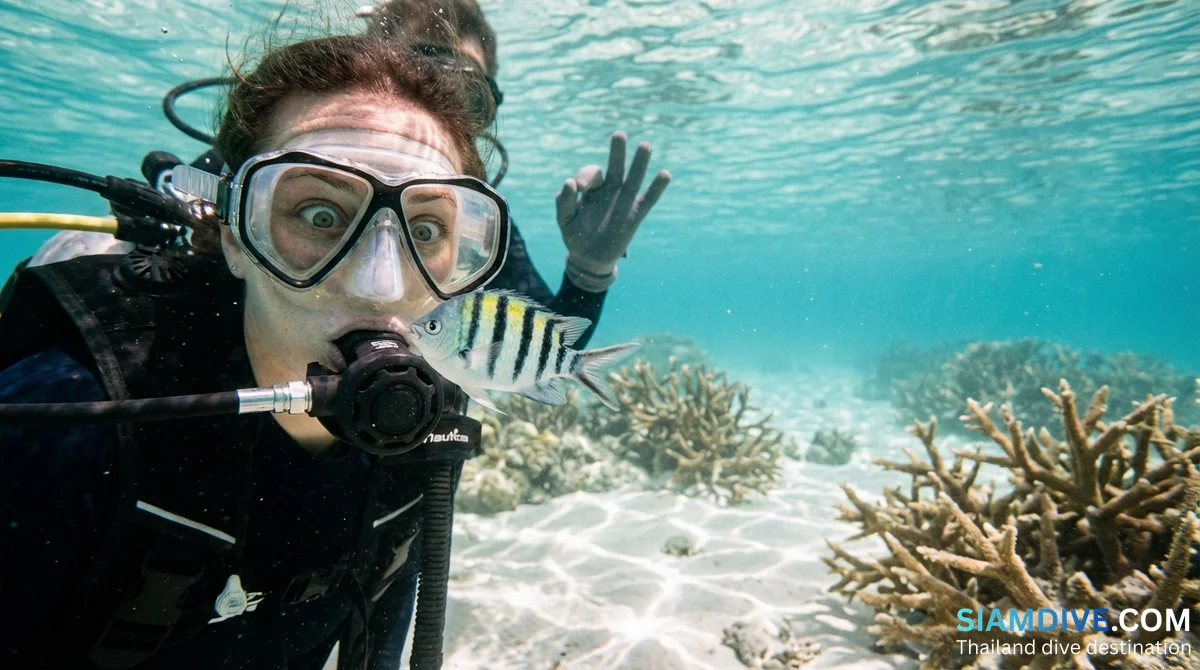
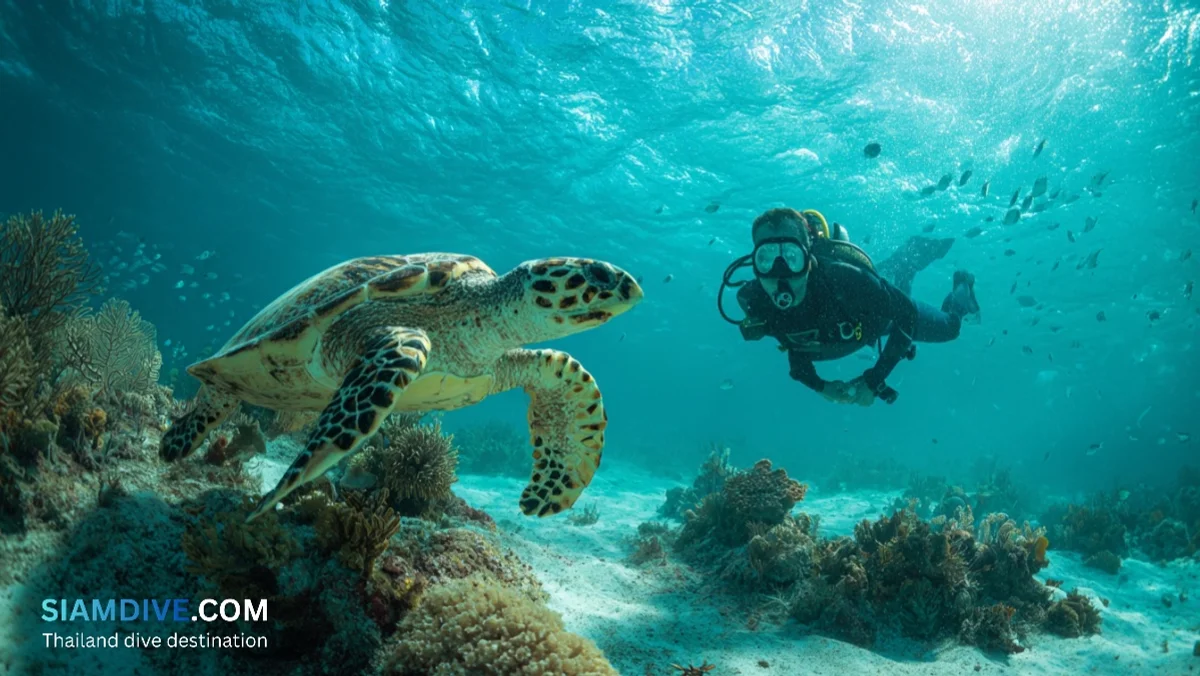
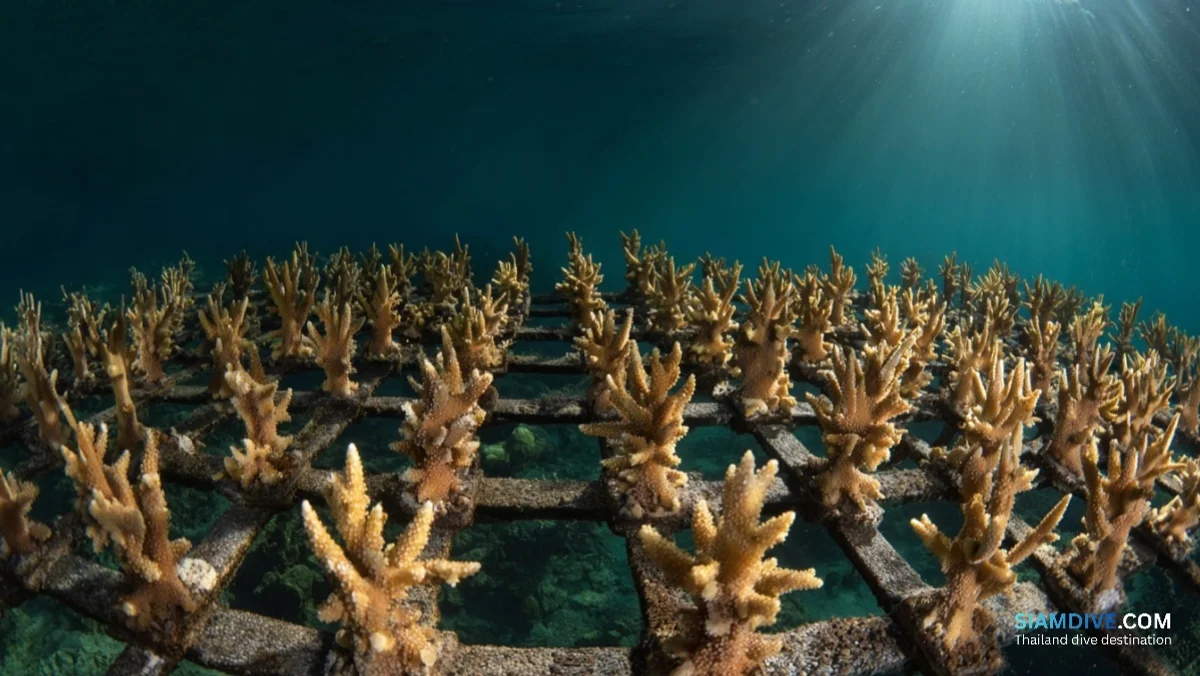
The staghorn coral at Ao Chong Khad starts at a metre and a half. Float face-down in the channel between Surin's two main islands — mask just breaking the surface — and the branches reach up like a forest canopy inverted. Anemonefish dart between their hosts every few metres, each pair defending its patch with a territorial fury that makes fish twice their size veer away. Surgeonfish graze in schools of thirty. A hawksbill turtle crosses the channel so close that individual scutes on its shell are sharp in the glass. All of this in water shallow enough to stand in.
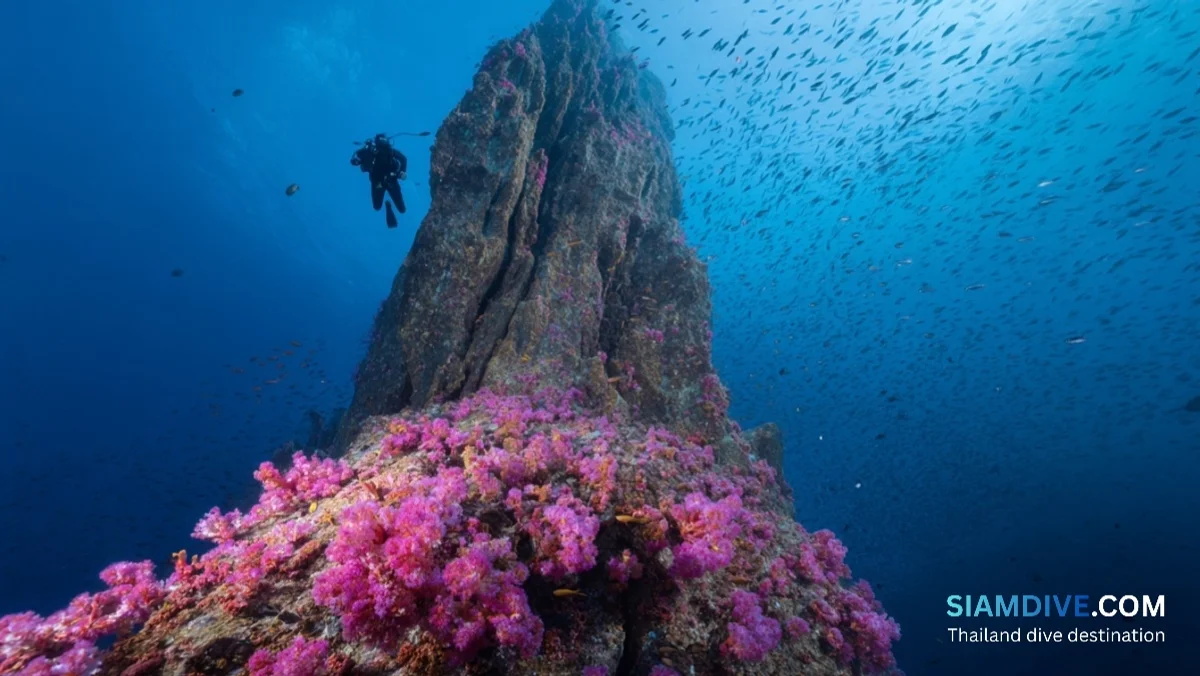
Divers spend years chasing reef density like this at 20 or 30 metres. At Surin, the same density — often better — sits at snorkel depth, spread across the sheltered east coast of an archipelago Thailand has guarded since 1981. Five bays. No tank required. This is not a consolation prize for people who do not dive. It is, bay for bay, some of the healthiest reef left in the country.
What 45 Years of Protection Built
Mu Ko Surin National Park covers five islands 60 kilometres off the Phang Nga coast. Established in 1981 as one of Thailand's first marine reserves, the park closed its reefs to commercial fishing and anchoring before most of Southeast Asia had marine protection programmes at all. Geographic isolation does the rest — no river runoff, no coastal development, no fertiliser plumes drifting in from farmland. The nearest mainland town, Khuraburi, is an hour and a half away by speedboat.
The numbers back it up. Coral surveys tracked live cover at the Surin group rising from 42.9 per cent in 1989 to 55.1 per cent by 2006, a recovery arc that held even after the 2004 tsunami stripped sections of the western coast bare. Park records list more than 260 reef fish species and 68 documented coral species within the boundaries.
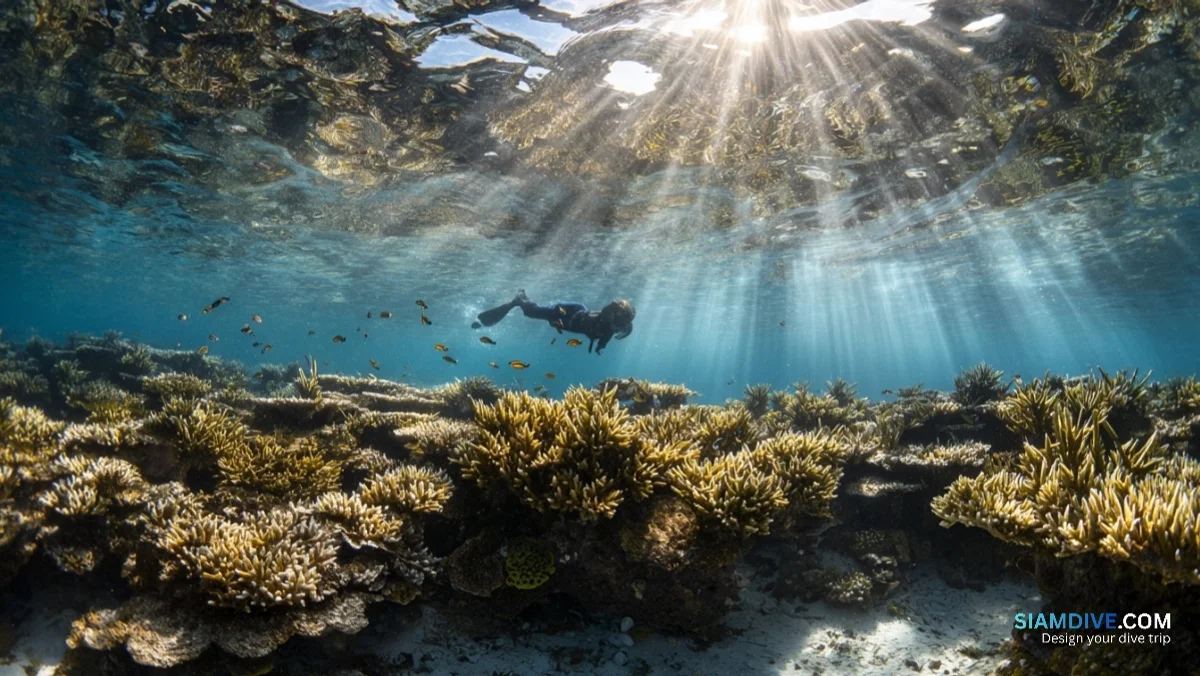
The critical detail is where that coral sits. The densest cover runs between one and five metres below the surface. Gulf of Thailand reefs routinely need ten or more metres of depth before coral coverage approaches anything comparable. At Surin, the hard coral begins at wading depth and stays thick until you leave the sheltered bays entirely. The archipelago is part of the Andaman Sea Nature Reserves on Thailand's UNESCO tentative list — another regulatory layer on top of the national park rules already in force.
Five Bays Worth the 5 AM Alarm
Day trips leave Khuraburi Pier before dawn. The speedboat ride runs roughly 90 minutes, and the first snorkel stop usually lands before hotels in Khao Lak have cleared the breakfast buffet.
Ao Chong Khad — Nemo's Front Yard
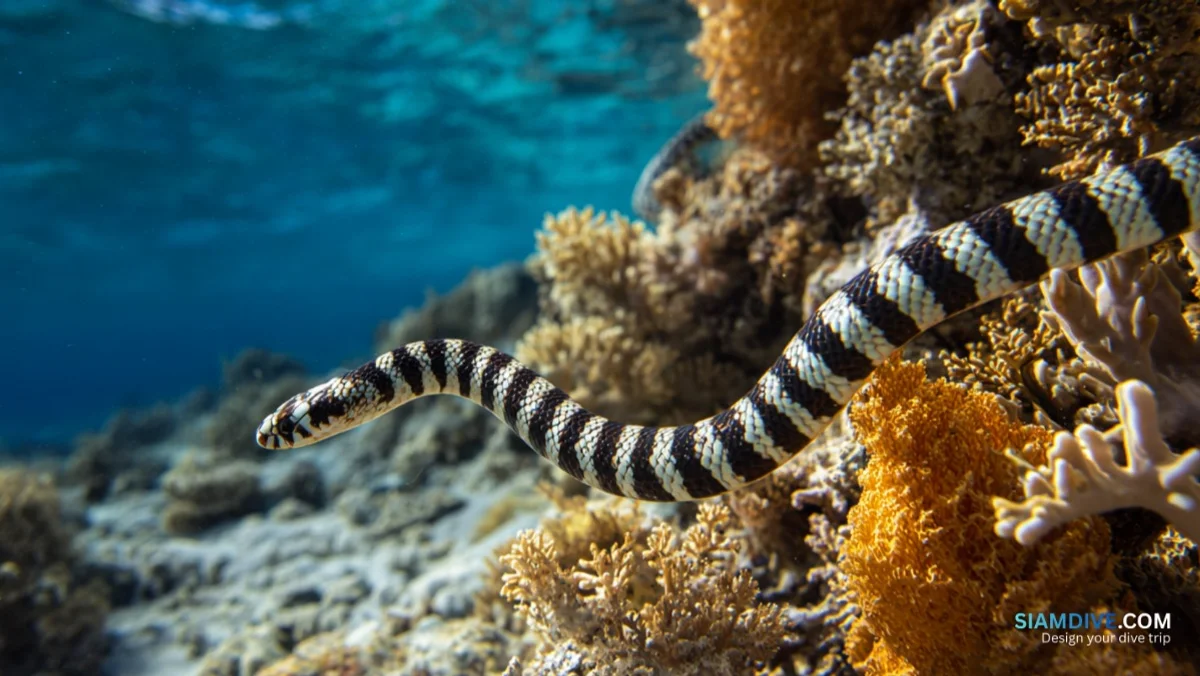
The channel between Koh Surin Nuea and Koh Surin Tai narrows to a shallow corridor of white sand and coral heads. Visibility regularly exceeds 30 metres — you can see the boat's hull shadow from the far end of the bay. Anemonefish occupy host anemones every few metres, the concentration dense enough that guides call the whole channel Nemo Village. Staghorn branches at 1.5 to 2 metres depth form an unbroken canopy across the channel floor, broken only where sand patches open like clearings in a forest. Butterflyfish work the coral edges. Banded sea kraits — harmless unless provoked — thread between the branches in slow S-curves. The site earns its reputation as the park's most productive shallow reef.
Ao Mae Yai — Where Batfish Tip Sideways
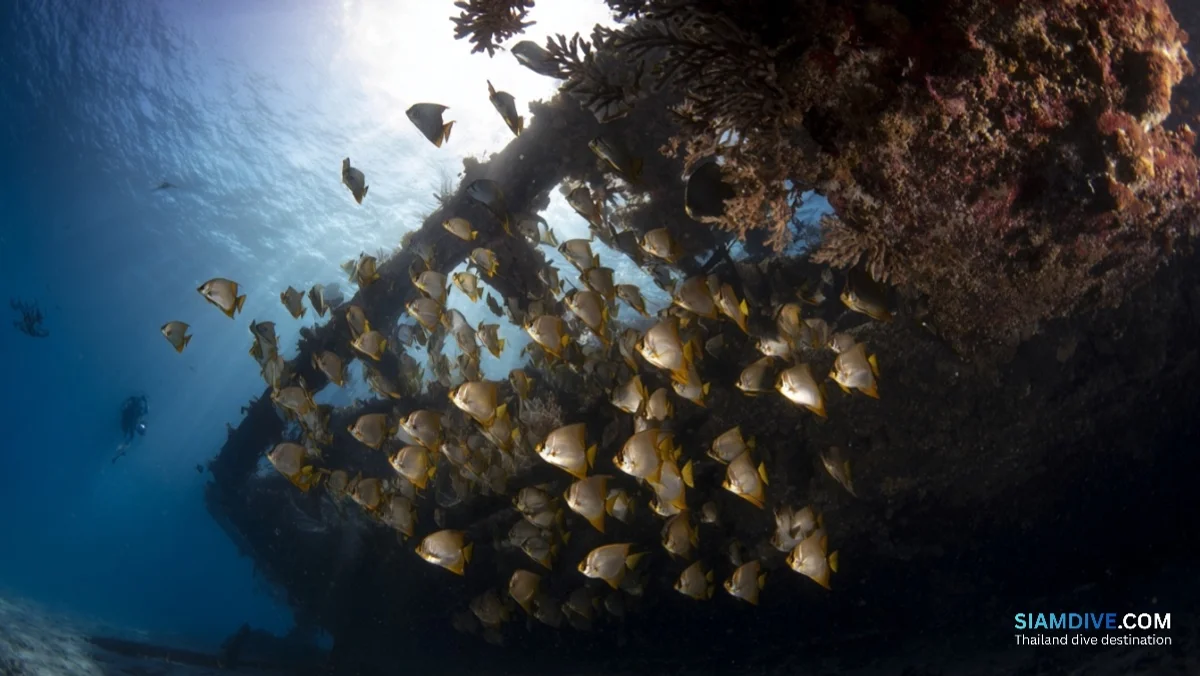
Mae Yai Bay on the northern island's east coast holds broad table corals and staghorn thickets within arm's reach of the surface. Longfin batfish patrol in loose groups — metallic-silver bodies tipping sideways as they turn, eye-stripes catching the midday sun. Lined surgeonfish and moorish idols feed along the reef crest in mixed schools. The bay's gentle slope means a snorkeller can drift over living coral for 200 metres or more before the reef gives way to sand. Water temperature in the shallows sits above 28°C through the season, warm enough that a rash guard is all the thermal protection most people need.
Koh Torinla — Blacktips in the Shallows
The small island south of Koh Surin Tai sees fewer boats than the main bays. Granite boulders create sheltered pockets where hawksbill turtles rest between feeding runs on sponge and soft coral. Blacktip reef sharks work the gap between Torinla and the main island at three to four metres depth — well within snorkel range, close enough to watch the slight twitch of their pectoral fins as they correct course. Live coral coverage on the reef flat is dense enough to obscure the substrate entirely in places: brain coral, Porites domes, and branching Acropora packed together without a visible gap.
Ao Sapharot — The Calm One
Named for a hillside silhouette resembling a pineapple, Sapharot on the northern island's east coast stays calm even when wind chop builds at the outer sites. The reef here favours massive Porites heads mixed with soft coral clusters — a different texture from the branching-dominated bays, and a useful visual comparison for anyone trying to understand why coral morphology matters. Current is usually mild. Sapharot is the bay where someone who has never snorkelled before can lower their face into the water without feeling rushed by swell or drift.
Ao Suthep — The One Tours Skip
Tucked into the southeast corner of Koh Surin Tai, Suthep drops off some day-trip itineraries when operators run short on time. That works in its favour. Giant clams wedge into boulder coral along the reef edge, mantles flashing electric blue and green when light hits them. Parrotfish scrape algae loud enough to hear through the water — a crackling static that becomes the soundtrack of a quiet bay. Juvenile reef fish shelter in branching thickets that extend to ankle depth at low tide, a reminder that what washes off your skin reaches this coral in seconds.
What 2 Metres Gives You That 30 Cannot
Sunlight at two metres is roughly ten times stronger than at thirty. Coral growing under full tropical sun develops denser pigmentation, brighter fluorescence, and faster calcification rates. The colour palette of a shallow reef at midday is the original — not the blue-filtered, desaturated version deeper reefs show to the naked eye. Reef fish in well-lit water display breeding colours they suppress at depth. A phone in a waterproof case produces images at Surin's surface that rival what divers spend thousands on strobe rigs to replicate at 25 metres.
Time matters just as much. A snorkeller at Surin can spend three continuous hours on a reef in a single session — breathe, look, drift. A recreational diver at 30 metres gets roughly 20 minutes before no-decompression limits force an ascent, followed by a surface interval, then another short window. Over a day trip with three snorkel stops, a visitor at Surin accumulates more reef observation time than many divers manage across an entire liveaboard trip at deeper sites.
Then there is the entry barrier — or rather, the absence of one. A ten-year-old can snorkel Ao Chong Khad. A parent who has never swum in open water can wade to waist depth and watch reef fish through a borrowed mask. No certification, no regulator, no buddy check. The reef does not require a qualifying exam, and the coral does not care whether you breathe air from a tank or from the sky.
The Moken's Reef
Three hundred Moken live on the western shore of Koh Surin Tai. The Austronesian sea nomads have fished these waters for generations — long before anyone drew a national park boundary on a map. The Thai government authorised their settlement on a single beach, and tour groups now stop for 30 to 40 minutes to walk the village, watch traditional boat-building, and buy handmade crafts.
The visit is brief and part-staged. But the Moken presence is one reason these reefs endure. Free-diving with spears and line-fishing from low-draft boats exert negligible harvest pressure compared to the commercial netting and trawling that stripped reefs elsewhere along the Andaman coast. Park authorities have acknowledged the Moken's subsistence methods as compatible with conservation goals — a rare case where a resident community and a marine reserve reinforce each other rather than compete.
Rules around the village are non-negotiable. Cover swimwear with a shirt or sarong. Ask before photographing anyone, especially elders and children. Drones stay grounded without written park approval. Violations carry a 2,000-baht fine and removal from the islands.
What the 2026 Surveys Found
Branching coral is vanishing from Thai reefs. A coast-to-coast survey covering eight provinces between 2022 and early 2024, published in January 2026, quantified the shift that reef scientists had warned about for years. Branching and staghorn Acropora — the coral forms that create the richest habitat for fish and invertebrates — turned up less frequently than in any prior survey round. Boulder-forming Porites now dominates reef composition on both the Andaman and Gulf coasts. Porites survives heat better, but it offers fewer hiding places, fewer niches, less of the structural complexity that makes a reef function as an ecosystem rather than just a rock with life on it.
Surin is not exempt from the trend. But its reefs hold advantages most Thai sites lack: four decades of enforced protection, no anchoring anywhere in the park, strictly capped daily visitor numbers, and open-ocean isolation that keeps land-based pollution near zero. The park's eastern bays still support dense branching Acropora fields at snorkel depth — a growth form retreating fast across shallower, more trafficked sites closer to the mainland.
Those surveys ended before the 2024 global bleaching event delivered its full impact to Thai waters. What the next data set will reveal is an open question. What is visible right now, during the 2025–26 season, is that Surin's shallow reefs still look the way healthy tropical coral is supposed to look. The list of places where that statement holds true is getting shorter every year.
Before You Pack a Mask
- Season: 15 October – 15 May. The park closes entirely during monsoon. Current season ends 10 May 2026.
- Departure: Khuraburi Pier, Phang Nga Province — about 3 hours north of Phuket airport, 90 minutes from Khao Lak.
- Day trip: around 3,200 THB + 500 THB national park fee = 3,700 THB per adult. Children 3–14: roughly 2,300 + 300 THB = 2,600 THB.
- Overnight (3D/2N): approximately 7,700 + 500 THB park fee = 8,200 THB per adult. Camping on Koh Surin Nuea with tents and bedding provided.
- Thai nationals: park fee reduced to 100 THB adults, 50 THB children.
- Included (most operators): speedboat transfer, lunch, three snorkel stops, mask and snorkel set, Moken village visit.
- Fins: not always supplied free — confirm with the operator or bring your own.
- Sunscreen: chemical sunscreen is banned inside the park. Use reef-safe mineral sunscreen or wear a rash guard. The coral is close enough to absorb whatever washes off your skin.