What Rubber Bands and Fishing Line Do to a Turtle's Heart
30 เมษายน 2569
Thai necropsy data shows 89% of turtles that ingest plastic die. Bags, fishing line, and rubber bands top the list veterinarians keep finding.
Rubber Bands, Rope, and Heart Failure
The green turtle that washed ashore near Chonburi's Laem Chabang Port was still breathing. Two days later, it was dead. A veterinary team opened its stomach and found rubber bands, nylon ropes, plastic bags, and loose shreds of fishing gear packed tight against the gut wall. Protein levels in the blood had crashed. Cysts formed around the obstruction. The heart stopped.
That single necropsy told a story Thailand's marine veterinarians already know by memory. The country ranks among the world's top ten producers of ocean plastic, and its sea turtles absorb the cost in a measurable, clinical way — one opened carcass at a time.
What 388 Strandings Revealed
Between 2017 and 2020, researchers in the Central Gulf of Thailand documented 388 sea turtle strandings. Green turtles accounted for 74 per cent of the total — 251 animals. Of the 208 turtles that died during or after rescue, veterinary teams found macroplastics in the gastrointestinal tracts of 46 individuals: bags, fishing line, rubber, foam, packed between layers of sea grass the turtles had been trying to digest.
That is a 22 per cent detection rate across all carcasses. But the number that changes the conversation sits one layer deeper: 89 per cent of turtles confirmed to have ingested plastic did not survive. Out of 28 confirmed ingestion cases, only three made it through rehabilitation — expelling the material over days or weeks at the rescue centre.
A separate analysis published in Scientific Reports put a threshold on the risk. Ingesting just 14 pieces of plastic gives a sea turtle a 50 per cent probability of dying. A juvenile green turtle recovered in Chanthaburi Province carried 158 pieces. At that count, the probability calculation becomes academic.
Why Turtles Keep Swallowing What Kills Them
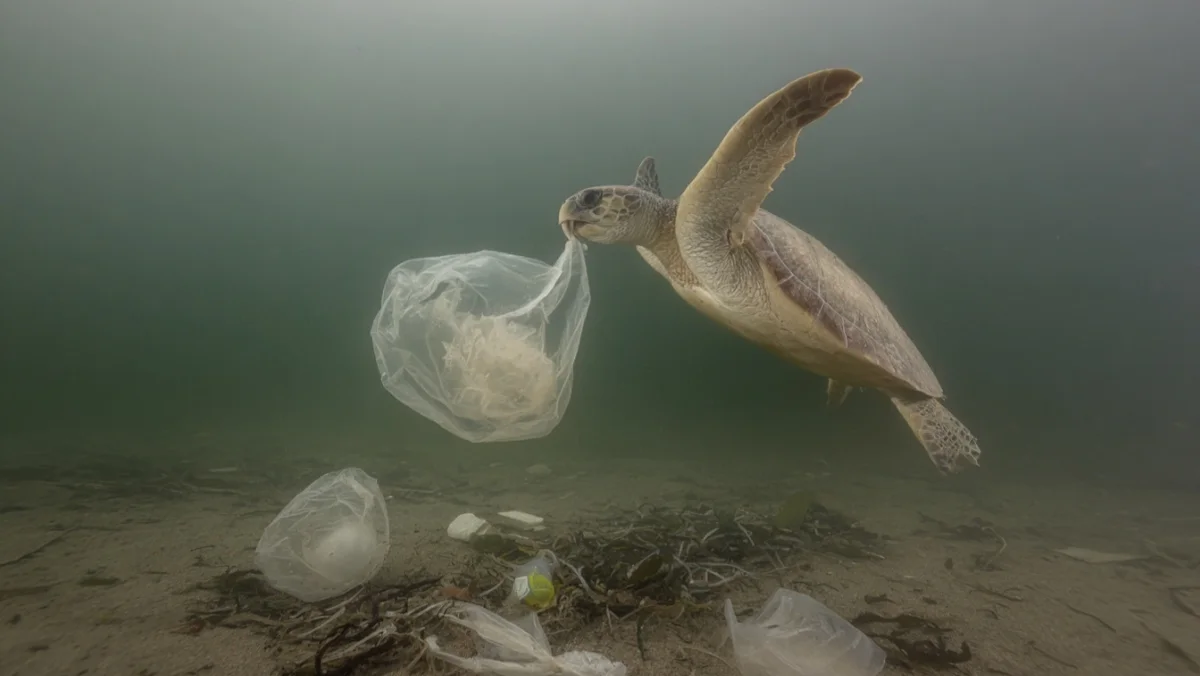
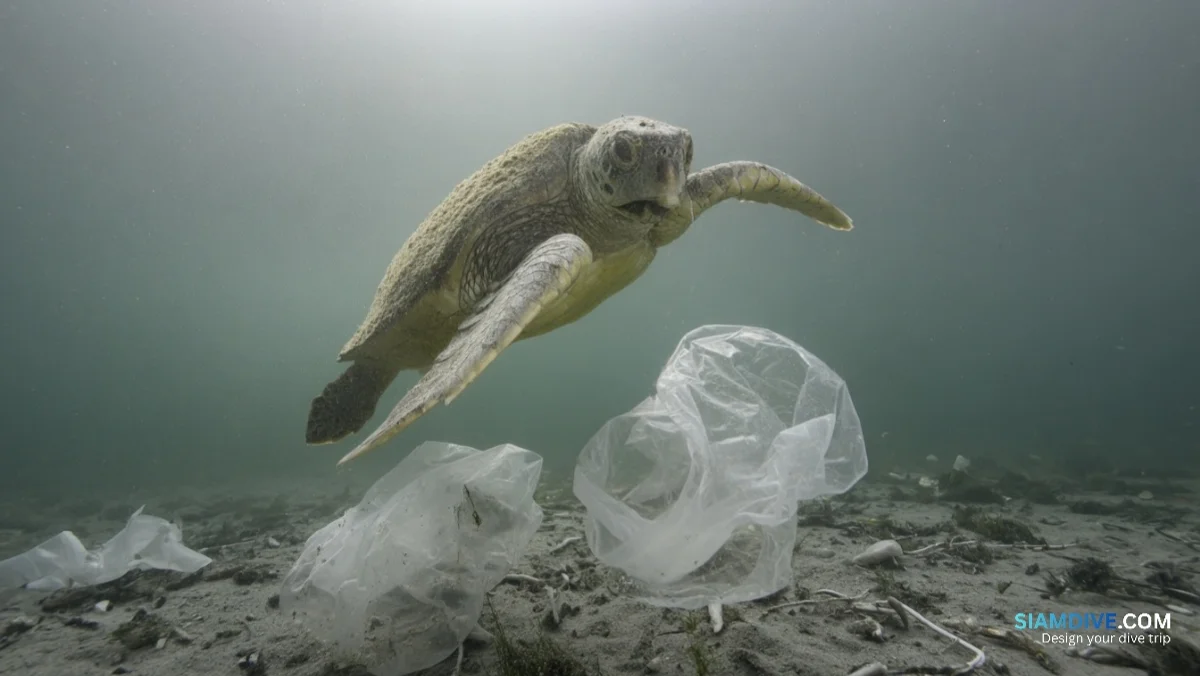
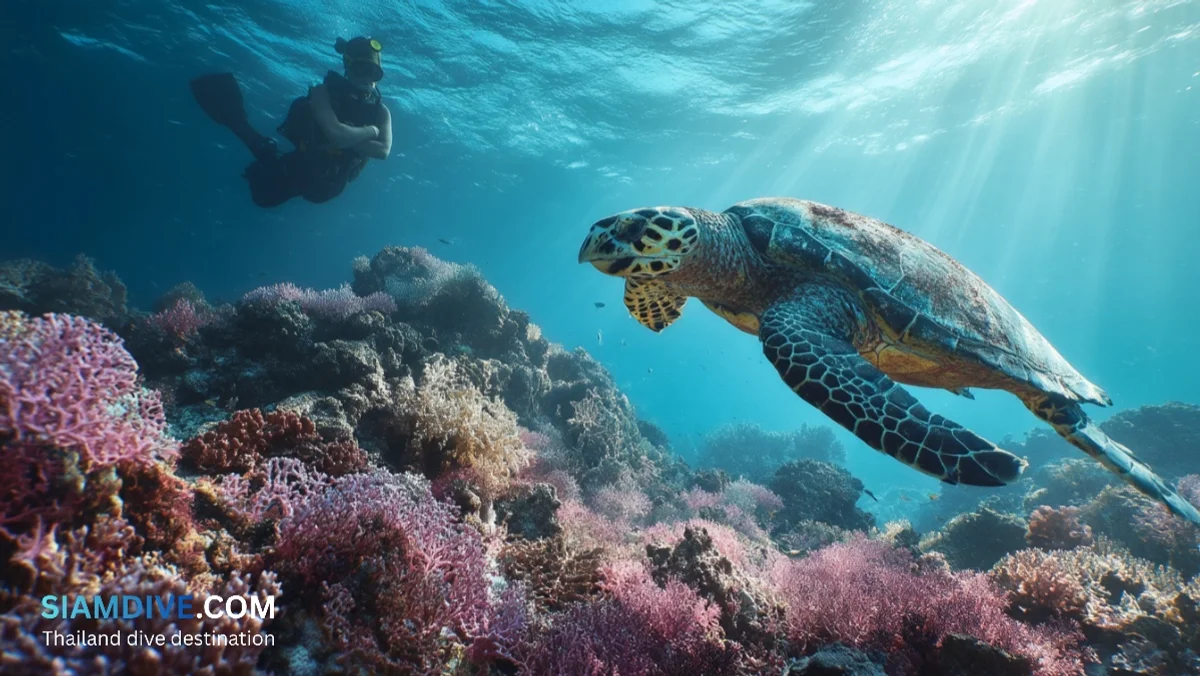
Green turtles shift from carnivorous hatchlings to herbivorous adults, but jellyfish remain part of the diet across every life stage. A translucent plastic bag drifting at the surface occupies the same visual profile as a moon jelly. Floating film, balloon fragments, and thin-gauge rubber mimic the texture and drift pattern of soft-bodied prey — and a turtle that strikes once cannot spit the mistake back out. The oesophagus is lined with backward-pointing papillae designed to keep food moving in one direction: down.
Fishing line works a different mechanism. A single strand caught in the jaw or swallowed with bait fish can saw through the intestinal wall over days, opening channels for bacterial infection. Synthetic rubber — from gloves, o-rings, tyre fragments — resists breakdown entirely and can block the pyloric valve, the gate between stomach and intestine. Once sealed, the turtle stops absorbing nutrition. Protein crashes. Organs follow.
The pattern mirrors what happens when chemical pollutants enter a coral cell — a slow, invisible process that only becomes visible in the data after the damage is done.
The Inventory Veterinarians Keep Finding
Necropsy reports from Thai rescue centres describe a repeating inventory. The items change in brand and colour. The categories do not:
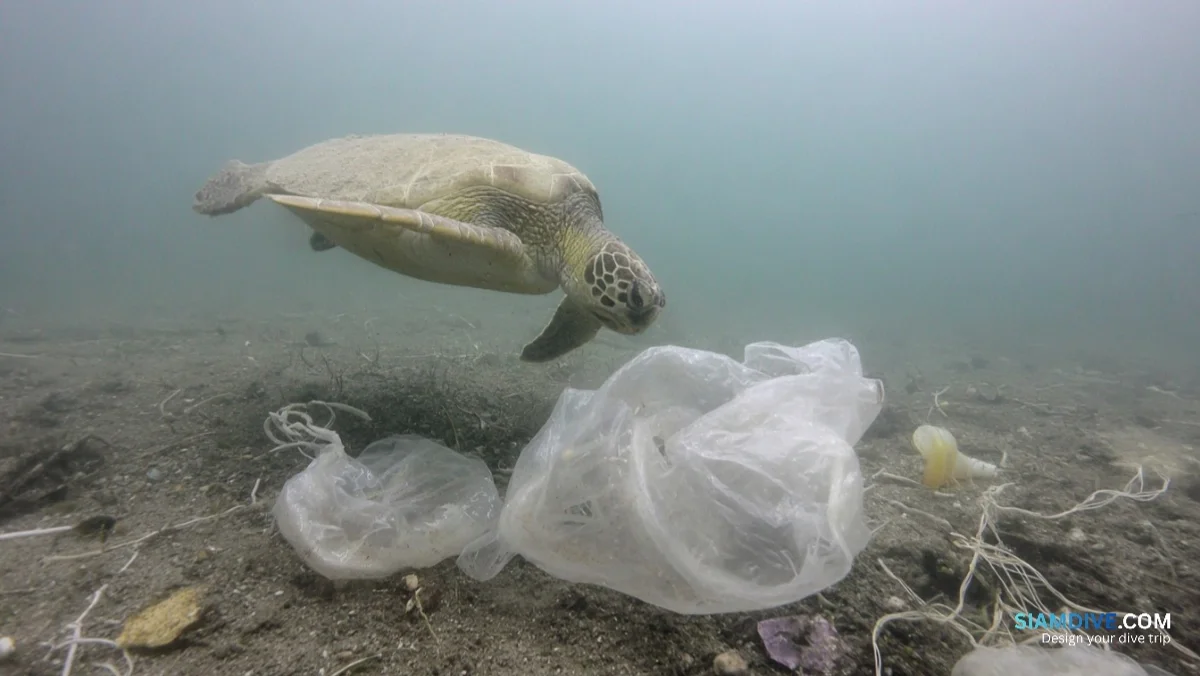
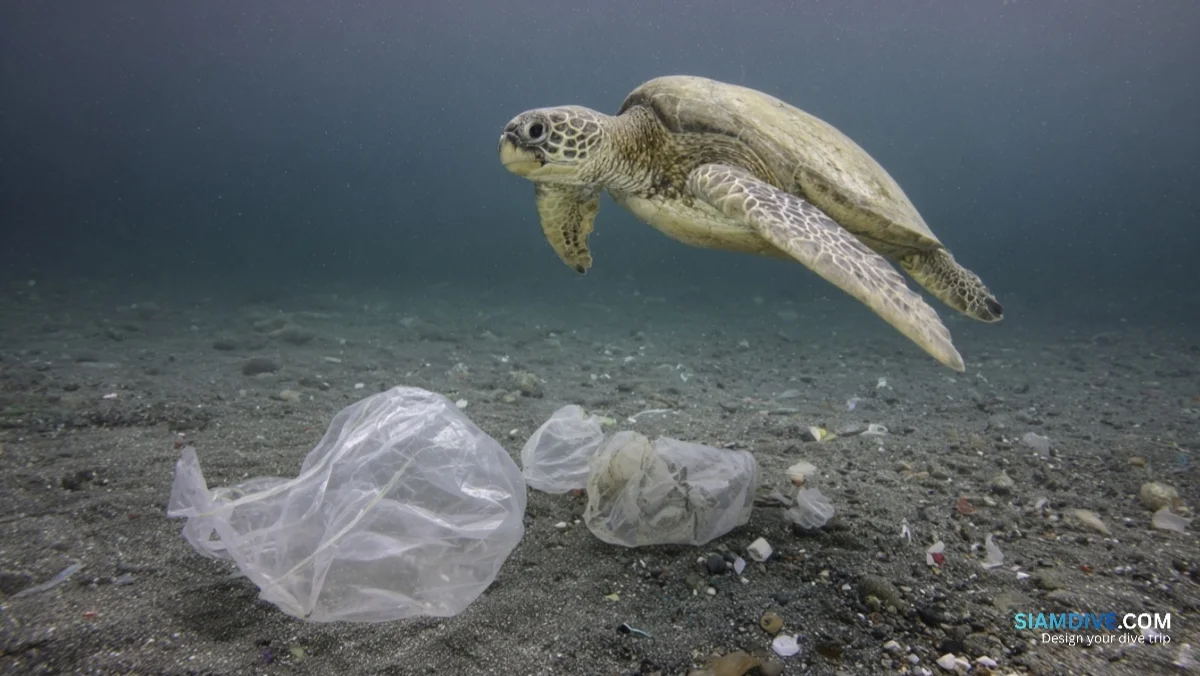
- Soft plastic film — bags, food wrappers, cling film. The most common category by count. UV exposure bleaches the material into translucent sheets that mimic jellyfish tissue
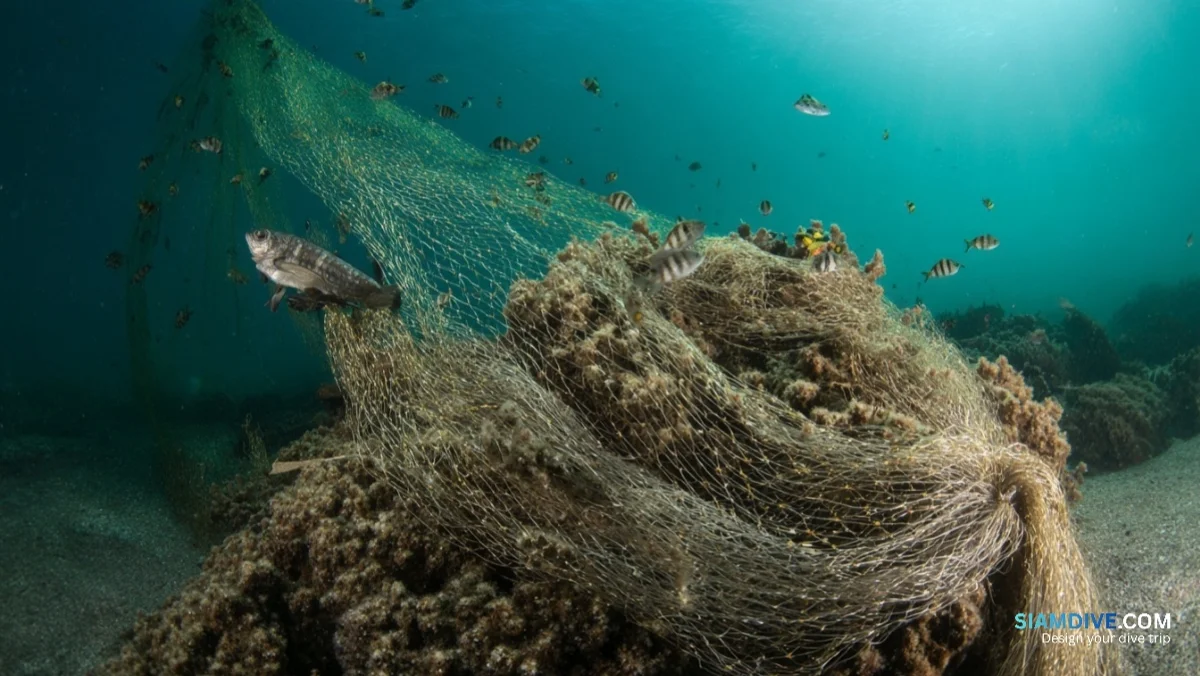
- Fishing gear — monofilament line, net fragments, hook rigs. These cause the most internal damage per piece, slicing gut walls and tangling organs into knots no surgeon can unravel
- Synthetic rubber — gloves, rubber bands, balloon fragments. Resistant to digestion, they clump into solid masses that seal the pyloric valve shut
- Expanded polystyrene — foam food containers and packaging. Lightweight but bulky, filling the stomach with material that carries zero nutritional signal
- Hard plastic fragments — bottle caps, pen casings, straw segments. Less frequent in the stomach but found often in intestinal blockages further down the tract
In October 2024, a young green turtle recovered at Mai Khao Beach in Phuket carried material from all five categories simultaneously. The necropsy, confirmed by the Department of Marine and Coastal Resources (DMCR), showed a stomach packed with sea grass, mangrove pods, and layered plastic waste. The turtle had been feeding normally — unable to distinguish food from debris.
Mai Khao's Ongoing Count
The Mai Khao Marine Turtle Foundation, established by Minor Hotels at the JW Marriott Phuket Resort and Spa, has released more than 7,000 turtles since its founding. Each nesting season — November through February — the team patrols Mai Khao Beach to locate and protect leatherback and green turtle nests along one of the last active nesting stretches on Phuket's west coast.
The rehabilitation centre treats injured and sick turtles year-round. Every dead turtle is opened, catalogued, and reported to the DMCR. The data feeds Thailand's national marine stranding database — and the pattern has not shifted. Plastic appears in roughly one out of five carcasses, and the objects match what every beach convenience store on the island sells in bulk.
- Education sessions — free talks Monday to Friday at 11:00, open to visitors at JW Marriott Phuket
- Annual Songkran release — each April, rehabilitated turtles and bamboo sharks return to the sea in a public ceremony. Participation: 8,000 THB per turtle, 5,000 THB per bamboo shark
- Nest adoption — symbolic sponsorship that funds overnight patrols during the November–February nesting window
- Volunteer shifts — beach cleanup and nest monitoring slots available through the foundation and through conservation programmes in Phang Nga
The Turtle Conservation Center in Thai Mueang, Phang Nga — roughly an hour north of Mai Khao — runs a parallel programme with rehabilitation tanks and public visits, a second contact point for anyone who finds a stranded turtle along the Andaman coast.
What Divers Change First
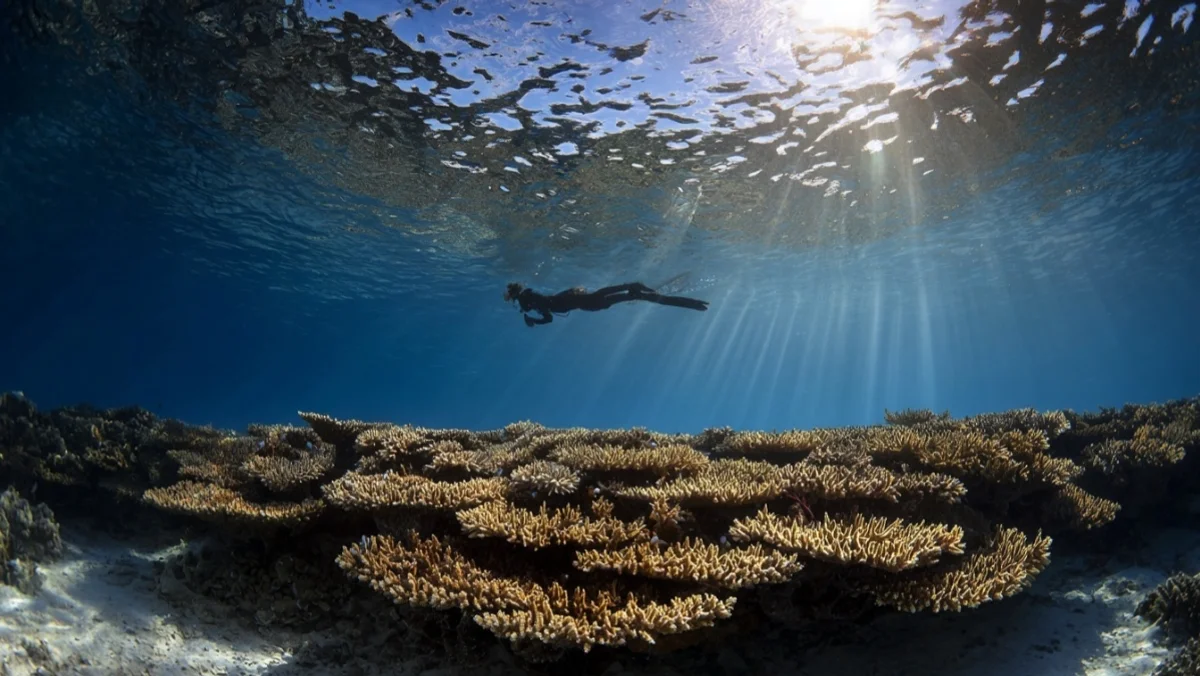
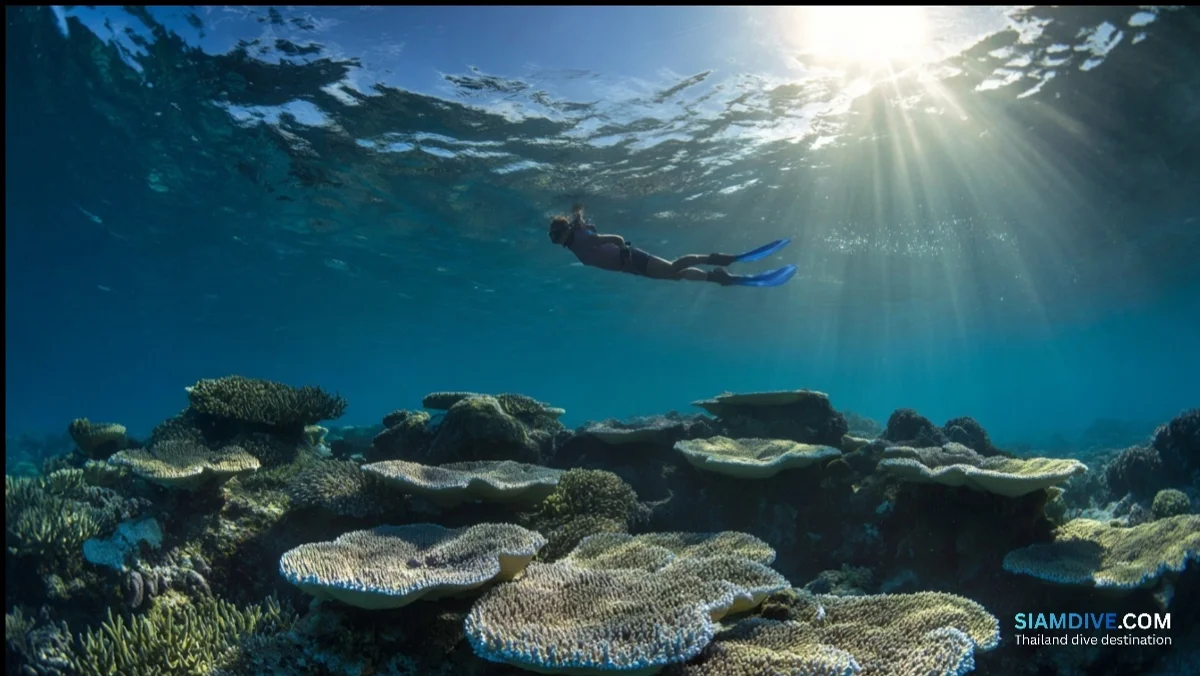
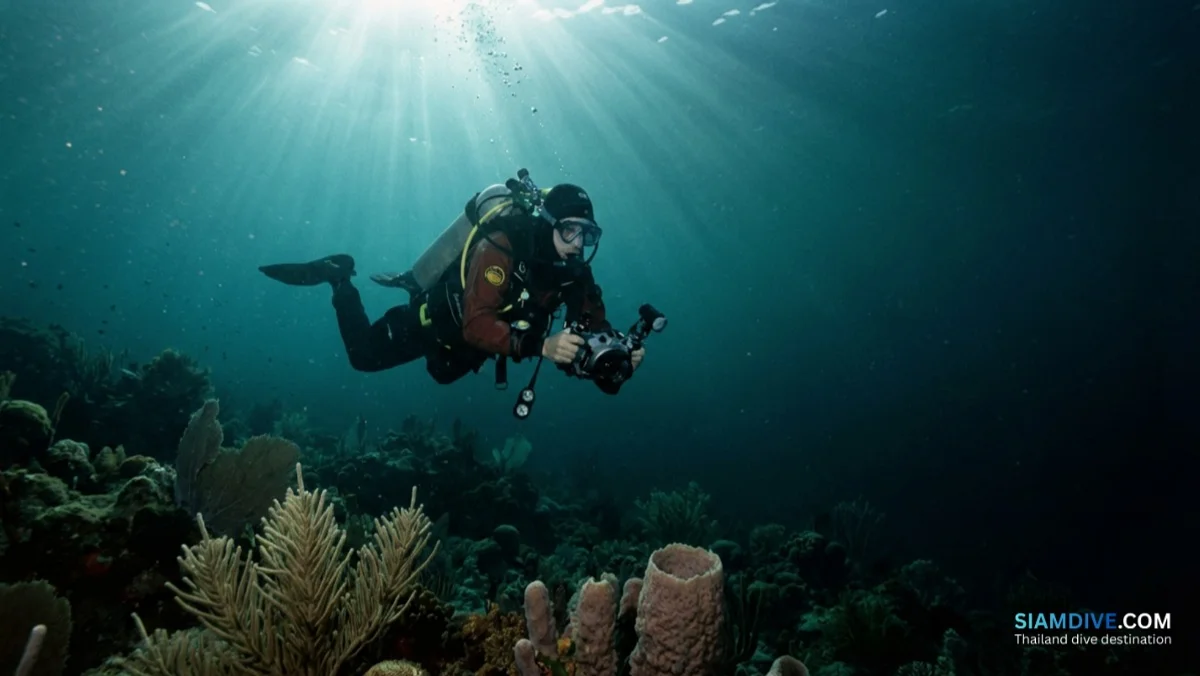
The connection between a plastic bag on a dive boat and a dead turtle on a necropsy table is direct, not metaphorical. Divers work inside the same water column where turtles feed, and the packaging, gear wrap, and single-use items that leave a boat deck do not return to shore on their own.
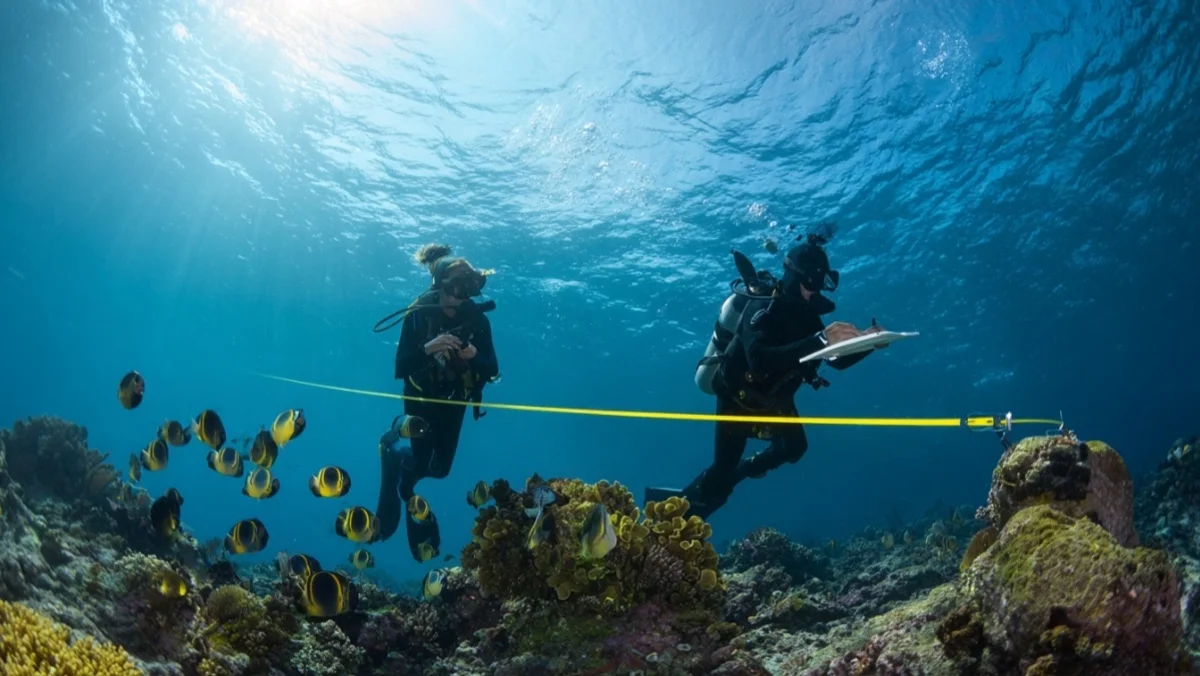
The same principle applies to counting reef health indicators and managing light impact on marine life — small individual actions that compound across thousands of dives per season.
- Carry a mesh debris bag on every dive — one per buddy pair, clipped to the BCD. Pick up whatever you find on the reef or during safety stops
- Replace surface-interval packaging — cling-wrapped sandwiches and single-portion crisp bags blow off boat decks in the Andaman wind. Those exact items appear in turtle stomach inventories. Reusable containers solve this
- Report sick or entangled turtles — call the DMCR hotline at 1362 or flag the nearest marine park ranger station. A GPS coordinate and a photo cut response time from hours to minutes
- Join research dives — Reef Check Thailand and university marine science programmes run citizen-science surveys that include debris counts, feeding the same stranding correlation models used in the Central Gulf study
A November 2025 study covered by Mongabay found that the lethal dose of plastic for sea turtles is smaller than previously estimated — not hundreds of pieces, but a threshold near 14 items for 50 per cent mortality. Every piece removed from the water column moves that line.
Sources
- Endangered Species Research — Association of ocean macroplastic debris with stranded sea turtles in the Central Gulf of Thailand
- Scientific Reports — A quantitative analysis linking sea turtle mortality and plastic debris ingestion
- PMC — Spatial, temporal, and geographical factors associated with stranded marine endangered species in Thailand
- Mai Khao Marine Turtle Foundation — programmes and rehabilitation
- Mongabay — Lethal dose of plastic for marine animals much smaller than expected (November 2025)