The Ice Crystal That Empties Your Tank at 35 Metres
3 พฤษภาคม 2569
A single ice crystal can jam your second stage open and drain a full tank in minutes. The physics, the in-water fix, and the hardware that fights back.
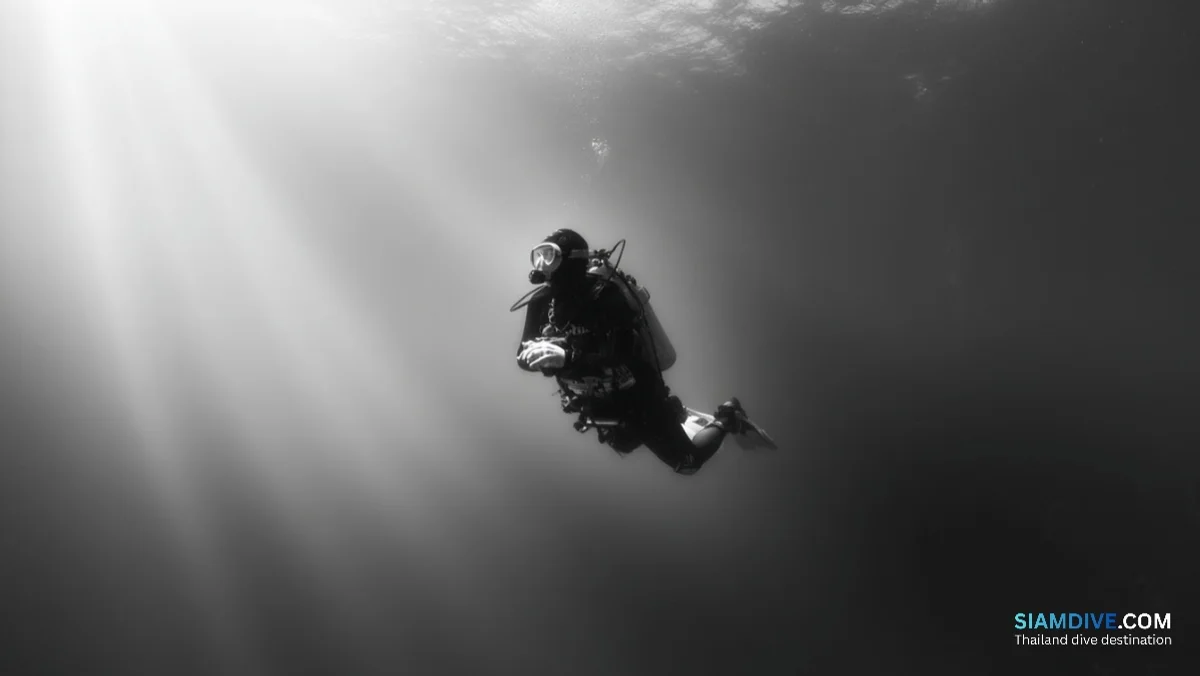
Thirty-five metres down a quarry wall, the sound starts — a rising whistle that cuts through the water like a pressure cooker left unattended. Silver bubbles pour from the second stage in a solid curtain, and the SPG needle begins its quiet, merciless sweep toward zero. Regulator free-flow at depth ranks among diving's least forgiving equipment failures. Not because the mechanism is complex — a single ice crystal smaller than a grain of sand can trigger the whole event — but because the timeline it creates is ruthlessly short.
What Actually Happens Inside a Frozen Second Stage
Every breath underwater begins with a pressure drop. Air stored at roughly 200 bar in your cylinder falls to around 10 bar at the first stage, then drops again to ambient pressure — maybe 4.5 bar at 35 metres — as it passes through the second stage valve. Each drop absorbs heat from the surrounding mechanism. Physicists call this the Joule-Thomson effect. Divers call it the reason their reg just started screaming.
In tropical water, the housing and surrounding sea supply enough warmth to offset that cooling. Below 10°C, the balance tips. The air emerging from the valve can fall well below freezing, and any moisture trapped inside the mechanism — condensation from a humid tank fill, a stray droplet from the last rinse — crystallises on contact. Ice forms on the poppet, the lever, or the valve seat itself.
Here is the critical detail: a downstream second stage valve can only freeze in one direction — open. Once ice locks the valve open, the free-flow begins and will not stop until the ice melts, the diver intervenes, or the tank runs dry.
The shift from metal to plastic second stage housings in the 1990s made the problem measurably worse. Metal transferred heat from the water to the internal mechanism far more efficiently than ABS or polycarbonate. That modest temperature drop during the final pressure reduction — from intermediate pressure to ambient — proved enough to freeze components that metal cases had kept warm for decades.
Why Is Your Reg Screaming? The Diagnostic Tree
Free-flow has four common root causes. Identifying which one is active changes everything — the in-water response, the surface fix, and whether the regulator needs a technician or just a different dive plan.
- Water below 10°C + sudden onset mid-dive — Almost certainly ice. Moisture inside the mechanism crystallised on the poppet or lever, holding the valve open. Heavy breathing or BC inflation moments before the onset is a strong confirming signal — the increased airflow pulled more heat out of the system than the water could replace.
- Warm water + gradual worsening over several dives — Mechanical wear. A degraded valve seat, weakened return spring, or cracked diaphragm no longer seals properly. The valve leaks air past the poppet even when demand stops. This regulator is overdue for service.
- Only when facing into current — Hydrodynamic purge. Water pressure on the second stage diaphragm mimics a purge press, physically pushing the demand lever inward. Turning your head 30 degrees off the current line usually stops it within seconds.
- Triggered by heavy breathing, BC inflation, or octopus use in cold water — Demand-triggered freeze. The airflow spike exceeded the mechanism's thermal budget. The internal temperature dropped below freezing mid-cycle, and ice formed before the housing could re-warm. This is the most common cold-water free-flow pattern reported by dive operators in Northern Europe and the Great Lakes region.
The consequences of misreading the cause are well-documented. DAN's analysis of more than 940 diving fatalities over a ten-year period found that regulator free-flow appeared in roughly 15% of equipment-related incidents. The number is small in absolute terms, but regulator failure at depth rarely offers a second chance at diagnosis.
Thirty Seconds at Depth — The Response Drill
A free-flow at 35 metres on a standard 12-litre cylinder at 150 bar leaves roughly three to four minutes of usable air — less if the diver panics and breathes hard on top of the leak. Speed matters, but sequence matters more.
- Do not seal your mouth around the mouthpiece. If the flow rate exceeds what the exhaust valves can dump, pressure builds inside your airway. A DAN case summary documents a diver who experienced a sudden free-flow, made an emergency ascent, and recovered without injury — precisely because the diver never sealed the reg and never held their breath.
- Turn the mouthpiece face-down. Gravity plus water backpressure on the exhaust valve can sometimes nudge the poppet back into its seat. Simple, fast, and works more often than divers expect.
- Cover the opening with your fingers. Backpressure builds behind your hand and may push the poppet home. Hold for two to three seconds before checking whether the flow has stopped.
- If the flow continues: sip air by placing your tongue against the mouthpiece as a water dam, letting small amounts of air and water into your mouth. Do not try to breathe normally — you are managing the airflow, not sealing against it.
- Signal your buddy immediately. Thumb up means abort. Begin a controlled ascent while sharing air if your supply drops below a safe margin for the depth. Panic compounds the problem — every rapid breath pulls more heat from the mechanism and accelerates the freeze.
- Switch to your alternate air source — with a caveat. In cold water, your octopus shares the same first stage and the same cooled intermediate-pressure air. It can freeze too. Redundant first stage configurations — sidemount or a pony bottle — eliminate this single point of failure.
Practising this sequence in controlled conditions — a pool, a shallow shore dive — is the difference between a managed incident and an uncontrolled ascent. The skill was taught in Open Water certification. Most divers have not rehearsed it since.
Hardware That Fights the Freeze
The European standard EN250:2014 draws a hard line. To carry the full EN250A cold-water rating, a regulator must deliver air reliably at 4°C water temperature, 50 metres depth, and 62.5 litres per minute of breathing demand for a continuous five minutes — tested by an independent accredited laboratory, not the manufacturer. Regulators that pass only above 10°C carry the marking EN250A >10°C. That single stamp on your first stage housing is the first thing to check before any cold-water trip.
Three engineering features separate cold-rated regulators from warm-water designs:
- Environmental seal
- A silicone membrane or fluid-filled chamber that isolates the first stage mechanism from surrounding water. It prevents water ingress, blocks silt and salt contamination, and stops external ice from bridging to internal moving parts.
- Heat exchange system
- Fins or ribs machined into the first stage body that increase the surface area exposed to surrounding water. They draw thermal energy inward, counteracting the Joule-Thomson cooling that gas expansion creates inside the mechanism.
- Metal second stage construction
- Brass or chrome-plated housings transfer heat from the water to the internal valve components more effectively than plastic, keeping the poppet and lever above freezing temperature during sustained demand.
Before buying new hardware, check what you already own. The EN250 marking is stamped or engraved on the first stage body, usually near the yoke or DIN connection. If it reads EN250A without a temperature qualifier, the regulator has passed the 4°C test. If it reads EN250A >10°C, the manufacturer submitted it only for warm-water certification — which does not mean it will necessarily fail in cold water, but it does mean nobody has independently verified that it will not.
Current models worth evaluating for cold-water work:
- Apeks MTX-RC — Over-balanced diaphragm first stage with a proprietary heat-exchange system designed for cold and contaminated water. Full EN250A rating.
- ScubaPro MK19 EVO / G260 — Fully sealed diaphragm first stage with solid metal construction and one of the smallest dry ambient pressure chambers available, minimising the volume of air exposed to temperature drop.
- Apeks EVX200 — Released in late 2024 as the successor to the long-running XTX200. Chrome-plated brass first stage with integrated heat-exchange ribs. Field reports from cold-water divers in Scandinavia and the British Isles through the 2025 season have been consistently positive.
- Cressi MC9 XS Compact — Rated to 4°C with a hyper-balanced diaphragm and environmental seal. A lighter, more travel-friendly option that still clears the EN250A threshold.
Servicing and Pre-Dive Discipline
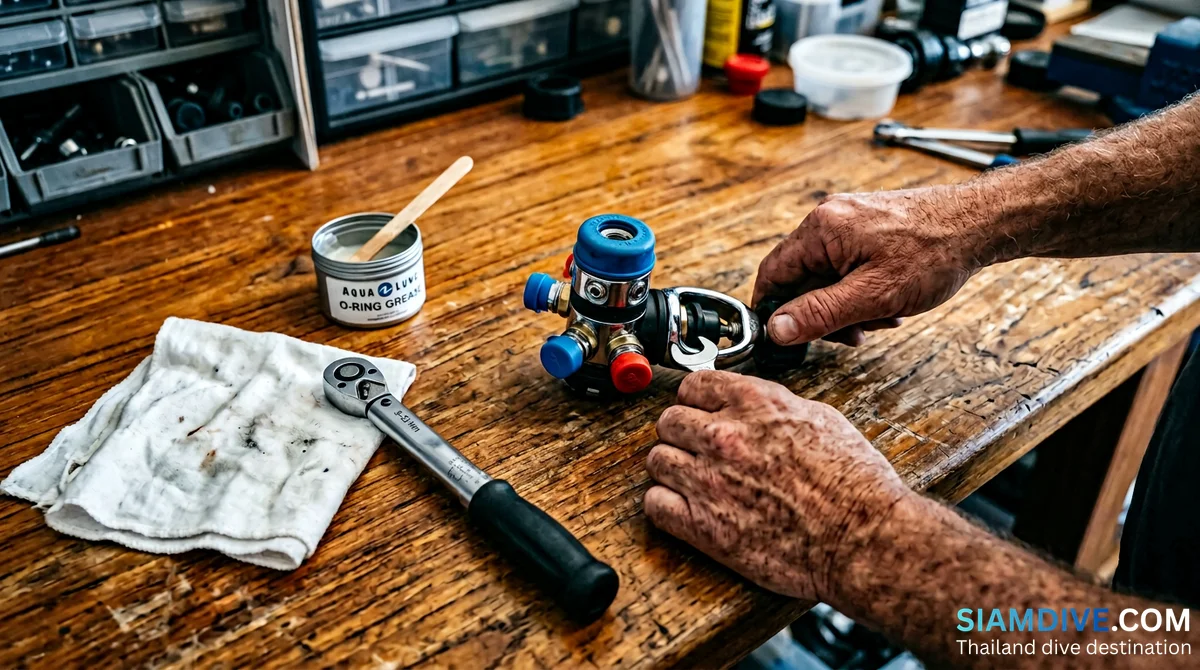
Annual servicing is the baseline — not the ceiling. Before a cold-water trip, request cold-water preparation specifically when you hand the regulator to a technician. This means inspecting the valve seat, poppet, return spring, and any environmental seals for degradation or hardening. A seal that passed inspection in May can fail in December if the silicone has begun to crack.
- Do not press the purge button on the surface in cold air. Each press cools the mechanism before the regulator enters the water, giving ice formation a head start it does not need.
- Do not breathe from the regulator on the surface before entry. Drawing air through the valve in sub-zero ambient air drops the internal temperature before the first underwater breath.
- Keep the second stage face-down when not in your mouth. This prevents water pooling inside the case — the same water that later becomes the moisture that freezes on the valve seat at depth.
- Breathe calmly at depth. Rapid breathing increases airflow rate, which increases internal cooling. Steady, relaxed breathing gives the housing time to re-absorb warmth from surrounding water between breath cycles.
- Consider redundant first stages for serious cold-water diving. A sidemount configuration or an independent pony bottle with its own regulator means a free-flow on your primary does not force an emergency response with no backup air.
When Warm Seas Hold a Cold Surprise
Thailand's waters average 27–29°C — safely above the freeze zone. But divers based in Southeast Asia routinely travel to destinations where the same regulator faces a different thermodynamic reality: UK quarries at 6°C, Iceland's Silfra at 2°C, Norwegian fjords, Great Lakes wrecks in single-digit temperatures. A regulator that breathes perfectly at Racha Noi in December can free-flow in a Scottish loch in March if it carries the EN250A >10°C marking rather than the full cold-water stamp.
For divers planning cold-water travel from Thailand, the preparation checklist is short but non-negotiable: verify the EN250A rating on both your primary and backup regulators, schedule a cold-water-specific service at least four weeks before departure, and pack a redundant air source. The gear that keeps you breathing through a gentle drift at Koh Bon needs a different conversation with a technician before it meets a February quarry in Northern England.
Even in tropical water, surprises exist. Thermoclines in the Andaman Sea can drop water temperature by 3–5°C within a few metres, and at 40 metres or deeper the sustained air demand from a working diver pushes the thermal margin thinner than most people realise. The physics never switch off — they just wait for the conditions to align.