50-Baht Michelin Noodles in Phuket's Forgotten Tin Quarter
4 พฤษภาคม 2569
Between dives off Phuket, a compact tin-mining quarter serves Michelin-recognised noodles for 50 baht and hides 200 years of Hokkien architecture on seven walkable streets.
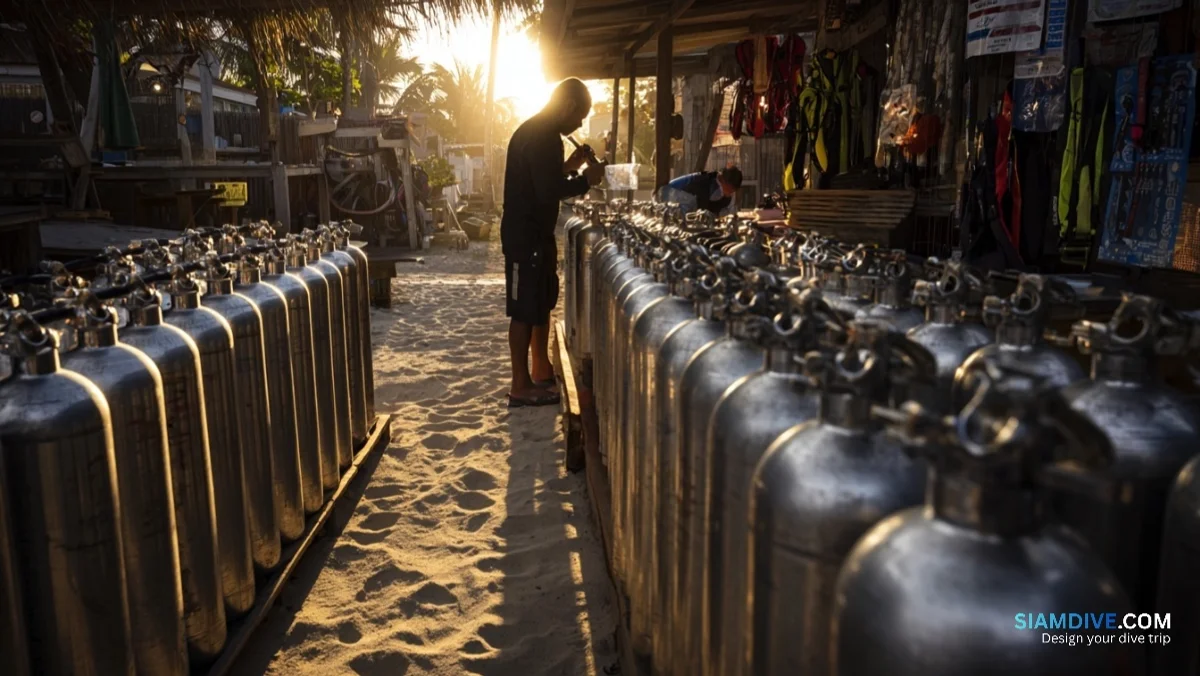
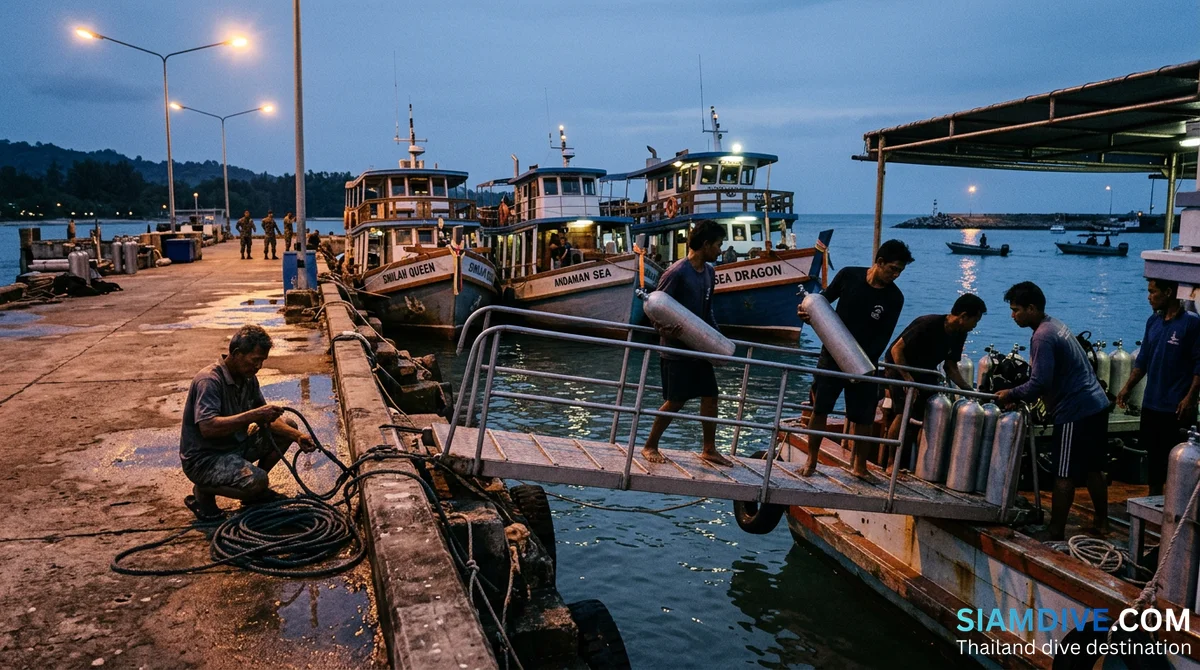
At four in the afternoon, while dive boats motor back to Chalong Pier with emptied tanks draining in the racks, a different Phuket begins to surface. Twenty-five minutes north by taxi — past the beach-resort sprawl of Patong and the traffic circles that every tourist learns to dread — a neighbourhood of pastel shophouses, century-old Hokkien temples, and noodle shops with Michelin plaques next to the napkin dispensers sits in the kind of quiet that few visitors associate with this island.
Phuket Old Town existed before the dive boats, before the beach clubs, before the airport. Built on tin money and Chinese labour across the 19th century, it occupies a compact rectangle of seven streets that the Thai government has designated a Cultural Heritage Conservation Zone. Most divers spend their non-dive days at the hotel pool or on a Phi Phi speedboat. The ones who wander into Old Town instead tend to come back the next evening — and the one after that.
Seven Streets Built on Tin
The wealth visible on Thalang Road, Dibuk Road, Phang Nga Road, Krabi Road, Yaowarat Road, Soi Romanee, and Rassada Road didn't come from tourism. It came from the ground — specifically, from tin deposits that drew thousands of Hokkien Chinese migrants to Phuket during a mining boom that ran from the 1820s through the 1930s. The miners who struck it rich did what newly wealthy people everywhere have done: they built houses that announced their status to the street.
What they built carries a hyphenated name — Sino-Portuguese — a style that evolved not in Phuket but in the Straits Settlements of Penang and Malacca, where Portuguese colonial facades met Chinese courtyard planning and Hokkien decorative instincts. Migrants carried the template across the Andaman Sea. The buildings standing in Old Town today feature arched colonnades at ground level (five-foot ways, designed for shade and commerce), ornate stucco work above, intricately carved wooden doors, decorative floor tiles imported from Europe, and facades painted in the pastel palette — mint, coral, custard yellow, powder blue — that fills every travel feed from the area.
The entire zone spans roughly 800 metres north to south and 600 metres east to west. Every notable building sits within a fifteen-minute walk of every other. That compression is part of the appeal — no transport logistics, no tuk-tuk negotiation, no map anxiety. Just walking, looking up, and occasionally stepping through a doorway that leads somewhere unexpected.
50-Baht Noodles with a Michelin Plaque
A bowl of beef-ball broth at O Cha Rot on Phang Nga Road costs around 50 baht — roughly $1.40 — and carries a Michelin Bib Gourmand from the 2026 Guide. The shophouse has served the same recipe for over 30 years. The queue at noon reaches the street.
The 2026 MICHELIN Guide for Phuket lists 1 starred restaurant, 18 Bib Gourmand selections, and 39 additional picks province-wide. A disproportionate number of those Bib Gourmands cluster in Old Town, where plates rarely break 100 baht.
- O Cha Rot — Beef-ball noodle broth, single-room shophouse, same family for three decades. Around 50 baht a bowl. Bib Gourmand 2026. Arrive before noon or queue.
- One Chun — Southern Thai family recipes spanning three generations: stink beans with prawns, yellow curry with snapper, turmeric-heavy dishes that taste nothing like resort-menu versions. Bib Gourmand.
- A Pong Mae Sunee — A tiny stall on Yaowarat Road famous for khanom a pong, small coconut crepes cooked on a charcoal griddle. No tables. Eat standing. Bib Gourmand 2026.
For divers used to the 250–350 baht pad thai on Patong's laminated menus, Old Town recalibrates what food costs on this island. A full afternoon of eating — noodles, southern curry, coconut crepes, mango sticky rice from a cart — rarely totals more than a single restaurant lunch on the west coast.
125 Metres of Pastel and Street Art
Soi Romanee splits off Thalang Road and runs exactly 125 metres before dead-ending. A generation ago, it was Old Town's most neglected lane — a former red-light district of crumbling plaster and shuttered shophouses. Today it is the neighbourhood's most photographed street, and one of the most photogenic 125 metres in Southeast Asia.
The restoration kept the narrow proportions and pastel facades but added contemporary street art that began with the F.A.T Phuket project in 2016 — Food, Art, Town, a collaboration between local artists and property developers. The most recognizable piece is by Alex Face, at the Romanee-Thalang junction: a giant three-eyed child in a rabbit hoodie clutching a red turtle cake, a commentary on innocence and commercialism that has become Old Town's unofficial mascot.
The lane now holds a handful of coffee shops with exposed brick walls, a couple of guesthouses, and not much else. That restraint is exactly why it works. There is nothing to buy, no tour group blocking the lane. Just facades, murals, and the sound of camera shutters from people who wandered in from Thalang Road and forgot they were going somewhere.
Sunday Night Between the Shophouses
Every Sunday at four, Thalang Road closes to traffic and becomes Lard Yai — Phuket's largest walking street market, stretching 360 metres between the shophouse facades. Vendors line both sides and fill the centre with street food, handicrafts, local sweets, and handmade goods. The setup is standard by Thai night-market measure. The setting is not.
Food runs 30–100 baht per item: grilled seafood, prawn cakes, coconut pancakes, som tam mixed to order, mango sticky rice in banana leaf. Cash only at most stalls. Small bills preferred.
What separates Lard Yai from a dozen other walking markets across Thailand is the architecture framing it. Pastel Sino-Portuguese facades, lit against the darkening sky, turn a standard market stroll into something worth arriving early for. The market runs until 10 PM, which means a diver coming back from a morning two-tank trip at Racha Yai or a liveaboard return day has time to shower, nap, and still arrive for the best hours.
Two Centuries in One Building
Room by room, the building at 28 Thalang Road walks visitors backward through Phuket's pre-tourism identity. Thai Hua Museum — a two-storey Sino-Portuguese structure completed in 1934 as a Chinese-language school for the Hokkien community — now traces the island's tin mining era, Baba-Peranakan culture, and the Chinese migration waves that built the streets visible through every window.
Inside, bilingual exhibits (Thai-English) trace a timeline from the labour conditions of the earliest mines — cramped shafts, kerosene lamps, opium-laced wages — to the merchant mansions that followed. For anyone whose knowledge of Phuket starts and ends with dive sites and beach bars, the museum fills in two centuries of context in about an hour.
The Baba-Peranakan story is worth understanding before stepping back outside. The term describes the community formed by early marriages between Hokkien miners and local Thai-Malay women — a cultural fusion that produced its own cuisine, dress, language, and building style. The shophouses on the streets are the physical record. The museum is the narrated version. Together they explain more than either one alone.
What Fits Between Dives
Old Town works for divers because it is compact enough to explore in a few hours and positioned on the east side of the island — the same side as Chalong Pier, where most Phuket dive boats depart and return.
- From Chalong Pier — 20–25 minutes by taxi or Grab, roughly 300–400 baht
- From Patong — 30–40 minutes depending on traffic, 400–500 baht
- Walking time — the full seven-street loop takes 1–2 hours at a strolling pace with photo stops; add an hour for a museum visit and another for eating
- Best timing — arrive after 4 PM when heat drops and light turns golden on the facades; on Sundays, align with Lard Yai's 4 PM opening
- Surface interval bonus — the walk is flat, shaded by five-foot-way colonnades, and the most strenuous activity is choosing between noodle shops
The pre-flight window deserves a mention. Dive operators recommend an 18–24 hour surface interval before flying, depending on repetitive dive profiles. That window often falls on the last full day — too late to dive, too early to fly, too restless for the hotel. Old Town absorbs exactly those hours, and compared to killing time at other dive destinations, the cost and quality here are hard to match.
The Streets That Were Here First
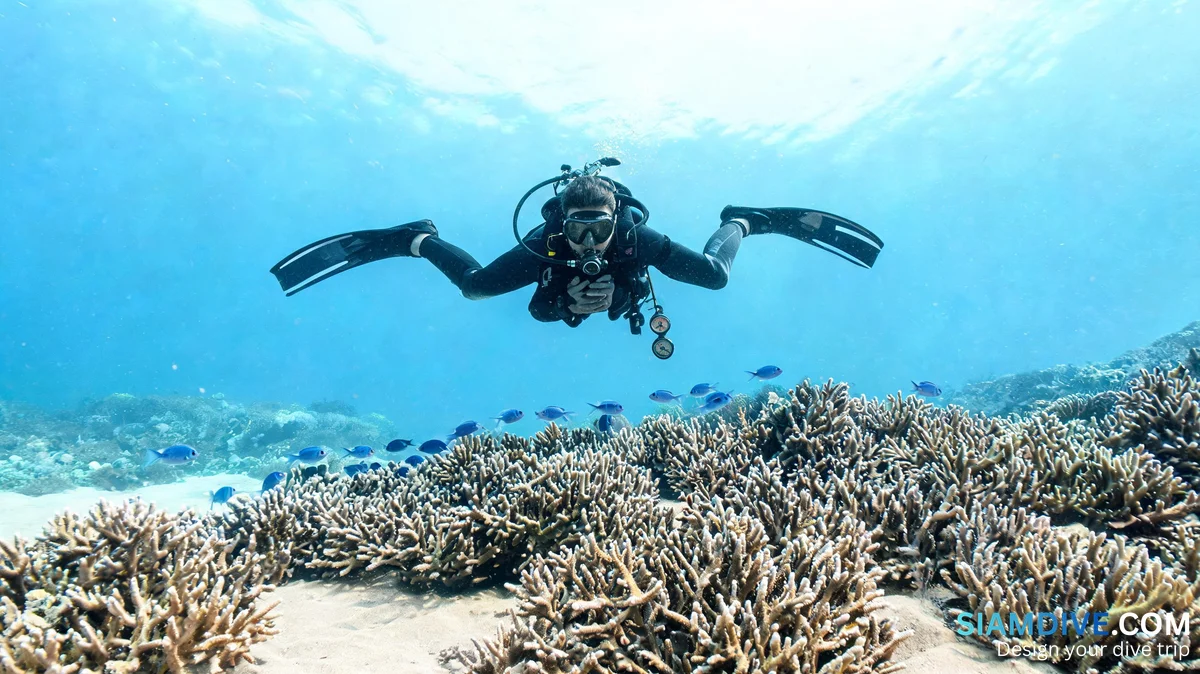
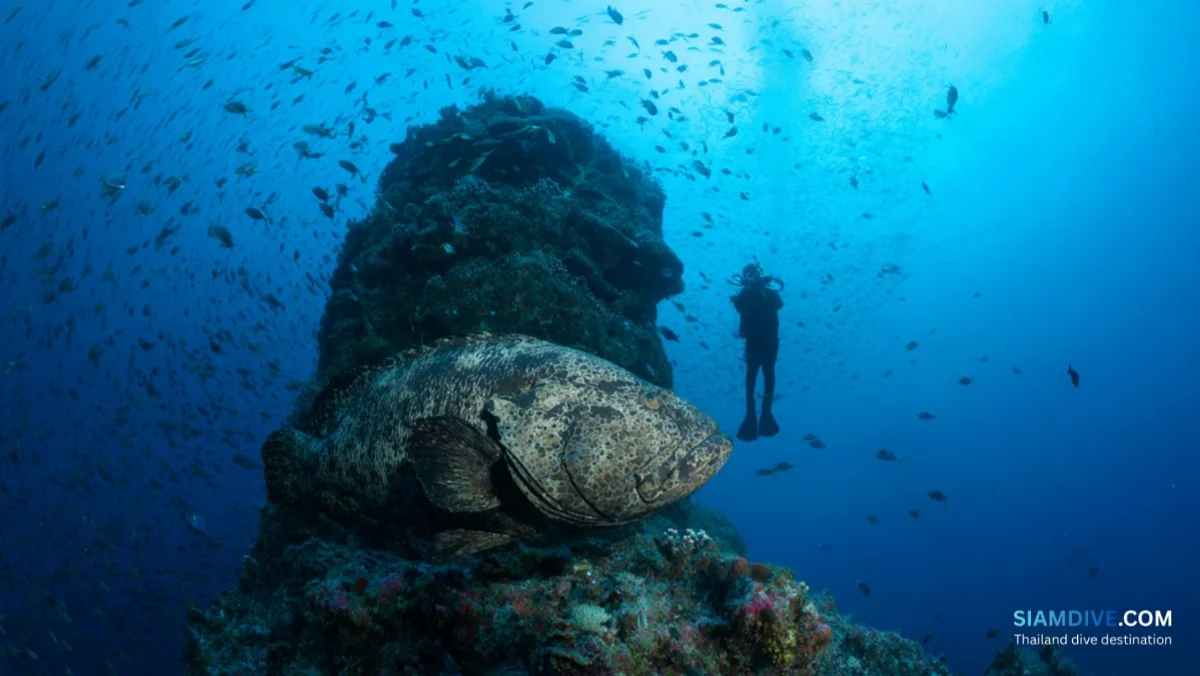
Dive trips compress an island into its underwater geography: the south tip of Racha Yai, the east wall of Shark Point, the pinnacles off Koh Dok Mai. Surface transit between pier and site passes through Phuket without really touching it. Most visiting divers can name five reef sites but not a single street in a town that has been here for two hundred years.
Old Town does not compete with the diving — it complements it. A different kind of sensory richness that happens to sit twenty minutes from the pier. Tin baron mansions instead of barrel sponges. Michelin noodle broth instead of reef fish. Hokkien stucco relief instead of hard coral texture. The island has been building things worth looking at for far longer than recreational diving has existed, and most of it is free to see, cheap to eat, and reachable on foot.
Seven streets of pastel and tin money, waiting every afternoon for the boats to come back.