80-Baht Pad Thai After a Night Dive — Only in Thailand
25 เมษายน 2569
Night markets, 300-baht massages, and temple visits between dives — the non-diving hours are why Thailand keeps beating every other dive destination.
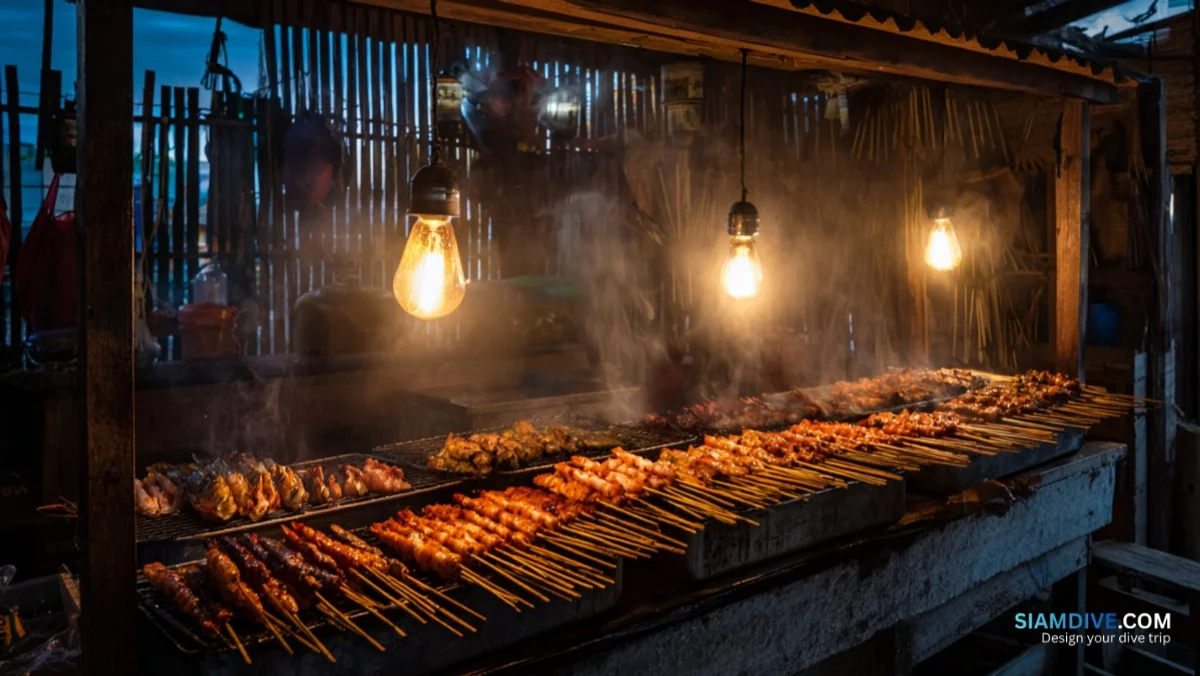
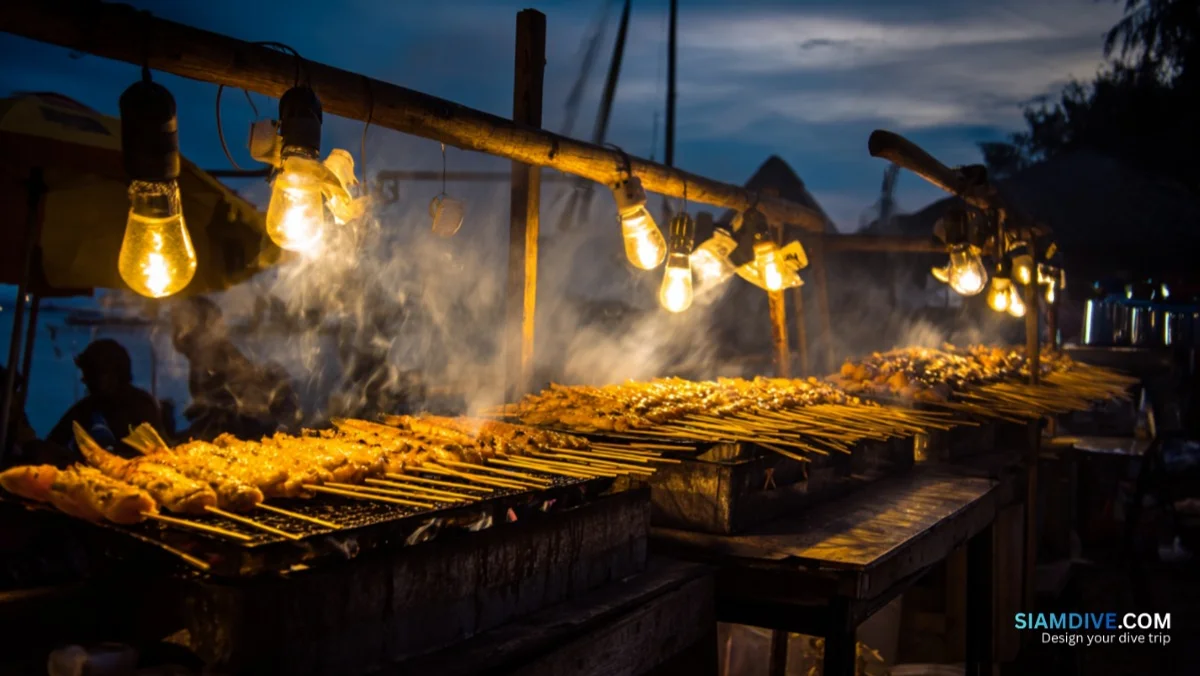
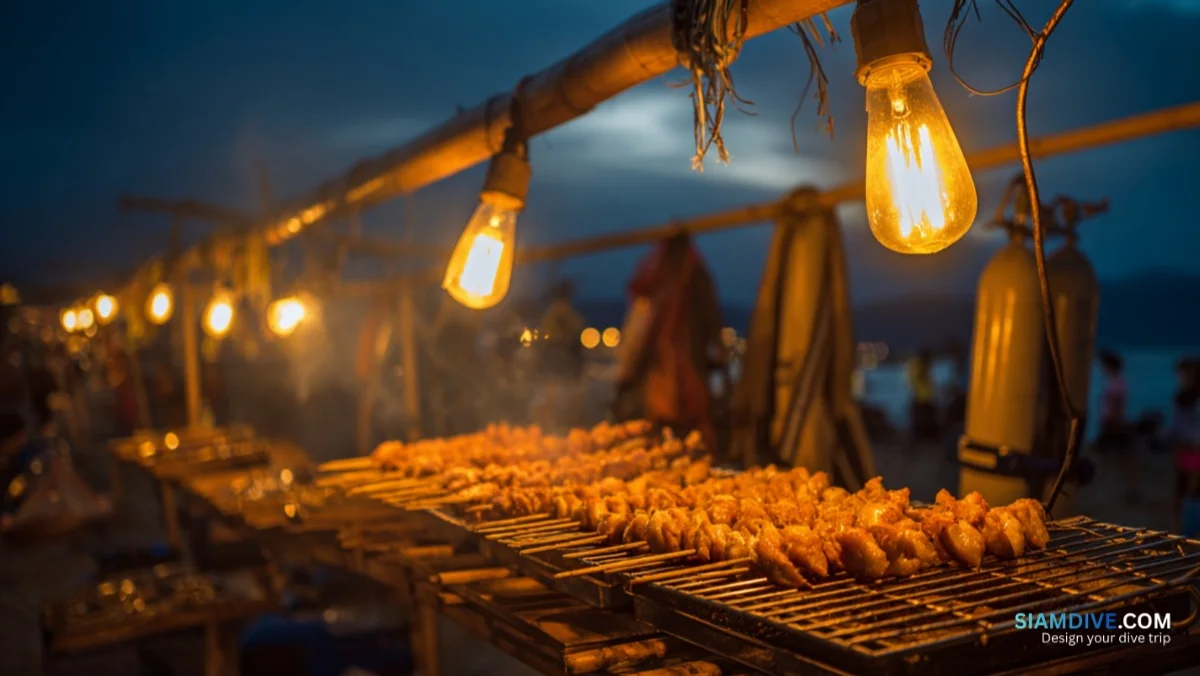
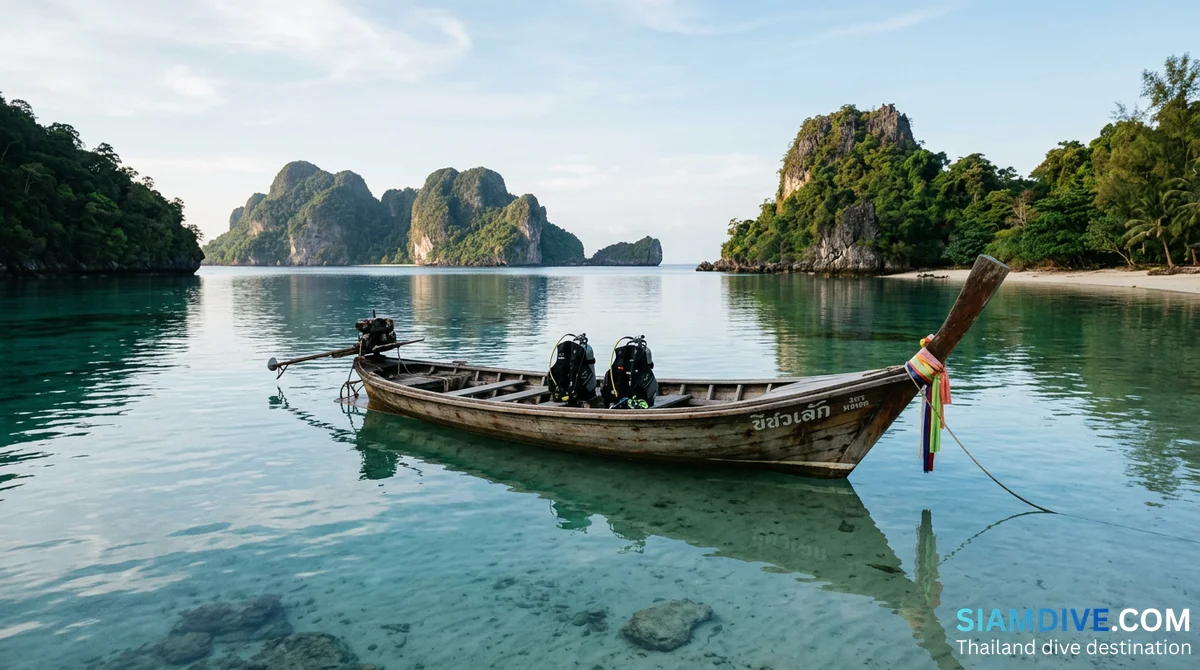
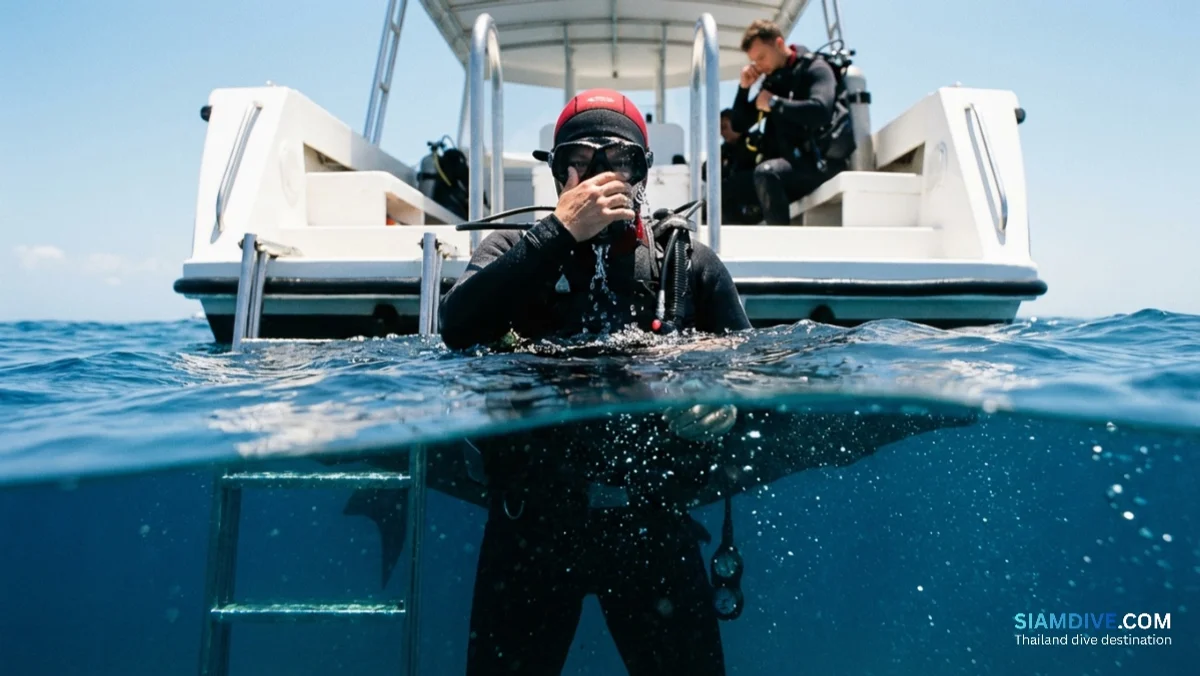
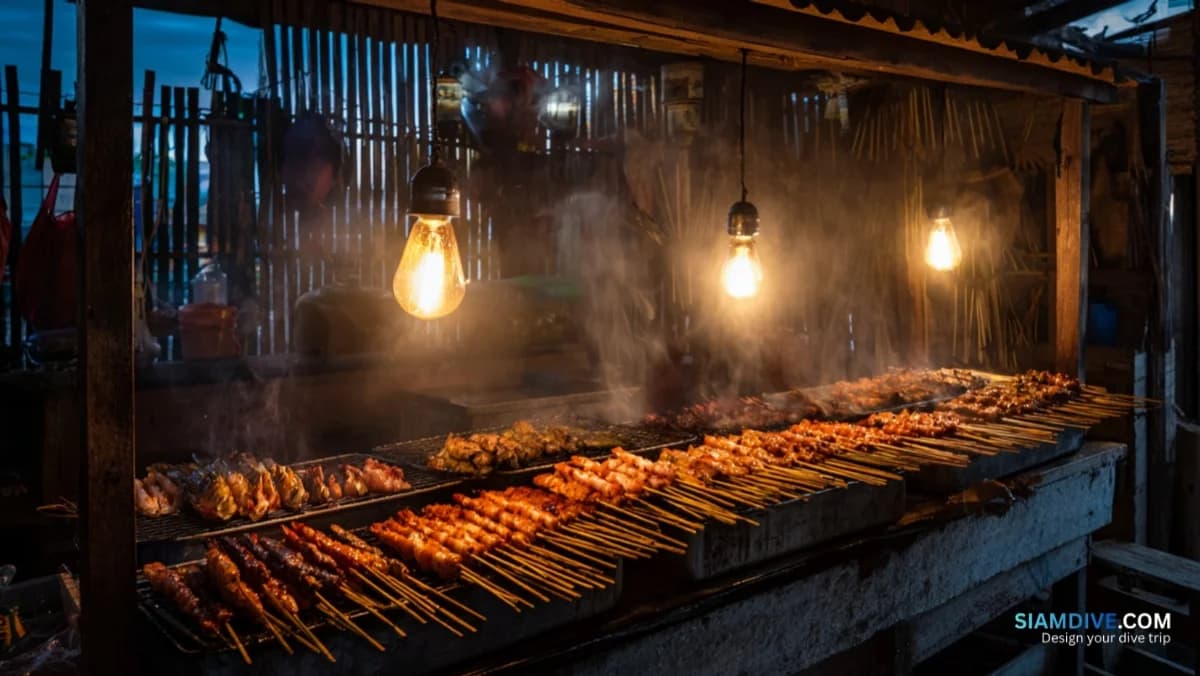
Wetsuits hang on a rack beside a charcoal grill. Squid sizzles three metres from a row of dive tanks. The smell of lemongrass and garlic drifts across a pier where a night-dive boat just tied up — and the entire scene costs less than a single beer at a Maldives resort bar. This is what most dive-destination marketing leaves out: the other sixteen hours of a diver's day, the hours Thailand has quietly turned into its strongest sales pitch.
The 16-Hour Question
A recreational diver spends roughly four to eight hours underwater across a full trip day — two morning dives, maybe a third after lunch or a night dive at dusk. That leaves at least sixteen hours on land. In the Maldives, those hours happen inside a single resort compound on a single island, where the bar closes at 11 PM and room service is the only late-night option. In the Egyptian Red Sea, Hurghada and Sharm El Sheikh offer restaurants and a nightlife strip, but the cultural menu stops at the hotel lobby. In Komodo, Labuan Bajo is growing, but after dark the harbour town still runs on a handful of waterfront restaurants and an early bedtime.
Thailand rewrites that equation entirely. Step off the dive boat at any of the country's major dive hubs — Koh Tao with its seventy-odd dive schools, Koh Phangan's Thong Sala port, Khao Lak's Thap Lamu pier, or Phuket's Chalong Bay — and within walking distance you'll find night markets, massage parlours, temples, live music, and street food stalls that stay open well past midnight. The surface interval doesn't feel like waiting. It feels like the second half of the trip.
Night Markets Within Earshot of the Compressor
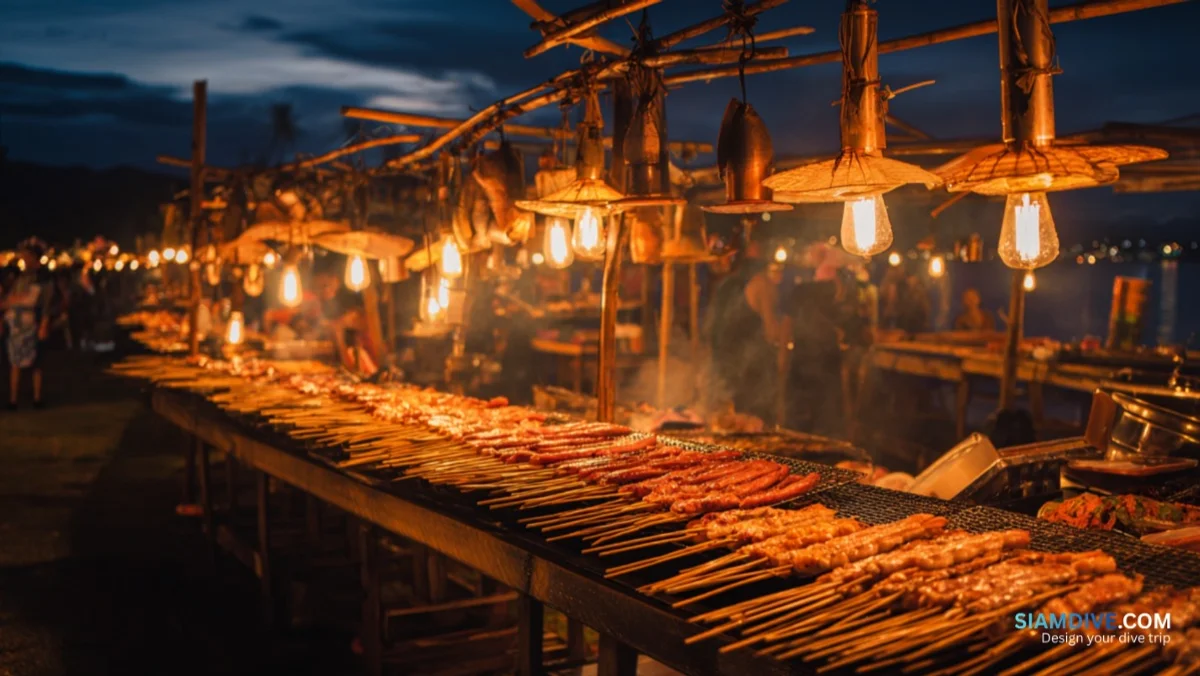
Mae Haad on Koh Tao sits at the bottom of the hill from at least a dozen dive schools. By 5 PM, the night market opens along the main road: grilled pork skewers for 20 baht, pad thai from 50 to 80 baht depending on protein, and mango sticky rice for 60 baht. No entrance fee, no reservation, no dress code beyond the board shorts you wore on the boat. A ten-minute walk up the coast, the Sairee Beach strip adds cocktail bars and live reggae to the mix, and around the southern bay, Chalok Baan Kao keeps things quieter — a few seafood stalls overlooking the water, cold Singha at 70 baht.
On Koh Phangan, the Thong Sala Saturday Walking Street transforms the old high street near the ferry pier into a 200-metre corridor of food stalls, handicraft vendors, and juice bars starting around 4 PM. Multiple TripAdvisor reviews from early 2026 confirm you can eat dinner — two or three dishes, a fresh fruit shake, and dessert — for roughly 200 baht total. That is under six US dollars for a full evening of food and atmosphere.
Phuket runs night markets almost every night of the week at rotating locations: Malin Plaza and OTOP in Patong for the nightly food-and-fashion mix, Chillva Market near Phuket Town for the weekend crowd. Island prices run 25–40 percent above mainland Thailand, but a full night-market dinner on Phuket still lands between 150 and 300 baht — a fraction of what a resort restaurant charges for a comparable spread.
- Koh Tao (Mae Haad) — pad thai 50–80 ฿, grilled skewers 20 ฿, mango sticky rice 60 ฿
- Koh Phangan (Thong Sala) — full dinner 200 ฿, Saturday walking street from 4 PM
- Phuket (Malin Plaza / Chillva) — night-market dinner 150–300 ฿, open nightly or weekends
- Khao Lak — Bang Niang market, grilled seafood sets from 120 ฿, Wednesday and Saturday
300-Baht Recovery Beats Any Spa Resort
Hauling a 12-litre tank up a boat ladder four times a day tightens shoulders and lower backs in ways most divers ignore until the flight home. Thailand's answer is a traditional Thai massage — and the price is almost absurdly low. Across the islands, a one-hour session runs 200 to 400 baht. On Phuket, where costs skew higher, a full-body Thai massage at a street-side parlour averages 300 to 500 baht for an hour. That is roughly 9 to 15 US dollars for the kind of deep-tissue work that dive resorts in the Maldives charge 80 to 120 USD for, if they offer it at all.
The access matters as much as the price. On Koh Tao, massage shops line the road between the dive schools and the accommodation — a diver can drop gear, walk sixty seconds, and be on a mat. No appointment system, no spa menu in a leather binder. Just a signboard with prices and a row of chairs out front. After a three-dive day, it is the most practical recovery tool available, and it costs less than a single Nitrox fill at most overseas destinations.
Timing works in the diver's favour too. Most massage parlours on the islands stay open until 10 or 11 PM — late enough for a post-dinner session after a night dive. The diver who surfaces at 8 PM, rinses gear, eats pad thai at the market by 9, and is face-down on a massage mat by 9:30 has executed a recovery routine that no resort spa booking system could replicate at twice the price.
Temples Before the 8 AM Briefing
Dive boats at most Thai hubs leave between 7:30 and 8:30 AM. That leaves a narrow window at dawn that many divers never think to use — but the temples are already open. Wat Koh Tao on the southern hillside above Chalok Baan Kao offers a 15-minute walk and a viewpoint that catches the Gulf of Thailand before the heat sets in. On Koh Lanta, Wat Khao Mai Kaeo sits near the old town, surrounded by mangroves, a 20-minute scooter ride from most dive shops. Phuket's Wat Chalong, the island's largest temple, opens at 7 AM and draws a steady pre-tourist crowd of locals making morning offerings.
None of this requires a day trip or a tour booking. It requires a scooter rental — 200 to 300 baht per day across most islands — and an alarm set 45 minutes early. The point is not that Thailand has temples; every Southeast Asian destination does. The point is that the temples sit close enough to the dive infrastructure that a diver can visit one between the morning alarm and the boat departure, without rearranging the dive schedule. Try doing that from a Maldives resort atoll or a Red Sea compound hotel — the nearest cultural site is a domestic flight away.
The Maldives Tab vs the Thai Night Market Bill
Numbers make the argument faster than adjectives. A diver spending a week in the Maldives at a mid-range resort — not luxury, not budget — will pay for meals at the resort because there is nowhere else to eat. A typical half-board supplement runs 80–120 USD per day. Drinks at the resort bar add another 15–25 USD per evening. A single 60-minute spa treatment costs 80–120 USD. A week's non-diving spend on food, drinks, and one massage: roughly 750 to 1,100 USD.
On Koh Tao, a diver eating every dinner at a night market (80–150 baht), buying beers at beach bars (70–120 baht each, two per night), and getting three massages across the week (300 baht each) spends approximately 5,000 to 8,000 baht total — 140 to 230 USD. Even on Phuket, where prices are higher, the same pattern costs 8,000 to 13,000 baht — 230 to 375 USD.
- Maldives (mid-range resort, 7 nights) — food + drinks + 1 massage: 750–1,100 USD
- Koh Tao (7 nights) — night-market dinners + beers + 3 massages: 140–230 USD
- Phuket (7 nights) — same pattern, island prices: 230–375 USD
- Red Sea, Egypt (7 nights, Sharm) — hotel half-board + local restaurants: 350–500 USD
The gap is not marginal. A diver on a Koh Tao trip can eat, drink, get massaged, and explore temples for a week on less than what a Maldives guest spends on food alone in three days. That surplus goes back into the dive budget — an extra dive day, a Nitrox upgrade, or a liveaboard extension to the Similans.
What Red Sea and Komodo Still Lack
Egypt's Red Sea has strong diving and improving infrastructure, but the culture gap between the dive boat and the hotel remains wide. Sharm El Sheikh offers restaurants and a nightlife strip, yet the options are resort-oriented — designed for package tourists rather than independent travellers looking for a local food scene. The street-food culture does not exist in the same form. Hurghada's marina has improved, but late-night options thin out quickly past the main strip.
Komodo's Labuan Bajo has transformed from a fishing village into a gateway town, and the waterfront restaurants now serve decent seafood. But the après-dive culture is still nascent — a handful of bars, no night market tradition, and limited non-diving activities beyond boat excursions to see the dragons. The infrastructure serves the dive, not the diver's full day.
Thailand's advantage is not just that it offers more things to do. It is that the non-diving infrastructure — food stalls, massage, temples, transport, nightlife — developed independently of the dive industry and was already mature when the first dive schools opened. The night market at Thong Sala existed before the first PADI centre hung its sign on Koh Phangan. The massage tradition predates recreational scuba by centuries. Divers are not getting a curated resort experience. They are stepping into a functioning local economy that happens to surround a world-class dive hub.
A 2026 Shift: Diving Meets Wellness
This connection between diving and Thailand's broader lifestyle offer is now being formalised. In April 2026, the Tourism Authority of Thailand partnered with PADI to launch a wellness-focused dive programme in Krabi, combining reef conservation dives with post-dive spa treatments and mindfulness sessions — a format that only works in a destination where professional dive operations and traditional wellness culture coexist within the same town.
The initiative signals a larger trend. Thailand is no longer marketing diving and culture as separate selling points. The country is packaging them as a single proposition: come for the reef, stay for everything within walking distance of the pier. For divers weighing their next trip, the question is no longer just "where is the best diving?" — it is "where do I want to be for the other sixteen hours?" Thailand has had the answer for decades. The rest of the industry is only now starting to ask the question.
Sources
- PADI — Diving in Thailand overview and dive site reference
- Tourism Authority of Thailand — 2026 dive-and-wellness programme announcement
- Thailand Routes — Average daily food and drink costs in Thailand 2026
- Off Path Thailand — Bangkok street food prices 2026
- TripAdvisor — Thong Sala Saturday Night Market reviews 2026