What Happens When You Pay Shark Fishermen to Stop
15 พฤษภาคม 2569
A $17,550 vessel buyout. A tourism swap that prevented 45 fishing trips. A livelihood program that cut shark catches 91%. Three experiments in stopping the trade — from the inside.
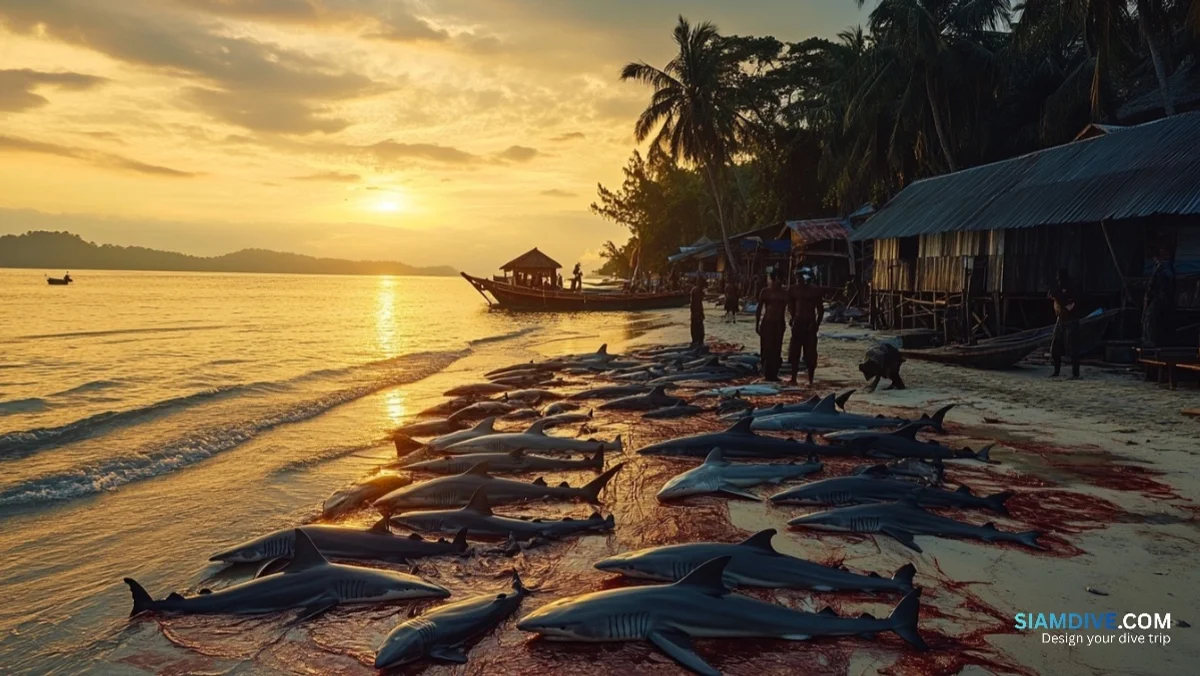
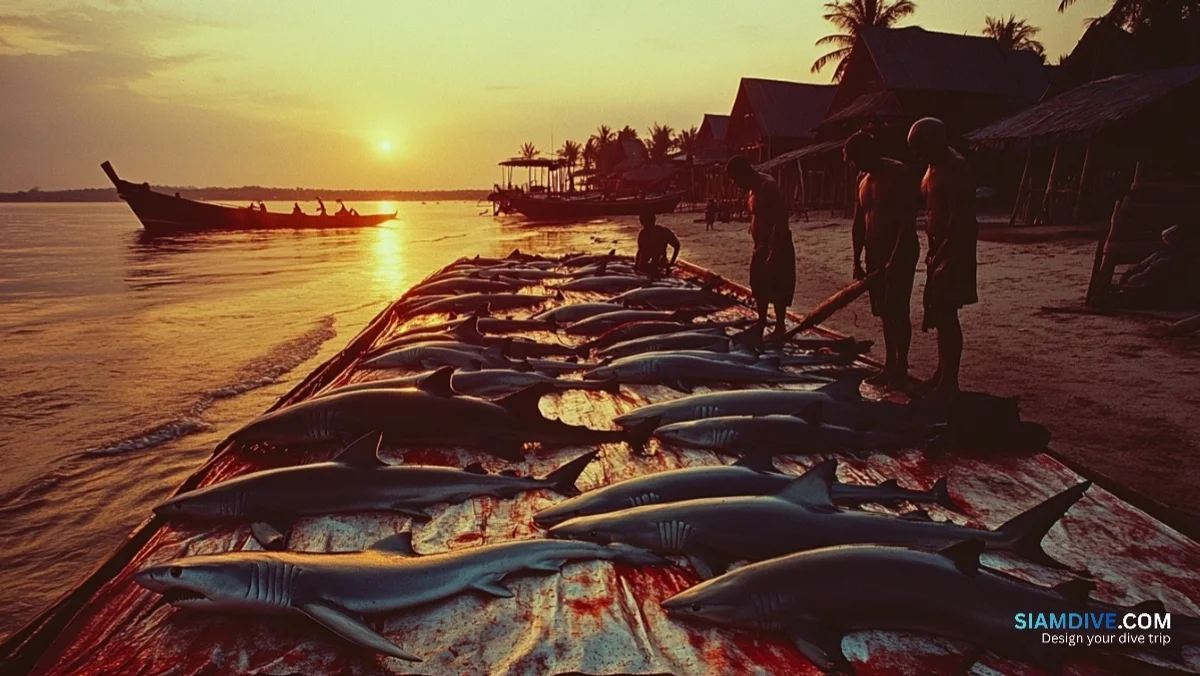
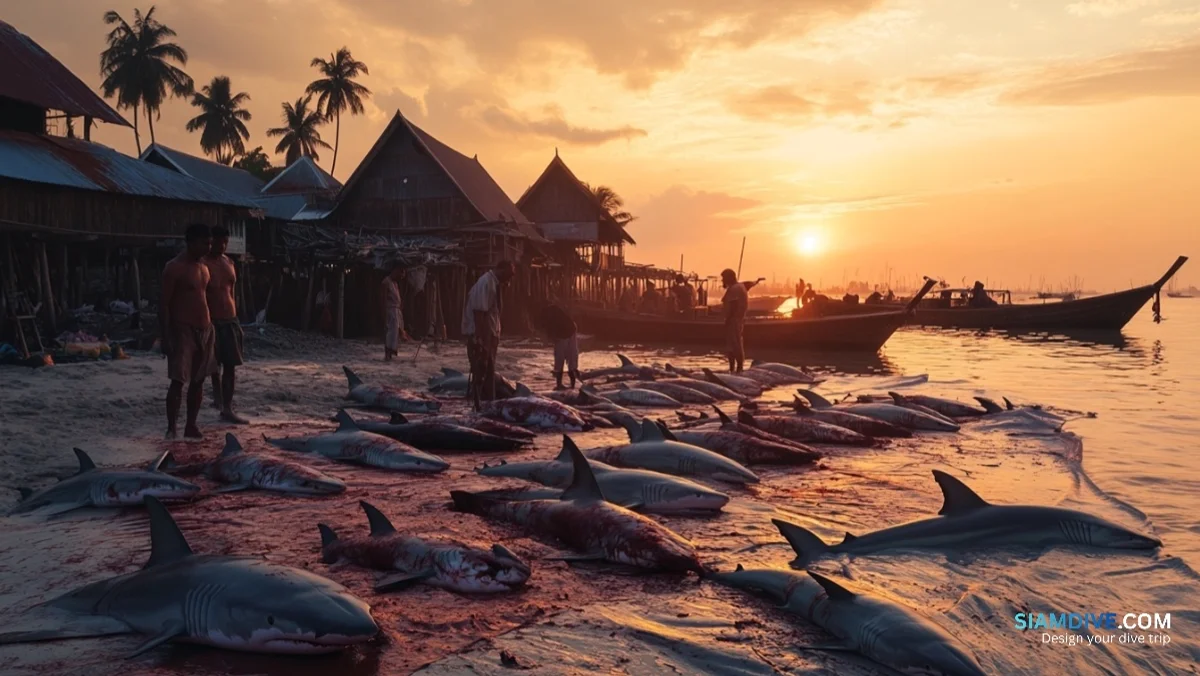
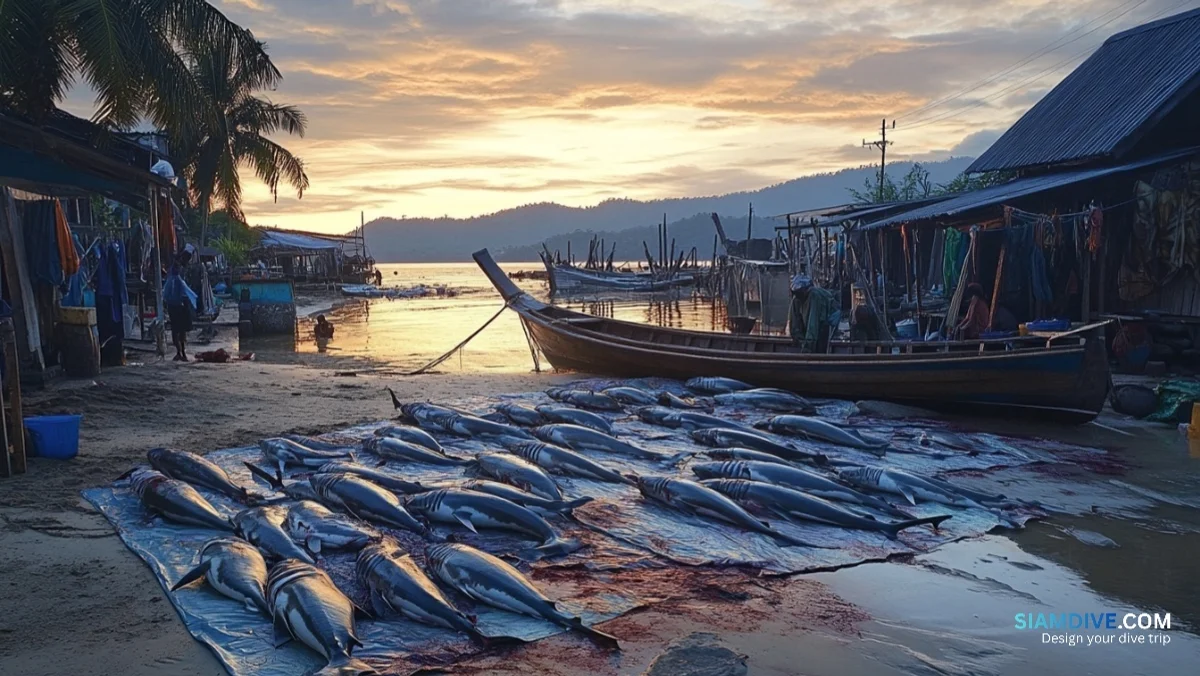
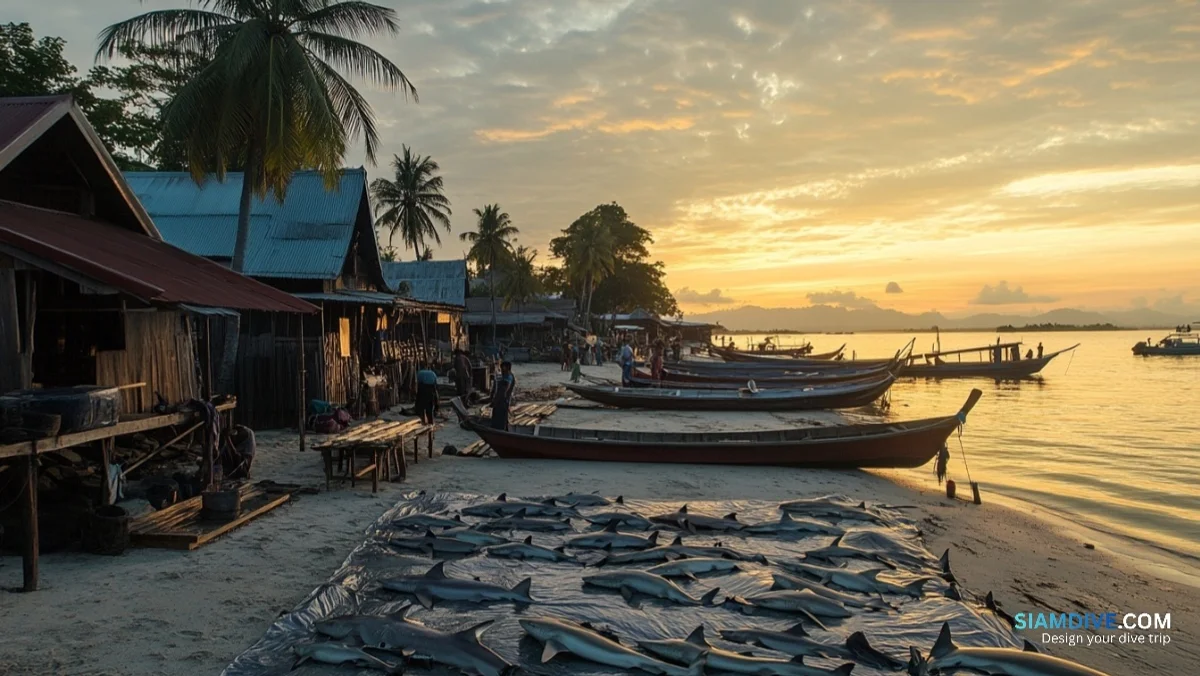
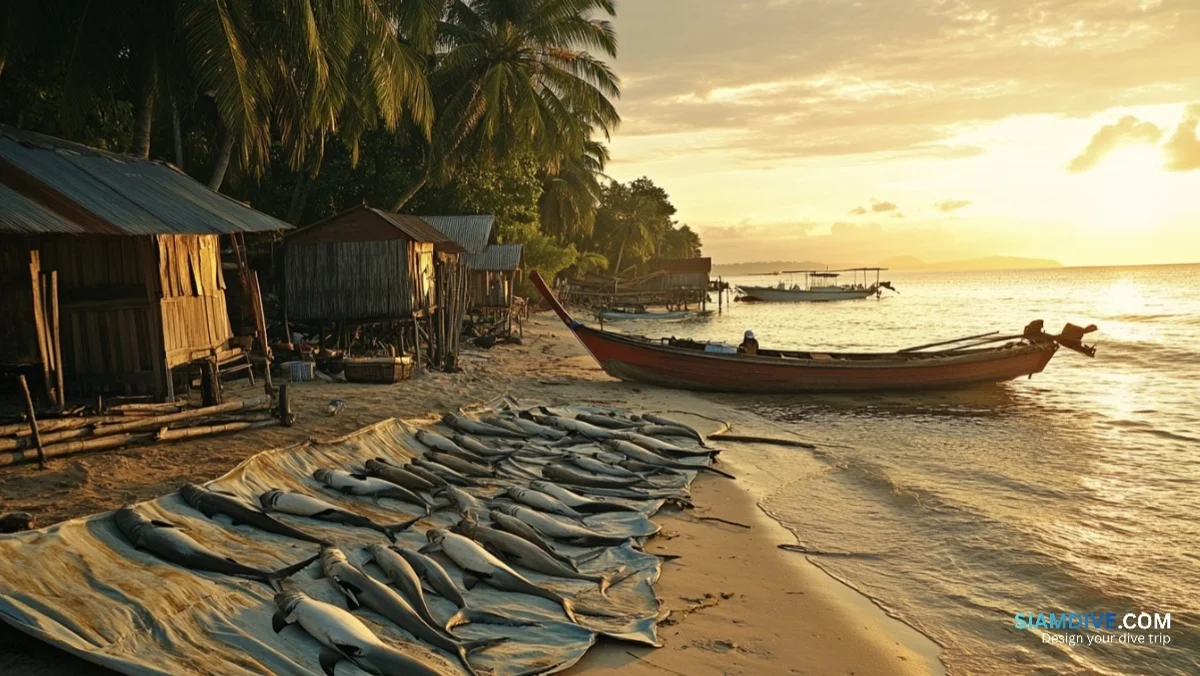
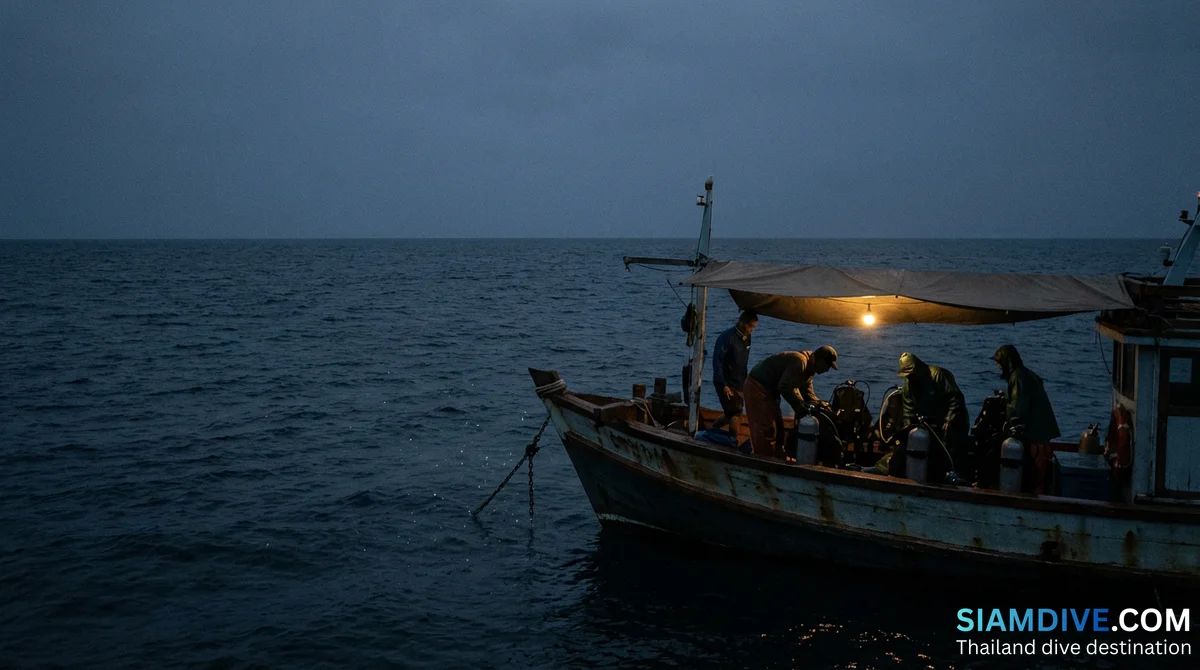
Nobody asked the question for a long time. Tanjung Luar — one of the largest shark markets in Southeast Asia, on Lombok's eastern coast in Indonesia — had operated the same way since the 1990s: boats out, sharks in, fins dried, meat processed, money split. The village of roughly 61 licensed longline vessels was a supply chain, not a problem to be solved. Then, around 2017, a handful of outsiders started asking a different kind of question: what would it cost to make the boats stop?
The $17,550 Experiment
In 2025, Indonesia ran its first-ever vessel buyout for shark fishing boats — right here in East Lombok. The program was a collaboration between local NGO Kebersamaan Untuk Lautan (KUL), the University of Oxford, Bangor University, and IPB University, funded through the UK Darwin Initiative and the Shark Conservation Fund.
The deal was straightforward. Two shark longline vessel owners were each paid IDR 300 million — approximately $17,550 — to have their shark-fishing licences cancelled and their boats permanently decommissioned. No shark-fishing licence, no legal way to fish sharks. The boats were retired, not repurposed.
The numbers behind the decision made the case. Over a two-year monitoring period at Tanjung Luar, researchers recorded more than 13,000 sharks and rays from 57 species landed at the dock. Based on catch monitoring data, the two retired vessels alone had landed 406 sharks and rays in 2025. Over a ten-year horizon, their permanent removal could prevent an estimated 4,000 or more sharks and rays from being killed — at a cost of less than $9 per animal saved.
Nine dollars. Less than the price of two shark satay skewers at the Tanjung Luar market.
Project Hiu: Turning Shark Boats Into Tour Boats
The vessel buyout retired boats permanently. Project Hiu took a different approach — it kept the boats running, but changed what they carried.
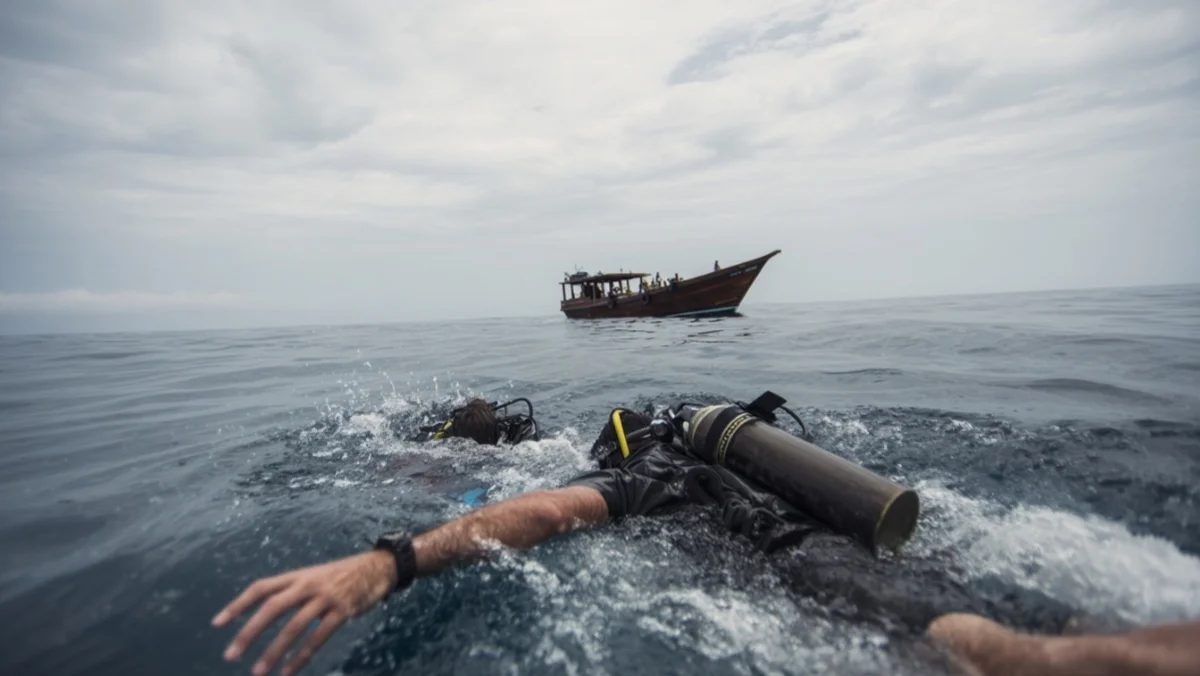
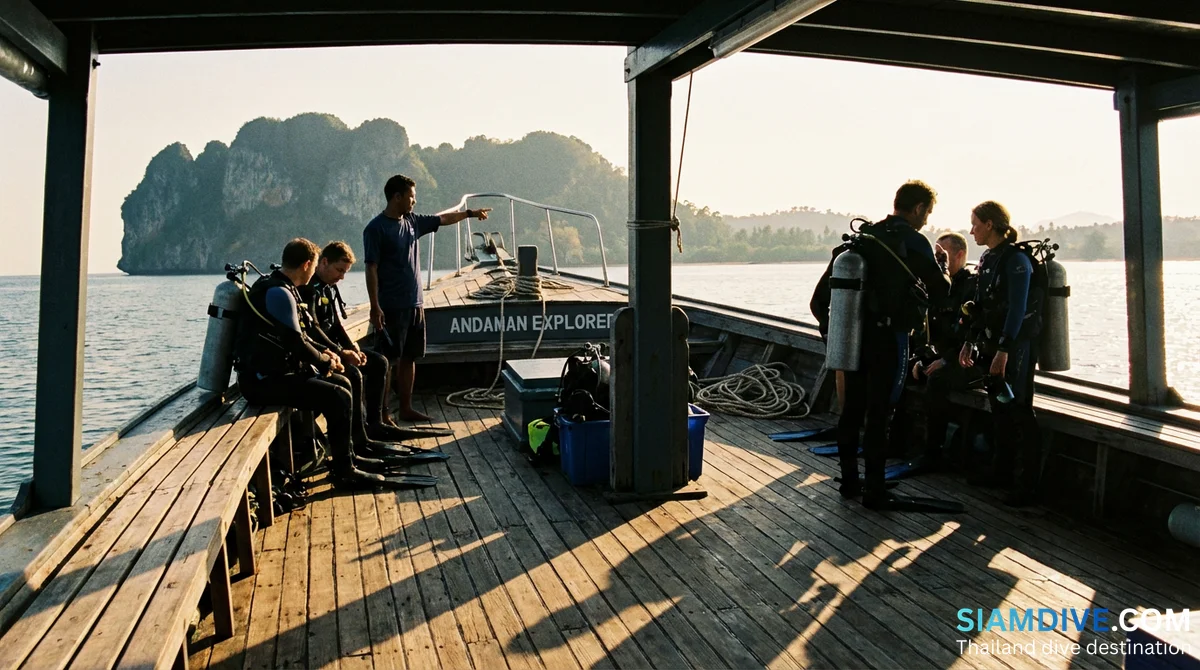
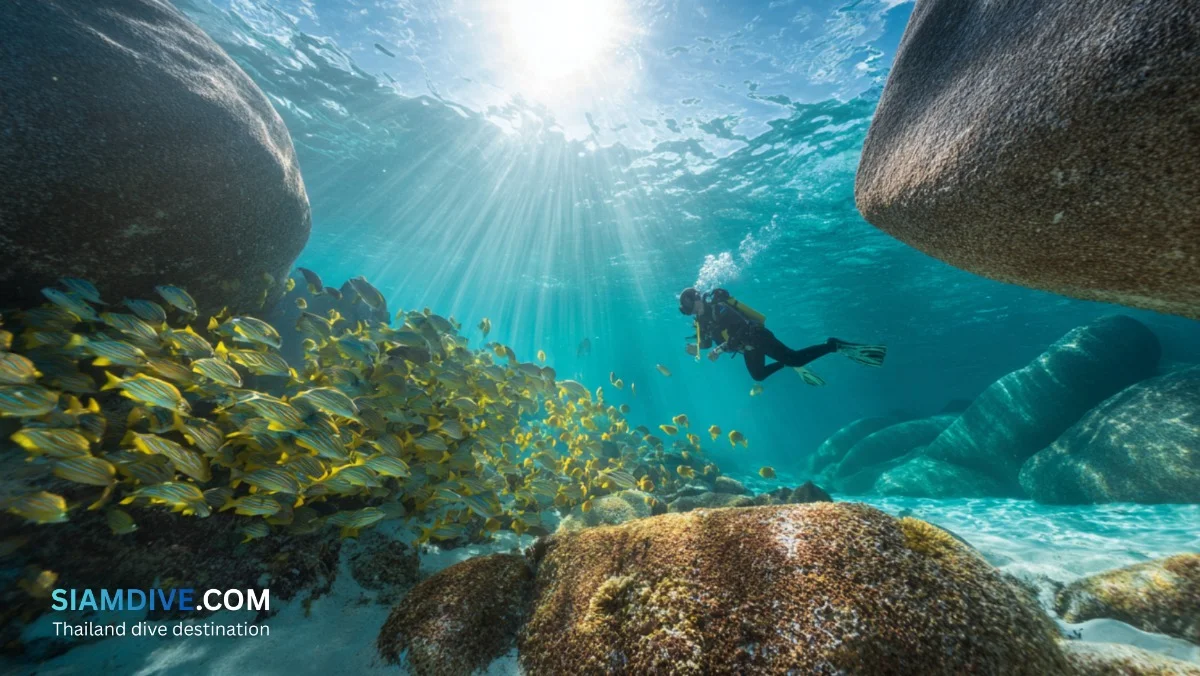
Founded in 2018 by Australian shark conservationist Madison Stewart, Project Hiu (named after the Indonesian word for shark) works directly with Tanjung Luar's fishing community. The premise is deliberately simple: pay fishermen to take tourists freediving and snorkelling instead of running longlines. The boat is the same. The crew is the same. The income source changes.
Stewart first visited Tanjung Luar in 2017 while filming the marine conservation documentary Blue. Rather than campaign against the fishermen — the approach that conservation groups had tried and failed with for years — she embedded herself in the community and asked what it would take to make tourism competitive with shark fishing.
The answer was straightforward: steady income that matched what the boats earned on fishing trips. In 2025, Project Hiu prevented 45 fishing trips by filling those slots with tourism runs instead. The project reinvests capital into community development — waste management programs, education initiatives, and infrastructure that makes the village more viable as a tourism destination.
The model is not a charity handout. It is a business substitution — same asset (boat), same labour (crew), different product (experience instead of dead sharks). The fishermen are not being asked to give up their livelihood. They are being offered a different version of it.
91% Fewer Sharks Caught: The Alor Island Proof
Three hundred kilometres east of Lombok, a separate program proved that the concept works at a deeper level. On Alor Island in East Nusa Tenggara, pelagic thresher sharks had been a primary target for small-scale fishers for decades. The species' Indo-Pacific population had declined by an estimated 50–79% over three generations, with Indonesia's catch showing drops of up to 83%.
Between 2021 and 2023, researchers and conservationists from Indonesia and the UK ran a livelihood-based intervention with nine voluntary fishers. The program provided resources to transition to alternative income sources — different fishing targets, small trade, local services — coupled with a commitment to zero thresher shark fishing.
The results, published in the journal Oryx in 2025 and reported by Mongabay, were striking: participating fishers reduced thresher shark catches by 91% compared to non-participants. Some participants saw their income increase by 5.2 times relative to pre-intervention levels — though a few struggled with job instability and personal challenges, a reminder that livelihood transitions are not uniformly smooth.
The 91% figure matters because it was achieved without enforcement, without patrols, without confiscation. It was achieved by making not fishing the better economic choice. The link between economic pressure and reef degradation runs in both directions — reduce the pressure, and the system starts to recover.
The 2026 Finning Ban: Law Meets Reality
Indonesia's 2026 shark finning ban represents the most significant domestic regulation to date. The law prohibits capturing sharks solely for their fins, with penalties of up to five years in prison and substantial financial fines. It arrived on the heels of CITES CoP20 in late 2025, which added trade protections for over 70 shark and ray species.
On paper, the legal framework is now formidable. Manta rays and sawfish have been fully protected since 2014. Whale sharks carry the highest protection tier. The 2026 ban closes the gap on fin-targeted fishing specifically.
On the ground, the enforcement picture is messier. Indonesia is an archipelago of 17,000 islands, and enforcement resources are spread thin. Protected species still land at markets under the "bycatch" label — a legal grey zone that allows fishermen to sell animals they claim were caught incidentally. Corruption at multiple levels has been documented. The gap between signing a law and staffing a coast guard cutter at every port is measured in years and budgets, not just political will.
This is precisely why community-based approaches — buyouts, tourism substitution, livelihood transitions — matter. They work at the dock level, where regulations often do not reach. A fisherman who earns more from snorkel tours than from longlines does not need a coast guard cutter to stop him from fishing sharks. The economics do the enforcement.
The Tourism Arithmetic
The economic case for live sharks over dead ones is not close. According to a study in Frontiers in Marine Science, shark dive tourism in Indonesia generates median annual expenditure of $22 million — 1.45 times the total value of annual shark exports. A single manta ray produces an estimated $1 million in dive tourism revenue over its lifetime. At Tanjung Luar, that same manta sells for $365, once.
If sharks disappeared from Indonesia's dive sites, the country would lose roughly 25% of dive tourist expenditure — tens of millions of dollars annually. The Tanjung Luar fishery generates approximately $200,000 per year from shark landings. The vessel buyout cost $35,100 total for two boats. Project Hiu runs on tourism revenue. The Alor program cost a fraction of a single fishing season's catch value.
None of these programs require the fishermen to become poorer. That is the critical design feature. Past conservation approaches that relied on bans and enforcement without economic alternatives failed precisely because they asked communities to absorb the cost of species preservation. The new generation of programs asks a different question: what if conservation made people richer?
What Remains Unresolved
These programs work. The data shows it. But they remain small relative to the scale of the problem.
Tanjung Luar has 61 licensed shark longline vessels. Two have been bought out. Project Hiu prevents dozens of trips per year, not hundreds. The Alor program enrolled nine fishers. Indonesia's shark fishery is measured in hundreds of thousands of tonnes annually across thousands of boats and hundreds of ports.
Scaling any of these programs faces the same constraints: funding, community trust, alternative income infrastructure, and the patience to let transitions take root. A fisherman who switches to tourism needs tourists — and Tanjung Luar is not yet a well-known tourist destination. A buyout program needs sustained funding that outlasts grant cycles. A livelihood transition needs to survive the first year when income dips before it climbs.
Small interventions in marine ecosystems can cascade into large outcomes. The same may be true for small interventions in fishing communities. Two boats retired. Nine fishers retrained. Forty-five trips diverted. Each number is modest. Each number is also a proof that the question — what happens when you pay shark fishermen to stop? — has an answer.
The answer is: some of them stop. And the ocean notices.
Sources
- University of Oxford — Indonesia's first vessel buyout permanently retires shark fishing boats
- Mongabay — Community-based conservation cuts thresher shark fishing by 91% in Indonesia (March 2025)
- Project Hiu — Official website
- Frontiers in Marine Science — Economic Value of Shark and Ray Tourism in Indonesia
- Shark Guardian — Historic Global Victory for Sharks and Rays at CITES CoP20