7 Mistakes Every New Diver Makes When Nobody Is Watching
2 พฤษภาคม 2569
From over-weighting to skipping buddy checks, these seven post-certification mistakes hit with clockwork regularity — and every one is fixable before you get wet.
The weight belt clicks shut. The regulator tastes the same. The water is the same temperature it was two days ago, when an instructor hovered within arm's reach and tapped your pressure gauge every few minutes. Everything looks identical — except today, nobody is watching.
A Business of Diving Institute survey found that only 50 percent of newly certified open water divers feel ready to dive with a buddy independently. The other half carry their card into the water alongside a quiet suspicion that something has changed. They are right. The other 37 percent actively describe themselves as unprepared — a number that rises when the gap between final training dive and first fun dive stretches beyond a few weeks. Seven mistakes show up with almost mechanical regularity on that first unsupervised dive — and every one of them is fixable before you even get wet.
Still Wearing Your Instructor's Weights
During training, the instructor wanted you down. An extra kilogram or two of lead kept you planted on the bottom during skills practice — mask clearing at three metres is easier when a student is not drifting toward the surface. That approach works in a controlled setting. The problem starts when the same weight configuration follows you onto a fun dive at eighteen metres.
Over-weighting is the single most common equipment mistake new divers carry out of their course. Extra lead forces a head-up, feet-down posture — picture someone standing on a moving bus instead of sitting. Maintaining that angle demands constant finning, which burns air faster, which shortens the dive, which leaves the diver frustrated and none the wiser about what went wrong.
The fix: Run a proper buoyancy check at the surface before your first descent. Deflate the BCD completely, hold a normal breath, and note where the water sits. Eye level means the weighting is correct. Forehead or above? Drop a kilogram. It feels counterintuitive to carry less lead, but air consumption and trim improve within the first five minutes. Think of weight the way a cyclist thinks of saddle height — one centimetre off and everything downstream gets harder.
The Buddy Check Nobody Enforces
During the course, buddy checks happened because someone stood at the edge of the platform and waited. Without that human prompt, the habit evaporates almost instantly. Gear-related problems appear as a contributing factor in a significant share of DAN incident reports — problems a ninety-second pre-dive routine would have caught before the backroll.
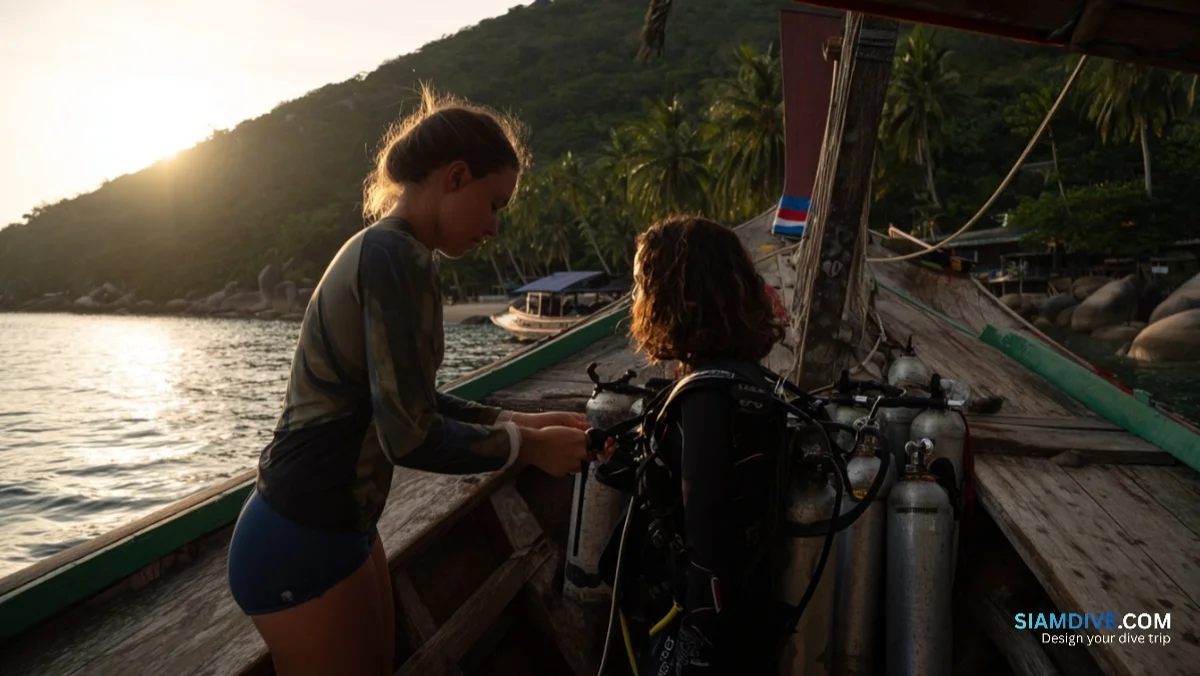
The fix: Run the check out loud. BWRAF — BCD, Weights, Releases, Air, Final check — takes under two minutes and catches open tank valves, loose weight pouches, and disconnected inflator hoses before they become emergencies at depth. Make it automatic enough that skipping feels wrong, the way forgetting a seatbelt does.
Divers who buddy-check every time report fewer task-loading surprises underwater. Not because the check prevents every malfunction, but because it forces both divers to shift mentally from surface mode to dive mode. That gear-change matters more than any single equipment item on the list.
50 Bar and No Tap on the Shoulder
Somewhere around the fifteen-minute mark, a new diver on a tropical reef forgets the pressure gauge exists. The brain is busy cataloguing parrotfish, coral formations, and the strange thrill of weightlessness. Meanwhile the needle drops — 180, 150, 120 — at a rate that would have triggered three separate instructor signals by now.
The numbers explain why. A new diver's surface air consumption typically runs 25 to 27 litres per minute, nearly double the 15 to 18 litres an experienced diver uses. Excitement and nerves accelerate breathing further. At eighteen metres, a standard aluminium tank can empty in well under 40 minutes. When the gauge finally catches the diver's eye at 60 bar, the remaining options shrink fast — a rushed ascent, a shortened safety stop, or a surface swim in current that nobody budgeted air for.
The fix: Use the rule of threes. Every three minutes, check three things — depth, air, buddy position. Pair the check with a physical cue you already perform: every time you equalise, glance at the gauge. Every time you adjust the BCD, glance again. The specific trigger matters less than the rhythm it creates.
New drivers check mirrors more often than experienced drivers. New divers should check the SPG more often, not less. The obsession with max depth distracts from the number that actually governs your dive: remaining air.
Certified Does Not Mean Experienced
The card says eighteen metres, conditions similar to training. It does not say thirty-metre walls, ripping currents, or night dives — even when the resort boat is heading there and every other diver on board seems relaxed about it.
DAN's 2017 Annual Report, analysing 2015 incident data, found that more than half the divers involved had been certified for fewer than two years — and incidents most commonly occurred on the first day of a dive series. That pattern is not meant to scare anyone off the boat. It is meant to calibrate what "ready" actually looks like at different stages of a diving career.
The fix: For the first ten to fifteen fun dives, choose sites within your training parameters. Calm water, good visibility, twelve to eighteen metres, easy entry from boat or shore. Treat each dive as deliberate practice — work on trim, navigation, and buddy positioning instead of chasing depth or distance. The advanced sites will still exist in six months, and a diver with fifty logged dives will enjoy them far more than one with four.
Rushing the curriculum is an advanced-diver habit that backfires even in rescue training. At the fun-dive stage, it backfires faster and with less backup.
A Briefing Heard, Not Absorbed
Five minutes before the backroll, the divemaster rattles through entry point, maximum depth, current direction, turn pressure, exit strategy, and emergency procedures — all while the boat rocks and a dozen divers fiddle with straps. During the course, briefings came with context and repetition. On a fun dive, information arrives once, fast, and assumes full attention from an audience still wrestling with their fins.
The fix: Compress the briefing to three numbers: max depth, turn pressure, exit direction. Write them on a slate or repeat them to your buddy out loud. If something was unclear, ask — divemasters expect questions from new divers and worry far more about the ones who stay silent.
The briefing matters most at sites with current. A diver who knows the flow runs north can ride it and plan a drift return. A diver who missed that detail spends the dive kicking against resistance, burning air at twice the normal rate, and surfacing exhausted in the wrong place. One sentence from the briefing would have changed the entire dive.
Where Is the Boat?
Navigation is the skill new divers consistently rate as their weakest, and the first fun dive proves exactly why. During training, the instructor led. On a buddy dive, someone has to navigate — and when neither diver volunteers, both surface looking for a boat they cannot locate.
The fix: Before descending, note the boat's position relative to something fixed — the reef slope direction, a compass heading, a sand channel. Agree with your buddy on who leads and who follows. Set a turnaround point: half your air or half your planned time, whichever arrives first. Track the compass heading every few minutes instead of following the reef wherever it wanders.
Surfacing away from the boat is not dangerous in itself. Dive boats post lookouts, and an inflated signal marker buoy is visible at hundreds of metres. But deploying that marker correctly at depth is a skill that needs practice before you actually need it at the surface. Add it to the list of things to rehearse on those first calm, shallow dives.
Camera First, Awareness Last
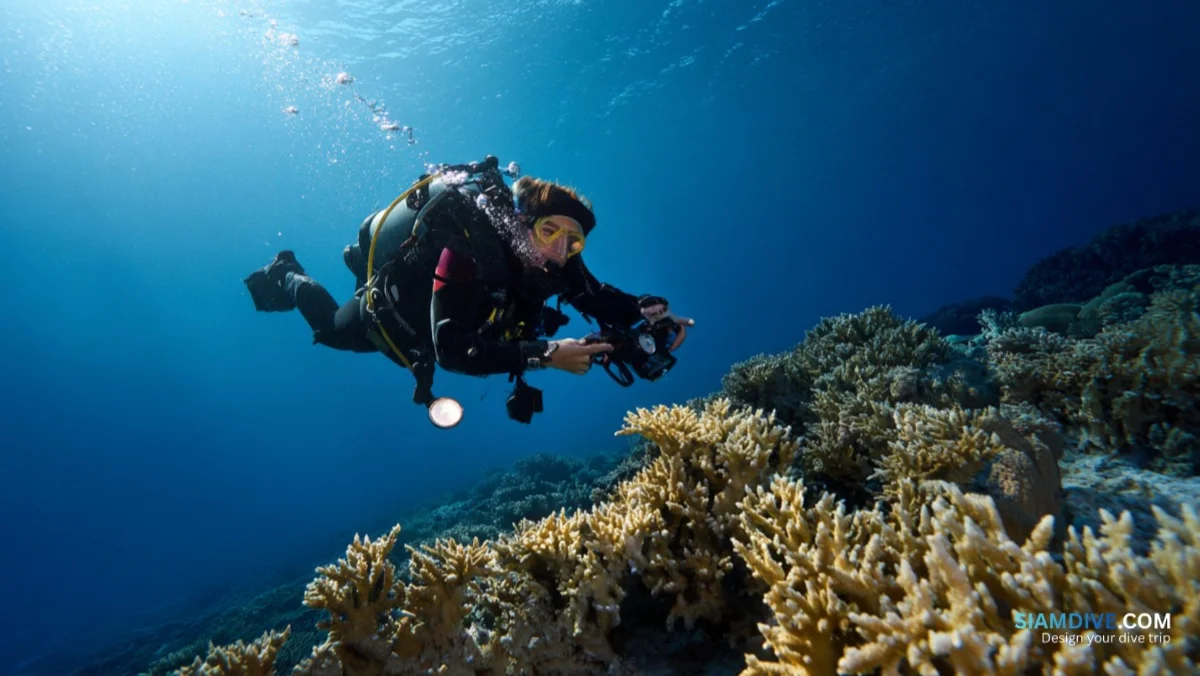
The housing comes out of the bag on dive five. The result is a diver suspended in place, face jammed into a viewfinder, oblivious to depth, air, buddy, and current — all to frame a nudibranch that refuses to cooperate.
Task loading is the real culprit. Experienced divers manage cameras because buoyancy and spatial awareness run in the background, the way an experienced driver changes lanes without consciously checking speed. For a new diver, every skill still lives in the foreground. Layering a camera on top is the underwater equivalent of texting while learning to drive.
The fix: Leave the camera at home for the first ten to twenty dives. If the itch is unbearable, clip a small action camera to the BCD — something that needs no adjustment and stays out of the way. Reserve strobes and macro lenses for after buoyancy and air management feel automatic. The reef is patient, and artificial light affects marine life more than most new underwater photographers realise.
From Certified to Confident
The gap between card and competence is not a flaw in the system. Open water courses are designed to produce safe beginners, not finished divers — the same way a driving licence certifies that a person can operate a vehicle, not that they can merge onto a motorway in rain at night. The analogy holds perfectly: most new drivers improve fastest in the first year of regular driving, and most new divers improve fastest in the first twenty to thirty dives — provided those dives happen in conditions where practice is possible rather than survival.
Three strategies close that gap faster than simply accumulating random dives:
- Dive locally and often. Twenty shore dives in familiar water build more practical skill than two resort trips a year. Local dive clubs organise exactly these sessions, and the pace is lower, the pressure lighter, and the learning far stickier than holiday diving allows.
- Take a specialty early. Peak Performance Buoyancy and Underwater Navigation are not advanced-level courses. They are structured practice for the two skills new divers struggle with most, available at the open water level from PADI, SSI, and most training agencies.
- Refresh if you pause. PADI recommends a ReActivate refresher after six months of inactivity, and a recent diver survey found that 97 percent of inactive certified divers intended to return — but many cited forgotten skills as the main barrier. A half-day pool session costs far less than the anxiety of a shaky first dive back.
The connection between panic and breathing mechanics is well-documented. Better skills make panic less likely, and the only reliable way to build skills is to dive — carefully, often, and with someone you trust finning beside you.