How 110,000 Baht Buys Four PADI Cards on Koh Tao
28 เมษายน 2569
Four PADI certifications from Open Water to Divemaster for 110,000 baht — every cost broken down, Koh Tao vs Cairns vs the Caribbean, with a realistic 12-month timeline.
The spreadsheet circulates in every Koh Tao Facebook group — Open Water, Advanced, Rescue, Divemaster, totals at the bottom. Newcomers update the prices each season; the numbers barely shift. Four PADI certifications, twelve months of island time, roughly 110,000 baht in course fees. That converts to about $3,150.
Run the same progression through Cairns on the Great Barrier Reef and the column stretches past AUD 9,000 — closer to $6,000. Try it in the UK, where a single Divemaster course can cost £2,000 before a student books a reef trip, and the total climbs past $15,000 in training alone.
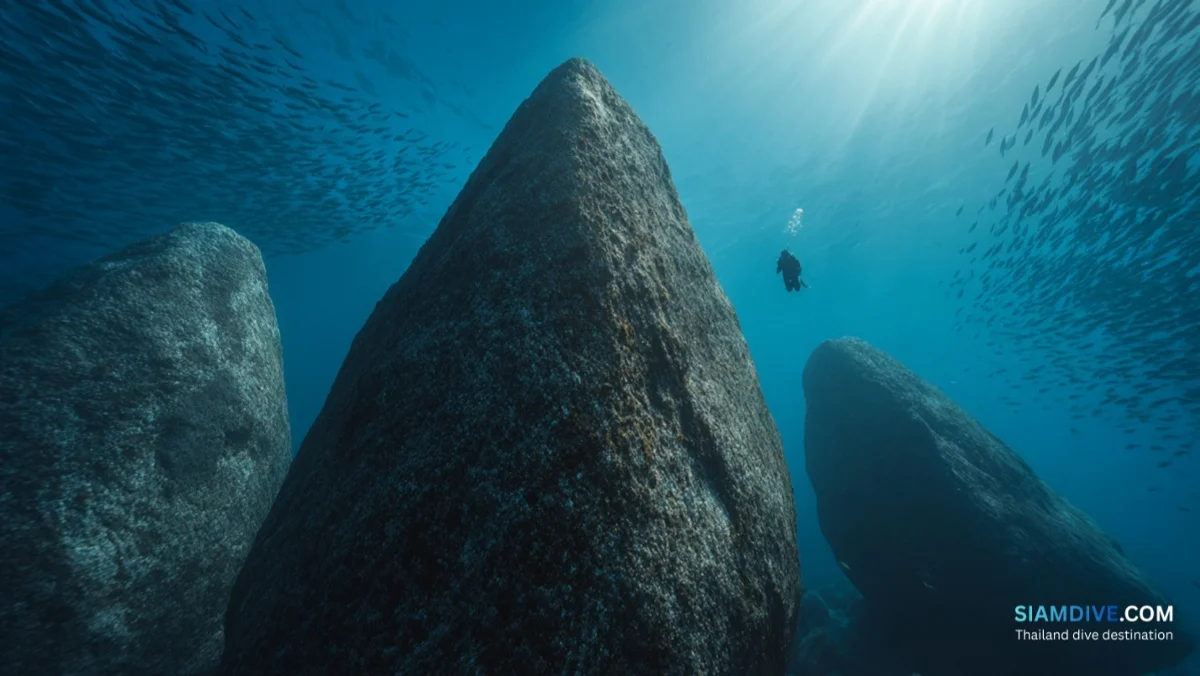
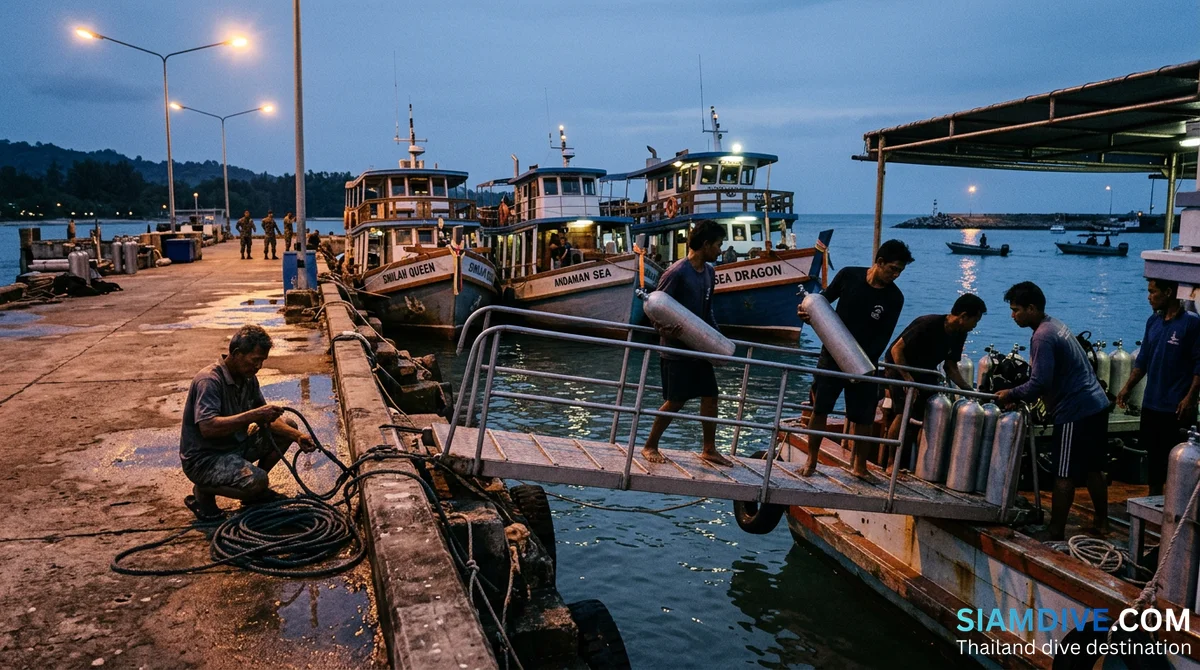
Those numbers explain why a seven-square-kilometre island in the Gulf of Thailand — granite boulders, coconut palms, one paved road — turns out more Divemaster interns per year than most countries. The economics are not complicated. What surprises people is how little separates the training quality from Western equivalents, and how much separates the invoice.
What Four Cards Actually Require
PADI's professional ladder has no shortcuts. Every Divemaster carries the full stack below, plus enough logged time to prove the skills are real — not just classroom memories.
- Open Water Diver — 3–4 days. Confined water sessions, four open-water dives, a final exam. Minimum age 15 (junior) or 18 for unrestricted certification.
- Advanced Open Water Diver — 2 days. Five adventure dives including deep and navigation. No written exam — performance assessed in the water.
- Rescue Diver + Emergency First Response — 3–4 days of scenario drills: unconscious diver at the surface, panicked swimmer, missing buddy search. EFR certification must stay current within 24 months.
- Divemaster — minimum six weeks of internship, though most candidates stretch to eight or twelve. Prerequisites: age 18, Rescue Diver certified, at least 40 logged dives, and a dive medical signed by a physician.
That 40-dive minimum is the quiet gatekeeper. A candidate who lands on Koh Tao with a fresh Open Water card needs roughly 25–30 fun dives between courses to hit the threshold. On Koh Tao each of those dives costs around 1,000 baht. On the Great Barrier Reef the same boat dive runs AUD 120–180 — three to five times more per splash.
The Koh Tao Price Tag
Koh Tao's 70-odd dive centres publish surprisingly similar rates each season. The numbers below are 2026 ranges drawn from multiple operators, not a single shop.
- Open Water — 9,900–12,000 baht ($280–340). Includes PADI eLearning, gear rental, certification processing, and three days of diving. Some centres add a free fun dive on graduation day.
- Advanced Open Water — 9,000–11,000 baht ($255–315). Two days, five dives.
- Rescue Diver + EFR — 12,000–16,750 baht ($340–480). The higher end covers candidates who need the separate EFR course. Already hold a current first-aid certificate? The number drops.
- Divemaster internship (inclusive) — 59,500–89,500 baht ($1,700–2,550). Inclusive packages bundle PADI crew pack, study materials, application fee (roughly AUD 286 paid directly to PADI), and enough daily diving to build the required logbook. Mid-range packages cluster around 75,000 baht ($2,140).
A candidate who picks mid-range courses and logs 20 extra fun dives at 1,000 baht each will spend approximately 110,000 baht — about $3,150 — on the full progression from zero to Divemaster.
That figure covers every textbook, every eLearning module, every certification card, and every tank of air from the first pool session to the final DM practical assessment. Gear rental is bundled through OW and AOW; most interns buy their own mask, fins, and wetsuit by month three, typically secondhand from departing instructors for 5,000–15,000 baht.
Same Cards, Australian Prices
Cairns is the closest Australian parallel to Koh Tao's DM pipeline — tropical water, year-round operation, a steady stream of working-holiday visa holders chasing pro cards. The pricing, though, sits in a different hemisphere.
- Advanced Open Water (Divers Den, 2-day liveaboard) — AUD 1,165 ($760). The same two-day certification costs 10,000 baht ($285) on Koh Tao.
- Advanced Open Water (Pro Dive Cairns, 3-day liveaboard) — AUD 1,445 ($940), plus a new AUD 25 fuel surcharge effective April 2026.
- Divemaster (Divers Den, 10-day programme with 7 days on the reef) — AUD 3,379–3,449 ($2,200–2,250). Does not include the PADI application fee (AUD 302.50 with GST), the dive medical, or personal equipment.
- Divemaster (Abyss, Sydney) — AUD 1,395 ($910) for the course structure alone. No reef access, no materials, no certification processing included.
A realistic Cairns total from Open Water through Divemaster — courses, application fees, 25 reef dives at liveaboard rates, and the mandatory dive medical — lands between AUD 9,000 and 10,000 ($5,850–6,500). That is roughly double the Koh Tao number before either candidate has paid a single month of rent.
Sydney looks cheaper on paper, but most dive sites sit in cold temperate water requiring a 7mm wetsuit and a hood. Visibility averages 8–15 metres — half of Koh Tao's typical 20–30-metre range. For DM candidates who need to demonstrate confident underwater leadership, that experience gap matters.
And the Caribbean?
Honduras — Utila and Roatán specifically — splits the difference between Thailand and Australia. The backpacker-diver economy runs strong, the water is warm year-round, and the reef is world-class.
- Divemaster course (Utila) — from $1,099 per month plus a $150 PADI processing fee. A two-month internship totals roughly $2,350.
- Full OW-to-DM path (estimated) — $3,800–4,600 in course fees depending on shop and package deals.
Caribbean training costs sit 20–40 percent above Koh Tao but well below Australia. The wider gap opens at the monthly-expense line — rent on Utila runs $400–600, roughly double Koh Tao's budget floor. And while Honduras offers excellent reef diving, the site variety is narrower. A year in Thailand covers wall dives, wrecks, pinnacles, and macro — across both the Gulf and the Andaman coast — within a single certification journey.
Beyond Course Fees: The Monthly Burn
A Divemaster year is not just course fees. It is ten to twelve months of island rent, three meals a day, scooter fuel, laundry, and the occasional sunset beer. This is where the comparison gets sharpest.
- Koh Tao — monthly budget
- Rent: 8,000–12,000 baht ($225–340) for a fan or A/C room with a private bathroom and Wi-Fi. Interns staying longer than three months often negotiate discounts.
- Food: 6,000–10,000 baht ($170–285). Street stalls serve pad thai from 40 baht; sit-down Thai meals run 80–120 baht. An 80-baht pad thai after a night dive is a Koh Tao rite of passage.
- Transport and extras: 2,000–3,000 baht ($55–85). Scooter rental, laundry at 40 baht per kilo, mobile data.
- Total: 16,000–25,000 baht ($455–715) per month.
- Cairns — monthly budget
- Rent: AUD 800–1,400 ($520–910) for a shared house or hostel dorm alongside the working-holiday crowd.
- Food: AUD 600–900 ($390–585). Australian grocery prices alone outpace a full Koh Tao food budget.
- Transport and extras: AUD 200–400 ($130–260).
- Total: AUD 1,600–2,700 ($1,040–1,755) per month.
- Utila — monthly budget
- Rent + food: $600–900 per month. Below Cairns, still well above Koh Tao.
Stacked across ten months, here is where the three destinations land all-in — training plus living:
| Destination | Est. 12-Month Total |
|---|---|
| Koh Tao | $8,000–10,000 |
| Utila | $11,000–14,000 |
| Cairns | $17,000–23,000 |
The living-cost gap alone adds $6,000–10,000 to a Cairns track versus Koh Tao. That difference funds a second year of diving in Thailand — or a few months of liveaboard trips across Southeast Asia.
What No Spreadsheet Shows
Price dominates the comparison, but three other factors tilt the decision further toward Thailand.
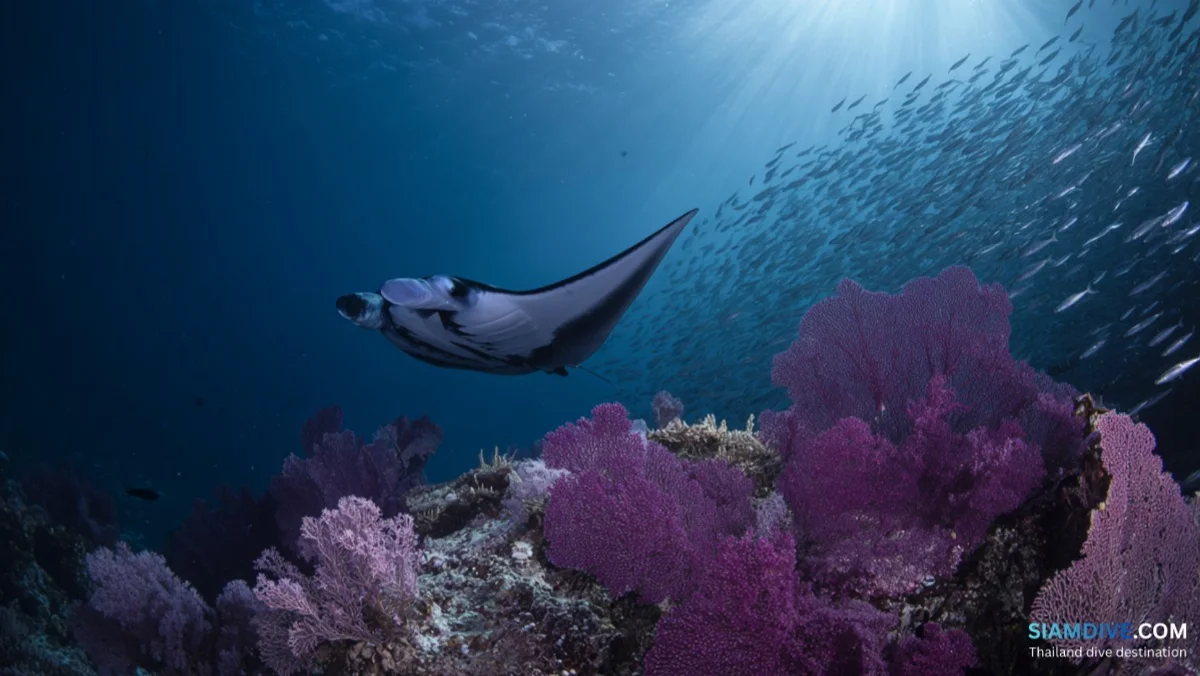
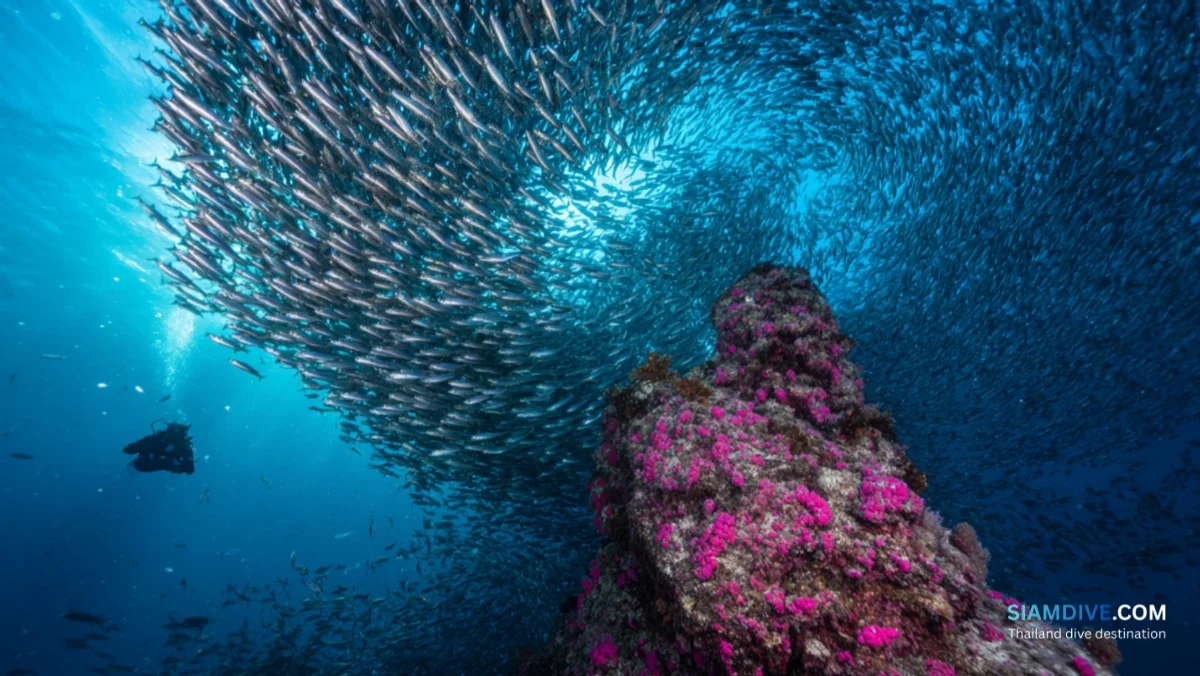
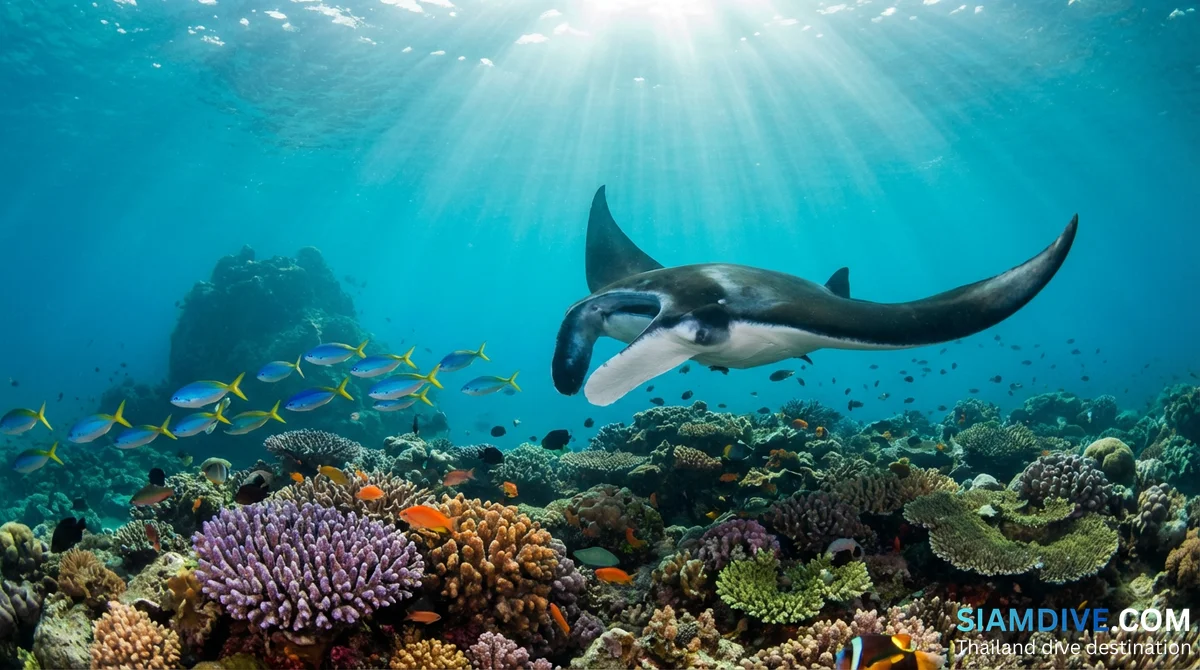
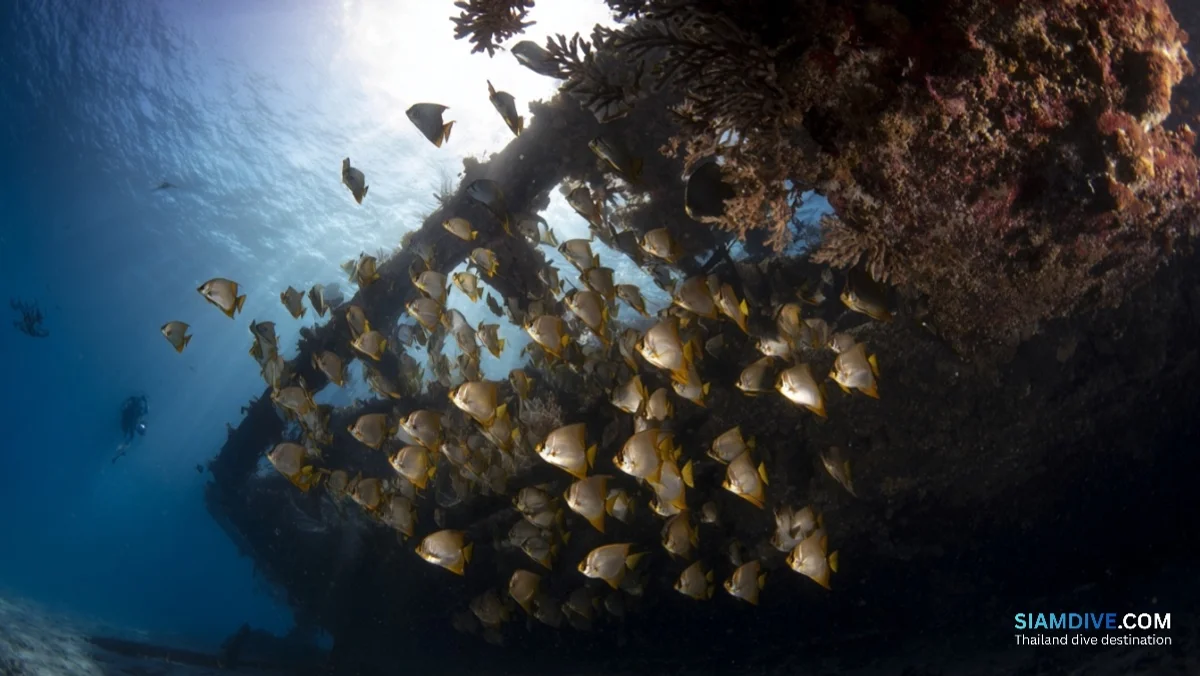
Dive-site variety inside the training year. Koh Tao's own sites — Chumphon Pinnacle, Sail Rock, Southwest Pinnacle, the HTMS Sattakut wreck — range from 12 to 40 metres and cover reef, wreck, and pelagic encounters. Weekend trips to the Andaman coast add Similan Islands wall dives, Richelieu Rock macro, and Koh Bon manta encounters. A DM candidate who spends twelve months in Thailand logs more habitat types than most Cairns interns see on the Great Barrier Reef alone.
Post-certification job pipeline. Koh Tao's 70-plus dive centres hire fresh Divemasters year-round. Entry-level pay is modest — 15,000–25,000 baht per month, often with accommodation included — but the cost of living means that money stretches further than a minimum-wage hospitality job in Cairns.
Climate and comfort. Water temperature on Koh Tao stays between 28°C and 30°C year-round. No 7mm wetsuit, no hood, no gloves. Training in board shorts and a rash guard removes a layer of distraction and lets skills develop faster. Candidates who later struggle with buoyancy in thicker exposure suits at least start from a strong baseline.
A Realistic 12-Month Calendar
Most Koh Tao DM candidates do not sprint. Between courses they take fun dives, build logbook hours, pick up part-time work, and wait for muscle memory to settle.
- Month 1–2: Open Water + 10 fun dives. Build basic comfort, learn to equalise without thinking about it. Course + dives: ~22,000 baht.
- Month 3: Advanced Open Water. Night dive, deep dive, underwater navigation — the confidence jump is noticeable. Cost: ~10,000 baht.
- Month 4–5: 15 more fun dives at sites like Chumphon Pinnacle and Sail Rock. Some candidates fit in a weekend trip to the Similan Islands if the season is open. Cost: ~15,000 baht.
- Month 5–6: Rescue Diver + EFR. The first course that carries real weight — managing a panicked diver changes how you see every dive after it. Cost: ~15,000 baht.
- Month 7–12: Divemaster internship. Six to twelve weeks of leading certified divers, assisting instructors on OW courses, learning how small gear failures cascade, and passing water-skills assessments — a 400-metre surface swim, 15-minute tread, and 800-metre snorkel swim. Cost: ~60,000–75,000 baht.
Total training across the year: roughly 110,000–135,000 baht ($3,150–3,860). The calendar stretches or compresses depending on how fast dives stack up. Nobody penalises a candidate for taking longer — the best interns often log the most water time precisely because they stay the longest.
Why April 2026 Shifts the Equation
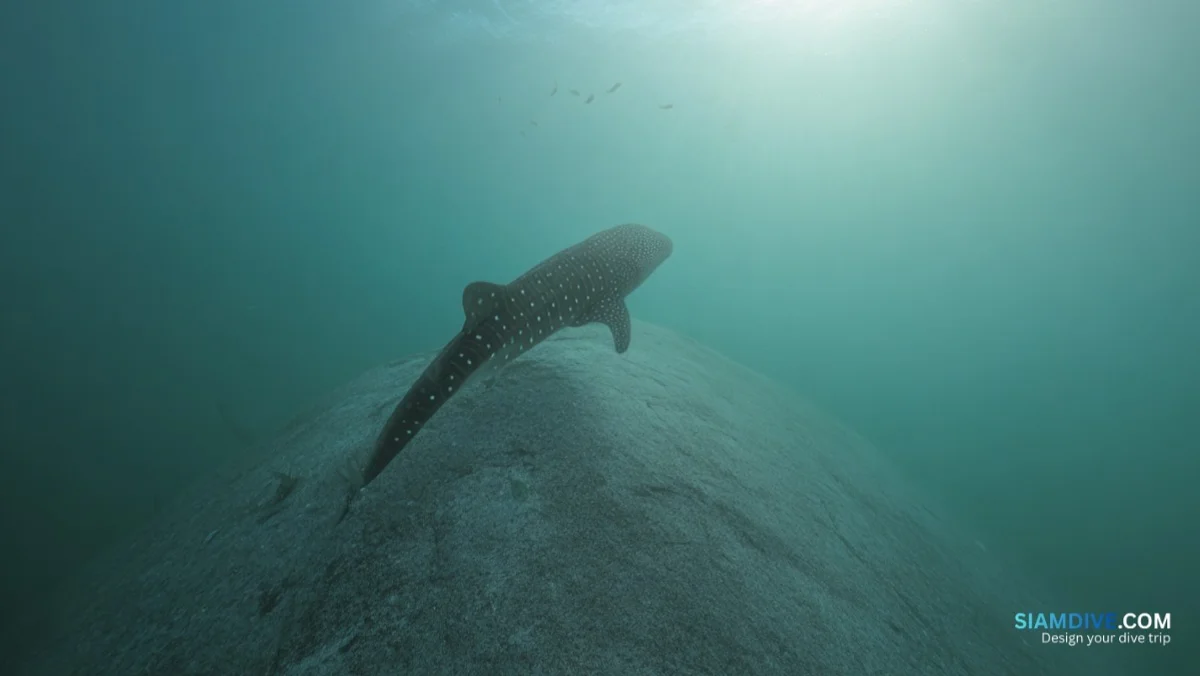
Right now — April 2026 — Koh Tao sits in its peak window. Water temperature holds at 30°C, visibility stretches to 20–30 metres, and the seasonal plankton bloom that runs from March through May draws whale sharks to Chumphon Pinnacle and Southwest Pinnacle. Sighting rates during this corridor run 15–20 percent per dive, compared with 2–5 percent in the off-months.
For a DM intern, those encounters are more than stories. Whale shark dives become teaching moments — crowd management, minimum approach distance, current awareness under pressure — that strengthen a professional logbook. Candidates who begin their programme now will finish around October or November, just as high season opens and dive centres across the Gulf and Andaman coast ramp up hiring.
Meanwhile, Cairns operators added a fuel surcharge of AUD 25 per trip from April 2026, and the Great Barrier Reef Environmental Management Charge remains at AUD 8 per person per day — modest per dive, significant across a training year of 100-plus boat trips.
The spreadsheet, as always, tells the clearest story. But right now is a particularly good time to start filling it in.